1
Anti-hypertension drugs
2
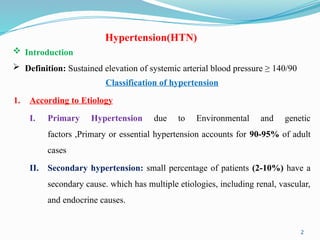
Hypertension(HTN)
 Introduction
 Definition: Sustained elevation of systemic arterial blood pressure ≥ 140/90
Classification of hypertension
1. According to Etiology
I. Primary Hypertension due to Environmental and genetic
factors ,Primary or essential hypertension accounts for 90-95% of adult
cases
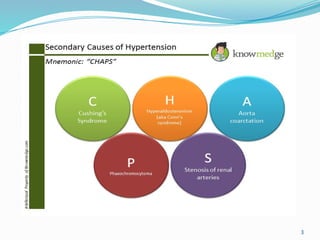
II. Secondary hypertension: small percentage of patients (2-10%) have a
secondary cause. which has multiple etiologies, including renal, vascular,
and endocrine causes.
3
4
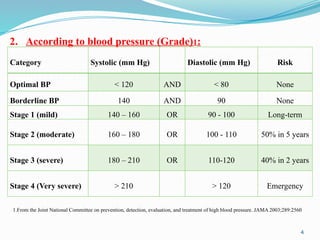
Category Systolic (mm Hg) Diastolic (mm Hg) Risk
Optimal BP < 120 AND < 80 None
Borderline BP 140 AND 90 None
Stage 1 (mild) 140 – 160 OR 90 - 100 Long-term
Stage 2 (moderate) 160 – 180 OR 100 - 110 50% in 5 years
Stage 3 (severe) 180 – 210 OR 110-120 40% in 2 years
Stage 4 (Very severe) > 210 > 120 Emergency
2. According to blood pressure (Grade)1:
1.From the Joint National Committee on prevention, detection, evaluation, and treatment of high blood pressure. JAMA 2003;289:2560
5
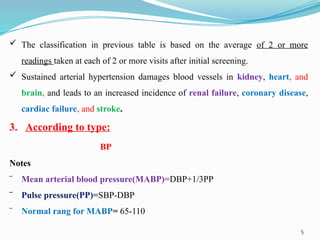
 The classification in previous table is based on the average of 2 or more
readings taken at each of 2 or more visits after initial screening.
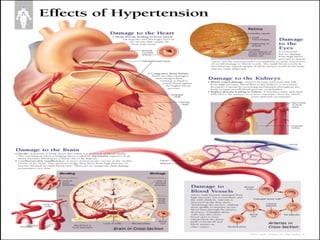
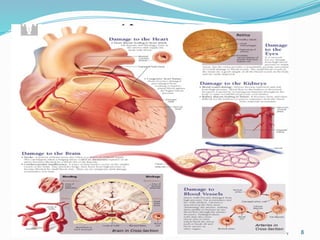
 Sustained arterial hypertension damages blood vessels in kidney, heart, and
brain, and leads to an increased incidence of renal failure, coronary disease,
cardiac failure, and stroke.
3. According to type:
BP
Notes
‾ Mean arterial blood pressure(MABP)=DBP+1/3PP
‾ Pulse pressure(PP)=SBP-DBP
‾ Normal rang for MABP= 65-110
6
7
8
9
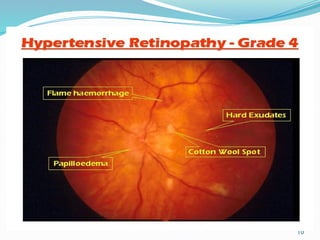
10
11
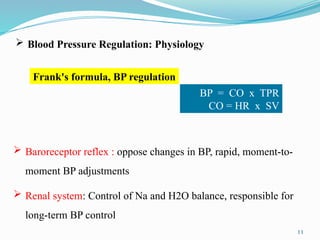
 Blood Pressure Regulation: Physiology
Frank's formula, BP regulation
BP = CO x TPR
CO = HR x SV
 Baroreceptor reflex : oppose changes in BP, rapid, moment-to-
moment BP adjustments
 Renal system: Control of Na and H2O balance, responsible for
long-term BP control
12
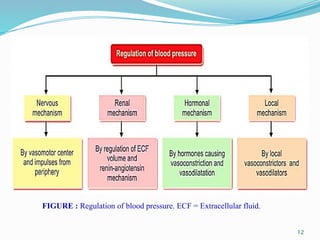
FIGURE : Regulation of blood pressure. ECF = Extracellular fluid.
13
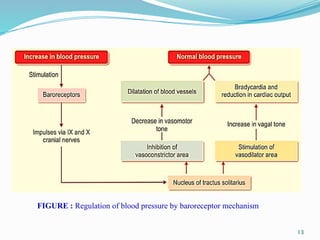
FIGURE : Regulation of blood pressure by baroreceptor mechanism
14
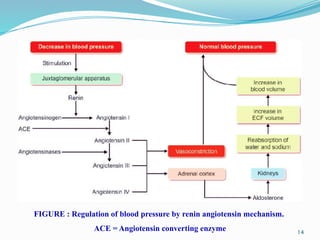
FIGURE : Regulation of blood pressure by renin angiotensin mechanism.
ACE = Angiotensin converting enzyme
15
Hormones which decrease arterial blood
pressure
Hormones which increase arterial blood
pressure
1. Vasoactive intestinal polypeptide (VIP)
2. Bradykinin
3. Prostaglandin
4. Histamine
5. Acetylcholine
6. Atrial natriuretic peptide
7. Brain natriuretic peptide
8. C type natriuretic peptide
1. Adrenaline*
2. Noradrenaline
3. Thyroxine*
4. Aldosterone
5. Vasopressin
6. Angiotensin
7. Serotonin
TABLE : Hormones involved in regulation of arterial blood pressure
*
Adrenaline and thyroxine increase systolic pressure but decrease diastolic pressure
.
16
Local vasodilators Local vasoconstrictors
(Endothelins)
Endothelins (ET) Metabolic
products
EDRF:
1. Nitric oxide
1. Carbon dioxide
2. Lactate
3. Hydrogen
4. Adenosine
EDCF
:
1. ET1
2. ET2
3. ET3
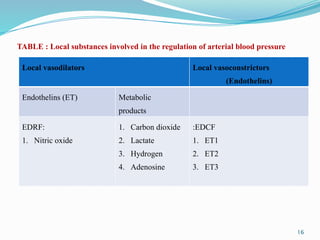
TABLE : Local substances involved in the regulation of arterial blood pressure
17
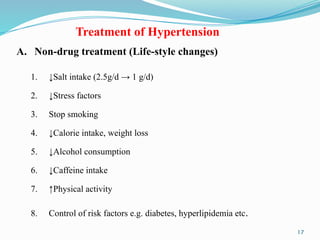
Treatment of Hypertension
A. Non-drug treatment (Life-style changes)
1. ↓Salt intake (2.5g/d → 1 g/d)
2. ↓Stress factors
3. Stop smoking
4. ↓Calorie intake, weight loss
5. ↓Alcohol consumption
6. ↓Caffeine intake
7. ↑Physical activity
8. Control of risk factors e.g. diabetes, hyperlipidemia etc.
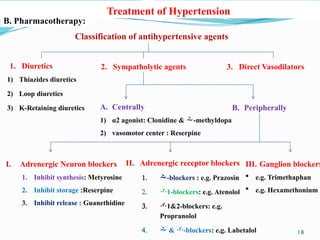
Classification of antihypertensive agents
1. Diuretics 2. Sympatholytic agents
A. Centrally
1) α2 agonist: Clonidine & -methyldopa
2) vasomotor center : Reserpine
B. Peripherally
I. Adrenergic Neuron blockers
1. Inhibit synthesis: Metyrosine
2. Inhibit storage :Reserpine
3. Inhibit release : Guanethidine
III. Ganglion blockers
 e.g. Trimethaphan
 e.g. Hexamethonium
1) Thiazides diuretics
2) Loop diuretics
3) K-Retaining diuretics
II. Adrenergic receptor blockers
1. -blockers : e.g. Prazosin
2. 1-blockers: e.g. Atenolol
3. 1&2-blockers: e.g.
Propranolol
4.  & -blockers: e.g. Labetalol
3. Direct Vasodilators
Treatment of Hypertension
B. Pharmacotherapy:
18
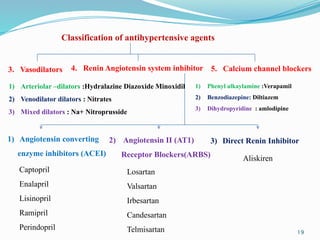
3. Vasodilators
Classification of antihypertensive agents
4. Renin Angiotensin system inhibitor
1) Arteriolar –dilators :Hydralazine Diazoxide Minoxidil
2) Venodilator dilators : Nitrates
3) Mixed dilators : Na+ Nitroprusside
5. Calcium channel blockers
1) Angiotensin converting
enzyme inhibitors (ACEI)
3) Direct Renin Inhibitor
2) Angiotensin II (AT1)
Receptor Blockers(ARBS)
Captopril
Enalapril
Lisinopril
Ramipril
Perindopril
Losartan
Valsartan
Irbesartan
Candesartan
Telmisartan
Aliskiren
1) Phenyl alkaylamine :Verapamil
2) Benzodiazepine: Diltiazem
3) Dihydropyridine : amlodipine
19
20
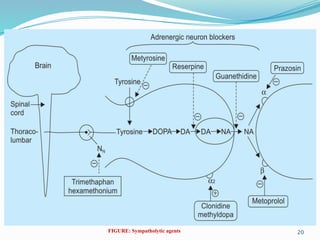
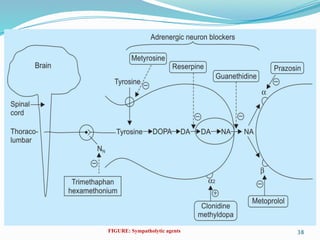
FIGURE: Sympatholytic agents
21
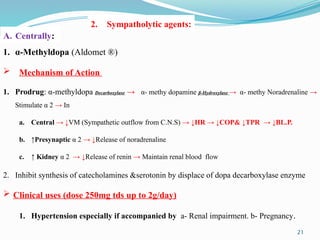
1. α-Methyldopa (Aldomet ®)
 Mechanism of Action
1. Prodrug: α-methyldopa Decarboxylase → α- methy dopamine β-Hydroxylase → α- methy Noradrenaline →
Stimulate α 2 → In
a. Central → ↓VM (Sympathetic outflow from C.N.S) → ↓HR → ↓COP& ↓TPR → ↓BL.P.
b. ↑Presynaptic α 2 → ↓Release of noradrenaline
c. ↑ Kidney α 2 → ↓Release of renin → Maintain renal blood flow
2. Inhibit synthesis of catecholamines &serotonin by displace of dopa decarboxylase enzyme
 Clinical uses (dose 250mg tds up to 2g/day)
1. Hypertension especially if accompanied by a- Renal impairment. b- Pregnancy.
A. Centrally:
2. Sympatholytic agents:
22
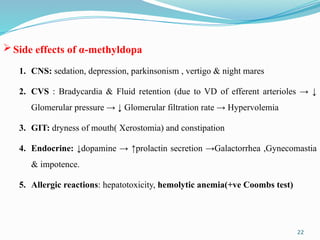
Side effects of α-methyldopa
1. CNS: sedation, depression, parkinsonism , vertigo & night mares
2. CVS : Bradycardia & Fluid retention (due to VD of efferent arterioles → ↓
Glomerular pressure → ↓ Glomerular filtration rate → Hypervolemia
3. GIT: dryness of mouth( Xerostomia) and constipation
4. Endocrine: ↓dopamine → ↑prolactin secretion →Galactorrhea ,Gynecomastia
& impotence.
5. Allergic reactions: hepatotoxicity, hemolytic anemia(+ve Coombs test)
23
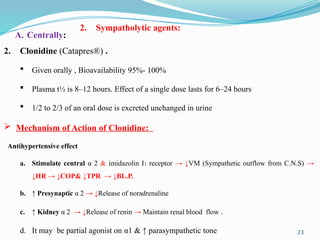
2. Clonidine (Catapres®) .
 Given orally , Bioavailability 95%- 100%
 Plasma t½ is 8–12 hours. Effect of a single dose lasts for 6–24 hours
 1/2 to 2/3 of an oral dose is excreted unchanged in urine
 Mechanism of Action of Clonidine:
Antihypertensive effect
a. Stimulate central α 2 & imidazolin I1 receptor → ↓VM (Sympathetic outflow from C.N.S) →
↓HR → ↓COP& ↓TPR → ↓BL.P.
b. ↑ Presynaptic α 2 → ↓Release of noradrenaline
c. ↑ Kidney α 2 → ↓Release of renin → Maintain renal blood flow .
d. It may be partial agonist on α1 & ↑ parasympathetic tone
A. Centrally:
2. Sympatholytic agents:
24
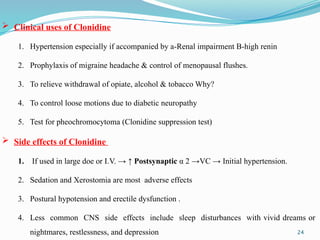
 Clinical uses of Clonidine
1. Hypertension especially if accompanied by a-Renal impairment B-high renin
2. Prophylaxis of migraine headache & control of menopausal flushes.
3. To relieve withdrawal of opiate, alcohol & tobacco Why?
4. To control loose motions due to diabetic neuropathy
5. Test for pheochromocytoma (Clonidine suppression test)
 Side effects of Clonidine
1. If used in large doe or I.V. → ↑ Postsynaptic α 2 →VC → Initial hypertension.
2. Sedation and Xerostomia are most adverse effects
3. Postural hypotension and erectile dysfunction .
4. Less common CNS side effects include sleep disturbances with vivid dreams or
nightmares, restlessness, and depression
25
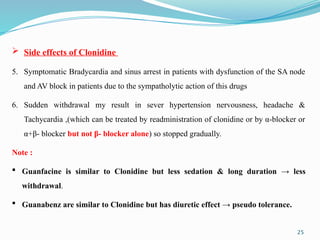
 Side effects of Clonidine
5. Symptomatic Bradycardia and sinus arrest in patients with dysfunction of the SA node
and AV block in patients due to the sympatholytic action of this drugs
6. Sudden withdrawal my result in sever hypertension nervousness, headache &
Tachycardia ,(which can be treated by readministration of clonidine or by α-blocker or
α+β- blocker but not β- blocker alone) so stopped gradually.
Note :
 Guanfacine is similar to Clonidine but less sedation & long duration → less
withdrawal.
 Guanabenz are similar to Clonidine but has diuretic effect → pseudo tolerance.
26
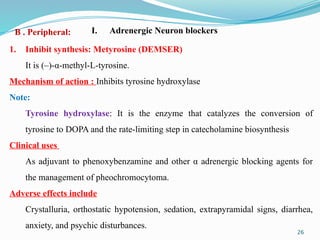
1. Inhibit synthesis: Metyrosine (DEMSER)
It is (–)-α-methyl-L-tyrosine.
Mechanism of action : Inhibits tyrosine hydroxylase
Note:
Tyrosine hydroxylase: It is the enzyme that catalyzes the conversion of
tyrosine to DOPA and the rate-limiting step in catecholamine biosynthesis
Clinical uses
As adjuvant to phenoxybenzamine and other α adrenergic blocking agents for
the management of pheochromocytoma.
Adverse effects include
Crystalluria, orthostatic hypotension, sedation, extrapyramidal signs, diarrhea,
anxiety, and psychic disturbances.
I. Adrenergic Neuron blockers
B . Peripheral:
27
B . Peripheral:
2. Inhibit storage: Reserpine
Alkaloid of rauwolfia serpentine root ,given orally , Can cross BBB ,so cause
parkinsonism or Psychic depression
 Mechanism of Action:
 Granular uptake of noradrenaline without affecting neural uptacke-1 → ↓ synthesis of
NA & serotonin → Depletion of catecholamine and serotonin central & peripheral.
This effect of reserpine end by synthesis of new granules (7-10 days)
 Action
1. ↓ Sympathetic tone & ↑Parasympathetic.
2. CNS; Sedation
3. CVS: hypotension & Bradycardia.
I. Adrenergic Neuron blockers
28
 Clinical uses of Reserpine
1. Mild &Moderate Hypertension. 2. Psychosis e.g. Schizophrenia
 Side effects of Reserpine
1. CNS: Sedation, mental depression, night mares& suicidal tendency. Parkinsonism&
Psychic depression(depletes dopamine in basal ganglia).
2. CVS: Bradycardia & Fluid retention ,flush &Nasal congestion
3. GIT : salivation, peptic ulcer & diarrhea.
4. Weight gain due to increase appetite & salt retention.
5. Endocrine: Feminization, libido, impotence& galactorrhea
 Contra-indication of Reserpine
1. Parkinsonism , Psychic depression& peptic ulcer
B. Peripheral:
I. Adrenergic Neuron blockers
 Mechanism of Action:
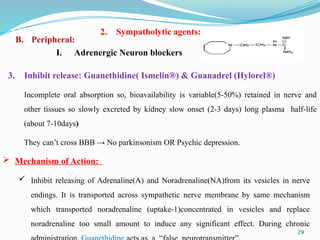
 Inhibit releasing of Adrenaline(A) and Noradrenaline(NA)from its vesicles in nerve
endings. It is transported across sympathetic nerve membrane by same mechanism
which transported noradrenaline (uptake-1)concentrated in vesicles and replace
noradrenaline too small amount to induce any significant effect. During chronic
3. Inhibit release: Guanethidine( Ismelin®) & Guanadrel (Hylorel®)
Incomplete oral absorption so, bioavailability is variable(5-50%) retained in nerve and
other tissues so slowly excreted by kidney slow onset (2-3 days) long plasma half-life
(about 7-10days)
They can’t cross BBB → No parkinsonism OR Psychic depression.
29
2. Sympatholytic agents:
30
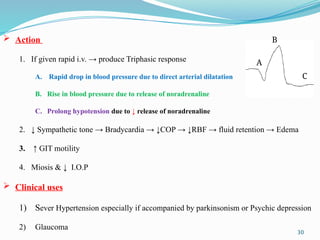
 Action
1. If given rapid i.v. → produce Triphasic response
A. Rapid drop in blood pressure due to direct arterial dilatation
B. Rise in blood pressure due to release of noradrenaline
C. Prolong hypotension due to ↓ release of noradrenaline
2. ↓ Sympathetic tone → Bradycardia → ↓COP → ↓RBF → fluid retention → Edema
3. ↑ GIT motility
4. Miosis & ↓ I.O.P
 Clinical uses
1) Sever Hypertension especially if accompanied by parkinsonism or Psychic depression
2) Glaucoma
A
B
C
 Side effects
1. Postural hypotension
2. Fatigue and lassitude.
3. Sexual dysfunction usually presents as delayed or retrograde ejaculation
4. Parotid pain & Diarrhea.
 Contra-indication
1. Hypertension due to Pheochromocytoma because it ↑ effect of
circulating catecholamine
3. Guanethidine(Ismelin®) & Guanadrel (Hylorel®)
I. Adrenergic Neuron blockers
31
32
II. Adrenergic receptor blockers:
1. 1-blockers :Prazosin, Terazosin & Doxazosin
Is effective orally undergoes first pass hepatic metabolism , bound to alph1 acid
glycoprotein, excretion by bile
 Mechanism of Action:
 Selective α1-blockers and have direct vasodilators effect.
 Decrease B.p. by dilating arteries (resistance vessels)and venules(capacitance
vessels)→ ↓ after and pre-load.
 Reduce plasma concentrations of triglycerides and total LDL cholesterol and
increase HDL cholesterol
B . Peripheral:
33
 Clinical uses of Prazosin
1. Hypertension not response to other agents (dose= 1mg raised to 20-30mg/d.
2. Hypertensive patients with benign prostatic hyperplasia
3. CHF (congestive heart failure).
4. Neck bladder obstruction in benign prostate hypertrophy not preferred Why
5. Peripheral vascular disease & Pheochromocytoma
 Side effects of Prazosin
1. Initial syncope attack (so start by low dose& better given at bedtime).
2. Nasal congestion ,Postural hypotension& Failure of ejaculation due to -blockers.
3. Headache , dizziness& salt retention.
34
II. Adrenergic receptor blockers:
2. -blockers: Propranolol(1,2 ) & Atenolol(1)
 Mechanism of Action:
 Negative inotropic effect → ↓ CO → ↓ BP
 ↓ Renin release, ↓ sympathetic outflow
 ↓ Release of noradrenaline & increase prostaglandin.
 Clinical uses(effect appear after 4weeks of continued use).
Mild &Moderate Hypertension specially in
1. Yong age due to either high renin or stress
2. Pheochromocytoma
3. Angina , arrhythmia ,hypertrophic cardiomyopathy or hyperthyroidism
35
 Side effects of - blockers
 1-blockers lead to decrease all the properties of the heart
 2-blockers
1. Worsen variant angina
2. Lung: Bronchospasm
3. Liver : ↓ Glycogenolysis , ↓ Hepatic blood flow by 30% → enzyme inhibitor.
4. Limbs: Cold Extremities & intermittent claudication
5. Metabolic: Hypoglycemia, ↑ Triglycerides & ↑ K+
6. CNS : Lipophilic -blocker sedation, depression, night mares& vivid dreams
7. Sudden stop → Death
36
II. Adrenergic receptor blockers:
3.  & -blockers: Labetalol & Carvedilol.
I. Labetalol
 Mechanism of action
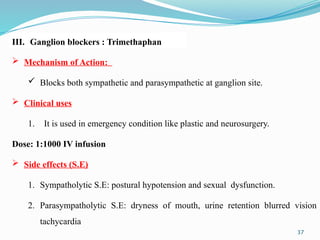
 α-block → V.D → ↓ T.P.R, 1 - block → ↓ renin,  2-partial agonist → V.D.
 It used in treatment of hypertension especially in Pheochromocytoma or PVD.
 Because of its capacity to block α1 adrenergic receptors, labetalol given intravenously can reduce blood
pressure sufficiently rapidly to be useful for the treatment of hypertensive emergencies
II. Carvedilol similar to Labetalol +anti-oxidant .It is approved for the treatment of
hypertension and symptomatic heart failure
Note: Nebivolol is a β1selective adrenergic antagonist that also promotes vasodilatation,
nebivolol augments arterial smooth muscle relaxation via NO
37
 Mechanism of Action:
 Blocks both sympathetic and parasympathetic at ganglion site.
 Clinical uses
1. It is used in emergency condition like plastic and neurosurgery.
Dose: 1:1000 IV infusion
 Side effects (S.E)
1. Sympatholytic S.E: postural hypotension and sexual dysfunction.
2. Parasympatholytic S.E: dryness of mouth, urine retention blurred vision
tachycardia
III. Ganglion blockers : Trimethaphan
38
FIGURE: Sympatholytic agents
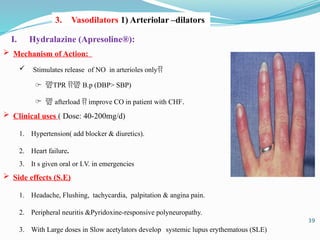
I. Hydralazine (Apresoline®):
 Mechanism of Action:
 Stimulates release of NO in arterioles only
̶ TPR  B.p (DBP> SBP)
̶  afterload  improve CO in patient with CHF.
 Clinical uses ( Dose: 40-200mg/d)
1. Hypertension( add blocker & diuretics).
2. Heart failure.
3. It s given oral or I.V. in emergencies
 Side effects (S.E)
1. Headache, Flushing, tachycardia, palpitation & angina pain.
2. Peripheral neuritis &Pyridoxine-responsive polyneuropathy.
3. With Large doses in Slow acetylators develops systemic lupus erythematous (SLE)
3. Vasodilators 1) Arteriolar –dilators
39
II. Minoxidil (Loniten®) : Prodrug  Minoxidil sulfate(active)
 Mechanism of Action:
 Very effective potent oral ,long acting direct Arterio-vasodilator
̶ TPR  B.p (DBP> SBP)
̶  afterload  improve CO in patient with CHF.
 Act by opening of K channels.
 Clinical uses( Dose: 5-10mg/d increased to 40mg/d)
1. Hypertension(Server, with renal insufficiency and in patient needing high dose of
hydralazine).should be combined with diuretic &beta-blocker.
2. Heart failure.
3. Topical in alopecia or baldness
 Side effects (S.E)
1. Headache, tachycardia, palpitation, Hypertrichosis angina pain & .lower limbs oedema.
40
41
III. Diazoxide (Hyperstat®): Similar to thiazide diuretics, but without diuretic effect
 Pharmacokinetics: its highly bound to plasma protein ,metabolized in liver excreted in
urine unchanged
 Mechanism of Action:
 Very effective potent parenteral ,long acting direct Arterio-vasodilator
 Opens K+ channel and makes stabilization of smooth muscle arterioles VDBP.
 Clinical uses( Dose: 50-150mg IV infusion).
1. Emergency Hypertension start with small dose then gradually increased WHY?
2. Treatment of insulinoma(orally).
 Side effects (S.E)
1. Excessive hypotensive, tachycardia, & angina pectoris.
2. Salt retention, hypokalemia, hyperglycemia, hyperuricemia &thrombophlebitis.
1. Arteriolar vasodilators
42
IV. Fenoldopam:
 Mechanism of Action:
 It is a dopamine(D1) agonist which dilates peripheral arterioles with
t1/2 10 minutes.
 Clinical uses( IV infusion).
1. Emergency Hypertension.
 Side effects (S.E)
1. Headache, tachycardia, flushing & IOP
3. Vasodilators 1) Arteriolar –dilators
43
I. Sodium nitropuresside(Nipride®):
 Mechanism of Action:
 Nitroprusside RBCs & Endothelium No ↑ Guanylate Cyclase (GC)
↑ cGMP  VD of both arterioles and venules.
 Clinical uses( Dose:0. 50-10µg /kg/min IV infusion).
1. Emergency Hypertension.
2. Emergency Heart failure.
3. Controlled hypotension during plastic & neurosurgery.
4. Acute aortic dissecting aneurysm(with B-blockers)
3. Mixed dilators
44
 Side effects of Sodium Nitroprusside
1. Sever hypotension &shock in large dose.
2. Sudden stop rebound hypertension.
3. Prolong use in old age  accumulation of cyanide  acidosis
& arrhythmia  death.
4. Teratogenic
45
 Classification of angiotensin converting enzymes inhibitors
ACE inhibitors can be classified into three broad groups based on chemical structure:
(1) Sulfhydryl group e.g. Captopril
(2) Dicarboxyl group e.g. Enalapril ,Lisinopril, Benazepril, Quinapril, Moexipril,
Ramipril, Trandolapril, Perindopril
(3) Phosphinate group e.g. Fosinopril.
1) Angiotensin Converting Enzymes Inhibitors
4. Renin Angiotensin system inhibitor
46
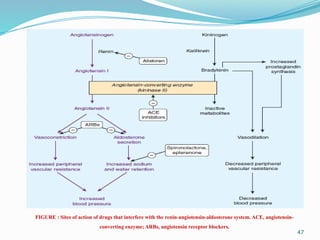
Mechanism Of Action of ACEI:
Inhibit Angiotensin Converting Enzyme(ACE) this lead to
1. Decrease conversion of Angiotensin I to Angiotensin II → ↓synthesis of Angiotensin II: →
 ↓Noradrenaline release from sympathetic nerve →Vasodilation
 ↓ Aldosterone → Na+ and water reabsorption and ↓ secretion of K+ and H+ in urine
 ↓ Hypertrophy &remodeling of heart and blood vessels
 ↑Increase release of renin & Angiotensin I
2. Inactivation of Bradykinin →↑ Bradykinin → Vasodilatation (Directly &by PGs)
47
FIGURE : Sites of action of drugs that interfere with the renin-angiotensin-aldosterone system. ACE, angiotensin-
converting enzyme; ARBs, angiotensin receptor blockers.
48
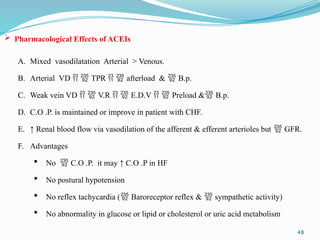
 Pharmacological Effects of ACEIs
A. Mixed vasodilatation Arterial > Venous.
B. Arterial VD   TPR   afterload &  B.p.
C. Weak vein VD   V.R   E.D.V   Preload & B.p.
D. C.O .P. is maintained or improve in patient with CHF.
E. ↑ Renal blood flow via vasodilation of the afferent & efferent arterioles but  GFR.
F. Advantages
 No  C.O .P. it may ↑ C.O .P in HF
 No postural hypotension
 No reflex tachycardia ( Baroreceptor reflex &  sympathetic activity)
 No abnormality in glucose or lipid or cholesterol or uric acid metabolism
49
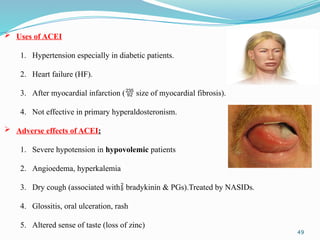
 Uses of ACEI
1. Hypertension especially in diabetic patients.
2. Heart failure (HF).
3. After myocardial infarction ( size of myocardial fibrosis).
4. Not effective in primary hyperaldosteronism.
 Adverse effects of ACEI:
1. Severe hypotension in hypovolemic patients
2. Angioedema, hyperkalemia
3. Dry cough (associated with bradykinin & PGs).Treated by NASIDs.
4. Glossitis, oral ulceration, rash
5. Altered sense of taste (loss of zinc)
50
 Contraindication of ACEI:
1. In 2nd
-3rd
trimesters pregnancy this lead to Fetal hypotension, renal failure
sometimes associated with fetal malformations or death
2. Bilateral renal artery stenosis this lead to Fetal renal failure.
 Drug interaction of ACEI:
1. (K+) with K-sparing diuretics, NSAIDs& β-Blockers
2. NSAIDs such as diclofenac sodium & Ketoprofen ( effect)
3. Na –depleting diuretics  initial hypotensive effect of ACEIs
51
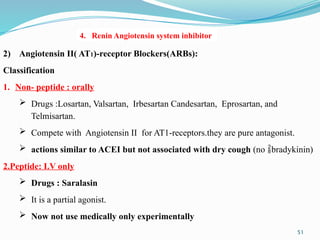
2) Angiotensin II( AT1)-receptor Blockers(ARBs):
Classification
1. Non- peptide : orally
 Drugs :Losartan, Valsartan, Irbesartan Candesartan, Eprosartan, and
Telmisartan.
 Compete with Angiotensin II for AT1-receptors.they are pure antagonist.
 actions similar to ACEI but not associated with dry cough (no bradykinin)
2.Peptide: I.V only
 Drugs : Saralasin
 It is a partial agonist.
 Now not use medically only experimentally
4. Renin Angiotensin system inhibitor
52
3) Direct Renin Inhibitor: Aliskiren
1. newest agent, introduced 2005, Expensive.
2. direct renin inhibitor →  production of angiotensin I
3. actions similar to ACEI but not associated with dry cough (no bradykinin)
4. less likely to cause angioedema, glossitis, oral ulceration, rash
5. adverse effects and contraindications similar to ACEIs/ARBs
6. used if cannot tolerate ACEIs or ARBs
7. poor bioavailability < 5%, may  [furosemide] (MOA unknown)
4. Renin Angiotensin system inhibitor
53
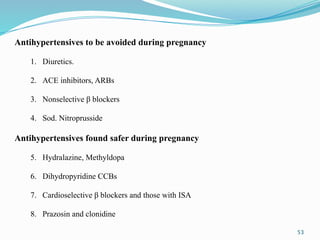
Antihypertensives to be avoided during pregnancy
1. Diuretics.
2. ACE inhibitors, ARBs
3. Nonselective β blockers
4. Sod. Nitroprusside
Antihypertensives found safer during pregnancy
5. Hydralazine, Methyldopa
6. Dihydropyridine CCBs
7. Cardioselective β blockers and those with ISA
8. Prazosin and clonidine
54
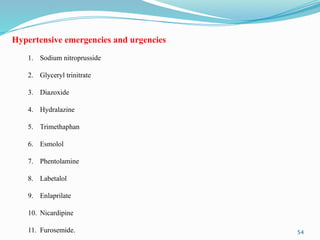
Hypertensive emergencies and urgencies
1. Sodium nitroprusside
2. Glyceryl trinitrate
3. Diazoxide
4. Hydralazine
5. Trimethaphan
6. Esmolol
7. Phentolamine
8. Labetalol
9. Enlaprilate
10. Nicardipine
11. Furosemide.
55
Thank You

Hypertension Lecture-5.pptx for pharmacy students

  • 1.
  • 2.
    2 Hypertension(HTN)  Introduction  Definition:Sustained elevation of systemic arterial blood pressure ≥ 140/90 Classification of hypertension 1. According to Etiology I. Primary Hypertension due to Environmental and genetic factors ,Primary or essential hypertension accounts for 90-95% of adult cases II. Secondary hypertension: small percentage of patients (2-10%) have a secondary cause. which has multiple etiologies, including renal, vascular, and endocrine causes.
  • 3.
  • 4.
    4 Category Systolic (mmHg) Diastolic (mm Hg) Risk Optimal BP < 120 AND < 80 None Borderline BP 140 AND 90 None Stage 1 (mild) 140 – 160 OR 90 - 100 Long-term Stage 2 (moderate) 160 – 180 OR 100 - 110 50% in 5 years Stage 3 (severe) 180 – 210 OR 110-120 40% in 2 years Stage 4 (Very severe) > 210 > 120 Emergency 2. According to blood pressure (Grade)1: 1.From the Joint National Committee on prevention, detection, evaluation, and treatment of high blood pressure. JAMA 2003;289:2560
  • 5.
    5  The classificationin previous table is based on the average of 2 or more readings taken at each of 2 or more visits after initial screening.  Sustained arterial hypertension damages blood vessels in kidney, heart, and brain, and leads to an increased incidence of renal failure, coronary disease, cardiac failure, and stroke. 3. According to type: BP Notes ‾ Mean arterial blood pressure(MABP)=DBP+1/3PP ‾ Pulse pressure(PP)=SBP-DBP ‾ Normal rang for MABP= 65-110
  • 6.
  • 7.
  • 8.
  • 9.
  • 10.
  • 11.
    11  Blood PressureRegulation: Physiology Frank's formula, BP regulation BP = CO x TPR CO = HR x SV  Baroreceptor reflex : oppose changes in BP, rapid, moment-to- moment BP adjustments  Renal system: Control of Na and H2O balance, responsible for long-term BP control
  • 12.
    12 FIGURE : Regulationof blood pressure. ECF = Extracellular fluid.
  • 13.
    13 FIGURE : Regulationof blood pressure by baroreceptor mechanism
  • 14.
    14 FIGURE : Regulationof blood pressure by renin angiotensin mechanism. ACE = Angiotensin converting enzyme
  • 15.
    15 Hormones which decreasearterial blood pressure Hormones which increase arterial blood pressure 1. Vasoactive intestinal polypeptide (VIP) 2. Bradykinin 3. Prostaglandin 4. Histamine 5. Acetylcholine 6. Atrial natriuretic peptide 7. Brain natriuretic peptide 8. C type natriuretic peptide 1. Adrenaline* 2. Noradrenaline 3. Thyroxine* 4. Aldosterone 5. Vasopressin 6. Angiotensin 7. Serotonin TABLE : Hormones involved in regulation of arterial blood pressure * Adrenaline and thyroxine increase systolic pressure but decrease diastolic pressure .
  • 16.
    16 Local vasodilators Localvasoconstrictors (Endothelins) Endothelins (ET) Metabolic products EDRF: 1. Nitric oxide 1. Carbon dioxide 2. Lactate 3. Hydrogen 4. Adenosine EDCF : 1. ET1 2. ET2 3. ET3 TABLE : Local substances involved in the regulation of arterial blood pressure
  • 17.
    17 Treatment of Hypertension A.Non-drug treatment (Life-style changes) 1. ↓Salt intake (2.5g/d → 1 g/d) 2. ↓Stress factors 3. Stop smoking 4. ↓Calorie intake, weight loss 5. ↓Alcohol consumption 6. ↓Caffeine intake 7. ↑Physical activity 8. Control of risk factors e.g. diabetes, hyperlipidemia etc.
  • 18.
    Classification of antihypertensiveagents 1. Diuretics 2. Sympatholytic agents A. Centrally 1) α2 agonist: Clonidine & -methyldopa 2) vasomotor center : Reserpine B. Peripherally I. Adrenergic Neuron blockers 1. Inhibit synthesis: Metyrosine 2. Inhibit storage :Reserpine 3. Inhibit release : Guanethidine III. Ganglion blockers  e.g. Trimethaphan  e.g. Hexamethonium 1) Thiazides diuretics 2) Loop diuretics 3) K-Retaining diuretics II. Adrenergic receptor blockers 1. -blockers : e.g. Prazosin 2. 1-blockers: e.g. Atenolol 3. 1&2-blockers: e.g. Propranolol 4.  & -blockers: e.g. Labetalol 3. Direct Vasodilators Treatment of Hypertension B. Pharmacotherapy: 18
  • 19.
    3. Vasodilators Classification ofantihypertensive agents 4. Renin Angiotensin system inhibitor 1) Arteriolar –dilators :Hydralazine Diazoxide Minoxidil 2) Venodilator dilators : Nitrates 3) Mixed dilators : Na+ Nitroprusside 5. Calcium channel blockers 1) Angiotensin converting enzyme inhibitors (ACEI) 3) Direct Renin Inhibitor 2) Angiotensin II (AT1) Receptor Blockers(ARBS) Captopril Enalapril Lisinopril Ramipril Perindopril Losartan Valsartan Irbesartan Candesartan Telmisartan Aliskiren 1) Phenyl alkaylamine :Verapamil 2) Benzodiazepine: Diltiazem 3) Dihydropyridine : amlodipine 19
  • 20.
  • 21.
    21 1. α-Methyldopa (Aldomet®)  Mechanism of Action 1. Prodrug: α-methyldopa Decarboxylase → α- methy dopamine β-Hydroxylase → α- methy Noradrenaline → Stimulate α 2 → In a. Central → ↓VM (Sympathetic outflow from C.N.S) → ↓HR → ↓COP& ↓TPR → ↓BL.P. b. ↑Presynaptic α 2 → ↓Release of noradrenaline c. ↑ Kidney α 2 → ↓Release of renin → Maintain renal blood flow 2. Inhibit synthesis of catecholamines &serotonin by displace of dopa decarboxylase enzyme  Clinical uses (dose 250mg tds up to 2g/day) 1. Hypertension especially if accompanied by a- Renal impairment. b- Pregnancy. A. Centrally: 2. Sympatholytic agents:
  • 22.
    22 Side effects ofα-methyldopa 1. CNS: sedation, depression, parkinsonism , vertigo & night mares 2. CVS : Bradycardia & Fluid retention (due to VD of efferent arterioles → ↓ Glomerular pressure → ↓ Glomerular filtration rate → Hypervolemia 3. GIT: dryness of mouth( Xerostomia) and constipation 4. Endocrine: ↓dopamine → ↑prolactin secretion →Galactorrhea ,Gynecomastia & impotence. 5. Allergic reactions: hepatotoxicity, hemolytic anemia(+ve Coombs test)
  • 23.
    23 2. Clonidine (Catapres®).  Given orally , Bioavailability 95%- 100%  Plasma t½ is 8–12 hours. Effect of a single dose lasts for 6–24 hours  1/2 to 2/3 of an oral dose is excreted unchanged in urine  Mechanism of Action of Clonidine: Antihypertensive effect a. Stimulate central α 2 & imidazolin I1 receptor → ↓VM (Sympathetic outflow from C.N.S) → ↓HR → ↓COP& ↓TPR → ↓BL.P. b. ↑ Presynaptic α 2 → ↓Release of noradrenaline c. ↑ Kidney α 2 → ↓Release of renin → Maintain renal blood flow . d. It may be partial agonist on α1 & ↑ parasympathetic tone A. Centrally: 2. Sympatholytic agents:
  • 24.
    24  Clinical usesof Clonidine 1. Hypertension especially if accompanied by a-Renal impairment B-high renin 2. Prophylaxis of migraine headache & control of menopausal flushes. 3. To relieve withdrawal of opiate, alcohol & tobacco Why? 4. To control loose motions due to diabetic neuropathy 5. Test for pheochromocytoma (Clonidine suppression test)  Side effects of Clonidine 1. If used in large doe or I.V. → ↑ Postsynaptic α 2 →VC → Initial hypertension. 2. Sedation and Xerostomia are most adverse effects 3. Postural hypotension and erectile dysfunction . 4. Less common CNS side effects include sleep disturbances with vivid dreams or nightmares, restlessness, and depression
  • 25.
    25  Side effectsof Clonidine 5. Symptomatic Bradycardia and sinus arrest in patients with dysfunction of the SA node and AV block in patients due to the sympatholytic action of this drugs 6. Sudden withdrawal my result in sever hypertension nervousness, headache & Tachycardia ,(which can be treated by readministration of clonidine or by α-blocker or α+β- blocker but not β- blocker alone) so stopped gradually. Note :  Guanfacine is similar to Clonidine but less sedation & long duration → less withdrawal.  Guanabenz are similar to Clonidine but has diuretic effect → pseudo tolerance.
  • 26.
    26 1. Inhibit synthesis:Metyrosine (DEMSER) It is (–)-α-methyl-L-tyrosine. Mechanism of action : Inhibits tyrosine hydroxylase Note: Tyrosine hydroxylase: It is the enzyme that catalyzes the conversion of tyrosine to DOPA and the rate-limiting step in catecholamine biosynthesis Clinical uses As adjuvant to phenoxybenzamine and other α adrenergic blocking agents for the management of pheochromocytoma. Adverse effects include Crystalluria, orthostatic hypotension, sedation, extrapyramidal signs, diarrhea, anxiety, and psychic disturbances. I. Adrenergic Neuron blockers B . Peripheral:
  • 27.
    27 B . Peripheral: 2.Inhibit storage: Reserpine Alkaloid of rauwolfia serpentine root ,given orally , Can cross BBB ,so cause parkinsonism or Psychic depression  Mechanism of Action:  Granular uptake of noradrenaline without affecting neural uptacke-1 → ↓ synthesis of NA & serotonin → Depletion of catecholamine and serotonin central & peripheral. This effect of reserpine end by synthesis of new granules (7-10 days)  Action 1. ↓ Sympathetic tone & ↑Parasympathetic. 2. CNS; Sedation 3. CVS: hypotension & Bradycardia. I. Adrenergic Neuron blockers
  • 28.
    28  Clinical usesof Reserpine 1. Mild &Moderate Hypertension. 2. Psychosis e.g. Schizophrenia  Side effects of Reserpine 1. CNS: Sedation, mental depression, night mares& suicidal tendency. Parkinsonism& Psychic depression(depletes dopamine in basal ganglia). 2. CVS: Bradycardia & Fluid retention ,flush &Nasal congestion 3. GIT : salivation, peptic ulcer & diarrhea. 4. Weight gain due to increase appetite & salt retention. 5. Endocrine: Feminization, libido, impotence& galactorrhea  Contra-indication of Reserpine 1. Parkinsonism , Psychic depression& peptic ulcer
  • 29.
    B. Peripheral: I. AdrenergicNeuron blockers  Mechanism of Action:  Inhibit releasing of Adrenaline(A) and Noradrenaline(NA)from its vesicles in nerve endings. It is transported across sympathetic nerve membrane by same mechanism which transported noradrenaline (uptake-1)concentrated in vesicles and replace noradrenaline too small amount to induce any significant effect. During chronic 3. Inhibit release: Guanethidine( Ismelin®) & Guanadrel (Hylorel®) Incomplete oral absorption so, bioavailability is variable(5-50%) retained in nerve and other tissues so slowly excreted by kidney slow onset (2-3 days) long plasma half-life (about 7-10days) They can’t cross BBB → No parkinsonism OR Psychic depression. 29 2. Sympatholytic agents:
  • 30.
    30  Action 1. Ifgiven rapid i.v. → produce Triphasic response A. Rapid drop in blood pressure due to direct arterial dilatation B. Rise in blood pressure due to release of noradrenaline C. Prolong hypotension due to ↓ release of noradrenaline 2. ↓ Sympathetic tone → Bradycardia → ↓COP → ↓RBF → fluid retention → Edema 3. ↑ GIT motility 4. Miosis & ↓ I.O.P  Clinical uses 1) Sever Hypertension especially if accompanied by parkinsonism or Psychic depression 2) Glaucoma A B C
  • 31.
     Side effects 1.Postural hypotension 2. Fatigue and lassitude. 3. Sexual dysfunction usually presents as delayed or retrograde ejaculation 4. Parotid pain & Diarrhea.  Contra-indication 1. Hypertension due to Pheochromocytoma because it ↑ effect of circulating catecholamine 3. Guanethidine(Ismelin®) & Guanadrel (Hylorel®) I. Adrenergic Neuron blockers 31
  • 32.
    32 II. Adrenergic receptorblockers: 1. 1-blockers :Prazosin, Terazosin & Doxazosin Is effective orally undergoes first pass hepatic metabolism , bound to alph1 acid glycoprotein, excretion by bile  Mechanism of Action:  Selective α1-blockers and have direct vasodilators effect.  Decrease B.p. by dilating arteries (resistance vessels)and venules(capacitance vessels)→ ↓ after and pre-load.  Reduce plasma concentrations of triglycerides and total LDL cholesterol and increase HDL cholesterol B . Peripheral:
  • 33.
    33  Clinical usesof Prazosin 1. Hypertension not response to other agents (dose= 1mg raised to 20-30mg/d. 2. Hypertensive patients with benign prostatic hyperplasia 3. CHF (congestive heart failure). 4. Neck bladder obstruction in benign prostate hypertrophy not preferred Why 5. Peripheral vascular disease & Pheochromocytoma  Side effects of Prazosin 1. Initial syncope attack (so start by low dose& better given at bedtime). 2. Nasal congestion ,Postural hypotension& Failure of ejaculation due to -blockers. 3. Headache , dizziness& salt retention.
  • 34.
    34 II. Adrenergic receptorblockers: 2. -blockers: Propranolol(1,2 ) & Atenolol(1)  Mechanism of Action:  Negative inotropic effect → ↓ CO → ↓ BP  ↓ Renin release, ↓ sympathetic outflow  ↓ Release of noradrenaline & increase prostaglandin.  Clinical uses(effect appear after 4weeks of continued use). Mild &Moderate Hypertension specially in 1. Yong age due to either high renin or stress 2. Pheochromocytoma 3. Angina , arrhythmia ,hypertrophic cardiomyopathy or hyperthyroidism
  • 35.
    35  Side effectsof - blockers  1-blockers lead to decrease all the properties of the heart  2-blockers 1. Worsen variant angina 2. Lung: Bronchospasm 3. Liver : ↓ Glycogenolysis , ↓ Hepatic blood flow by 30% → enzyme inhibitor. 4. Limbs: Cold Extremities & intermittent claudication 5. Metabolic: Hypoglycemia, ↑ Triglycerides & ↑ K+ 6. CNS : Lipophilic -blocker sedation, depression, night mares& vivid dreams 7. Sudden stop → Death
  • 36.
    36 II. Adrenergic receptorblockers: 3.  & -blockers: Labetalol & Carvedilol. I. Labetalol  Mechanism of action  α-block → V.D → ↓ T.P.R, 1 - block → ↓ renin,  2-partial agonist → V.D.  It used in treatment of hypertension especially in Pheochromocytoma or PVD.  Because of its capacity to block α1 adrenergic receptors, labetalol given intravenously can reduce blood pressure sufficiently rapidly to be useful for the treatment of hypertensive emergencies II. Carvedilol similar to Labetalol +anti-oxidant .It is approved for the treatment of hypertension and symptomatic heart failure Note: Nebivolol is a β1selective adrenergic antagonist that also promotes vasodilatation, nebivolol augments arterial smooth muscle relaxation via NO
  • 37.
    37  Mechanism ofAction:  Blocks both sympathetic and parasympathetic at ganglion site.  Clinical uses 1. It is used in emergency condition like plastic and neurosurgery. Dose: 1:1000 IV infusion  Side effects (S.E) 1. Sympatholytic S.E: postural hypotension and sexual dysfunction. 2. Parasympatholytic S.E: dryness of mouth, urine retention blurred vision tachycardia III. Ganglion blockers : Trimethaphan
  • 38.
  • 39.
    I. Hydralazine (Apresoline®): Mechanism of Action:  Stimulates release of NO in arterioles only ̶ TPR  B.p (DBP> SBP) ̶  afterload  improve CO in patient with CHF.  Clinical uses ( Dose: 40-200mg/d) 1. Hypertension( add blocker & diuretics). 2. Heart failure. 3. It s given oral or I.V. in emergencies  Side effects (S.E) 1. Headache, Flushing, tachycardia, palpitation & angina pain. 2. Peripheral neuritis &Pyridoxine-responsive polyneuropathy. 3. With Large doses in Slow acetylators develops systemic lupus erythematous (SLE) 3. Vasodilators 1) Arteriolar –dilators 39
  • 40.
    II. Minoxidil (Loniten®): Prodrug  Minoxidil sulfate(active)  Mechanism of Action:  Very effective potent oral ,long acting direct Arterio-vasodilator ̶ TPR  B.p (DBP> SBP) ̶  afterload  improve CO in patient with CHF.  Act by opening of K channels.  Clinical uses( Dose: 5-10mg/d increased to 40mg/d) 1. Hypertension(Server, with renal insufficiency and in patient needing high dose of hydralazine).should be combined with diuretic &beta-blocker. 2. Heart failure. 3. Topical in alopecia or baldness  Side effects (S.E) 1. Headache, tachycardia, palpitation, Hypertrichosis angina pain & .lower limbs oedema. 40
  • 41.
    41 III. Diazoxide (Hyperstat®):Similar to thiazide diuretics, but without diuretic effect  Pharmacokinetics: its highly bound to plasma protein ,metabolized in liver excreted in urine unchanged  Mechanism of Action:  Very effective potent parenteral ,long acting direct Arterio-vasodilator  Opens K+ channel and makes stabilization of smooth muscle arterioles VDBP.  Clinical uses( Dose: 50-150mg IV infusion). 1. Emergency Hypertension start with small dose then gradually increased WHY? 2. Treatment of insulinoma(orally).  Side effects (S.E) 1. Excessive hypotensive, tachycardia, & angina pectoris. 2. Salt retention, hypokalemia, hyperglycemia, hyperuricemia &thrombophlebitis. 1. Arteriolar vasodilators
  • 42.
    42 IV. Fenoldopam:  Mechanismof Action:  It is a dopamine(D1) agonist which dilates peripheral arterioles with t1/2 10 minutes.  Clinical uses( IV infusion). 1. Emergency Hypertension.  Side effects (S.E) 1. Headache, tachycardia, flushing & IOP 3. Vasodilators 1) Arteriolar –dilators
  • 43.
    43 I. Sodium nitropuresside(Nipride®): Mechanism of Action:  Nitroprusside RBCs & Endothelium No ↑ Guanylate Cyclase (GC) ↑ cGMP  VD of both arterioles and venules.  Clinical uses( Dose:0. 50-10µg /kg/min IV infusion). 1. Emergency Hypertension. 2. Emergency Heart failure. 3. Controlled hypotension during plastic & neurosurgery. 4. Acute aortic dissecting aneurysm(with B-blockers) 3. Mixed dilators
  • 44.
    44  Side effectsof Sodium Nitroprusside 1. Sever hypotension &shock in large dose. 2. Sudden stop rebound hypertension. 3. Prolong use in old age  accumulation of cyanide  acidosis & arrhythmia  death. 4. Teratogenic
  • 45.
    45  Classification ofangiotensin converting enzymes inhibitors ACE inhibitors can be classified into three broad groups based on chemical structure: (1) Sulfhydryl group e.g. Captopril (2) Dicarboxyl group e.g. Enalapril ,Lisinopril, Benazepril, Quinapril, Moexipril, Ramipril, Trandolapril, Perindopril (3) Phosphinate group e.g. Fosinopril. 1) Angiotensin Converting Enzymes Inhibitors 4. Renin Angiotensin system inhibitor
  • 46.
    46 Mechanism Of Actionof ACEI: Inhibit Angiotensin Converting Enzyme(ACE) this lead to 1. Decrease conversion of Angiotensin I to Angiotensin II → ↓synthesis of Angiotensin II: →  ↓Noradrenaline release from sympathetic nerve →Vasodilation  ↓ Aldosterone → Na+ and water reabsorption and ↓ secretion of K+ and H+ in urine  ↓ Hypertrophy &remodeling of heart and blood vessels  ↑Increase release of renin & Angiotensin I 2. Inactivation of Bradykinin →↑ Bradykinin → Vasodilatation (Directly &by PGs)
  • 47.
    47 FIGURE : Sitesof action of drugs that interfere with the renin-angiotensin-aldosterone system. ACE, angiotensin- converting enzyme; ARBs, angiotensin receptor blockers.
  • 48.
    48  Pharmacological Effectsof ACEIs A. Mixed vasodilatation Arterial > Venous. B. Arterial VD   TPR   afterload &  B.p. C. Weak vein VD   V.R   E.D.V   Preload & B.p. D. C.O .P. is maintained or improve in patient with CHF. E. ↑ Renal blood flow via vasodilation of the afferent & efferent arterioles but  GFR. F. Advantages  No  C.O .P. it may ↑ C.O .P in HF  No postural hypotension  No reflex tachycardia ( Baroreceptor reflex &  sympathetic activity)  No abnormality in glucose or lipid or cholesterol or uric acid metabolism
  • 49.
    49  Uses ofACEI 1. Hypertension especially in diabetic patients. 2. Heart failure (HF). 3. After myocardial infarction ( size of myocardial fibrosis). 4. Not effective in primary hyperaldosteronism.  Adverse effects of ACEI: 1. Severe hypotension in hypovolemic patients 2. Angioedema, hyperkalemia 3. Dry cough (associated with bradykinin & PGs).Treated by NASIDs. 4. Glossitis, oral ulceration, rash 5. Altered sense of taste (loss of zinc)
  • 50.
    50  Contraindication ofACEI: 1. In 2nd -3rd trimesters pregnancy this lead to Fetal hypotension, renal failure sometimes associated with fetal malformations or death 2. Bilateral renal artery stenosis this lead to Fetal renal failure.  Drug interaction of ACEI: 1. (K+) with K-sparing diuretics, NSAIDs& β-Blockers 2. NSAIDs such as diclofenac sodium & Ketoprofen ( effect) 3. Na –depleting diuretics  initial hypotensive effect of ACEIs
  • 51.
    51 2) Angiotensin II(AT1)-receptor Blockers(ARBs): Classification 1. Non- peptide : orally  Drugs :Losartan, Valsartan, Irbesartan Candesartan, Eprosartan, and Telmisartan.  Compete with Angiotensin II for AT1-receptors.they are pure antagonist.  actions similar to ACEI but not associated with dry cough (no bradykinin) 2.Peptide: I.V only  Drugs : Saralasin  It is a partial agonist.  Now not use medically only experimentally 4. Renin Angiotensin system inhibitor
  • 52.
    52 3) Direct ReninInhibitor: Aliskiren 1. newest agent, introduced 2005, Expensive. 2. direct renin inhibitor →  production of angiotensin I 3. actions similar to ACEI but not associated with dry cough (no bradykinin) 4. less likely to cause angioedema, glossitis, oral ulceration, rash 5. adverse effects and contraindications similar to ACEIs/ARBs 6. used if cannot tolerate ACEIs or ARBs 7. poor bioavailability < 5%, may  [furosemide] (MOA unknown) 4. Renin Angiotensin system inhibitor
  • 53.
    53 Antihypertensives to beavoided during pregnancy 1. Diuretics. 2. ACE inhibitors, ARBs 3. Nonselective β blockers 4. Sod. Nitroprusside Antihypertensives found safer during pregnancy 5. Hydralazine, Methyldopa 6. Dihydropyridine CCBs 7. Cardioselective β blockers and those with ISA 8. Prazosin and clonidine
  • 54.
    54 Hypertensive emergencies andurgencies 1. Sodium nitroprusside 2. Glyceryl trinitrate 3. Diazoxide 4. Hydralazine 5. Trimethaphan 6. Esmolol 7. Phentolamine 8. Labetalol 9. Enlaprilate 10. Nicardipine 11. Furosemide.
  • 55.

Editor's Notes

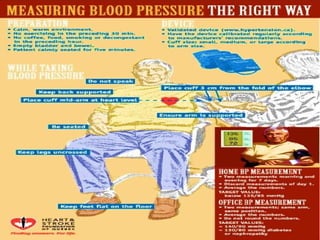
  • #6 Place cuff 3 cm from the fold of the elbow …preceding ,patient calmly seated for five minute ..validated device …discard ..be seated uncrossed Measuring blood pressure the right way
  • #32 Alfuzosin Tamsulosin Silodosinis an α1 receptor antagonist with some selectivity for α1A(andα1D) subtypes compared to the α1B Subtype The affinity of Prazosin for α1adrenergic receptors is ~1000-fold greater than that for α2adrenergicreceptors. Prazosin has similar potencies at α1A ,α1B,andα1D subtypes