02/10/2025 1
ANTIHYPERTENSIVE AGENTS
FOR NURSES, 2018
BY AZI BULUS SAMUEL (BNSC, MSC, RN, RM,….
02/10/2025 2
INTRODUCTION
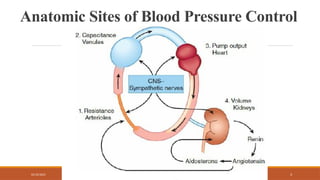
All antihypertensive agents act at one or more of the four anatomic control
sites depicted in slide 2 and produce their effects by interfering with normal
mechanisms of blood pressure regulation.
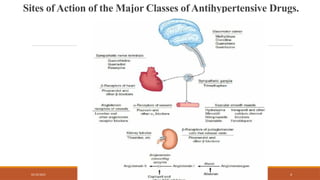
A useful classification of these agents categorizes them according to the
principal regulatory site or mechanism on which they act (Figure 11–3).
Because of their common mechanisms of action, drugs within each category
tend to produce a similar spectrum of toxicities.
02/10/2025 3
Anatomic Sites of Blood Pressure Control
02/10/2025 4
Sites of Action of the Major Classes of Antihypertensive Drugs.
02/10/2025 5
Classification of Antihypertensive
I. Diuretics, which lower blood pressure by depleting the body of sodium and reducing blood
volume and perhaps by other mechanisms.
II. Sympathoplegic agents, which lower blood pressure by reducing peripheral vascular
resistance, inhibiting cardiac function, and increasing venous pooling in capacitance vessels.
These agents are further subdivided according to their putative sites of action in the
sympathetic reflex arc.
III. Direct vasodilators, which reduce pressure by relaxing vascular smooth muscle, thus
dilating resistance vessels and—to varying degrees—increasing capacitance as well.
IV. Agents that block production or action of angiotensin and thereby reduce peripheral
vascular resistance and (potentially) blood volume.
02/10/2025 6
DRUGS THATALTER SODIUM & WATER BALANCE
Dietary sodium restriction has been known for many years to decrease
blood pressure in hypertensive patients.
With the advent of diuretics, sodium restriction was thought to be less
important.
However, there is now general agreement that dietary control of blood
pressure is a relatively nontoxic therapeutic measure and may even be
preventive.
Even modest dietary sodium restriction lowers blood pressure (though
to varying extents) in many hypertensive persons.
02/10/2025 7
Mechanisms of Action & Hemodynamic Effects of Diuretics
Diuretics lower blood pressure primarily by depleting body sodium stores.
Initially, diuretics reduce blood pressure by reducing blood volume and cardiac
output; peripheral vascular resistance may increase.
After 6–8 weeks, cardiac output returns toward normal while peripheral vascular
resistance declines.
Sodium is believed to contribute to vascular resistance by increasing vessel
stiffness and neural reactivity, possibly related to altered sodium-calcium
exchange with a resultant increase in intracellular calcium.
These effects are reversed by diuretics or dietary sodium restriction.
02/10/2025 8
Mechanisms of Action & Hemodynamic Effects of Diuretics…
Diuretics are effective in lowering blood pressure by 10-5 mm Hg in most patients.
In more severe hypertension, diuretics are used in combination with
sympathoplegic and vasodilator drugs to control the tendency toward sodium
retention caused by these agents.
Vascular responsiveness; i. e, the ability to either constrict or dilate is diminished
by sympathoplegic and vasodilator drugs, so that the vasculature behaves like an
inflexible tube.
As a consequence, blood pressure becomes exquisitely sensitive to blood volume.
02/10/2025 9
Use of Diuretics
Thiazide diuretics are appropriate for most patients with mild or moderate hypertension
and normal renal and cardiac function.
Chlorthalidone may be more effective than hydrochlorothiazide because it has a longer
half-life.
More powerful diuretics (eg, those acting on the loop of Henle) such as furosemide are
necessary in:
 severe hypertension,
when multiple drugs with sodium-retaining properties are used;
in renal insufficiency,
when glomerular filtration rate is less than 30–40 mL/min; and
in cardiac failure or cirrhosis, in which sodium retention is marked.
02/10/2025 10
Use of Diuretics
Potassium-sparing diuretics are useful both to avoid excessive potassium
depletion and to enhance the natriuretic effects of other diuretics.
Aldosterone receptor antagonists in particular also have a favorable effect on
cardiac function in people with heart failure.
Although thiazide diuretics are more natriuretic at higher doses (up to 100-200
mg of hydrochlorothiazide), when used as a single agent, lower doses (25-50 mg)
exert as much antihypertensive effect as do higher doses.
In contrast to thiazides, the blood pressure response to loop diuretics continues to
increase at doses many times greater than the usual therapeutic dose.
02/10/2025 11
Toxicity of Diuretics
In the treatment of hypertension, the most common adverse effect of diuretics
(except for potassium-sparing diuretics) is potassium depletion- hypokalaemia
Hypokalaemia may be hazardous in persons taking digitalis, those who have
chronic arrhythmias, or those with acute myocardial infarction or left ventricular
dysfunction.
Diuretics may also cause magnesium depletion, impair glucose tolerance, and
increase serum lipid concentrations.
02/10/2025 12
Toxicity of Diuretics
Diuretics increase uric acid concentrations and may precipitate gout. The use of
low doses minimizes these adverse metabolic effects without impairing the
antihypertensive action.
Potassium-sparing diuretics may produce hyperkalemia, particularly in patients
with renal insufficiency and those taking ACE inhibitors or angiotensin receptor
blockers; spironolactone (a steroid) is associated with gynecomastia.
02/10/2025 13
DRUGS THATALTER SYMPATHETIC NERVOUS SYSTEM FUNCTION
In many patients, hypertension is initiated and sustained at least in part by
sympathetic neural activation.
In patients with moderate to severe hypertension, most effective drug regimens
include an agent that inhibits function of the sympathetic nervous system.
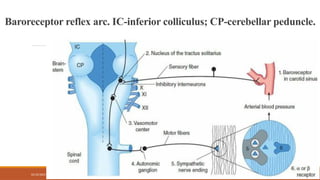
Drugs in this group are classified according to the site at which they impair the
sympathetic reflex arc as shown in the next slide.
This neuroanatomic classification explains prominent differences in
cardiovascular effects of drugs and allows the clinician to predict interactions of
these drugs with one another and with other drugs.
02/10/2025 14
Baroreceptor reflex arc. IC-inferior colliculus; CP-cerebellar peduncle.
02/10/2025 15
The subclasses of sympathoplegic drugs exhibit different patterns of potential toxicity.
Drugs that lower blood pressure by actions on the central nervous system tend to cause sedation and
mental depression and may produce disturbances of sleep, including nightmares.
Drugs that act by inhibiting transmission through autonomic ganglia (ganglion blockers) produce
toxicity from inhibition of parasympathetic regulation, in addition to profound sympathetic blockade
and are no longer used.
Drugs that act chiefly by reducing release of norepinephrine from sympathetic nerve endings cause
effects that are similar to those of surgical sympathectomy, including inhibition of ejaculation, and
hypotension that is increased by upright posture and after exercise.
Drugs that block postsynaptic adrenoceptors produce a more selective spectrum of effects depending
on the class of receptor to which they bind.
Sympathoplegic antihypertensive drugs are most effective when used concomitantly with a diuretic.
02/10/2025 16
CENTRALLYACTING SYMPATHOPLEGIC DRUGS
Centrally acting sympathoplegic drugs were once widely used in the treatment of
hypertension.
02/10/2025 17
Mechanisms and Sites of Action
These agents reduce sympathetic outflow from vasomotor centers in
the brainstem but allow these centers to retain or even increase their
sensitivity to baroreceptor control.
Accordingly, the antihypertensive and toxic actions of these drugs
are generally less dependent on posture than are the effects of drugs
that act directly on peripheral sympathetic neurons.
02/10/2025 18
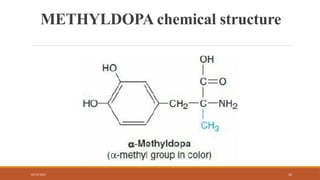
Methyldopa (L-α-methyl-3, 4-dihydroxyphenylalanine)
Is an analog of L-dopa and is converted to α-methyldopamine and α-methylnorepinephrine; this
pathway directly parallels the synthesis of norepinephrine from dopa illustrated in Figure 6–5.
Alpha-methylnorepinephrine is stored in adrenergic nerve vesicles, where it stoichiometrically replaces
norepinephrine, and is released by nerve stimulation to interact with postsynaptic adrenoceptors.
However, this replacement of norepinephrine by a false transmitter in peripheral neurons is not
responsible for methyldopa’s antihypertensive effect, because the α-methylnorepinephrine released is an
effective agonist at the α adrenoceptors that mediate peripheral sympathetic constriction of arterioles
and venules.
In fact, methyldopa’s antihypertensive action appears to be due to stimulation of central α
adrenoceptors by α-methylnorepinephrine or α-methyldopamine.
02/10/2025 19
The antihypertensive action of clonidine, a 2-imidazoline derivative, was discovered in the course of testing the drug
for use as a nasal decongestant. After intravenous injection, clonidine produces a brief rise in blood pressure followed by
more prolonged hypotension. The pressor response is due to direct stimulation of α adrenoceptors in arterioles. The
drug is
classified as a partial agonist at α receptors because it also inhibits pressor effects of other α agonists.
Considerable evidence indicates that the hypotensive effect of clonidine is exerted at α adrenoceptors in the medulla of
the brain. In animals, the hypotensive effect of clonidine is prevented by central administration of α antagonists.
Clonidine
reduces sympathetic and increases parasympathetic tone, resulting in blood pressure lowering and bradycardia. The
reduction in pressure is accompanied by a decrease in circulating catecholamine levels. These observations suggest that
clonidine sensitizes brainstem vasomotor centers to inhibition by baroreflexes.
02/10/2025 20
Thus, studies of clonidine and methyldopa suggest that normal regulation of blood pressure involves central adrenergic
neurons that modulate baroreceptor reflexes. Clonidine and α-methylnorepinephrine bind more tightly to α2 than to α1
adrenoceptors. As noted in Chapter 6, α2 receptors are located on presynaptic adrenergic neurons as well as some
postsynaptic sites. It is possible that clonidine and α-methylnorepinephrine act in the brain to reduce norepinephrine release
onto relevant receptor sites. Alternatively, these drugs may act on postsynaptic α2 adrenoceptors to inhibit activity of
appropriate neurons. Finally, clonidine also binds to a nonadrenoceptor site, the imidazoline receptor, which may also
mediate antihypertensive effects. Methyldopa and clonidine produce slightly different hemodynamic effects: clonidine lowers
heart rate and cardiac
output more than does methyldopa. This difference suggests that these two drugs do not have identical sites of action. They
may act primarily on different populations of neurons in the vasomotor centers of the brainstem.
Guanabenz and guanfacine are centrally active antihypertensive drugs that share the central α-adrenoceptorstimulating
effects of clonidine. They do not appear to offer any advantages over clonidine and are rarely used.
02/10/2025 21
METHYLDOPA
Methyldopa was widely used in the past but is now used primarily for
hypertension during pregnancy.
It lowers blood pressure chiefly by reducing peripheral vascular resistance, with
a variable reduction in heart rate and cardiac output.
Most cardiovascular reflexes remain intact after administration of methyldopa,
and blood pressure reduction is not markedly dependent on posture.
Postural (orthostatic) hypotension sometimes occurs, particularly in volume-
depleted patients.
One potential advantage of methyldopa is that it causes reduction in renal
vascular resistance.
02/10/2025 22
METHYLDOPA chemical structure
02/10/2025 23
Pharmacokinetics & Dosage
Methyldopa enters the brain via an aromatic amino acid transporter.
The usual oral dose of methyldopa produces its maximal antihypertensive
effect in 4-6 hours, and the effect can persist for up to 24 hours.
Because the effect depends on accumulation and storage of a metabolite (α-
methylnorepinephrine) in the vesicles of nerve endings, the action persists after
the parent drug has disappeared from the circulation.
02/10/2025 24
Toxicity
The most common undesirable effect of methyldopa is sedation, particularly at the onset of treatment.
With long-term therapy, patients may complain of persistent mental lassitude and impaired mental concentration.
Nightmares, mental depression, vertigo, and extrapyramidal signs may occur but are relatively infrequent.
Lactation, associated with increased prolactin secretion, can occur both in men and in women treated with
methyldopa. This toxicity is probably mediated by inhibition of dopaminergic mechanisms in the hypothalamus.
Other important adverse effects of methyldopa are development of a positive Coombs test (occurring in 10–20%
of patients undergoing therapy for longer than 12 months), which sometimes makes cross-matching blood for
transfusion difficult and rarely is associated with hemolytic anemia, as well as hepatitis and drug fever.
Discontinuation of the drug usually results in prompt reversal of these abnormalities.
02/10/2025 25
CLONIDINE
Blood pressure lowering by clonidine results from reduction of cardiac
output due to decreased heart rate and relaxation of capacitance vessels, as
well as a reduction in peripheral vascular resistance.
Reduction in arterial blood pressure by clonidine is accompanied by
decreased renal vascular resistance and maintenance of renal blood flow.
As with methyldopa, clonidine reduces blood pressure in the supine
position and only rarely causes postural hypotension.
Pressor effects of clonidine are not observed after ingestion of therapeutic
doses of clonidine, but severe hypertension can complicate a massive
overdose.
02/10/2025 26
Pharmacokinetics & Dosage
Clonidine is lipid-soluble and rapidly enters the brain from the
circulation.
Because of its relatively short half-life and the fact that its
antihypertensive effect is directly related to blood concentration, oral
clonidine must be given twice a day (or as a patch, below) to maintain
smooth blood pressure control.
However, as is not the case with methyldopa, the dose-response
curve of clonidine is such that increasing doses are more effective
(but also more toxic).
02/10/2025 27
A transdermal preparation of clonidine that reduces blood pressure for 7 days after a single
application is also available.
This preparation appears to produce less sedation than clonidine tablets but is often associated
with local skin reactions.
02/10/2025 28
Toxicity
Dry mouth and sedation are common. Both effects are centrally mediated and
dose-dependent and coincide temporally with the drug’s antihypertensive effect.
Clonidine should not be given to patients who are at risk for mental depression
and should be withdrawn if depression occurs during therapy.
Concomitant treatment with tricyclic antidepressants may block the
antihypertensive effect of clonidine.
The interaction is believed to be due to α-adrenoceptor-blocking actions of the
tricyclics.
02/10/2025 29
Withdrawal of clonidine after protracted use, particularly with high dosages (more than 1 mg/d), can result in
lifethreatening hypertensive crisis mediated by increased sympathetic nervous activity.
Patients exhibit nervousness, tachycardia, headache, and sweating after omitting one or two doses of the drug.
Because of the risk of severe hypertensive crisis when clonidine is suddenly withdrawn, all patients who take
clonidine should be warned of the possibility.
If the drug must be stopped, it should be done gradually while other antihypertensive agents are being substituted.
Treatment of the hypertensive crisis consists of reinstitution of clonidine therapy or administration of α- and β-
adrenoceptor-blocking agents.
02/10/2025 30
GANGLION-BLOCKING AGENTS
Historically, drugs that block activation of postganglionic autonomic neurons by acetylcholine were among the first agents
used in the treatment of hypertension. Most such drugs are no longer available clinically because of intolerable toxicities
related to their primary action (see below).
Ganglion blockers competitively block nicotinic cholinoceptors on postganglionic neurons in both sympathetic and
parasympathetic ganglia. In addition, these drugs may directly block the nicotinic acetylcholine channel, in the same fashion
as neuromuscular nicotinic blockers.
The adverse effects of ganglion blockers are direct extensions of their pharmacologic effects. These effects include both
sympathoplegia (excessive orthostatic hypotension and sexual dysfunction) and parasympathoplegia (constipation, urinary
retention, precipitation of glaucoma, blurred vision, dry mouth, etc). These severe toxicities are the major reason for the
abandonment of ganglion blockers for the therapy of hypertension.
02/10/2025 31
ADRENERGIC NEURON-BLOCKING AGENTS
These drugs lower blood pressure by preventing normal physiologic release of
norepinephrine from postganglionic sympathetic neurons.
02/10/2025 32
Guanethidine
In high enough doses, guanethidine can produce profound sympathoplegia. The
resulting high maximal efficacy of this agent made it the mainstay of outpatient
therapy of severe hypertension for many years.
For the same reason, guanethidine can produce all of the toxicities expected from
“pharmacologic sympathectomy,” including marked postural hypotension,
diarrhea, and impaired ejaculation.
Because of these adverse effects, guanethidine is now rarely used. Guanethidine
is too polar to enter the central nervous system.
As a result, this drug has none of the central effects seen with many of the other
antihypertensive agents described in this chapter.
02/10/2025 33
Mechanism and Sites of Action
Guanethidine inhibits the release of norepinephrine from sympathetic nerve endings (see Figure 6–4). This effect is
probably responsible for most of the sympathoplegia that occurs in patients. Guanethidine is transported across the
sympathetic nerve membrane by the same mechanism that transports norepinephrine itself (NET, uptake 1), and
uptake is
essential for the drug’s action. Once guanethidine has entered the nerve, it is concentrated in transmitter vesicles,
where it
replaces norepinephrine. Because it replaces norepinephrine, the drug causes a gradual depletion of norepinephrine
stores
in the nerve ending.
02/10/2025 34
Because neuronal uptake is necessary for the hypotensive activity of guanethidine, drugs that block the
catecholamine uptake process or displace amines from the nerve terminal block its effects.
These include cocaine, amphetamine, tricyclic antidepressants, phenothiazines, and phenoxybenzamine.
02/10/2025 35
Pharmacokinetics and Dosage
Because of guanethidine’s long half-life (5 days), the onset of sympathoplegia is gradual (maximal effect in 1–2
weeks), and sympathoplegia persists for a comparable period after cessation of therapy.
The dose should not ordinarily be increased at intervals shorter than 2 weeks.
02/10/2025 36
Toxicity
Therapeutic use of guanethidine is often associated with symptomatic postural hypotension and hypotension
following exercise, particularly when the drug is given in high doses.
Guanethidine-induced sympathoplegia in men may be associated with delayed or retrograde ejaculation (into the
bladder).
Guanethidine commonly causes diarrhea, which results from increased gastrointestinal motility due to
parasympathetic predominance in controlling the activity of intestinal smooth muscle.
Interactions with other drugs may complicate guanethidine therapy. Sympathomimetic agents, at doses available in
over-the-counter cold preparations, can produce hypertension in patients taking guanethidine.
Similarly, guanethidine can produce hyper-tensive crisis by releasing catecholamines in patients with
pheochromocytoma.
When tricyclic antidepressants are administered to patients taking guanethidine, the drug’s antihypertensive effect is
attenuated, and severe hypertension may follow.
02/10/2025 37
Reserpine
Reserpine, an alkaloid extracted from the roots of an Indian plant, Rauwolfia serpentina, was
one of the first effective drugs used on a large scale in the treatment of hypertension.
At present, it is rarely used owing to its adverse effects.
02/10/2025 38
Mechanism and Sites of Action
Reserpine blocks the ability of aminergic transmitter vesicles to take up and store biogenic amines, probably by
interfering with the vesicular membrane-associated transporter (VMAT, see Figure 6–4).
This effect occurs throughout the body, resulting in depletion of norepinephrine, dopamine, and serotonin in both
central and peripheral neurons.
Chromaffin granules of the adrenal medulla are also depleted of catecholamines, although to a lesser extent than are
the vesicles of vesicular membranes for many days.
02/10/2025 39
Depletion of peripheral amines probably accounts for much of the beneficial antihypertensive effect of reserpine,
but a central component cannot be ruled out.
Reserpine readily enters the brain, and depletion of cerebral amine stores causes sedation, mental depression, and
parkinsonism symptoms.
At lower doses used for treatment of mild hypertension, reserpine lowers blood pressure by a combination of
decreased cardiac output and decreased peripheral vascular resistance.
02/10/2025 40
Toxicity
At the low doses usually administered, reserpine produces little postural hypotension.
Most of the unwanted effects of reserpine result from actions on the brain or gastrointestinal tract.
High doses of reserpine characteristically produce sedation, lassitude, nightmares, and severe mental depression;
occasionally, these occur even in patients receiving low doses (0.25 mg/d).
Much less frequently, ordinary low doses of reserpine produce extrapyramidal effects resembling Parkinson’s
disease, probably as a result of dopamine depletion in the corpus striatum.
02/10/2025 41
Although these central effects are uncommon, it should be stressed that they may occur at any
time, even after months of uneventful treatment.
Patients with a history of mental depression should not receive reserpine, and the drug should
be stopped if depression appears.
Reserpine rather often produces mild diarrhea and gastrointestinal cramps and increases gastric
acid secretion.
The drug should not be given to patients with a history of peptic ulcer.
02/10/2025 42
BETA-ADRENOCEPTOR-BLOCKING AGENTS
Of the large number of β blockers tested, most have been shown to be effective
in lowering blood pressure.
The pharmacologic properties of several of these agents differ in ways that may
confer therapeutic benefits in certain clinical situations.
02/10/2025 43
Propranolol
Propranolol was the first β blocker shown to be effective in hyper-tension and
ischemic heart disease. Propranolol has now been largely replaced by
cardioselective β blockers such as metoprolol and atenolol.
All β-adrenoceptor-blocking agents are useful for lowering blood pressure in mild
to moderate hypertension.
In severe hypertension, β blockers are especially useful in preventing the reflex
tachycardia that often results from treatment with direct vasodilators.
Beta blockers have been shown to reduce mortality after a myocardial infarction
and some also reduce mortality in patients with heart failure; they are particularly
advantageous for treating hypertension in patients with these conditions.
02/10/2025 44
Mechanism and Sites of Action
Propranolol’s efficacy in treating hypertension as well as most of its toxic effects result from nonselective β
blockade.
Propranolol decreases blood pressure primarily as a result of a decrease in cardiac output.
Other β blockers may decrease cardiac output or decrease peripheral vascular resistance to various degrees,
depending on cardioselectivity and partial agonist activities.
02/10/2025 45
Propranolol inhibits the stimulation of renin production by catecholamines (mediated by β1 receptors).
It is likely that propranolol’s effect is due in part to depression of the renin-angiotensin-aldosterone system.
Although most effective in patients with high plasma renin activity, propranolol also reduces blood pressure in
hypertensive patients with normal or even low renin activity.
Beta blockers might also act on peripheral presynaptic β adrenoceptors to reduce sympathetic vasoconstrictor
nerve activity.
In mild to moderate hypertension, propranolol produces a significant reduction in blood pressure without
prominent postural hypotension.
02/10/2025 46
Pharmacokinetics and Dosage
Resting bradycardia and a reduction in the heart rate during exercise
are indicators of propranolol’s β- blocking effect, and changes in
these parameters may be used as guides for regulating dosage.
Propranolol can be administered twice daily, and slow-release once-
daily preparations are available.
02/10/2025 47
Toxicity
The principal toxicities of propranolol result from blockade of cardiac, vascular, or bronchial β receptors.
The most important of these predictable extensions of the β1-blocking action occur in patients with brady-cardia
or cardiac conduction disease, and those of the β2-blocking action occur in patients with asthma, peripheral
vascular insufficiency, and diabetes.
When β blockers are discontinued after prolonged regular use, some patients experience a withdrawal syndrome,
manifested by nervousness, tachycardia, increased intensity of angina, and increase of blood pressure.
Myocardial infarction has been reported in a few patients. Although the incidence of these complications is
probably low, β blockers should not be discontinued abruptly.
The withdrawal syndrome may involve upregulation or supersensitivity of β adrenoceptors.
02/10/2025 48
Metoprolol & Atenolol
Metoprolol and atenolol, which are cardioselective, are the most widely used β blockers in the
treatment of hypertension.
Metoprolol is approximately equipotent to propranolol in inhibiting stimulation of β1
adrenoceptors such as those in the heart but 50- to 100-fold less potent than propranolol in
blocking β2 receptors.
Relative cardioselectivity is advantageous in treating hypertensive patients who also suffer from
asthma, diabetes, or peripheral vascular disease.
Although cardioselectivity is not complete, metoprolol causes less bronchial constriction than
propranolol at doses that produce equal inhibition of β1-adrenoceptor responses. Metoprolol is
extensively metabolized by CYP2D6 with high first-pass metabolism.
The drug has a relatively short half-life of 4–6 hours, but the extended-release preparation can be
dosed once daily (Table 11–2).
02/10/2025 49
Sustained-release metoprolol is effective in reducing mortality from heart failure and is
particularly useful in patients with hypertension and heart failure.
Atenolol is not extensively metabolized and is excreted primarily in the urine with a half-life of
6 hours; it is usually dosed once daily.
Atenolol is reported to be less effective than metoprolol in preventing the complications of
hypertension.
A possible reason for this difference is that once-daily dosing does not maintain adequate
blood levels of atenolol.
The usual dosage is 50–100 mg/d. Patients with reduced renal function should receive lower
doses.
02/10/2025 50
Nadolol, Carteolol, Betaxolol, & Bisoprolol
Nadolol and carteolol, nonselective β-receptor antagonists, are not appreciably metabolized and are excreted to
a considerable extent in the urine.
Betaxolol and bisoprolol are β1-selective blockers that are primarily metabolized in the liver but have long half-
lives.
Because of these relatively long half-lives, these drugs can be administered once daily.
Nadolol is usually begun at a dosage of 40 mg/d, carteolol at 2.5 mg/d, betaxolol at 10 mg/d, and bisoprolol at 5
mg/d.
Increases in dosage to obtain a satisfactory therapeutic effect should take place no more often than every 4 or 5
days.
Patients with reduced renal function should receive correspondingly reduced doses of nadolol and carteolol.
02/10/2025 51
Pindolol, Acebutolol, & Penbutolol
Pindolol, acebutolol, and penbutolol are partial agonists, ie, β blockers with some
intrinsic sympathomimetic activity.
They lower blood pressure by decreasing vascular resistance and appear to
depress cardiac output or heart rate less than other β blockers, perhaps because of
significantly greater agonist than antagonist effects at β2 receptors.
This may be particularly beneficial for patients with bradyarrhythmias or
peripheral vascular disease.
Daily doses of pindolol start at 10 mg; of acebutolol, at 400 mg; and of
penbutolol, at 20 mg.
02/10/2025 52
Labetalol, Carvedilol, & Nebivolol
These drugs have both β-blocking and vasodilating effects. Labetalol is formulated as a racemic mixture of four
isomers (it has two centers of asymmetry).
Two of these isomers—the (S, S)- and (R,S)-isomers—are relatively inactive, a third (S,R)- is a potent α blocker,
and the last (R,R)- is a potent β blocker.
Labetalol has a 3:1 ratio of β:α antagonism after oral dosing.
Blood pressure is lowered by reduction of systemic vascular resistance (via α blockade) without significant
alteration in heart rate or cardiac output.
Because of its combined α- and β-blocking activity, labetalol is useful in treating the hypertension of
pheochromocytoma and hypertensive emergencies.
Oral daily doses of labetalol range from 200 to 2400 mg/d. Labetalol is given as repeated intravenous bolus
injections of 20–80 mg to treat hypertensive emergencies.
02/10/2025 53
Carvedilol, like labetalol, is administered as a racemic mixture. The S(–) isomer is
a nonselective β-adrenoceptor blocker, but both S(–) and R(+) isomers have
approximately equal a-blocking potency.
The isomers are stereoselectively metabolized in the liver, which means that their
elimination half-lives may differ.
The average half-life is 7–10 hours.
The usual starting dosage of carvedilol for ordinary hypertension is 6.25 mg twice
daily.
Carvedilol reduces mortality in patients with heart failure and is therefore
particularly useful in patients with both heart failure and hypertension.
02/10/2025 54
Nebivolol is a β1-selective blocker with vasodilating properties that are not mediated by α
blockade. d-Nebivolol has highly selective β1 blocking effects, while the l-isomer causes
vasodilation; the drug is marketed as a racemic mixture.
The vasodilating effect may be due to an increase in endothelial release of nitric oxide via
induction of endothelial nitric oxide synthase.
The hemodynamic effects of nebivolol therefore differ from those of pure β blockers in that
peripheral vascular resistance is acutely lowered (by nebivolol) as opposed to increased acutely
(by the older agents).
02/10/2025 55
Nebivolol is extensively metabolized and has active metabolites.
The half-life is 10–12 hours, but the drug can be given once daily.
Dosing is generally started at 5 mg/d, with dose escalation as high as 40 mg/d, if necessary.
The efficacy of nebivolol is similar to that of other antihypertensive agents, but several studies
report fewer adverse effects.
02/10/2025 56
Esmolol
Esmolol is a β1-selective blocker that is rapidly metabolized via hydrolysis by red blood cell esterases.
It has a short halflife (9–10 minutes) and is administered by intravenous infusion.
Esmolol is generally administered as a loading dose (0.5– 1 mg/kg), followed by a constant infusion.
The infusion is typically started at 50–150 mcg/kg/min, and the dose increased every 5 minutes, up to 300
mcg/kg/min, as needed to achieve the desired therapeutic effect.
 Esmolol is used for management of intraoperative and postoperative hypertension, and sometimes for
hypertensive emergencies, particularly when hypertension is associated with tachycardia or when there is
concern about toxicity such as aggravation of severe heart failure, in which case a drug with a short duration of
action that can be discontinued quickly is advantageous.
02/10/2025 57
PRAZOSIN & OTHER ALPHA1 BLOCKERS
Mechanism & Sites of Action
Prazosin, terazosin, and doxazosin produce most of their antihypertensive effects by selectively blocking α1 receptors in
arterioles and venules. These agents produce less reflex tachycardia when lowering blood pressure than do nonselective α
antagonists such as phentolamine. Alpha1-receptor selectivity allows norepinephrine to exert unopposed negative feedback
(mediated by presynaptic α2 receptors) on its own release (see Chapter 6); in contrast, phentolamine blocks both
presynaptic and postsynaptic α receptors, with the result that reflex activation of sympathetic neurons by phentolamine’s
effects produces greater release of transmitter onto β receptors and correspondingly greater cardioacceleration.
Alpha blockers reduce arterial pressure by dilating both resistance and capacitance vessels. As expected, blood
pressure is reduced more in the upright than in the supine position. Retention of salt and water occurs when these drugs are
administered without a diuretic. The drugs are more effective when used in combination with other agents, such as a β
blocker and a diuretic, than when used alone. Owing to their beneficial effects in men with prostatic hyperplasia and
bladder obstruction symptoms, these drugs are used primarily in men with concurrent hypertension and benign prostatic
hyperplasia.
02/10/2025 58
Pharmacokinetics & Dosage
Pharmacokinetic characteristics of prazosin are listed in Table 11–2.
Terazosin is also extensively metabolized but undergoes very little first-pass metabolism and has a half-life of 12 hours.
Doxazosin has an intermediate bioavailability and a half-life of 22 hours.
Terazosin can often be given once daily, with doses of 5–20 mg/d.
Doxazosin is usually given once daily starting at 1 mg/d and progressing to 4 mg/d or more as needed.
Although long-term treatment with these α blockers causes relatively little postural hypotension, a precipitous drop in standing
blood pressure develops in some patients shortly after the first dose is absorbed.
For this reason, the first dose should be small and should be administered at bedtime.
Although the mechanism of this first-dose phenomenon is not clear, it occurs more commonly in patients who are salt- and
volumedepleted.
02/10/2025 59
Aside from the first-dose phenomenon, the reported toxicities of the α1 blockers are relatively
infrequent and mild.
These include dizziness, palpitations, headache, and lassitude. Some patients develop a
positive test for antinuclear factor in serum while on prazosin therapy, but this has not been
associated with rheumatic symptoms.
The α1 blockers do not adversely and may even beneficially affect plasma lipid profiles, but this
action has not been shown to confer any benefit on clinical outcomes.
02/10/2025 60
OTHER ALPHA-ADRENOCEPTOR-BLOCKING AGENTS
The nonselective agents, phentolamine and phenoxybenzamine, are useful in
diagnosis and treatment of pheochromocytoma and in other clinical situations
associated with exaggerated release of catecholamines (eg, phentolamine may be
combined with a β blocker to treat the clonidine withdrawal syndrome, described
previously).
02/10/2025 61
VASODILATORS
Mechanism & Sites of Action
This class of drugs includes the oral vasodilators, hydralazine and minoxidil,
which are used for long-term outpatient therapy of hypertension; the parenteral
vasodilators, nitroprusside, diazoxide, and fenoldopam, which are used to treat
hypertensive emergencies; the calcium channel blockers, which are used in both
circumstances; and the nitrates, which are used mainly in angina.
02/10/2025 62
All the vasodilators that are useful in hypertension relax smooth muscle of
arterioles, thereby decreasing systemic vascular resistance.
Sodium nitroprusside and the nitrates also relax veins.
Decreased arterial resistance and decreased mean arterial blood pressure elicit
compensatory responses, mediated by baroreceptors and the sympathetic nervous
system, as well as renin, angiotensin, and aldosterone.
Because sympathetic reflexes are intact, vasodilator therapy does not cause
orthostatic hypotension or sexual dysfunction.
Vasodilators work best in combination with other antihypertensive drugs that
oppose the compensatory cardiovascular responses.
02/10/2025 63
HYDRALAZINE
Hydralazine, a hydrazine derivative, dilates arterioles but not veins.
It has been available for many years, although it was initially thought not to be
particularly effective because tachyphylaxis to its antihypertensive effects developed
rapidly.
The benefits of combination therapy are now recognized, and hydralazine may be
used more effectively, particularly in severe hypertension.
The combination of hydralazine with nitrates is effective in heart failure and
should be considered in patients
with both hypertension and heart failure, especially in African-American patients.
02/10/2025 64
Pharmacokinetics & Dosage
Hydralazine is well absorbed and rapidly metabolized by the liver during the first pass, so that
bioavailability is low (averaging 25%) and variable among individuals.
It is metabolized in part by acetylation at a rate that appears to be bimodally distributed in the
population (see Chapter 4).
As a consequence, rapid acetylators have greater first-pass metabolism, lower blood levels, and less
antihypertensive benefit from a given dose than do slow acetylators.
The half-life of hydralazine ranges from 1.5 to 3 hours, but vascular effects persist longer than do blood
concentrations, possibly due to
avid binding to vascular tissue.
02/10/2025 65
Usual dosage ranges from 40 mg/d to 200 mg/d. The higher dosage was selected as the dose at
which there is a small
possibility of developing the lupus erythematosus-like syndrome described in the next section.
However, higher dosages
result in greater vasodilation and may be used if necessary. Dosing two or three times daily
provides smooth control of
blood pressure.
02/10/2025 66
Toxicity
The most common adverse effects of hydralazine are headache, nausea, anorexia, palpitations, sweating, and
flushing.
In patients with ischemic heart disease, reflex tachycardia and sympathetic stimulation may provoke angina or
ischemic arrhythmias.
With dosages of 400 mg/d or more, there is a 10–20% incidence—chiefly in persons who slowly acetylate the
drug—of a syndrome characterized by arthralgia, myalgia, skin rashes, and fever that resembles lupus
erythematosus.
The syndrome is not associated with renal damage and is reversed by discontinuance of hydralazine.
Peripheral neuropathy and drug fever are other serious but uncommon adverse effects.
02/10/2025 67
MINOXIDIL
Minoxidil is a very efficacious orally active vasodilator.
The effect results from the opening of potassium channels in smooth muscle membranes by minoxidil sulfate, the
active metabolite.
Increased potassium permeability stabilizes the membrane at its resting potential and makes contraction less likely.
Like hydralazine, minoxidil dilates arterioles but not veins.
Because of its greater potential antihypertensive effect, minoxidil should replace hydralazine when maximal doses
of the latter are not effective or in patients with renal failure and severe hypertension, who do not respond well to
hydralazine.
02/10/2025 68
Pharmacokinetics & Dosage
Even more than with hydralazine, the use of minoxidil is associated with reflex
sympathetic stimulation and sodium and fluid retention.
Minoxidil must be used in combination with a β blocker and a loop diuretic.
02/10/2025 69
Toxicity
Tachycardia, palpitations, angina, and edema are observed when doses of co-
administered β blockers and diuretics are inadequate.
Headache, sweating, and hypertrichosis (the latter particularly bothersome in
women) are relatively common.
Minoxidil illustrates how one person’s toxicity may become another person’s
therapy.
Topical minoxidil (as Rogaine) is used as a stimulant to hair growth for
correction of baldness.
02/10/2025 70
SODIUM NITROPRUSSIDE
Sodium nitroprusside is a powerful parenterally administered vasodilator that is used in treating
hypertensive emergencies as well as severe heart failure.
Nitroprusside dilates both arterial and venous vessels, resulting in reduced peripheral vascular
resistance and venous return.
The action occurs as a result of activation of guanylyl cyclase, either via release of nitric oxide
or by direct stimulation of the enzyme. The result is increased intracellular cGMP, which relaxes
vascular smooth muscle.
In the absence of heart failure, blood pressure decreases, owing to decreased vascular
resistance, whereas cardiac output does not change or decreases slightly.
In patients with heart failure and low cardiac output, output often increases owing to afterload
reduction.
02/10/2025 71
Pharmacokinetics & Dosage
Nitroprusside is a complex of iron, cyanide groups, and a nitroso moiety.
It is rapidly metabolized by uptake into red blood cells with release of nitric oxide and cyanide.
Thiocyanate is distributed in extracellular fluid and slowly eliminated by the kidney.
Nitroprusside rapidly lowers blood pressure, and its effects disappear within 1-10 minutes after discontinuation.
The drug is given by intravenous infusion. Sodium nitroprusside in aqueous solution is sensitive to light and must
therefore be made up fresh before each administration and covered with opaque foil. Infusion solutions should
be changed after several hours.
Dosage typically begins at 0.5 mcg/kg/min and may be increased up to 10 mcg/kg/min as necessary to control
blood pressure. Higher rates of infusion, if continued for more than an hour, may result in toxicity.
Because of its efficacy and rapid onset of effect, nitroprusside should be administered by infusion pump and
arterial blood pressure continuously monitored via intra-arterial recording.
02/10/2025 72
Toxicity
Other than excessive blood pressure lowering, the most serious toxicity is related to accumulation of cyanide;
metabolic acidosis, arrhythmias, excessive hypotension, and death have resulted.
In a few cases, toxicity after relatively low doses of nitroprusside suggested a defect in cyanide metabolism.
Administration of sodium thiosulfate as a sulfur donor facilitates metabolism of cyanide. Hydroxocobalamin
combines with cyanide to form the nontoxic cyanocobalamin.
Both have been advocated for prophylaxis or treatment of cyanide poisoning during nitroprusside infusion.
Thiocyanate may accumulate over the course of prolonged administration, usually several days or more,
particularly in patients with renal insufficiency who do not excrete thiocyanate at a normal rate.
02/10/2025 73
Thiocyanate toxicity is manifested as weakness, disorientation, psychosis, muscle spasms, and
convulsions, and the diagnosis is confirmed by finding serum concentrations greater than 10
mg/dL.
Rarely, delayed hypothyroidism occurs, owing to thiocyanate inhibition of iodide uptake by the
thyroid.
Methemoglobinemia during infusion of nitroprusside has also been reported.
02/10/2025 74
DIAZOXIDE
Diazoxide is an effective and relatively long-acting parenterally administered
arteriolar dilator that is occasionally used to treat hypertensive emergencies.
Diminishing usage suggests that it may be withdrawn.
Injection of diazoxide results in a rapid fall in systemic vascular resistance and
mean arterial blood pressure.
Studies of its mechanism suggest that it prevents vascular smooth muscle
contraction by opening potassium channels and stabilizing the membrane potential
at the resting level.
02/10/2025 75
Pharmacokinetics & Dosage
Diazoxide is similar chemically to the thiazide diuretics but has no diuretic activity.
It is bound extensively to serum albumin and to vascular tissue.
Diazoxide is partially metabolized; its metabolic pathways are not well
characterized.
The remainder is excreted unchanged.
Its half-life is approximately 24 hours, but the relationship between blood
concentration and hypotensive action is not well established.
The blood pressure-lowering effect after a rapid injection is established within 5
minutes and lasts for 4–12 hours.
02/10/2025 76
When diazoxide was first marketed, a dose of 300 mg by rapid injection was recommended.
It appears, however, that excessive hypotension can be avoided by beginning with smaller doses (50–150 mg).
 If necessary, doses of 150 mg may be repeated every 5–15 minutes until blood pressure is lowered satisfactorily.
Nearly all patients respond to a maximum of three or four doses.
Alternatively, diazoxide may be administered by intravenous infusion at rates of 15–30 mg/min.
Because of reduced protein binding, hypotension occurs after smaller doses in persons with chronic renal failure,
and smaller doses should be administered to these patients.
The hypotensive effects of diazoxide are also greater when patients are pretreated with β blockers to prevent the
reflex tachycardia and associated increase in cardiac output.
02/10/2025 77
Toxicity
The most significant toxicity from diazoxide has been excessive hypotension, resulting from the original
recommendation to use a fixed dose of 300 mg in all patients. Such hypotension has resulted in stroke and
myocardial infarction.
The reflex sympathetic response can provoke angina, electrocardiographic evidence of ischemia, and cardiac
failure in patients with ischemic heart disease, and diazoxide should be avoided in this situation.
Diazoxide inhibits insulin release from the pancreas (probably by opening potassium channels in the beta cell
membrane) and is used to treat hypoglycemia secondary to insulinoma.
Occasionally, hyperglycemia complicates diazoxide use, particularly in persons with renal insufficiency.
In contrast to the structurally related thiazide diuretics, diazoxide causes renal salt and water retention. However,
because the drug is used for short periods only, this is rarely a problem.
02/10/2025 78
FENOLDOPAM
Fenoldopam is a peripheral arteriolar dilator used for hypertensive emergencies and postoperative hypertension.
It acts primarily as an agonist of dopamine D1 receptors, resulting in dilation of peripheral arteries and
natriuresis.
The commercial product is a racemic mixture with the (R)-isomer mediating the pharmacologic activity.
Fenoldopam is rapidly metabolized, primarily by conjugation. Its half-life is 10 minutes.
The drug is administered by continuous intravenous infusion. Fenoldopam is initiated at a low dosage (0.1
mcg/kg/min), and the dose is then titrated upward every 15 or 20 minutes to a maximum dose of 1.6 mcg/kg/min
or until the desired blood pressure reduction is achieved.
As with other direct vasodilators, the major toxicities are reflex tachycardia, headache, and flushing.
Fenoldopam also increases intraocular pressure and should be avoided in patients with glaucoma.
02/10/2025 79
CALCIUM CHANNEL BLOCKERS
In addition to their antianginal and antiarrhythmic effects, calcium channel blockers also reduce
peripheral resistance and blood pressure.
The mechanism of action in hypertension (and, in part, in angina) is inhibition of calcium
influx into arterial smooth muscle cells.
Verapamil, diltiazem, and the dihydropyridine family (amlodipine, felodipine, isradipine,
nicardipine, nifedipine, and nisoldipine) are all equally effective in lowering blood pressure.
Clevidipine is a newer member of this group that is formulated for intravenous use only.
Hemodynamic differences among calcium channel blockers may influence the choice of a
particular agent.
02/10/2025 80
Nifedipine and the other dihydropyridine agents are more selective as vasodilators and have
less cardiac depressant effect than verapamil and diltiazem.
Reflex sympathetic activation with slight tachycardia maintains or increases cardiac output in
most patients given dihydropyridines.
Verapamil has the greatest depressant effect on the heart and may decrease heart rate and
cardiac output. Diltiazem has intermediate actions. The pharmacology and toxicity of these
drugs are discussed in more detail in Chapter 12. Doses of calcium channel blockers used in
treating hypertension are similar to those used in treating angina. Some epidemiologic studies
reported an increased risk of myocardial infarction or mortality in patients receiving short-acting
nifedipine for hypertension.
02/10/2025 81
It is therefore recommended that short-acting oral dihydropyridines not be used
for hypertension.
Sustained-release calcium blockers or calcium blockers with long half-lives
provide smoother blood pressure control and are more appropriate for treatment of
chronic hypertension.
Intravenous nicardipine and clevidipine are available for the treatment of hyper-
tension when oral therapy is not feasible; parenteral verapamil and diltiazem can
also be used for the same indication.
02/10/2025 82
Nicardipine is typically infused at rates of 2–15 mg/h.
Clevidipine is infused starting at 1–2 mg/h and progressing to 4–6
mg/h. It has a rapid onset of action and has been used in acute
hypertension occurring during surgery.
Oral short-acting nifedipine has been used in emergency management
of severe hypertension.

ANTIHYPERTENSIVE AGENTS For NURSING STUDENT.pptx

  • 1.
    02/10/2025 1 ANTIHYPERTENSIVE AGENTS FORNURSES, 2018 BY AZI BULUS SAMUEL (BNSC, MSC, RN, RM,….
  • 2.
    02/10/2025 2 INTRODUCTION All antihypertensiveagents act at one or more of the four anatomic control sites depicted in slide 2 and produce their effects by interfering with normal mechanisms of blood pressure regulation. A useful classification of these agents categorizes them according to the principal regulatory site or mechanism on which they act (Figure 11–3). Because of their common mechanisms of action, drugs within each category tend to produce a similar spectrum of toxicities.
  • 3.
    02/10/2025 3 Anatomic Sitesof Blood Pressure Control
  • 4.
    02/10/2025 4 Sites ofAction of the Major Classes of Antihypertensive Drugs.
  • 5.
    02/10/2025 5 Classification ofAntihypertensive I. Diuretics, which lower blood pressure by depleting the body of sodium and reducing blood volume and perhaps by other mechanisms. II. Sympathoplegic agents, which lower blood pressure by reducing peripheral vascular resistance, inhibiting cardiac function, and increasing venous pooling in capacitance vessels. These agents are further subdivided according to their putative sites of action in the sympathetic reflex arc. III. Direct vasodilators, which reduce pressure by relaxing vascular smooth muscle, thus dilating resistance vessels and—to varying degrees—increasing capacitance as well. IV. Agents that block production or action of angiotensin and thereby reduce peripheral vascular resistance and (potentially) blood volume.
  • 6.
    02/10/2025 6 DRUGS THATALTERSODIUM & WATER BALANCE Dietary sodium restriction has been known for many years to decrease blood pressure in hypertensive patients. With the advent of diuretics, sodium restriction was thought to be less important. However, there is now general agreement that dietary control of blood pressure is a relatively nontoxic therapeutic measure and may even be preventive. Even modest dietary sodium restriction lowers blood pressure (though to varying extents) in many hypertensive persons.
  • 7.
    02/10/2025 7 Mechanisms ofAction & Hemodynamic Effects of Diuretics Diuretics lower blood pressure primarily by depleting body sodium stores. Initially, diuretics reduce blood pressure by reducing blood volume and cardiac output; peripheral vascular resistance may increase. After 6–8 weeks, cardiac output returns toward normal while peripheral vascular resistance declines. Sodium is believed to contribute to vascular resistance by increasing vessel stiffness and neural reactivity, possibly related to altered sodium-calcium exchange with a resultant increase in intracellular calcium. These effects are reversed by diuretics or dietary sodium restriction.
  • 8.
    02/10/2025 8 Mechanisms ofAction & Hemodynamic Effects of Diuretics… Diuretics are effective in lowering blood pressure by 10-5 mm Hg in most patients. In more severe hypertension, diuretics are used in combination with sympathoplegic and vasodilator drugs to control the tendency toward sodium retention caused by these agents. Vascular responsiveness; i. e, the ability to either constrict or dilate is diminished by sympathoplegic and vasodilator drugs, so that the vasculature behaves like an inflexible tube. As a consequence, blood pressure becomes exquisitely sensitive to blood volume.
  • 9.
    02/10/2025 9 Use ofDiuretics Thiazide diuretics are appropriate for most patients with mild or moderate hypertension and normal renal and cardiac function. Chlorthalidone may be more effective than hydrochlorothiazide because it has a longer half-life. More powerful diuretics (eg, those acting on the loop of Henle) such as furosemide are necessary in:  severe hypertension, when multiple drugs with sodium-retaining properties are used; in renal insufficiency, when glomerular filtration rate is less than 30–40 mL/min; and in cardiac failure or cirrhosis, in which sodium retention is marked.
  • 10.
    02/10/2025 10 Use ofDiuretics Potassium-sparing diuretics are useful both to avoid excessive potassium depletion and to enhance the natriuretic effects of other diuretics. Aldosterone receptor antagonists in particular also have a favorable effect on cardiac function in people with heart failure. Although thiazide diuretics are more natriuretic at higher doses (up to 100-200 mg of hydrochlorothiazide), when used as a single agent, lower doses (25-50 mg) exert as much antihypertensive effect as do higher doses. In contrast to thiazides, the blood pressure response to loop diuretics continues to increase at doses many times greater than the usual therapeutic dose.
  • 11.
    02/10/2025 11 Toxicity ofDiuretics In the treatment of hypertension, the most common adverse effect of diuretics (except for potassium-sparing diuretics) is potassium depletion- hypokalaemia Hypokalaemia may be hazardous in persons taking digitalis, those who have chronic arrhythmias, or those with acute myocardial infarction or left ventricular dysfunction. Diuretics may also cause magnesium depletion, impair glucose tolerance, and increase serum lipid concentrations.
  • 12.
    02/10/2025 12 Toxicity ofDiuretics Diuretics increase uric acid concentrations and may precipitate gout. The use of low doses minimizes these adverse metabolic effects without impairing the antihypertensive action. Potassium-sparing diuretics may produce hyperkalemia, particularly in patients with renal insufficiency and those taking ACE inhibitors or angiotensin receptor blockers; spironolactone (a steroid) is associated with gynecomastia.
  • 13.
    02/10/2025 13 DRUGS THATALTERSYMPATHETIC NERVOUS SYSTEM FUNCTION In many patients, hypertension is initiated and sustained at least in part by sympathetic neural activation. In patients with moderate to severe hypertension, most effective drug regimens include an agent that inhibits function of the sympathetic nervous system. Drugs in this group are classified according to the site at which they impair the sympathetic reflex arc as shown in the next slide. This neuroanatomic classification explains prominent differences in cardiovascular effects of drugs and allows the clinician to predict interactions of these drugs with one another and with other drugs.
  • 14.
    02/10/2025 14 Baroreceptor reflexarc. IC-inferior colliculus; CP-cerebellar peduncle.
  • 15.
    02/10/2025 15 The subclassesof sympathoplegic drugs exhibit different patterns of potential toxicity. Drugs that lower blood pressure by actions on the central nervous system tend to cause sedation and mental depression and may produce disturbances of sleep, including nightmares. Drugs that act by inhibiting transmission through autonomic ganglia (ganglion blockers) produce toxicity from inhibition of parasympathetic regulation, in addition to profound sympathetic blockade and are no longer used. Drugs that act chiefly by reducing release of norepinephrine from sympathetic nerve endings cause effects that are similar to those of surgical sympathectomy, including inhibition of ejaculation, and hypotension that is increased by upright posture and after exercise. Drugs that block postsynaptic adrenoceptors produce a more selective spectrum of effects depending on the class of receptor to which they bind. Sympathoplegic antihypertensive drugs are most effective when used concomitantly with a diuretic.
  • 16.
    02/10/2025 16 CENTRALLYACTING SYMPATHOPLEGICDRUGS Centrally acting sympathoplegic drugs were once widely used in the treatment of hypertension.
  • 17.
    02/10/2025 17 Mechanisms andSites of Action These agents reduce sympathetic outflow from vasomotor centers in the brainstem but allow these centers to retain or even increase their sensitivity to baroreceptor control. Accordingly, the antihypertensive and toxic actions of these drugs are generally less dependent on posture than are the effects of drugs that act directly on peripheral sympathetic neurons.
  • 18.
    02/10/2025 18 Methyldopa (L-α-methyl-3,4-dihydroxyphenylalanine) Is an analog of L-dopa and is converted to α-methyldopamine and α-methylnorepinephrine; this pathway directly parallels the synthesis of norepinephrine from dopa illustrated in Figure 6–5. Alpha-methylnorepinephrine is stored in adrenergic nerve vesicles, where it stoichiometrically replaces norepinephrine, and is released by nerve stimulation to interact with postsynaptic adrenoceptors. However, this replacement of norepinephrine by a false transmitter in peripheral neurons is not responsible for methyldopa’s antihypertensive effect, because the α-methylnorepinephrine released is an effective agonist at the α adrenoceptors that mediate peripheral sympathetic constriction of arterioles and venules. In fact, methyldopa’s antihypertensive action appears to be due to stimulation of central α adrenoceptors by α-methylnorepinephrine or α-methyldopamine.
  • 19.
    02/10/2025 19 The antihypertensiveaction of clonidine, a 2-imidazoline derivative, was discovered in the course of testing the drug for use as a nasal decongestant. After intravenous injection, clonidine produces a brief rise in blood pressure followed by more prolonged hypotension. The pressor response is due to direct stimulation of α adrenoceptors in arterioles. The drug is classified as a partial agonist at α receptors because it also inhibits pressor effects of other α agonists. Considerable evidence indicates that the hypotensive effect of clonidine is exerted at α adrenoceptors in the medulla of the brain. In animals, the hypotensive effect of clonidine is prevented by central administration of α antagonists. Clonidine reduces sympathetic and increases parasympathetic tone, resulting in blood pressure lowering and bradycardia. The reduction in pressure is accompanied by a decrease in circulating catecholamine levels. These observations suggest that clonidine sensitizes brainstem vasomotor centers to inhibition by baroreflexes.
  • 20.
    02/10/2025 20 Thus, studiesof clonidine and methyldopa suggest that normal regulation of blood pressure involves central adrenergic neurons that modulate baroreceptor reflexes. Clonidine and α-methylnorepinephrine bind more tightly to α2 than to α1 adrenoceptors. As noted in Chapter 6, α2 receptors are located on presynaptic adrenergic neurons as well as some postsynaptic sites. It is possible that clonidine and α-methylnorepinephrine act in the brain to reduce norepinephrine release onto relevant receptor sites. Alternatively, these drugs may act on postsynaptic α2 adrenoceptors to inhibit activity of appropriate neurons. Finally, clonidine also binds to a nonadrenoceptor site, the imidazoline receptor, which may also mediate antihypertensive effects. Methyldopa and clonidine produce slightly different hemodynamic effects: clonidine lowers heart rate and cardiac output more than does methyldopa. This difference suggests that these two drugs do not have identical sites of action. They may act primarily on different populations of neurons in the vasomotor centers of the brainstem. Guanabenz and guanfacine are centrally active antihypertensive drugs that share the central α-adrenoceptorstimulating effects of clonidine. They do not appear to offer any advantages over clonidine and are rarely used.
  • 21.
    02/10/2025 21 METHYLDOPA Methyldopa waswidely used in the past but is now used primarily for hypertension during pregnancy. It lowers blood pressure chiefly by reducing peripheral vascular resistance, with a variable reduction in heart rate and cardiac output. Most cardiovascular reflexes remain intact after administration of methyldopa, and blood pressure reduction is not markedly dependent on posture. Postural (orthostatic) hypotension sometimes occurs, particularly in volume- depleted patients. One potential advantage of methyldopa is that it causes reduction in renal vascular resistance.
  • 22.
  • 23.
    02/10/2025 23 Pharmacokinetics &Dosage Methyldopa enters the brain via an aromatic amino acid transporter. The usual oral dose of methyldopa produces its maximal antihypertensive effect in 4-6 hours, and the effect can persist for up to 24 hours. Because the effect depends on accumulation and storage of a metabolite (α- methylnorepinephrine) in the vesicles of nerve endings, the action persists after the parent drug has disappeared from the circulation.
  • 24.
    02/10/2025 24 Toxicity The mostcommon undesirable effect of methyldopa is sedation, particularly at the onset of treatment. With long-term therapy, patients may complain of persistent mental lassitude and impaired mental concentration. Nightmares, mental depression, vertigo, and extrapyramidal signs may occur but are relatively infrequent. Lactation, associated with increased prolactin secretion, can occur both in men and in women treated with methyldopa. This toxicity is probably mediated by inhibition of dopaminergic mechanisms in the hypothalamus. Other important adverse effects of methyldopa are development of a positive Coombs test (occurring in 10–20% of patients undergoing therapy for longer than 12 months), which sometimes makes cross-matching blood for transfusion difficult and rarely is associated with hemolytic anemia, as well as hepatitis and drug fever. Discontinuation of the drug usually results in prompt reversal of these abnormalities.
  • 25.
    02/10/2025 25 CLONIDINE Blood pressurelowering by clonidine results from reduction of cardiac output due to decreased heart rate and relaxation of capacitance vessels, as well as a reduction in peripheral vascular resistance. Reduction in arterial blood pressure by clonidine is accompanied by decreased renal vascular resistance and maintenance of renal blood flow. As with methyldopa, clonidine reduces blood pressure in the supine position and only rarely causes postural hypotension. Pressor effects of clonidine are not observed after ingestion of therapeutic doses of clonidine, but severe hypertension can complicate a massive overdose.
  • 26.
    02/10/2025 26 Pharmacokinetics &Dosage Clonidine is lipid-soluble and rapidly enters the brain from the circulation. Because of its relatively short half-life and the fact that its antihypertensive effect is directly related to blood concentration, oral clonidine must be given twice a day (or as a patch, below) to maintain smooth blood pressure control. However, as is not the case with methyldopa, the dose-response curve of clonidine is such that increasing doses are more effective (but also more toxic).
  • 27.
    02/10/2025 27 A transdermalpreparation of clonidine that reduces blood pressure for 7 days after a single application is also available. This preparation appears to produce less sedation than clonidine tablets but is often associated with local skin reactions.
  • 28.
    02/10/2025 28 Toxicity Dry mouthand sedation are common. Both effects are centrally mediated and dose-dependent and coincide temporally with the drug’s antihypertensive effect. Clonidine should not be given to patients who are at risk for mental depression and should be withdrawn if depression occurs during therapy. Concomitant treatment with tricyclic antidepressants may block the antihypertensive effect of clonidine. The interaction is believed to be due to α-adrenoceptor-blocking actions of the tricyclics.
  • 29.
    02/10/2025 29 Withdrawal ofclonidine after protracted use, particularly with high dosages (more than 1 mg/d), can result in lifethreatening hypertensive crisis mediated by increased sympathetic nervous activity. Patients exhibit nervousness, tachycardia, headache, and sweating after omitting one or two doses of the drug. Because of the risk of severe hypertensive crisis when clonidine is suddenly withdrawn, all patients who take clonidine should be warned of the possibility. If the drug must be stopped, it should be done gradually while other antihypertensive agents are being substituted. Treatment of the hypertensive crisis consists of reinstitution of clonidine therapy or administration of α- and β- adrenoceptor-blocking agents.
  • 30.
    02/10/2025 30 GANGLION-BLOCKING AGENTS Historically,drugs that block activation of postganglionic autonomic neurons by acetylcholine were among the first agents used in the treatment of hypertension. Most such drugs are no longer available clinically because of intolerable toxicities related to their primary action (see below). Ganglion blockers competitively block nicotinic cholinoceptors on postganglionic neurons in both sympathetic and parasympathetic ganglia. In addition, these drugs may directly block the nicotinic acetylcholine channel, in the same fashion as neuromuscular nicotinic blockers. The adverse effects of ganglion blockers are direct extensions of their pharmacologic effects. These effects include both sympathoplegia (excessive orthostatic hypotension and sexual dysfunction) and parasympathoplegia (constipation, urinary retention, precipitation of glaucoma, blurred vision, dry mouth, etc). These severe toxicities are the major reason for the abandonment of ganglion blockers for the therapy of hypertension.
  • 31.
    02/10/2025 31 ADRENERGIC NEURON-BLOCKINGAGENTS These drugs lower blood pressure by preventing normal physiologic release of norepinephrine from postganglionic sympathetic neurons.
  • 32.
    02/10/2025 32 Guanethidine In highenough doses, guanethidine can produce profound sympathoplegia. The resulting high maximal efficacy of this agent made it the mainstay of outpatient therapy of severe hypertension for many years. For the same reason, guanethidine can produce all of the toxicities expected from “pharmacologic sympathectomy,” including marked postural hypotension, diarrhea, and impaired ejaculation. Because of these adverse effects, guanethidine is now rarely used. Guanethidine is too polar to enter the central nervous system. As a result, this drug has none of the central effects seen with many of the other antihypertensive agents described in this chapter.
  • 33.
    02/10/2025 33 Mechanism andSites of Action Guanethidine inhibits the release of norepinephrine from sympathetic nerve endings (see Figure 6–4). This effect is probably responsible for most of the sympathoplegia that occurs in patients. Guanethidine is transported across the sympathetic nerve membrane by the same mechanism that transports norepinephrine itself (NET, uptake 1), and uptake is essential for the drug’s action. Once guanethidine has entered the nerve, it is concentrated in transmitter vesicles, where it replaces norepinephrine. Because it replaces norepinephrine, the drug causes a gradual depletion of norepinephrine stores in the nerve ending.
  • 34.
    02/10/2025 34 Because neuronaluptake is necessary for the hypotensive activity of guanethidine, drugs that block the catecholamine uptake process or displace amines from the nerve terminal block its effects. These include cocaine, amphetamine, tricyclic antidepressants, phenothiazines, and phenoxybenzamine.
  • 35.
    02/10/2025 35 Pharmacokinetics andDosage Because of guanethidine’s long half-life (5 days), the onset of sympathoplegia is gradual (maximal effect in 1–2 weeks), and sympathoplegia persists for a comparable period after cessation of therapy. The dose should not ordinarily be increased at intervals shorter than 2 weeks.
  • 36.
    02/10/2025 36 Toxicity Therapeutic useof guanethidine is often associated with symptomatic postural hypotension and hypotension following exercise, particularly when the drug is given in high doses. Guanethidine-induced sympathoplegia in men may be associated with delayed or retrograde ejaculation (into the bladder). Guanethidine commonly causes diarrhea, which results from increased gastrointestinal motility due to parasympathetic predominance in controlling the activity of intestinal smooth muscle. Interactions with other drugs may complicate guanethidine therapy. Sympathomimetic agents, at doses available in over-the-counter cold preparations, can produce hypertension in patients taking guanethidine. Similarly, guanethidine can produce hyper-tensive crisis by releasing catecholamines in patients with pheochromocytoma. When tricyclic antidepressants are administered to patients taking guanethidine, the drug’s antihypertensive effect is attenuated, and severe hypertension may follow.
  • 37.
    02/10/2025 37 Reserpine Reserpine, analkaloid extracted from the roots of an Indian plant, Rauwolfia serpentina, was one of the first effective drugs used on a large scale in the treatment of hypertension. At present, it is rarely used owing to its adverse effects.
  • 38.
    02/10/2025 38 Mechanism andSites of Action Reserpine blocks the ability of aminergic transmitter vesicles to take up and store biogenic amines, probably by interfering with the vesicular membrane-associated transporter (VMAT, see Figure 6–4). This effect occurs throughout the body, resulting in depletion of norepinephrine, dopamine, and serotonin in both central and peripheral neurons. Chromaffin granules of the adrenal medulla are also depleted of catecholamines, although to a lesser extent than are the vesicles of vesicular membranes for many days.
  • 39.
    02/10/2025 39 Depletion ofperipheral amines probably accounts for much of the beneficial antihypertensive effect of reserpine, but a central component cannot be ruled out. Reserpine readily enters the brain, and depletion of cerebral amine stores causes sedation, mental depression, and parkinsonism symptoms. At lower doses used for treatment of mild hypertension, reserpine lowers blood pressure by a combination of decreased cardiac output and decreased peripheral vascular resistance.
  • 40.
    02/10/2025 40 Toxicity At thelow doses usually administered, reserpine produces little postural hypotension. Most of the unwanted effects of reserpine result from actions on the brain or gastrointestinal tract. High doses of reserpine characteristically produce sedation, lassitude, nightmares, and severe mental depression; occasionally, these occur even in patients receiving low doses (0.25 mg/d). Much less frequently, ordinary low doses of reserpine produce extrapyramidal effects resembling Parkinson’s disease, probably as a result of dopamine depletion in the corpus striatum.
  • 41.
    02/10/2025 41 Although thesecentral effects are uncommon, it should be stressed that they may occur at any time, even after months of uneventful treatment. Patients with a history of mental depression should not receive reserpine, and the drug should be stopped if depression appears. Reserpine rather often produces mild diarrhea and gastrointestinal cramps and increases gastric acid secretion. The drug should not be given to patients with a history of peptic ulcer.
  • 42.
    02/10/2025 42 BETA-ADRENOCEPTOR-BLOCKING AGENTS Ofthe large number of β blockers tested, most have been shown to be effective in lowering blood pressure. The pharmacologic properties of several of these agents differ in ways that may confer therapeutic benefits in certain clinical situations.
  • 43.
    02/10/2025 43 Propranolol Propranolol wasthe first β blocker shown to be effective in hyper-tension and ischemic heart disease. Propranolol has now been largely replaced by cardioselective β blockers such as metoprolol and atenolol. All β-adrenoceptor-blocking agents are useful for lowering blood pressure in mild to moderate hypertension. In severe hypertension, β blockers are especially useful in preventing the reflex tachycardia that often results from treatment with direct vasodilators. Beta blockers have been shown to reduce mortality after a myocardial infarction and some also reduce mortality in patients with heart failure; they are particularly advantageous for treating hypertension in patients with these conditions.
  • 44.
    02/10/2025 44 Mechanism andSites of Action Propranolol’s efficacy in treating hypertension as well as most of its toxic effects result from nonselective β blockade. Propranolol decreases blood pressure primarily as a result of a decrease in cardiac output. Other β blockers may decrease cardiac output or decrease peripheral vascular resistance to various degrees, depending on cardioselectivity and partial agonist activities.
  • 45.
    02/10/2025 45 Propranolol inhibitsthe stimulation of renin production by catecholamines (mediated by β1 receptors). It is likely that propranolol’s effect is due in part to depression of the renin-angiotensin-aldosterone system. Although most effective in patients with high plasma renin activity, propranolol also reduces blood pressure in hypertensive patients with normal or even low renin activity. Beta blockers might also act on peripheral presynaptic β adrenoceptors to reduce sympathetic vasoconstrictor nerve activity. In mild to moderate hypertension, propranolol produces a significant reduction in blood pressure without prominent postural hypotension.
  • 46.
    02/10/2025 46 Pharmacokinetics andDosage Resting bradycardia and a reduction in the heart rate during exercise are indicators of propranolol’s β- blocking effect, and changes in these parameters may be used as guides for regulating dosage. Propranolol can be administered twice daily, and slow-release once- daily preparations are available.
  • 47.
    02/10/2025 47 Toxicity The principaltoxicities of propranolol result from blockade of cardiac, vascular, or bronchial β receptors. The most important of these predictable extensions of the β1-blocking action occur in patients with brady-cardia or cardiac conduction disease, and those of the β2-blocking action occur in patients with asthma, peripheral vascular insufficiency, and diabetes. When β blockers are discontinued after prolonged regular use, some patients experience a withdrawal syndrome, manifested by nervousness, tachycardia, increased intensity of angina, and increase of blood pressure. Myocardial infarction has been reported in a few patients. Although the incidence of these complications is probably low, β blockers should not be discontinued abruptly. The withdrawal syndrome may involve upregulation or supersensitivity of β adrenoceptors.
  • 48.
    02/10/2025 48 Metoprolol &Atenolol Metoprolol and atenolol, which are cardioselective, are the most widely used β blockers in the treatment of hypertension. Metoprolol is approximately equipotent to propranolol in inhibiting stimulation of β1 adrenoceptors such as those in the heart but 50- to 100-fold less potent than propranolol in blocking β2 receptors. Relative cardioselectivity is advantageous in treating hypertensive patients who also suffer from asthma, diabetes, or peripheral vascular disease. Although cardioselectivity is not complete, metoprolol causes less bronchial constriction than propranolol at doses that produce equal inhibition of β1-adrenoceptor responses. Metoprolol is extensively metabolized by CYP2D6 with high first-pass metabolism. The drug has a relatively short half-life of 4–6 hours, but the extended-release preparation can be dosed once daily (Table 11–2).
  • 49.
    02/10/2025 49 Sustained-release metoprololis effective in reducing mortality from heart failure and is particularly useful in patients with hypertension and heart failure. Atenolol is not extensively metabolized and is excreted primarily in the urine with a half-life of 6 hours; it is usually dosed once daily. Atenolol is reported to be less effective than metoprolol in preventing the complications of hypertension. A possible reason for this difference is that once-daily dosing does not maintain adequate blood levels of atenolol. The usual dosage is 50–100 mg/d. Patients with reduced renal function should receive lower doses.
  • 50.
    02/10/2025 50 Nadolol, Carteolol,Betaxolol, & Bisoprolol Nadolol and carteolol, nonselective β-receptor antagonists, are not appreciably metabolized and are excreted to a considerable extent in the urine. Betaxolol and bisoprolol are β1-selective blockers that are primarily metabolized in the liver but have long half- lives. Because of these relatively long half-lives, these drugs can be administered once daily. Nadolol is usually begun at a dosage of 40 mg/d, carteolol at 2.5 mg/d, betaxolol at 10 mg/d, and bisoprolol at 5 mg/d. Increases in dosage to obtain a satisfactory therapeutic effect should take place no more often than every 4 or 5 days. Patients with reduced renal function should receive correspondingly reduced doses of nadolol and carteolol.
  • 51.
    02/10/2025 51 Pindolol, Acebutolol,& Penbutolol Pindolol, acebutolol, and penbutolol are partial agonists, ie, β blockers with some intrinsic sympathomimetic activity. They lower blood pressure by decreasing vascular resistance and appear to depress cardiac output or heart rate less than other β blockers, perhaps because of significantly greater agonist than antagonist effects at β2 receptors. This may be particularly beneficial for patients with bradyarrhythmias or peripheral vascular disease. Daily doses of pindolol start at 10 mg; of acebutolol, at 400 mg; and of penbutolol, at 20 mg.
  • 52.
    02/10/2025 52 Labetalol, Carvedilol,& Nebivolol These drugs have both β-blocking and vasodilating effects. Labetalol is formulated as a racemic mixture of four isomers (it has two centers of asymmetry). Two of these isomers—the (S, S)- and (R,S)-isomers—are relatively inactive, a third (S,R)- is a potent α blocker, and the last (R,R)- is a potent β blocker. Labetalol has a 3:1 ratio of β:α antagonism after oral dosing. Blood pressure is lowered by reduction of systemic vascular resistance (via α blockade) without significant alteration in heart rate or cardiac output. Because of its combined α- and β-blocking activity, labetalol is useful in treating the hypertension of pheochromocytoma and hypertensive emergencies. Oral daily doses of labetalol range from 200 to 2400 mg/d. Labetalol is given as repeated intravenous bolus injections of 20–80 mg to treat hypertensive emergencies.
  • 53.
    02/10/2025 53 Carvedilol, likelabetalol, is administered as a racemic mixture. The S(–) isomer is a nonselective β-adrenoceptor blocker, but both S(–) and R(+) isomers have approximately equal a-blocking potency. The isomers are stereoselectively metabolized in the liver, which means that their elimination half-lives may differ. The average half-life is 7–10 hours. The usual starting dosage of carvedilol for ordinary hypertension is 6.25 mg twice daily. Carvedilol reduces mortality in patients with heart failure and is therefore particularly useful in patients with both heart failure and hypertension.
  • 54.
    02/10/2025 54 Nebivolol isa β1-selective blocker with vasodilating properties that are not mediated by α blockade. d-Nebivolol has highly selective β1 blocking effects, while the l-isomer causes vasodilation; the drug is marketed as a racemic mixture. The vasodilating effect may be due to an increase in endothelial release of nitric oxide via induction of endothelial nitric oxide synthase. The hemodynamic effects of nebivolol therefore differ from those of pure β blockers in that peripheral vascular resistance is acutely lowered (by nebivolol) as opposed to increased acutely (by the older agents).
  • 55.
    02/10/2025 55 Nebivolol isextensively metabolized and has active metabolites. The half-life is 10–12 hours, but the drug can be given once daily. Dosing is generally started at 5 mg/d, with dose escalation as high as 40 mg/d, if necessary. The efficacy of nebivolol is similar to that of other antihypertensive agents, but several studies report fewer adverse effects.
  • 56.
    02/10/2025 56 Esmolol Esmolol isa β1-selective blocker that is rapidly metabolized via hydrolysis by red blood cell esterases. It has a short halflife (9–10 minutes) and is administered by intravenous infusion. Esmolol is generally administered as a loading dose (0.5– 1 mg/kg), followed by a constant infusion. The infusion is typically started at 50–150 mcg/kg/min, and the dose increased every 5 minutes, up to 300 mcg/kg/min, as needed to achieve the desired therapeutic effect.  Esmolol is used for management of intraoperative and postoperative hypertension, and sometimes for hypertensive emergencies, particularly when hypertension is associated with tachycardia or when there is concern about toxicity such as aggravation of severe heart failure, in which case a drug with a short duration of action that can be discontinued quickly is advantageous.
  • 57.
    02/10/2025 57 PRAZOSIN &OTHER ALPHA1 BLOCKERS Mechanism & Sites of Action Prazosin, terazosin, and doxazosin produce most of their antihypertensive effects by selectively blocking α1 receptors in arterioles and venules. These agents produce less reflex tachycardia when lowering blood pressure than do nonselective α antagonists such as phentolamine. Alpha1-receptor selectivity allows norepinephrine to exert unopposed negative feedback (mediated by presynaptic α2 receptors) on its own release (see Chapter 6); in contrast, phentolamine blocks both presynaptic and postsynaptic α receptors, with the result that reflex activation of sympathetic neurons by phentolamine’s effects produces greater release of transmitter onto β receptors and correspondingly greater cardioacceleration. Alpha blockers reduce arterial pressure by dilating both resistance and capacitance vessels. As expected, blood pressure is reduced more in the upright than in the supine position. Retention of salt and water occurs when these drugs are administered without a diuretic. The drugs are more effective when used in combination with other agents, such as a β blocker and a diuretic, than when used alone. Owing to their beneficial effects in men with prostatic hyperplasia and bladder obstruction symptoms, these drugs are used primarily in men with concurrent hypertension and benign prostatic hyperplasia.
  • 58.
    02/10/2025 58 Pharmacokinetics &Dosage Pharmacokinetic characteristics of prazosin are listed in Table 11–2. Terazosin is also extensively metabolized but undergoes very little first-pass metabolism and has a half-life of 12 hours. Doxazosin has an intermediate bioavailability and a half-life of 22 hours. Terazosin can often be given once daily, with doses of 5–20 mg/d. Doxazosin is usually given once daily starting at 1 mg/d and progressing to 4 mg/d or more as needed. Although long-term treatment with these α blockers causes relatively little postural hypotension, a precipitous drop in standing blood pressure develops in some patients shortly after the first dose is absorbed. For this reason, the first dose should be small and should be administered at bedtime. Although the mechanism of this first-dose phenomenon is not clear, it occurs more commonly in patients who are salt- and volumedepleted.
  • 59.
    02/10/2025 59 Aside fromthe first-dose phenomenon, the reported toxicities of the α1 blockers are relatively infrequent and mild. These include dizziness, palpitations, headache, and lassitude. Some patients develop a positive test for antinuclear factor in serum while on prazosin therapy, but this has not been associated with rheumatic symptoms. The α1 blockers do not adversely and may even beneficially affect plasma lipid profiles, but this action has not been shown to confer any benefit on clinical outcomes.
  • 60.
    02/10/2025 60 OTHER ALPHA-ADRENOCEPTOR-BLOCKINGAGENTS The nonselective agents, phentolamine and phenoxybenzamine, are useful in diagnosis and treatment of pheochromocytoma and in other clinical situations associated with exaggerated release of catecholamines (eg, phentolamine may be combined with a β blocker to treat the clonidine withdrawal syndrome, described previously).
  • 61.
    02/10/2025 61 VASODILATORS Mechanism &Sites of Action This class of drugs includes the oral vasodilators, hydralazine and minoxidil, which are used for long-term outpatient therapy of hypertension; the parenteral vasodilators, nitroprusside, diazoxide, and fenoldopam, which are used to treat hypertensive emergencies; the calcium channel blockers, which are used in both circumstances; and the nitrates, which are used mainly in angina.
  • 62.
    02/10/2025 62 All thevasodilators that are useful in hypertension relax smooth muscle of arterioles, thereby decreasing systemic vascular resistance. Sodium nitroprusside and the nitrates also relax veins. Decreased arterial resistance and decreased mean arterial blood pressure elicit compensatory responses, mediated by baroreceptors and the sympathetic nervous system, as well as renin, angiotensin, and aldosterone. Because sympathetic reflexes are intact, vasodilator therapy does not cause orthostatic hypotension or sexual dysfunction. Vasodilators work best in combination with other antihypertensive drugs that oppose the compensatory cardiovascular responses.
  • 63.
    02/10/2025 63 HYDRALAZINE Hydralazine, ahydrazine derivative, dilates arterioles but not veins. It has been available for many years, although it was initially thought not to be particularly effective because tachyphylaxis to its antihypertensive effects developed rapidly. The benefits of combination therapy are now recognized, and hydralazine may be used more effectively, particularly in severe hypertension. The combination of hydralazine with nitrates is effective in heart failure and should be considered in patients with both hypertension and heart failure, especially in African-American patients.
  • 64.
    02/10/2025 64 Pharmacokinetics &Dosage Hydralazine is well absorbed and rapidly metabolized by the liver during the first pass, so that bioavailability is low (averaging 25%) and variable among individuals. It is metabolized in part by acetylation at a rate that appears to be bimodally distributed in the population (see Chapter 4). As a consequence, rapid acetylators have greater first-pass metabolism, lower blood levels, and less antihypertensive benefit from a given dose than do slow acetylators. The half-life of hydralazine ranges from 1.5 to 3 hours, but vascular effects persist longer than do blood concentrations, possibly due to avid binding to vascular tissue.
  • 65.
    02/10/2025 65 Usual dosageranges from 40 mg/d to 200 mg/d. The higher dosage was selected as the dose at which there is a small possibility of developing the lupus erythematosus-like syndrome described in the next section. However, higher dosages result in greater vasodilation and may be used if necessary. Dosing two or three times daily provides smooth control of blood pressure.
  • 66.
    02/10/2025 66 Toxicity The mostcommon adverse effects of hydralazine are headache, nausea, anorexia, palpitations, sweating, and flushing. In patients with ischemic heart disease, reflex tachycardia and sympathetic stimulation may provoke angina or ischemic arrhythmias. With dosages of 400 mg/d or more, there is a 10–20% incidence—chiefly in persons who slowly acetylate the drug—of a syndrome characterized by arthralgia, myalgia, skin rashes, and fever that resembles lupus erythematosus. The syndrome is not associated with renal damage and is reversed by discontinuance of hydralazine. Peripheral neuropathy and drug fever are other serious but uncommon adverse effects.
  • 67.
    02/10/2025 67 MINOXIDIL Minoxidil isa very efficacious orally active vasodilator. The effect results from the opening of potassium channels in smooth muscle membranes by minoxidil sulfate, the active metabolite. Increased potassium permeability stabilizes the membrane at its resting potential and makes contraction less likely. Like hydralazine, minoxidil dilates arterioles but not veins. Because of its greater potential antihypertensive effect, minoxidil should replace hydralazine when maximal doses of the latter are not effective or in patients with renal failure and severe hypertension, who do not respond well to hydralazine.
  • 68.
    02/10/2025 68 Pharmacokinetics &Dosage Even more than with hydralazine, the use of minoxidil is associated with reflex sympathetic stimulation and sodium and fluid retention. Minoxidil must be used in combination with a β blocker and a loop diuretic.
  • 69.
    02/10/2025 69 Toxicity Tachycardia, palpitations,angina, and edema are observed when doses of co- administered β blockers and diuretics are inadequate. Headache, sweating, and hypertrichosis (the latter particularly bothersome in women) are relatively common. Minoxidil illustrates how one person’s toxicity may become another person’s therapy. Topical minoxidil (as Rogaine) is used as a stimulant to hair growth for correction of baldness.
  • 70.
    02/10/2025 70 SODIUM NITROPRUSSIDE Sodiumnitroprusside is a powerful parenterally administered vasodilator that is used in treating hypertensive emergencies as well as severe heart failure. Nitroprusside dilates both arterial and venous vessels, resulting in reduced peripheral vascular resistance and venous return. The action occurs as a result of activation of guanylyl cyclase, either via release of nitric oxide or by direct stimulation of the enzyme. The result is increased intracellular cGMP, which relaxes vascular smooth muscle. In the absence of heart failure, blood pressure decreases, owing to decreased vascular resistance, whereas cardiac output does not change or decreases slightly. In patients with heart failure and low cardiac output, output often increases owing to afterload reduction.
  • 71.
    02/10/2025 71 Pharmacokinetics &Dosage Nitroprusside is a complex of iron, cyanide groups, and a nitroso moiety. It is rapidly metabolized by uptake into red blood cells with release of nitric oxide and cyanide. Thiocyanate is distributed in extracellular fluid and slowly eliminated by the kidney. Nitroprusside rapidly lowers blood pressure, and its effects disappear within 1-10 minutes after discontinuation. The drug is given by intravenous infusion. Sodium nitroprusside in aqueous solution is sensitive to light and must therefore be made up fresh before each administration and covered with opaque foil. Infusion solutions should be changed after several hours. Dosage typically begins at 0.5 mcg/kg/min and may be increased up to 10 mcg/kg/min as necessary to control blood pressure. Higher rates of infusion, if continued for more than an hour, may result in toxicity. Because of its efficacy and rapid onset of effect, nitroprusside should be administered by infusion pump and arterial blood pressure continuously monitored via intra-arterial recording.
  • 72.
    02/10/2025 72 Toxicity Other thanexcessive blood pressure lowering, the most serious toxicity is related to accumulation of cyanide; metabolic acidosis, arrhythmias, excessive hypotension, and death have resulted. In a few cases, toxicity after relatively low doses of nitroprusside suggested a defect in cyanide metabolism. Administration of sodium thiosulfate as a sulfur donor facilitates metabolism of cyanide. Hydroxocobalamin combines with cyanide to form the nontoxic cyanocobalamin. Both have been advocated for prophylaxis or treatment of cyanide poisoning during nitroprusside infusion. Thiocyanate may accumulate over the course of prolonged administration, usually several days or more, particularly in patients with renal insufficiency who do not excrete thiocyanate at a normal rate.
  • 73.
    02/10/2025 73 Thiocyanate toxicityis manifested as weakness, disorientation, psychosis, muscle spasms, and convulsions, and the diagnosis is confirmed by finding serum concentrations greater than 10 mg/dL. Rarely, delayed hypothyroidism occurs, owing to thiocyanate inhibition of iodide uptake by the thyroid. Methemoglobinemia during infusion of nitroprusside has also been reported.
  • 74.
    02/10/2025 74 DIAZOXIDE Diazoxide isan effective and relatively long-acting parenterally administered arteriolar dilator that is occasionally used to treat hypertensive emergencies. Diminishing usage suggests that it may be withdrawn. Injection of diazoxide results in a rapid fall in systemic vascular resistance and mean arterial blood pressure. Studies of its mechanism suggest that it prevents vascular smooth muscle contraction by opening potassium channels and stabilizing the membrane potential at the resting level.
  • 75.
    02/10/2025 75 Pharmacokinetics &Dosage Diazoxide is similar chemically to the thiazide diuretics but has no diuretic activity. It is bound extensively to serum albumin and to vascular tissue. Diazoxide is partially metabolized; its metabolic pathways are not well characterized. The remainder is excreted unchanged. Its half-life is approximately 24 hours, but the relationship between blood concentration and hypotensive action is not well established. The blood pressure-lowering effect after a rapid injection is established within 5 minutes and lasts for 4–12 hours.
  • 76.
    02/10/2025 76 When diazoxidewas first marketed, a dose of 300 mg by rapid injection was recommended. It appears, however, that excessive hypotension can be avoided by beginning with smaller doses (50–150 mg).  If necessary, doses of 150 mg may be repeated every 5–15 minutes until blood pressure is lowered satisfactorily. Nearly all patients respond to a maximum of three or four doses. Alternatively, diazoxide may be administered by intravenous infusion at rates of 15–30 mg/min. Because of reduced protein binding, hypotension occurs after smaller doses in persons with chronic renal failure, and smaller doses should be administered to these patients. The hypotensive effects of diazoxide are also greater when patients are pretreated with β blockers to prevent the reflex tachycardia and associated increase in cardiac output.
  • 77.
    02/10/2025 77 Toxicity The mostsignificant toxicity from diazoxide has been excessive hypotension, resulting from the original recommendation to use a fixed dose of 300 mg in all patients. Such hypotension has resulted in stroke and myocardial infarction. The reflex sympathetic response can provoke angina, electrocardiographic evidence of ischemia, and cardiac failure in patients with ischemic heart disease, and diazoxide should be avoided in this situation. Diazoxide inhibits insulin release from the pancreas (probably by opening potassium channels in the beta cell membrane) and is used to treat hypoglycemia secondary to insulinoma. Occasionally, hyperglycemia complicates diazoxide use, particularly in persons with renal insufficiency. In contrast to the structurally related thiazide diuretics, diazoxide causes renal salt and water retention. However, because the drug is used for short periods only, this is rarely a problem.
  • 78.
    02/10/2025 78 FENOLDOPAM Fenoldopam isa peripheral arteriolar dilator used for hypertensive emergencies and postoperative hypertension. It acts primarily as an agonist of dopamine D1 receptors, resulting in dilation of peripheral arteries and natriuresis. The commercial product is a racemic mixture with the (R)-isomer mediating the pharmacologic activity. Fenoldopam is rapidly metabolized, primarily by conjugation. Its half-life is 10 minutes. The drug is administered by continuous intravenous infusion. Fenoldopam is initiated at a low dosage (0.1 mcg/kg/min), and the dose is then titrated upward every 15 or 20 minutes to a maximum dose of 1.6 mcg/kg/min or until the desired blood pressure reduction is achieved. As with other direct vasodilators, the major toxicities are reflex tachycardia, headache, and flushing. Fenoldopam also increases intraocular pressure and should be avoided in patients with glaucoma.
  • 79.
    02/10/2025 79 CALCIUM CHANNELBLOCKERS In addition to their antianginal and antiarrhythmic effects, calcium channel blockers also reduce peripheral resistance and blood pressure. The mechanism of action in hypertension (and, in part, in angina) is inhibition of calcium influx into arterial smooth muscle cells. Verapamil, diltiazem, and the dihydropyridine family (amlodipine, felodipine, isradipine, nicardipine, nifedipine, and nisoldipine) are all equally effective in lowering blood pressure. Clevidipine is a newer member of this group that is formulated for intravenous use only. Hemodynamic differences among calcium channel blockers may influence the choice of a particular agent.
  • 80.
    02/10/2025 80 Nifedipine andthe other dihydropyridine agents are more selective as vasodilators and have less cardiac depressant effect than verapamil and diltiazem. Reflex sympathetic activation with slight tachycardia maintains or increases cardiac output in most patients given dihydropyridines. Verapamil has the greatest depressant effect on the heart and may decrease heart rate and cardiac output. Diltiazem has intermediate actions. The pharmacology and toxicity of these drugs are discussed in more detail in Chapter 12. Doses of calcium channel blockers used in treating hypertension are similar to those used in treating angina. Some epidemiologic studies reported an increased risk of myocardial infarction or mortality in patients receiving short-acting nifedipine for hypertension.
  • 81.
    02/10/2025 81 It istherefore recommended that short-acting oral dihydropyridines not be used for hypertension. Sustained-release calcium blockers or calcium blockers with long half-lives provide smoother blood pressure control and are more appropriate for treatment of chronic hypertension. Intravenous nicardipine and clevidipine are available for the treatment of hyper- tension when oral therapy is not feasible; parenteral verapamil and diltiazem can also be used for the same indication.
  • 82.
    02/10/2025 82 Nicardipine istypically infused at rates of 2–15 mg/h. Clevidipine is infused starting at 1–2 mg/h and progressing to 4–6 mg/h. It has a rapid onset of action and has been used in acute hypertension occurring during surgery. Oral short-acting nifedipine has been used in emergency management of severe hypertension.