1 
A Seminar On 
HYBRID CAR
WHAT IS A HYBRID? 
 A hybrid is a vehicle that is propelled by two 
power sources. 
Internal combustion engine (ICE) 
+ 
Electric motor powered by batteries. 
2
OBJECTIVES 
 Types of hybrid vehicles 
 Hybrid vehicle operation 
 Commonly asked questions about hybrids 
 The pay back rate of hybrids 
 Advantages and disadvantages of owning a 
hybrid 
3
4 
LEVELS OF HYBRID VEHICLES 
 Full hybrid 
 They feature idle-stop function 
 Regenerative braking 
 Most are capable of using the electric motor 
alone to propel the vehicle 
 The electric motor also assists the engine 
 Battery voltages are about 200 to 300 volts
5 
LEVELS OF HYBRID VEHICLES 
 Medium hybrid 
 They feature idle-stop function 
 Regenerative braking 
 Most are not capable of using the electric 
motor alone to propel the vehicle 
 The electric motor usually assists the engine 
 Battery voltages are about 144 to 158 volts
6 
LEVELS OF HYBRID VEHICLES 
 Mild Hybrid 
 They feature idle-stop function 
 Regenerative braking 
 Are not capable of using the electric motor to 
propel the vehicle 
 These systems are usually 42 volts or less
BASIC COMPONENTS 
 Power plant ICE 
 Electric motor / Generator 
 Battery 
 Transmission 
 Inverter 
7
8 
TYPES OF HYBRID VEHICLES 
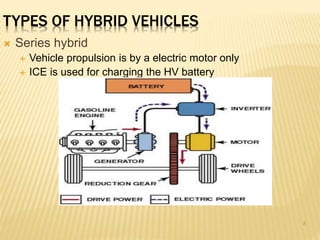
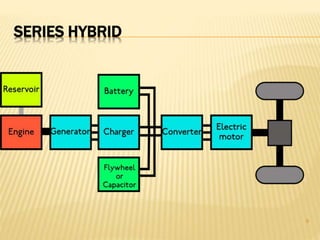
 Series hybrid 
 Vehicle propulsion is by a electric motor only 
 ICE is used for charging the HV battery
SERIES HYBRID 
9
10 
TYPES OF HYBRID VEHICLES 
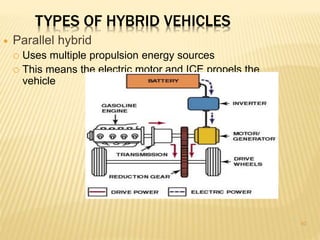
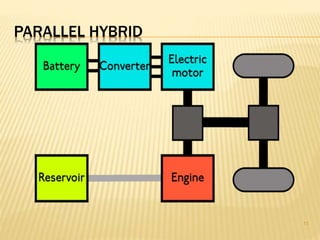
 Parallel hybrid 
 Uses multiple propulsion energy sources 
 This means the electric motor and ICE propels the 
vehicle
PARALLEL HYBRID 
11
12 
TYPES OF HYBRID VEHICLES 
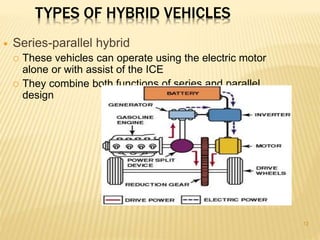
 Series-parallel hybrid 
 These vehicles can operate using the electric motor 
alone or with assist of the ICE 
 They combine both functions of series and parallel 
design
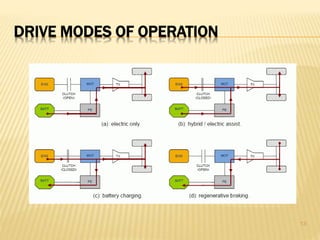
DRIVE MODES OF OPERATION 
13
MAINTENANCE 
 Hybrid vehicles require the same 
maintenance as regular vehicles 
 However, some hybrids require inverter 
flushes and battery filter changes. 
 There be additional costs involved in 
replacing low rolling resistance tires. 
 Vehicle repairs may cost more than a regular 
vehicle 
14
HOW LONG WILL A HIGH VOLTAGE BATTERY 
LAST? 
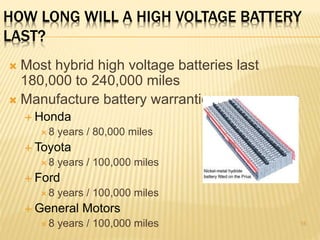
 Most hybrid high voltage batteries last 
180,000 to 240,000 miles 
 Manufacture battery warranties 
 Honda 
 8 years / 80,000 miles 
 Toyota 
 8 years / 100,000 miles 
 Ford 
 8 years / 100,000 miles 
 General Motors 
 8 years / 100,000 miles 15
ARE HYBRID VEHICLES SAFE? 
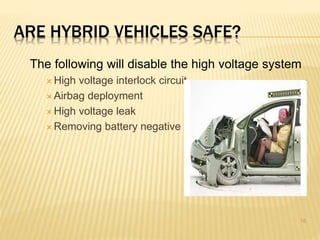
The following will disable the high voltage system 
 High voltage interlock circuit 
 Airbag deployment 
 High voltage leak 
Removing battery negative 
16
WHAT HAPPENS IF A HYBRID VEHICLE IS 
SUBMERGED IN WATER? 
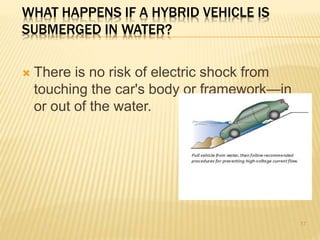
 There is no risk of electric shock from 
touching the car's body or framework—in 
or out of the water. 
17
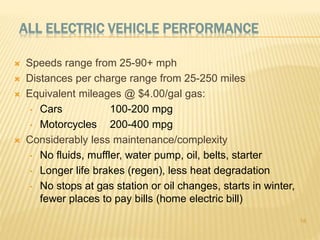
ALL ELECTRIC VEHICLE PERFORMANCE 
 Speeds range from 25-90+ mph 
 Distances per charge range from 25-250 miles 
 Equivalent mileages @ $4.00/gal gas: 
• Cars 100-200 mpg 
• Motorcycles 200-400 mpg 
 Considerably less maintenance/complexity 
• No fluids, muffler, water pump, oil, belts, starter 
• Longer life brakes (regen), less heat degradation 
• No stops at gas station or oil changes, starts in winter, 
fewer places to pay bills (home electric bill) 
18
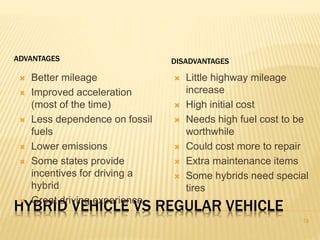
ADVANTAGES DISADVANTAGES 
 Better mileage 
 Improved acceleration 
(most of the time) 
 Less dependence on fossil 
fuels 
 Lower emissions 
 Some states provide 
incentives for driving a 
hybrid 
 Great driving experience 
 Little highway mileage 
increase 
 High initial cost 
 Needs high fuel cost to be 
worthwhile 
 Could cost more to repair 
 Extra maintenance items 
 Some hybrids need special 
tires 
HYBRID VEHICLE VS REGULAR VEHICLE 
19
CONCLUSION 
20
REFERENCE 
21

Hybrids Cars a simple Idea

  • 1.
    1 A SeminarOn HYBRID CAR
  • 2.
    WHAT IS AHYBRID?  A hybrid is a vehicle that is propelled by two power sources. Internal combustion engine (ICE) + Electric motor powered by batteries. 2
  • 3.
    OBJECTIVES  Typesof hybrid vehicles  Hybrid vehicle operation  Commonly asked questions about hybrids  The pay back rate of hybrids  Advantages and disadvantages of owning a hybrid 3
  • 4.
    4 LEVELS OFHYBRID VEHICLES  Full hybrid  They feature idle-stop function  Regenerative braking  Most are capable of using the electric motor alone to propel the vehicle  The electric motor also assists the engine  Battery voltages are about 200 to 300 volts
  • 5.
    5 LEVELS OFHYBRID VEHICLES  Medium hybrid  They feature idle-stop function  Regenerative braking  Most are not capable of using the electric motor alone to propel the vehicle  The electric motor usually assists the engine  Battery voltages are about 144 to 158 volts
  • 6.
    6 LEVELS OFHYBRID VEHICLES  Mild Hybrid  They feature idle-stop function  Regenerative braking  Are not capable of using the electric motor to propel the vehicle  These systems are usually 42 volts or less
  • 7.
    BASIC COMPONENTS Power plant ICE  Electric motor / Generator  Battery  Transmission  Inverter 7
  • 8.
    8 TYPES OFHYBRID VEHICLES  Series hybrid  Vehicle propulsion is by a electric motor only  ICE is used for charging the HV battery
  • 9.
  • 10.
    10 TYPES OFHYBRID VEHICLES  Parallel hybrid  Uses multiple propulsion energy sources  This means the electric motor and ICE propels the vehicle
  • 11.
  • 12.
    12 TYPES OFHYBRID VEHICLES  Series-parallel hybrid  These vehicles can operate using the electric motor alone or with assist of the ICE  They combine both functions of series and parallel design
  • 13.
    DRIVE MODES OFOPERATION 13
  • 14.
    MAINTENANCE  Hybridvehicles require the same maintenance as regular vehicles  However, some hybrids require inverter flushes and battery filter changes.  There be additional costs involved in replacing low rolling resistance tires.  Vehicle repairs may cost more than a regular vehicle 14
  • 15.
    HOW LONG WILLA HIGH VOLTAGE BATTERY LAST?  Most hybrid high voltage batteries last 180,000 to 240,000 miles  Manufacture battery warranties  Honda  8 years / 80,000 miles  Toyota  8 years / 100,000 miles  Ford  8 years / 100,000 miles  General Motors  8 years / 100,000 miles 15
  • 16.
    ARE HYBRID VEHICLESSAFE? The following will disable the high voltage system  High voltage interlock circuit  Airbag deployment  High voltage leak Removing battery negative 16
  • 17.
    WHAT HAPPENS IFA HYBRID VEHICLE IS SUBMERGED IN WATER?  There is no risk of electric shock from touching the car's body or framework—in or out of the water. 17
  • 18.
    ALL ELECTRIC VEHICLEPERFORMANCE  Speeds range from 25-90+ mph  Distances per charge range from 25-250 miles  Equivalent mileages @ $4.00/gal gas: • Cars 100-200 mpg • Motorcycles 200-400 mpg  Considerably less maintenance/complexity • No fluids, muffler, water pump, oil, belts, starter • Longer life brakes (regen), less heat degradation • No stops at gas station or oil changes, starts in winter, fewer places to pay bills (home electric bill) 18
  • 19.
    ADVANTAGES DISADVANTAGES Better mileage  Improved acceleration (most of the time)  Less dependence on fossil fuels  Lower emissions  Some states provide incentives for driving a hybrid  Great driving experience  Little highway mileage increase  High initial cost  Needs high fuel cost to be worthwhile  Could cost more to repair  Extra maintenance items  Some hybrids need special tires HYBRID VEHICLE VS REGULAR VEHICLE 19
  • 20.
  • 21.