Types And
Benefits
HRIS
What Is Human
Resource
Information
Systems
Employers may manage every stage of an employee's life cycle, from
recruiting to retirement, with the use of the human resource
information system (HRIS), a software solution. HRIS systems
automate administrative tasks and provide a centralized database of
information about employees, allowing HR professionals to
streamline their processes and make informed decisions. With the
rise of cloud computing, HRIS systems are now accessible from
anywhere and are becoming more affordable for small and medium-
sized businesses.
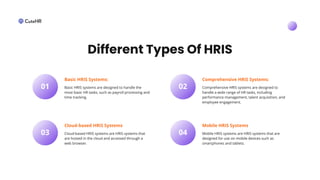
Basic HRIS systems are designed to handle the
most basic HR tasks, such as payroll processing and
time tracking.
01
Basic HRIS Systems:
Cloud-based HRIS systems are HRIS systems that
are hosted in the cloud and accessed through a
web browser.
03
Cloud-based HRIS Systems
Comprehensive HRIS systems are designed to
handle a wide range of HR tasks, including
performance management, talent acquisition, and
employee engagement.
02
Comprehensive HRIS Systems:
Mobile HRIS systems are HRIS systems that are
designed for use on mobile devices such as
smartphones and tablets.
04
Mobile HRIS Systems
Different Types Of HRIS
Benefits Of HRIS
Systems:
• Improved Data Management:
• Increased Efficiency
• Better Compliance Management
• Enhanced Employee Self-Service
• Improved Reporting and Analytics
• Better Talent Management
• Increased Employee Engagement
Conclusion
In conclusion, HRIS systems offer organizations a range of benefits, from
improved data management and increased efficiency to enhanced
employee engagement and better talent management. With the rise of
cloud computing, HRIS systems are becoming more accessible and
affordable, making them a must-have tool for organizations of all sizes.
By selecting the right HRIS system for their needs, organizations can
streamline their HR processes, improve the employee experience, and
better understand and manage their workforce.
Thank You

HRIS Types And Benefits

  • 1.
  • 2.
    What Is Human Resource Information Systems Employersmay manage every stage of an employee's life cycle, from recruiting to retirement, with the use of the human resource information system (HRIS), a software solution. HRIS systems automate administrative tasks and provide a centralized database of information about employees, allowing HR professionals to streamline their processes and make informed decisions. With the rise of cloud computing, HRIS systems are now accessible from anywhere and are becoming more affordable for small and medium- sized businesses.
  • 3.
    Basic HRIS systemsare designed to handle the most basic HR tasks, such as payroll processing and time tracking. 01 Basic HRIS Systems: Cloud-based HRIS systems are HRIS systems that are hosted in the cloud and accessed through a web browser. 03 Cloud-based HRIS Systems Comprehensive HRIS systems are designed to handle a wide range of HR tasks, including performance management, talent acquisition, and employee engagement. 02 Comprehensive HRIS Systems: Mobile HRIS systems are HRIS systems that are designed for use on mobile devices such as smartphones and tablets. 04 Mobile HRIS Systems Different Types Of HRIS
  • 4.
    Benefits Of HRIS Systems: •Improved Data Management: • Increased Efficiency • Better Compliance Management • Enhanced Employee Self-Service • Improved Reporting and Analytics • Better Talent Management • Increased Employee Engagement
  • 5.
    Conclusion In conclusion, HRISsystems offer organizations a range of benefits, from improved data management and increased efficiency to enhanced employee engagement and better talent management. With the rise of cloud computing, HRIS systems are becoming more accessible and affordable, making them a must-have tool for organizations of all sizes. By selecting the right HRIS system for their needs, organizations can streamline their HR processes, improve the employee experience, and better understand and manage their workforce.
  • 6.