Human Microbiome
Presenter: Dr. Vijaya Rengan. R
Moderator: Dr. Shefali Gupta
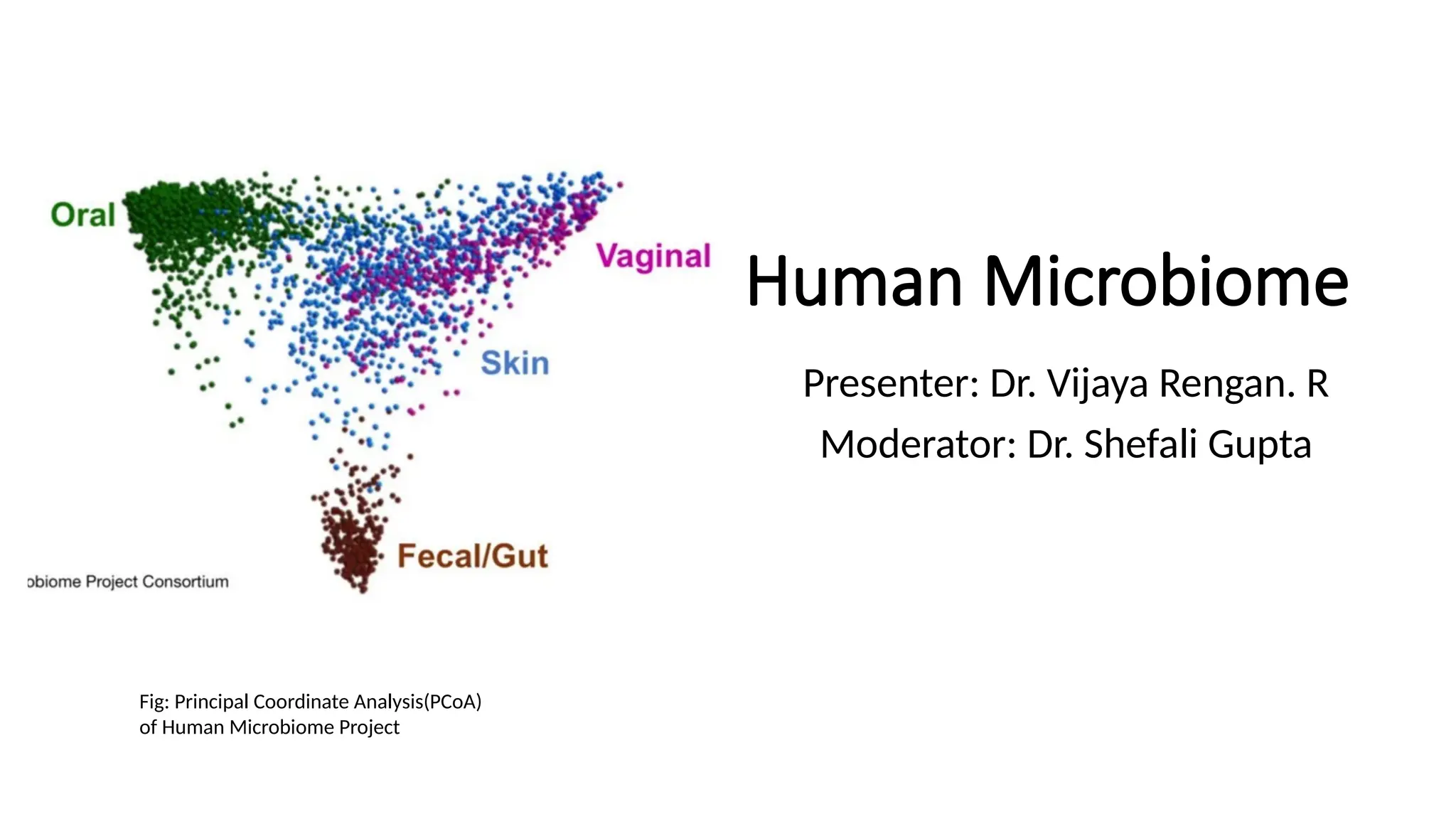
Fig: Principal Coordinate Analysis(PCoA)
of Human Microbiome Project
Contents
Definitions
Extraction methods
Collection
Establishment of microbiome
Microbiome and Dysbiosis in Diseases
Gut Lung axis
Gut Brain axis
Faecal Microbiota Transplant
Mycobiome
Virome
Take Home
References
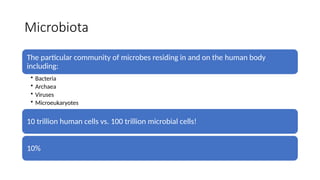
Microbiota
The particular community of microbes residing in and on the human body
including:
• Bacteria
• Archaea
• Viruses
• Microeukaryotes
10 trillion human cells vs. 100 trillion microbial cells!
10%
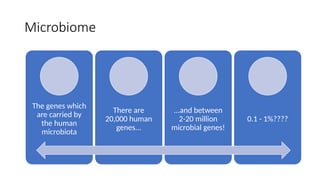
Microbiome
The genes which
are carried by
the human
microbiota
There are
20,000 human
genes...
...and between
2-20 million
microbial genes!
0.1 - 1%????
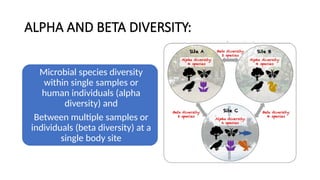
ALPHA AND BETA DIVERSITY:
Microbial species diversity
within single samples or
human individuals (alpha
diversity) and
Between multiple samples or
individuals (beta diversity) at a
single body site
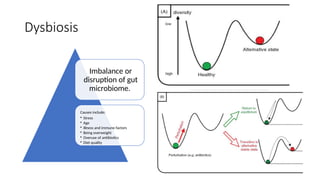
Dysbiosis
Imbalance or
disruption of gut
microbiome.
Causes include:
• Stress
• Age
• Illness and immune factors
• Being overweight
• Overuse of antibiotics
• Diet quality
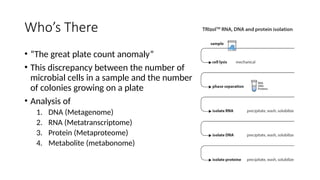
Who’s There
• “The great plate count anomaly”
• This discrepancy between the number of
microbial cells in a sample and the number
of colonies growing on a plate
• Analysis of
1. DNA (Metagenome)
2. RNA (Metatranscriptome)
3. Protein (Metaproteome)
4. Metabolite (metabonome)
Sequencing-based approaches
• Targeted amplicon sequencing
(Metataxonomics)
• Metagenomic shotgun sequencing
Applied to
microbiome
research:
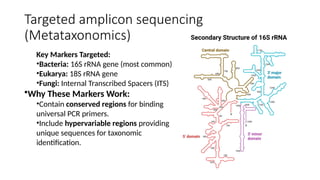
Targeted amplicon sequencing
(Metataxonomics)
Key Markers Targeted:
•Bacteria: 16S rRNA gene (most common)
•Eukarya: 18S rRNA gene
•Fungi: Internal Transcribed Spacers (ITS)
•Why These Markers Work:
•Contain conserved regions for binding
universal PCR primers.
•Include hypervariable regions providing
unique sequences for taxonomic
identification.
Metagenomic shotgun sequencing
•Approach: Directly sequences the entire DNA pool from a microbial community,
skipping targeted PCR amplification.
•Advantages:
•Comprehensive: Captures all domains of life (viruses, bacteria, archaea, eukaryotes)
without primer bias
•Functional Insights: Reveals potential gene functions ("what they can do") alongside
taxonomy ("who is there").
•Less Biased: Avoids PCR amplification biases inherent in marker gene methods.
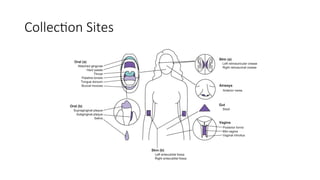
Collection Sites
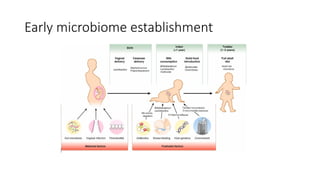
Early microbiome establishment
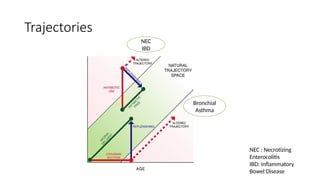
Trajectories
NEC
IBD
Bronchial
Asthma
NEC : Necrotizing
Enterocolitis
IBD: Inflammatory
Bowel Disease
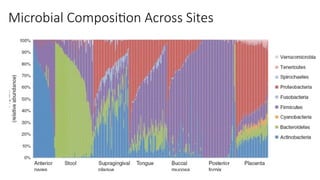
Microbial Composition Across Sites
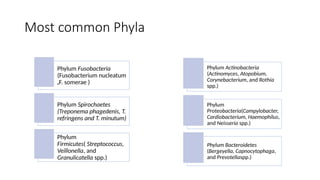
Most common Phyla
Phylum Fusobacteria
(Fusobacterium nucleatum
,F. somerae )
Phylum Spirochaetes
(Treponema phagedenis, T.
refringens and T. minutum)
Phylum
Firmicutes( Streptococcus,
Veillonella, and
Granulicatella spp.)
Phylum Actinobacteria
(Actinomyces, Atopobium,
Corynebacterium, and Rothia
spp.)
Phylum
Proteobacteria(Campylobacter,
Cardiobacterium, Haemophilus,
and Neisseria spp.)
Phylum Bacteroidetes
(Bergeyella, Capnocytophaga,
and Prevotellaspp.)
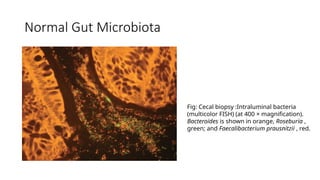
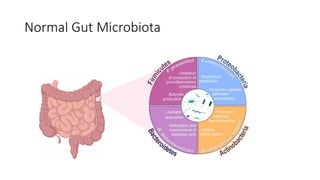
Normal Gut Microbiota
Fig: Cecal biopsy :Intraluminal bacteria
(multicolor FISH) (at 400 × magnification).
Bacteroides is shown in orange, Roseburia ,
green; and Faecalibacterium prausnitzii , red.
Normal Gut Microbiota
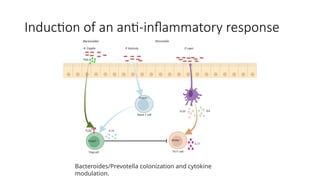
Induction of an anti-inflammatory response
Bacteroides/Prevotella colonization and cytokine
modulation.
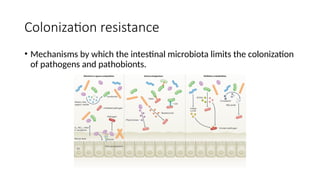
Colonization resistance
• Mechanisms by which the intestinal microbiota limits the colonization
of pathogens and pathobionts.
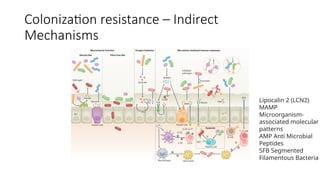
Colonization resistance – Indirect
Mechanisms
Lipocalin 2 (LCN2)
MAMP
Microorganism-
associated molecular
patterns
AMP Anti Microbial
Peptides
SFB Segmented
Filamentous Bacteria
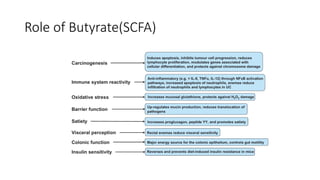
Role of Butyrate(SCFA)
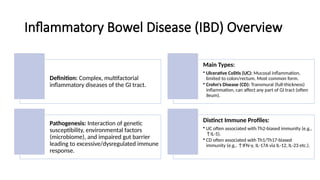
Inflammatory Bowel Disease (IBD) Overview
Definition: Complex, multifactorial
inflammatory diseases of the GI tract.
Main Types:
• Ulcerative Colitis (UC): Mucosal inflammation,
limited to colon/rectum. Most common form.
• Crohn's Disease (CD): Transmural (full-thickness)
inflammation, can affect any part of GI tract (often
ileum).
Pathogenesis: Interaction of genetic
susceptibility, environmental factors
(microbiome), and impaired gut barrier
leading to excessive/dysregulated immune
response.
Distinct Immune Profiles:
• UC often associated with Th2-biased immunity (e.g.,
↑IL-5).
• CD often associated with Th1/Th17-biased
immunity (e.g., ↑IFN-γ, IL-17A via IL-12, IL-23 etc.).
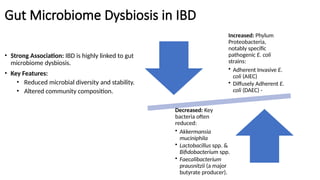
Gut Microbiome Dysbiosis in IBD
• Strong Association: IBD is highly linked to gut
microbiome dysbiosis.
• Key Features:
• Reduced microbial diversity and stability.
• Altered community composition.
Increased: Phylum
Proteobacteria,
notably specific
pathogenic E. coli
strains:
• Adherent Invasive E.
coli (AIEC)
• Diffusely Adherent E.
coli (DAEC) -
Decreased: Key
bacteria often
reduced:
• Akkermansia
muciniphila
• Lactobacillus spp. &
Bifidobacterium spp.
• Faecalibacterium
prausnitzii (a major
butyrate producer).
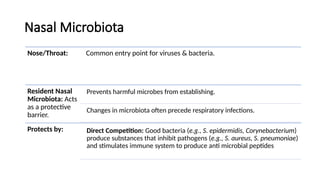
Nasal Microbiota
Nose/Throat: Common entry point for viruses & bacteria.
Resident Nasal
Microbiota: Acts
as a protective
barrier.
Prevents harmful microbes from establishing.
Changes in microbiota often precede respiratory infections.
Protects by: Direct Competition: Good bacteria (e.g., S. epidermidis, Corynebacterium)
produce substances that inhibit pathogens (e.g., S. aureus, S. pneumoniae)
and stimulates immune system to produce anti microbial peptides
Early Life Microbiome & Asthma Risk
• Critical Window: Microbiome composition and its changes during the
first 2 years of life are important.
• Findings: A nasopharyngeal microbiome dominated by
Staphylococcus in early infancy (<6 months) is associated with a
higher risk of developing asthma later in childhood.
Cystic Fibrosis
• Difficulty clearing bacteria from birth.
• Early lung colonization by pathogens (S. aureus, P. aeruginosa) linked
to worse outcomes and higher mortality.
• Delaying acquisition of these bacteria improves prognosis.
COPD
Severe COPD:
• Distinct microbiome changes (More Proteobacteria/Firmicutes, Less
Bacteroidetes).
Acute Exacerbations:
• Often show a temporary shift towards Proteobacteria (influenced by
treatments like steroids/antibiotics).
Mild/Moderate COPD:
• Lung microbiome may be similar to healthy individuals.
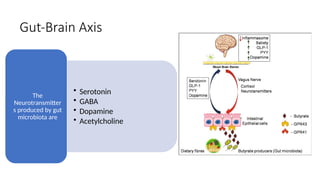
Gut-Brain Axis
• Serotonin
• GABA
• Dopamine
• Acetylcholine
The
Neurotransmitter
s produced by gut
microbiota are
Alzheimer's Disease (AD)
• A progressive neurodegenerative disorder leading to brain atrophy
(shrinkage).
• Impact: The most common cause of dementia (60-70% of cases),
affecting memory, thinking, behavior, and independence.
• Important Brain Changes:
• Buildup of beta-amyloid plaques (outside cells).
• Formation of tau neurofibrillary tangles (inside cells).
• Often, lower levels of the neurotransmitter acetylcholine.
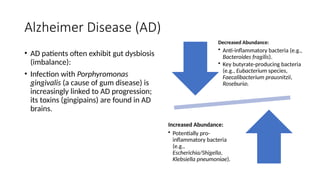
Alzheimer Disease (AD)
• AD patients often exhibit gut dysbiosis
(imbalance):
• Infection with Porphyromonas
gingivalis (a cause of gum disease) is
increasingly linked to AD progression;
its toxins (gingipains) are found in AD
brains.
Decreased Abundance:
• Anti-inflammatory bacteria (e.g.,
Bacteroides fragilis).
• Key butyrate-producing bacteria
(e.g., Eubacterium species,
Faecalibacterium prausnitzii,
Roseburia).
Increased Abundance:
• Potentially pro-
inflammatory bacteria
(e.g.,
Escherichia/Shigella,
Klebsiella pneumoniae).
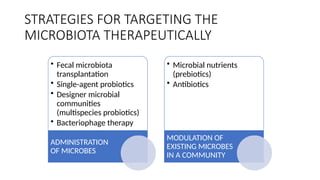
STRATEGIES FOR TARGETING THE
MICROBIOTA THERAPEUTICALLY
• Fecal microbiota
transplantation
• Single-agent probiotics
• Designer microbial
communities
(multispecies probiotics)
• Bacteriophage therapy
ADMINISTRATION
OF MICROBES
• Microbial nutrients
(prebiotics)
• Antibiotics
MODULATION OF
EXISTING MICROBES
IN A COMMUNITY
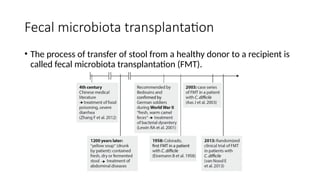
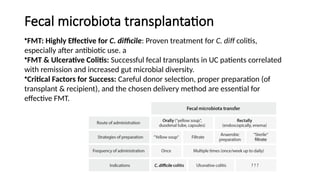
Fecal microbiota transplantation
• The process of transfer of stool from a healthy donor to a recipient is
called fecal microbiota transplantation (FMT).
Fecal microbiota transplantation
•FMT: Highly Effective for C. difficile: Proven treatment for C. diff colitis,
especially after antibiotic use. a
•FMT & Ulcerative Colitis: Successful fecal transplants in UC patients correlated
with remission and increased gut microbial diversity.
•Critical Factors for Success: Careful donor selection, proper preparation (of
transplant & recipient), and the chosen delivery method are essential for
effective FMT.
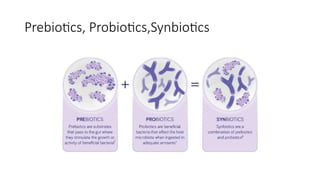
Prebiotics, Probiotics,Synbiotics
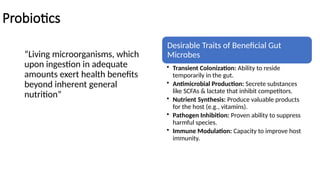
Probiotics
“Living microorganisms, which
upon ingestion in adequate
amounts exert health benefits
beyond inherent general
nutrition”
Desirable Traits of Beneficial Gut
Microbes
• Transient Colonization: Ability to reside
temporarily in the gut.
• Antimicrobial Production: Secrete substances
like SCFAs & lactate that inhibit competitors.
• Nutrient Synthesis: Produce valuable products
for the host (e.g., vitamins).
• Pathogen Inhibition: Proven ability to suppress
harmful species.
• Immune Modulation: Capacity to improve host
immunity.
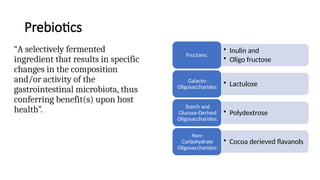
Prebiotics
“A selectively fermented
ingredient that results in specific
changes in the composition
and/or activity of the
gastrointestinal microbiota, thus
conferring benefit(s) upon host
health”.
• Inulin and
• Oligo fructose
Fructans:
• Lactulose
Galacto-
Oligosaccharides:
• Polydextrose
Starch and
Glucose-Derived
Oligosaccharides:
• Cocoa derieved flavanols
Non-
Carbohydrate
Oligosaccharides:
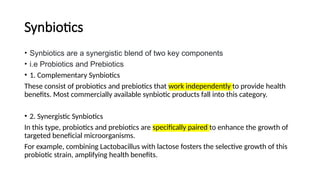
Synbiotics
• Synbiotics are a synergistic blend of two key components
• i.e Probiotics and Prebiotics
• 1. Complementary Synbiotics
These consist of probiotics and prebiotics that work independently to provide health
benefits. Most commercially available synbiotic products fall into this category.
• 2. Synergistic Synbiotics
In this type, probiotics and prebiotics are specifically paired to enhance the growth of
targeted beneficial microorganisms.
For example, combining Lactobacillus with lactose fosters the selective growth of this
probiotic strain, amplifying health benefits.
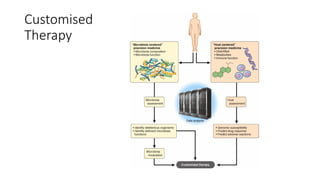
Customised
Therapy
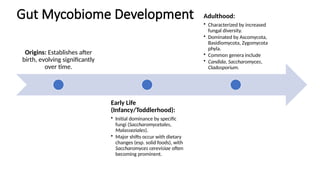
Gut Mycobiome Development
Origins: Establishes after
birth, evolving significantly
over time.
Early Life
(Infancy/Toddlerhood):
• Initial dominance by specific
fungi (Saccharomycetales,
Malasseziales).
• Major shifts occur with dietary
changes (esp. solid foods), with
Saccharomyces cerevisiae often
becoming prominent.
Adulthood:
• Characterized by increased
fungal diversity.
• Dominated by Ascomycota,
Basidiomycota, Zygomycota
phyla.
• Common genera include
• Candida, Saccharomyces,
Cladosporium.
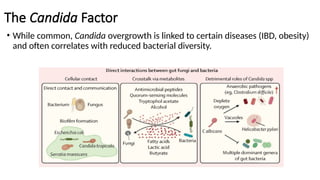
The Candida Factor
• While common, Candida overgrowth is linked to certain diseases (IBD, obesity)
and often correlates with reduced bacterial diversity.
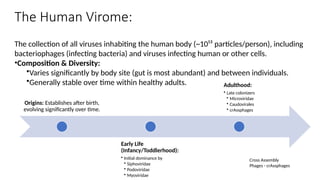
The Human Virome:
The collection of all viruses inhabiting the human body (~10¹³ particles/person), including
bacteriophages (infecting bacteria) and viruses infecting human or other cells.
•Composition & Diversity:
•Varies significantly by body site (gut is most abundant) and between individuals.
•Generally stable over time within healthy adults.
Origins: Establishes after birth,
evolving significantly over time.
Early Life
(Infancy/Toddlerhood):
• Initial dominance by
• Siphoviridae
• Podoviridae
• Myoviridae
Adulthood:
• Late colonizers
• Microviridae
• Caudovirales
• crAssphages
Cross Assembly
Phages - crAssphages
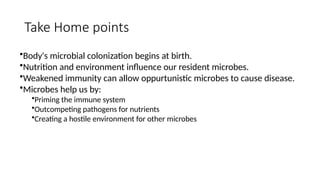
Take Home points
•Body's microbial colonization begins at birth.
•Nutrition and environment influence our resident microbes.
•Weakened immunity can allow oppurtunistic microbes to cause disease.
•Microbes help us by:
•Priming the immune system
•Outcompeting pathogens for nutrients
•Creating a hostile environment for other microbes
References
• ASM MANUAL OF CLINICAL MICROBIOLOGY 13TH EDITION 2023
• The Gut Microbiome in Health and Disease, Editor Dirk Haller Springer 2018
• Probiotics, Prebiotics, Synbiotics, and Postbiotics , Human Microbiome and
Human Health, Vijay Kothari,Prasun Kumar,Subhasree Ray Editors Springer 2023
• THE HUMAN MICROBIOTA How Microbial Communities Affect Health and Disease
Edited by David N. Fredricks, Wiley 2013
• Young VB. The role of the microbiome in human health and disease: an
introduction for clinicians. BMJ . 2017;356:j831.
• Cox LM, Blaser MJ. Pathways in microbe-induced obesity. Cell Metab .
2013;17:883-894
Question 1
True or False?
People living Westernized lifestyles (e.g. in the U.S.) have gut
microbiomes that are very different from people living more
traditional lifestyles (e.g. rural agrarian)
Ans: True
Question 2
True or False? A fecal transplant can be considered a type of probiotic
• Ans: True
Question 3
Which of the following is a true statement about the effect of
antibiotics on the gut microbiota?
1. Antibiotics have a small effect whereas vaccines have a huge effect
2. Antibiotics only alter the bad microbes
3. Antibiotics alter the gut microbial community differently depending
on the person
4. Antibiotic effects don’t last very long
Ans: 3
Question 4
Disease is often associated with:
1. No change in gut microbial diversity
2. Increased gut microbial diversity
3. Reduced gut microbial diversity
4. Dramatic changes from day to day in gut microbial diversity
• Ans: 3
Question 5
Fusobacterium has been linked with colon cancer because:
1. It is found in high abundances near tumors in the colon
2. People with colon cancer have less of it
3. People with more of it develop colon cancer
4. Healthy people don’t have it
Ans: 1
Question 6
What happens when we put gut microbes from an obese human into
germ-free mice?
1. The mice lose weight
2. The mice gain weight
3. The mice stay the same weight
4. The mice die
Ans: 2
Question 7
What does “The Great Plate Count Anomaly” describe?
1. For the same sample, more microbes can be counted under the
microscope than when grown on a petri dish
2. In the past, scientists needed so many petri dishes to culture microbes
that they would lose count
3. It takes so long to count microbes on a petri dish that scientists would
never finish if they studied communities this way
4. Culturing microbes on a petri dish makes it impossible to count them
Ans: 1
Question 8
For the first time, Koch’s postulate stated:
1. that most microbes are hard to grow
2. that microbes exist on people
3. that microbes are everywhere
4. that microbes can cause disease
Ans: 4
Question 9
What is the purpose of the “reversible blocking agent” used during DNA
sequencing?
1. It stops the sequencing process if too many sequences are created at
once
2. It ensures that only one nucleotide is added to the sequence at once
3. It unzips the DNA during sequencing
4. It ensure that only the gene of interest is sequenced
Ans: 2
Question 10
In microbiome research, proteomics refers to the study of:
1. Metabolites produced by a microbial community
2. Proteins constructed by microbes from DNA blueprints
3. RNA translated from DNA blueprints by microbes
4. All of the genes present in a microbial community
Ans: 2
Thank you

Human Microbiome and it's importance.pptx

  • 1.
    Human Microbiome Presenter: Dr.Vijaya Rengan. R Moderator: Dr. Shefali Gupta Fig: Principal Coordinate Analysis(PCoA) of Human Microbiome Project
  • 2.
    Contents Definitions Extraction methods Collection Establishment ofmicrobiome Microbiome and Dysbiosis in Diseases Gut Lung axis Gut Brain axis Faecal Microbiota Transplant Mycobiome Virome Take Home References
  • 3.
    Microbiota The particular communityof microbes residing in and on the human body including: • Bacteria • Archaea • Viruses • Microeukaryotes 10 trillion human cells vs. 100 trillion microbial cells! 10%
  • 4.
    Microbiome The genes which arecarried by the human microbiota There are 20,000 human genes... ...and between 2-20 million microbial genes! 0.1 - 1%????
  • 5.
    ALPHA AND BETADIVERSITY: Microbial species diversity within single samples or human individuals (alpha diversity) and Between multiple samples or individuals (beta diversity) at a single body site
  • 6.
    Dysbiosis Imbalance or disruption ofgut microbiome. Causes include: • Stress • Age • Illness and immune factors • Being overweight • Overuse of antibiotics • Diet quality
  • 7.
    Who’s There • “Thegreat plate count anomaly” • This discrepancy between the number of microbial cells in a sample and the number of colonies growing on a plate • Analysis of 1. DNA (Metagenome) 2. RNA (Metatranscriptome) 3. Protein (Metaproteome) 4. Metabolite (metabonome)
  • 8.
    Sequencing-based approaches • Targetedamplicon sequencing (Metataxonomics) • Metagenomic shotgun sequencing Applied to microbiome research:
  • 9.
    Targeted amplicon sequencing (Metataxonomics) KeyMarkers Targeted: •Bacteria: 16S rRNA gene (most common) •Eukarya: 18S rRNA gene •Fungi: Internal Transcribed Spacers (ITS) •Why These Markers Work: •Contain conserved regions for binding universal PCR primers. •Include hypervariable regions providing unique sequences for taxonomic identification.
  • 10.
    Metagenomic shotgun sequencing •Approach:Directly sequences the entire DNA pool from a microbial community, skipping targeted PCR amplification. •Advantages: •Comprehensive: Captures all domains of life (viruses, bacteria, archaea, eukaryotes) without primer bias •Functional Insights: Reveals potential gene functions ("what they can do") alongside taxonomy ("who is there"). •Less Biased: Avoids PCR amplification biases inherent in marker gene methods.
  • 11.
  • 12.
  • 13.
  • 14.
  • 15.
    Most common Phyla PhylumFusobacteria (Fusobacterium nucleatum ,F. somerae ) Phylum Spirochaetes (Treponema phagedenis, T. refringens and T. minutum) Phylum Firmicutes( Streptococcus, Veillonella, and Granulicatella spp.) Phylum Actinobacteria (Actinomyces, Atopobium, Corynebacterium, and Rothia spp.) Phylum Proteobacteria(Campylobacter, Cardiobacterium, Haemophilus, and Neisseria spp.) Phylum Bacteroidetes (Bergeyella, Capnocytophaga, and Prevotellaspp.)
  • 16.
    Normal Gut Microbiota Fig:Cecal biopsy :Intraluminal bacteria (multicolor FISH) (at 400 × magnification). Bacteroides is shown in orange, Roseburia , green; and Faecalibacterium prausnitzii , red.
  • 17.
  • 18.
    Induction of ananti-inflammatory response Bacteroides/Prevotella colonization and cytokine modulation.
  • 19.
    Colonization resistance • Mechanismsby which the intestinal microbiota limits the colonization of pathogens and pathobionts.
  • 20.
    Colonization resistance –Indirect Mechanisms Lipocalin 2 (LCN2) MAMP Microorganism- associated molecular patterns AMP Anti Microbial Peptides SFB Segmented Filamentous Bacteria
  • 21.
  • 22.
    Inflammatory Bowel Disease(IBD) Overview Definition: Complex, multifactorial inflammatory diseases of the GI tract. Main Types: • Ulcerative Colitis (UC): Mucosal inflammation, limited to colon/rectum. Most common form. • Crohn's Disease (CD): Transmural (full-thickness) inflammation, can affect any part of GI tract (often ileum). Pathogenesis: Interaction of genetic susceptibility, environmental factors (microbiome), and impaired gut barrier leading to excessive/dysregulated immune response. Distinct Immune Profiles: • UC often associated with Th2-biased immunity (e.g., ↑IL-5). • CD often associated with Th1/Th17-biased immunity (e.g., ↑IFN-γ, IL-17A via IL-12, IL-23 etc.).
  • 23.
    Gut Microbiome Dysbiosisin IBD • Strong Association: IBD is highly linked to gut microbiome dysbiosis. • Key Features: • Reduced microbial diversity and stability. • Altered community composition. Increased: Phylum Proteobacteria, notably specific pathogenic E. coli strains: • Adherent Invasive E. coli (AIEC) • Diffusely Adherent E. coli (DAEC) - Decreased: Key bacteria often reduced: • Akkermansia muciniphila • Lactobacillus spp. & Bifidobacterium spp. • Faecalibacterium prausnitzii (a major butyrate producer).
  • 24.
    Nasal Microbiota Nose/Throat: Commonentry point for viruses & bacteria. Resident Nasal Microbiota: Acts as a protective barrier. Prevents harmful microbes from establishing. Changes in microbiota often precede respiratory infections. Protects by: Direct Competition: Good bacteria (e.g., S. epidermidis, Corynebacterium) produce substances that inhibit pathogens (e.g., S. aureus, S. pneumoniae) and stimulates immune system to produce anti microbial peptides
  • 25.
    Early Life Microbiome& Asthma Risk • Critical Window: Microbiome composition and its changes during the first 2 years of life are important. • Findings: A nasopharyngeal microbiome dominated by Staphylococcus in early infancy (<6 months) is associated with a higher risk of developing asthma later in childhood.
  • 26.
    Cystic Fibrosis • Difficultyclearing bacteria from birth. • Early lung colonization by pathogens (S. aureus, P. aeruginosa) linked to worse outcomes and higher mortality. • Delaying acquisition of these bacteria improves prognosis.
  • 27.
    COPD Severe COPD: • Distinctmicrobiome changes (More Proteobacteria/Firmicutes, Less Bacteroidetes). Acute Exacerbations: • Often show a temporary shift towards Proteobacteria (influenced by treatments like steroids/antibiotics). Mild/Moderate COPD: • Lung microbiome may be similar to healthy individuals.
  • 28.
    Gut-Brain Axis • Serotonin •GABA • Dopamine • Acetylcholine The Neurotransmitter s produced by gut microbiota are
  • 29.
    Alzheimer's Disease (AD) •A progressive neurodegenerative disorder leading to brain atrophy (shrinkage). • Impact: The most common cause of dementia (60-70% of cases), affecting memory, thinking, behavior, and independence. • Important Brain Changes: • Buildup of beta-amyloid plaques (outside cells). • Formation of tau neurofibrillary tangles (inside cells). • Often, lower levels of the neurotransmitter acetylcholine.
  • 30.
    Alzheimer Disease (AD) •AD patients often exhibit gut dysbiosis (imbalance): • Infection with Porphyromonas gingivalis (a cause of gum disease) is increasingly linked to AD progression; its toxins (gingipains) are found in AD brains. Decreased Abundance: • Anti-inflammatory bacteria (e.g., Bacteroides fragilis). • Key butyrate-producing bacteria (e.g., Eubacterium species, Faecalibacterium prausnitzii, Roseburia). Increased Abundance: • Potentially pro- inflammatory bacteria (e.g., Escherichia/Shigella, Klebsiella pneumoniae).
  • 31.
    STRATEGIES FOR TARGETINGTHE MICROBIOTA THERAPEUTICALLY • Fecal microbiota transplantation • Single-agent probiotics • Designer microbial communities (multispecies probiotics) • Bacteriophage therapy ADMINISTRATION OF MICROBES • Microbial nutrients (prebiotics) • Antibiotics MODULATION OF EXISTING MICROBES IN A COMMUNITY
  • 32.
    Fecal microbiota transplantation •The process of transfer of stool from a healthy donor to a recipient is called fecal microbiota transplantation (FMT).
  • 33.
    Fecal microbiota transplantation •FMT:Highly Effective for C. difficile: Proven treatment for C. diff colitis, especially after antibiotic use. a •FMT & Ulcerative Colitis: Successful fecal transplants in UC patients correlated with remission and increased gut microbial diversity. •Critical Factors for Success: Careful donor selection, proper preparation (of transplant & recipient), and the chosen delivery method are essential for effective FMT.
  • 34.
  • 35.
    Probiotics “Living microorganisms, which uponingestion in adequate amounts exert health benefits beyond inherent general nutrition” Desirable Traits of Beneficial Gut Microbes • Transient Colonization: Ability to reside temporarily in the gut. • Antimicrobial Production: Secrete substances like SCFAs & lactate that inhibit competitors. • Nutrient Synthesis: Produce valuable products for the host (e.g., vitamins). • Pathogen Inhibition: Proven ability to suppress harmful species. • Immune Modulation: Capacity to improve host immunity.
  • 36.
    Prebiotics “A selectively fermented ingredientthat results in specific changes in the composition and/or activity of the gastrointestinal microbiota, thus conferring benefit(s) upon host health”. • Inulin and • Oligo fructose Fructans: • Lactulose Galacto- Oligosaccharides: • Polydextrose Starch and Glucose-Derived Oligosaccharides: • Cocoa derieved flavanols Non- Carbohydrate Oligosaccharides:
  • 37.
    Synbiotics • Synbiotics area synergistic blend of two key components • i.e Probiotics and Prebiotics • 1. Complementary Synbiotics These consist of probiotics and prebiotics that work independently to provide health benefits. Most commercially available synbiotic products fall into this category. • 2. Synergistic Synbiotics In this type, probiotics and prebiotics are specifically paired to enhance the growth of targeted beneficial microorganisms. For example, combining Lactobacillus with lactose fosters the selective growth of this probiotic strain, amplifying health benefits.
  • 38.
  • 39.
    Gut Mycobiome Development Origins:Establishes after birth, evolving significantly over time. Early Life (Infancy/Toddlerhood): • Initial dominance by specific fungi (Saccharomycetales, Malasseziales). • Major shifts occur with dietary changes (esp. solid foods), with Saccharomyces cerevisiae often becoming prominent. Adulthood: • Characterized by increased fungal diversity. • Dominated by Ascomycota, Basidiomycota, Zygomycota phyla. • Common genera include • Candida, Saccharomyces, Cladosporium.
  • 40.
    The Candida Factor •While common, Candida overgrowth is linked to certain diseases (IBD, obesity) and often correlates with reduced bacterial diversity.
  • 41.
    The Human Virome: Thecollection of all viruses inhabiting the human body (~10¹³ particles/person), including bacteriophages (infecting bacteria) and viruses infecting human or other cells. •Composition & Diversity: •Varies significantly by body site (gut is most abundant) and between individuals. •Generally stable over time within healthy adults. Origins: Establishes after birth, evolving significantly over time. Early Life (Infancy/Toddlerhood): • Initial dominance by • Siphoviridae • Podoviridae • Myoviridae Adulthood: • Late colonizers • Microviridae • Caudovirales • crAssphages Cross Assembly Phages - crAssphages
  • 42.
    Take Home points •Body'smicrobial colonization begins at birth. •Nutrition and environment influence our resident microbes. •Weakened immunity can allow oppurtunistic microbes to cause disease. •Microbes help us by: •Priming the immune system •Outcompeting pathogens for nutrients •Creating a hostile environment for other microbes
  • 43.
    References • ASM MANUALOF CLINICAL MICROBIOLOGY 13TH EDITION 2023 • The Gut Microbiome in Health and Disease, Editor Dirk Haller Springer 2018 • Probiotics, Prebiotics, Synbiotics, and Postbiotics , Human Microbiome and Human Health, Vijay Kothari,Prasun Kumar,Subhasree Ray Editors Springer 2023 • THE HUMAN MICROBIOTA How Microbial Communities Affect Health and Disease Edited by David N. Fredricks, Wiley 2013 • Young VB. The role of the microbiome in human health and disease: an introduction for clinicians. BMJ . 2017;356:j831. • Cox LM, Blaser MJ. Pathways in microbe-induced obesity. Cell Metab . 2013;17:883-894
  • 44.
    Question 1 True orFalse? People living Westernized lifestyles (e.g. in the U.S.) have gut microbiomes that are very different from people living more traditional lifestyles (e.g. rural agrarian) Ans: True
  • 45.
    Question 2 True orFalse? A fecal transplant can be considered a type of probiotic • Ans: True
  • 46.
    Question 3 Which ofthe following is a true statement about the effect of antibiotics on the gut microbiota? 1. Antibiotics have a small effect whereas vaccines have a huge effect 2. Antibiotics only alter the bad microbes 3. Antibiotics alter the gut microbial community differently depending on the person 4. Antibiotic effects don’t last very long Ans: 3
  • 47.
    Question 4 Disease isoften associated with: 1. No change in gut microbial diversity 2. Increased gut microbial diversity 3. Reduced gut microbial diversity 4. Dramatic changes from day to day in gut microbial diversity • Ans: 3
  • 48.
    Question 5 Fusobacterium hasbeen linked with colon cancer because: 1. It is found in high abundances near tumors in the colon 2. People with colon cancer have less of it 3. People with more of it develop colon cancer 4. Healthy people don’t have it Ans: 1
  • 49.
    Question 6 What happenswhen we put gut microbes from an obese human into germ-free mice? 1. The mice lose weight 2. The mice gain weight 3. The mice stay the same weight 4. The mice die Ans: 2
  • 50.
    Question 7 What does“The Great Plate Count Anomaly” describe? 1. For the same sample, more microbes can be counted under the microscope than when grown on a petri dish 2. In the past, scientists needed so many petri dishes to culture microbes that they would lose count 3. It takes so long to count microbes on a petri dish that scientists would never finish if they studied communities this way 4. Culturing microbes on a petri dish makes it impossible to count them Ans: 1
  • 51.
    Question 8 For thefirst time, Koch’s postulate stated: 1. that most microbes are hard to grow 2. that microbes exist on people 3. that microbes are everywhere 4. that microbes can cause disease Ans: 4
  • 52.
    Question 9 What isthe purpose of the “reversible blocking agent” used during DNA sequencing? 1. It stops the sequencing process if too many sequences are created at once 2. It ensures that only one nucleotide is added to the sequence at once 3. It unzips the DNA during sequencing 4. It ensure that only the gene of interest is sequenced Ans: 2
  • 53.
    Question 10 In microbiomeresearch, proteomics refers to the study of: 1. Metabolites produced by a microbial community 2. Proteins constructed by microbes from DNA blueprints 3. RNA translated from DNA blueprints by microbes 4. All of the genes present in a microbial community Ans: 2
  • 54.

Editor's Notes

  • #42 Often dominated by phages (e.g., Caudovirales, Microviridae, crAssphage) and certain commensal eukaryotic viruses (e.g., Anelloviridae, Redondoviridae).