HUMAN DIGESTIVE SYSTEM
By,
ASHWINI C H
ROLL NO: 01
NATURAL SCIENCE
ZAINAB MEMORIALCOLLEGE OF TEACHER EDUCATION
CHERKALA
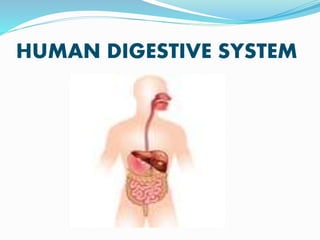
HUMAN DIGESTIVE SYSTEM
WHAT IS DIGESTIVE SYSTEM ?
 Human digestive system is a
group of organs working together in
converting food into energy and
basic nutrients required for the body.
 MOUTH
 OESOPHAGUS
 STOMACH
 SMALL INTESTINE
 LARGE INTESTINE
 RECTUM
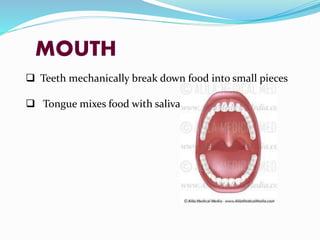
MOUTH
 Teeth mechanically break down food into small pieces
 Tongue mixes food with saliva
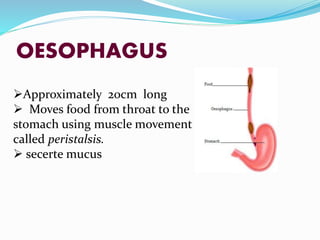
OESOPHAGUS
Approximately 20cm long
 Moves food from throat to the
stomach using muscle movement
called peristalsis.
 secerte mucus
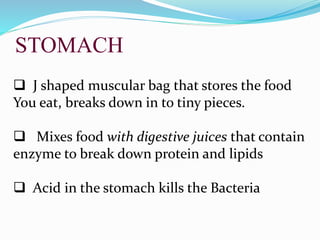
STOMACH
 J shaped muscular bag that stores the food
You eat, breaks down in to tiny pieces.
 Mixes food with digestive juices that contain
enzyme to break down protein and lipids
 Acid in the stomach kills the Bacteria
SMALL INTESTINE
 Small intestines are roughly 7
meters long.
 lining of intestine walls has finger
like projections
called villi , to increase surface area.
 Nutrients from the food pass in to
bloodstream
Through the small intestine walls
 absorbs vitamins, minerals,
proteins etc
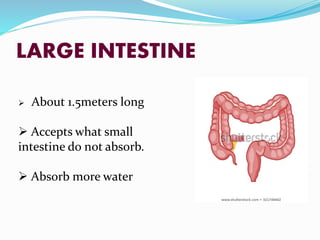
LARGE INTESTINE
 About 1.5meters long
 Accepts what small
intestine do not absorb.
 Absorb more water
RECTUM
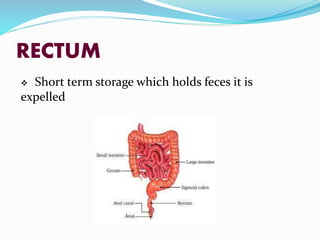
 Short term storage which holds feces it is
expelled
ACCESSORY ORGANS
 Accessory organs is the not a part of food , but play a
critical role.
 Include liver , gall bladder, pancreas
LIVER
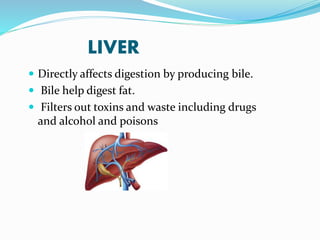
 Directly affects digestion by producing bile.
 Bile help digest fat.
 Filters out toxins and waste including drugs
and alcohol and poisons
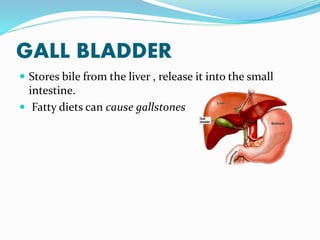
GALL BLADDER
 Stores bile from the liver , release it into the small
intestine.
 Fatty diets can cause gallstones
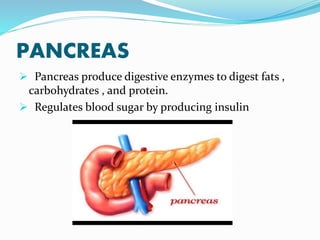
PANCREAS
 Pancreas produce digestive enzymes to digest fats ,
carbohydrates , and protein.
 Regulates blood sugar by producing insulin
REFERANCE
BASIC SCIENCE TEST BOOK , STANDARD IX
HUMAN DIGESTIVE SYSTEM

HUMAN DIGESTIVE SYSTEM