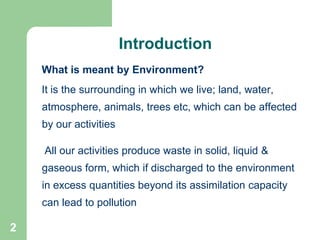
Environmental Management
2
What is meant by Environment?
It is the surrounding in which we live; land, water,
atmosphere, animals, trees etc, which can be affected
by our activities
All our activities produce waste in solid, liquid &
gaseous form, which if discharged to the environment
in excess quantities beyond its assimilation capacity
can lead to pollution
Introduction
3
Environmental Policy
Daewoo Engineering & Construction Co., Ltd. recognizes that the
Earth environment is essential and will comply with the following
environmental policy for planning and conducting the construction
business for human survival not only for present but also for future
generation.
Environmental Management Point
 Minimize construction waste, effluent and promote recycling
 Prevent environmental pollution
 Provide adequate information, training and supervision
 Measure, monitor and review environmental performance
4
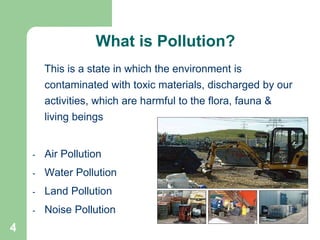
This is a state in which the environment is
contaminated with toxic materials, discharged by our
activities, which are harmful to the flora, fauna &
living beings
- Air Pollution
- Water Pollution
- Land Pollution
- Noise Pollution
What is Pollution?
5
What is meant by spill?
 This refers to the sudden or accidental discharged of contaminant
into the environment
 Spill Control Plans
Three processes are in place for effective management of waste water
to avoid land surface and ground water contamination.
- Batching plant process water
- Treatment of batching plant toxic waste water before discharge
- The high pH value is neutralized with the use of Aluminum Sulfate
Spill
6
• Battery charging operation
- Sulphuric acid is being neutralized with soda ash before
disposal
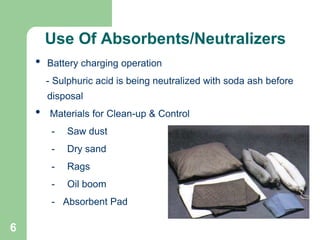
• Materials for Clean-up & Control
- Saw dust
- Dry sand
- Rags
- Oil boom
- Absorbent Pad
Use Of Absorbents/Neutralizers
7
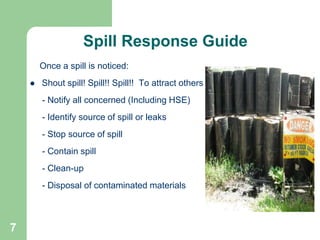
Once a spill is noticed:
 Shout spill! Spill!! Spill!! To attract others
- Notify all concerned (Including HSE)
- Identify source of spill or leaks
- Stop source of spill
- Contain spill
- Clean-up
- Disposal of contaminated materials
Spill Response Guide
8
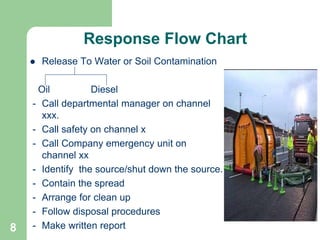
 Release To Water or Soil Contamination
Oil Diesel
- Call departmental manager on channel
xxx.
- Call safety on channel x
- Call Company emergency unit on
channel xx
- Identify the source/shut down the source.
- Contain the spread
- Arrange for clean up
- Follow disposal procedures
- Make written report
Response Flow Chart
9
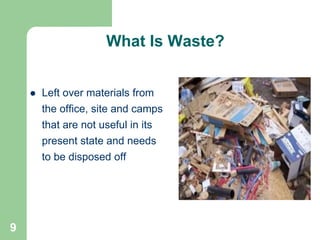
 Left over materials from
the office, site and camps
that are not useful in its
present state and needs
to be disposed off
What Is Waste?
10
 Wood
 Used engine oil
 Used batteries
 Used tyres
 Oily cotton rag
 Oil contaminated sand
 Metal scrap
 Gaskets, glass waste etc.
 Sewage
 Kitchen waste
 Clinical waste
 Paper
 Carton
 Plastic
Common wastes that are generated in the project are;
Types Of Wastes
11
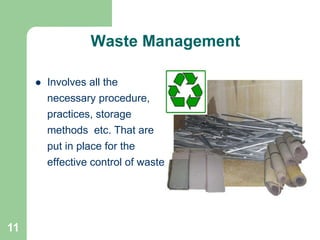
 Involves all the
necessary procedure,
practices, storage
methods etc. That are
put in place for the
effective control of waste
Waste Management
12
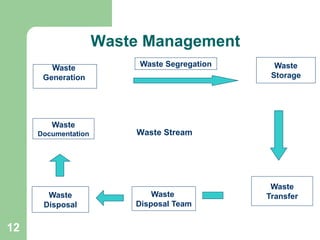
Waste Stream
Waste
Generation
Waste Segregation Waste
Storage
Waste
Transfer
Waste
Disposal Team
Waste
Disposal
Waste
Documentation
Waste Management
13
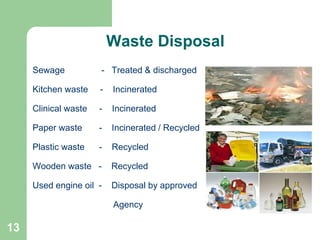
Sewage - Treated & discharged
Kitchen waste - Incinerated
Clinical waste - Incinerated
Paper waste - Incinerated / Recycled
Plastic waste - Recycled
Wooden waste - Recycled
Used engine oil - Disposal by approved
Agency
Waste Disposal
14
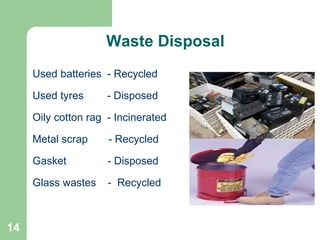
Used batteries - Recycled
Used tyres - Disposed
Oily cotton rag - Incinerated
Metal scrap - Recycled
Gasket - Disposed
Glass wastes - Recycled
Waste Disposal
15
Waste Management Tips
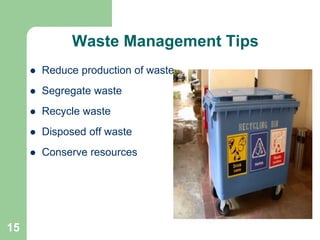
 Reduce production of waste
 Segregate waste
 Recycle waste
 Disposed off waste
 Conserve resources
16
Waste Management
 Waste management aim is to gradually reduce
waste with the aim of eliminating those that have
the potential to cause harm to people and the
environment.
 It is criminal offence to dispose hazardous waste
to nature or cause harm to the environment.
17
Environmental Control
Dust Pollution during Construction Phase
 Adequately sprinkle the area with water especially the road
under construction to suppress or minimize dust. Water
sprinkling of construction areas shall be done twice a day,
morning and afternoon on a regular basis.
Body of Water
 Protect all forms of body of water around the site that will
be affected during the construction period this includes river,
sea, swamp or lakes.
 No waste water coming from the construction site will be
discharged to this body of water without proper treatment or
tested to be safe and will not harm any form of living things
in the environment.
18
Environmental Control
Noise Control
 Administer a continuing, effective hearing
conservation program, as described in the
procedure, whenever employee noise
exposures equal or exceed an 8-hour time-
weighted average sound level of 85 decibels
measured.
19
Environmental Control
 Hazards of Exposure to noise
– Exposure to noise can have the following consequences;
– Causes annoyance and irritation
– Affects concentration and efficiency
– Causes fatigue and accident proneness
– Prevents ear from registering other sounds, instructions and
warnings
– Short exposure to excess noise causes damage to the inner
ear and permanent loss of hearing
20
Environmental Control
 Limiting Exposure to noise can be reduced by:
– Engineering and control methods (e.g. installation of
silencer, sound controlled equipment enclosure, replacing
equipment with a low noise producing equipment if
possible)
– Job rotation
– Providing rest rooms or acoustic refuges
– Re-arranging work locations
– PPE (ear plug, ear muffs)
21
Environmental Control
Soil Erosion
 The excavated or embanked area, shoulder on side slopes or
borrow pits are the area where soil erosion are likely to occur
during heavy rain. To avoid soil erosion, all exposed surface shall
be regressed or covered by stone pitching, lining concrete, spill
way and compaction of the embankment area shall be carried out.
Operating Procedures:
 The operating procedures for various operations such as Acid
neutralization, Auto Effluent Grease pit operation, Batching plant
effluent neutralization should be displayed at the corresponding
locations. The operating personnel in the corresponding locations
should be trained to operate the above procedures.
22
Summary
 Minimizse construction waste, and then dispose it to the
designated area
 Implement waste segregation ang recycling
 Minimize the source of pollution by establishing target of
saving energy and resources
 Strive that there is no environmental accident and
violation of environmental legislation and regulation
 Environmental policy shall be open to the public as well
as internal
 Each employee should understand and comply with the
policy, and shall actively participate in and make utmost
efforts to the environmental management activity

HSE-BMS-003 Environmental Management.ppt

  • 1.
  • 2.
    2 What is meantby Environment? It is the surrounding in which we live; land, water, atmosphere, animals, trees etc, which can be affected by our activities All our activities produce waste in solid, liquid & gaseous form, which if discharged to the environment in excess quantities beyond its assimilation capacity can lead to pollution Introduction
  • 3.
    3 Environmental Policy Daewoo Engineering& Construction Co., Ltd. recognizes that the Earth environment is essential and will comply with the following environmental policy for planning and conducting the construction business for human survival not only for present but also for future generation. Environmental Management Point  Minimize construction waste, effluent and promote recycling  Prevent environmental pollution  Provide adequate information, training and supervision  Measure, monitor and review environmental performance
  • 4.
    4 This is astate in which the environment is contaminated with toxic materials, discharged by our activities, which are harmful to the flora, fauna & living beings - Air Pollution - Water Pollution - Land Pollution - Noise Pollution What is Pollution?
  • 5.
    5 What is meantby spill?  This refers to the sudden or accidental discharged of contaminant into the environment  Spill Control Plans Three processes are in place for effective management of waste water to avoid land surface and ground water contamination. - Batching plant process water - Treatment of batching plant toxic waste water before discharge - The high pH value is neutralized with the use of Aluminum Sulfate Spill
  • 6.
    6 • Battery chargingoperation - Sulphuric acid is being neutralized with soda ash before disposal • Materials for Clean-up & Control - Saw dust - Dry sand - Rags - Oil boom - Absorbent Pad Use Of Absorbents/Neutralizers
  • 7.
    7 Once a spillis noticed:  Shout spill! Spill!! Spill!! To attract others - Notify all concerned (Including HSE) - Identify source of spill or leaks - Stop source of spill - Contain spill - Clean-up - Disposal of contaminated materials Spill Response Guide
  • 8.
    8  Release ToWater or Soil Contamination Oil Diesel - Call departmental manager on channel xxx. - Call safety on channel x - Call Company emergency unit on channel xx - Identify the source/shut down the source. - Contain the spread - Arrange for clean up - Follow disposal procedures - Make written report Response Flow Chart
  • 9.
    9  Left overmaterials from the office, site and camps that are not useful in its present state and needs to be disposed off What Is Waste?
  • 10.
    10  Wood  Usedengine oil  Used batteries  Used tyres  Oily cotton rag  Oil contaminated sand  Metal scrap  Gaskets, glass waste etc.  Sewage  Kitchen waste  Clinical waste  Paper  Carton  Plastic Common wastes that are generated in the project are; Types Of Wastes
  • 11.
    11  Involves allthe necessary procedure, practices, storage methods etc. That are put in place for the effective control of waste Waste Management
  • 12.
    12 Waste Stream Waste Generation Waste SegregationWaste Storage Waste Transfer Waste Disposal Team Waste Disposal Waste Documentation Waste Management
  • 13.
    13 Sewage - Treated& discharged Kitchen waste - Incinerated Clinical waste - Incinerated Paper waste - Incinerated / Recycled Plastic waste - Recycled Wooden waste - Recycled Used engine oil - Disposal by approved Agency Waste Disposal
  • 14.
    14 Used batteries -Recycled Used tyres - Disposed Oily cotton rag - Incinerated Metal scrap - Recycled Gasket - Disposed Glass wastes - Recycled Waste Disposal
  • 15.
    15 Waste Management Tips Reduce production of waste  Segregate waste  Recycle waste  Disposed off waste  Conserve resources
  • 16.
    16 Waste Management  Wastemanagement aim is to gradually reduce waste with the aim of eliminating those that have the potential to cause harm to people and the environment.  It is criminal offence to dispose hazardous waste to nature or cause harm to the environment.
  • 17.
    17 Environmental Control Dust Pollutionduring Construction Phase  Adequately sprinkle the area with water especially the road under construction to suppress or minimize dust. Water sprinkling of construction areas shall be done twice a day, morning and afternoon on a regular basis. Body of Water  Protect all forms of body of water around the site that will be affected during the construction period this includes river, sea, swamp or lakes.  No waste water coming from the construction site will be discharged to this body of water without proper treatment or tested to be safe and will not harm any form of living things in the environment.
  • 18.
    18 Environmental Control Noise Control Administer a continuing, effective hearing conservation program, as described in the procedure, whenever employee noise exposures equal or exceed an 8-hour time- weighted average sound level of 85 decibels measured.
  • 19.
    19 Environmental Control  Hazardsof Exposure to noise – Exposure to noise can have the following consequences; – Causes annoyance and irritation – Affects concentration and efficiency – Causes fatigue and accident proneness – Prevents ear from registering other sounds, instructions and warnings – Short exposure to excess noise causes damage to the inner ear and permanent loss of hearing
  • 20.
    20 Environmental Control  LimitingExposure to noise can be reduced by: – Engineering and control methods (e.g. installation of silencer, sound controlled equipment enclosure, replacing equipment with a low noise producing equipment if possible) – Job rotation – Providing rest rooms or acoustic refuges – Re-arranging work locations – PPE (ear plug, ear muffs)
  • 21.
    21 Environmental Control Soil Erosion The excavated or embanked area, shoulder on side slopes or borrow pits are the area where soil erosion are likely to occur during heavy rain. To avoid soil erosion, all exposed surface shall be regressed or covered by stone pitching, lining concrete, spill way and compaction of the embankment area shall be carried out. Operating Procedures:  The operating procedures for various operations such as Acid neutralization, Auto Effluent Grease pit operation, Batching plant effluent neutralization should be displayed at the corresponding locations. The operating personnel in the corresponding locations should be trained to operate the above procedures.
  • 22.
    22 Summary  Minimizse constructionwaste, and then dispose it to the designated area  Implement waste segregation ang recycling  Minimize the source of pollution by establishing target of saving energy and resources  Strive that there is no environmental accident and violation of environmental legislation and regulation  Environmental policy shall be open to the public as well as internal  Each employee should understand and comply with the policy, and shall actively participate in and make utmost efforts to the environmental management activity