Submitted to: Submitted by:
Mrs. Veerpal Kaur Pralabh Jain
Lecturer in HRM CSE-2k7
4736
DEPTT. OF COMPUTER SCIENCE
ENGINEERING
G.Z.S.C.E.T,BATHINDA
(Estd. By Government of PUNJAB)
HUMAN RESOURCE
MANAGEMENT
Introduction
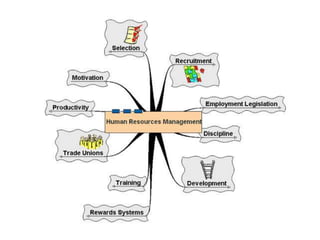
Human Resource Management is the
organizational function that deals with issues
related to people such as compensation,
hiring, performance management, organization
development, safety, wellness, benefits,
employee motivation, communication,
administration, and training.
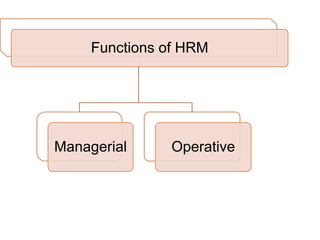
Functions of HRM
Managerial Operative
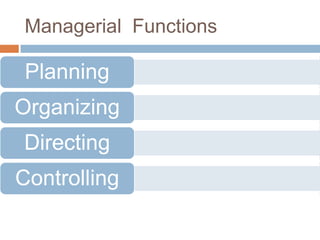
Managerial Functions
Planning
Organizing
Directing
Controlling
Planning
 Planning is necessary to give the organization
its goals and directions to establish best
procedure to reach the goals. Planning staff
levels requires that an assessment of present
and future needs of the organization be
compared with present resources and future
predicted resources. Appropriate steps then be
planned to bring demand and supply into
balance.
Organizing
 After objectives have been established and
plans been developed then personnel manager
must design and develop organisation structure
to carry out various operations. Such as-
• Grouping of personnel activity
• Assignment of different groups of activities to
different individuals
• Delegation according to task assigned
• Co-ordination of activities of different individuals.
Directing
 The directing function of the personnel
manager involves encouraging people to work
willingly and effectively for the goals of the
orgainsation.
Controlling
 Controlling helps to evaluate and control the
performance of the department in terms of
various operative functions.
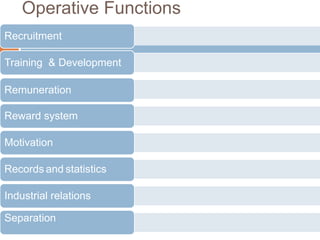
Operative Functions
Recruitment
Training & Development
Remuneration
Reward system
Motivation
Records and statistics
Industrial relations
Separation
Recruitment
 The process by which a job vacancy
is identified and potential employees are
notified.
 The nature of the recruitment process
is regulated and subject
to employment law.
 Main forms of recruitment through advertising
in newspapers, magazines, trade papers and
internal vacancy lists.
Training and Development
 Provides new skills for the employee
 Keeps the employee up to date
with changes in the field
 Aims to improve efficiency
Remuneration
 Concern with determination and equitable
remuneration of employees in the organisation
to the goals.
Reward system
 The system of pay and benefits used by the
firm to reward workers
 Money not the only method
 Fringe benefits
 Flexibility at work
 Holidays, etc.
Motivation
 To retain good staff and to encourage them to
give of their best while at work requires
attention to the financial and psychological and
even physiological rewards offered by the
organization as a continuous exercise.
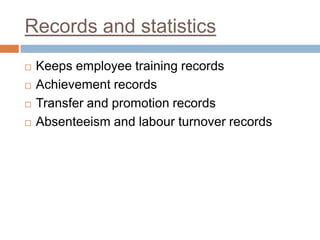
Records and statistics
 Keeps employee training records
 Achievement records
 Transfer and promotion records
 Absenteeism and labour turnover records
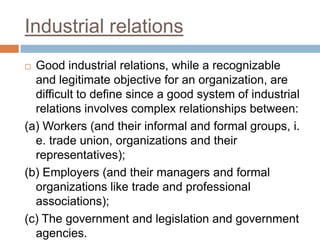
Industrial relations
 Good industrial relations, while a recognizable
and legitimate objective for an organization, are
difficult to define since a good system of industrial
relations involves complex relationships between:
(a) Workers (and their informal and formal groups, i.
e. trade union, organizations and their
representatives);
(b) Employers (and their managers and formal
organizations like trade and professional
associations);
(c) The government and legislation and government
agencies.
Separation
 Ensure the release of retirement benefits
 Requirements of the employee
Thank You

HRM Functions.pdf

  • 1.
    Submitted to: Submittedby: Mrs. Veerpal Kaur Pralabh Jain Lecturer in HRM CSE-2k7 4736 DEPTT. OF COMPUTER SCIENCE ENGINEERING G.Z.S.C.E.T,BATHINDA (Estd. By Government of PUNJAB) HUMAN RESOURCE MANAGEMENT
  • 2.
    Introduction Human Resource Managementis the organizational function that deals with issues related to people such as compensation, hiring, performance management, organization development, safety, wellness, benefits, employee motivation, communication, administration, and training.
  • 4.
  • 5.
  • 6.
    Planning  Planning isnecessary to give the organization its goals and directions to establish best procedure to reach the goals. Planning staff levels requires that an assessment of present and future needs of the organization be compared with present resources and future predicted resources. Appropriate steps then be planned to bring demand and supply into balance.
  • 7.
    Organizing  After objectiveshave been established and plans been developed then personnel manager must design and develop organisation structure to carry out various operations. Such as- • Grouping of personnel activity • Assignment of different groups of activities to different individuals • Delegation according to task assigned • Co-ordination of activities of different individuals.
  • 8.
    Directing  The directingfunction of the personnel manager involves encouraging people to work willingly and effectively for the goals of the orgainsation.
  • 9.
    Controlling  Controlling helpsto evaluate and control the performance of the department in terms of various operative functions.
  • 10.
    Operative Functions Recruitment Training &Development Remuneration Reward system Motivation Records and statistics Industrial relations Separation
  • 11.
    Recruitment  The processby which a job vacancy is identified and potential employees are notified.  The nature of the recruitment process is regulated and subject to employment law.  Main forms of recruitment through advertising in newspapers, magazines, trade papers and internal vacancy lists.
  • 12.
    Training and Development Provides new skills for the employee  Keeps the employee up to date with changes in the field  Aims to improve efficiency
  • 13.
    Remuneration  Concern withdetermination and equitable remuneration of employees in the organisation to the goals.
  • 14.
    Reward system  Thesystem of pay and benefits used by the firm to reward workers  Money not the only method  Fringe benefits  Flexibility at work  Holidays, etc.
  • 15.
    Motivation  To retaingood staff and to encourage them to give of their best while at work requires attention to the financial and psychological and even physiological rewards offered by the organization as a continuous exercise.
  • 16.
    Records and statistics Keeps employee training records  Achievement records  Transfer and promotion records  Absenteeism and labour turnover records
  • 17.
    Industrial relations  Goodindustrial relations, while a recognizable and legitimate objective for an organization, are difficult to define since a good system of industrial relations involves complex relationships between: (a) Workers (and their informal and formal groups, i. e. trade union, organizations and their representatives); (b) Employers (and their managers and formal organizations like trade and professional associations); (c) The government and legislation and government agencies.
  • 18.
    Separation  Ensure therelease of retirement benefits  Requirements of the employee
  • 19.