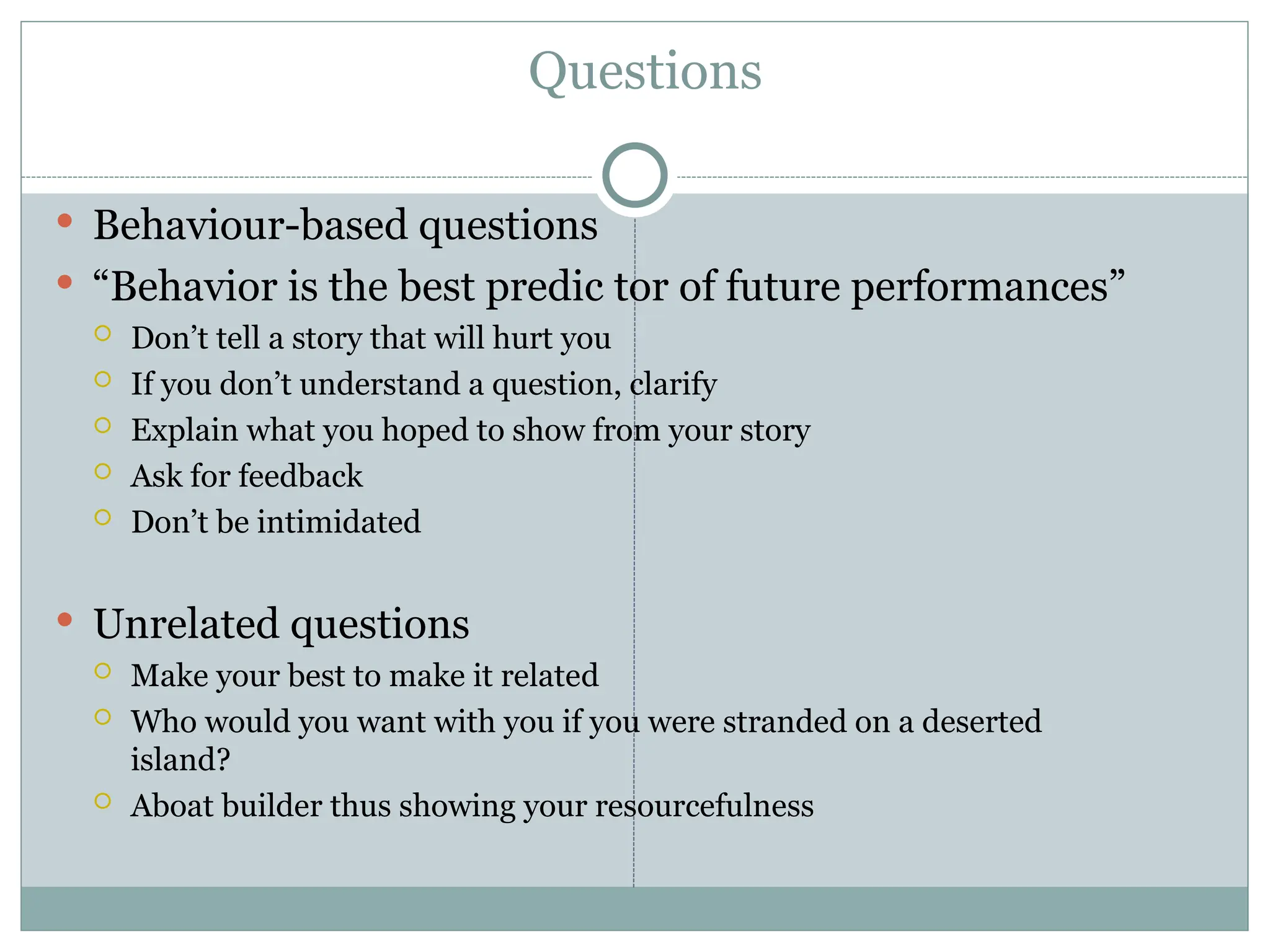
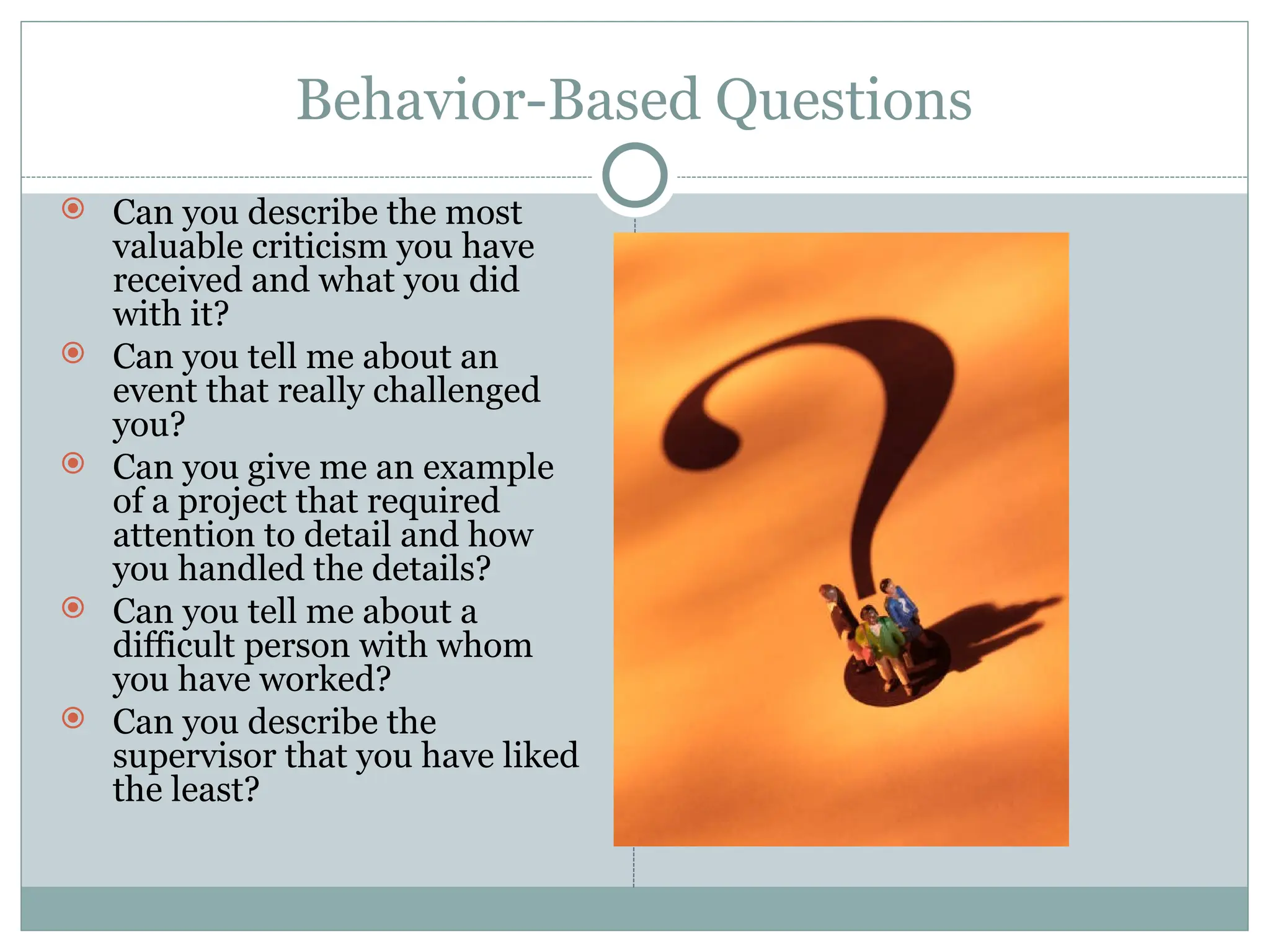
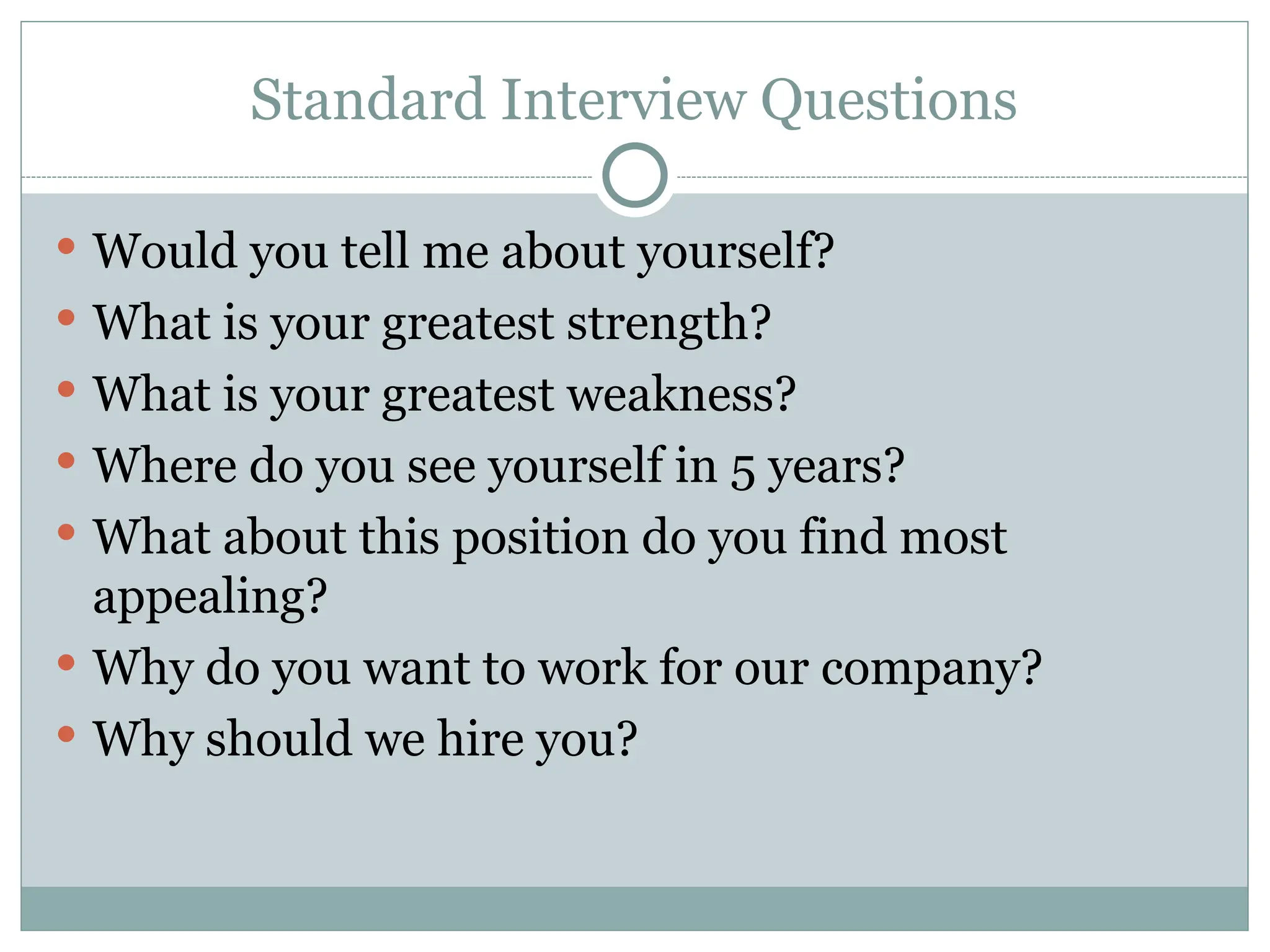
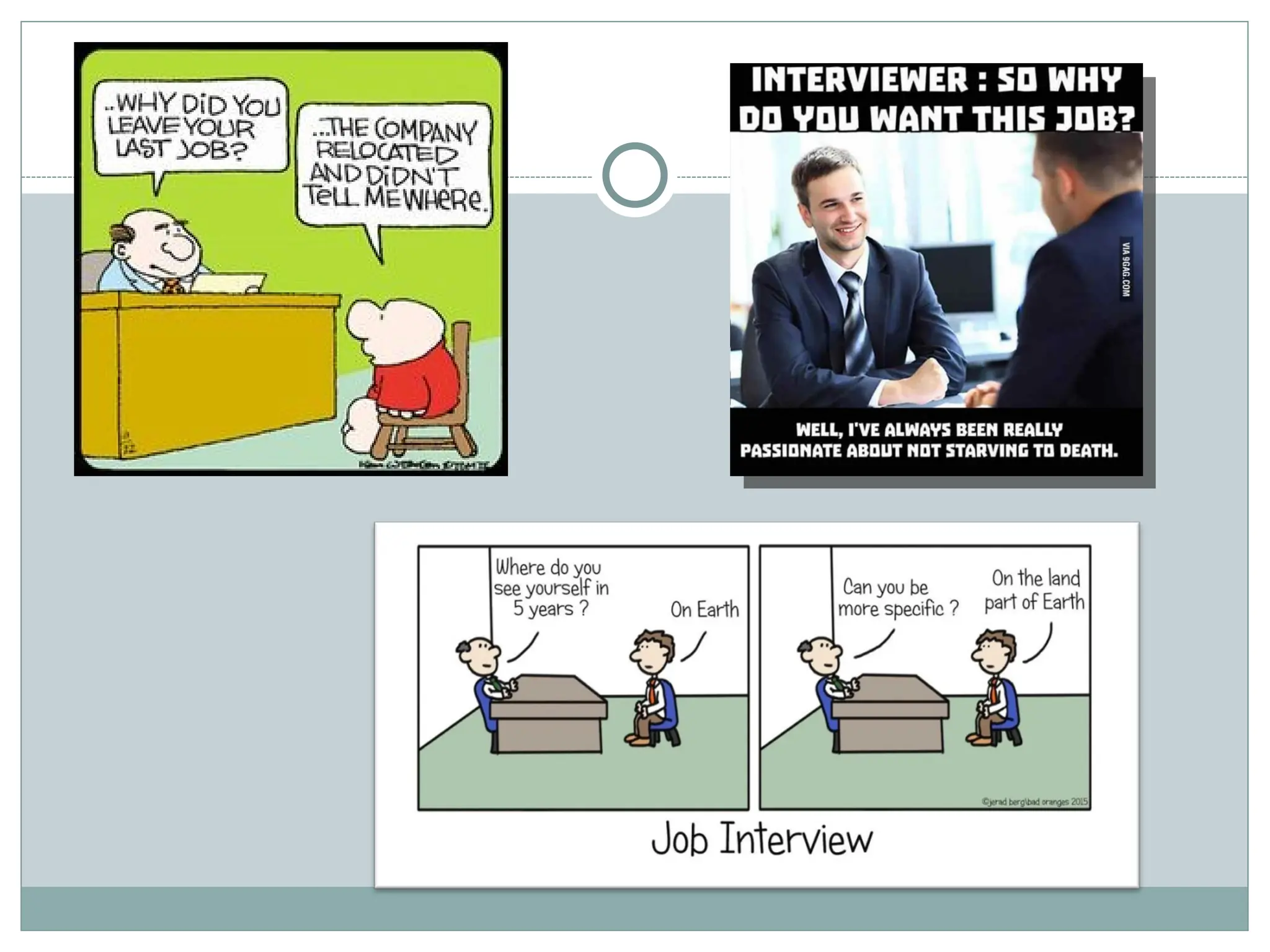
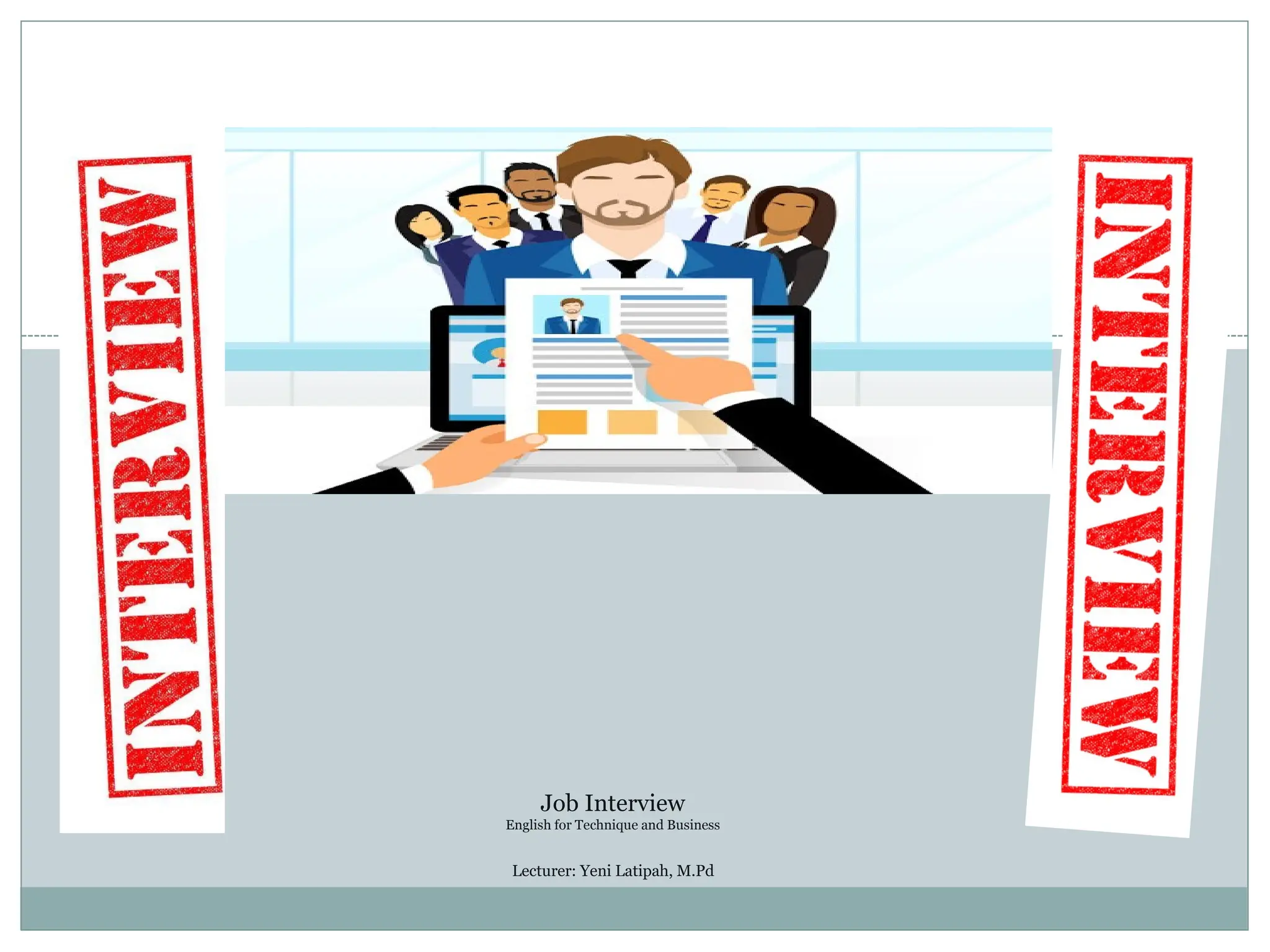
Job Interview
English for Technique and Business
Lecturer: Yeni Latipah, M.Pd
Before the Interview
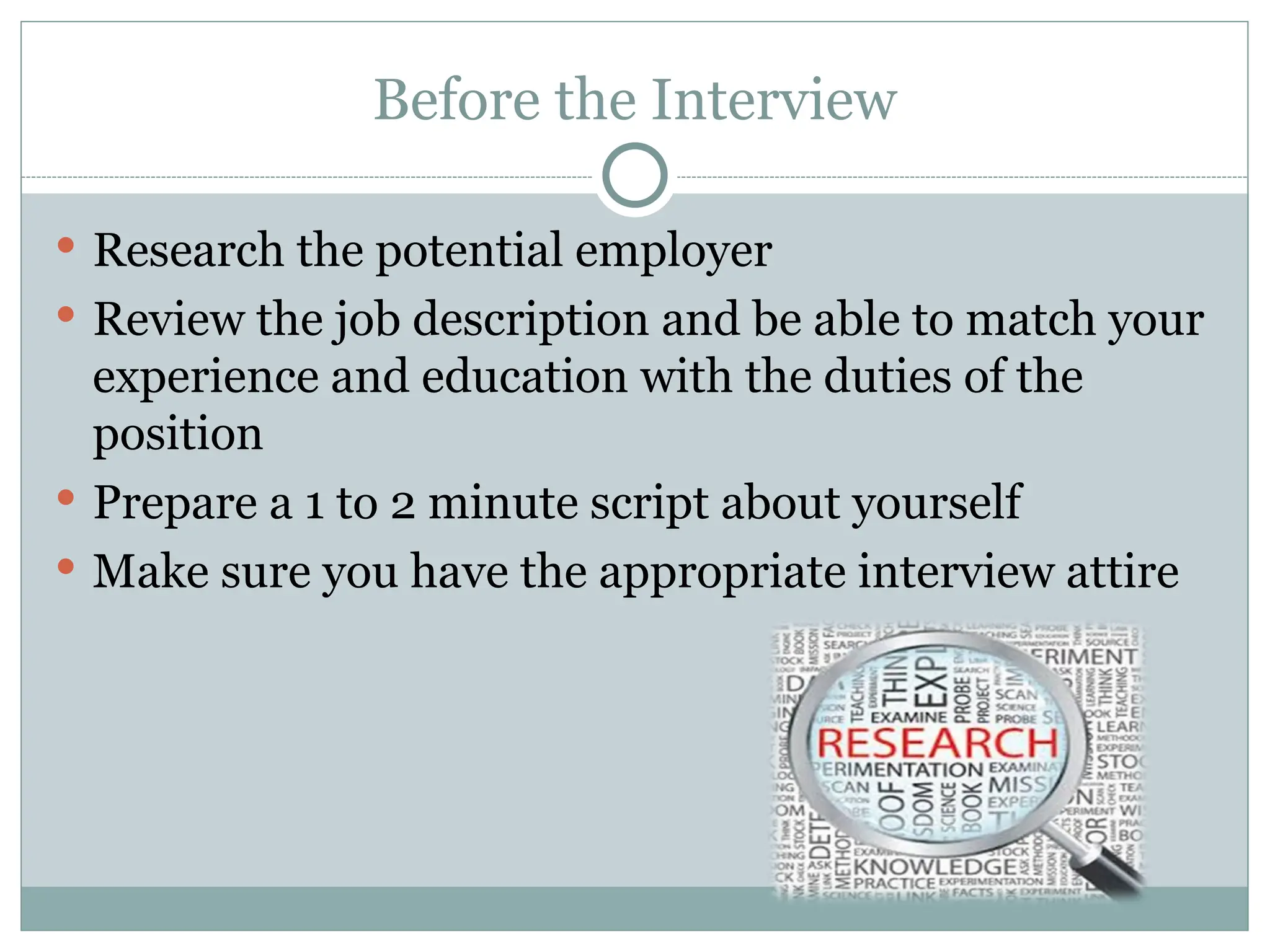
 Research the potential employer
 Review the job description and be able to match your
experience and education with the duties of the
position
 Prepare a 1 to 2 minute script about yourself
 Make sure you have the appropriate interview attire
First Impression
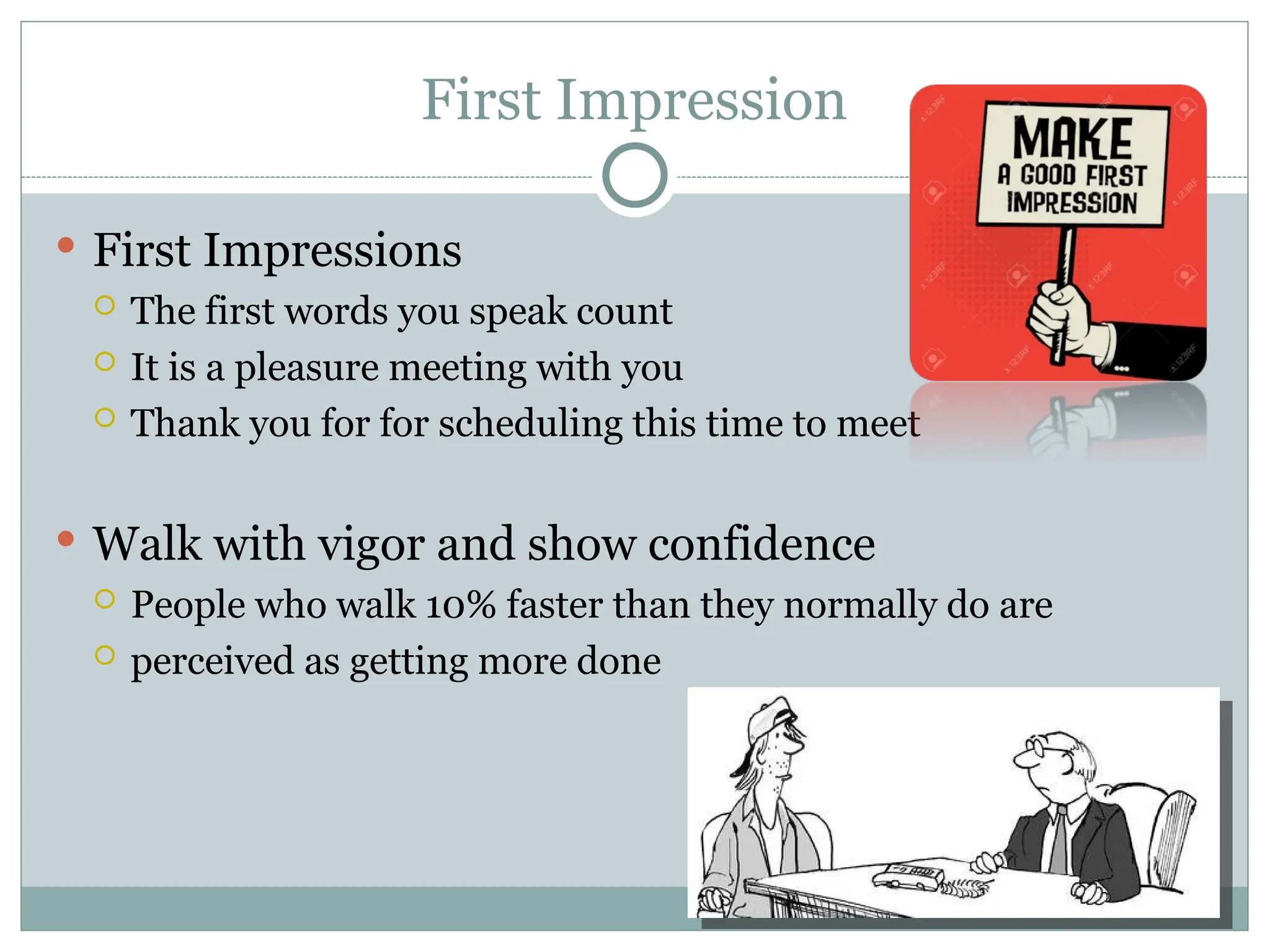
 First Impressions
 The first words you speak count
 It is a pleasure meeting with you
 Thank you for for scheduling this time to meet
 Walk with vigor and show confidence
 People who walk 10% faster than they normally do are
 perceived as getting more done
Dress for Success
 Dress for Success
 From head to toe should reflect impeccable grooming.
 Your hair, collar, tie/scarf and other accessories should be a
reflection of the quality person you are.
 It is a fact of life that we do “judge books by their covers.” To be
marketable in business today, your image is as important as
what you know. You must “fit in.”
Tips Regarding Attire
(Men)
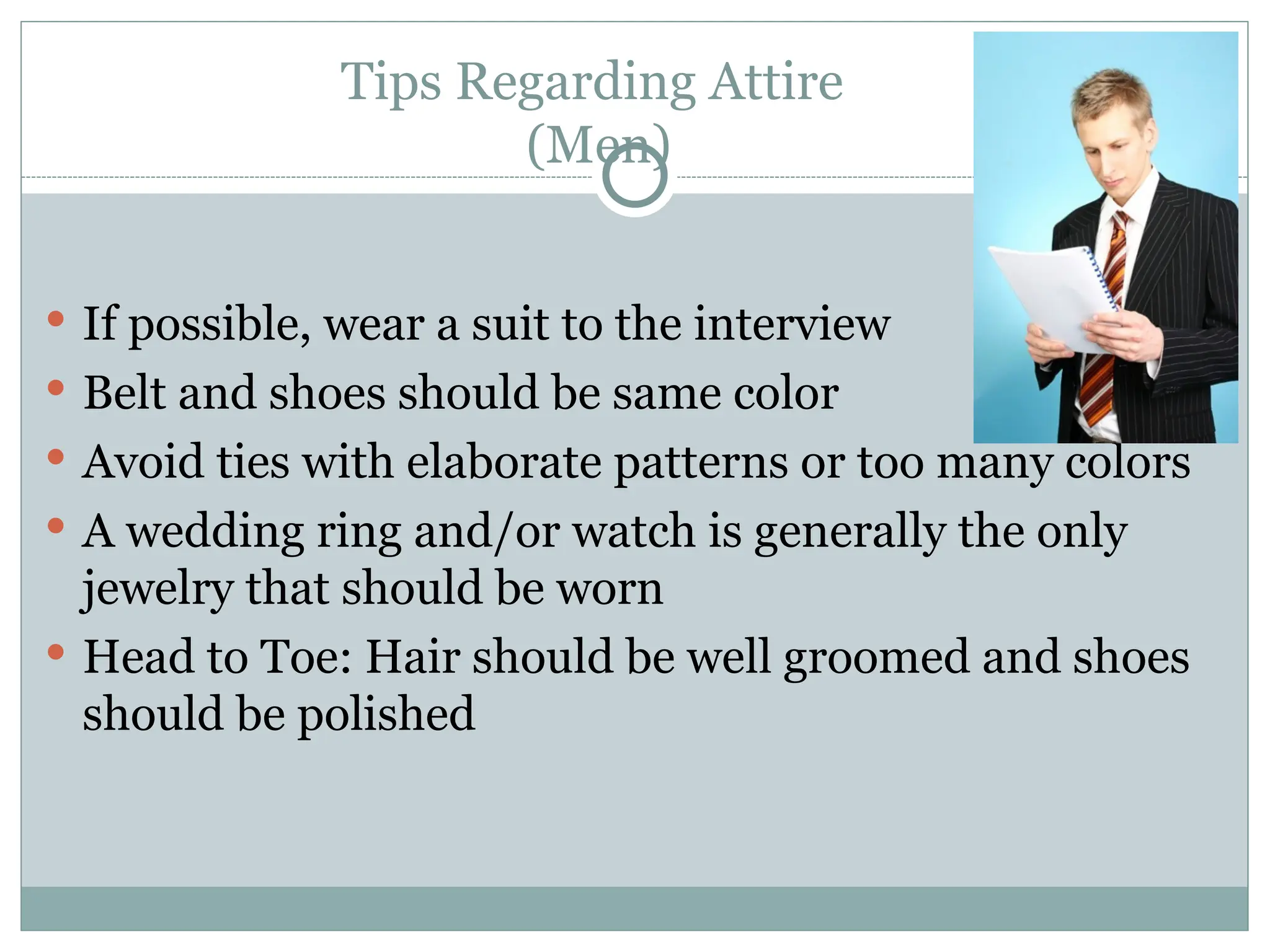
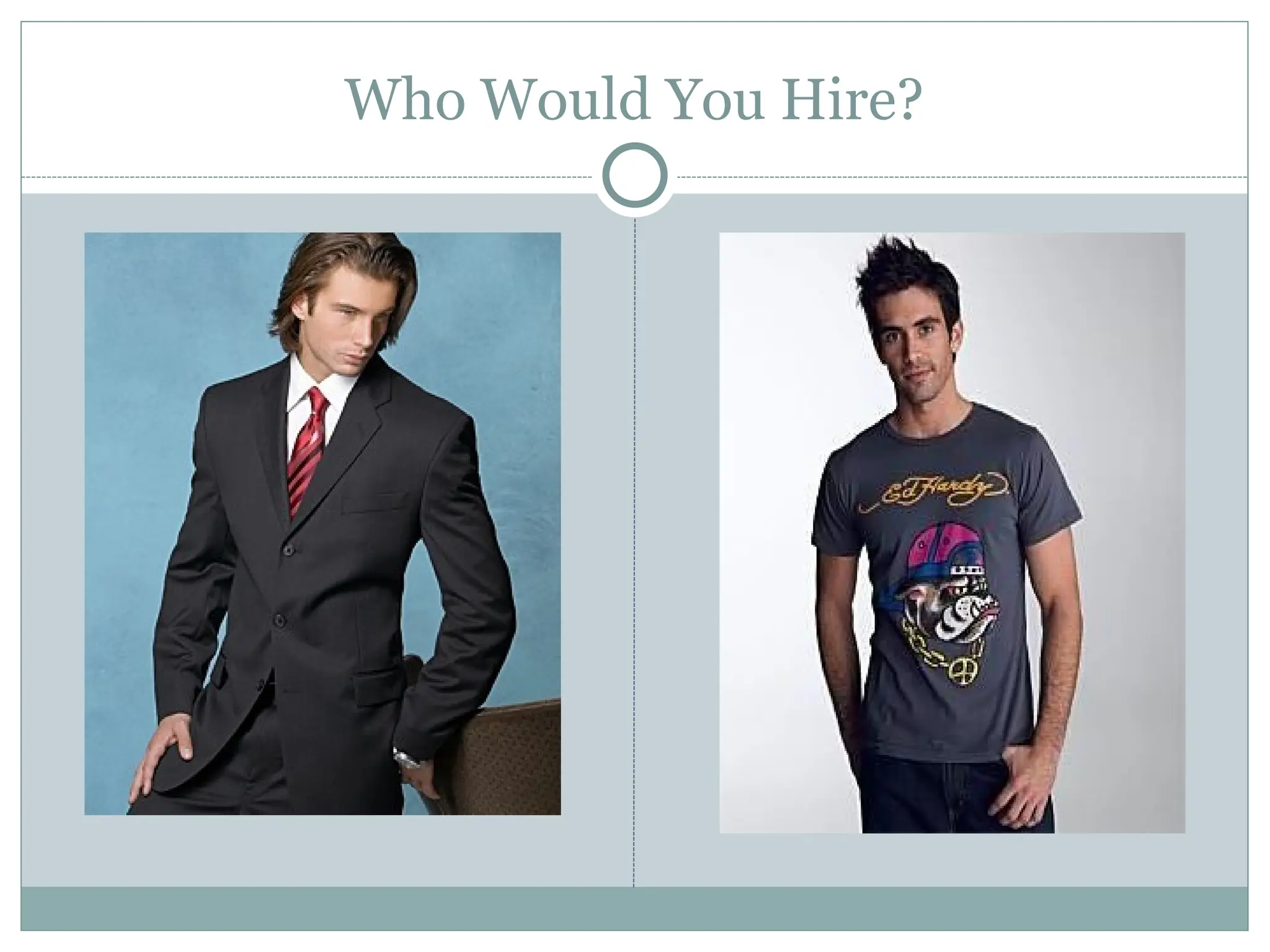
 If possible, wear a suit to the interview
 Belt and shoes should be same color
 Avoid ties with elaborate patterns or too many colors
 A wedding ring and/or watch is generally the only
jewelry that should be worn
 Head to Toe: Hair should be well groomed and shoes
should be polished
Who Would You Hire?
Tips Regarding Attire
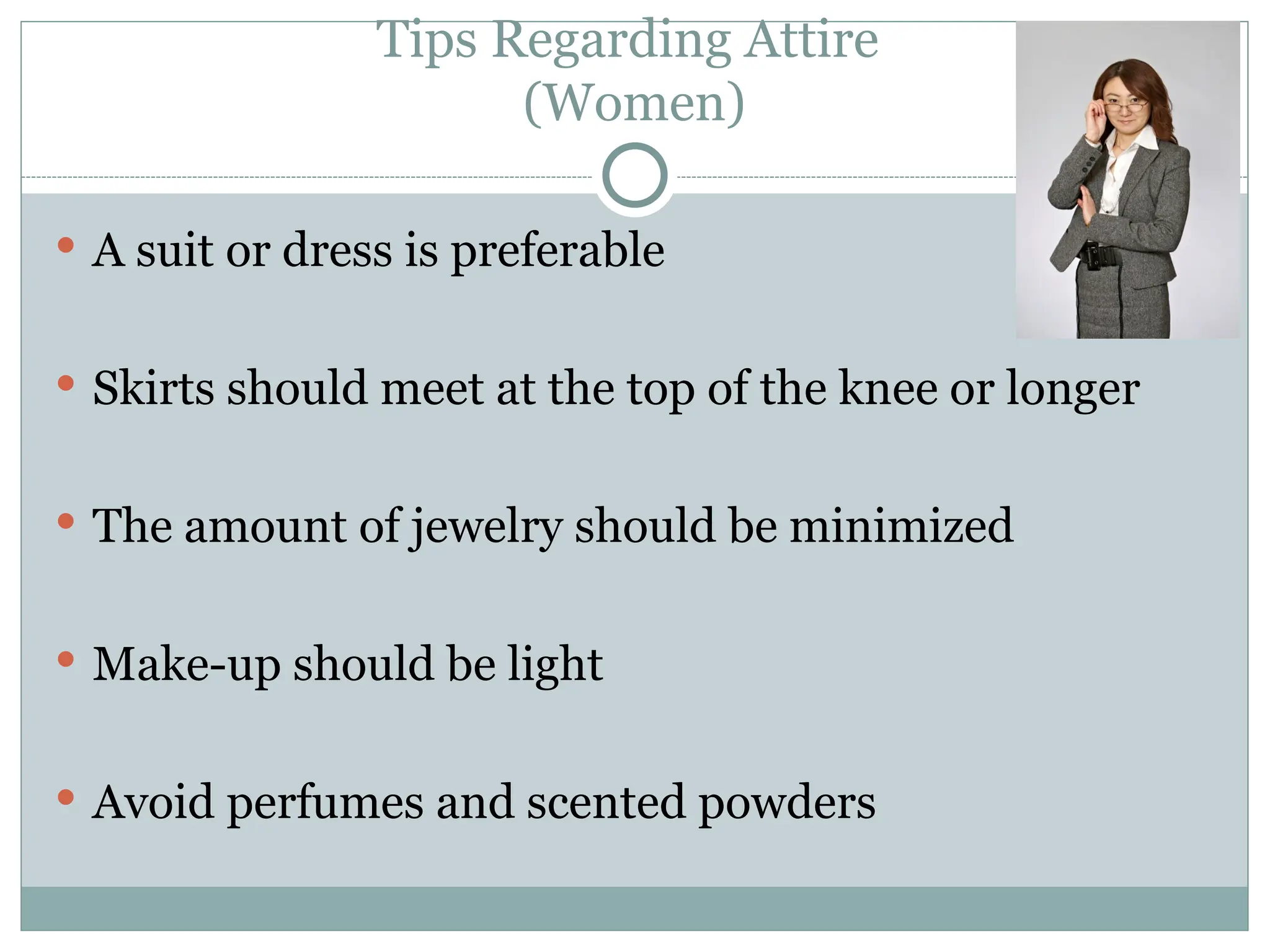
(Women)
 A suit or dress is preferable
 Skirts should meet at the top of the knee or longer
 The amount of jewelry should be minimized
 Make-up should be light
 Avoid perfumes and scented powders
Stylish Look, But Not For An Interview
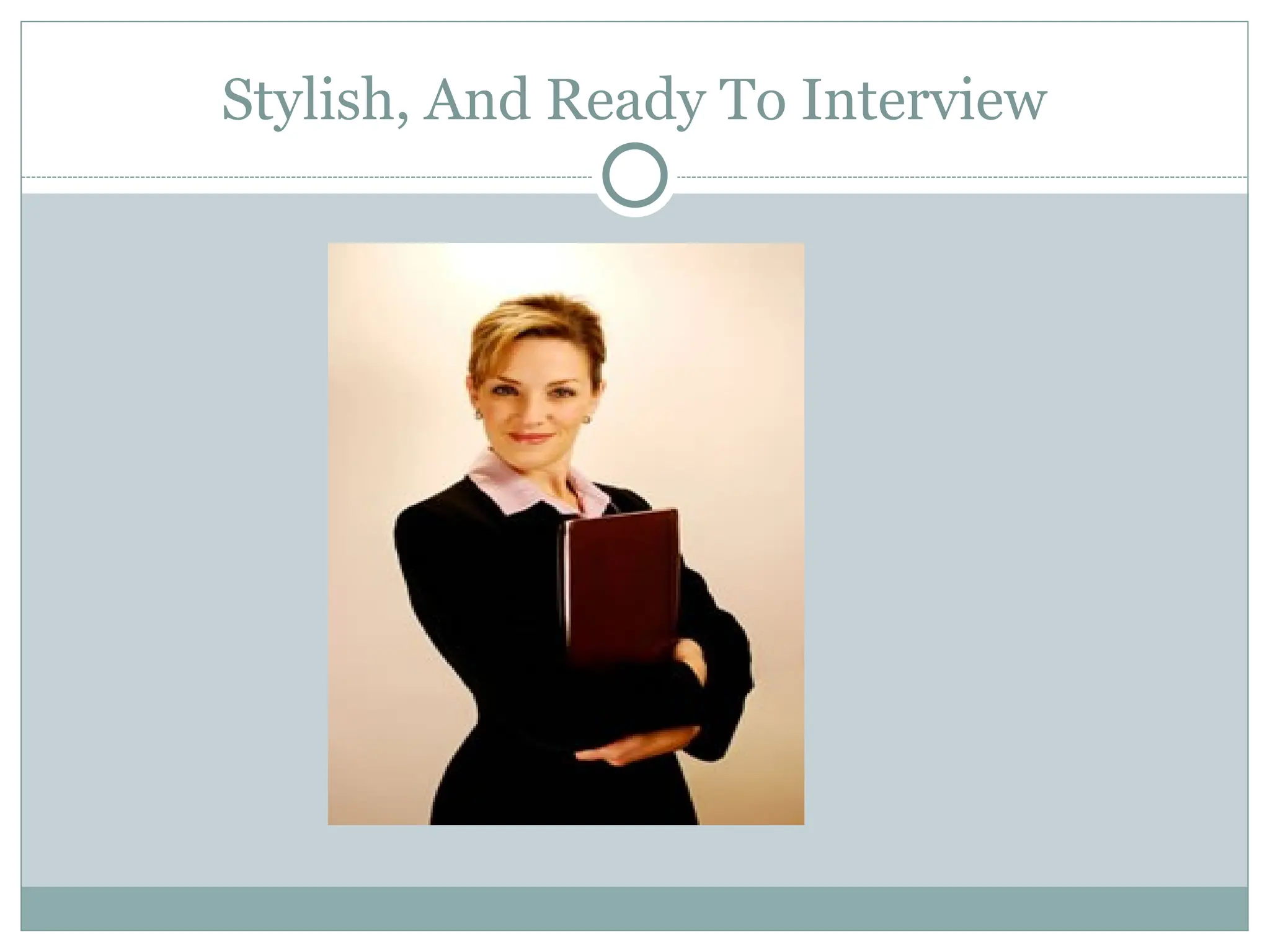
Stylish, And Ready To Interview
Starting The Interview
 Be sure to arrive 10 to
15 minutes prior to the
start of the interview
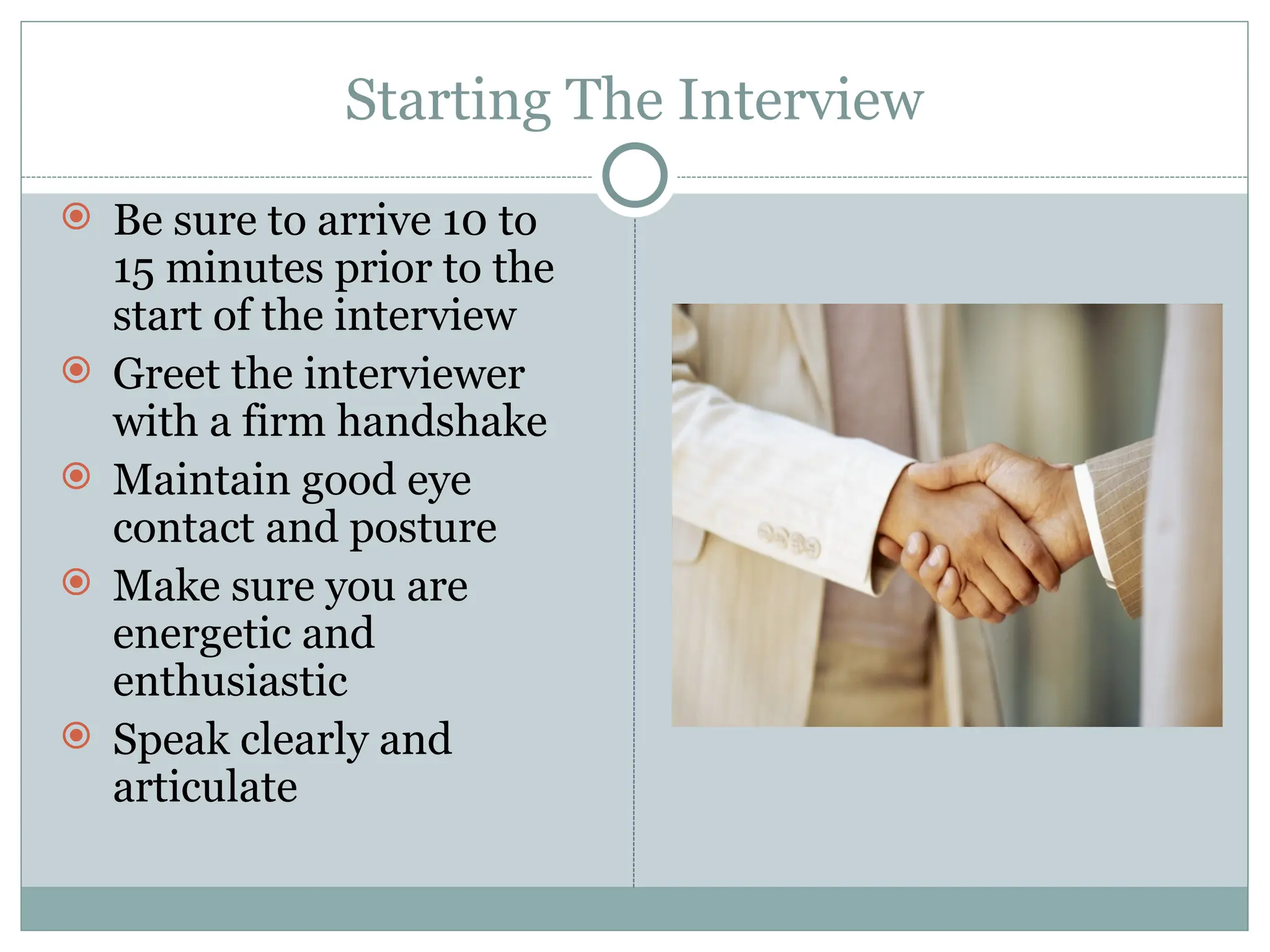
 Greet the interviewer
with a firm handshake
 Maintain good eye
contact and posture
 Make sure you are
energetic and
enthusiastic
 Speak clearly and
articulate
Be Prepared
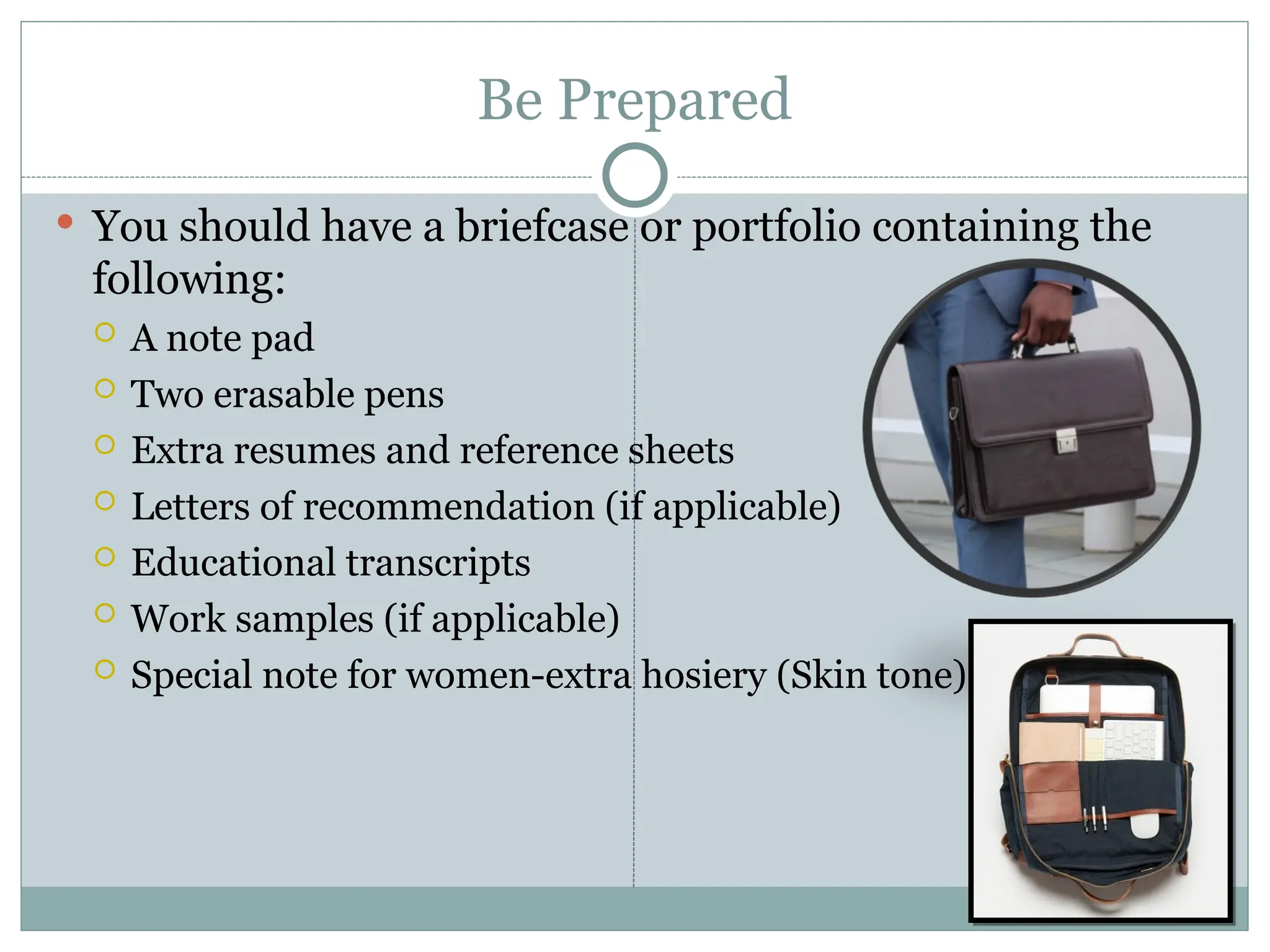
 You should have a briefcase or portfolio containing the
following:
 A note pad
 Two erasable pens
 Extra resumes and reference sheets
 Letters of recommendation (if applicable)
 Educational transcripts
 Work samples (if applicable)
 Special note for women-extra hosiery (Skin tone)
Central Themes of Questions
 Suitability
 Credibility
 Capability
 Compatibility
 Affordability
How will the questions be asked?
 Straight forward
 Problem solving
 Don’t find the “right answer” - how them you know the right way
to come up with the answer
 Listen to what is being asked
 Ask clarifying questions
 Respond by first explaining how you’d gather the data needed to
make an informed decision
 Discuss how you’d use that data to generate options
 Finally, based on the data, the available options, and your
understanding of the open position explain your recommendation
Questions
 Behaviour-based questions
 “Behavior is the best predic tor of future performances”
 Don’t tell a story that will hurt you
 If you don’t understand a question, clarify
 Explain what you hoped to show from your story
 Ask for feedback
 Don’t be intimidated
 Unrelated questions
 Make your best to make it related
 Who would you want with you if you were stranded on a deserted
island?
 Aboat builder thus showing your resourcefulness
Behavior-Based Questions
 Can you describe the most
valuable criticism you have
received and what you did
with it?
 Can you tell me about an
event that really challenged
you?
 Can you give me an example
of a project that required
attention to detail and how
you handled the details?
 Can you tell me about a
difficult person with whom
you have worked?
 Can you describe the
supervisor that you have liked
the least?
Standard Interview Questions
 Would you tell me about yourself?
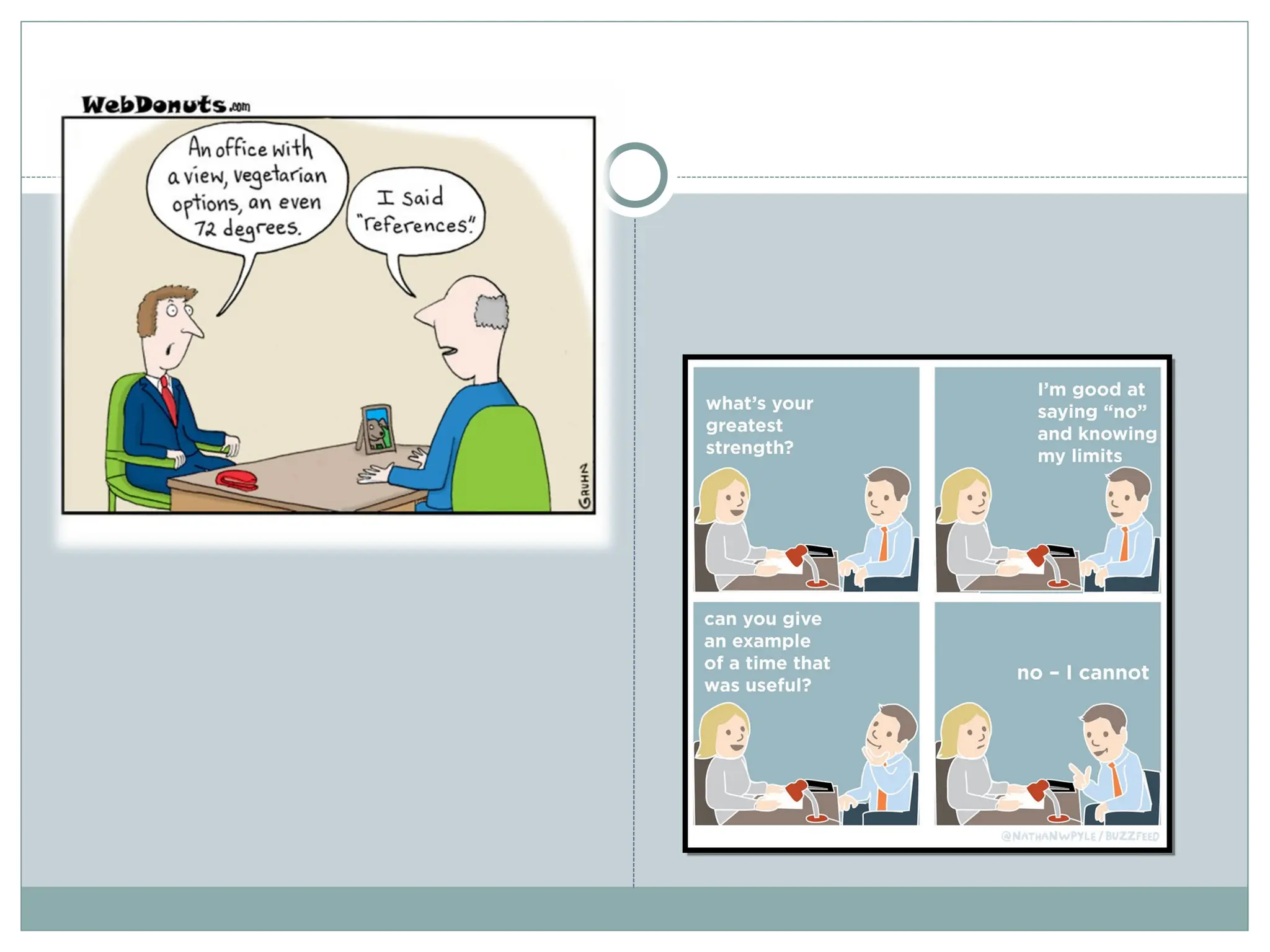
 What is your greatest strength?
 What is your greatest weakness?
 Where do you see yourself in 5 years?
 What about this position do you find most
appealing?
 Why do you want to work for our company?
 Why should we hire you?
How Do You Formulate Your Answers?
 S: situation
 T:task
 A: action
 R: result
Discussing a weakness
 Discuss a negative which is not related to the job
 Discuss a negative an employer already knows, but
make up for it in another way
 Discuss a negative you have improved on
 Discuss a negative that can become a positive
Handling negatives or objections
 Be positive -never complain
 Recognize stereotypes and biases
 Stress your strengths
 Use examples that show your reasons and
motivations -avoid yes or no answers
 The underlying questions is always “why should I
hire you” –give them reason
Asking Questions
 You should have questions prepared. It is your
chance to interview the interviewer.

 Don’t ask questions that can be readily found on
company brochures.
 Ask questions that will directly affect you or shows
your interest in the companies success.
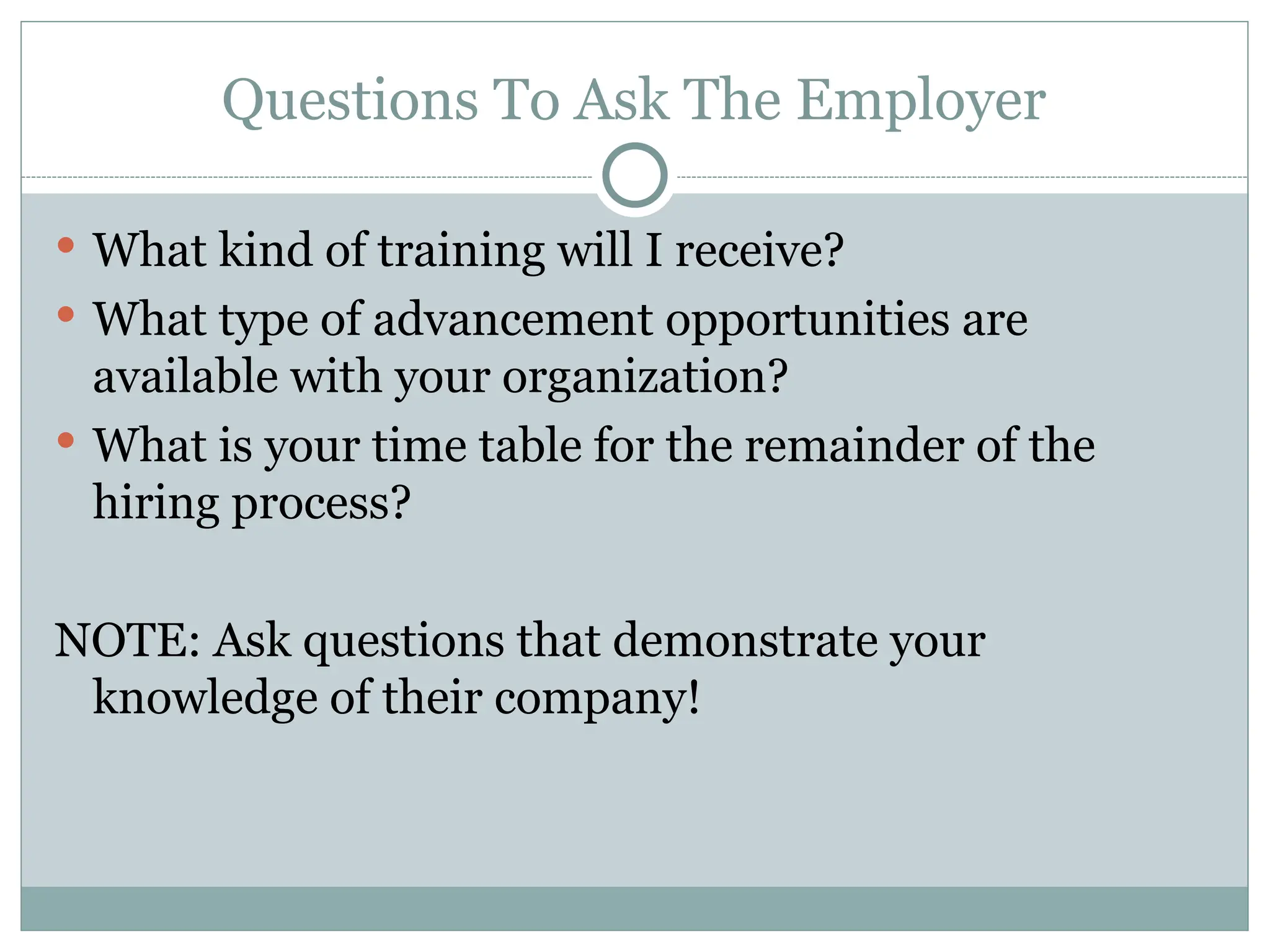
Questions To Ask The Employer
 What kind of training will I receive?
 What type of advancement opportunities are
available with your organization?
 What is your time table for the remainder of the
hiring process?
NOTE: Ask questions that demonstrate your
knowledge of their company!
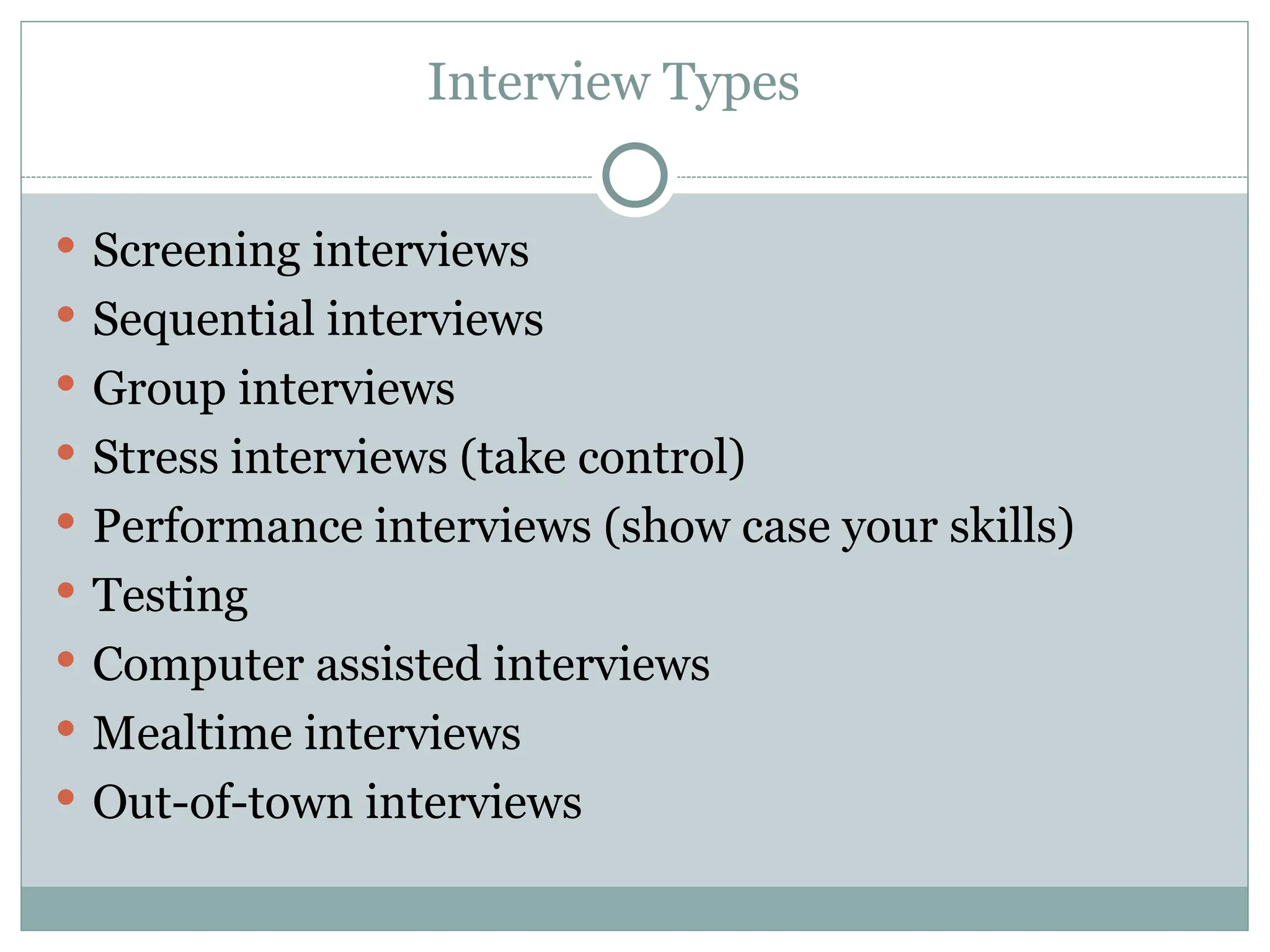
Interview Types
 Screening interviews
 Sequential interviews
 Group interviews
 Stress interviews (take control)
 Performance interviews (show case your skills)
 Testing
 Computer assisted interviews
 Mealtime interviews
 Out-of-town interviews
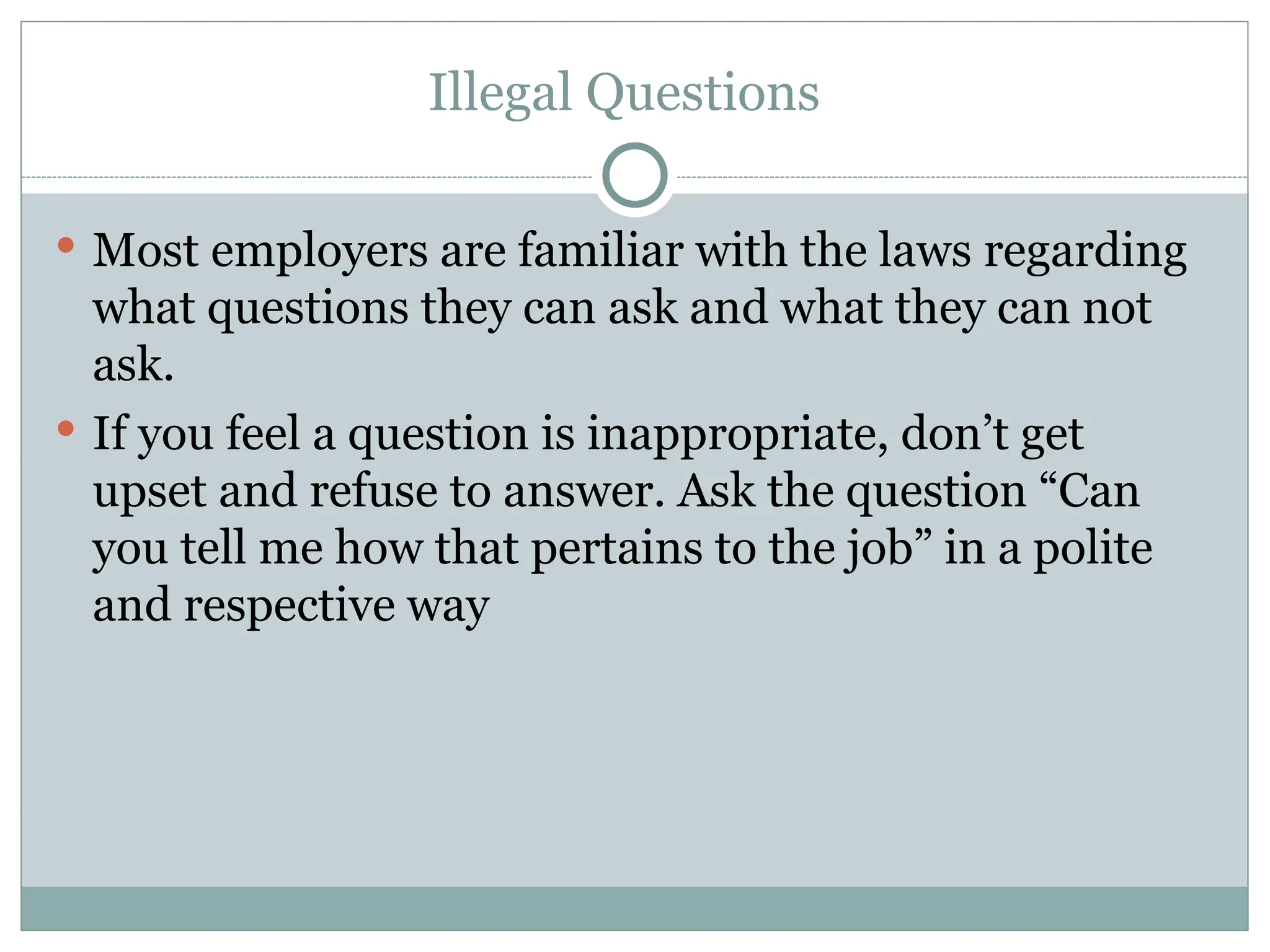
Illegal Questions
 Most employers are familiar with the laws regarding
what questions they can ask and what they can not
ask.
 If you feel a question is inappropriate, don’t get
upset and refuse to answer. Ask the question “Can
you tell me how that pertains to the job” in a polite
and respective way
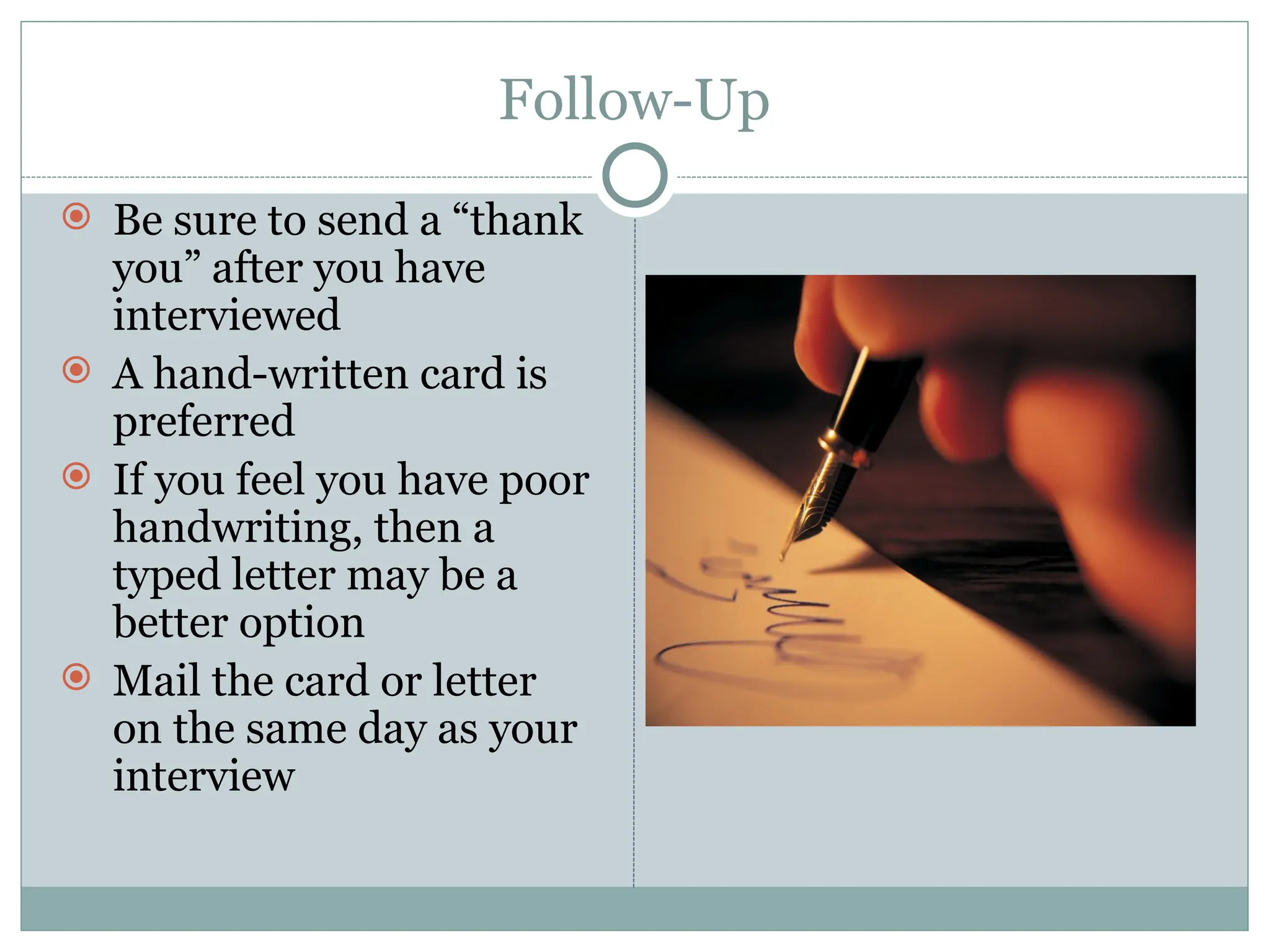
Follow-Up
 Be sure to send a “thank
you” after you have
interviewed
 A hand-written card is
preferred
 If you feel you have poor
handwriting, then a
typed letter may be a
better option
 Mail the card or letter
on the same day as your
interview
PPT- meeting 15 job interview 2 presentation.ppt

  • 1.
    Job Interview English forTechnique and Business Lecturer: Yeni Latipah, M.Pd
  • 2.
    Before the Interview Research the potential employer  Review the job description and be able to match your experience and education with the duties of the position  Prepare a 1 to 2 minute script about yourself  Make sure you have the appropriate interview attire
  • 3.
    First Impression  FirstImpressions  The first words you speak count  It is a pleasure meeting with you  Thank you for for scheduling this time to meet  Walk with vigor and show confidence  People who walk 10% faster than they normally do are  perceived as getting more done
  • 4.
    Dress for Success Dress for Success  From head to toe should reflect impeccable grooming.  Your hair, collar, tie/scarf and other accessories should be a reflection of the quality person you are.  It is a fact of life that we do “judge books by their covers.” To be marketable in business today, your image is as important as what you know. You must “fit in.”
  • 5.
    Tips Regarding Attire (Men) If possible, wear a suit to the interview  Belt and shoes should be same color  Avoid ties with elaborate patterns or too many colors  A wedding ring and/or watch is generally the only jewelry that should be worn  Head to Toe: Hair should be well groomed and shoes should be polished
  • 6.
  • 7.
    Tips Regarding Attire (Women) A suit or dress is preferable  Skirts should meet at the top of the knee or longer  The amount of jewelry should be minimized  Make-up should be light  Avoid perfumes and scented powders
  • 8.
    Stylish Look, ButNot For An Interview
  • 9.
    Stylish, And ReadyTo Interview
  • 10.
    Starting The Interview Be sure to arrive 10 to 15 minutes prior to the start of the interview  Greet the interviewer with a firm handshake  Maintain good eye contact and posture  Make sure you are energetic and enthusiastic  Speak clearly and articulate
  • 11.
    Be Prepared  Youshould have a briefcase or portfolio containing the following:  A note pad  Two erasable pens  Extra resumes and reference sheets  Letters of recommendation (if applicable)  Educational transcripts  Work samples (if applicable)  Special note for women-extra hosiery (Skin tone)
  • 12.
    Central Themes ofQuestions  Suitability  Credibility  Capability  Compatibility  Affordability
  • 13.
    How will thequestions be asked?  Straight forward  Problem solving  Don’t find the “right answer” - how them you know the right way to come up with the answer  Listen to what is being asked  Ask clarifying questions  Respond by first explaining how you’d gather the data needed to make an informed decision  Discuss how you’d use that data to generate options  Finally, based on the data, the available options, and your understanding of the open position explain your recommendation
  • 15.
    Questions  Behaviour-based questions “Behavior is the best predic tor of future performances”  Don’t tell a story that will hurt you  If you don’t understand a question, clarify  Explain what you hoped to show from your story  Ask for feedback  Don’t be intimidated  Unrelated questions  Make your best to make it related  Who would you want with you if you were stranded on a deserted island?  Aboat builder thus showing your resourcefulness
  • 16.
    Behavior-Based Questions  Canyou describe the most valuable criticism you have received and what you did with it?  Can you tell me about an event that really challenged you?  Can you give me an example of a project that required attention to detail and how you handled the details?  Can you tell me about a difficult person with whom you have worked?  Can you describe the supervisor that you have liked the least?
  • 17.
    Standard Interview Questions Would you tell me about yourself?  What is your greatest strength?  What is your greatest weakness?  Where do you see yourself in 5 years?  What about this position do you find most appealing?  Why do you want to work for our company?  Why should we hire you?
  • 19.
    How Do YouFormulate Your Answers?  S: situation  T:task  A: action  R: result
  • 20.
    Discussing a weakness Discuss a negative which is not related to the job  Discuss a negative an employer already knows, but make up for it in another way  Discuss a negative you have improved on  Discuss a negative that can become a positive
  • 21.
    Handling negatives orobjections  Be positive -never complain  Recognize stereotypes and biases  Stress your strengths  Use examples that show your reasons and motivations -avoid yes or no answers  The underlying questions is always “why should I hire you” –give them reason
  • 22.
    Asking Questions  Youshould have questions prepared. It is your chance to interview the interviewer.   Don’t ask questions that can be readily found on company brochures.  Ask questions that will directly affect you or shows your interest in the companies success.
  • 23.
    Questions To AskThe Employer  What kind of training will I receive?  What type of advancement opportunities are available with your organization?  What is your time table for the remainder of the hiring process? NOTE: Ask questions that demonstrate your knowledge of their company!
  • 24.
    Interview Types  Screeninginterviews  Sequential interviews  Group interviews  Stress interviews (take control)  Performance interviews (show case your skills)  Testing  Computer assisted interviews  Mealtime interviews  Out-of-town interviews
  • 26.
    Illegal Questions  Mostemployers are familiar with the laws regarding what questions they can ask and what they can not ask.  If you feel a question is inappropriate, don’t get upset and refuse to answer. Ask the question “Can you tell me how that pertains to the job” in a polite and respective way
  • 27.
    Follow-Up  Be sureto send a “thank you” after you have interviewed  A hand-written card is preferred  If you feel you have poor handwriting, then a typed letter may be a better option  Mail the card or letter on the same day as your interview