し たんご ぶんぽう い まわ
知らない単語や文法や言い回しがあったらメモをする (take notes
if you come across with words, grammar, phrases you don’t
know or even make a mini dictionary!) – good to expand
your vocabulary or phrases
たんご い かた
わからないことやわからない単語や言い方があったら、
とき あと
その時に聞くかメモをして後で聞く (If there are something you
don’t understand or words you don’t know or don’t know how
to say, take a note and ask if appropriate or ask later)
ほか はつげん はっぴょう とき ちゅうい
他の人が発言、発表している時も注意して聞く。 - Pay
attention as well when other people are saying
something or presenting something – you can
learn from other people and expand your
vocabulary, phrases and expressions too.
し たんご ぶんぽう い まわ しら
知らない単語や文法や言い回しがあったら調べる
(look up if you come across with words, grammar,
phrases you don’t know BUT make notes and keep
them so that you can remember them or use them for
reference later) – good to expand your vocabulary or
phrases
かんじ
知らない漢字を調べる (look up correct spelling of Kanji
or correct reading of Kanji) – good to expand your
range of kanji and learn correct spelling/pronunciation
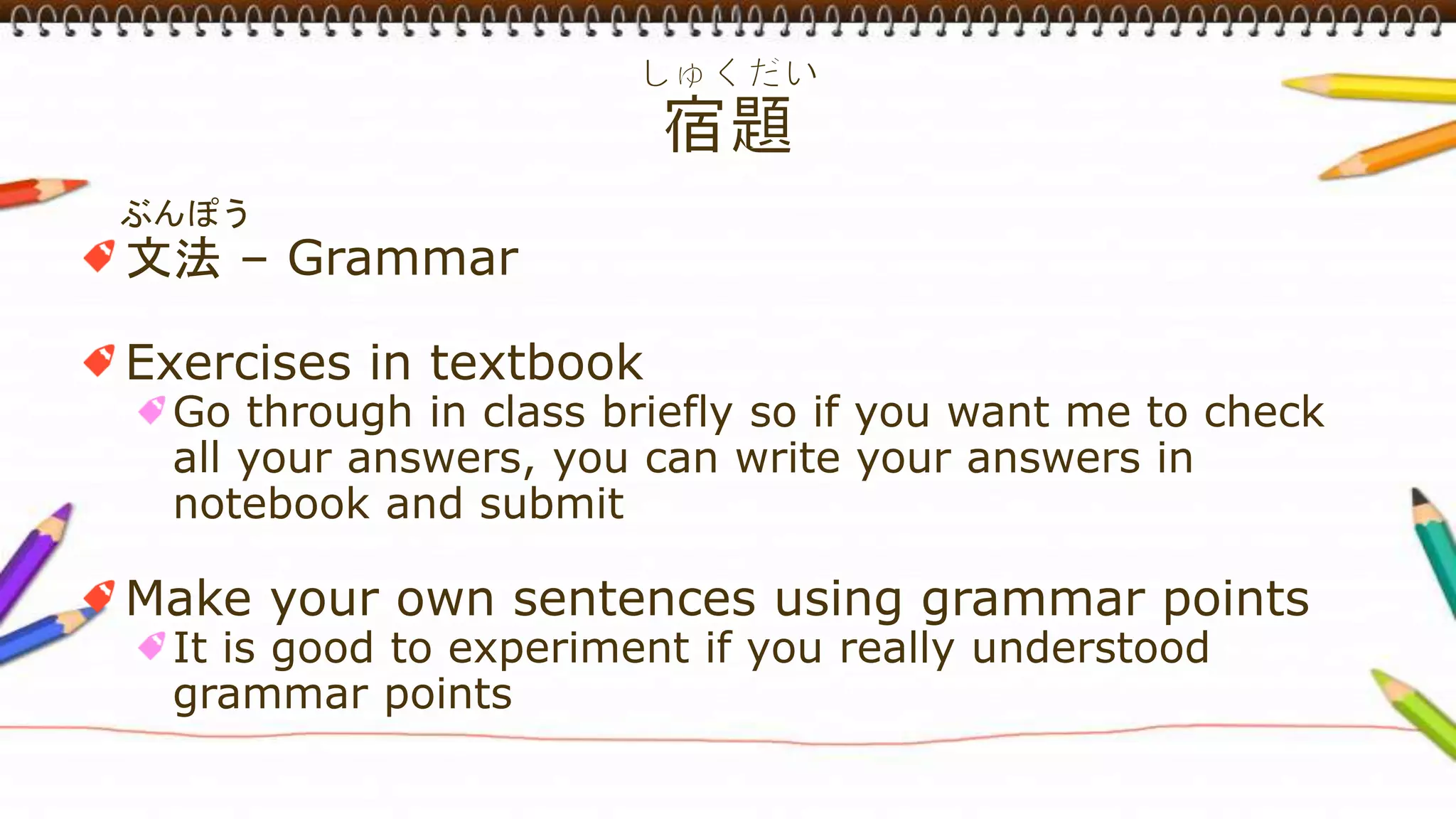
ぶんぽう
文法 – Grammar
Exercises in textbook
Go through in class briefly so if you want me to check
all your answers, you can write your answers in
notebook and submit
Make your own sentences using grammar points
It is good to experiment if you really understood
grammar points
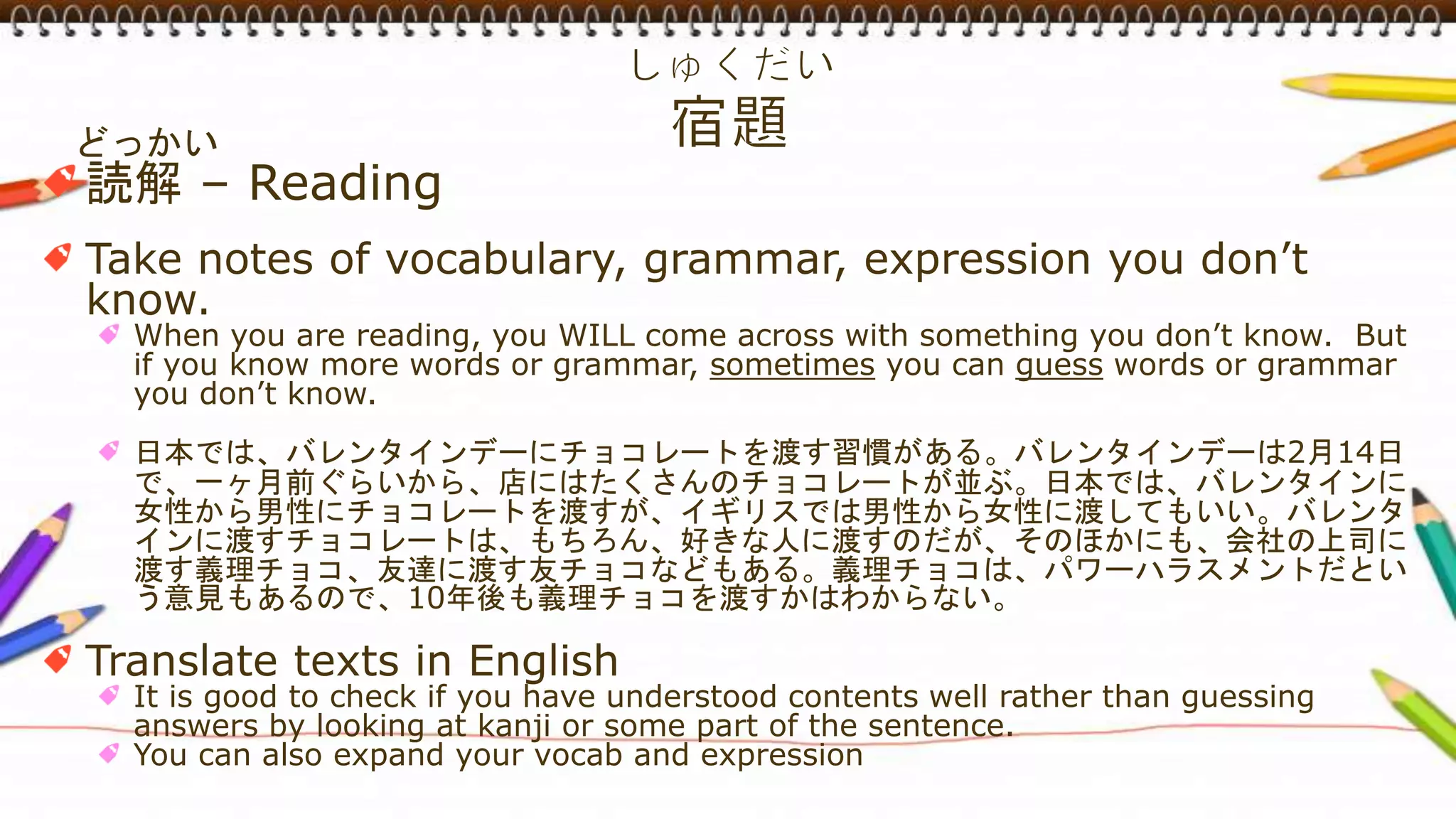
どっかい
読解 – Reading
Take notes of vocabulary, grammar, expression you don’t
know.
When you are reading, you WILL come across with something you don’t know. But
if you know more words or grammar, sometimes you can guess words or grammar
you don’t know.
日本では、バレンタインデーにチョコレートを渡す習慣がある。バレンタインデーは2月14日
で、一ヶ月前ぐらいから、店にはたくさんのチョコレートが並ぶ。日本では、バレンタインに
女性から男性にチョコレートを渡すが、イギリスでは男性から女性に渡してもいい。バレンタ
インに渡すチョコレートは、もちろん、好きな人に渡すのだが、そのほかにも、会社の上司に
渡す義理チョコ、友達に渡す友チョコなどもある。義理チョコは、パワーハラスメントだとい
う意見もあるので、10年後も義理チョコを渡すかはわからない。
Translate texts in English
It is good to check if you have understood contents well rather than guessing
answers by looking at kanji or some part of the sentence.
You can also expand your vocab and expression
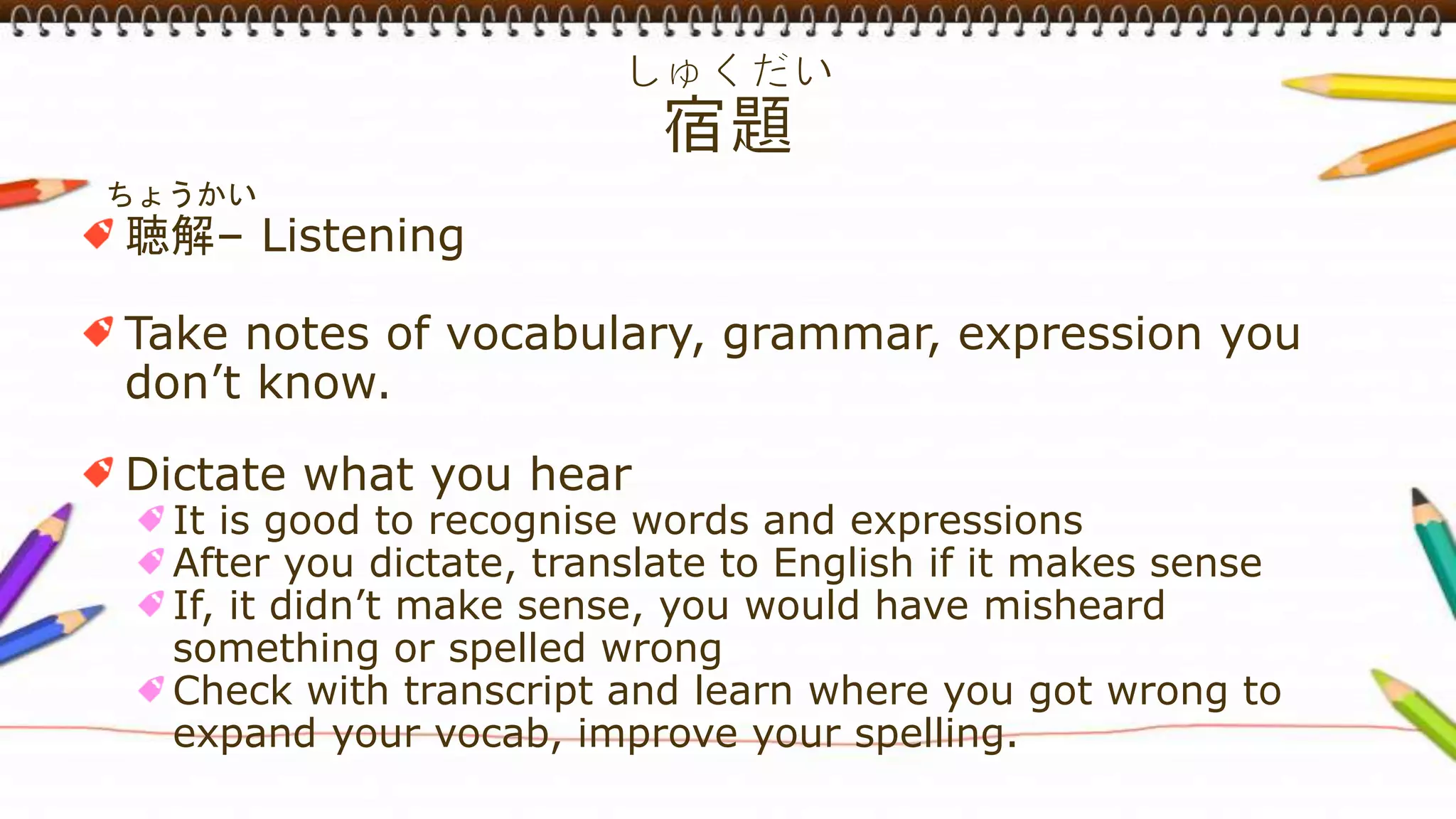
ちょうかい
聴解– Listening
Take notes of vocabulary, grammar, expression you
don’t know.
Dictate what you hear
It is good to recognise words and expressions
After you dictate, translate to English if it makes sense
If, it didn’t make sense, you would have misheard
something or spelled wrong
Check with transcript and learn where you got wrong to
expand your vocab, improve your spelling.
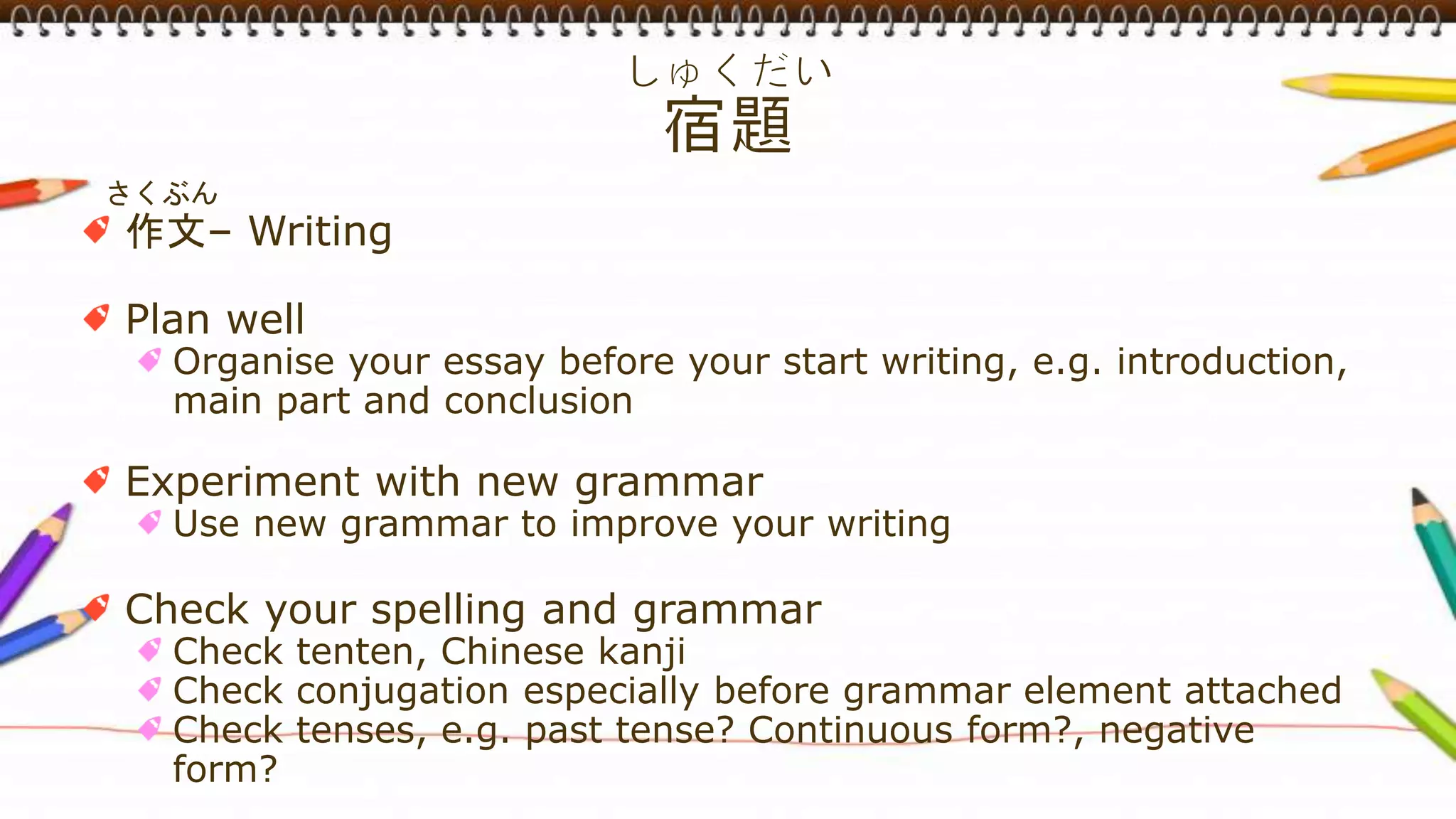
さくぶん
作文– Writing
Plan well
Organise your essay before your start writing, e.g. introduction,
main part and conclusion
Experiment with new grammar
Use new grammar to improve your writing
Check your spelling and grammar
Check tenten, Chinese kanji
Check conjugation especially before grammar element attached
Check tenses, e.g. past tense? Continuous form?, negative
form?

How to study

  • 2.
    し たんご ぶんぽうい まわ 知らない単語や文法や言い回しがあったらメモをする (take notes if you come across with words, grammar, phrases you don’t know or even make a mini dictionary!) – good to expand your vocabulary or phrases たんご い かた わからないことやわからない単語や言い方があったら、 とき あと その時に聞くかメモをして後で聞く (If there are something you don’t understand or words you don’t know or don’t know how to say, take a note and ask if appropriate or ask later)
  • 3.
    ほか はつげん はっぴょうとき ちゅうい 他の人が発言、発表している時も注意して聞く。 - Pay attention as well when other people are saying something or presenting something – you can learn from other people and expand your vocabulary, phrases and expressions too.
  • 4.
    し たんご ぶんぽうい まわ しら 知らない単語や文法や言い回しがあったら調べる (look up if you come across with words, grammar, phrases you don’t know BUT make notes and keep them so that you can remember them or use them for reference later) – good to expand your vocabulary or phrases かんじ 知らない漢字を調べる (look up correct spelling of Kanji or correct reading of Kanji) – good to expand your range of kanji and learn correct spelling/pronunciation
  • 5.
    ぶんぽう 文法 – Grammar Exercisesin textbook Go through in class briefly so if you want me to check all your answers, you can write your answers in notebook and submit Make your own sentences using grammar points It is good to experiment if you really understood grammar points
  • 6.
    どっかい 読解 – Reading Takenotes of vocabulary, grammar, expression you don’t know. When you are reading, you WILL come across with something you don’t know. But if you know more words or grammar, sometimes you can guess words or grammar you don’t know. 日本では、バレンタインデーにチョコレートを渡す習慣がある。バレンタインデーは2月14日 で、一ヶ月前ぐらいから、店にはたくさんのチョコレートが並ぶ。日本では、バレンタインに 女性から男性にチョコレートを渡すが、イギリスでは男性から女性に渡してもいい。バレンタ インに渡すチョコレートは、もちろん、好きな人に渡すのだが、そのほかにも、会社の上司に 渡す義理チョコ、友達に渡す友チョコなどもある。義理チョコは、パワーハラスメントだとい う意見もあるので、10年後も義理チョコを渡すかはわからない。 Translate texts in English It is good to check if you have understood contents well rather than guessing answers by looking at kanji or some part of the sentence. You can also expand your vocab and expression
  • 7.
    ちょうかい 聴解– Listening Take notesof vocabulary, grammar, expression you don’t know. Dictate what you hear It is good to recognise words and expressions After you dictate, translate to English if it makes sense If, it didn’t make sense, you would have misheard something or spelled wrong Check with transcript and learn where you got wrong to expand your vocab, improve your spelling.
  • 8.
    さくぶん 作文– Writing Plan well Organiseyour essay before your start writing, e.g. introduction, main part and conclusion Experiment with new grammar Use new grammar to improve your writing Check your spelling and grammar Check tenten, Chinese kanji Check conjugation especially before grammar element attached Check tenses, e.g. past tense? Continuous form?, negative form?