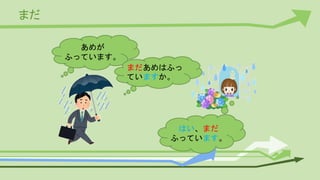
usage
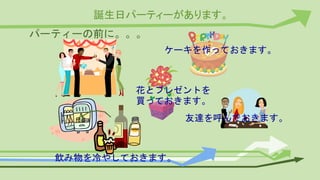
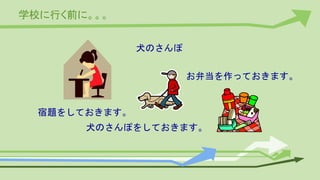
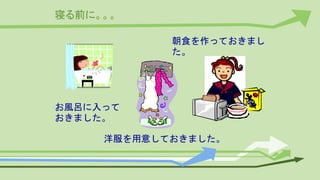
• This expressionis used when something is done for
future convenience
• Translations can be ‘do something in advance’, ‘go
ahead and do something’, ‘let someone/something
remain as he/it is’, ‘prepared to do something’,
ておきます
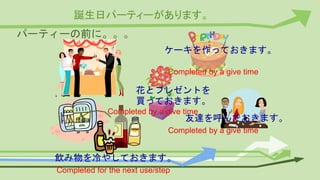
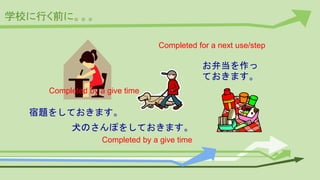
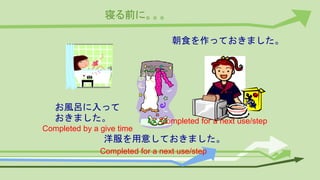
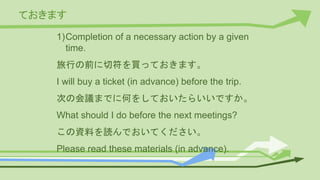
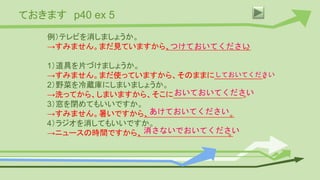
1)Completion of anecessary action by a given
time.
旅行の前に切符を買っておきます。
I will buy a ticket (in advance) before the trip.
次の会議までに何をしておいたらいいですか。
What should I do before the next meetings?
この資料を読んでおいてください。
Please read these materials (in advance).
10.
ておきます
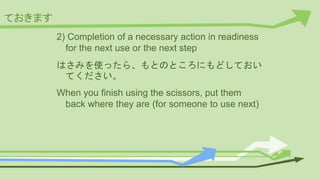
2) Completion ofa necessary action in readiness
for the next use or the next step
はさみを使ったら、もとのところにもどしておい
てください。
When you finish using the scissors, put them
back where they are (for someone to use next)
11.
ておきます
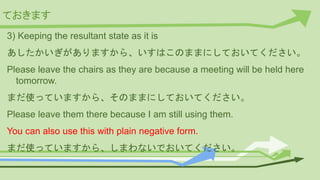
3) Keeping theresultant state as it is
あしたかいぎがありますから、いすはこのままにしておいてください。
Please leave the chairs as they are because a meeting will be held here
tomorrow.
まだ使っていますから、そのままにしておいてください。
Please leave them there because I am still using them.
You can also use this with plain negative form.
まだ使っていますから、しまわないでおいてください。
てあります(already done)
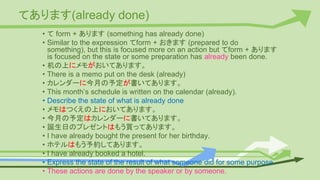
• てform + あります (something has already done)
• Similar to the expression てform + おきます (prepared to do
something), but this is focused more on an action but てform + あります
is focused on the state or some preparation has already been done.
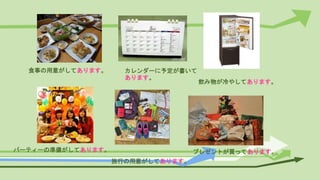
• 机の上にメモがおいてあります。
• There is a memo put on the desk (already)
• カレンダーに今月の予定が書いてあります。
• This month’s schedule is written on the calendar (already).
• Describe the state of what is already done
• メモはつくえの上においてあります。
• 今月の予定はカレンダーに書いてあります。
• 誕生日のプレゼントはもう買ってあります。
• I have already bought the present for her birthday.
• ホテルはもう予約してあります。
• I have already booked a hotel.
• Express the state of the result of what someone did for some purpose.
• These actions are done by the speaker or by someone.
16.
てあります(already done)
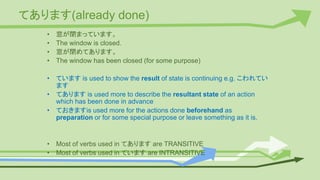
• 窓が閉まっています。
•The window is closed.
• 窓が閉めてあります。
• The window has been closed (for some purpose)
• ています is used to show the result of state is continuing e.g. こわれてい
ます
• てあります is used more to describe the resultant state of an action
which has been done in advance
• ておきますis used more for the actions done beforehand as
preparation or for some special purpose or leave something as it is.
• Most of verbs used in てあります are TRANSITIVE
• Most of verbs used in ています are INTRANSITIVE
17.
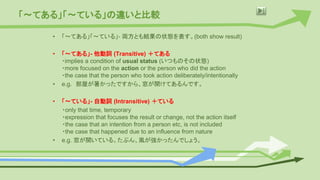
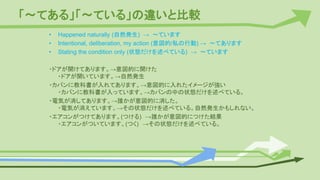
「〜てある」「〜ている」の違いと比較
• 「〜てある」「〜ている」- 両方とも結果の状態を表す。(bothshow result)
• 「〜てある」- 他動詞 (Transitive) +てある
・implies a condition of usual status (いつものその状態)
・more focused on the action or the person who did the action
・the case that the person who took action deliberately/intentionally
• e.g. 部屋が暑かったですから、窓が開けてあるんです。
• 「〜ている」- 自動詞 (Intransitive) +ている
・only that time, temporary
・expression that focuses the result or change, not the action itself
・the case that an intention from a person etc, is not included
・the case that happened due to an influence from nature
• e.g. 窓が開いている。たぶん、風が強かったんでしょう。
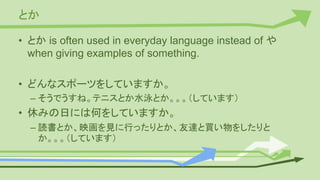
とか
• とか isoften used in everyday language instead of や
when giving examples of something.
• どんなスポーツをしていますか。
– そうでうすね。テニスとか水泳とか。。。(しています)
• 休みの日には何をしていますか。
– 読書とか、映画を見に行ったりとか、友達と買い物をしたりと
か。。。(しています)
はなしてみましょう
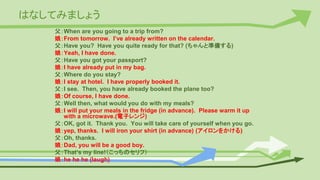
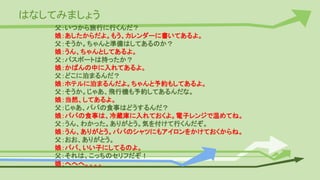
父:When are yougoing to a trip from?
娘:From tomorrow. I’ve already written on the calendar.
父:Have you? Have you quite ready for that? (ちゃんと準備する)
娘:Yeah, I have done.
父:Have you got your passport?
娘:I have already put in my bag.
父:Where do you stay?
娘:I stay at hotel. I have properly booked it.
父:I see. Then, you have already booked the plane too?
娘:Of course, I have done.
父:Well then, what would you do with my meals?
娘:I will put your meals in the fridge (in advance). Please warm it up
with a microwave.(電子レンジ)
父:OK, got it. Thank you. You will take care of yourself when you go.
娘:yep, thanks. I will iron your shirt (in advance) (アイロンをかける)
父:Oh, thanks.
娘:Dad, you will be a good boy.
父:That’s my line!(こっちのセリフ)
娘:he he he (laugh)