B Y S T E V E M O R A L E S
How to recycle
What is recycling
 Recycling is the process of making or manufacturing
new products from a product that has originally
served its purpose. If these used products are
disposed of in an appropriate, environmentally
friendly way the process of recycling has been set in
motion.
History
 Recycling is not a new concept. The practice of recycling has been around for
thousands of years. However , it has been affected predominantly by supply
and demand , much as it is today.
 Historic Times: there is also evidence that early romans recycled bronze coin
into status that could be sold at a higher monetary value than the original
 Pre-industrail: As for the history of recycling prior to the industrial revolution
recycling and general household re-using was actually a common place
practice.
 Industrial times: the history of recycling took a turn during the times of
industrialization.
 WW2: A highlight in the history of recycling was during WW2.
 Post WW2: As with the other times, after the WW2 period, the history
of recycling was greatly influenced by economic reason.
Why is recycling important
 Recycling is the process of separating, collecting and remanufacturing
or converting used or waste products into new materials. The recycling
process involves a series of steps to produce new products.
 Recycling helps extend te life and usefulness of something that has
already served its initial purpose by producing something that is
useable. Recycling has a lot of benefits and importantance not only to
us humans but especially to our planet.
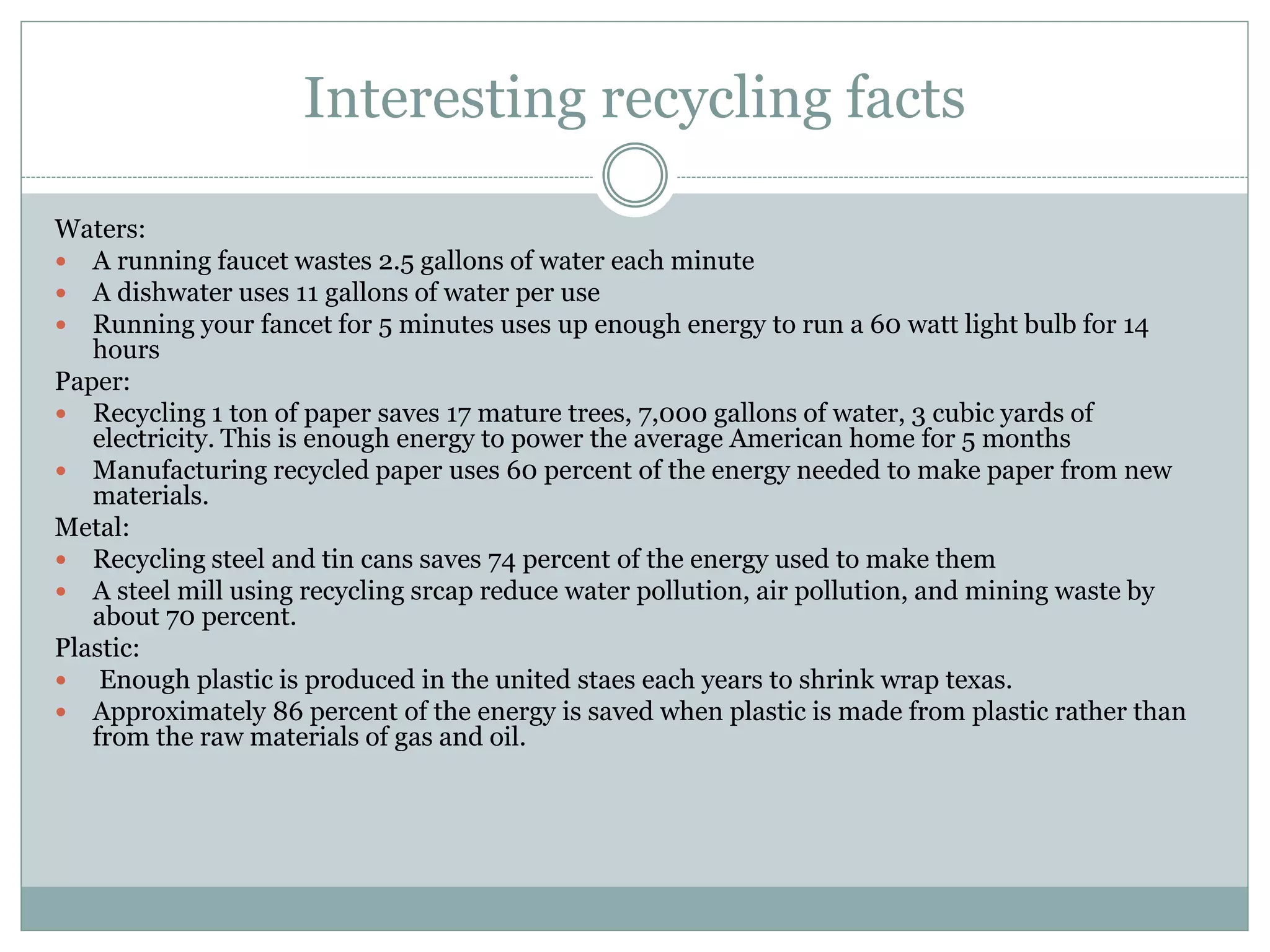
Interesting recycling facts
Waters:
 A running faucet wastes 2.5 gallons of water each minute
 A dishwater uses 11 gallons of water per use
 Running your fancet for 5 minutes uses up enough energy to run a 60 watt light bulb for 14
hours
Paper:
 Recycling 1 ton of paper saves 17 mature trees, 7,000 gallons of water, 3 cubic yards of
electricity. This is enough energy to power the average American home for 5 months
 Manufacturing recycled paper uses 60 percent of the energy needed to make paper from new
materials.
Metal:
 Recycling steel and tin cans saves 74 percent of the energy used to make them
 A steel mill using recycling srcap reduce water pollution, air pollution, and mining waste by
about 70 percent.
Plastic:
 Enough plastic is produced in the united staes each years to shrink wrap texas.
 Approximately 86 percent of the energy is saved when plastic is made from plastic rather than
from the raw materials of gas and oil.
Recycling center in los Angeles, CA
 There over thirty recycling center in los angeles
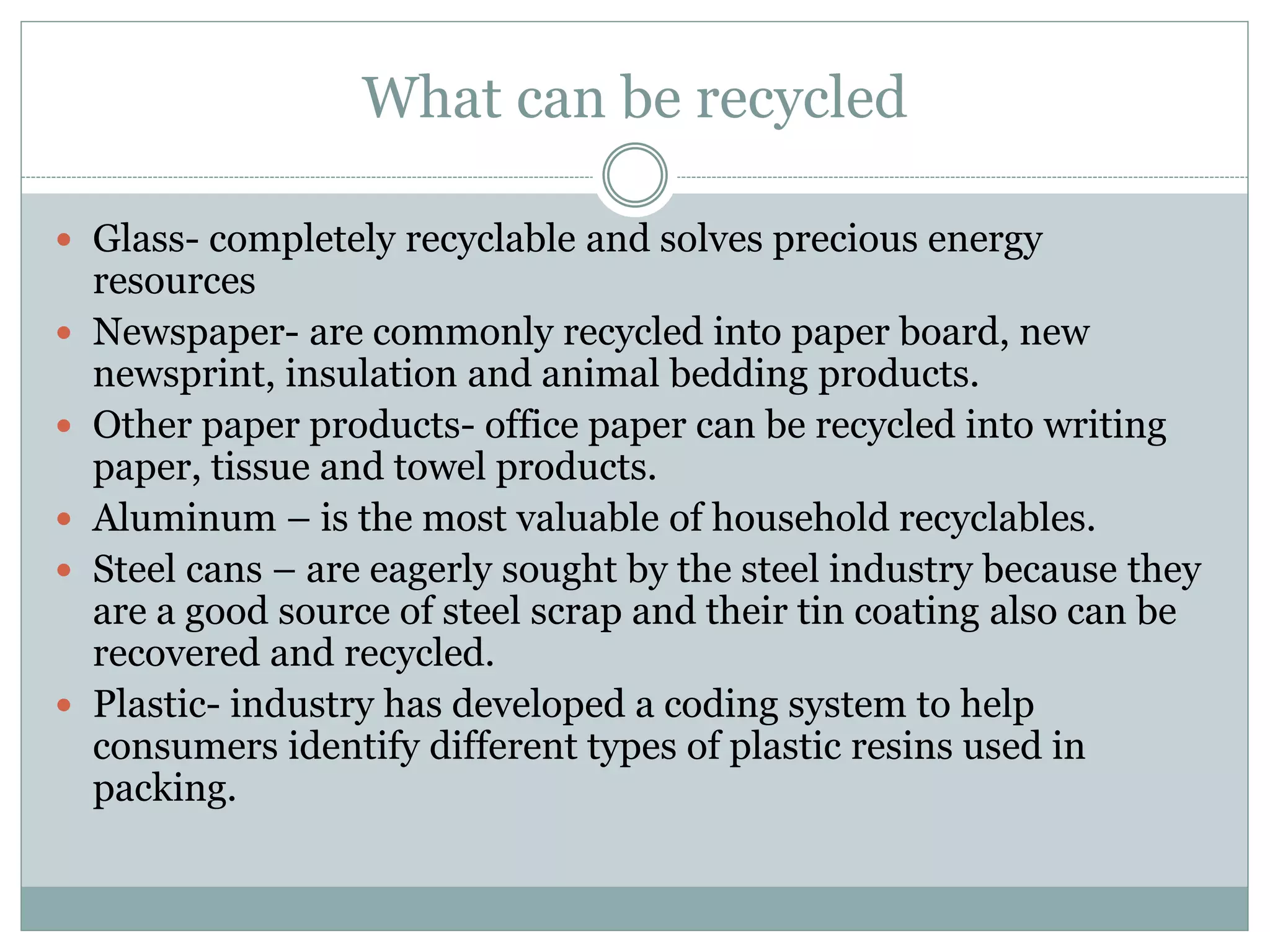
What can be recycled
 Glass- completely recyclable and solves precious energy
resources
 Newspaper- are commonly recycled into paper board, new
newsprint, insulation and animal bedding products.
 Other paper products- office paper can be recycled into writing
paper, tissue and towel products.
 Aluminum – is the most valuable of household recyclables.
 Steel cans – are eagerly sought by the steel industry because they
are a good source of steel scrap and their tin coating also can be
recovered and recycled.
 Plastic- industry has developed a coding system to help
consumers identify different types of plastic resins used in
packing.
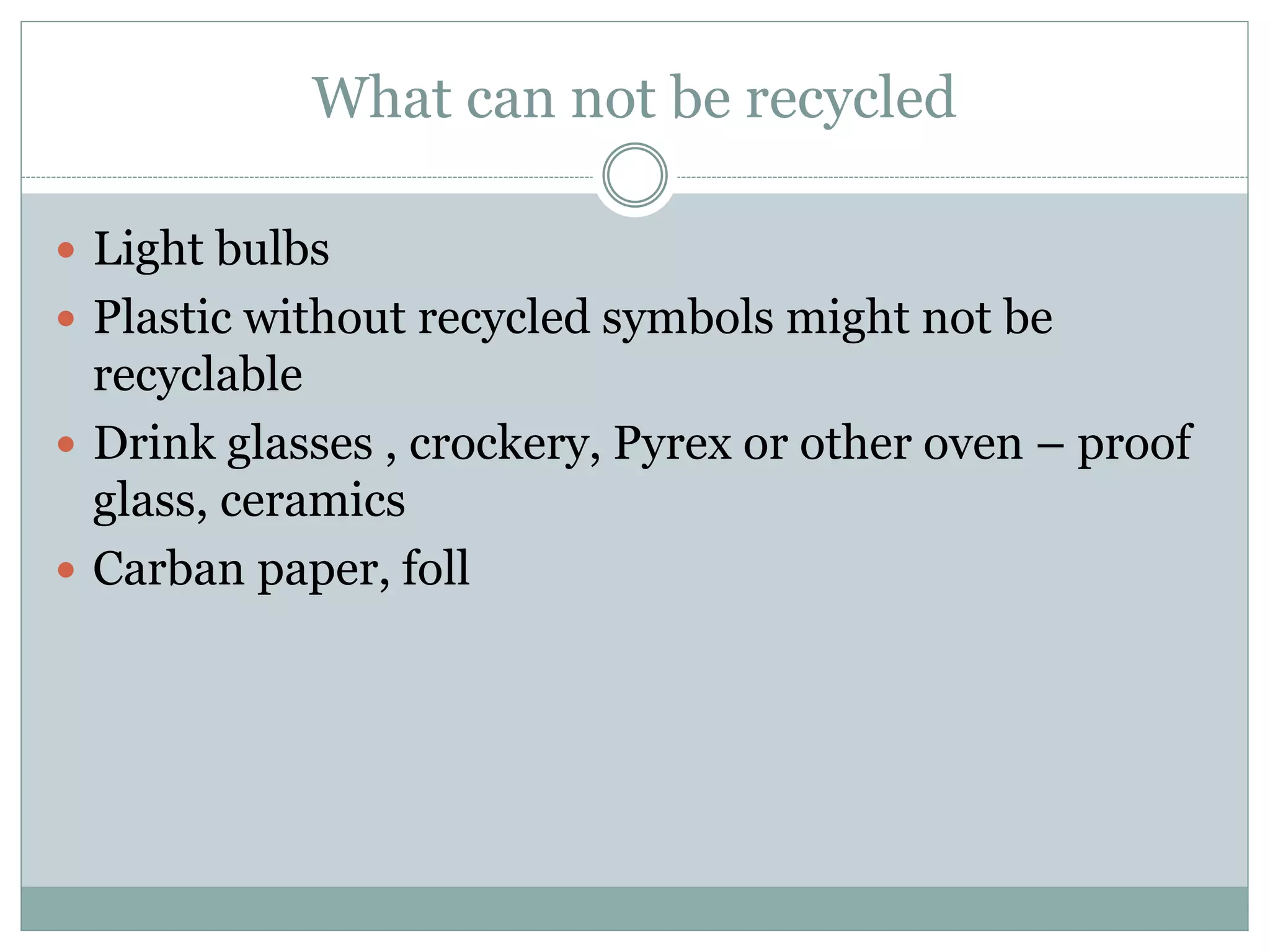
What can not be recycled
 Light bulbs
 Plastic without recycled symbols might not be
recyclable
 Drink glasses , crockery, Pyrex or other oven – proof
glass, ceramics
 Carban paper, foll
Last information
All this information will help you to know about
recycling and their other websites that has more
details about recycling.
http://lacitysan.org/solid_resources/recycling/
http://www.wikihow.com/Recycle
http://www.timetorecycle.com/education/How_To_R
ecycle.asp
Bibliography
 http://www.wikihow.com/Recycle
 http://www.lacitysan.org/solid_resources/recycling
/curbside/what_is_recyclable.htm
 http://www.lacitysan.org/solid_resources/recycling
/curbside/what_is_recyclable.htm
 http://www2.epa.gov/recycle/how-do-i-recycle-
common-recyclables

How to recycle 5

  • 1.
    B Y ST E V E M O R A L E S How to recycle
  • 2.
    What is recycling Recycling is the process of making or manufacturing new products from a product that has originally served its purpose. If these used products are disposed of in an appropriate, environmentally friendly way the process of recycling has been set in motion.
  • 3.
    History  Recycling isnot a new concept. The practice of recycling has been around for thousands of years. However , it has been affected predominantly by supply and demand , much as it is today.  Historic Times: there is also evidence that early romans recycled bronze coin into status that could be sold at a higher monetary value than the original  Pre-industrail: As for the history of recycling prior to the industrial revolution recycling and general household re-using was actually a common place practice.  Industrial times: the history of recycling took a turn during the times of industrialization.  WW2: A highlight in the history of recycling was during WW2.  Post WW2: As with the other times, after the WW2 period, the history of recycling was greatly influenced by economic reason.
  • 4.
    Why is recyclingimportant  Recycling is the process of separating, collecting and remanufacturing or converting used or waste products into new materials. The recycling process involves a series of steps to produce new products.  Recycling helps extend te life and usefulness of something that has already served its initial purpose by producing something that is useable. Recycling has a lot of benefits and importantance not only to us humans but especially to our planet.
  • 5.
    Interesting recycling facts Waters: A running faucet wastes 2.5 gallons of water each minute  A dishwater uses 11 gallons of water per use  Running your fancet for 5 minutes uses up enough energy to run a 60 watt light bulb for 14 hours Paper:  Recycling 1 ton of paper saves 17 mature trees, 7,000 gallons of water, 3 cubic yards of electricity. This is enough energy to power the average American home for 5 months  Manufacturing recycled paper uses 60 percent of the energy needed to make paper from new materials. Metal:  Recycling steel and tin cans saves 74 percent of the energy used to make them  A steel mill using recycling srcap reduce water pollution, air pollution, and mining waste by about 70 percent. Plastic:  Enough plastic is produced in the united staes each years to shrink wrap texas.  Approximately 86 percent of the energy is saved when plastic is made from plastic rather than from the raw materials of gas and oil.
  • 6.
    Recycling center inlos Angeles, CA  There over thirty recycling center in los angeles
  • 7.
    What can berecycled  Glass- completely recyclable and solves precious energy resources  Newspaper- are commonly recycled into paper board, new newsprint, insulation and animal bedding products.  Other paper products- office paper can be recycled into writing paper, tissue and towel products.  Aluminum – is the most valuable of household recyclables.  Steel cans – are eagerly sought by the steel industry because they are a good source of steel scrap and their tin coating also can be recovered and recycled.  Plastic- industry has developed a coding system to help consumers identify different types of plastic resins used in packing.
  • 8.
    What can notbe recycled  Light bulbs  Plastic without recycled symbols might not be recyclable  Drink glasses , crockery, Pyrex or other oven – proof glass, ceramics  Carban paper, foll
  • 9.
    Last information All thisinformation will help you to know about recycling and their other websites that has more details about recycling. http://lacitysan.org/solid_resources/recycling/ http://www.wikihow.com/Recycle http://www.timetorecycle.com/education/How_To_R ecycle.asp
  • 10.
    Bibliography  http://www.wikihow.com/Recycle  http://www.lacitysan.org/solid_resources/recycling /curbside/what_is_recyclable.htm http://www.lacitysan.org/solid_resources/recycling /curbside/what_is_recyclable.htm  http://www2.epa.gov/recycle/how-do-i-recycle- common-recyclables