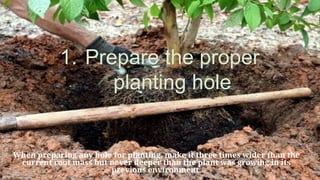
1. Prepare the proper
planting hole
When preparing any hole for planting, make it three times wider than the
current root mass but never deeper than the plant was growing in its
previous environment.
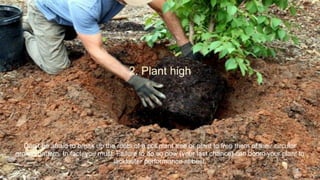
2. Plant high
Don’t be afraid to break up the roots of a pot plant tree or plant to free them of their circular
growth pattern. In fact, you must. Failure to do so now (your last chance) can doom your plant to
lackluster performance at best.
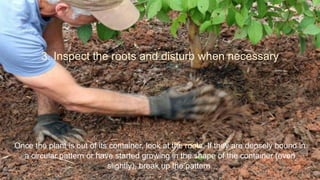
3. Inspect the roots and disturb when necessary
Once the plant is out of its container, look at the roots. If they are densely bound in
a circular pattern or have started growing in the shape of the container (even
slightly), break up the pattern.
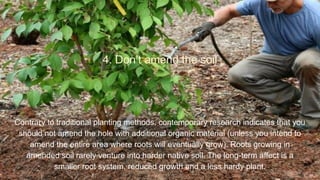
4. Don’t amend the soil
Contrary to traditional planting methods, contemporary research indicates that you
should not amend the hole with additional organic material (unless you intend to
amend the entire area where roots will eventually grow). Roots growing in
amended soil rarely venture into harder native soil. The long-term affect is a
smaller root system, reduced growth and a less hardy plant.
5. Eliminate air pockets
While you could lightly tamp or hand-pack the soil around the plant roots to ensure good soil-to-root
contact, I prefer to add a stiff spray of water to the hole after backfilling half way. Not only does it provide
needed moisture but the water also helps eliminate air pockets that could otherwise result in dead roots or
worse (without compacting the soil too much). Finally, water again gently but thoroughly once all the soil is
in place.
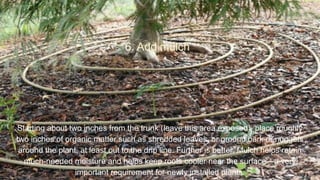
6. Add mulch
Starting about two inches from the trunk (leave this area exposed), place roughly
two inches of organic matter such as shredded leaves, or ground bark or nuggets
around the plant, at least out to the drip line. Further is better. Mulch helps retain
much-needed moisture and helps keep roots cooler near the surface—a very
important requirement for newly installed plants.

How to plant a three

  • 1.
    1. Prepare theproper planting hole When preparing any hole for planting, make it three times wider than the current root mass but never deeper than the plant was growing in its previous environment.
  • 2.
    2. Plant high Don’tbe afraid to break up the roots of a pot plant tree or plant to free them of their circular growth pattern. In fact, you must. Failure to do so now (your last chance) can doom your plant to lackluster performance at best.
  • 3.
    3. Inspect theroots and disturb when necessary Once the plant is out of its container, look at the roots. If they are densely bound in a circular pattern or have started growing in the shape of the container (even slightly), break up the pattern.
  • 4.
    4. Don’t amendthe soil Contrary to traditional planting methods, contemporary research indicates that you should not amend the hole with additional organic material (unless you intend to amend the entire area where roots will eventually grow). Roots growing in amended soil rarely venture into harder native soil. The long-term affect is a smaller root system, reduced growth and a less hardy plant.
  • 5.
    5. Eliminate airpockets While you could lightly tamp or hand-pack the soil around the plant roots to ensure good soil-to-root contact, I prefer to add a stiff spray of water to the hole after backfilling half way. Not only does it provide needed moisture but the water also helps eliminate air pockets that could otherwise result in dead roots or worse (without compacting the soil too much). Finally, water again gently but thoroughly once all the soil is in place.
  • 6.
    6. Add mulch Startingabout two inches from the trunk (leave this area exposed), place roughly two inches of organic matter such as shredded leaves, or ground bark or nuggets around the plant, at least out to the drip line. Further is better. Mulch helps retain much-needed moisture and helps keep roots cooler near the surface—a very important requirement for newly installed plants.