
By Rocío Luna
Recognizing
when it's time to repot
is the first step.
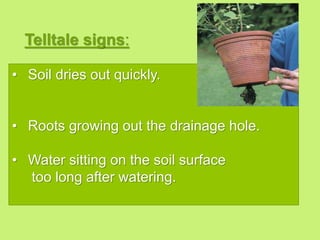
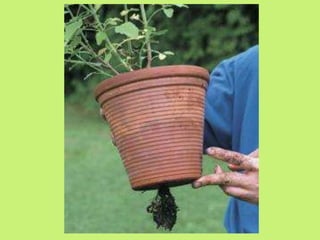
Telltale signs:
• Soil dries out quickly.
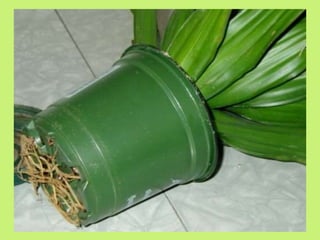
• Roots growing out the drainage hole.
• Water sitting on the soil surface
too long after watering.
Water the plant
a couple of days
before.
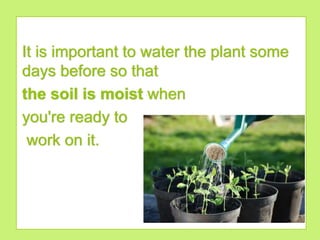
It is important to water the plant some
days before so that
the soil is moist when
you're ready to
work on it.
Remove the plant
from its pot.
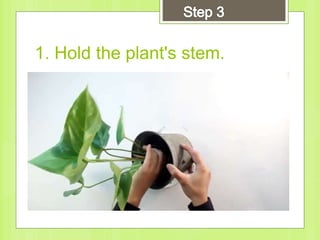
1. Hold the plant's stem.
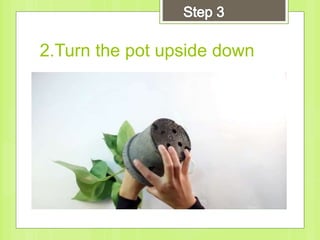
2.Turn the pot upside down
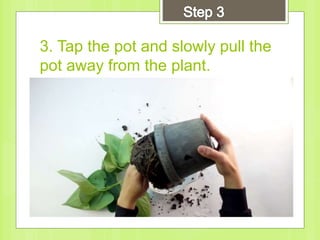
3. Tap the pot and slowly pull the
pot away from the plant.
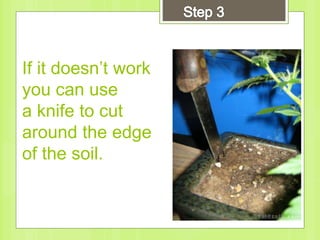
If it doesn’t work
you can use
a knife to cut
around the edge
of the soil.
If your plant is
root-bound, you
should trim the roots.
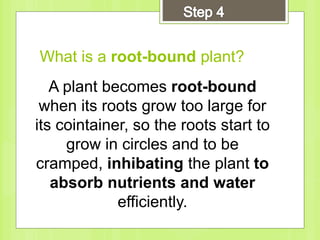
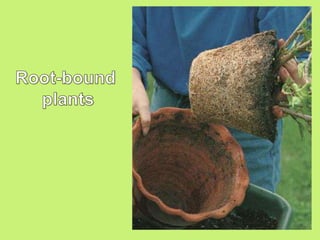
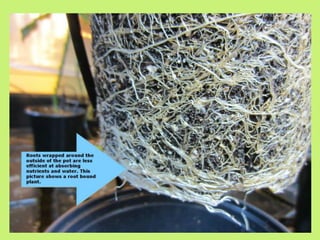
What is a root-bound plant?
A plant becomes root-bound
when its roots grow too large for
its cointainer, so the roots start to
grow in circles and to be
cramped, inhibating the plant to
absorb nutrients and water
efficiently.
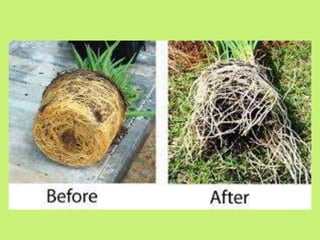
How to eliminate a root-bound?
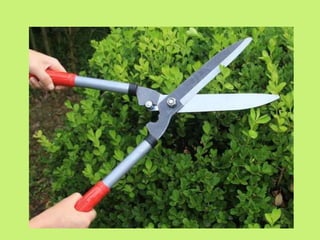
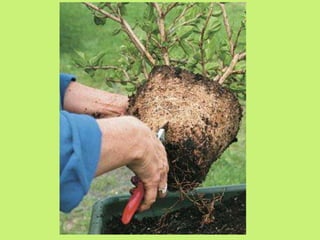
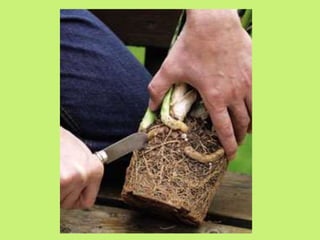
You can break up the roots
with your hands or you can
use pruning shears or a
sharp knife and make some
vertical cuts up the sides.
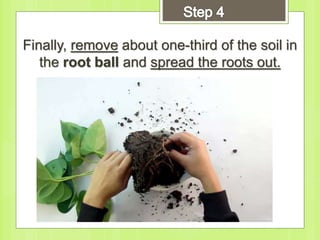
Finally, remove about one-third of the soil in
the root ball and spread the roots out.
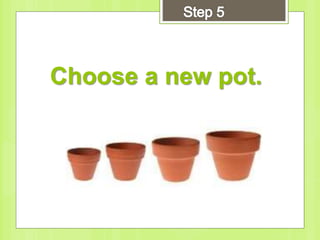
Choose a new pot.
The new pot should be no more
than 2 inches larger in diameter
(or 2 inches deeper) than the old
pot.
How to choose a new pot?
Why?
A pot that's much larger gives the roots too
much space to grow into.
The top of the plant won't grow until its
roots begin to fill the container.
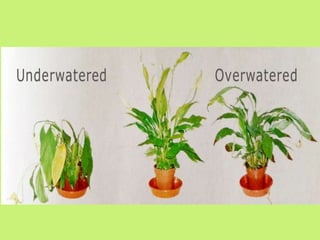
A too-large container will also hold too much
water and can cause root rot.
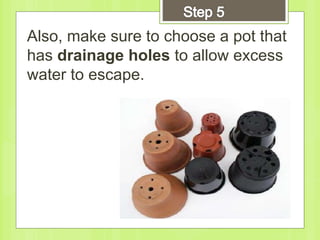
Also, make sure to choose a pot that
has drainage holes to allow excess
water to escape.
Put the plant into the
new pot.
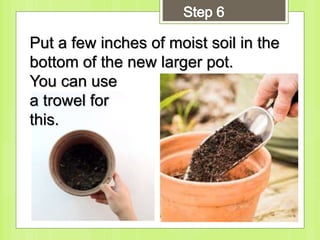
Put a few inches of moist soil in the
bottom of the new larger pot.
You can use
a trowel for
this.
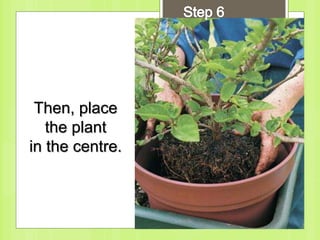
Then, place
the plant
in the centre.
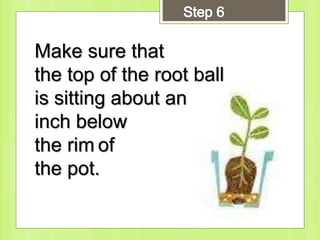
Make sure that
the top of the root ball
is sitting about an
inch below
the rim of
the pot.
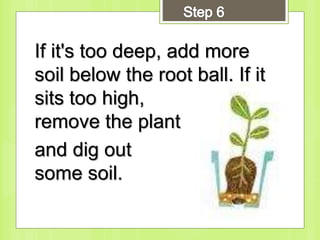
If it's too deep, add more
soil below the root ball. If it
sits too high,
remove the plant
and dig out
some soil.
Fill in the pot with fresh
potting soil.
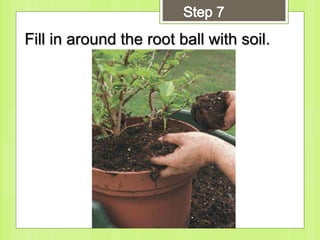
Fill in around the root ball with soil.
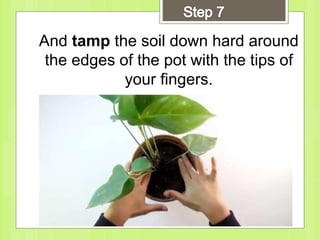
And tamp the soil down hard around
the edges of the pot with the tips of
your fingers.
Cut away dead
branches.
Cut away any diseased, dead
or broken top growth in order
to prevent insect and decay
organisms from entering the
plant.
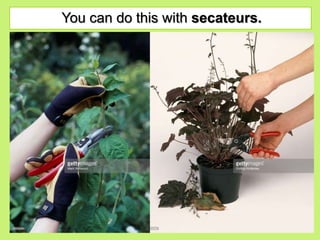
You can do this with secateurs.
Water the plant.
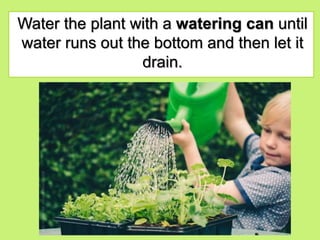
Water the plant with a watering can until
water runs out the bottom and then let it
drain.
Enjoy a healthy plant!

How to repot a plant

  • 1.
  • 2.
    Recognizing when it's timeto repot is the first step.
  • 3.
    Telltale signs: • Soildries out quickly. • Roots growing out the drainage hole. • Water sitting on the soil surface too long after watering.
  • 6.
    Water the plant acouple of days before.
  • 7.
    It is importantto water the plant some days before so that the soil is moist when you're ready to work on it.
  • 8.
  • 9.
    1. Hold theplant's stem.
  • 10.
    2.Turn the potupside down
  • 11.
    3. Tap thepot and slowly pull the pot away from the plant.
  • 12.
    If it doesn’twork you can use a knife to cut around the edge of the soil.
  • 13.
    If your plantis root-bound, you should trim the roots.
  • 14.
    What is aroot-bound plant? A plant becomes root-bound when its roots grow too large for its cointainer, so the roots start to grow in circles and to be cramped, inhibating the plant to absorb nutrients and water efficiently.
  • 17.
    How to eliminatea root-bound? You can break up the roots with your hands or you can use pruning shears or a sharp knife and make some vertical cuts up the sides.
  • 21.
    Finally, remove aboutone-third of the soil in the root ball and spread the roots out.
  • 23.
  • 24.
    The new potshould be no more than 2 inches larger in diameter (or 2 inches deeper) than the old pot. How to choose a new pot?
  • 25.
    Why? A pot that'smuch larger gives the roots too much space to grow into. The top of the plant won't grow until its roots begin to fill the container. A too-large container will also hold too much water and can cause root rot.
  • 27.
    Also, make sureto choose a pot that has drainage holes to allow excess water to escape.
  • 28.
    Put the plantinto the new pot.
  • 29.
    Put a fewinches of moist soil in the bottom of the new larger pot. You can use a trowel for this.
  • 30.
  • 31.
    Make sure that thetop of the root ball is sitting about an inch below the rim of the pot.
  • 32.
    If it's toodeep, add more soil below the root ball. If it sits too high, remove the plant and dig out some soil.
  • 33.
    Fill in thepot with fresh potting soil.
  • 34.
    Fill in aroundthe root ball with soil.
  • 35.
    And tamp thesoil down hard around the edges of the pot with the tips of your fingers.
  • 36.
  • 37.
    Cut away anydiseased, dead or broken top growth in order to prevent insect and decay organisms from entering the plant.
  • 38.
    You can dothis with secateurs.
  • 39.
  • 40.
    Water the plantwith a watering can until water runs out the bottom and then let it drain.
  • 41.