1
Research Defined
 Research is an organized and
systematic way to find answers to
questions
 Research is a creative process
2
Why is research important to
medicine and public health?
 Knowledge obtained from sound
research is transformed into clinical
practice, leading to medical practice
that is evidence-based.
3
The Research Idea
 Professional experience
 Burning questions
 Literature
 Professional meetings
 Discussions
4
Criteria for developing a good
research question
 Feasible
 Interesting
 Novel
 Ethical
 Relevant
 Cummings et al. 2001
5
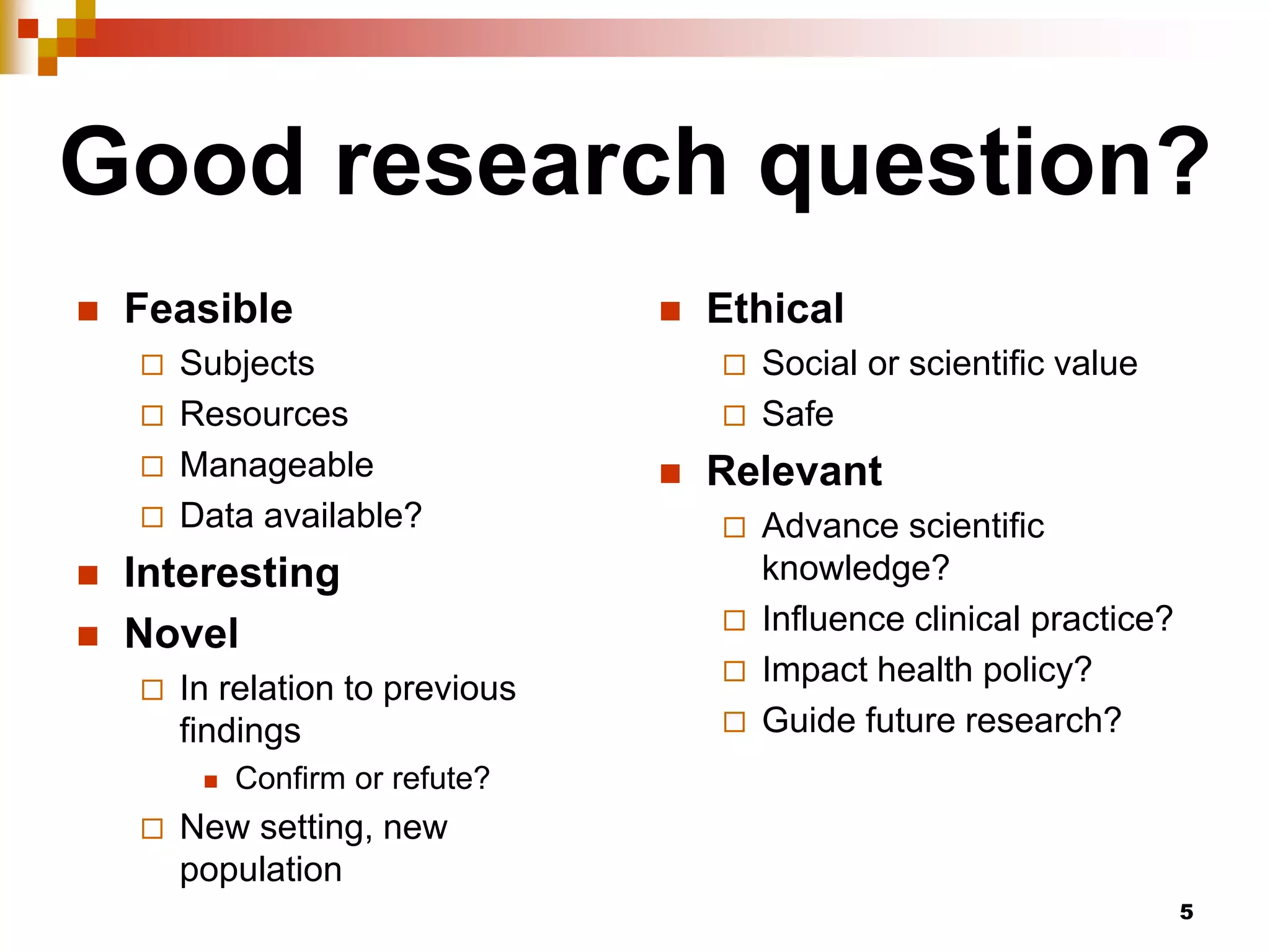
Good research question?
 Feasible
 Subjects
 Resources
 Manageable
 Data available?
 Interesting
 Novel
 In relation to previous
findings
 Confirm or refute?
 New setting, new
population
 Ethical
 Social or scientific value
 Safe
 Relevant
 Advance scientific
knowledge?
 Influence clinical practice?
 Impact health policy?
 Guide future research?
6
A Research Question Must
Identify
1. The variables under study
2. The population being studied
3. The testability of the question
7
Variables in research
 Have 2 or more properties or qualities
 Age, sex, weight, height
 Is one variable related to another?
 “ Is X related to Y? What is the effect of X on Y?” etc.
8
Variables in research
 Independent
variable:
 has a presumed effect
on the dependent
variable (outcome)
 May or may not be
manipulated
 Dependent variable:
 Something that varies
with a change in the
independent variable
 Outcome variable
9
Hypothesis
 Statement about the relationship
between 2 or more variables
 Converts the question into a statement
that predicts an expected outcome
 A unit or subset of the research
problem
10
Characteristics of hypotheses
 Declarative statement that identifies the
predicted relationship between 2 or
more variables
 Testability
 Based on sound scientific
theory/rationale
11
Directional vs. Non-Directional
Hypotheses
 Directional hypothesis
Specifies the direction of the relationship
between independent and dependent
variables
 Non-directional hypothesis
Shows the existence of a relationship
between variables but no direction is specified

Research Methods.ppt

  • 1.
    1 Research Defined  Researchis an organized and systematic way to find answers to questions  Research is a creative process
  • 2.
    2 Why is researchimportant to medicine and public health?  Knowledge obtained from sound research is transformed into clinical practice, leading to medical practice that is evidence-based.
  • 3.
    3 The Research Idea Professional experience  Burning questions  Literature  Professional meetings  Discussions
  • 4.
    4 Criteria for developinga good research question  Feasible  Interesting  Novel  Ethical  Relevant  Cummings et al. 2001
  • 5.
    5 Good research question? Feasible  Subjects  Resources  Manageable  Data available?  Interesting  Novel  In relation to previous findings  Confirm or refute?  New setting, new population  Ethical  Social or scientific value  Safe  Relevant  Advance scientific knowledge?  Influence clinical practice?  Impact health policy?  Guide future research?
  • 6.
    6 A Research QuestionMust Identify 1. The variables under study 2. The population being studied 3. The testability of the question
  • 7.
    7 Variables in research Have 2 or more properties or qualities  Age, sex, weight, height  Is one variable related to another?  “ Is X related to Y? What is the effect of X on Y?” etc.
  • 8.
    8 Variables in research Independent variable:  has a presumed effect on the dependent variable (outcome)  May or may not be manipulated  Dependent variable:  Something that varies with a change in the independent variable  Outcome variable
  • 9.
    9 Hypothesis  Statement aboutthe relationship between 2 or more variables  Converts the question into a statement that predicts an expected outcome  A unit or subset of the research problem
  • 10.
    10 Characteristics of hypotheses Declarative statement that identifies the predicted relationship between 2 or more variables  Testability  Based on sound scientific theory/rationale
  • 11.
    11 Directional vs. Non-Directional Hypotheses Directional hypothesis Specifies the direction of the relationship between independent and dependent variables  Non-directional hypothesis Shows the existence of a relationship between variables but no direction is specified