

How to Improve Your
Work–Life Balance
It's essential
to balance your professional
and personal life.
Creating a harmonious work–life balance is
critical to improve not only our physical,
emotional and mental well–being, but it
also benefits our career.
Work–life balance
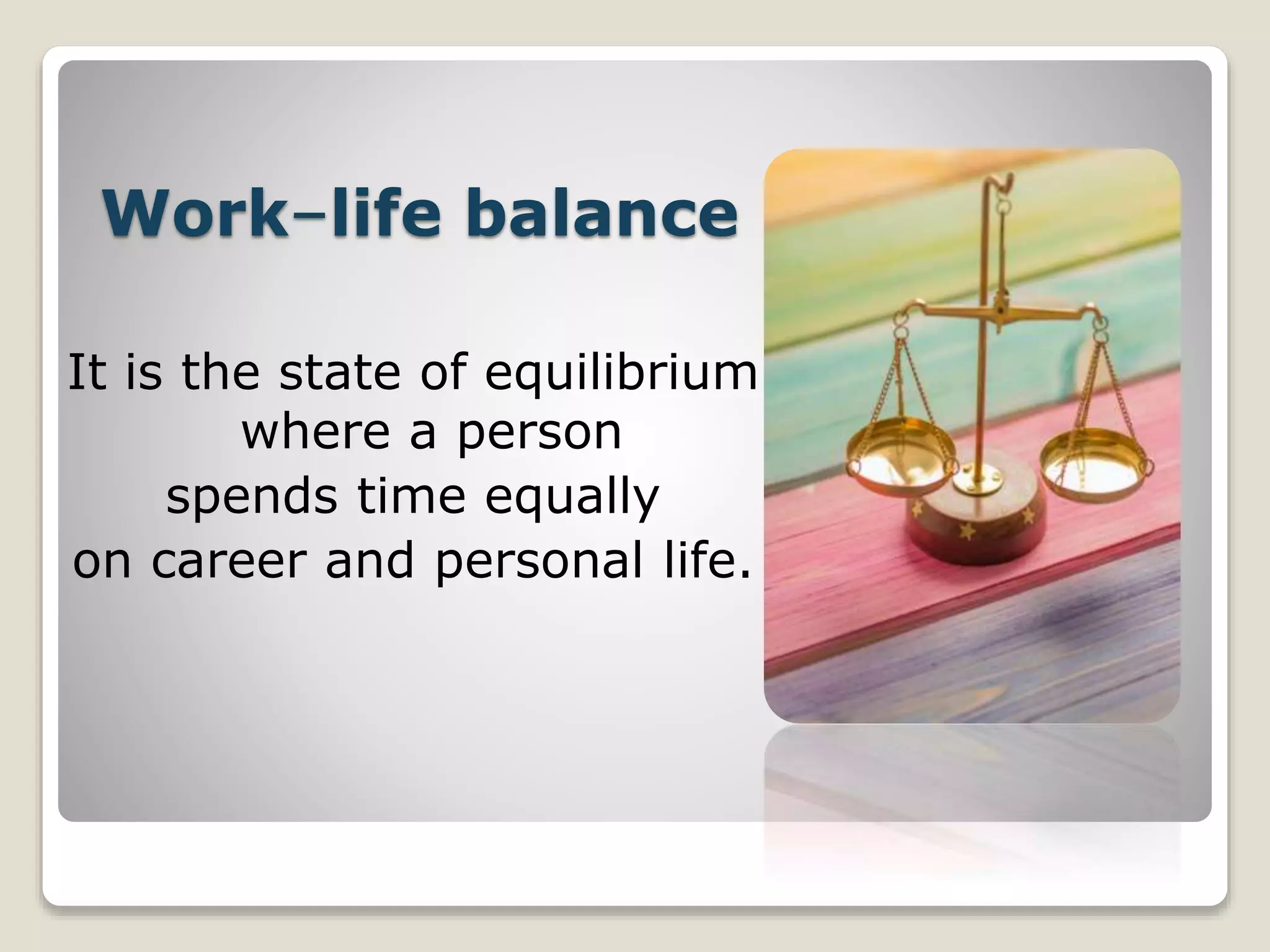
It is the state of equilibrium
where a person
spends time equally
on career and personal life.
Work–life balance
 It is about having the flexibility to get
things done in your professional life while
having time and energy for your personal
life.
 There may be heavy workload days, but
you have time later in the week to enjoy
other activities.
Reasons leading to a poor
work–life balance:
 increased responsibilities at work;
 working longer hours;
 increased responsibilities at home;
 having children.
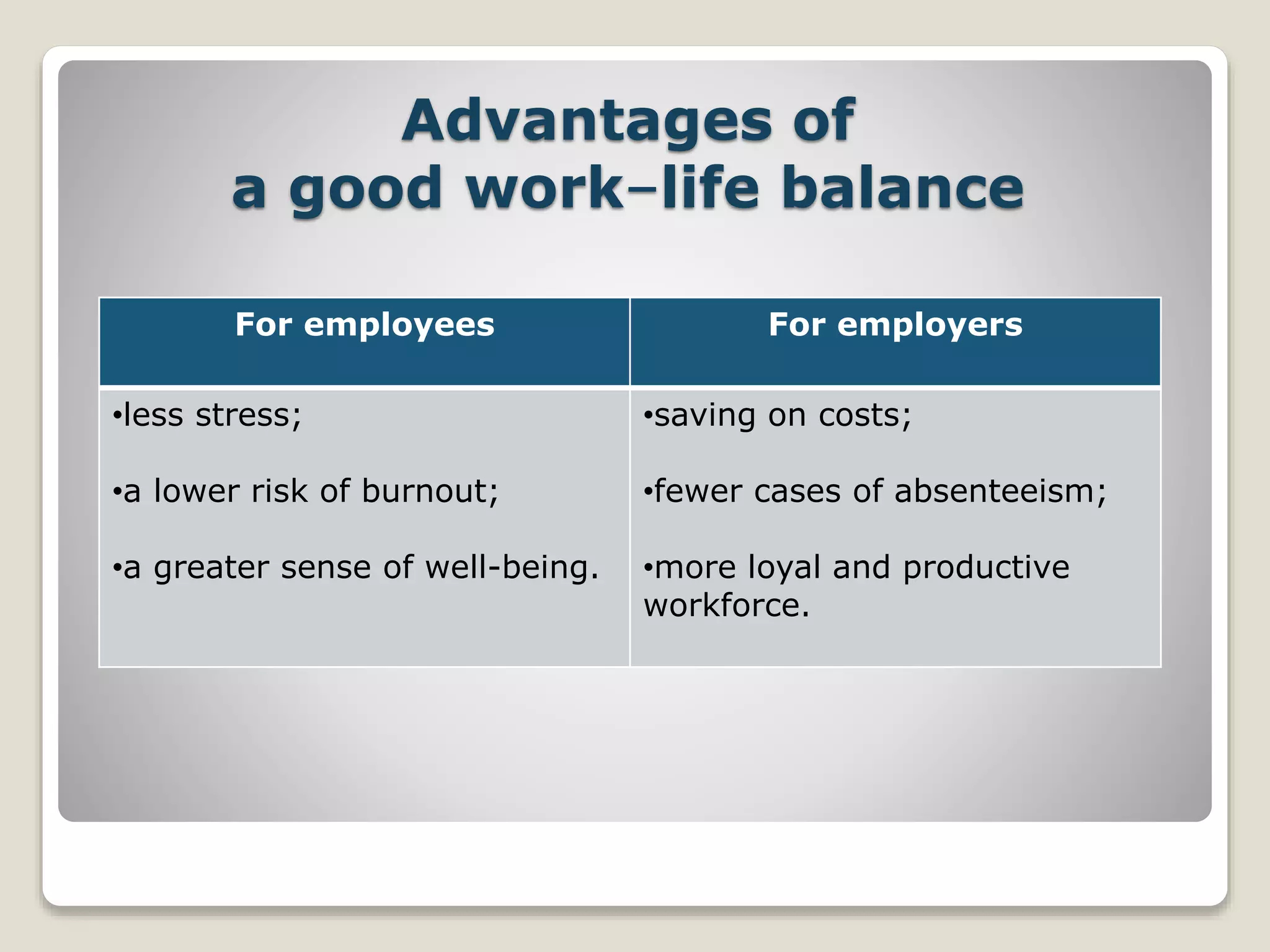
Advantages of
a good work–life balance
For employees For employers
•less stress;
•a lower risk of burnout;
•a greater sense of well-being.
•saving on costs;
•fewer cases of absenteeism;
•more loyal and productive
workforce.
Tips to create a better work–life
balance, and to be a supportive
manager.
1. Accept that there is no ‘perfect’ work–life balance.
2. Find a job that you love.
3. Prioritize your health.
4. Don’t be afraid to unplug.
5. Take a vacation.
6. Make time for yourself and your loved ones.
7. Set boundaries and work hours.
8. Set goals and priorities (and stick to them).
1. Accept that there is no ‘perfect’
work–life balance
 Do not try to reach an ideal work–life balance.
Try to reach a realistic one.
 Some days, you might focus more on work, while
other days on your hobbies or your family.
 Balance is achieved over time, not each day.
2. Find a job that you love
 You don't have to love every aspect of your job,
but it should be exciting enough to make you
want to get out of bed every morning.
 If you hate what you do, you won’t be happy.
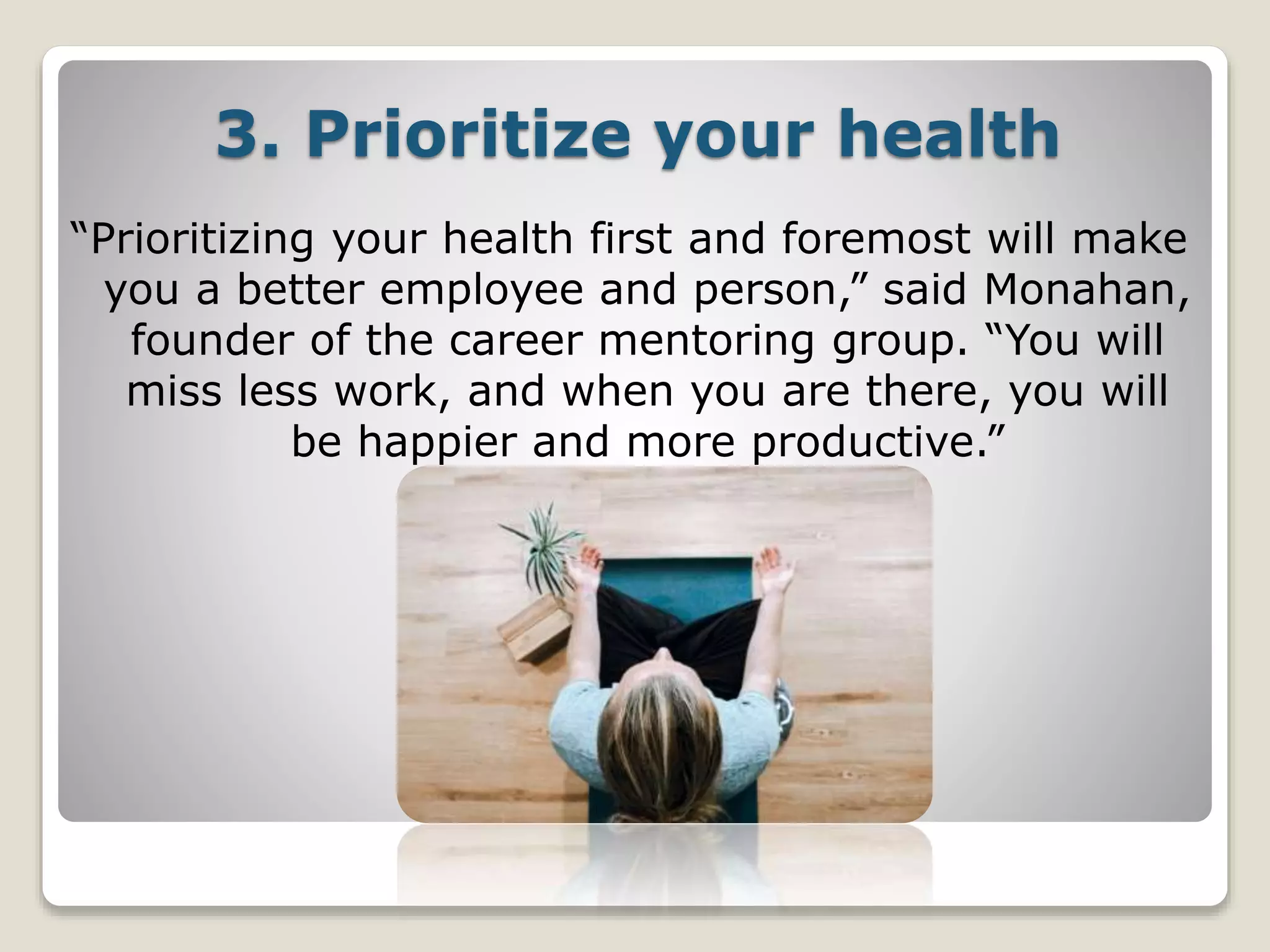
3. Prioritize your health
“Prioritizing your health first and foremost will make
you a better employee and person,” said Monahan,
founder of the career mentoring group. “You will
miss less work, and when you are there, you will
be happier and more productive.”
4. Don’t be afraid to unplug
Having sometimes a rest from the outside world
 allows us to recover from weekly stress;
 gives us space for other thoughts and ideas.
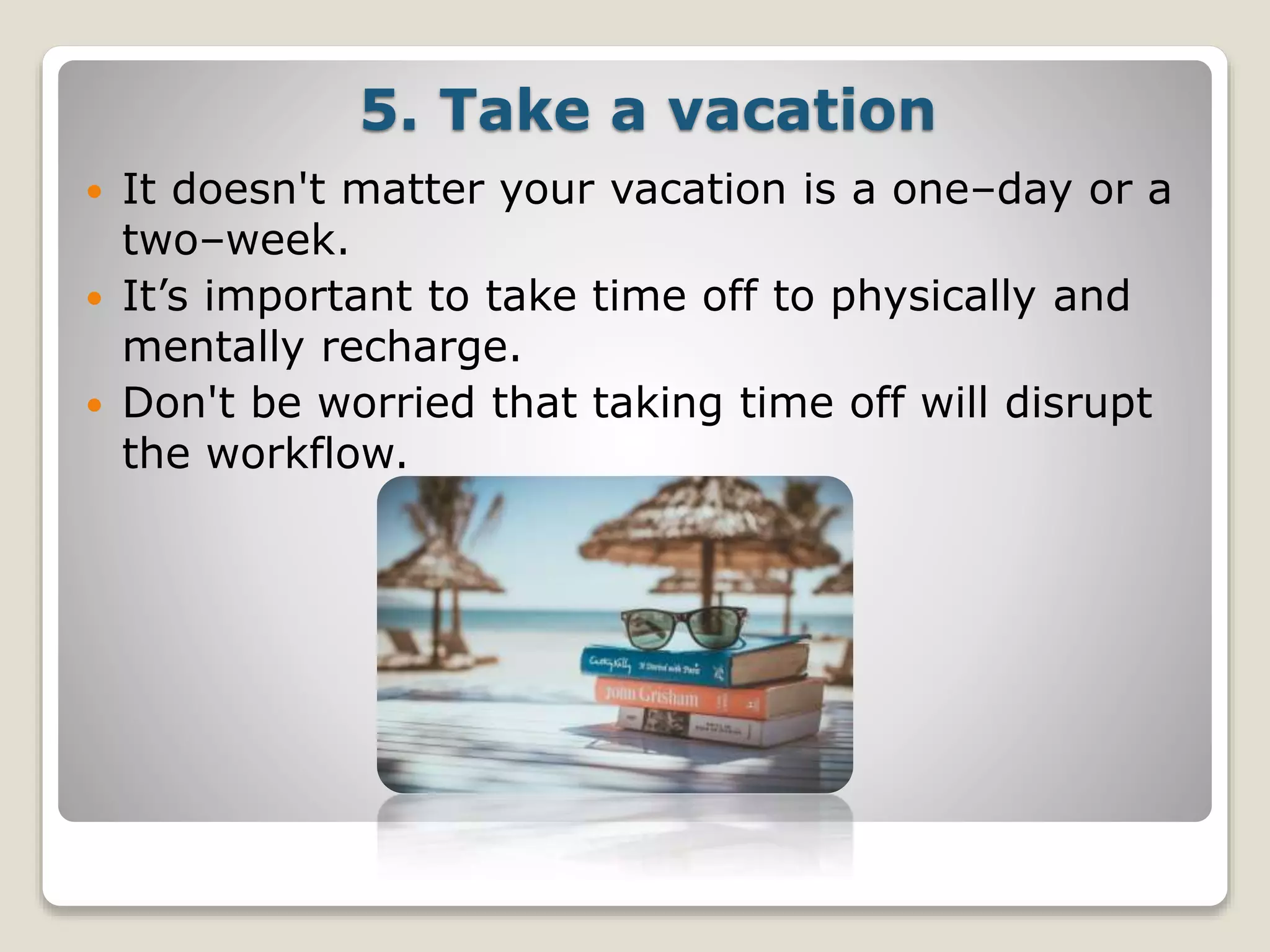
5. Take a vacation
 It doesn't matter your vacation is a one–day or a
two–week.
 It’s important to take time off to physically and
mentally recharge.
 Don't be worried that taking time off will disrupt
the workflow.
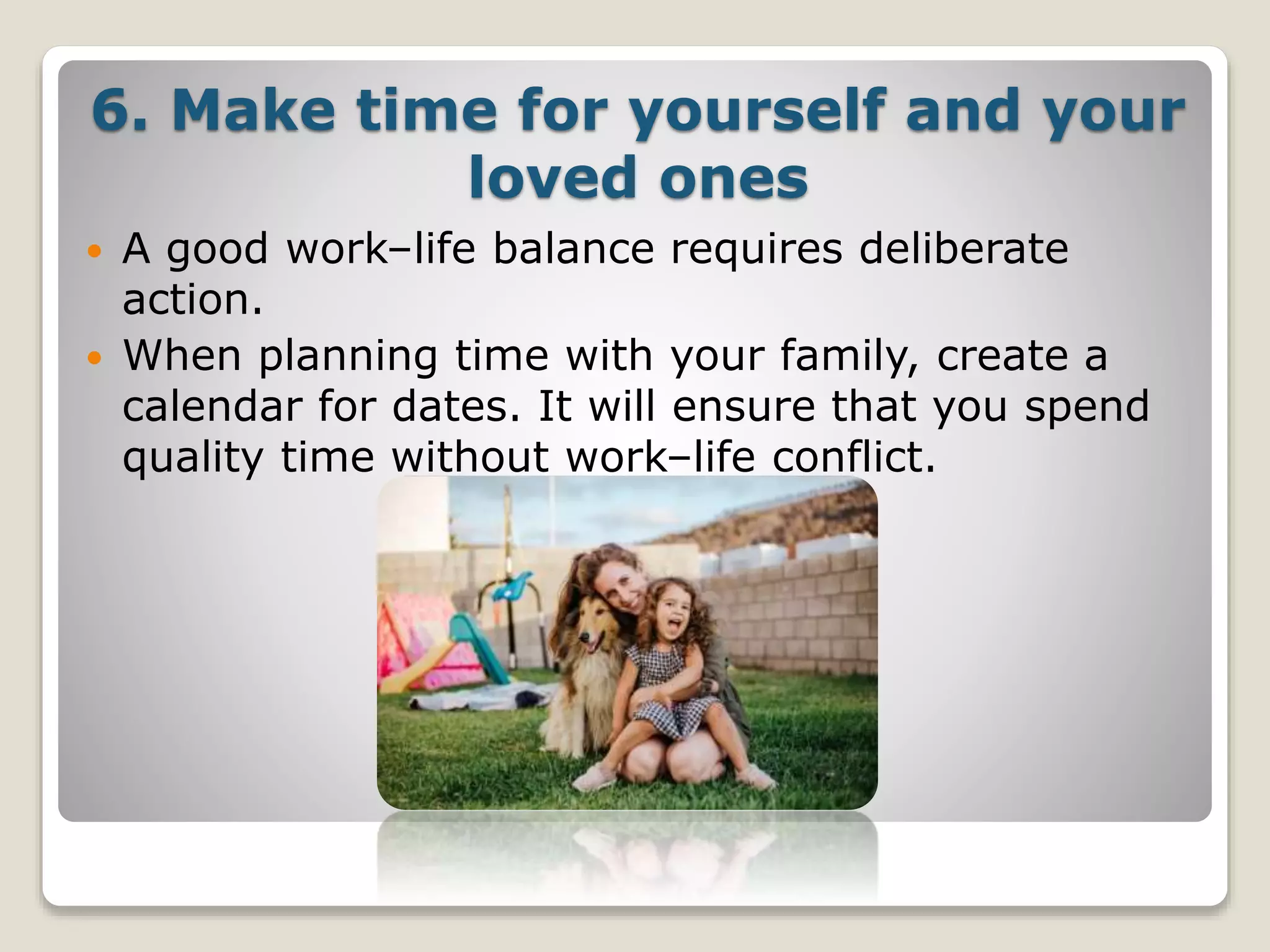
6. Make time for yourself and your
loved ones
 A good work–life balance requires deliberate
action.
 When planning time with your family, create a
calendar for dates. It will ensure that you spend
quality time without work–life conflict.
7. Set boundaries and work hours
 It is important to set specific work hours. It
means to determine when you will work and
when you will stop working to avoid burnout.
 It would be a loadable idea to have a separate
computer or phone for work. If that isn’t
possible, try to separate your work and personal
platforms using different browsers or email
addresses.
Set goals and priorities (and stick
to them)
 Structuring your day can increase productivity at
work, which can leads to more free time to relax
outside of work.
 Pay attention to when you are the most
productive at work and spend this time for
important work–related activities.
 Set achievable goals by implementing time–
management strategies, analyzing your to–do
list.
Balance is a very personal thing,
and only you can decide the
lifestyle that suits you best.

How to improve your work–life balance.ppt

  • 1.
    How to ImproveYour Work–Life Balance
  • 2.
    It's essential to balanceyour professional and personal life. Creating a harmonious work–life balance is critical to improve not only our physical, emotional and mental well–being, but it also benefits our career.
  • 3.
    Work–life balance It isthe state of equilibrium where a person spends time equally on career and personal life.
  • 4.
    Work–life balance  Itis about having the flexibility to get things done in your professional life while having time and energy for your personal life.  There may be heavy workload days, but you have time later in the week to enjoy other activities.
  • 5.
    Reasons leading toa poor work–life balance:  increased responsibilities at work;  working longer hours;  increased responsibilities at home;  having children.
  • 6.
    Advantages of a goodwork–life balance For employees For employers •less stress; •a lower risk of burnout; •a greater sense of well-being. •saving on costs; •fewer cases of absenteeism; •more loyal and productive workforce.
  • 7.
    Tips to createa better work–life balance, and to be a supportive manager. 1. Accept that there is no ‘perfect’ work–life balance. 2. Find a job that you love. 3. Prioritize your health. 4. Don’t be afraid to unplug. 5. Take a vacation. 6. Make time for yourself and your loved ones. 7. Set boundaries and work hours. 8. Set goals and priorities (and stick to them).
  • 8.
    1. Accept thatthere is no ‘perfect’ work–life balance  Do not try to reach an ideal work–life balance. Try to reach a realistic one.  Some days, you might focus more on work, while other days on your hobbies or your family.  Balance is achieved over time, not each day.
  • 9.
    2. Find ajob that you love  You don't have to love every aspect of your job, but it should be exciting enough to make you want to get out of bed every morning.  If you hate what you do, you won’t be happy.
  • 10.
    3. Prioritize yourhealth “Prioritizing your health first and foremost will make you a better employee and person,” said Monahan, founder of the career mentoring group. “You will miss less work, and when you are there, you will be happier and more productive.”
  • 11.
    4. Don’t beafraid to unplug Having sometimes a rest from the outside world  allows us to recover from weekly stress;  gives us space for other thoughts and ideas.
  • 12.
    5. Take avacation  It doesn't matter your vacation is a one–day or a two–week.  It’s important to take time off to physically and mentally recharge.  Don't be worried that taking time off will disrupt the workflow.
  • 13.
    6. Make timefor yourself and your loved ones  A good work–life balance requires deliberate action.  When planning time with your family, create a calendar for dates. It will ensure that you spend quality time without work–life conflict.
  • 14.
    7. Set boundariesand work hours  It is important to set specific work hours. It means to determine when you will work and when you will stop working to avoid burnout.  It would be a loadable idea to have a separate computer or phone for work. If that isn’t possible, try to separate your work and personal platforms using different browsers or email addresses.
  • 15.
    Set goals andpriorities (and stick to them)  Structuring your day can increase productivity at work, which can leads to more free time to relax outside of work.  Pay attention to when you are the most productive at work and spend this time for important work–related activities.  Set achievable goals by implementing time– management strategies, analyzing your to–do list.
  • 16.
    Balance is avery personal thing, and only you can decide the lifestyle that suits you best.