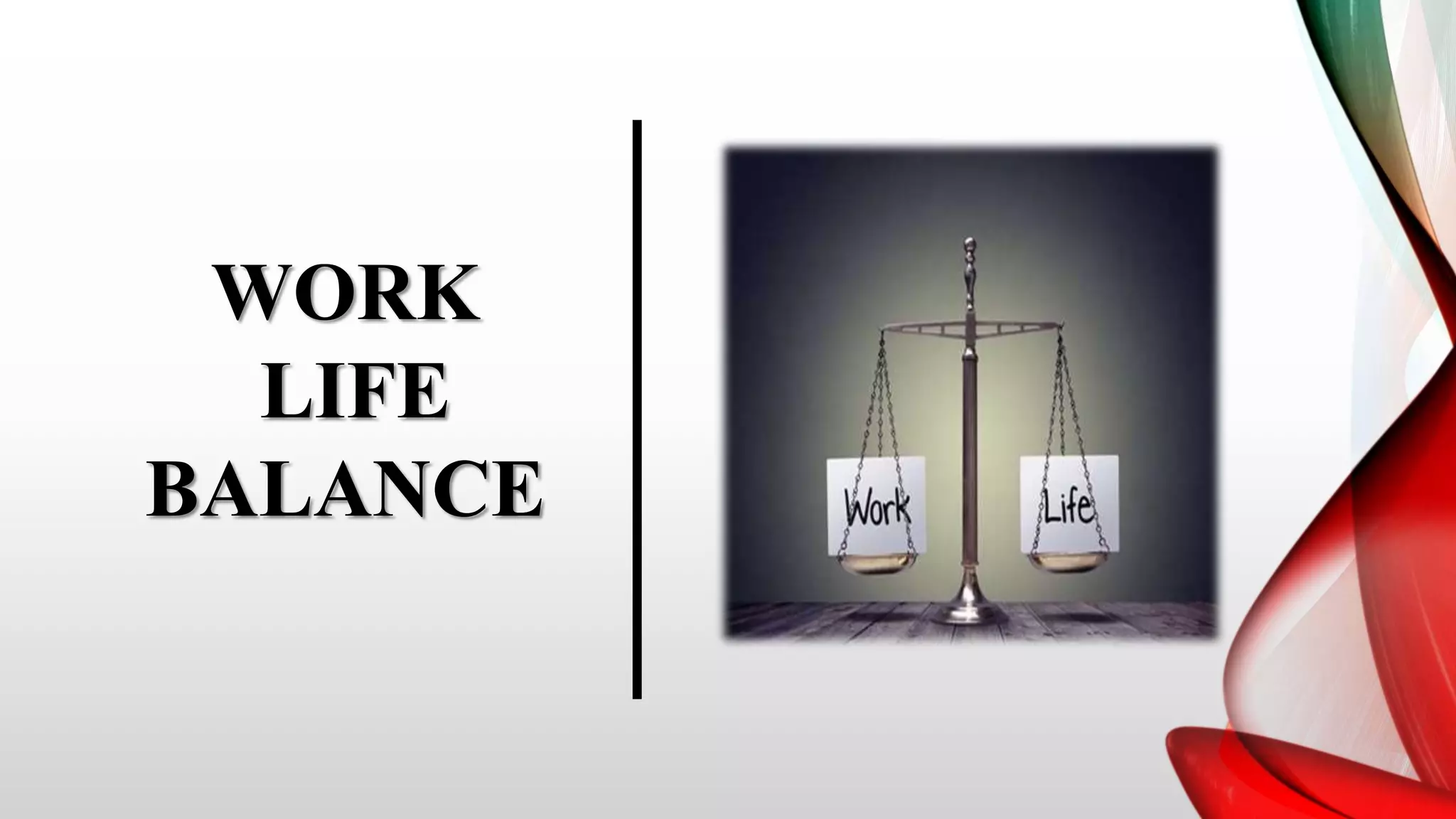
WORK
LIFE
BALANCE
INTRODUCTION:
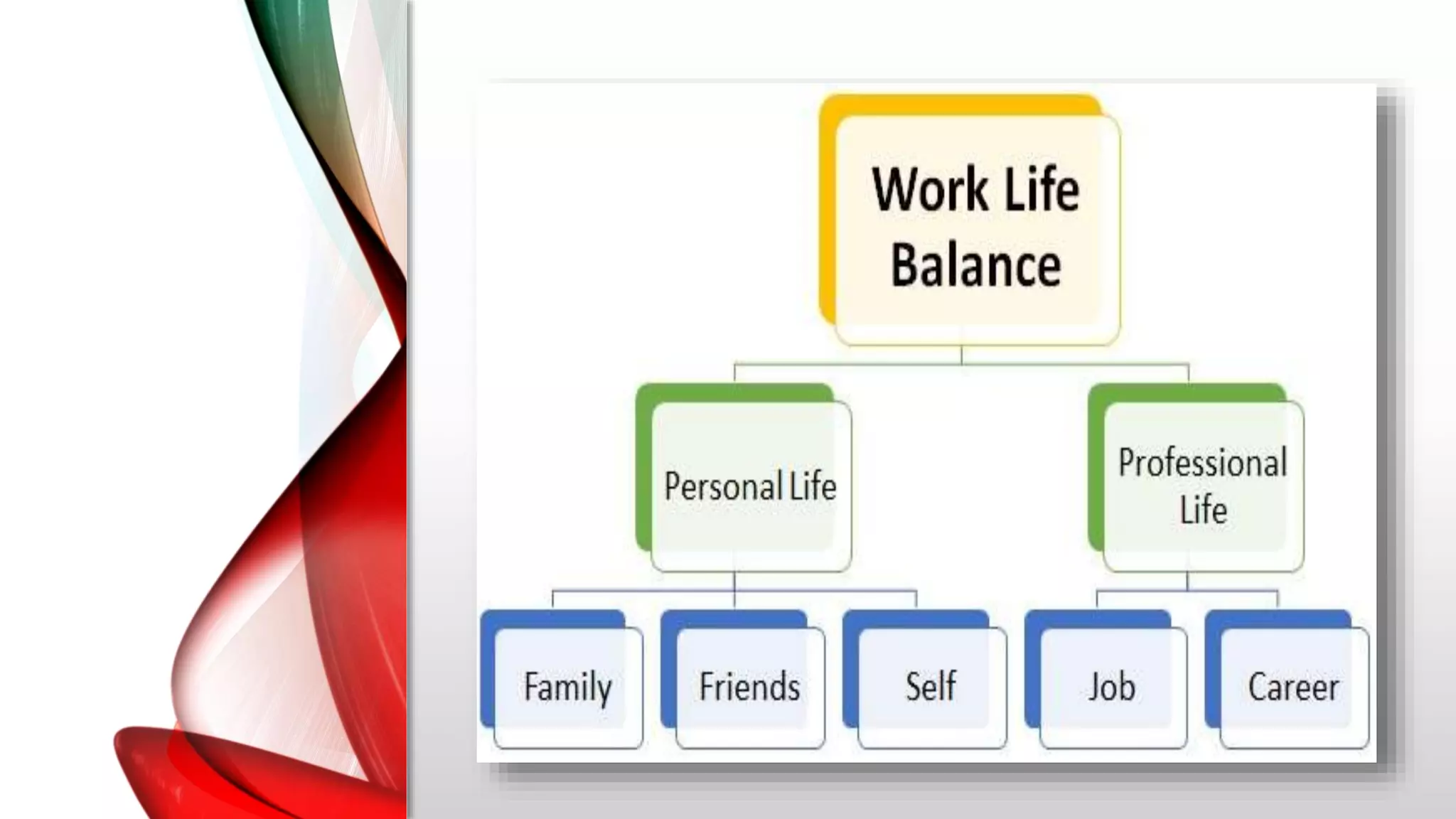
Work-life balance is a very broader term in human resource development and
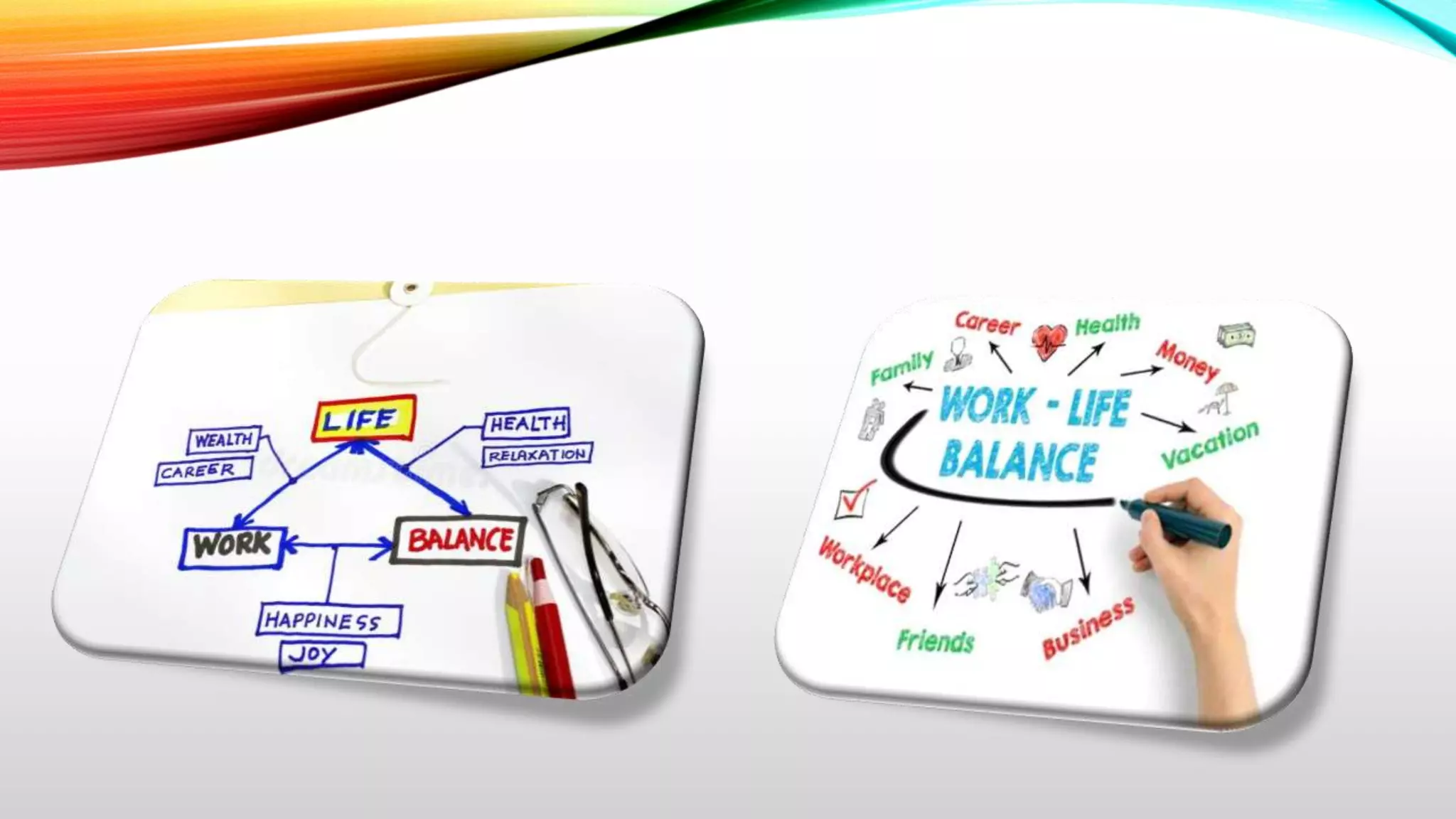
often referred to finding the right equilibrium between the different aspects
and roles in a life of a person. Although there are different views and concepts
about work-life balance but it is generally coupled with maintaining an overall
balance in different aspects of life..
Now-a-days, the concept of work-life balance is not new; because of
its importance it has been discussed extensively. It has been
conceptualized as an individual’s orientation across various life roles
and inter roles phenomenon.
Definition:
Cambridge dictionary defines work-life balance as the amount of time spent
doing a job, as compared to the amount of time spent with your family and on
things you enjoy.
As defined by Forbes, work-life balance is one of the most important
components of a healthy work environment. The publication further describes
work-life balance as essential to reducing stress and preventing burnout in the
workplace.
Benefits of work life balance:
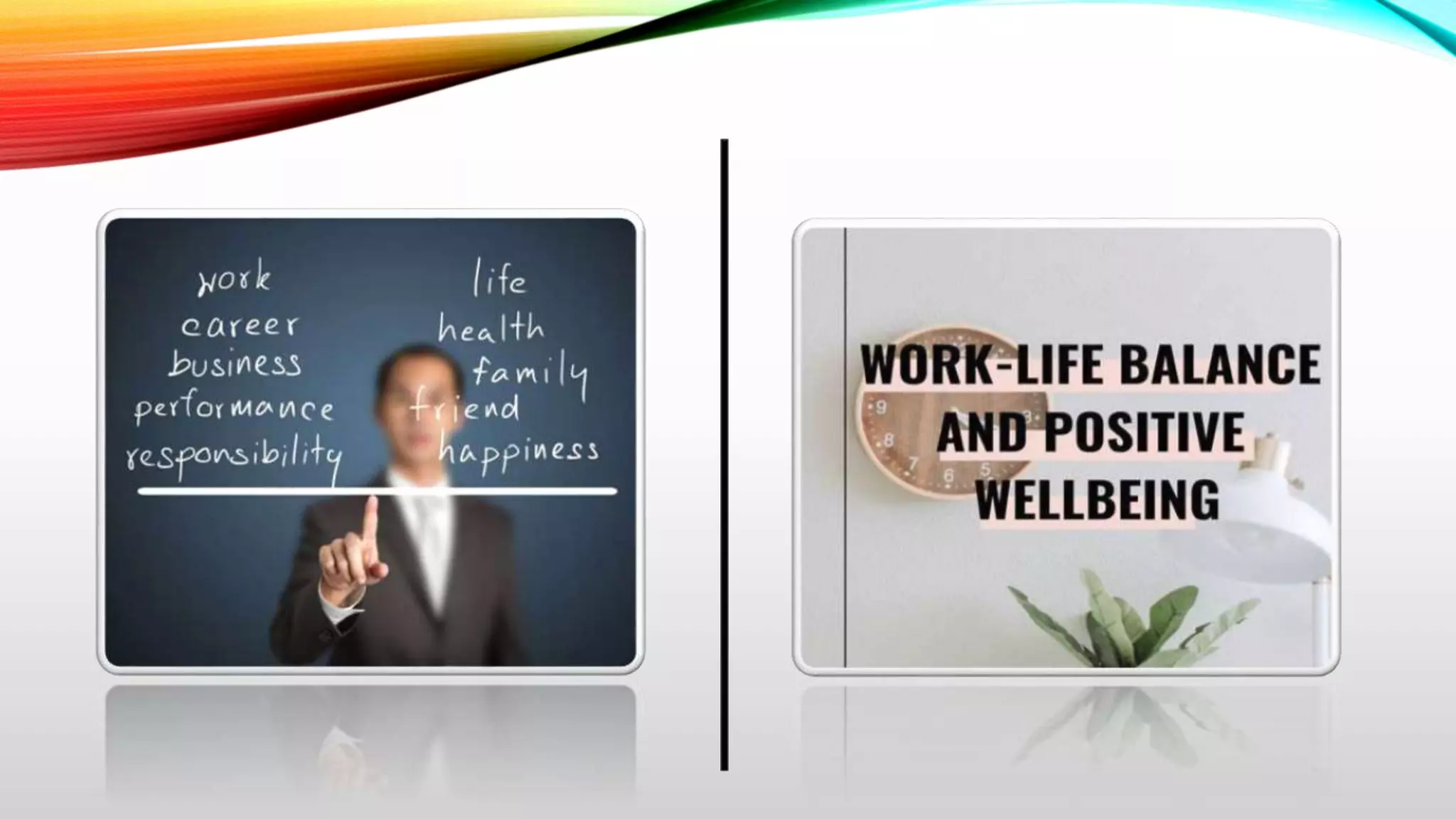
.Maintaining a healthy work-life balance can bring numerous benefits to an
individual's physical, emotional, and mental well-being. Here are some of the
key benefits of having a good work-life balance:
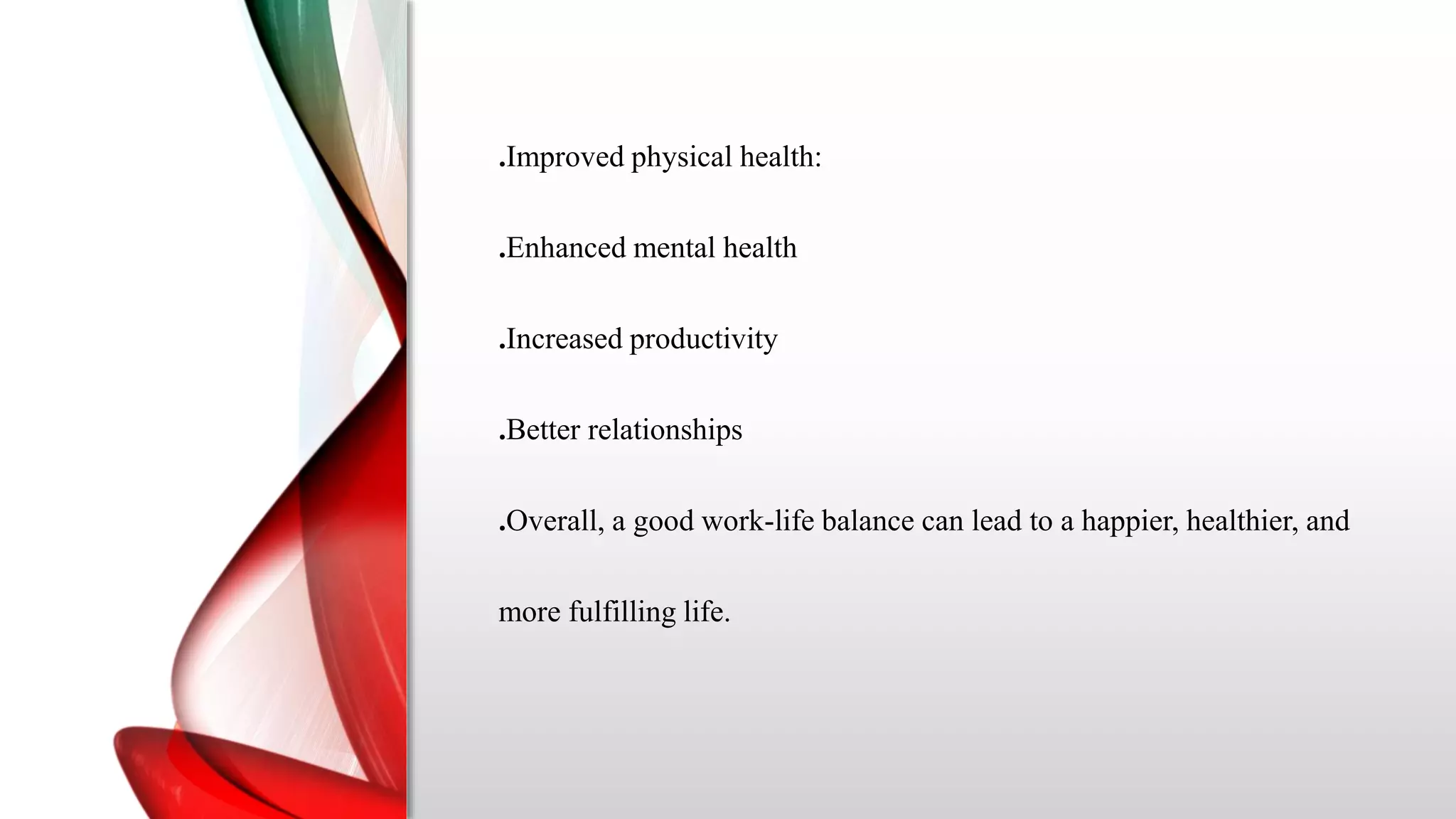
.Improved physical health:
.Enhanced mental health
.Increased productivity
.Better relationships
.Overall, a good work-life balance can lead to a happier, healthier, and
more fulfilling life.
CHALLENGES:
.Long work hours and a high workload
.Work-related stress and burnout
. Lack of time management
.Health and wellness issues
. Lack of support from colleagues
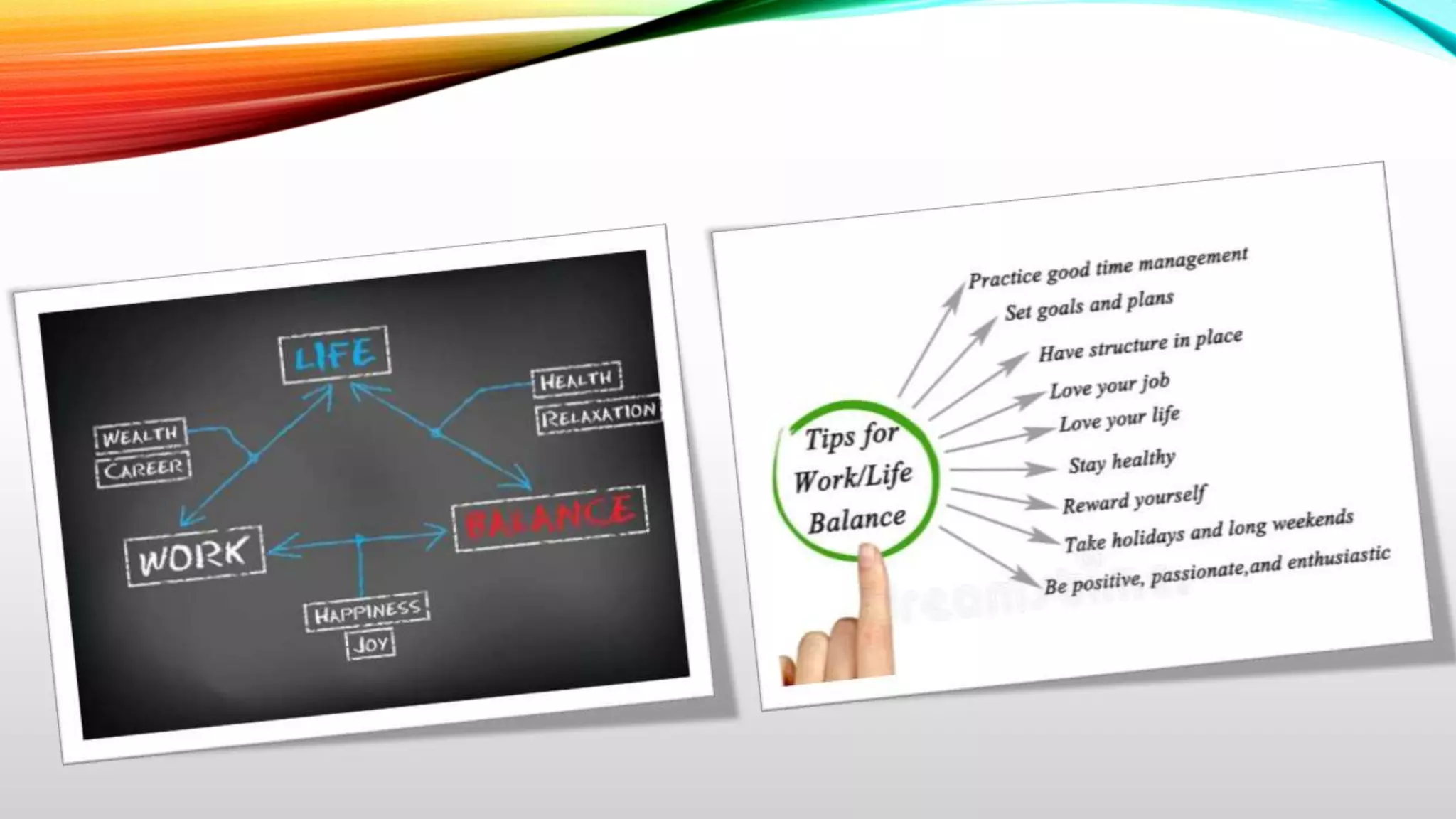
Strategies For Achieving Work-life Balance:
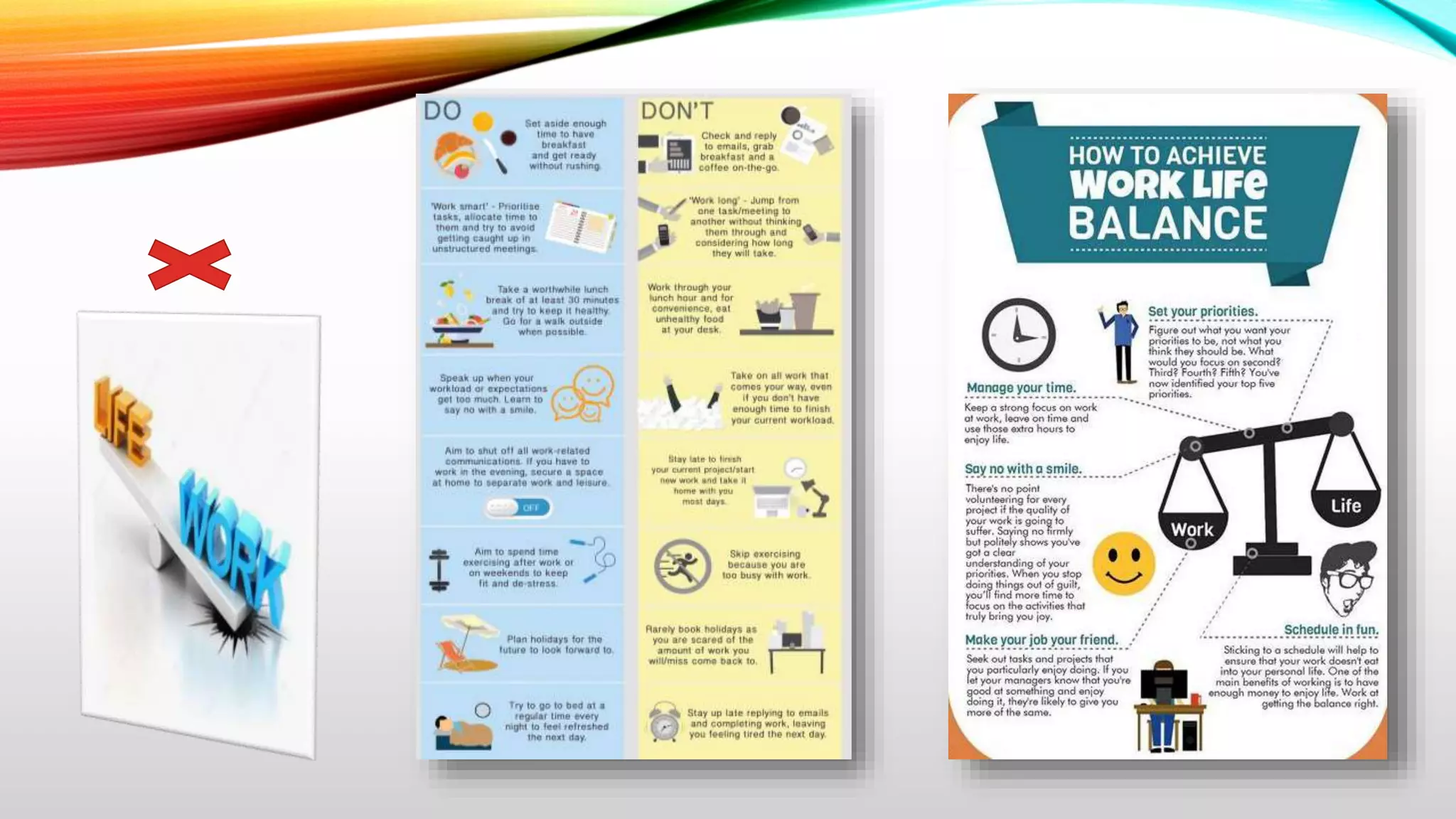
.Prioritizing tasks and setting goals
.Setting boundaries and sticking to them
.Time management techniques, such as the pomodoro
technique
.mindfulness practices, such as meditation or yoga
.Taking regular breaks and vacations
.Delegation And Outsourcing
.Stress Reduction Strategies
.Boundary Setting And Saying No
.Creating A Support System
.Seeking Support From Friends, Family, And Colleagues
.Prioritizing Self-care Activities, Such As Exercise Or
Hobbies
.Work-life balance refers to the ability to effectively balance the
demands of work and personal life, allowing for satisfaction and
fulfilment in both areas.
.Work-life balance is important because it can lead to increased
productivity, better mental and physical health, and improved
relationships.
.The challenges of achieving work-life balance can be daunting, but
with the right strategies, it is possible to find balance.
Six Key Elements Of Work Life Balance:
. Self management…
. Time management…
. Stress management…
. Managing change…
. Managing technology…
. Managing leisure time…
Methods To Achieve Work Life Balance:
.Time management techniques: this involves creating a schedule
that allows for both work and personal activities and using tools
such as calendars and to-do lists.
.Prioritization and goal setting: it is important to prioritize tasks and
set achievable goals to prevent feeling overwhelmed by work
responsibilities.
.Delegation and outsourcing: it can be helpful to delegate tasks to
others or outsource tasks that are not essential to focus on more
important tasks.
.Mindfulness and stress reduction strategies: mindfulness
techniques such as meditation or yoga can help reduce stress and
increase overall well-being.
.Boundary setting and saying no: setting boundaries and learning to
say no to non-essential tasks or activities can help reduce workload
and increase time for personal activities.
.Creating a support system: having a support system of friends,
family, or colleagues can provide emotional support and help with
personal responsibilities.
CONCLUSION:
.In conclusion, achieving work-life balance is crucial for our overall
well-being and happiness.
.By identifying the challenges to work-life balance and implementing
strategies such as prioritizing tasks, setting boundaries, and practicing
self-care, we can achieve a better balance between work and personal
life.
.Remember that achieving work-life balance is an ongoing process,
and it may take time to find the strategies that work best for you.
presentation.pptx

presentation.pptx

  • 1.
  • 2.
    INTRODUCTION: Work-life balance isa very broader term in human resource development and often referred to finding the right equilibrium between the different aspects and roles in a life of a person. Although there are different views and concepts about work-life balance but it is generally coupled with maintaining an overall balance in different aspects of life.. Now-a-days, the concept of work-life balance is not new; because of its importance it has been discussed extensively. It has been conceptualized as an individual’s orientation across various life roles and inter roles phenomenon.
  • 3.
    Definition: Cambridge dictionary defineswork-life balance as the amount of time spent doing a job, as compared to the amount of time spent with your family and on things you enjoy. As defined by Forbes, work-life balance is one of the most important components of a healthy work environment. The publication further describes work-life balance as essential to reducing stress and preventing burnout in the workplace.
  • 6.
    Benefits of worklife balance: .Maintaining a healthy work-life balance can bring numerous benefits to an individual's physical, emotional, and mental well-being. Here are some of the key benefits of having a good work-life balance:
  • 7.
    .Improved physical health: .Enhancedmental health .Increased productivity .Better relationships .Overall, a good work-life balance can lead to a happier, healthier, and more fulfilling life.
  • 9.
    CHALLENGES: .Long work hoursand a high workload .Work-related stress and burnout . Lack of time management .Health and wellness issues . Lack of support from colleagues
  • 11.
    Strategies For AchievingWork-life Balance: .Prioritizing tasks and setting goals .Setting boundaries and sticking to them .Time management techniques, such as the pomodoro technique .mindfulness practices, such as meditation or yoga .Taking regular breaks and vacations
  • 12.
    .Delegation And Outsourcing .StressReduction Strategies .Boundary Setting And Saying No .Creating A Support System .Seeking Support From Friends, Family, And Colleagues .Prioritizing Self-care Activities, Such As Exercise Or Hobbies
  • 13.
    .Work-life balance refersto the ability to effectively balance the demands of work and personal life, allowing for satisfaction and fulfilment in both areas. .Work-life balance is important because it can lead to increased productivity, better mental and physical health, and improved relationships. .The challenges of achieving work-life balance can be daunting, but with the right strategies, it is possible to find balance.
  • 14.
    Six Key ElementsOf Work Life Balance: . Self management… . Time management… . Stress management… . Managing change… . Managing technology… . Managing leisure time…
  • 16.
    Methods To AchieveWork Life Balance: .Time management techniques: this involves creating a schedule that allows for both work and personal activities and using tools such as calendars and to-do lists. .Prioritization and goal setting: it is important to prioritize tasks and set achievable goals to prevent feeling overwhelmed by work responsibilities. .Delegation and outsourcing: it can be helpful to delegate tasks to others or outsource tasks that are not essential to focus on more important tasks.
  • 17.
    .Mindfulness and stressreduction strategies: mindfulness techniques such as meditation or yoga can help reduce stress and increase overall well-being. .Boundary setting and saying no: setting boundaries and learning to say no to non-essential tasks or activities can help reduce workload and increase time for personal activities. .Creating a support system: having a support system of friends, family, or colleagues can provide emotional support and help with personal responsibilities.
  • 19.
    CONCLUSION: .In conclusion, achievingwork-life balance is crucial for our overall well-being and happiness. .By identifying the challenges to work-life balance and implementing strategies such as prioritizing tasks, setting boundaries, and practicing self-care, we can achieve a better balance between work and personal life. .Remember that achieving work-life balance is an ongoing process, and it may take time to find the strategies that work best for you.