MAINTAINING WORK-LIFE BALANCE
TIPS AND TECHNIQUES
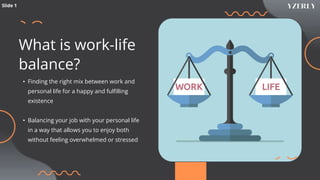
What is work-life
balance?
• Finding the right mix between work and
personal life for a happy and fulfilling
existence
• Balancing your job with your personal life
in a way that allows you to enjoy both
without feeling overwhelmed or stressed
Slide 1
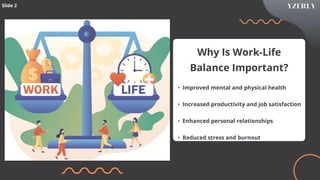
Why Is Work-Life
Balance Important?
• Improved mental and physical health
• Increased productivity and job satisfaction
• Enhanced personal relationships
• Reduced stress and burnout
Slide 2
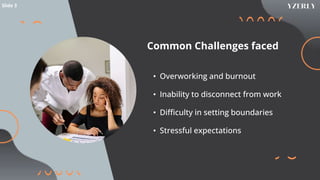
Common Challenges faced
• Overworking and burnout
• Inability to disconnect from work
• Difficulty in setting boundaries
• Stressful expectations
Slide 3
Tips for Maintaining Work-Life Balance
Slide 4
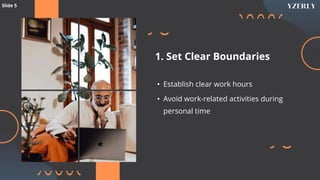
1. Set Clear Boundaries
• Establish clear work hours
• Avoid work-related activities during
personal time
Slide 5
Slide 6
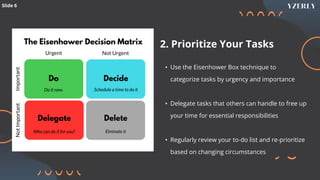
2. Prioritize Your Tasks
• Use the Eisenhower Box technique to
categorize tasks by urgency and importance
• Delegate tasks that others can handle to free up
your time for essential responsibilities
• Regularly review your to-do list and re-prioritize
based on changing circumstances
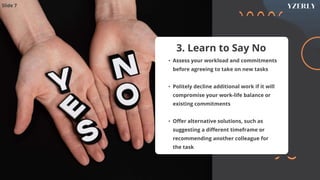
3. Learn to Say No
• Assess your workload and commitments
before agreeing to take on new tasks
• Politely decline additional work if it will
compromise your work-life balance or
existing commitments
• Offer alternative solutions, such as
suggesting a different timeframe or
recommending another colleague for
the task
Slide 7
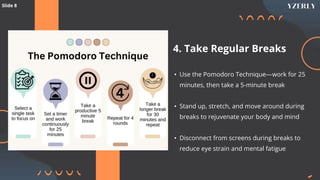
4. Take Regular Breaks
• Use the Pomodoro Technique—work for 25
minutes, then take a 5-minute break
• Stand up, stretch, and move around during
breaks to rejuvenate your body and mind
• Disconnect from screens during breaks to
reduce eye strain and mental fatigue
Slide 8
Slide 9
Exercise and Maintain a
Healthy Diet
• Schedule regular exercise sessions in your
weekly calendar and treat them as non-
negotiable appointments
• Plan and prepare healthy meals in advance to
ensure you have nutritious options
readily available
• Stay hydrated and snack on healthy options
like fruits, nuts, or yogurt throughout the day
5.
6. Establish a Relaxation Routine
• Set aside time each day for relaxation
activities, such as reading, or listening to
music
• Practice mindfulness or guided
meditation to reduce stress and increase
mental clarity
• Engage in a hobby you enjoy, like
painting, gardening, or playing a musical
instrument
Slide 10
7. Involve Your Support System
• Schedule regular check-ins with your supervisor to
discuss workload and potential adjustments
• Clearly communicate your capacity and workload,
emphasizing the need for a balanced workload
• Propose strategies to optimize work processes and
increase efficiency to better manage your time
Slide 11
Unlock Your Potential: Discover how Yzerly can help you
reach your full communication potential
Visit our page at https://www.yzerly.com/corporate-
communication-training-yzerly for details on our programs

Maintaining Work-Life Balance: Tips and Techniques

  • 1.
  • 2.
    What is work-life balance? •Finding the right mix between work and personal life for a happy and fulfilling existence • Balancing your job with your personal life in a way that allows you to enjoy both without feeling overwhelmed or stressed Slide 1
  • 3.
    Why Is Work-Life BalanceImportant? • Improved mental and physical health • Increased productivity and job satisfaction • Enhanced personal relationships • Reduced stress and burnout Slide 2
  • 4.
    Common Challenges faced •Overworking and burnout • Inability to disconnect from work • Difficulty in setting boundaries • Stressful expectations Slide 3
  • 5.
    Tips for MaintainingWork-Life Balance Slide 4
  • 6.
    1. Set ClearBoundaries • Establish clear work hours • Avoid work-related activities during personal time Slide 5
  • 7.
    Slide 6 2. PrioritizeYour Tasks • Use the Eisenhower Box technique to categorize tasks by urgency and importance • Delegate tasks that others can handle to free up your time for essential responsibilities • Regularly review your to-do list and re-prioritize based on changing circumstances
  • 8.
    3. Learn toSay No • Assess your workload and commitments before agreeing to take on new tasks • Politely decline additional work if it will compromise your work-life balance or existing commitments • Offer alternative solutions, such as suggesting a different timeframe or recommending another colleague for the task Slide 7
  • 9.
    4. Take RegularBreaks • Use the Pomodoro Technique—work for 25 minutes, then take a 5-minute break • Stand up, stretch, and move around during breaks to rejuvenate your body and mind • Disconnect from screens during breaks to reduce eye strain and mental fatigue Slide 8
  • 10.
    Slide 9 Exercise andMaintain a Healthy Diet • Schedule regular exercise sessions in your weekly calendar and treat them as non- negotiable appointments • Plan and prepare healthy meals in advance to ensure you have nutritious options readily available • Stay hydrated and snack on healthy options like fruits, nuts, or yogurt throughout the day 5.
  • 11.
    6. Establish aRelaxation Routine • Set aside time each day for relaxation activities, such as reading, or listening to music • Practice mindfulness or guided meditation to reduce stress and increase mental clarity • Engage in a hobby you enjoy, like painting, gardening, or playing a musical instrument Slide 10
  • 12.
    7. Involve YourSupport System • Schedule regular check-ins with your supervisor to discuss workload and potential adjustments • Clearly communicate your capacity and workload, emphasizing the need for a balanced workload • Propose strategies to optimize work processes and increase efficiency to better manage your time Slide 11
  • 13.
    Unlock Your Potential:Discover how Yzerly can help you reach your full communication potential Visit our page at https://www.yzerly.com/corporate- communication-training-yzerly for details on our programs