How Not to
Kill Thinking
Gerald Aungst
PCTM Conference
Seven Springs, PA
August 4, 2016
Principles of the
MODERN
Math Classroom
5|
#5cmath #pctm
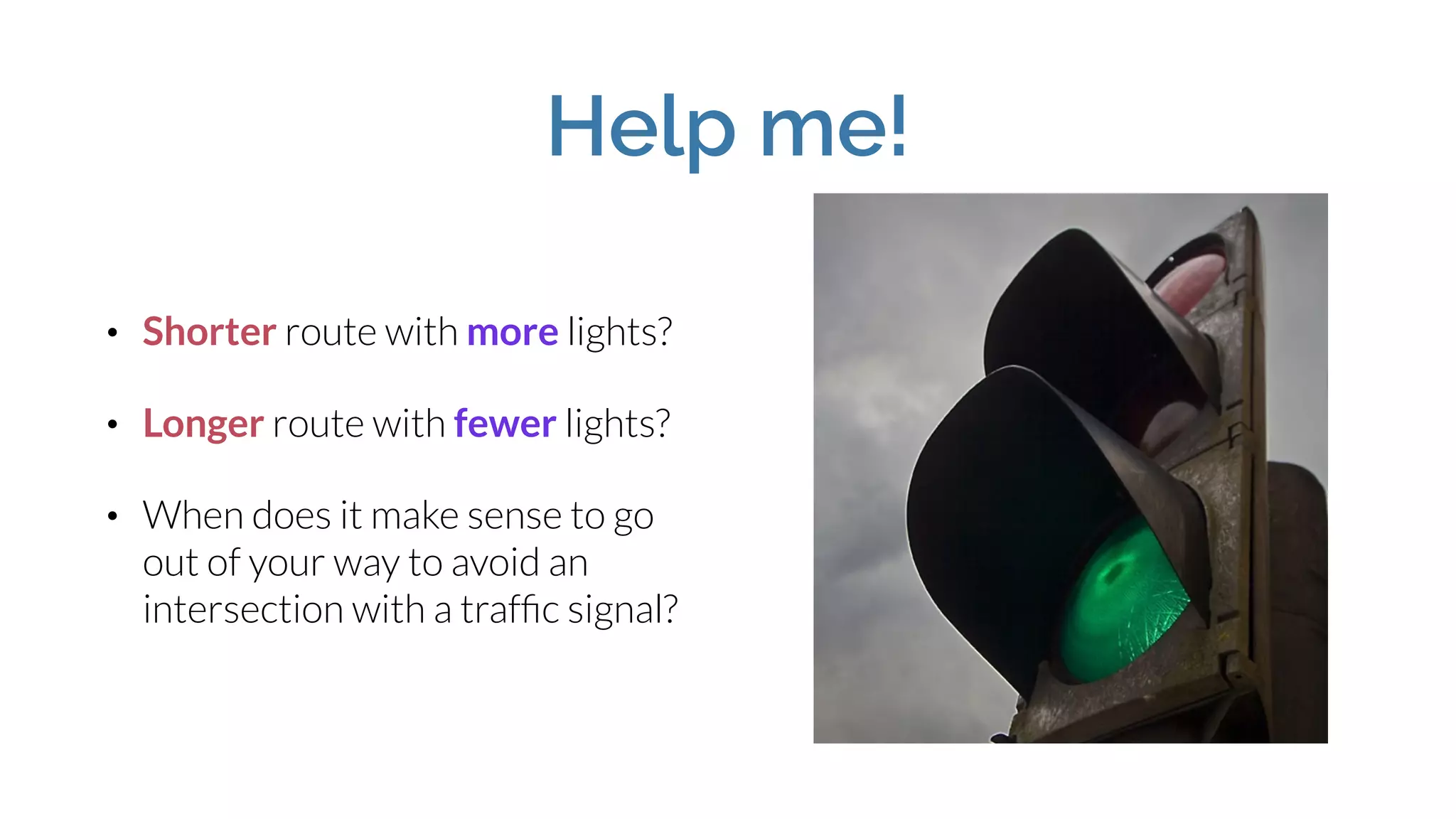
Help me!
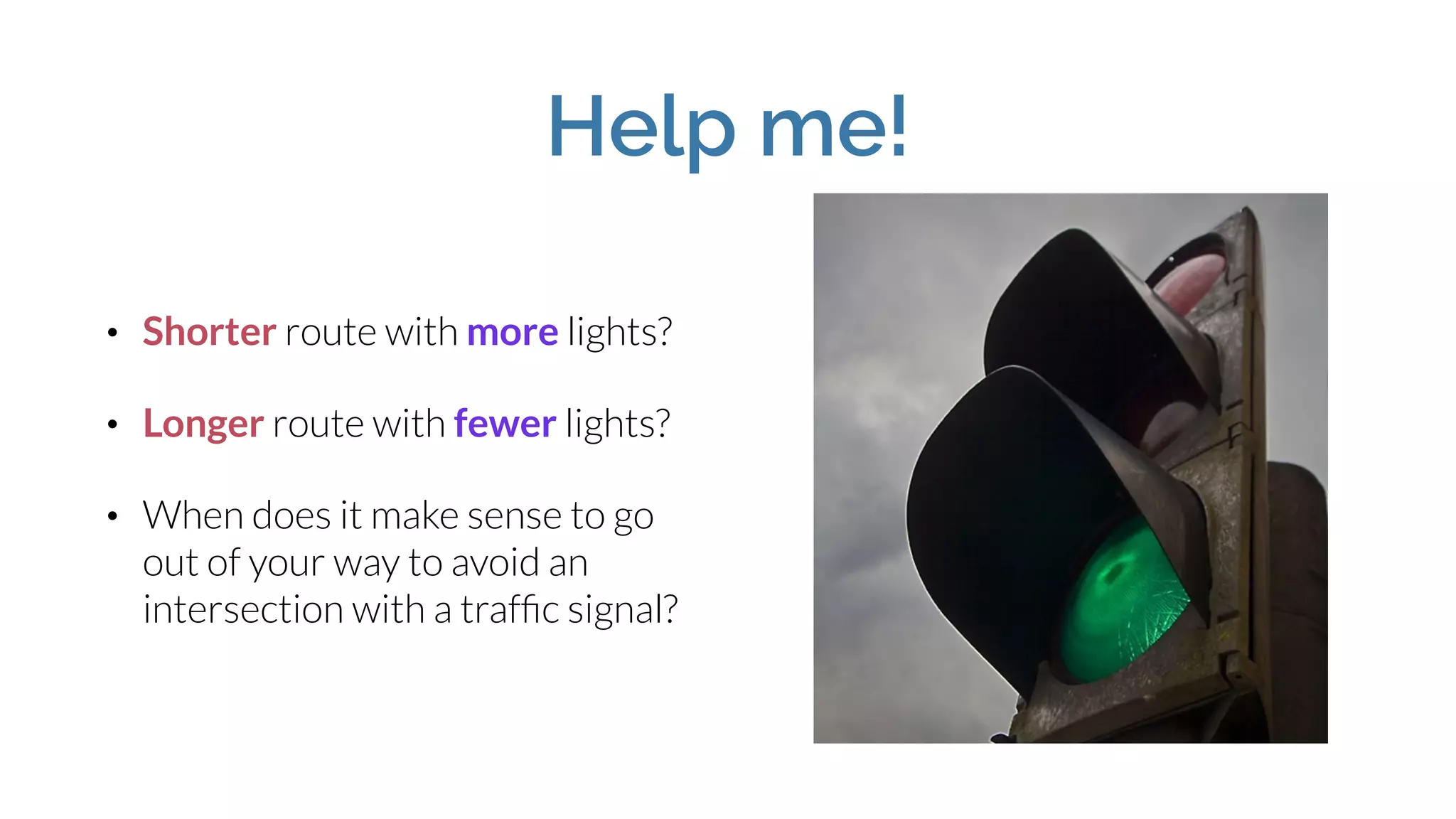
• Shorter route with more lights?
• Longer route with fewer lights?
• When does it make sense to go
out of your way to avoid an
intersection with a traffic signal?
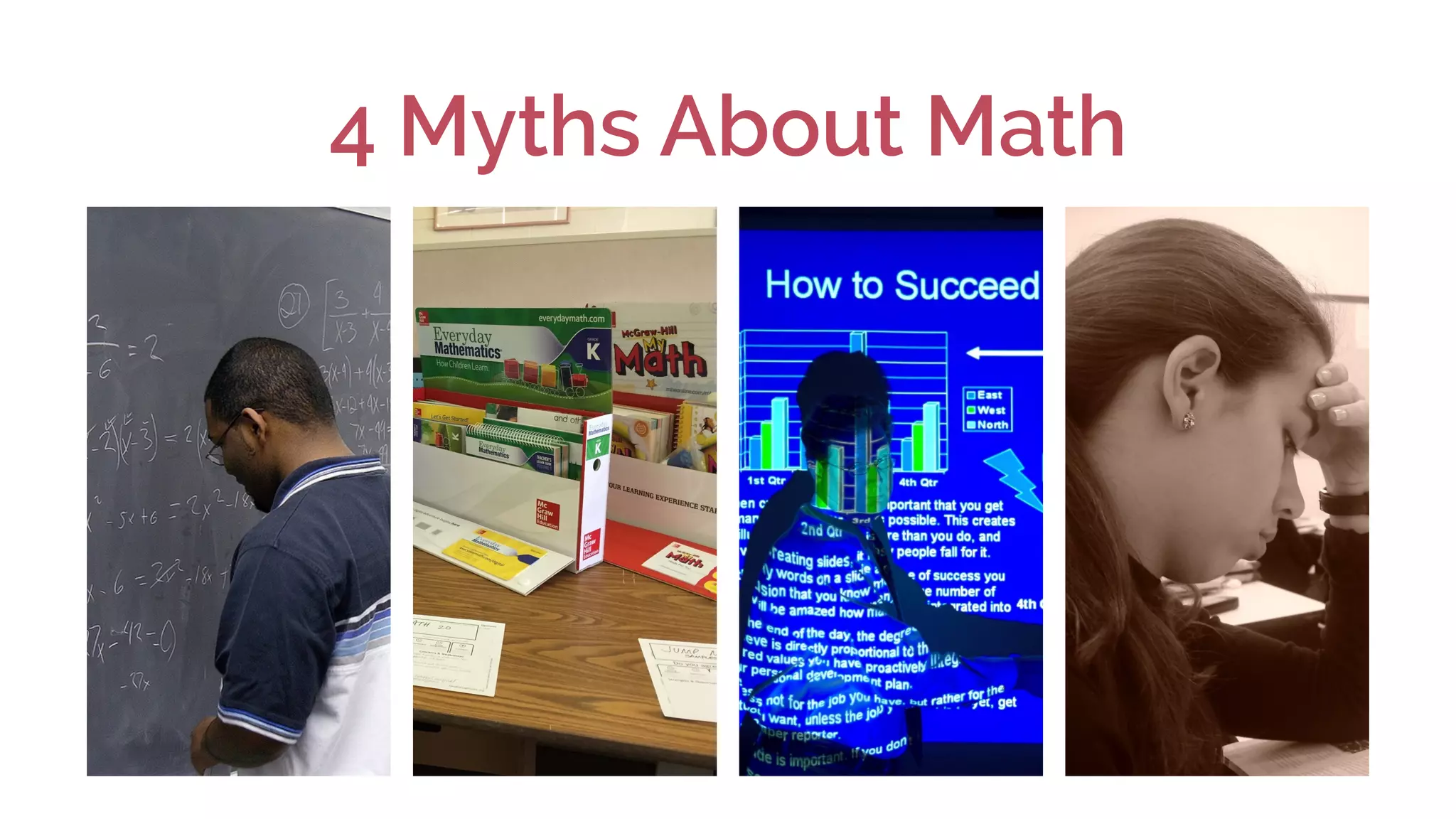
4 Myths About Math
5 Principles
Conjecture
Communication
Collaboration
Chaos
Celebration
Conjecture
Communication
Collaboration
Chaos
Celebration
Communication Chaos
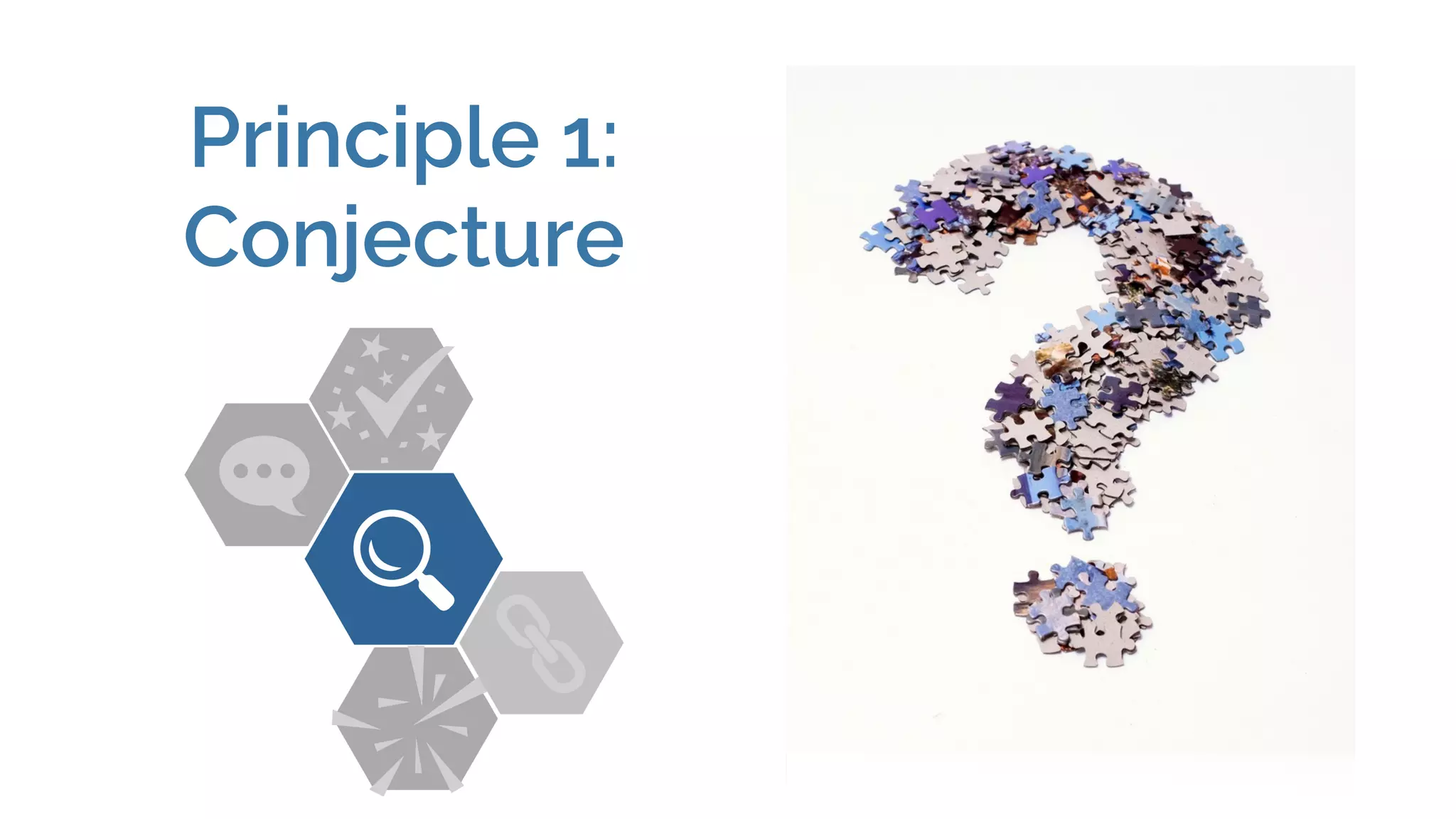
Principle 1:
Conjecture
You Won’t Believe
What This Guy Thinks
About Math…
#2 Will
Absolutely
DROP YOUR
JAW!!!
We are wired to wonder
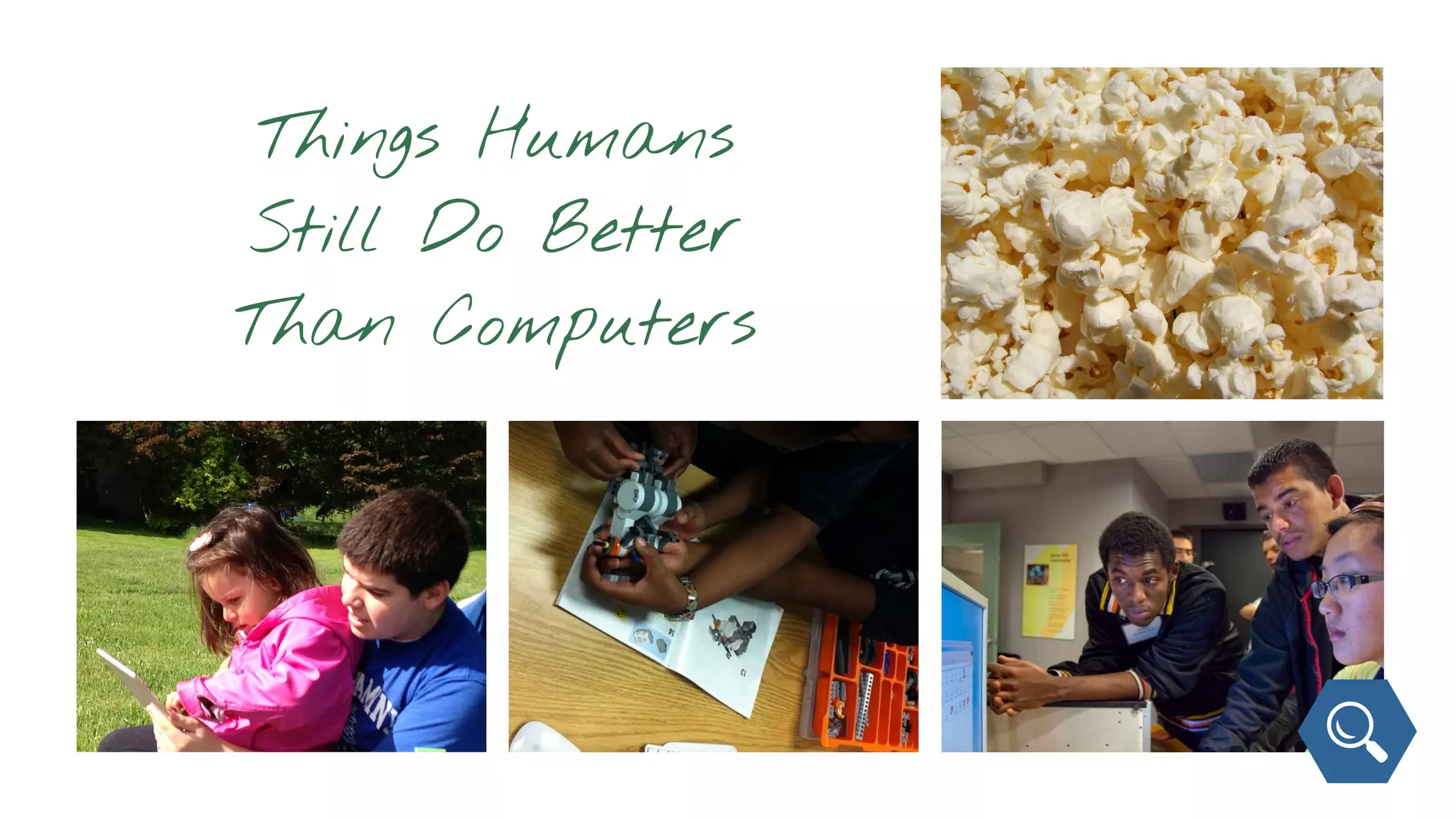
Things Humans
Still Do Better
Than Computers
Never End With the Answer
• Why do you think so?
• How do you know?
• Are there any other ways to
answer it?
• What was hard about solving
that problem?
• What did you use to help you
solve this? How did it help?
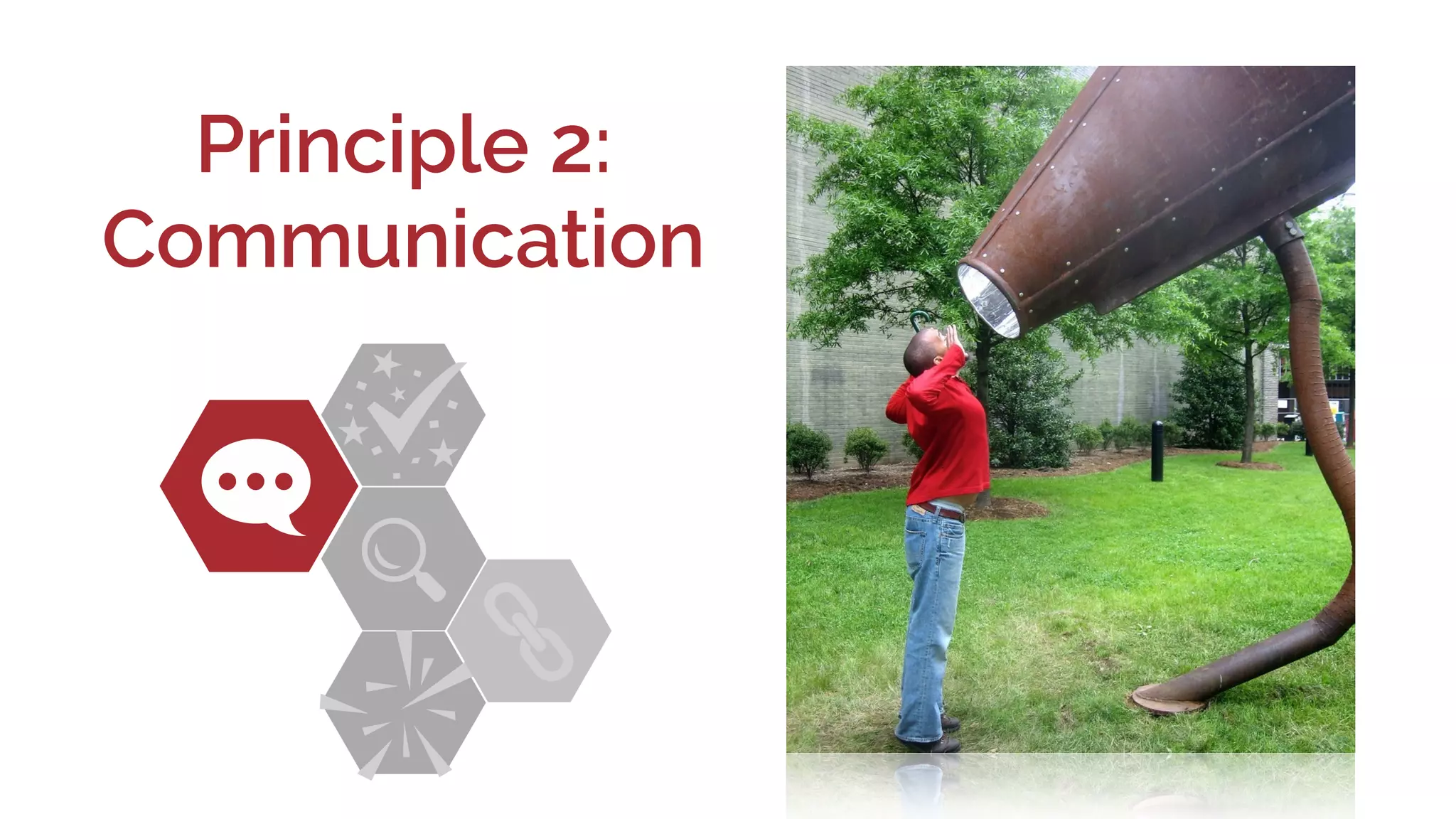
Principle 2:
Communication
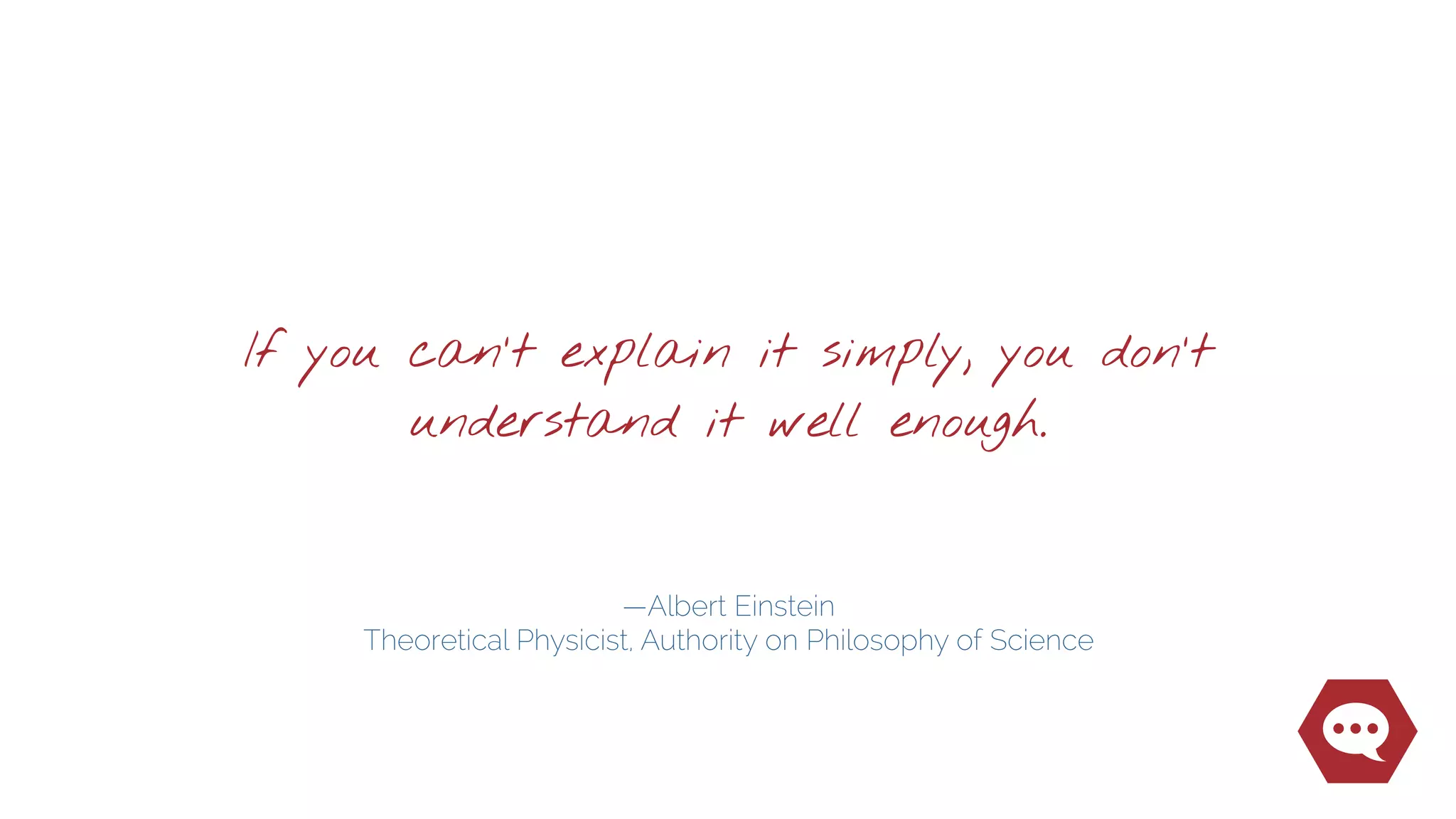
—Albert Einstein
Theoretical Physicist, Authority on Philosophy of Science
If you can’t explain it simply, you don’t
understand it well enough.
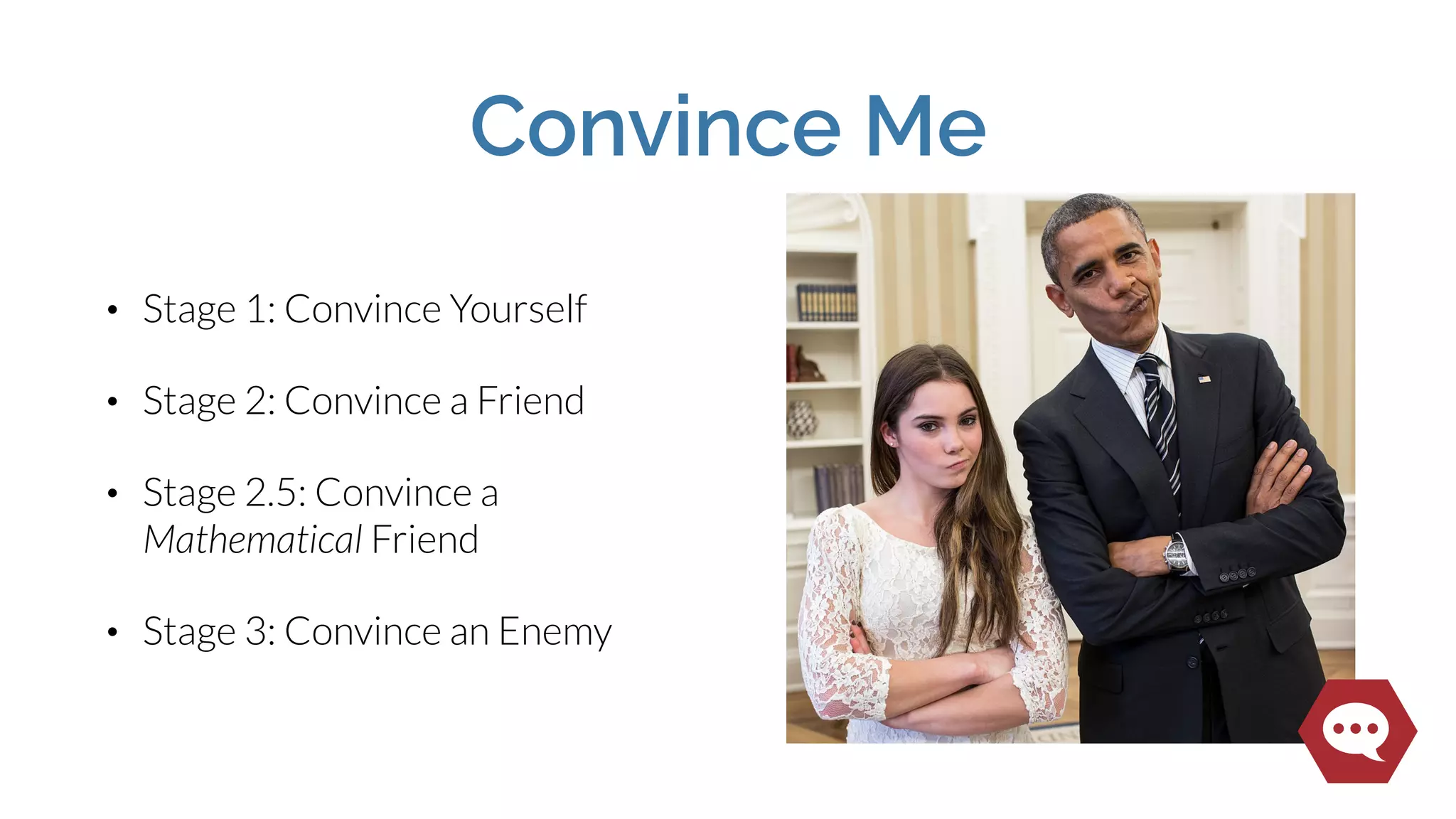
Convince Me
• Stage 1: Convince Yourself
• Stage 2: Convince a Friend
• Stage 2.5: Convince a
Mathematical Friend
• Stage 3: Convince an Enemy
Principle 3:
Collaboration
Think about the
last problem
you solved
Share at your table
Discuss the process you
used to solve it
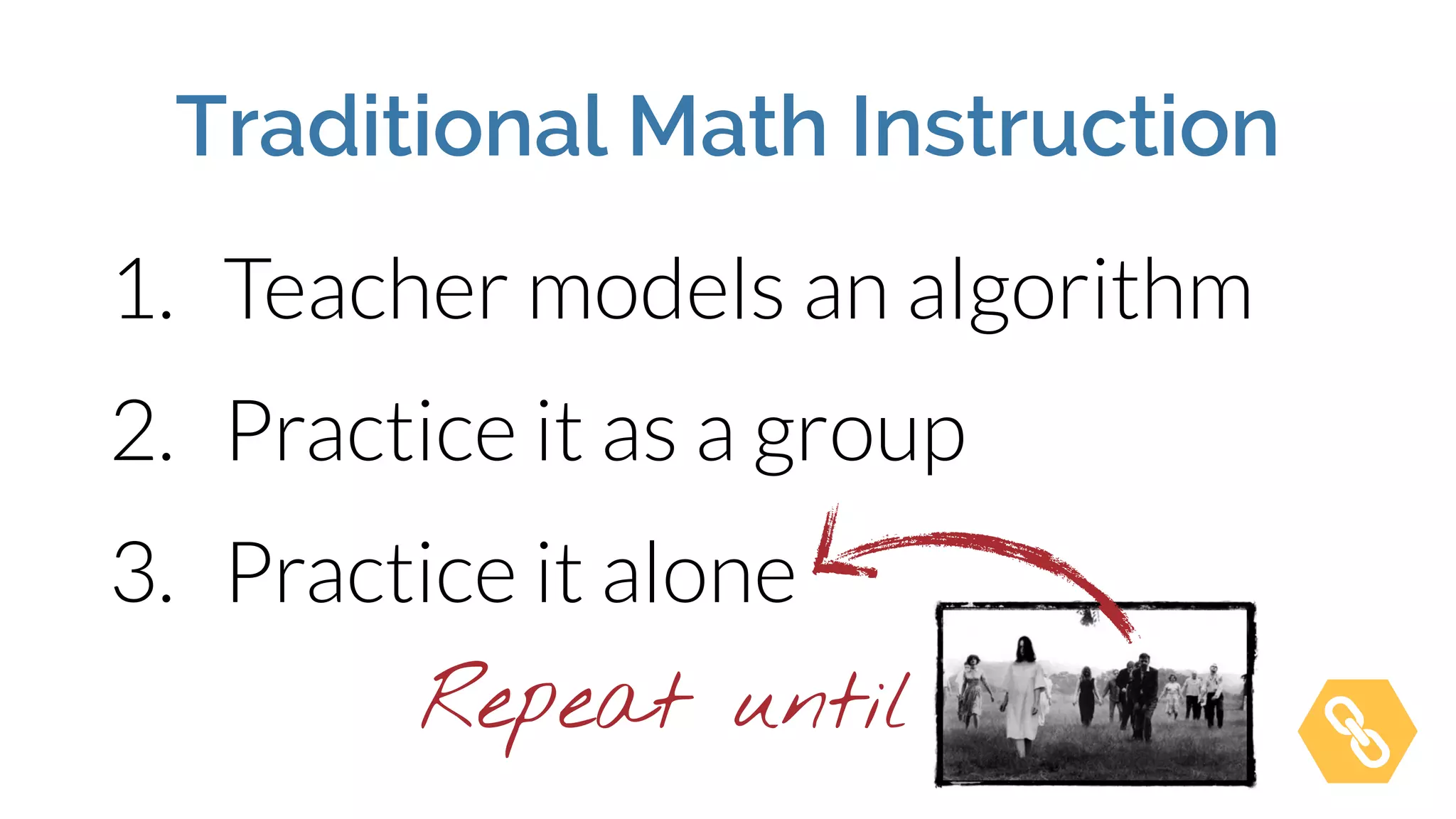
Traditional Math Instruction
1. Teacher models an algorithm
2. Practice it as a group
3. Practice it alone
Repeat until perfect
5 Principles Math Instruction
3. Teacher models an algorithm
2. Practice it together
1. Practice it alone
(if necessary…)
Help me!
• Shorter route with more lights?
• Longer route with fewer lights?
• When does it make sense to go
out of your way to avoid an
intersection with a traffic signal?
Where Good Ideas Come From
• The Adjacent Possible
• Liquid Networks
• The Slow Hunch
• Serendipity
• Error
• Exaptation
• Platforms
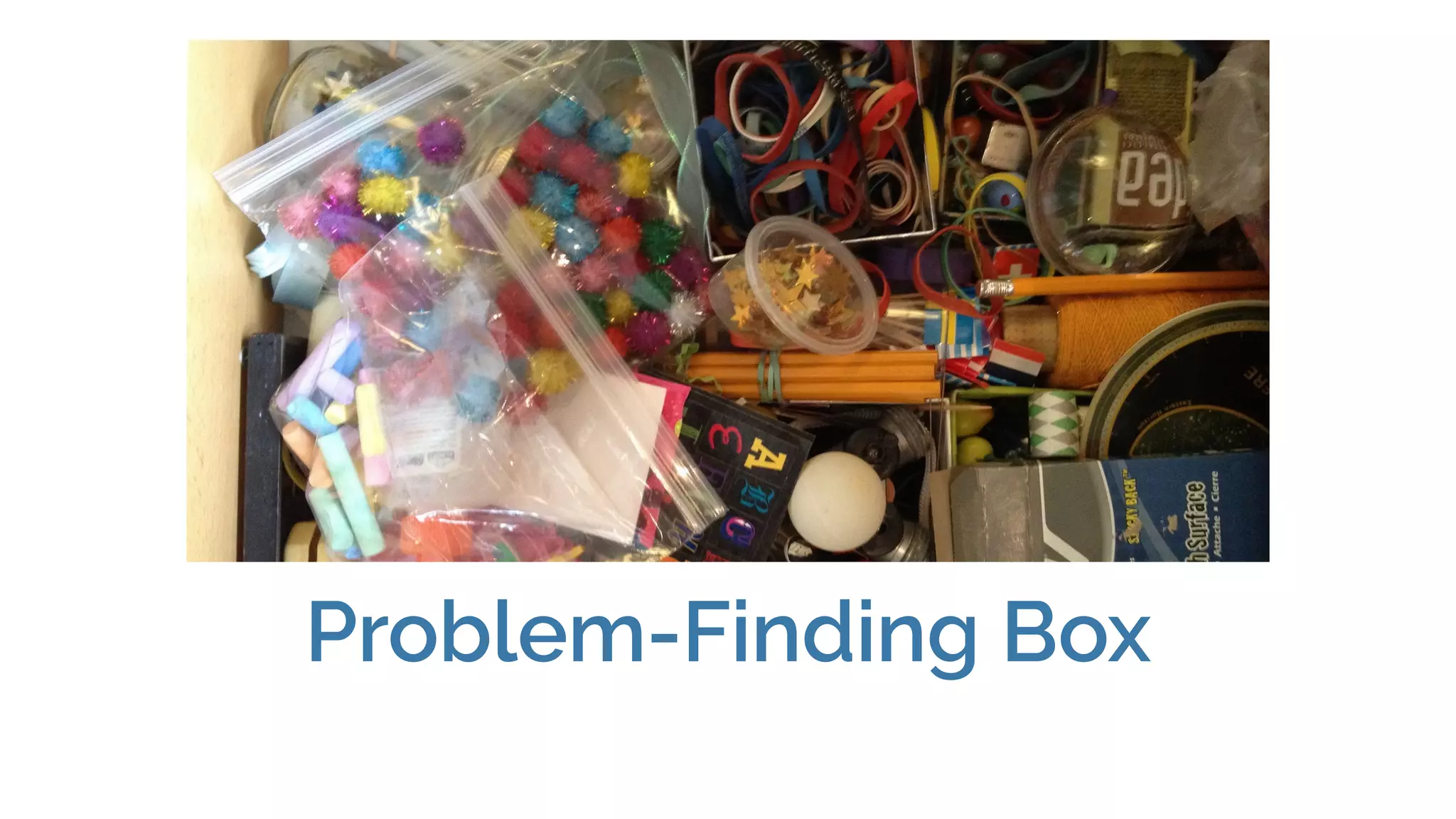
Problem-Finding Box
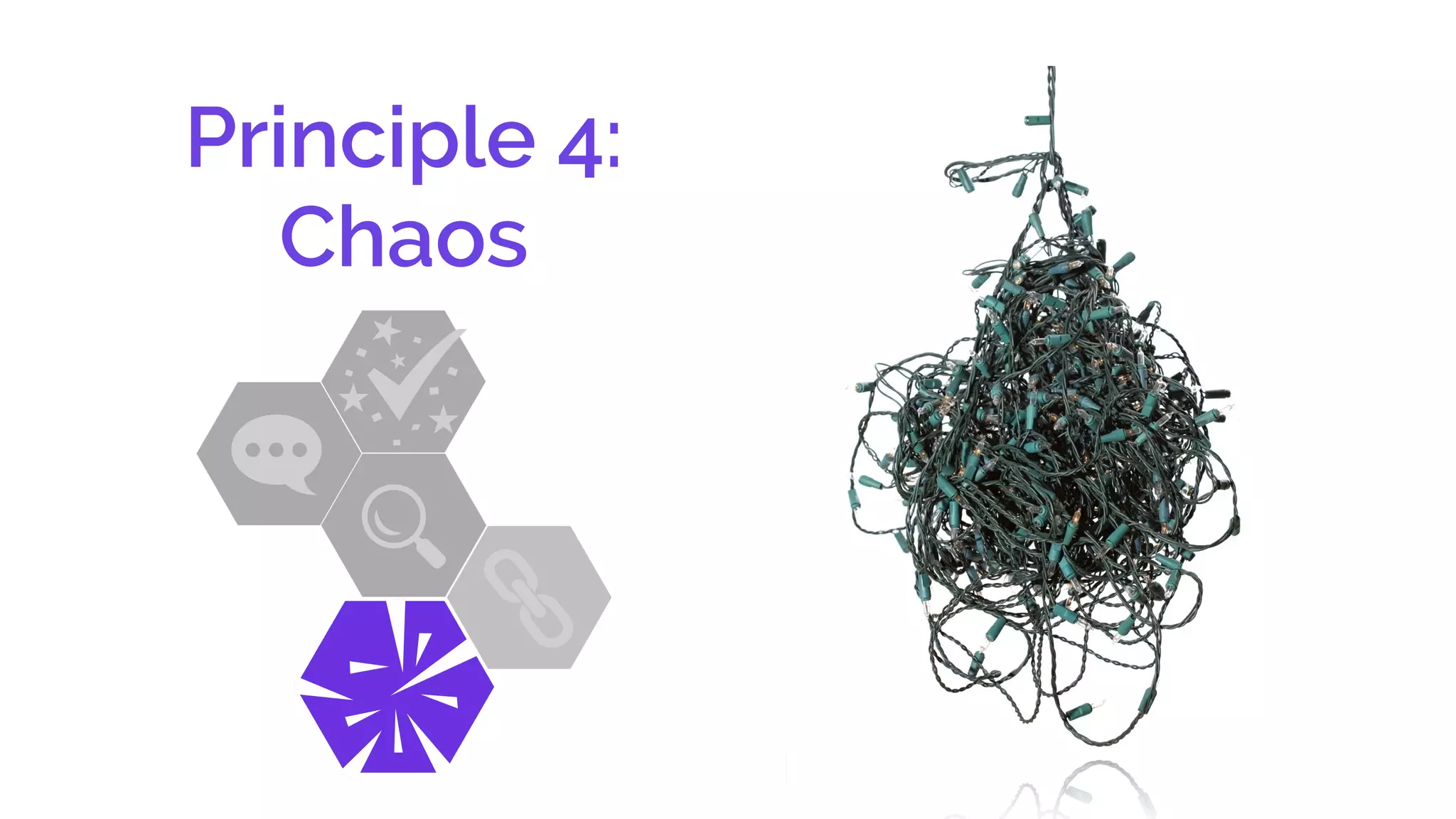
Principle 4:
Chaos
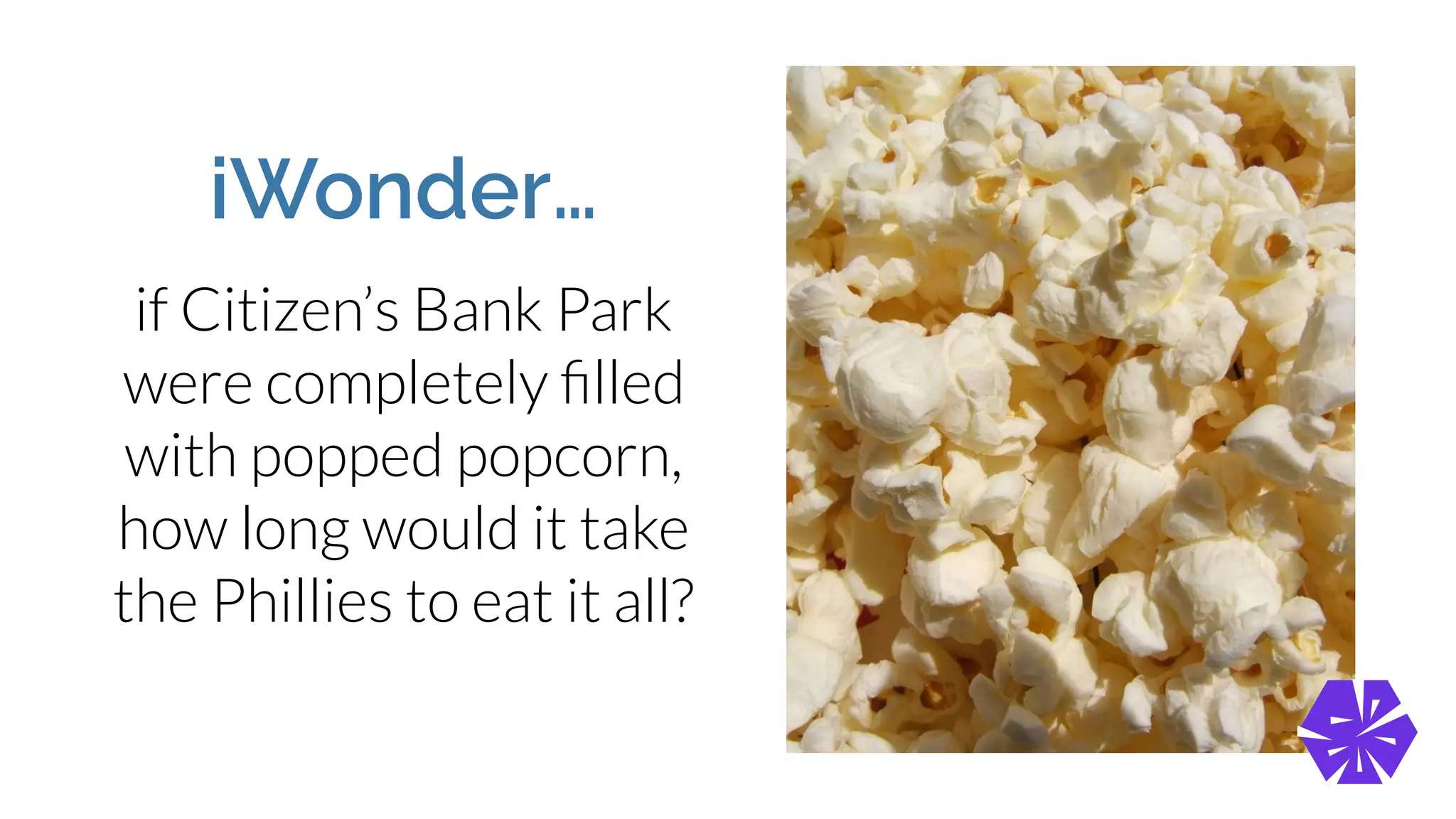
iWonder…
if Citizen’s Bank Park
were completely filled
with popped popcorn,
how long would it take
the Phillies to eat it all?
—David Perkins
Founding Member of Project Zero, Harvard Graduate School of Education
Much of formal education . . . feels like
learning the pieces of a picture puzzle that
never gets put together, or learning about the
puzzle without being able to touch the pieces.
Non-Routine and Unsolved Problems
• Bedtime Math: http://bedtimemath.org
• Math Pickle: http://www.mathpickle.com
• Three-Act Problems: http://threeacts.mrmeyer.com
• Stella’s Stunners: Temporarily gone!
Principle 5:
Celebration
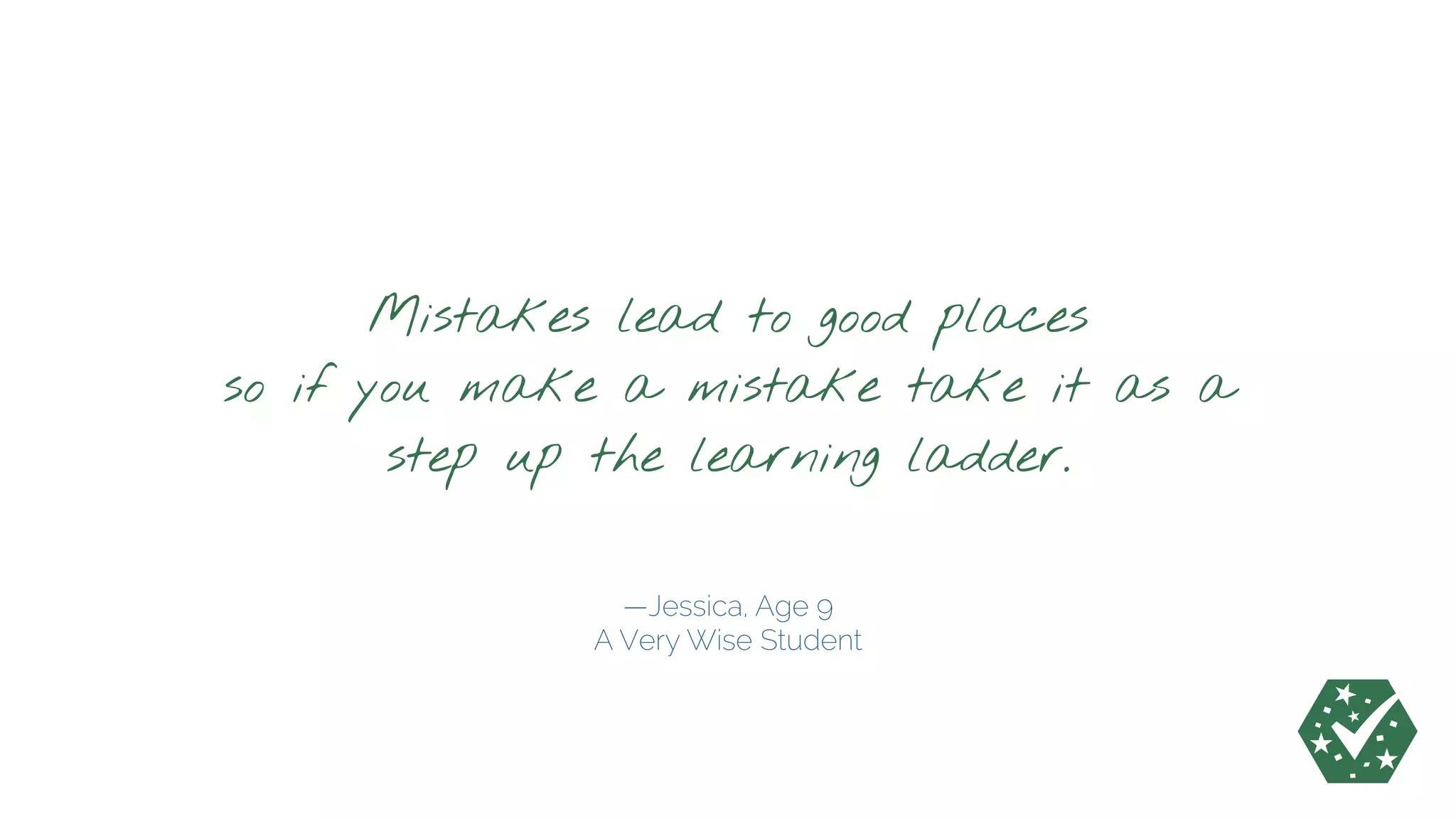
—Jessica, Age 9
A Very Wise Student
Mistakes lead to good places

so if you make a mistake take it as a

step up the learning ladder.
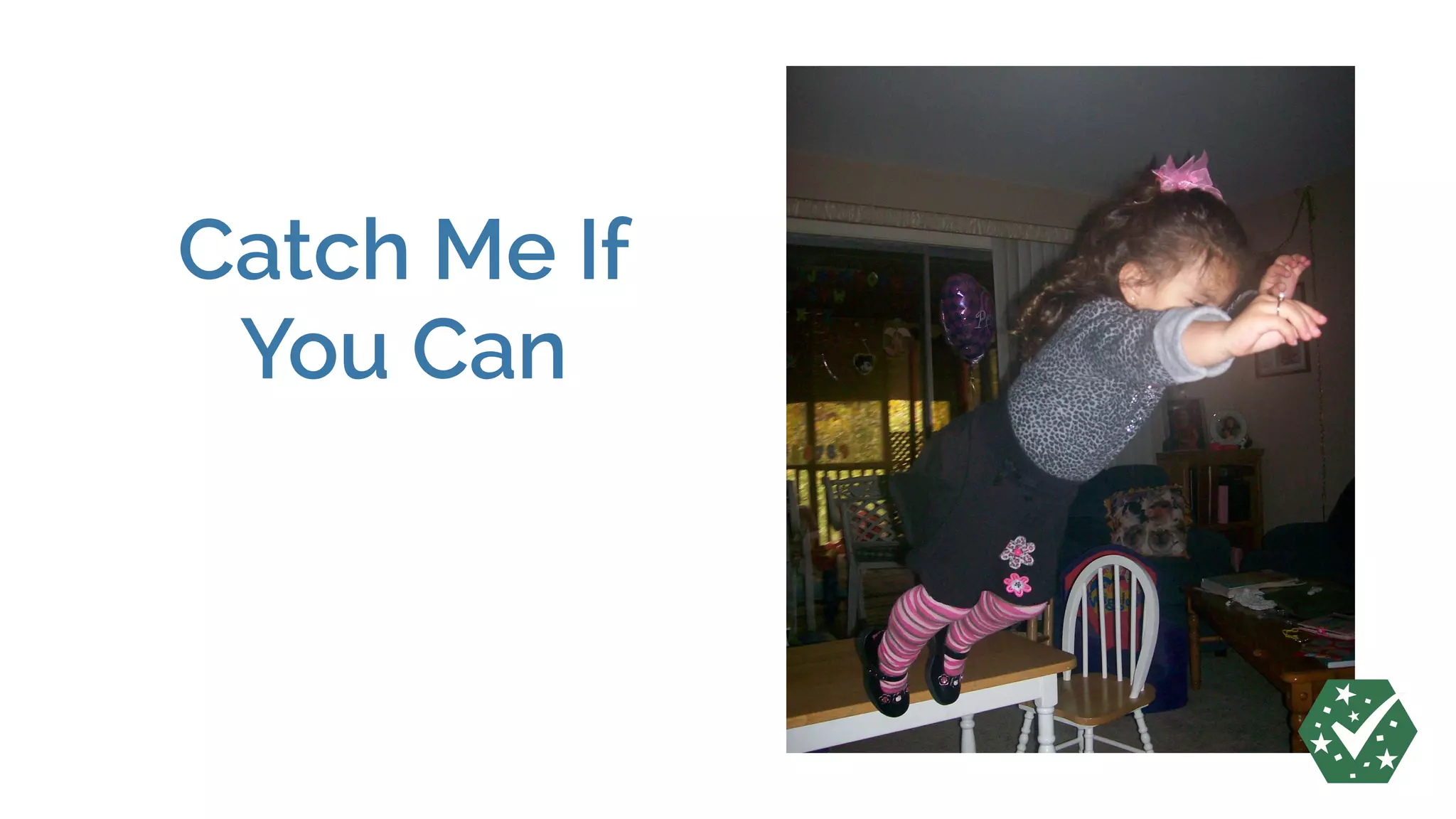
Catch Me If
You Can
I Guarantee It!
Certainty
Rating
Name
1 I have a good start
2 I’m confident
3 I guarantee it!
? I’m not ready yet
The Truth About Math
Action Planning
• Focus on just one
• Choose your most or least comfortable/confident
• Write down 3 things you already do
Choose a Principle
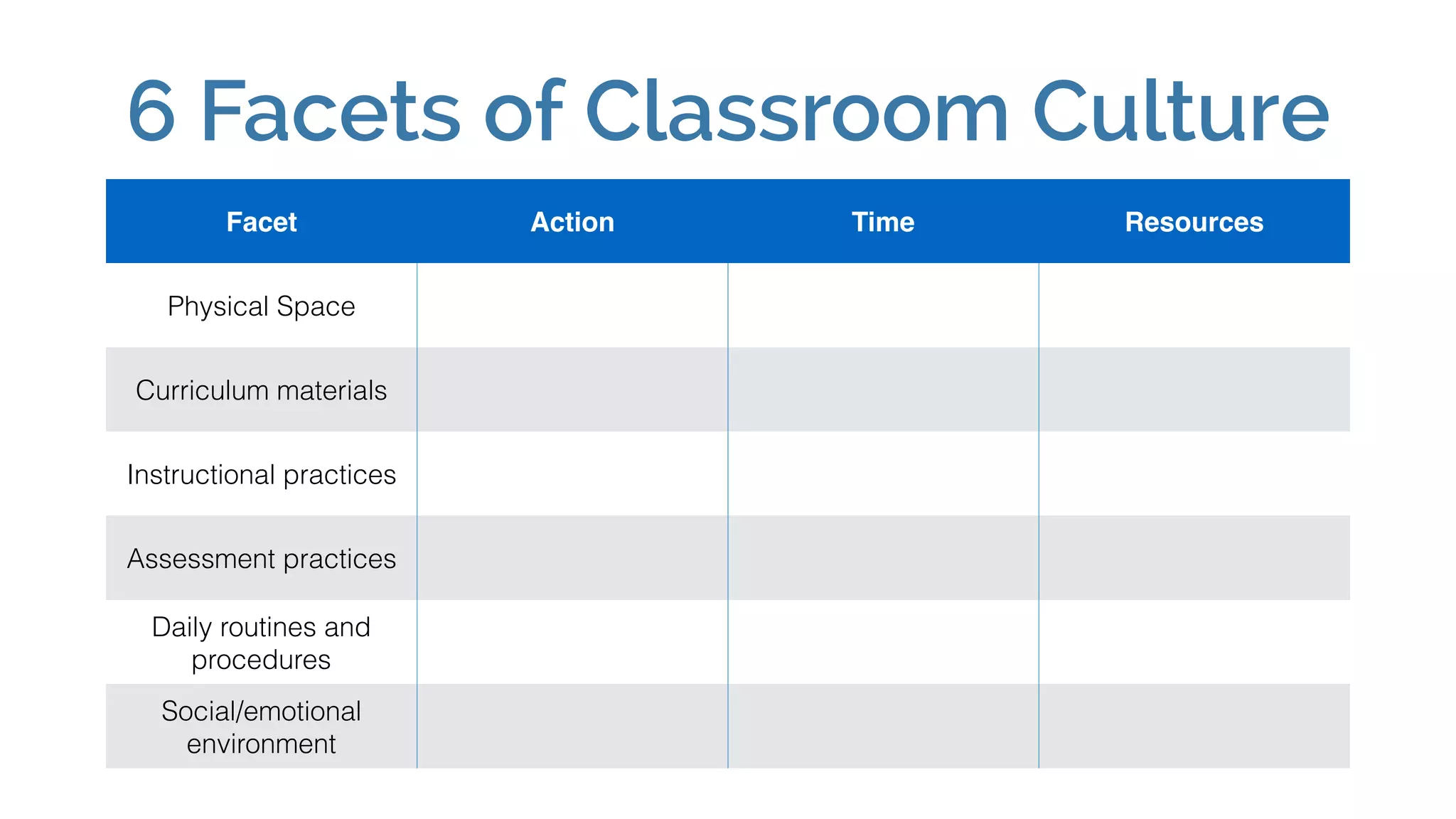
6 Facets of Classroom Culture
Facet Action Time Resources
Physical Space
Curriculum materials
Instructional practices
Assessment practices
Daily routines and
procedures
Social/emotional
environment
5of the
MODERN
Mathematics
Classroom
Gerald Aungst
www.geraldaungst.com/5cmath
@geraldaungst
geraldaungst@gmail.com
Principles
Photo Credits
• 5 Principles icons designed by Jerry Gottesman, http://jginkcreative.com/
• Some images licensed from iStock by Getty Images
• “#hashtagyourlife” by Bark. https://www.flickr.com/photos/barkbud/6350091667/
• “Skagen Traffic Signal” by Erik Ogan. https://www.flickr.com/photos/erikogan/2941019357/
• “Eccentric” by Domiriel. https://www.flickr.com/photos/domiriel/8057852296/
• Bacon, by Toyulaewww44 (Own work) [CC BY-SA 3.0 (http://creativecommons.org/licenses/by-sa/3.0)], via https://commons.wikimedia.org/wiki/File
%3A500gfpx-Bacon.png
• Untitled photo by NCSSM. https://www.flickr.com/photos/ncssm/8609916515/
• “Waiting for Time to Pass” by Richard Phillip Rücker. https://www.flickr.com/photos/70243696@N00/342753239
• “Question mark made of puzzle pieces” by Horia Varlan. https://www.flickr.com/photos/horiavarlan/4273168957/
• “Computing Sciences outreach program for high school students” by Berkeley Lab. https://www.flickr.com/photos/berkeleylab/4863700123/
• “Popcorn” by Micky Zlimen. https://www.flickr.com/photos/emzee/140977871
• “Question mark” by Jean-Marc Valladier. https://www.flickr.com/photos/segozyme/3105128025/
• “suessian megaphone” by Michael. https://www.flickr.com/photos/theparadigmshifter/470341923/
• McKayla Maroney and Barack Obama, “P111512PS-0111” by The White House. https://www.flickr.com/photos/whitehouse/8191317327/
• “Solitaire” by Roger H. Goun. https://www.flickr.com/photos/sskennel/4669788084/
• “Olivia Birds Drawing Ornaments Kids Can Make a Difference” by Laurie Sullivan. http://www.flickr.com/photos/32561453@N05/15805499565
• “Never a Dull Moment!” by Lyle. https://www.flickr.com/photos/lyle58/2085980030/
• "Cheeseburger" by Renee Comet (photographer) This image was released by the National Cancer Institute, an agency part of the National Institutes
of Health, with the ID 2652
• All other images are original photographs by Gerald Aungst.

How Not to Kill Thinking (PCTM)

  • 1.
    How Not to KillThinking Gerald Aungst PCTM Conference Seven Springs, PA August 4, 2016 Principles of the MODERN Math Classroom 5|
  • 2.
  • 3.
    Help me! • Shorterroute with more lights? • Longer route with fewer lights? • When does it make sense to go out of your way to avoid an intersection with a traffic signal?
  • 4.
  • 5.
  • 6.
  • 7.
  • 8.
  • 9.
    You Won’t Believe WhatThis Guy Thinks About Math… #2 Will Absolutely DROP YOUR JAW!!!
  • 10.
    We are wiredto wonder
  • 11.
    Things Humans Still DoBetter Than Computers
  • 12.
    Never End Withthe Answer • Why do you think so? • How do you know? • Are there any other ways to answer it? • What was hard about solving that problem? • What did you use to help you solve this? How did it help?
  • 13.
  • 14.
    —Albert Einstein Theoretical Physicist,Authority on Philosophy of Science If you can’t explain it simply, you don’t understand it well enough.
  • 16.
    Convince Me • Stage1: Convince Yourself • Stage 2: Convince a Friend • Stage 2.5: Convince a Mathematical Friend • Stage 3: Convince an Enemy
  • 17.
  • 18.
    Think about the lastproblem you solved Share at your table Discuss the process you used to solve it
  • 19.
    Traditional Math Instruction 1.Teacher models an algorithm 2. Practice it as a group 3. Practice it alone Repeat until perfect
  • 20.
    5 Principles MathInstruction 3. Teacher models an algorithm 2. Practice it together 1. Practice it alone (if necessary…)
  • 21.
    Help me! • Shorterroute with more lights? • Longer route with fewer lights? • When does it make sense to go out of your way to avoid an intersection with a traffic signal?
  • 22.
    Where Good IdeasCome From • The Adjacent Possible • Liquid Networks • The Slow Hunch • Serendipity • Error • Exaptation • Platforms
  • 23.
  • 24.
  • 25.
    iWonder… if Citizen’s BankPark were completely filled with popped popcorn, how long would it take the Phillies to eat it all?
  • 26.
    —David Perkins Founding Memberof Project Zero, Harvard Graduate School of Education Much of formal education . . . feels like learning the pieces of a picture puzzle that never gets put together, or learning about the puzzle without being able to touch the pieces.
  • 27.
    Non-Routine and UnsolvedProblems • Bedtime Math: http://bedtimemath.org • Math Pickle: http://www.mathpickle.com • Three-Act Problems: http://threeacts.mrmeyer.com • Stella’s Stunners: Temporarily gone!
  • 28.
  • 29.
    —Jessica, Age 9 AVery Wise Student Mistakes lead to good places
 so if you make a mistake take it as a
 step up the learning ladder.
  • 30.
  • 31.
    I Guarantee It! Certainty Rating Name 1I have a good start 2 I’m confident 3 I guarantee it! ? I’m not ready yet
  • 32.
  • 33.
  • 34.
    • Focus onjust one • Choose your most or least comfortable/confident • Write down 3 things you already do Choose a Principle
  • 35.
    6 Facets ofClassroom Culture Facet Action Time Resources Physical Space Curriculum materials Instructional practices Assessment practices Daily routines and procedures Social/emotional environment
  • 36.
  • 37.
    Photo Credits • 5Principles icons designed by Jerry Gottesman, http://jginkcreative.com/ • Some images licensed from iStock by Getty Images • “#hashtagyourlife” by Bark. https://www.flickr.com/photos/barkbud/6350091667/ • “Skagen Traffic Signal” by Erik Ogan. https://www.flickr.com/photos/erikogan/2941019357/ • “Eccentric” by Domiriel. https://www.flickr.com/photos/domiriel/8057852296/ • Bacon, by Toyulaewww44 (Own work) [CC BY-SA 3.0 (http://creativecommons.org/licenses/by-sa/3.0)], via https://commons.wikimedia.org/wiki/File %3A500gfpx-Bacon.png • Untitled photo by NCSSM. https://www.flickr.com/photos/ncssm/8609916515/ • “Waiting for Time to Pass” by Richard Phillip Rücker. https://www.flickr.com/photos/70243696@N00/342753239 • “Question mark made of puzzle pieces” by Horia Varlan. https://www.flickr.com/photos/horiavarlan/4273168957/ • “Computing Sciences outreach program for high school students” by Berkeley Lab. https://www.flickr.com/photos/berkeleylab/4863700123/ • “Popcorn” by Micky Zlimen. https://www.flickr.com/photos/emzee/140977871 • “Question mark” by Jean-Marc Valladier. https://www.flickr.com/photos/segozyme/3105128025/ • “suessian megaphone” by Michael. https://www.flickr.com/photos/theparadigmshifter/470341923/ • McKayla Maroney and Barack Obama, “P111512PS-0111” by The White House. https://www.flickr.com/photos/whitehouse/8191317327/ • “Solitaire” by Roger H. Goun. https://www.flickr.com/photos/sskennel/4669788084/ • “Olivia Birds Drawing Ornaments Kids Can Make a Difference” by Laurie Sullivan. http://www.flickr.com/photos/32561453@N05/15805499565 • “Never a Dull Moment!” by Lyle. https://www.flickr.com/photos/lyle58/2085980030/ • "Cheeseburger" by Renee Comet (photographer) This image was released by the National Cancer Institute, an agency part of the National Institutes of Health, with the ID 2652 • All other images are original photographs by Gerald Aungst.