How to Motivate a
Remote SDR Team
Tenbound
About Me:
● Ellen Stafford
● Director, Business Development at
Vidyard
● ellen.stafford@vidyard.com
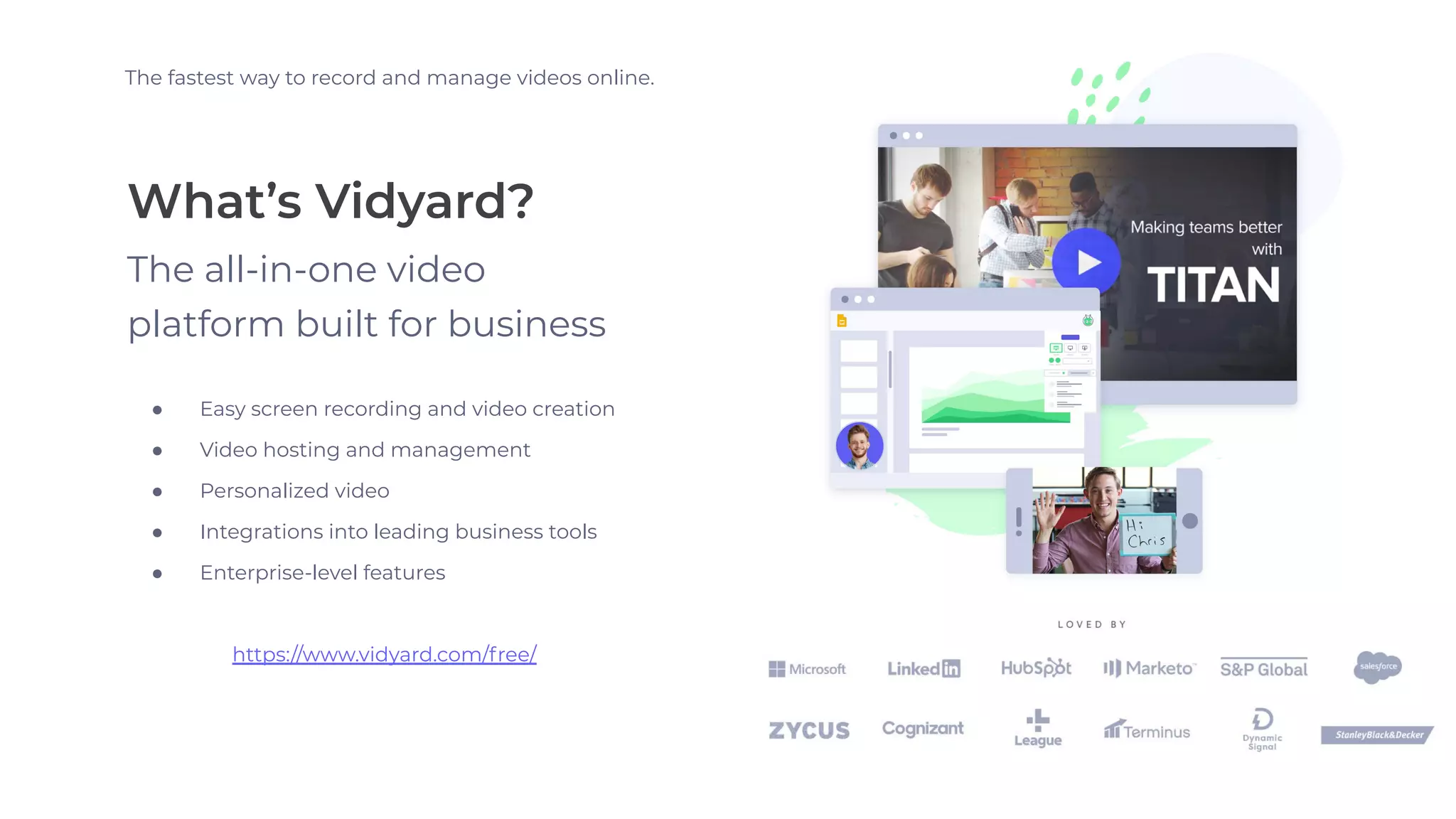
What’s Vidyard?
The fastest way to record and manage videos online.
The all-in-one video
platform built for business
● Easy screen recording and video creation
● Video hosting and management
● Personalized video
● Integrations into leading business tools
● Enterprise-level features
https://www.vidyard.com/free/
Motivation
Motivation
● Motivation is the “Why” behind anything that
we do
● Changing my own perspective on Motivation:
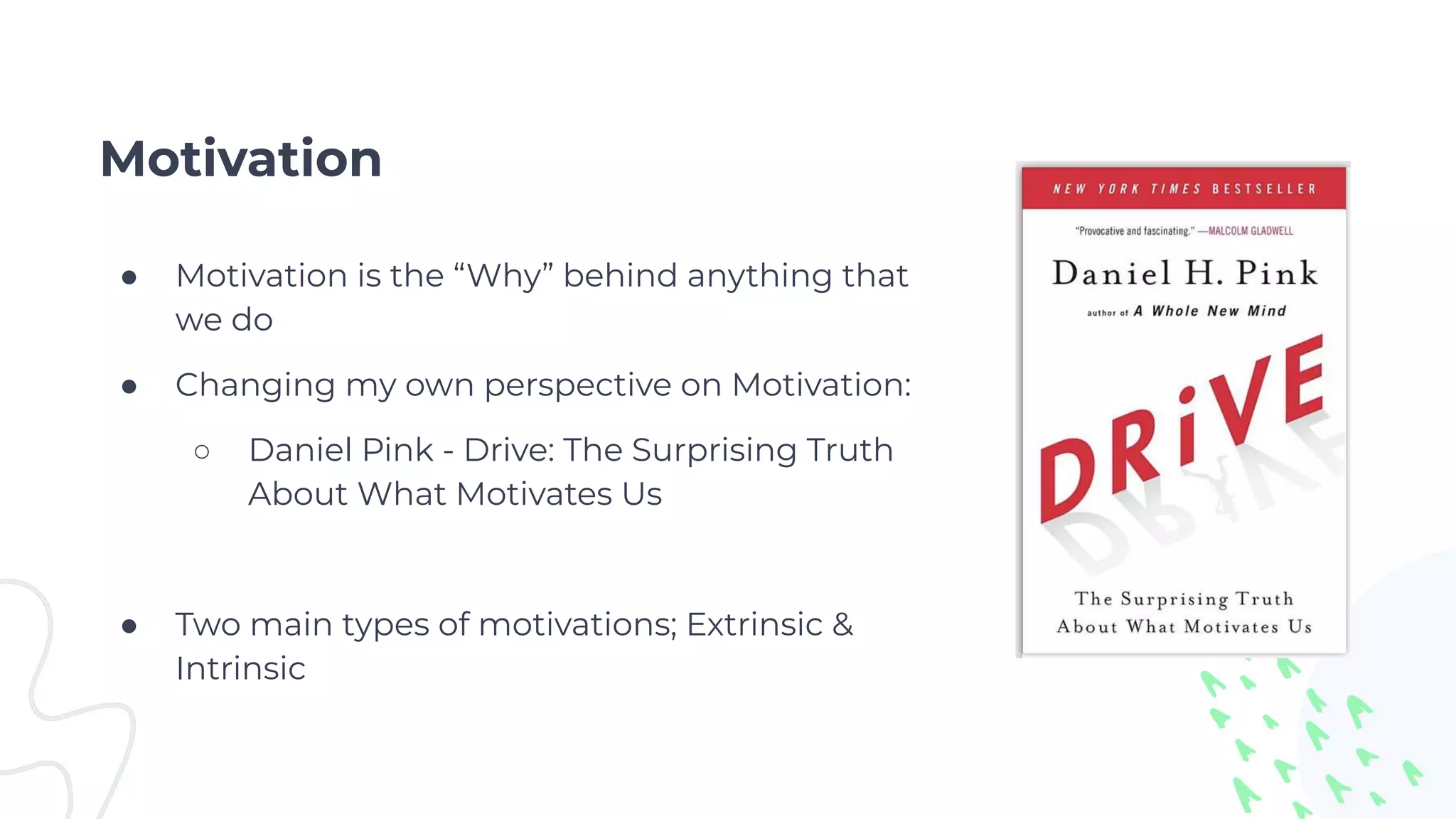
○ Daniel Pink - Drive: The Surprising Truth
About What Motivates Us
● Two main types of motivations; Extrinsic &
Intrinsic
Extrinsic Motivation
● Doing something to produce separate
outcome such as receiving a reward
(Carrot) or to avoid a punishment (Stick)
● “If, then” incentives
● Can be useful in certain scenarios in SDR
but when used alone, often only motivates
short term behaviors and short term
results
Intrinsic Motivation
● An inner drive that encourages someone to
perform an activity.
● From Daniel Pink, three types:
○ Autonomy - is trusted by their leader and feels
that they take ownership of their task and
their outcomes
○ Mastery - is challenged by what they are
doing and feels they are constantly learning
and getting better
○ Purpose - understand the impact they are
making for the team, for the company, for
themselves
Engaging your Remote Team
● Benefits of being part of a team
○ Grind of SDR - we’re in this together
○ Gaining energy from others
○ Learning from each other
○ Much more
● The shift to remote survey: missing their teammates and the team
dynamics
● Recreating this remotely
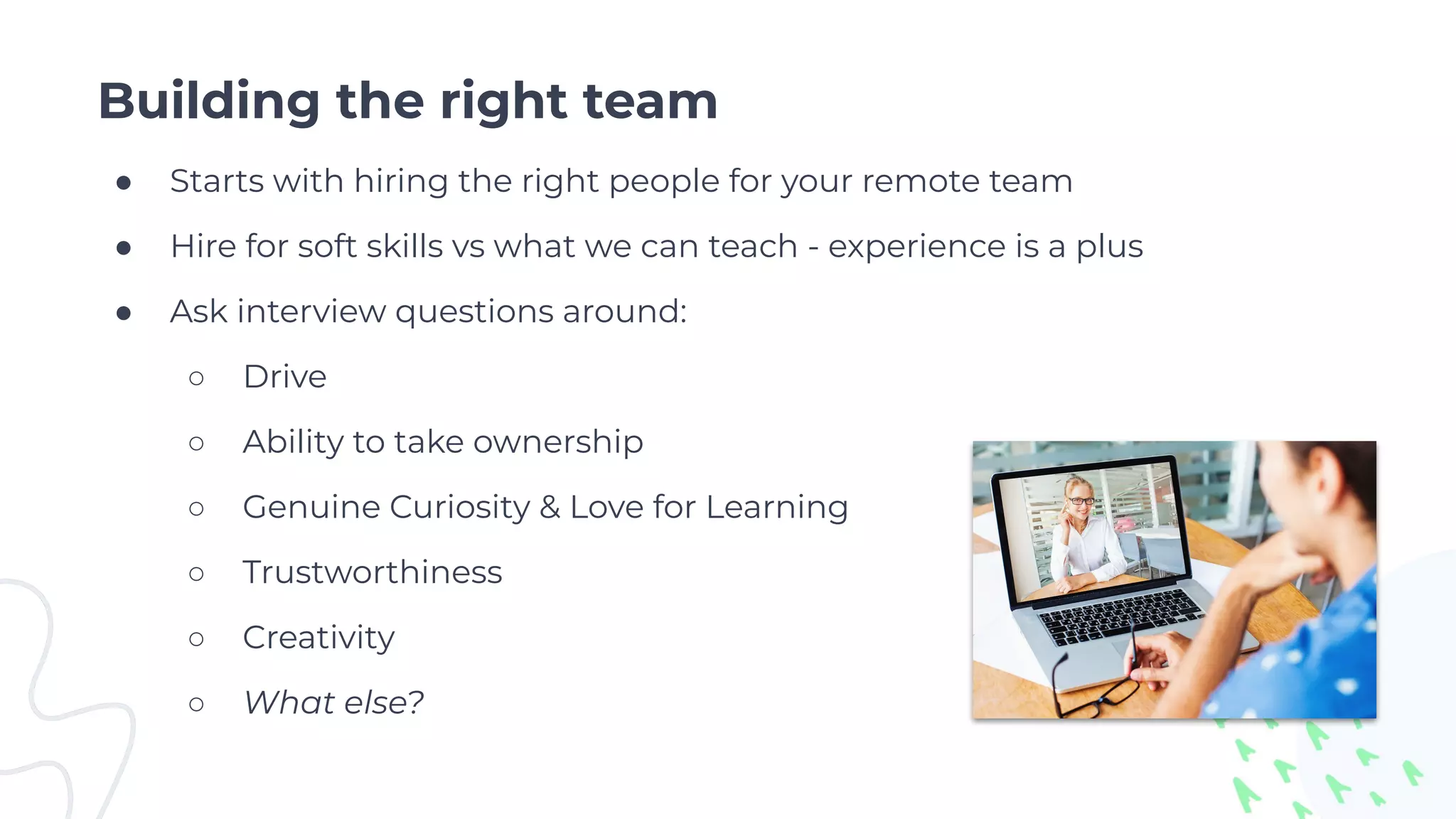
Building the right team
● Starts with hiring the right people for your remote team
● Hire for soft skills vs what we can teach - experience is a plus
● Ask interview questions around:
○ Drive
○ Ability to take ownership
○ Genuine Curiosity & Love for Learning
○ Trustworthiness
○ Creativity
○ What else?
Your Remote Team Culture
● Build a Culture of Accountability
○ Set clear expectations
○ Allow flexibility in how they get there
● Demonstrate Trust
○ Avoid micromanagement!
■ Something seems off: Assume the best intentions & seek to
understand
● Exemplify Work / Life balance
● Give them Ownership:
○ Promote collaboration & solicit frequent feedback on whats working,
and what isn’t
Team Communication
● Over-communicate with your remote team
○ Build an effective team communications plan that
doesn’t rely on virtual meetings only
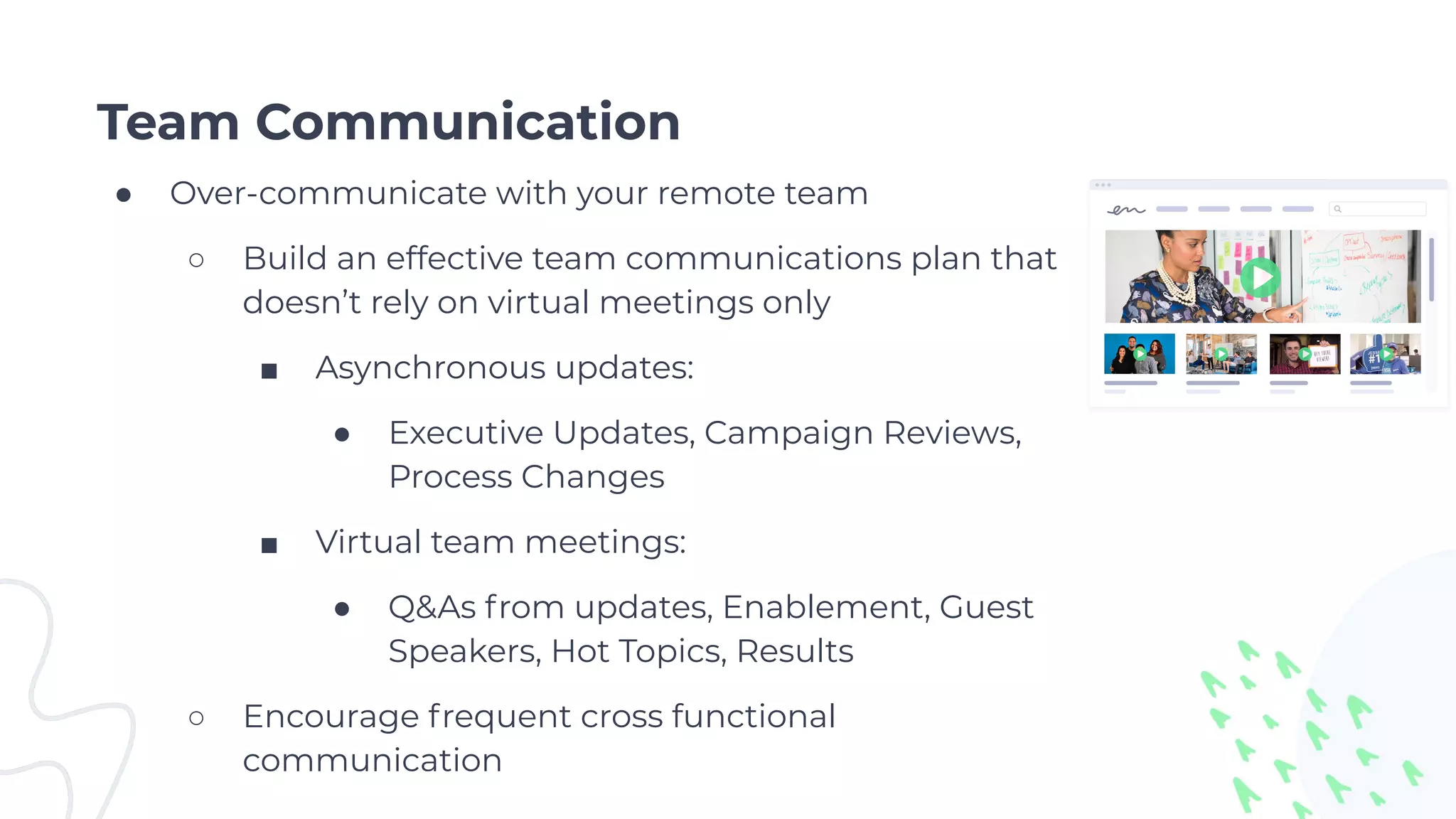
■ Asynchronous updates:
● Executive Updates, Campaign Reviews,
Process Changes
■ Virtual team meetings:
● Q&As from updates, Enablement, Guest
Speakers, Hot Topics, Results
○ Encourage frequent cross functional
communication
The fun stuff
● Find creative ways to have fun and build relationships remotely
○ Team events.. not just zoom happy hours
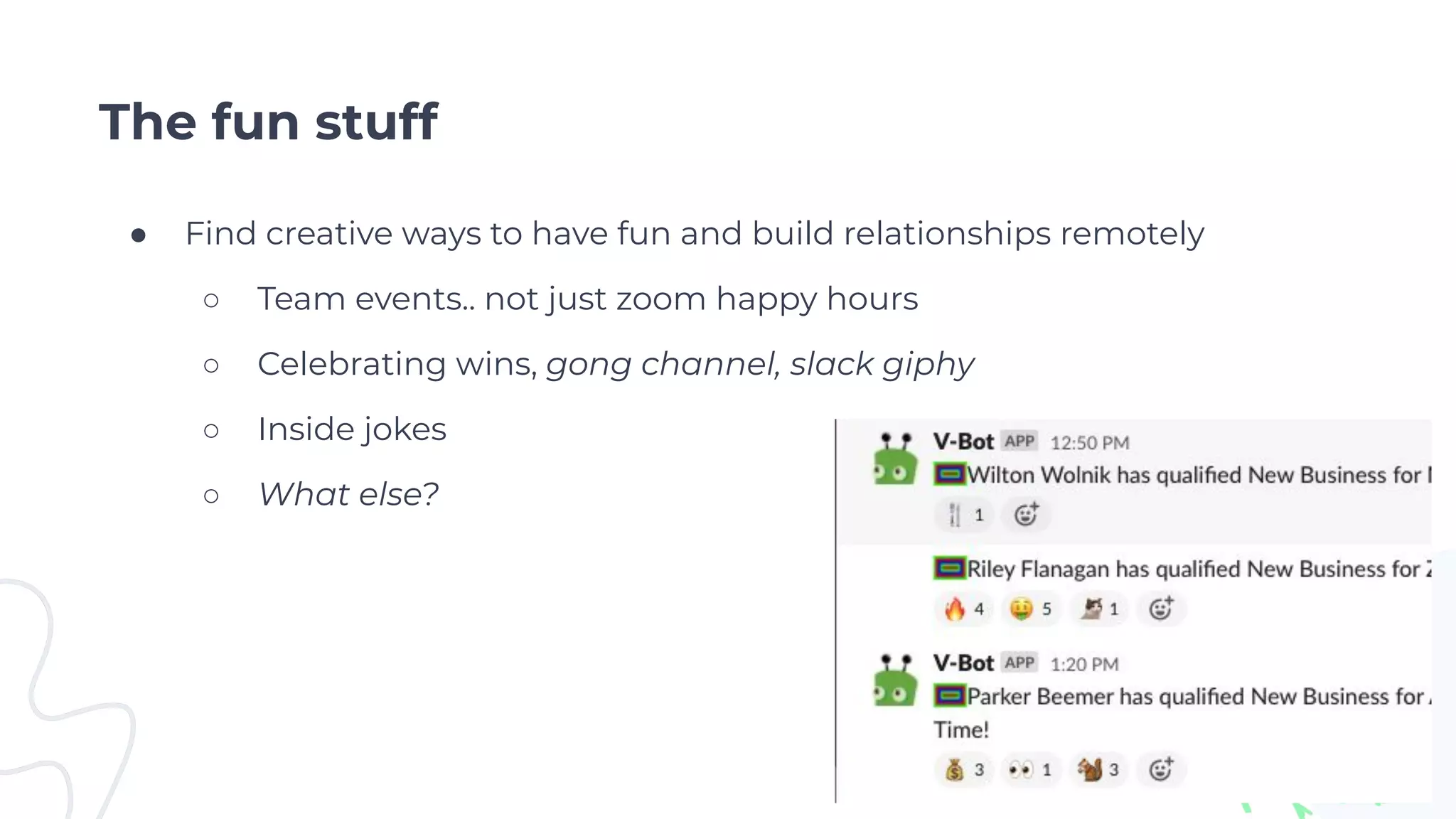
○ Celebrating wins, gong channel, slack giphy
○ Inside jokes
○ What else?
Investing in your Team
Team Enablement
● Continuously develop your team’s skill set through remote team
training
○ Mix of virtual meeting or self guided
○ Leverage internal and external facilitator, SDR and non
SDR topics
● Build enablement content to encourage resourcefulness
● Promote personal development outside of company
● Frequently investing in your own development
○ Network for you and for your team
Programs for your team
● Build programs that will motivate SDRs and BDRs
to own their personal professional development
● Micro Promotion Program
○ Always working towards a goal
○ Define tasks and certification to progress in
role
○ Progression is 100% owned by the rep
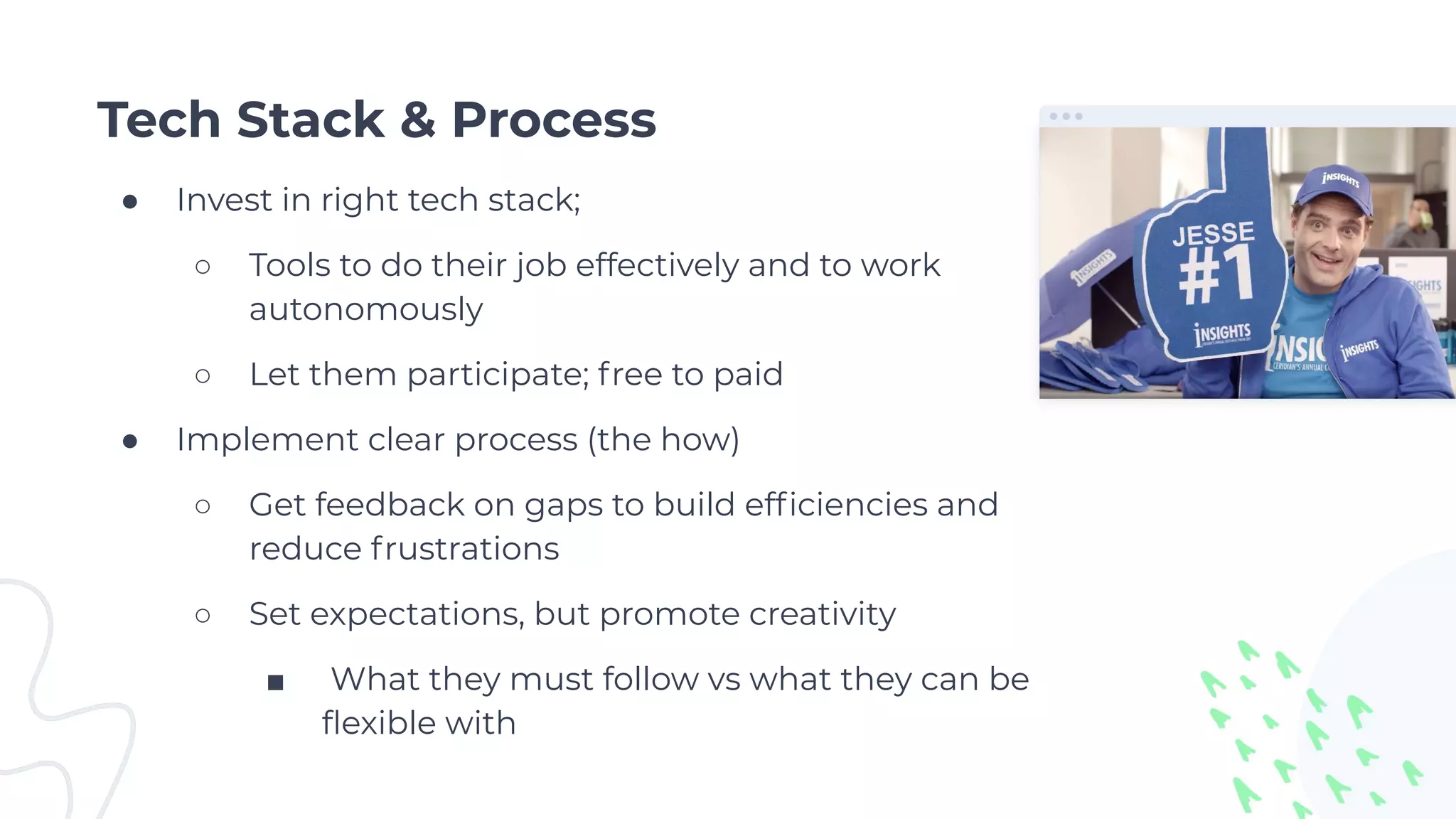
Tech Stack & Process
● Invest in right tech stack;
○ Tools to do their job effectively and to work
autonomously
○ Let them participate; free to paid
● Implement clear process (the how)
○ Get feedback on gaps to build efficiencies and
reduce frustrations
○ Set expectations, but promote creativity
■ What they must follow vs what they can be
flexible with
Tech Stack & Process
● Invest in tools that help you to develop & work effectively with your
remote team
○ Chorus/ Gong
○ Slack
○ Vidyard
○ What else?
Motivating your Individual
Reps
Invest to your relationships
● Invest the time to build a trusting, personal relationship with your
team members
○ backgrounds, learning styles, goals, pet peeves
○ Do a discovery, get beyond the surface and uncover their true
motivators
● Leverage this knowledge to effectively tap into their intrinsic
motivation
○ Radical Candor - Kim Scott
1-1 Coaching and Development
● Schedule and keep regular weekly 1-1s
● Never just check in, have a plan
● Shared agenda ownership
● Give and get feedback regularly
● Always be coaching
○ team based theme - competitive. individualized - micro promotion
Praise & Incentives
● Recognition
○ Public Praise, Encourage Peer to Peer Praise, Kudos folder.
○ Tie to purpose and impact
● Rewards and Spiffs
○ Use effectively - Short term impact
○ Have fun with them, get creative, get team input
○ Tie back to intrinsic personalized goals
Motivating your Managers
Motivating Managers
● Leverage many of the same tips
○ Autonomy - Ownership of their own team and the results they
drive. Trust them, Guide them, and hold them accountable
○ Mastery - challenged them by giving them opportunities to
development new skills
■ Ie Project leads
○ Purpose - ensure it is clear to you manager the impact they are
making for their direct team, for the department, and for the
company
Q&A

How Motivate a Remote SDR Team

  • 1.
    How to Motivatea Remote SDR Team Tenbound
  • 2.
    About Me: ● EllenStafford ● Director, Business Development at Vidyard ● ellen.stafford@vidyard.com
  • 3.
    What’s Vidyard? The fastestway to record and manage videos online. The all-in-one video platform built for business ● Easy screen recording and video creation ● Video hosting and management ● Personalized video ● Integrations into leading business tools ● Enterprise-level features https://www.vidyard.com/free/
  • 4.
  • 5.
    Motivation ● Motivation isthe “Why” behind anything that we do ● Changing my own perspective on Motivation: ○ Daniel Pink - Drive: The Surprising Truth About What Motivates Us ● Two main types of motivations; Extrinsic & Intrinsic
  • 6.
    Extrinsic Motivation ● Doingsomething to produce separate outcome such as receiving a reward (Carrot) or to avoid a punishment (Stick) ● “If, then” incentives ● Can be useful in certain scenarios in SDR but when used alone, often only motivates short term behaviors and short term results
  • 7.
    Intrinsic Motivation ● Aninner drive that encourages someone to perform an activity. ● From Daniel Pink, three types: ○ Autonomy - is trusted by their leader and feels that they take ownership of their task and their outcomes ○ Mastery - is challenged by what they are doing and feels they are constantly learning and getting better ○ Purpose - understand the impact they are making for the team, for the company, for themselves
  • 8.
  • 9.
    Engaging your RemoteTeam ● Benefits of being part of a team ○ Grind of SDR - we’re in this together ○ Gaining energy from others ○ Learning from each other ○ Much more ● The shift to remote survey: missing their teammates and the team dynamics ● Recreating this remotely
  • 10.
    Building the rightteam ● Starts with hiring the right people for your remote team ● Hire for soft skills vs what we can teach - experience is a plus ● Ask interview questions around: ○ Drive ○ Ability to take ownership ○ Genuine Curiosity & Love for Learning ○ Trustworthiness ○ Creativity ○ What else?
  • 11.
    Your Remote TeamCulture ● Build a Culture of Accountability ○ Set clear expectations ○ Allow flexibility in how they get there ● Demonstrate Trust ○ Avoid micromanagement! ■ Something seems off: Assume the best intentions & seek to understand ● Exemplify Work / Life balance ● Give them Ownership: ○ Promote collaboration & solicit frequent feedback on whats working, and what isn’t
  • 12.
    Team Communication ● Over-communicatewith your remote team ○ Build an effective team communications plan that doesn’t rely on virtual meetings only ■ Asynchronous updates: ● Executive Updates, Campaign Reviews, Process Changes ■ Virtual team meetings: ● Q&As from updates, Enablement, Guest Speakers, Hot Topics, Results ○ Encourage frequent cross functional communication
  • 13.
    The fun stuff ●Find creative ways to have fun and build relationships remotely ○ Team events.. not just zoom happy hours ○ Celebrating wins, gong channel, slack giphy ○ Inside jokes ○ What else?
  • 14.
  • 15.
    Team Enablement ● Continuouslydevelop your team’s skill set through remote team training ○ Mix of virtual meeting or self guided ○ Leverage internal and external facilitator, SDR and non SDR topics ● Build enablement content to encourage resourcefulness ● Promote personal development outside of company ● Frequently investing in your own development ○ Network for you and for your team
  • 16.
    Programs for yourteam ● Build programs that will motivate SDRs and BDRs to own their personal professional development ● Micro Promotion Program ○ Always working towards a goal ○ Define tasks and certification to progress in role ○ Progression is 100% owned by the rep
  • 17.
    Tech Stack &Process ● Invest in right tech stack; ○ Tools to do their job effectively and to work autonomously ○ Let them participate; free to paid ● Implement clear process (the how) ○ Get feedback on gaps to build efficiencies and reduce frustrations ○ Set expectations, but promote creativity ■ What they must follow vs what they can be flexible with
  • 18.
    Tech Stack &Process ● Invest in tools that help you to develop & work effectively with your remote team ○ Chorus/ Gong ○ Slack ○ Vidyard ○ What else?
  • 19.
  • 20.
    Invest to yourrelationships ● Invest the time to build a trusting, personal relationship with your team members ○ backgrounds, learning styles, goals, pet peeves ○ Do a discovery, get beyond the surface and uncover their true motivators ● Leverage this knowledge to effectively tap into their intrinsic motivation ○ Radical Candor - Kim Scott
  • 21.
    1-1 Coaching andDevelopment ● Schedule and keep regular weekly 1-1s ● Never just check in, have a plan ● Shared agenda ownership ● Give and get feedback regularly ● Always be coaching ○ team based theme - competitive. individualized - micro promotion
  • 22.
    Praise & Incentives ●Recognition ○ Public Praise, Encourage Peer to Peer Praise, Kudos folder. ○ Tie to purpose and impact ● Rewards and Spiffs ○ Use effectively - Short term impact ○ Have fun with them, get creative, get team input ○ Tie back to intrinsic personalized goals
  • 23.
  • 24.
    Motivating Managers ● Leveragemany of the same tips ○ Autonomy - Ownership of their own team and the results they drive. Trust them, Guide them, and hold them accountable ○ Mastery - challenged them by giving them opportunities to development new skills ■ Ie Project leads ○ Purpose - ensure it is clear to you manager the impact they are making for their direct team, for the department, and for the company
  • 25.