What kind of medicines do you commonly
take when you get sick?
How medicine
are used
Objectives
a. Describe uses of medicines
b. Differentiate prescription from
non-prescription medicines.
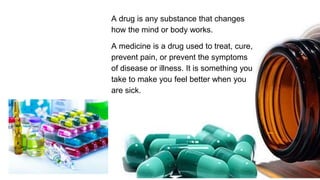
A drug is any substance that changes
how the mind or body works.
A medicine is a drug used to treat, cure,
prevent pain, or prevent the symptoms
of disease or illness. It is something you
take to make you feel better when you
are sick.
Every medicine has two names: a brand name and a
generic name.
Combination medicines are grouped under one brand
name. But the individual ingredients are always listed
on the packaging.
A group of medicines that function in the same way
have the same sounding generic name.
Medicine are taken
for different
purposes
1. For PREVENTION
Some medicines are taken as preventive
medicine.
They do not treat any existing or pre-existing
disease or symptoms but they prevent infections
that may happen in the future.
These kinds of medicines are taken to prevent
illness or disease.
Examples of these are the painkillers or pain
relievers.
2. For PROTECTION
Some medicines are taken to protect
the body from further growth or attack
of disease-causing organisms. These
kinds of medicines are taken usually to
maintain health.
Examples of these are medicines that
strengthen the capacity of your body
to fight against infection.
3. For TREATMENT or CURE
Most medicines are taken to treat or
cure infections and their symptoms.
They may be used for a limited period or
on a regular basis for persistent or
chronic disorders. Medicines that are
taken to treat infectious diseases are
not only intended to make you feel
better. They actually cure the diseases.
Examples are medicines that kill
infectious germs
There are two (2 types of medicines
according to how they are sold or
dispensed
1. Over-the-counter (OTC) medicines (Non-Prescription)
These medicines can be bought without
a doctor’s written prescription or
authorization. They can be bought at
any pharmacy or even at a
supermarket or health food shop.
.
Examples of these medicines are the
common cold and cough expectorants,
fever and flu medicines, stomach upset
medicines, analgesics or pain relievers
2. Prescription medicines
These medicines are those that need a
prescription or authorization from an authorized
prescriber such as a doctor, dentist, and the like.
They are general more stronger than sold over-
the-counter.
They may have serious side effects and drug
interactions if not used properly.
Antibiotics and strong painkillers need a
prescription.
Safety in the use of medicines is very important.
Medicines can save lives if used properly. They can
cause health problems when not used properly.
Here are some other important
information that you should look
for and understand in a medicine
label.
Active Ingredients- indicates the therapeutic
substance in the product and the amount of active
ingredient per unit, usually in milligrams (mg) or
milliliters (mL)
Uses- indicates the symptoms or diseases the product
will treat or prevent.
Warnings- this indicates warnings like when not to use the
product; the conditions that may require advice from a doctor
before taking the product; the possible interactions or side
effects; when to stop taking the product and when to contact a
doctor; and to keep the product out of reach of children.
Inactive ingredients- this indicates substances such as colors
or flavors
Purpose- indicates the action or category of the product
such as antihistamine, antacid, or cough suppressant.
Directions- this indicates the specific age categories
how much to take, how often to take, and how long to
take the medicine.
Other information- this indicates information on how to store the
product properly and required information about certain ingredients
such as the amount of calcium, potassium, or sodium the product
contains)
a. Expiration date
b. Net quantity of contents
c. What to do if an overdose occurs
Check Your understanding
How are medicines used?
What is the difference between
prescription and nonprescription
medicines?
Keep in Mind
A drug is any substance that changes how the
mind or body works.
A medicine is a drug used to treat, cure, prevent
pain, or prevent the symptoms of disease or illness.
Over-the-counter medicines can be bought
without a doctor’s written prescription or
authorization.
Prescription medicines are drugs authorize from a
doctor, dentist, and the like.

HOW MEDICINE ARE USED

  • 1.
    What kind ofmedicines do you commonly take when you get sick?
  • 2.
  • 3.
    Objectives a. Describe usesof medicines b. Differentiate prescription from non-prescription medicines.
  • 4.
    A drug isany substance that changes how the mind or body works. A medicine is a drug used to treat, cure, prevent pain, or prevent the symptoms of disease or illness. It is something you take to make you feel better when you are sick.
  • 5.
    Every medicine hastwo names: a brand name and a generic name. Combination medicines are grouped under one brand name. But the individual ingredients are always listed on the packaging. A group of medicines that function in the same way have the same sounding generic name.
  • 6.
    Medicine are taken fordifferent purposes
  • 7.
    1. For PREVENTION Somemedicines are taken as preventive medicine. They do not treat any existing or pre-existing disease or symptoms but they prevent infections that may happen in the future. These kinds of medicines are taken to prevent illness or disease. Examples of these are the painkillers or pain relievers.
  • 8.
    2. For PROTECTION Somemedicines are taken to protect the body from further growth or attack of disease-causing organisms. These kinds of medicines are taken usually to maintain health. Examples of these are medicines that strengthen the capacity of your body to fight against infection.
  • 9.
    3. For TREATMENTor CURE Most medicines are taken to treat or cure infections and their symptoms. They may be used for a limited period or on a regular basis for persistent or chronic disorders. Medicines that are taken to treat infectious diseases are not only intended to make you feel better. They actually cure the diseases. Examples are medicines that kill infectious germs
  • 10.
    There are two(2 types of medicines according to how they are sold or dispensed
  • 11.
    1. Over-the-counter (OTC)medicines (Non-Prescription) These medicines can be bought without a doctor’s written prescription or authorization. They can be bought at any pharmacy or even at a supermarket or health food shop. . Examples of these medicines are the common cold and cough expectorants, fever and flu medicines, stomach upset medicines, analgesics or pain relievers
  • 12.
    2. Prescription medicines Thesemedicines are those that need a prescription or authorization from an authorized prescriber such as a doctor, dentist, and the like. They are general more stronger than sold over- the-counter. They may have serious side effects and drug interactions if not used properly. Antibiotics and strong painkillers need a prescription.
  • 13.
    Safety in theuse of medicines is very important. Medicines can save lives if used properly. They can cause health problems when not used properly.
  • 14.
    Here are someother important information that you should look for and understand in a medicine label.
  • 15.
    Active Ingredients- indicatesthe therapeutic substance in the product and the amount of active ingredient per unit, usually in milligrams (mg) or milliliters (mL) Uses- indicates the symptoms or diseases the product will treat or prevent.
  • 16.
    Warnings- this indicateswarnings like when not to use the product; the conditions that may require advice from a doctor before taking the product; the possible interactions or side effects; when to stop taking the product and when to contact a doctor; and to keep the product out of reach of children. Inactive ingredients- this indicates substances such as colors or flavors
  • 17.
    Purpose- indicates theaction or category of the product such as antihistamine, antacid, or cough suppressant. Directions- this indicates the specific age categories how much to take, how often to take, and how long to take the medicine.
  • 18.
    Other information- thisindicates information on how to store the product properly and required information about certain ingredients such as the amount of calcium, potassium, or sodium the product contains) a. Expiration date b. Net quantity of contents c. What to do if an overdose occurs
  • 19.
    Check Your understanding Howare medicines used? What is the difference between prescription and nonprescription medicines?
  • 20.
    Keep in Mind Adrug is any substance that changes how the mind or body works. A medicine is a drug used to treat, cure, prevent pain, or prevent the symptoms of disease or illness. Over-the-counter medicines can be bought without a doctor’s written prescription or authorization. Prescription medicines are drugs authorize from a doctor, dentist, and the like.

Editor's Notes

  • #12 They are safe and effective when you follow the directions on the label on how to properly use the medicine.
  • #13 This is the reason why these medicines are only sold under prescriber;s direction