HOW MANUFACTURERS
CAN TRANSFORM AROUND DIGITAL
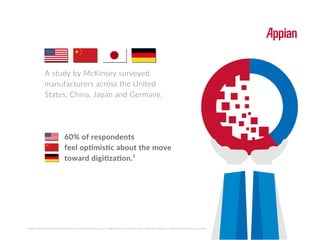
A study by McKinsey surveyed
manufacturers across the United
States, China, Japan and Germany.
60% of respondents
feel optimistic about the move
toward digitization.¹
1. https://www.mckinsey.com/business-functions/operations/our-insights/how-to-achieve-and-sustain-the-impact-of-digital-manufacturing-at-scale
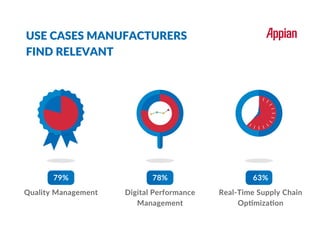
USE CASES MANUFACTURERS
FIND RELEVANT
79%
Quality Management
78%
Digital Performance
Management
63%
Real-Time Supply Chain
Optimization
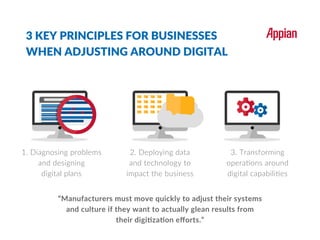
3 KEY PRINCIPLES FOR BUSINESSES
WHEN ADJUSTING AROUND DIGITAL
1. Diagnosing problems
and designing
digital plans
2. Deploying data
and technology to
impact the business
3. Transforming
operations around
digital capabilities
“Manufacturers must move quickly to adjust their systems
and culture if they want to actually glean results from
their digitization efforts.”
SIGNIFICANT ROADBLOCKS
STILL EXIST
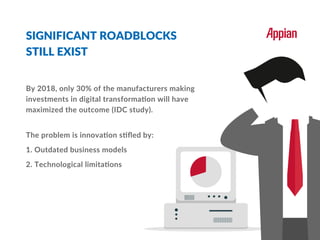
By 2018, only 30% of the manufacturers making
investments in digital transformation will have
maximized the outcome (IDC study).
The problem is innovation stifled by:
1. Outdated business models
2. Technological limitations
THE DIGITAL FUTURE
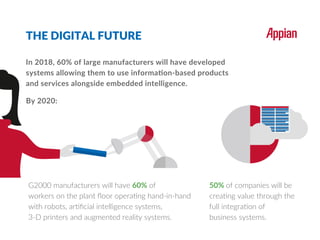
In 2018, 60% of large manufacturers will have developed
systems allowing them to use information-based products
and services alongside embedded intelligence.
G2000 manufacturers will have 60% of
workers on the plant floor operating hand-in-hand
with robots, artificial intelligence systems,
3-D printers and augmented reality systems.
50% of companies will be
creating value through the
full integration of
business systems.
By 2020:
USING PROCESS-BASED
LOW-CODE PLATFORMS TO KEEP
UP WITH TRANSFORMATION
“Data underpins just about every process in
a digital manufacturing setup.”
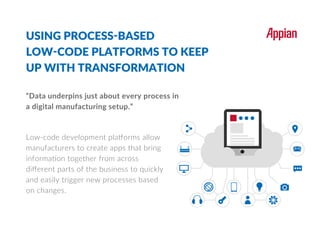
Low-code development platforms allow
manufacturers to create apps that bring
information together from across
different parts of the business to quickly
and easily trigger new processes based
on changes.
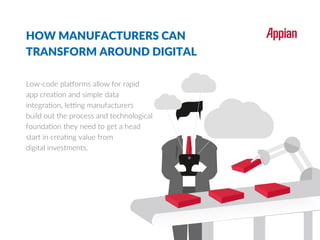
Low-code platforms allow for rapid
app creation and simple data
integration, letting manufacturers
build out the process and technological
foundation they need to get a head
start in creating value from
digital investments.
HOW MANUFACTURERS CAN
TRANSFORM AROUND DIGITAL
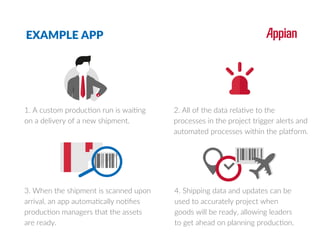
1. A custom production run is waiting
on a delivery of a new shipment.
2. All of the data relative to the
processes in the project trigger alerts and
automated processes within the platform.
3. When the shipment is scanned upon
arrival, an app automatically notifies
production managers that the assets
are ready.
EXAMPLE APP
4. Shipping data and updates can be
used to accurately project when
goods will be ready, allowing leaders
to get ahead on planning production.
appian.com/manufacturing

How Manufacturers Can Transform Around Digital

  • 1.
  • 2.
    A study byMcKinsey surveyed manufacturers across the United States, China, Japan and Germany. 60% of respondents feel optimistic about the move toward digitization.¹ 1. https://www.mckinsey.com/business-functions/operations/our-insights/how-to-achieve-and-sustain-the-impact-of-digital-manufacturing-at-scale
  • 3.
    USE CASES MANUFACTURERS FINDRELEVANT 79% Quality Management 78% Digital Performance Management 63% Real-Time Supply Chain Optimization
  • 4.
    3 KEY PRINCIPLESFOR BUSINESSES WHEN ADJUSTING AROUND DIGITAL 1. Diagnosing problems and designing digital plans 2. Deploying data and technology to impact the business 3. Transforming operations around digital capabilities “Manufacturers must move quickly to adjust their systems and culture if they want to actually glean results from their digitization efforts.”
  • 5.
    SIGNIFICANT ROADBLOCKS STILL EXIST By2018, only 30% of the manufacturers making investments in digital transformation will have maximized the outcome (IDC study). The problem is innovation stifled by: 1. Outdated business models 2. Technological limitations
  • 6.
    THE DIGITAL FUTURE In2018, 60% of large manufacturers will have developed systems allowing them to use information-based products and services alongside embedded intelligence. G2000 manufacturers will have 60% of workers on the plant floor operating hand-in-hand with robots, artificial intelligence systems, 3-D printers and augmented reality systems. 50% of companies will be creating value through the full integration of business systems. By 2020:
  • 7.
    USING PROCESS-BASED LOW-CODE PLATFORMSTO KEEP UP WITH TRANSFORMATION “Data underpins just about every process in a digital manufacturing setup.” Low-code development platforms allow manufacturers to create apps that bring information together from across different parts of the business to quickly and easily trigger new processes based on changes.
  • 8.
    Low-code platforms allowfor rapid app creation and simple data integration, letting manufacturers build out the process and technological foundation they need to get a head start in creating value from digital investments. HOW MANUFACTURERS CAN TRANSFORM AROUND DIGITAL
  • 9.
    1. A customproduction run is waiting on a delivery of a new shipment. 2. All of the data relative to the processes in the project trigger alerts and automated processes within the platform. 3. When the shipment is scanned upon arrival, an app automatically notifies production managers that the assets are ready. EXAMPLE APP 4. Shipping data and updates can be used to accurately project when goods will be ready, allowing leaders to get ahead on planning production.
  • 10.