Essential Oil Use:
A Beginner's Guide
INTRODUCTION
Essential oils, concentrated plant extracts that retain the natural smell and
flavor, or "essence," of their source, are increasingly popular due to their broad
range of benefits. From enhancing physical...
Essential oils, concentrated plant extracts that retain the natural smell and
flavor, or "essence," of their source, are increasingly popular due to their broad
range of benefits. From enhancing physical wellness to promoting emotional
well-being, these aromatic oils have something to offer everyone. Here’s a
comprehensive guide on how to enjoy the benefits of essential oils in various
ways.
Aromatherapy: The Power of Scent
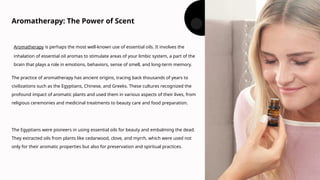
Aromatherapy is perhaps the most well-known use of essential oils. It involves the
inhalation of essential oil aromas to stimulate areas of your limbic system, a part of the
brain that plays a role in emotions, behaviors, sense of smell, and long-term memory.
The practice of aromatherapy has ancient origins, tracing back thousands of years to
civilizations such as the Egyptians, Chinese, and Greeks. These cultures recognized the
profound impact of aromatic plants and used them in various aspects of their lives, from
religious ceremonies and medicinal treatments to beauty care and food preparation.
The Egyptians were pioneers in using essential oils for beauty and embalming the dead.
They extracted oils from plants like cedarwood, clove, and myrrh, which were used not
only for their aromatic properties but also for preservation and spiritual practices.
Similarly, the Chinese incorporated aromatic herbs in healing practices, as documented in
the oldest known medical text, "The Yellow Emperor's Book of Internal Medicine," which
discusses the benefits of aromatics in balancing bodily systems.
In ancient Greece, Hippocrates, often called the "father of medicine," advocated for the
use of aromatic fumigations to foster health, suggesting that the environment and
cleanliness played a crucial role in physical well-being. The Romans further popularized
aromatherapy with their lavish baths infused with scents and their use of perfumed oils
to enhance wellbeing.
The term "aromatherapy" itself was coined much later, in the early 20th century by French
chemist René-Maurice Gattefossé, who discovered the healing properties of lavender oil
when it accidentally helped heal a burn on his hand. This incident spurred a renewed
interest in the therapeutic benefits of essential oils, leading to the modern practice of
aromatherapy that we know today.
Here are some effective methods to practice aromatherapy:
Practicing Aromatherapy
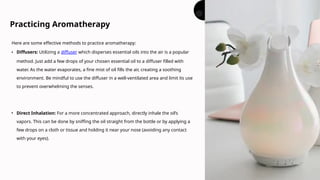
• Diffusers: Utilizing a diffuser which disperses essential oils into the air is a popular
method. Just add a few drops of your chosen essential oil to a diffuser filled with
water. As the water evaporates, a fine mist of oil fills the air, creating a soothing
environment. Be mindful to use the diffuser in a well-ventilated area and limit its use
to prevent overwhelming the senses.
• Direct Inhalation: For a more concentrated approach, directly inhale the oil’s
vapors. This can be done by sniffing the oil straight from the bottle or by applying a
few drops on a cloth or tissue and holding it near your nose (avoiding any contact
with your eyes).
Applying essential oils directly to the skin is another effective way
to harness their benefits, though it should be done with care:
Topical Application
• Massage: Create a massage oil by mixing a few drops of
essential oil with a carrier oil such as jojoba, argan, or almond
oil. This mixture can be used to rub into the skin, soothing
muscles and calming the mind.
• Skincare: Essential oils can also enhance your skincare
routine. Add a drop to your daily moisturizer or lotion. For
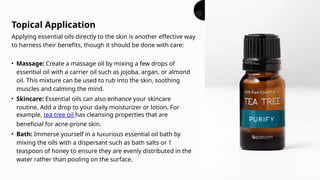
example, tea tree oil has cleansing properties that are
beneficial for acne-prone skin.
• Bath: Immerse yourself in a luxurious essential oil bath by
mixing the oils with a dispersant such as bath salts or 1
teaspoon of honey to ensure they are evenly distributed in the
water rather than pooling on the surface.
Beyond personal care, essential oils are excellent for keeping your home clean and fresh:
DIY Cleaning Products: Natural Solutions
• Homemade Cleaners: Combine essential oils like lemon, eucalyptus, or peppermint oil
with natural cleaning agents like vinegar or baking soda. These mixtures can effectively
clean surfaces without the harsh chemicals found in many store-bought products. For
some cleaning DIY recipes check out this article.
While essential oils are derived from natural sources, they are potent and should be used
responsibly to avoid adverse effects:
Essential Oil Safety Tips
• Dilution: Essential oils should be diluted with a carrier oil before being applied to the
skin to minimize any risk of irritation.
• Patch Test: It’s wise to perform a patch test before using a new oil extensively. Apply a
small amount of diluted oil to a patch of skin and wait to see if there is an adverse
reaction.
• Quality: Opt for high-quality, 100% pure essential oils from reputable suppliers, like
SpaRoom to ensure the best results and safety.
• Consultation: If you have any underlying health conditions, are pregnant, or are
considering using essential oils with children, consult a healthcare provider or a
professional aromatherapist.
If you're new to the world of essential oils, starting with the most popular and versatile
options can help you ease into using them effectively. Here are some top essential oils
that are renowned for their benefits and ease of use:
Popular Essential Oils for Beginners
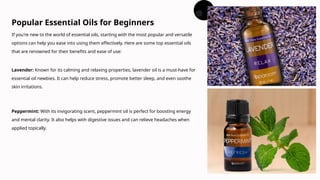
Lavender: Known for its calming and relaxing properties, lavender oil is a must-have for
essential oil newbies. It can help reduce stress, promote better sleep, and even soothe
skin irritations.
Peppermint: With its invigorating scent, peppermint oil is perfect for boosting energy
and mental clarity. It also helps with digestive issues and can relieve headaches when
applied topically.
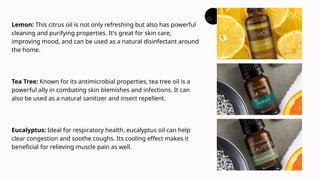
Lemon: This citrus oil is not only refreshing but also has powerful
cleaning and purifying properties. It's great for skin care,
improving mood, and can be used as a natural disinfectant around
the home.
Tea Tree: Known for its antimicrobial properties, tea tree oil is a
powerful ally in combating skin blemishes and infections. It can
also be used as a natural sanitizer and insect repellent.
Eucalyptus: Ideal for respiratory health, eucalyptus oil can help
clear congestion and soothe coughs. Its cooling effect makes it
beneficial for relieving muscle pain as well.
Essential oils can significantly enhance your quality of life by providing physical and emotional
benefits. Whether it’s the calming aroma of lavender helping you unwind at the end of a long
day or the invigorating scent of citrus energizing your mornings, these oils offer a natural,
versatile solution to many everyday concerns. Start with small amounts to see how your body
reacts and gradually explore different oils and methods to find what works best for you.
Remember, with essential oils, a little often goes a long way. Explore, enjoy, and experience
the potent power of nature’s essence safely and effectively. To learn more about how you can
use essential oils, take a look at this article: Summer Vacation Must-Haves: Aromatherapy
Edition.
Final Thoughts
Website
www.sparoom.com

Essential Oil Use A Beginner's Guide.pptx

  • 1.
    Essential Oil Use: ABeginner's Guide
  • 2.
    INTRODUCTION Essential oils, concentratedplant extracts that retain the natural smell and flavor, or "essence," of their source, are increasingly popular due to their broad range of benefits. From enhancing physical... Essential oils, concentrated plant extracts that retain the natural smell and flavor, or "essence," of their source, are increasingly popular due to their broad range of benefits. From enhancing physical wellness to promoting emotional well-being, these aromatic oils have something to offer everyone. Here’s a comprehensive guide on how to enjoy the benefits of essential oils in various ways.
  • 3.
    Aromatherapy: The Powerof Scent Aromatherapy is perhaps the most well-known use of essential oils. It involves the inhalation of essential oil aromas to stimulate areas of your limbic system, a part of the brain that plays a role in emotions, behaviors, sense of smell, and long-term memory. The practice of aromatherapy has ancient origins, tracing back thousands of years to civilizations such as the Egyptians, Chinese, and Greeks. These cultures recognized the profound impact of aromatic plants and used them in various aspects of their lives, from religious ceremonies and medicinal treatments to beauty care and food preparation. The Egyptians were pioneers in using essential oils for beauty and embalming the dead. They extracted oils from plants like cedarwood, clove, and myrrh, which were used not only for their aromatic properties but also for preservation and spiritual practices.
  • 4.
    Similarly, the Chineseincorporated aromatic herbs in healing practices, as documented in the oldest known medical text, "The Yellow Emperor's Book of Internal Medicine," which discusses the benefits of aromatics in balancing bodily systems. In ancient Greece, Hippocrates, often called the "father of medicine," advocated for the use of aromatic fumigations to foster health, suggesting that the environment and cleanliness played a crucial role in physical well-being. The Romans further popularized aromatherapy with their lavish baths infused with scents and their use of perfumed oils to enhance wellbeing. The term "aromatherapy" itself was coined much later, in the early 20th century by French chemist René-Maurice Gattefossé, who discovered the healing properties of lavender oil when it accidentally helped heal a burn on his hand. This incident spurred a renewed interest in the therapeutic benefits of essential oils, leading to the modern practice of aromatherapy that we know today.
  • 5.
    Here are someeffective methods to practice aromatherapy: Practicing Aromatherapy • Diffusers: Utilizing a diffuser which disperses essential oils into the air is a popular method. Just add a few drops of your chosen essential oil to a diffuser filled with water. As the water evaporates, a fine mist of oil fills the air, creating a soothing environment. Be mindful to use the diffuser in a well-ventilated area and limit its use to prevent overwhelming the senses. • Direct Inhalation: For a more concentrated approach, directly inhale the oil’s vapors. This can be done by sniffing the oil straight from the bottle or by applying a few drops on a cloth or tissue and holding it near your nose (avoiding any contact with your eyes).
  • 6.
    Applying essential oilsdirectly to the skin is another effective way to harness their benefits, though it should be done with care: Topical Application • Massage: Create a massage oil by mixing a few drops of essential oil with a carrier oil such as jojoba, argan, or almond oil. This mixture can be used to rub into the skin, soothing muscles and calming the mind. • Skincare: Essential oils can also enhance your skincare routine. Add a drop to your daily moisturizer or lotion. For example, tea tree oil has cleansing properties that are beneficial for acne-prone skin. • Bath: Immerse yourself in a luxurious essential oil bath by mixing the oils with a dispersant such as bath salts or 1 teaspoon of honey to ensure they are evenly distributed in the water rather than pooling on the surface.
  • 7.
    Beyond personal care,essential oils are excellent for keeping your home clean and fresh: DIY Cleaning Products: Natural Solutions • Homemade Cleaners: Combine essential oils like lemon, eucalyptus, or peppermint oil with natural cleaning agents like vinegar or baking soda. These mixtures can effectively clean surfaces without the harsh chemicals found in many store-bought products. For some cleaning DIY recipes check out this article.
  • 8.
    While essential oilsare derived from natural sources, they are potent and should be used responsibly to avoid adverse effects: Essential Oil Safety Tips • Dilution: Essential oils should be diluted with a carrier oil before being applied to the skin to minimize any risk of irritation. • Patch Test: It’s wise to perform a patch test before using a new oil extensively. Apply a small amount of diluted oil to a patch of skin and wait to see if there is an adverse reaction. • Quality: Opt for high-quality, 100% pure essential oils from reputable suppliers, like SpaRoom to ensure the best results and safety. • Consultation: If you have any underlying health conditions, are pregnant, or are considering using essential oils with children, consult a healthcare provider or a professional aromatherapist.
  • 9.
    If you're newto the world of essential oils, starting with the most popular and versatile options can help you ease into using them effectively. Here are some top essential oils that are renowned for their benefits and ease of use: Popular Essential Oils for Beginners Lavender: Known for its calming and relaxing properties, lavender oil is a must-have for essential oil newbies. It can help reduce stress, promote better sleep, and even soothe skin irritations. Peppermint: With its invigorating scent, peppermint oil is perfect for boosting energy and mental clarity. It also helps with digestive issues and can relieve headaches when applied topically.
  • 10.
    Lemon: This citrusoil is not only refreshing but also has powerful cleaning and purifying properties. It's great for skin care, improving mood, and can be used as a natural disinfectant around the home. Tea Tree: Known for its antimicrobial properties, tea tree oil is a powerful ally in combating skin blemishes and infections. It can also be used as a natural sanitizer and insect repellent. Eucalyptus: Ideal for respiratory health, eucalyptus oil can help clear congestion and soothe coughs. Its cooling effect makes it beneficial for relieving muscle pain as well.
  • 11.
    Essential oils cansignificantly enhance your quality of life by providing physical and emotional benefits. Whether it’s the calming aroma of lavender helping you unwind at the end of a long day or the invigorating scent of citrus energizing your mornings, these oils offer a natural, versatile solution to many everyday concerns. Start with small amounts to see how your body reacts and gradually explore different oils and methods to find what works best for you. Remember, with essential oils, a little often goes a long way. Explore, enjoy, and experience the potent power of nature’s essence safely and effectively. To learn more about how you can use essential oils, take a look at this article: Summer Vacation Must-Haves: Aromatherapy Edition. Final Thoughts
  • 12.