


Global Trade in Oil
7 sisters, OPEC, Oil Middle East Conflict
7 Sisters
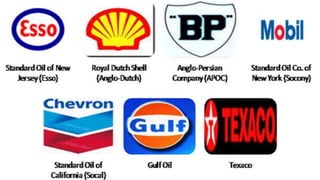
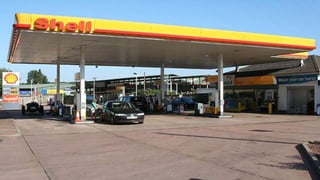
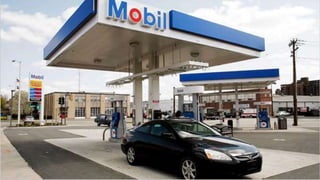
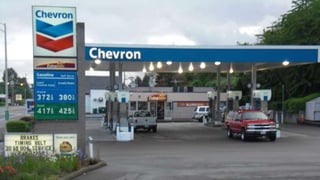
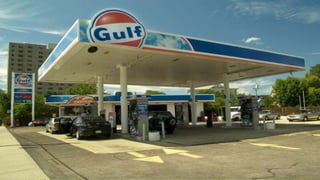
“The Seven Sisters" refers to the seven
international oil companies that dominated
the world's oil production after World War
II.
The term “Seven Sisters” was coined by
Italian energy patriarch Enrico Mattei.
The Seven Sisters achieved considerable
success with most Third World oil
producers due to its well organized
negotiation strategy. However, by way
of the formation of OPEC, the Arab
states began to gain control over oil
prices and production.
The demise of The Seven Sisters
began in 1960 and continued
further through the 1970s,
when its power and influence
had greatly decreased.
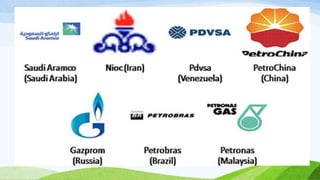
In 2007, the Financial Times profiled an
emerging trend of the dominance of the
global oil industry by national oil companies,
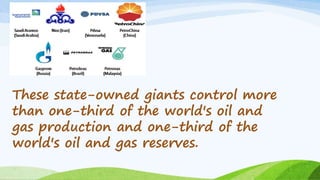
"The New Seven Sisters." These include Saudi
Aramco (Saudi Arabia), Gazprom (Russia),
CNPC (China), NIOC (Iran), PDVSA
(Venezuela), Petrobras (Brazil), and Petronas
(Malaysia).
These state-owned giants control more
than one-third of the world's oil and
gas production and one-third of the
world's oil and gas reserves.
Organization of the Petroleum
Exporting Countries
Brief History of OPEC
- was founded in Baghdad, Iraq, with the signing of an
agreement in September 1960 by five countries namely Islamic
Republic of Iran, Iraq, Kuwait, Saudi Arabia and Venezuela.
They were to become the Founder Members of the Organization.
- These countries were later joined by Qatar (1961), Indonesia
(1962), Libya (1962), the United Arab Emirates (1967),
Algeria (1969), Nigeria (1971), Ecuador (1973), Gabon
(1975) and Angola (2007).
Currently, the Organization has a total of 12 Member
Countries.
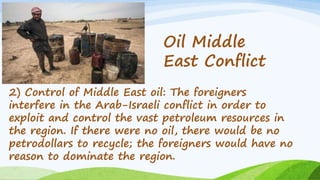
2) Control of Middle East oil: The foreigners
interfere in the Arab-Israeli conflict in order to
exploit and control the vast petroleum resources in
the region. If there were no oil, there would be no
petrodollars to recycle; the foreigners would have no
reason to dominate the region.
Oil Middle
East Conflict
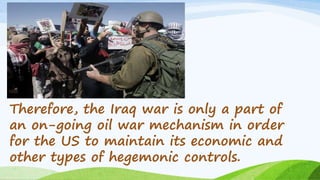
Therefore, the Iraq war is only a part of
an on-going oil war mechanism in order
for the US to maintain its economic and
other types of hegemonic controls.
Global Trade in Precious
Metals and Stones
Gold, Silver and Diamond
Global Trade in Oil

Global Trade in Oil

  • 1.
    Global Trade inOil 7 sisters, OPEC, Oil Middle East Conflict
  • 2.
    7 Sisters “The SevenSisters" refers to the seven international oil companies that dominated the world's oil production after World War II. The term “Seven Sisters” was coined by Italian energy patriarch Enrico Mattei.
  • 11.
    The Seven Sistersachieved considerable success with most Third World oil producers due to its well organized negotiation strategy. However, by way of the formation of OPEC, the Arab states began to gain control over oil prices and production.
  • 12.
    The demise ofThe Seven Sisters began in 1960 and continued further through the 1970s, when its power and influence had greatly decreased.
  • 13.
    In 2007, theFinancial Times profiled an emerging trend of the dominance of the global oil industry by national oil companies, "The New Seven Sisters." These include Saudi Aramco (Saudi Arabia), Gazprom (Russia), CNPC (China), NIOC (Iran), PDVSA (Venezuela), Petrobras (Brazil), and Petronas (Malaysia).
  • 15.
    These state-owned giantscontrol more than one-third of the world's oil and gas production and one-third of the world's oil and gas reserves.
  • 16.
    Organization of thePetroleum Exporting Countries
  • 17.
    Brief History ofOPEC - was founded in Baghdad, Iraq, with the signing of an agreement in September 1960 by five countries namely Islamic Republic of Iran, Iraq, Kuwait, Saudi Arabia and Venezuela. They were to become the Founder Members of the Organization. - These countries were later joined by Qatar (1961), Indonesia (1962), Libya (1962), the United Arab Emirates (1967), Algeria (1969), Nigeria (1971), Ecuador (1973), Gabon (1975) and Angola (2007). Currently, the Organization has a total of 12 Member Countries.
  • 18.
    2) Control ofMiddle East oil: The foreigners interfere in the Arab-Israeli conflict in order to exploit and control the vast petroleum resources in the region. If there were no oil, there would be no petrodollars to recycle; the foreigners would have no reason to dominate the region. Oil Middle East Conflict
  • 19.
    Therefore, the Iraqwar is only a part of an on-going oil war mechanism in order for the US to maintain its economic and other types of hegemonic controls.
  • 20.
    Global Trade inPrecious Metals and Stones Gold, Silver and Diamond