Dr Jamie Ranse RN PhD
Research Fellow, Emergency Care
www.jamieranse.com
twitter.com/jamieranse
youtube.com/jamieranse
linkedin.com/in/jamieranse
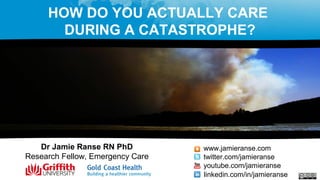
HOW DO YOU ACTUALLY CARE
DURING A CATASTROPHE?
overview
• Expectations versus reality - what do nurses actually do during a disaster?
• What level of psychological support are people expecting nurses to provide?
• How can you be of most assistance?
• What health advice do people require?
• What medical support and information is of most use to a community?
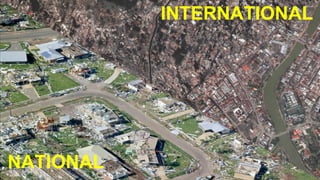
INTERNATIONAL
NATIONAL
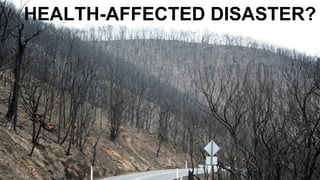
HEALTH-AFFECTED DISASTER?
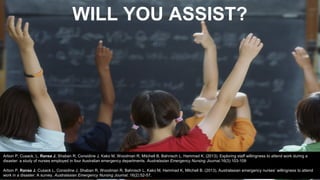
WILL YOU ASSIST?
Arbon P, Cusack, L, Ranse J, Shaban R, Considine J, Kako M, Woodman R, Mitchell B, Bahnisch L, Hammad K. (2013). Exploring staff willingness to attend work during a
disaster: a study of nurses employed in four Australian emergency departments. Australasian Emergency Nursing Journal.16(3):103-109
Arbon P, Ranse J, Cusack L, Considine J, Shaban R, Woodman R, Bahnisch L, Kako M, Hammad K, Mitchell B. (2013). Australasian emergency nurses’ willingness to attend
work in a disaster: A survey. Australasian Emergency Nursing Journal. 16(2):52-57.
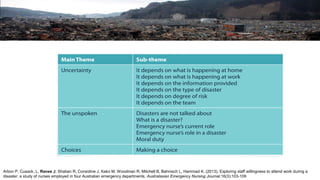
Arbon P, Cusack, L, Ranse J, Shaban R, Considine J, Kako M, Woodman R, Mitchell B, Bahnisch L, Hammad K. (2013). Exploring staff willingness to attend work during a
disaster: a study of nurses employed in four Australian emergency departments. Australasian Emergency Nursing Journal.16(3):103-109
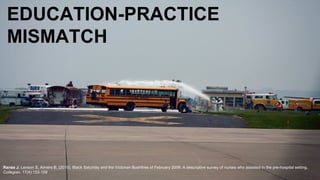
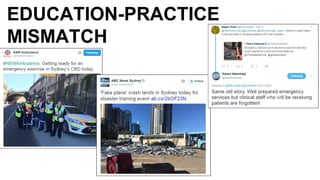
EDUCATION-PRACTICE
MISMATCH
Ranse J, Lenson S, Aimers B. (2010). Black Saturday and the Victorian Bushfires of February 2009: A descriptive survey of nurses who assisted in the pre-hospital setting.
Collegian. 17(4):153-159
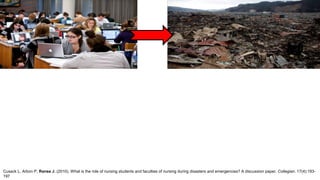
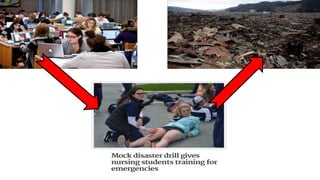
EDUCATION-PRACTICE
MISMATCH
Cusack L, Arbon P, Ranse J. (2010). What is the role of nursing students and faculties of nursing during disasters and emergencies? A discussion paper. Collegian. 17(4):193-
197
WHAT WILL YOUR
ROLE BE?
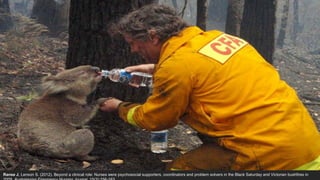
Ranse J, Lenson S. (2012). Beyond a clinical role: Nurses were psychosocial supporters, coordinators and problem solvers in the Black Saturday and Victorian bushfires in
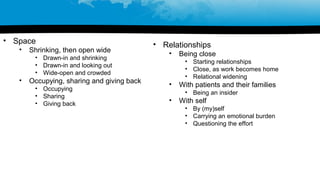
• Space
• Shrinking, then open wide
• Drawn-in and shrinking
• Drawn-in and looking out
• Wide-open and crowded
• Occupying, sharing and giving back
• Occupying
• Sharing
• Giving back
• Relationships
• Being close
• Starting relationships
• Close, as work becomes home
• Relational widening
• With patients and their families
• Being an insider
• With self
• By (my)self
• Carrying an emotional burden
• Questioning the effort
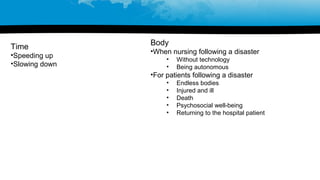
Body
•When nursing following a disaster
• Without technology
• Being autonomous
•For patients following a disaster
• Endless bodies
• Injured and ill
• Death
• Psychosocial well-being
• Returning to the hospital patient
Time
•Speeding up
•Slowing down
LEADERSHIP
AND
TEAMWORK
Ranse J, Hutton A, Wilson R, Usher K. (2015). Leadership opportunities for mental health nurses in the field of disaster preparation, response and recovery. Issues in Mental
Health Nursing. [accepted]
Filmer L, Ranse J. (2013) Who is my leader? Lessons from a hospital disaster drill in a less developed country. Australasian Emergency Nursing Journal. 16(4)170-174.
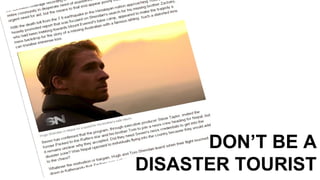
DON’T BE A
DISASTER TOURIST
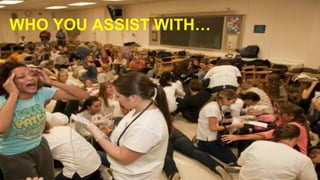
WHO YOU ASSIST WITH…
HOME!
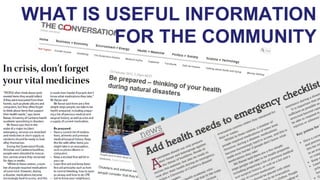
WHAT IS USEFUL INFORMATION
FOR THE COMMUNITY
Dr Jamie Ranse RN PhD
Research Fellow, Emergency Care
www.jamieranse.com
twitter.com/jamieranse
youtube.com/jamieranse
linkedin.com/in/jamieranse
HOW DO YOU ACTUALLY CARE
DURING A CATASTROPHE?

How do you actually care during a catastrophe?

  • 1.
    Dr Jamie RanseRN PhD Research Fellow, Emergency Care www.jamieranse.com twitter.com/jamieranse youtube.com/jamieranse linkedin.com/in/jamieranse HOW DO YOU ACTUALLY CARE DURING A CATASTROPHE?
  • 2.
    overview • Expectations versusreality - what do nurses actually do during a disaster? • What level of psychological support are people expecting nurses to provide? • How can you be of most assistance? • What health advice do people require? • What medical support and information is of most use to a community?
  • 4.
  • 5.
  • 6.
    WILL YOU ASSIST? ArbonP, Cusack, L, Ranse J, Shaban R, Considine J, Kako M, Woodman R, Mitchell B, Bahnisch L, Hammad K. (2013). Exploring staff willingness to attend work during a disaster: a study of nurses employed in four Australian emergency departments. Australasian Emergency Nursing Journal.16(3):103-109 Arbon P, Ranse J, Cusack L, Considine J, Shaban R, Woodman R, Bahnisch L, Kako M, Hammad K, Mitchell B. (2013). Australasian emergency nurses’ willingness to attend work in a disaster: A survey. Australasian Emergency Nursing Journal. 16(2):52-57.
  • 7.
    Arbon P, Cusack,L, Ranse J, Shaban R, Considine J, Kako M, Woodman R, Mitchell B, Bahnisch L, Hammad K. (2013). Exploring staff willingness to attend work during a disaster: a study of nurses employed in four Australian emergency departments. Australasian Emergency Nursing Journal.16(3):103-109
  • 8.
    EDUCATION-PRACTICE MISMATCH Ranse J, LensonS, Aimers B. (2010). Black Saturday and the Victorian Bushfires of February 2009: A descriptive survey of nurses who assisted in the pre-hospital setting. Collegian. 17(4):153-159
  • 9.
  • 10.
    Cusack L, ArbonP, Ranse J. (2010). What is the role of nursing students and faculties of nursing during disasters and emergencies? A discussion paper. Collegian. 17(4):193- 197
  • 12.
  • 13.
    Ranse J, LensonS. (2012). Beyond a clinical role: Nurses were psychosocial supporters, coordinators and problem solvers in the Black Saturday and Victorian bushfires in
  • 16.
    • Space • Shrinking,then open wide • Drawn-in and shrinking • Drawn-in and looking out • Wide-open and crowded • Occupying, sharing and giving back • Occupying • Sharing • Giving back • Relationships • Being close • Starting relationships • Close, as work becomes home • Relational widening • With patients and their families • Being an insider • With self • By (my)self • Carrying an emotional burden • Questioning the effort
  • 17.
    Body •When nursing followinga disaster • Without technology • Being autonomous •For patients following a disaster • Endless bodies • Injured and ill • Death • Psychosocial well-being • Returning to the hospital patient Time •Speeding up •Slowing down
  • 18.
    LEADERSHIP AND TEAMWORK Ranse J, HuttonA, Wilson R, Usher K. (2015). Leadership opportunities for mental health nurses in the field of disaster preparation, response and recovery. Issues in Mental Health Nursing. [accepted] Filmer L, Ranse J. (2013) Who is my leader? Lessons from a hospital disaster drill in a less developed country. Australasian Emergency Nursing Journal. 16(4)170-174.
  • 19.
  • 20.
  • 21.
  • 22.
    WHAT IS USEFULINFORMATION FOR THE COMMUNITY
  • 23.
    Dr Jamie RanseRN PhD Research Fellow, Emergency Care www.jamieranse.com twitter.com/jamieranse youtube.com/jamieranse linkedin.com/in/jamieranse HOW DO YOU ACTUALLY CARE DURING A CATASTROPHE?