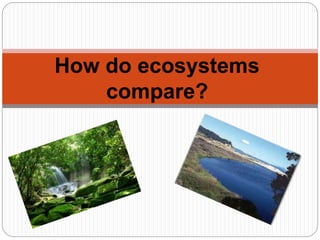
How do ecosystems
compare?
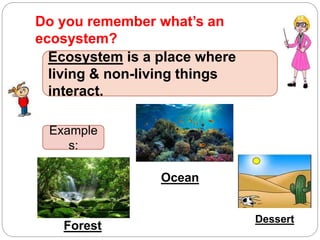
Do you remember what’s an
ecosystem?
Ecosystem is a place where
living & non-living things
interact.
Example
s:
Forest
Ocean
Dessert
Do you know that every
ecosystem has its own
climate?
Wait please, I can’t
understand what’s the
meaning of climate.
Well, let’s see what
is the climate?
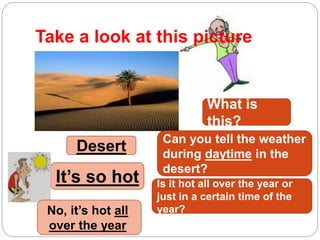
Take a look at this picture
What is
this?
Desert
Can you tell the weather
during daytime in the
desert?
It’s so hot Is it hot all over the year or
just in a certain time of the
year?No, it’s hot all
over the year
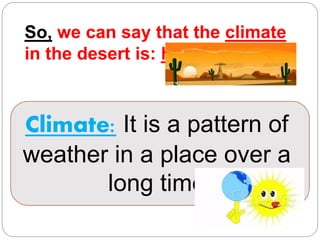
So, we can say that the climate
in the desert is: hot
Climate: It is a pattern of
weather in a place over a
long time
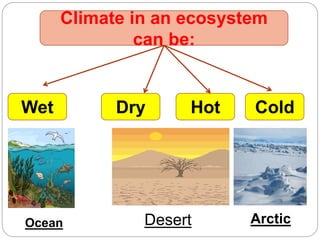
Climate in an ecosystem
can be:
Wet Dry Hot Cold
Ocean Desert Arctic
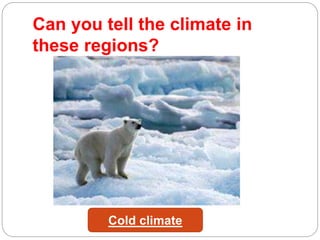
Can you tell the climate in
these regions?
Cold climate
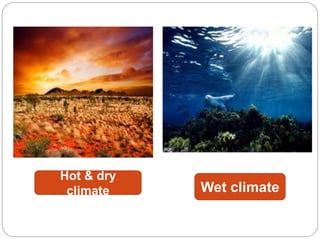
Hot & dry
climate Wet climate
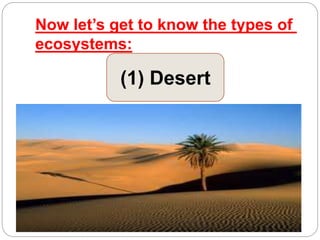
Now let’s get to know the types of
ecosystems:
(1) Desert
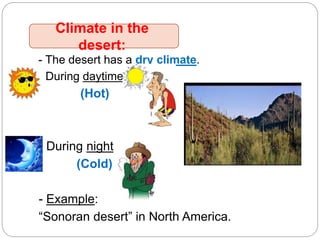
- The desert has a dry climate.
- During daytime:
(Hot)
- During night:
(Cold)
- Example:
“Sonoran desert” in North America.
Climate in the
desert:
How can animals & plants
survive in the desert?
The desert is a very hot & dry place to
live in, so in order for the animals &
plants to survive there, they have to
adapt to the desert.
Adapt = Change to
survive
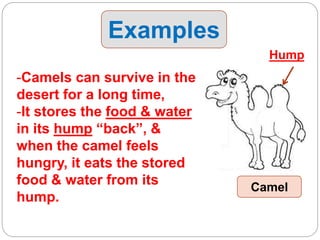
Examples
-Camels can survive in the
desert for a long time,
-It stores the food & water
in its hump “back”, &
when the camel feels
hungry, it eats the stored
food & water from its
hump.
Hump
Camel
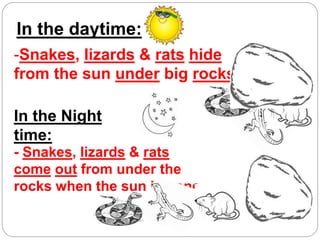
-Snakes, lizards & rats hide
from the sun under big rocks .
In the daytime:
In the Night
time:
- Snakes, lizards & rats
come out from under the
rocks when the sun is gone.
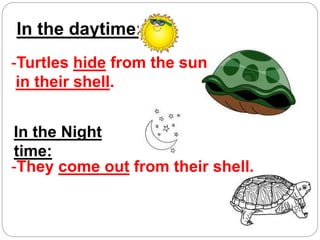
In the daytime:
In the Night
time:
-Turtles hide from the sun
in their shell.
-They come out from their shell.
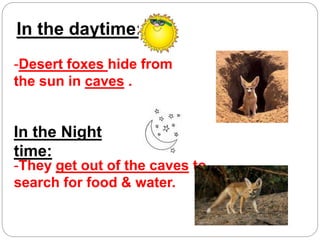
In the daytime:
-Desert foxes hide from
the sun in caves .
In the Night
time:
-They get out of the caves to
search for food & water.
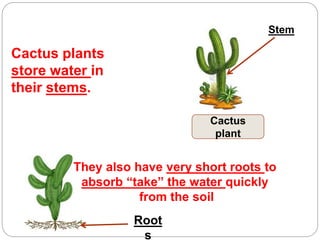
Cactus
plant
Cactus plants
store water in
their stems.
They also have very short roots to
absorb “take” the water quickly
from the soil
Stem
Root
s
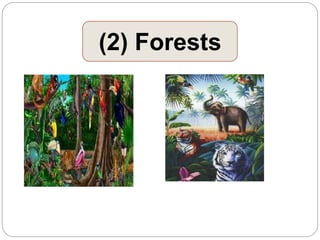
(2) Forests
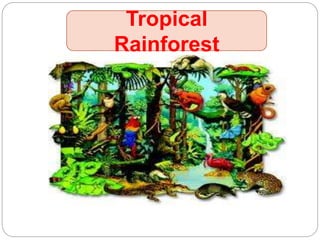
Tropical
Rainforest
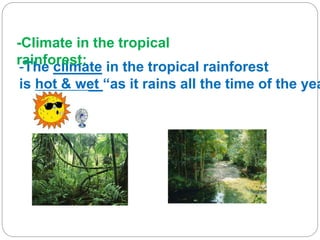
-The climate in the tropical rainforest
is hot & wet “as it rains all the time of the yea
-Climate in the tropical
rainforest:
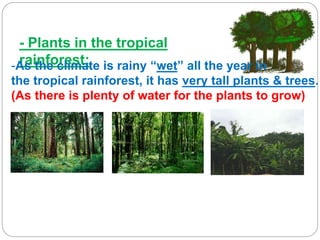
- Plants in the tropical
rainforest:-As the climate is rainy “wet” all the year in
the tropical rainforest, it has very tall plants & trees.
(As there is plenty of water for the plants to grow)
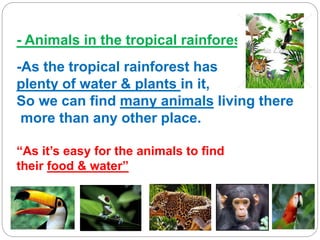
- Animals in the tropical rainforest:
-As the tropical rainforest has
plenty of water & plants in it,
So we can find many animals living there
more than any other place.
“As it’s easy for the animals to find
their food & water”
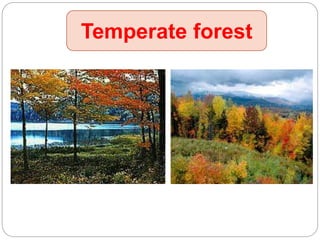
Temperate forest
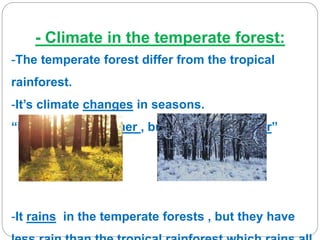
- Climate in the temperate forest:
-The temperate forest differ from the tropical
rainforest.
-It’s climate changes in seasons.
“It’s warm in summer , but it’s cold in winter”
-It rains in the temperate forests , but they have
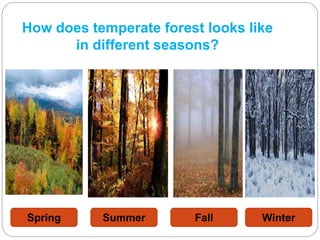
How does temperate forest looks like
in different seasons?
Spring Summer Fall Winter
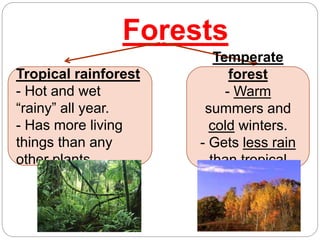
Forests
Tropical rainforest
- Hot and wet
“rainy” all year.
- Has more living
things than any
other plants.
Temperate
forest
- Warm
summers and
cold winters.
- Gets less rain
than tropical
rainforests.
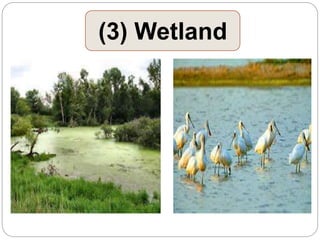
(3) Wetland
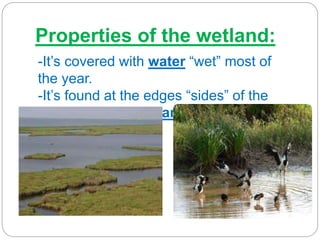
Properties of the wetland:
-It’s covered with water “wet” most of
the year.
-It’s found at the edges “sides” of the
rivers, lakes & oceans.
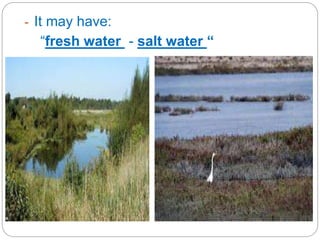
- It may have:
“fresh water - salt water “
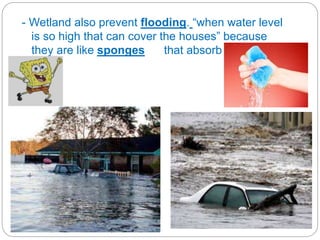
- Wetland also prevent flooding. “when water level
is so high that can cover the houses” because
they are like sponges that absorb water.
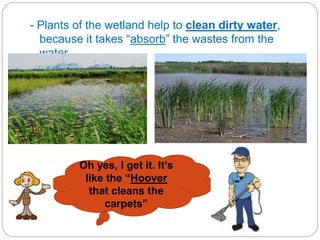
- Plants of the wetland help to clean dirty water,
because it takes “absorb” the wastes from the
water.
Oh yes, I get it. It’s
like the “Hoover
that cleans the
carpets”
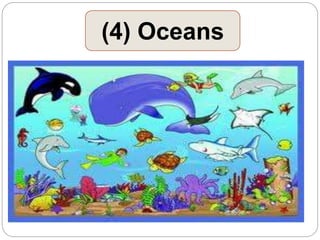
(4) Oceans
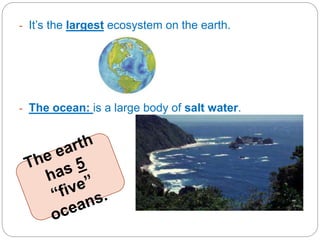
- It’s the largest ecosystem on the earth.
- The ocean: is a large body of salt water.
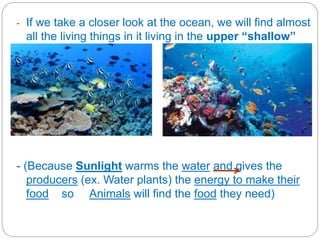
- If we take a closer look at the ocean, we will find almost
all the living things in it living in the upper “shallow”
part of the ocean.
- (Because Sunlight warms the water and gives the
producers (ex. Water plants) the energy to make their
food so Animals will find the food they need)

How do ecosystems compare

  • 1.
  • 2.
    Do you rememberwhat’s an ecosystem? Ecosystem is a place where living & non-living things interact. Example s: Forest Ocean Dessert
  • 3.
    Do you knowthat every ecosystem has its own climate? Wait please, I can’t understand what’s the meaning of climate. Well, let’s see what is the climate?
  • 4.
    Take a lookat this picture What is this? Desert Can you tell the weather during daytime in the desert? It’s so hot Is it hot all over the year or just in a certain time of the year?No, it’s hot all over the year
  • 5.
    So, we cansay that the climate in the desert is: hot Climate: It is a pattern of weather in a place over a long time
  • 6.
    Climate in anecosystem can be: Wet Dry Hot Cold Ocean Desert Arctic
  • 7.
    Can you tellthe climate in these regions? Cold climate
  • 8.
    Hot & dry climateWet climate
  • 9.
    Now let’s getto know the types of ecosystems: (1) Desert
  • 10.
    - The deserthas a dry climate. - During daytime: (Hot) - During night: (Cold) - Example: “Sonoran desert” in North America. Climate in the desert:
  • 11.
    How can animals& plants survive in the desert? The desert is a very hot & dry place to live in, so in order for the animals & plants to survive there, they have to adapt to the desert. Adapt = Change to survive
  • 12.
    Examples -Camels can survivein the desert for a long time, -It stores the food & water in its hump “back”, & when the camel feels hungry, it eats the stored food & water from its hump. Hump Camel
  • 13.
    -Snakes, lizards &rats hide from the sun under big rocks . In the daytime: In the Night time: - Snakes, lizards & rats come out from under the rocks when the sun is gone.
  • 14.
    In the daytime: Inthe Night time: -Turtles hide from the sun in their shell. -They come out from their shell.
  • 15.
    In the daytime: -Desertfoxes hide from the sun in caves . In the Night time: -They get out of the caves to search for food & water.
  • 16.
    Cactus plant Cactus plants store waterin their stems. They also have very short roots to absorb “take” the water quickly from the soil Stem Root s
  • 17.
  • 18.
  • 19.
    -The climate inthe tropical rainforest is hot & wet “as it rains all the time of the yea -Climate in the tropical rainforest:
  • 20.
    - Plants inthe tropical rainforest:-As the climate is rainy “wet” all the year in the tropical rainforest, it has very tall plants & trees. (As there is plenty of water for the plants to grow)
  • 21.
    - Animals inthe tropical rainforest: -As the tropical rainforest has plenty of water & plants in it, So we can find many animals living there more than any other place. “As it’s easy for the animals to find their food & water”
  • 22.
  • 23.
    - Climate inthe temperate forest: -The temperate forest differ from the tropical rainforest. -It’s climate changes in seasons. “It’s warm in summer , but it’s cold in winter” -It rains in the temperate forests , but they have
  • 24.
    How does temperateforest looks like in different seasons? Spring Summer Fall Winter
  • 25.
    Forests Tropical rainforest - Hotand wet “rainy” all year. - Has more living things than any other plants. Temperate forest - Warm summers and cold winters. - Gets less rain than tropical rainforests.
  • 26.
  • 27.
    Properties of thewetland: -It’s covered with water “wet” most of the year. -It’s found at the edges “sides” of the rivers, lakes & oceans.
  • 28.
    - It mayhave: “fresh water - salt water “
  • 29.
    - Wetland alsoprevent flooding. “when water level is so high that can cover the houses” because they are like sponges that absorb water.
  • 30.
    - Plants ofthe wetland help to clean dirty water, because it takes “absorb” the wastes from the water. Oh yes, I get it. It’s like the “Hoover that cleans the carpets”
  • 31.
  • 32.
    - It’s thelargest ecosystem on the earth. - The ocean: is a large body of salt water.
  • 33.
    - If wetake a closer look at the ocean, we will find almost all the living things in it living in the upper “shallow” part of the ocean. - (Because Sunlight warms the water and gives the producers (ex. Water plants) the energy to make their food so Animals will find the food they need)