
How clinical decision support systems (CDSS) is the right
tool for Physicians ?
1st International Online BioMedical Conference (IOBMC 2015)
George P. Kolostoumpis (BSc, PhD)
Scientific Expert for Horizon 2020, ECDC, COST, EUREKA
Overview
 Definition of CDSS
 Main purpose of CDSS
 Characteristics
 Benefits
 Target Area
 Examples
 Conclusion
Definition of CDSS
Clinical Decision Support Systems (CDSS) are active knowledge base systems, with
knowledge and person-specific in formation, intelligently filtered and presented at
appropriate times, to enhance health and health care.
CDS is a sophisticated health IT component which include:
 Computerized alerts and reminders to care providers and patients;
 Clinical guidelines;
 Condition-specific order sets; focused patient data reports and summaries; documentation
templates;
 Diagnostic support, and contextually relevant reference information, among other tools.
Main purpose of CDSS
• Assist in problem solving with semi structured problems
• Improve the effectiveness of the decision – making process
• Supporting clinical coding and documentation, authorization of procedures, and referrals.
• Managing clinical complexity and details:
• Monitoring medication orders; avoiding duplicate or unnecessary tests.
Characteristics
• Access to accurate clinical data,
• Access to pertinent medical knowledge
• Ability to use appropriate problem solving skills.
Benefits of CDSS
• Reduce the risk of medication errors.
• Reduce misdiagnoses
• Provide the entire care team with consistent, reliable information
• Improve efficiency and patient throughput
• Access all information in one place.
Target area
• Improve the overall efficiency, identify disease early aid in accurate diagnosis or protocol -
based treatments or prevent dangerous adverse events affecting the patient.
• To whom and how the information from the CDSS will be delivered?
• How much control the user will have in accessing and responding to the information.
• A key that CDSS can help, solve the need or problem identified
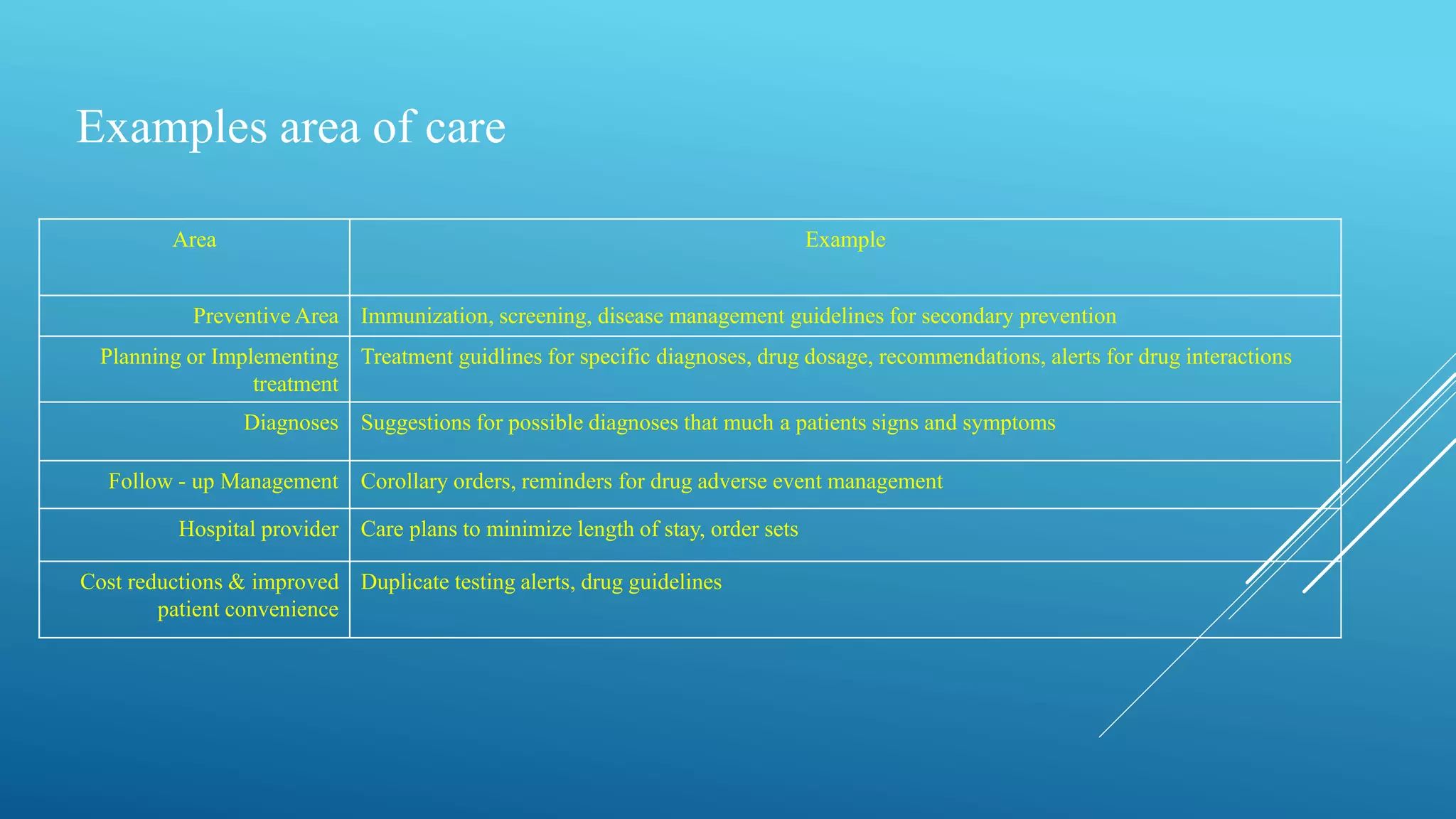
Examples area of care
Area Example
Preventive Area Immunization, screening, disease management guidelines for secondary prevention
Planning or Implementing
treatment
Treatment guidlines for specific diagnoses, drug dosage, recommendations, alerts for drug interactions
Diagnoses Suggestions for possible diagnoses that much a patients signs and symptoms
Follow - up Management Corollary orders, reminders for drug adverse event management
Hospital provider Care plans to minimize length of stay, order sets
Cost reductions & improved
patient convenience
Duplicate testing alerts, drug guidelines
Conclusion
• Improve the overall efficiency, identify disease early aid in accurate diagnosis or protocol -
based treatments or prevent dangerous adverse events affecting the patient.
• To whom and how the information from the CDSS will be delivered?
• How much control the user will have in accessing and responding to the information.
• A key that CDSS can help, solve the need or problem identified
?
Thank you

How Clinical Decision Support Systems (CDSS) is the right tool for physicians?

  • 1.
    How clinical decisionsupport systems (CDSS) is the right tool for Physicians ? 1st International Online BioMedical Conference (IOBMC 2015) George P. Kolostoumpis (BSc, PhD) Scientific Expert for Horizon 2020, ECDC, COST, EUREKA
  • 2.
    Overview  Definition ofCDSS  Main purpose of CDSS  Characteristics  Benefits  Target Area  Examples  Conclusion
  • 3.
    Definition of CDSS ClinicalDecision Support Systems (CDSS) are active knowledge base systems, with knowledge and person-specific in formation, intelligently filtered and presented at appropriate times, to enhance health and health care. CDS is a sophisticated health IT component which include:  Computerized alerts and reminders to care providers and patients;  Clinical guidelines;  Condition-specific order sets; focused patient data reports and summaries; documentation templates;  Diagnostic support, and contextually relevant reference information, among other tools.
  • 4.
    Main purpose ofCDSS • Assist in problem solving with semi structured problems • Improve the effectiveness of the decision – making process • Supporting clinical coding and documentation, authorization of procedures, and referrals. • Managing clinical complexity and details: • Monitoring medication orders; avoiding duplicate or unnecessary tests.
  • 5.
    Characteristics • Access toaccurate clinical data, • Access to pertinent medical knowledge • Ability to use appropriate problem solving skills.
  • 6.
    Benefits of CDSS •Reduce the risk of medication errors. • Reduce misdiagnoses • Provide the entire care team with consistent, reliable information • Improve efficiency and patient throughput • Access all information in one place.
  • 7.
    Target area • Improvethe overall efficiency, identify disease early aid in accurate diagnosis or protocol - based treatments or prevent dangerous adverse events affecting the patient. • To whom and how the information from the CDSS will be delivered? • How much control the user will have in accessing and responding to the information. • A key that CDSS can help, solve the need or problem identified
  • 8.
    Examples area ofcare Area Example Preventive Area Immunization, screening, disease management guidelines for secondary prevention Planning or Implementing treatment Treatment guidlines for specific diagnoses, drug dosage, recommendations, alerts for drug interactions Diagnoses Suggestions for possible diagnoses that much a patients signs and symptoms Follow - up Management Corollary orders, reminders for drug adverse event management Hospital provider Care plans to minimize length of stay, order sets Cost reductions & improved patient convenience Duplicate testing alerts, drug guidelines
  • 9.
    Conclusion • Improve theoverall efficiency, identify disease early aid in accurate diagnosis or protocol - based treatments or prevent dangerous adverse events affecting the patient. • To whom and how the information from the CDSS will be delivered? • How much control the user will have in accessing and responding to the information. • A key that CDSS can help, solve the need or problem identified
  • 10.

Editor's Notes

  • #6 CDSS uses case-based reasoning to assist clinicians in assessing disease status, in making a diagnosis, in selecting appropriate therapy or in making other clinical decisions. There are three key elements of a successful CDSS.