
HOW CAN WE MANAGE RADIAL ARTERY
LATE OCCLUSION: RECANALIZATION OF
OCCLUSION OR PROXIMAL “HIGH”
PUNCTURE OF RADIAL ARTERY

Avtandil M. Babunashvili
Center of Endosurgery, Moscow, Russia
Disclosure: Avtandil M. Babunashvili, MD

I have no relevant financial interests to disclose
Background:
_______________________________________________
Transradial interventions (TRI) are associated
with certain risk of radial artery (RA) occlusion, limiting
The possibility of re-intervention through the same
access site.
Study population
Occlusion of the RA/UA was detected in 72 cases (3.7%)
of the 1972 repeat transradial or transulnar interventions
for

diagnostic

and

interventional

procedures

from

January 2005 to November 2012.

Methods
In case of late RA/UA occlusion if the distal stump was
palpable

pulse,

puncture

and

cannulation

of

the

postocclusion segment, retrograde RA/UA recanalization
and angioplasty was performed using the "Dottertechnique” or plain balloon dilatation or mixed technique.
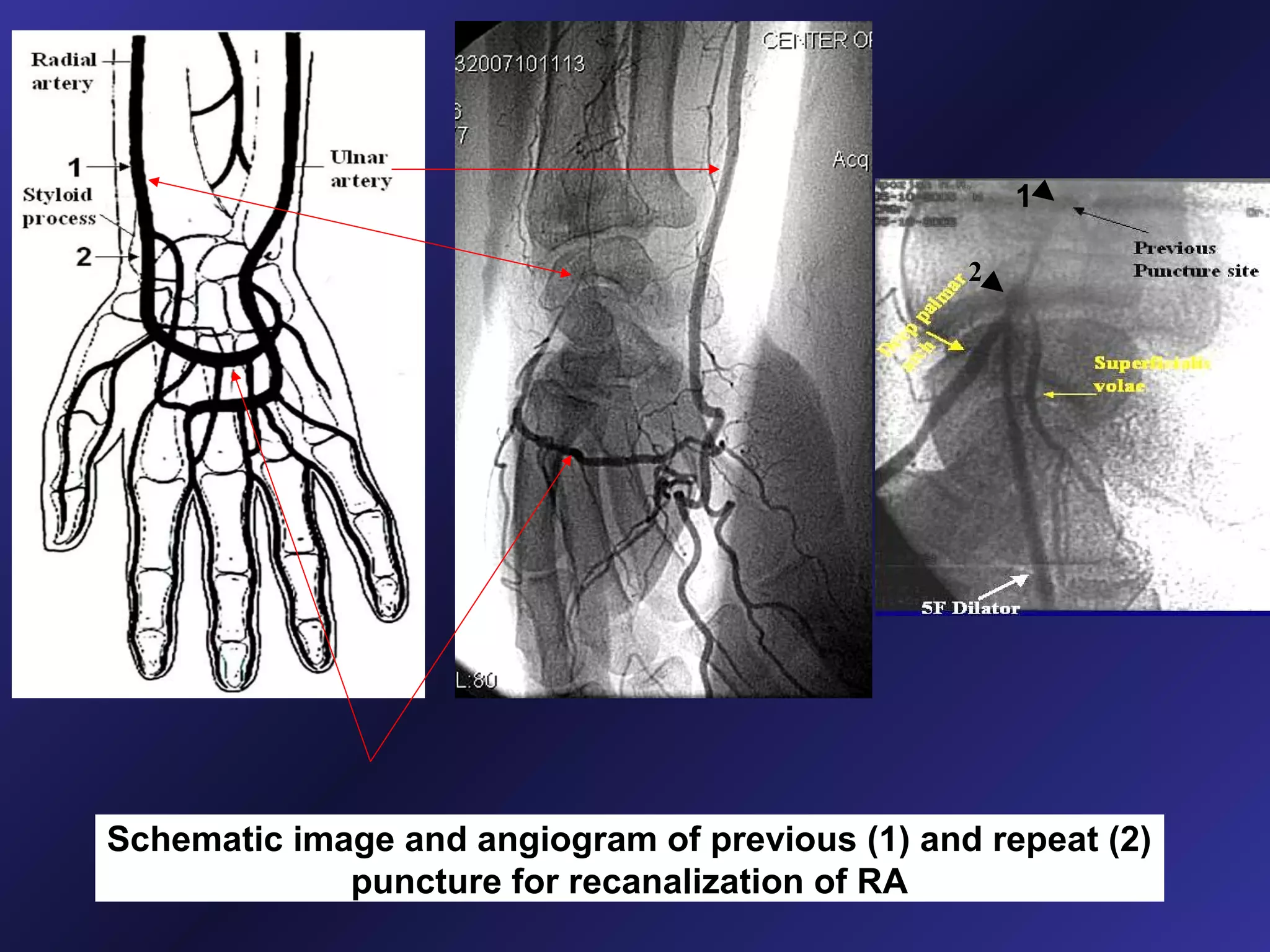
1
2

Schematic image and angiogram of previous (1) and repeat (2)
puncture for recanalization of RA
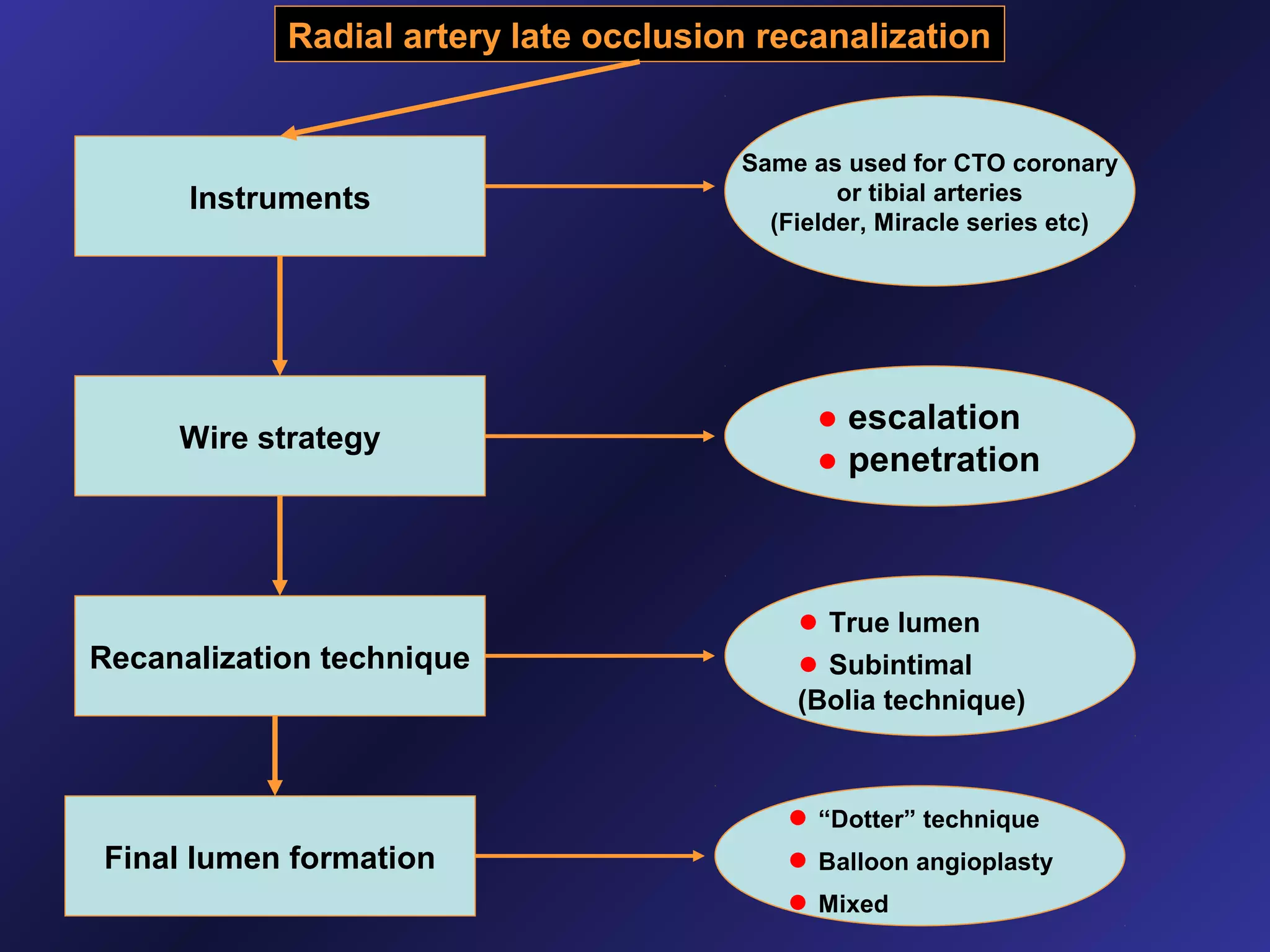
Radial artery late occlusion recanalization

Instruments

Same as used for CTO coronary
or tibial arteries
(Fielder, Miracle series etc)

Wire strategy

● escalation
● penetration

Recanalization technique

● True lumen
● Subintimal
(Bolia technique)

Final lumen formation

● “Dotter” technique
● Balloon angioplasty
● Mixed
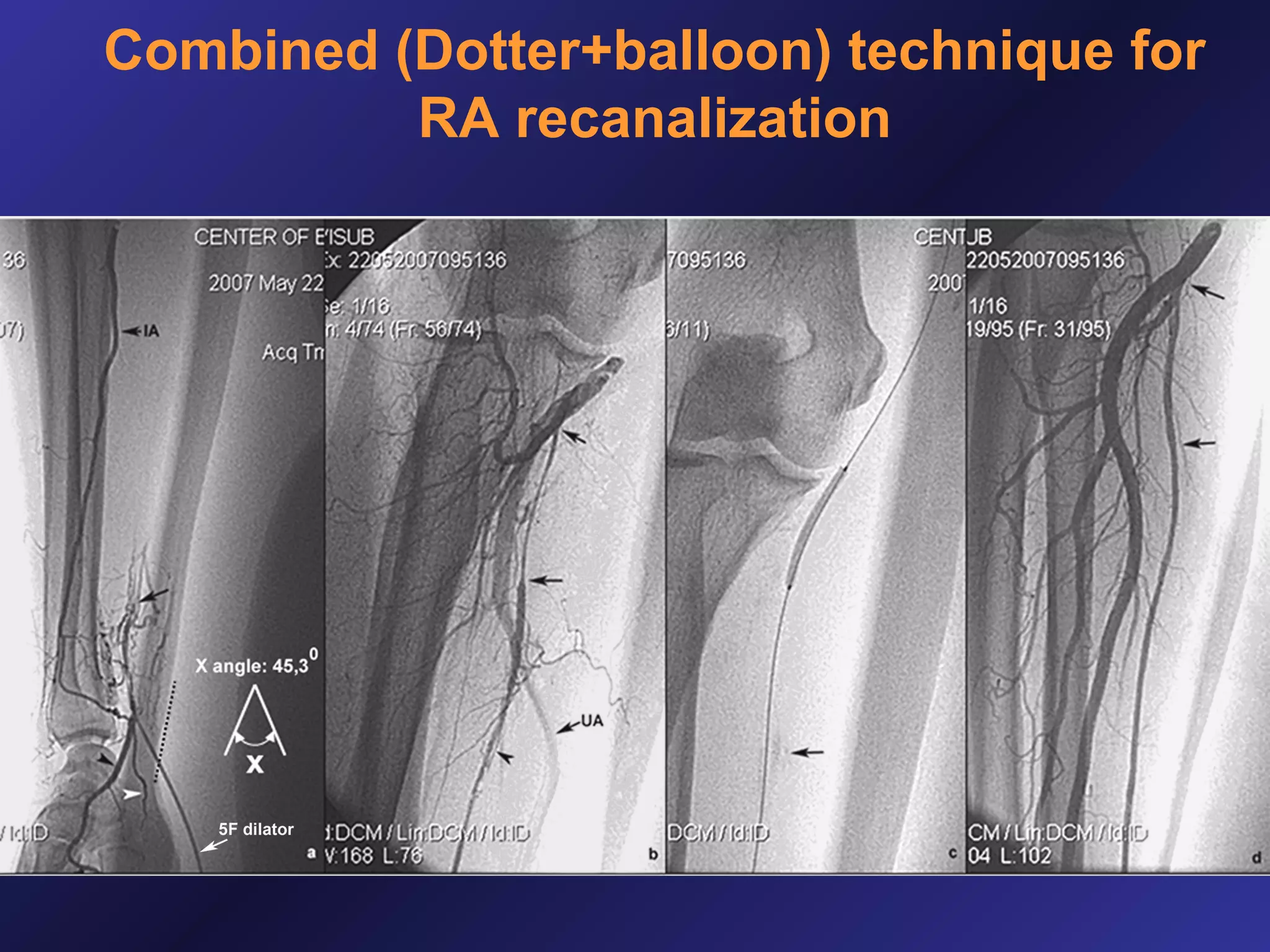
Combined (Dotter+balloon) technique for
RA recanalization
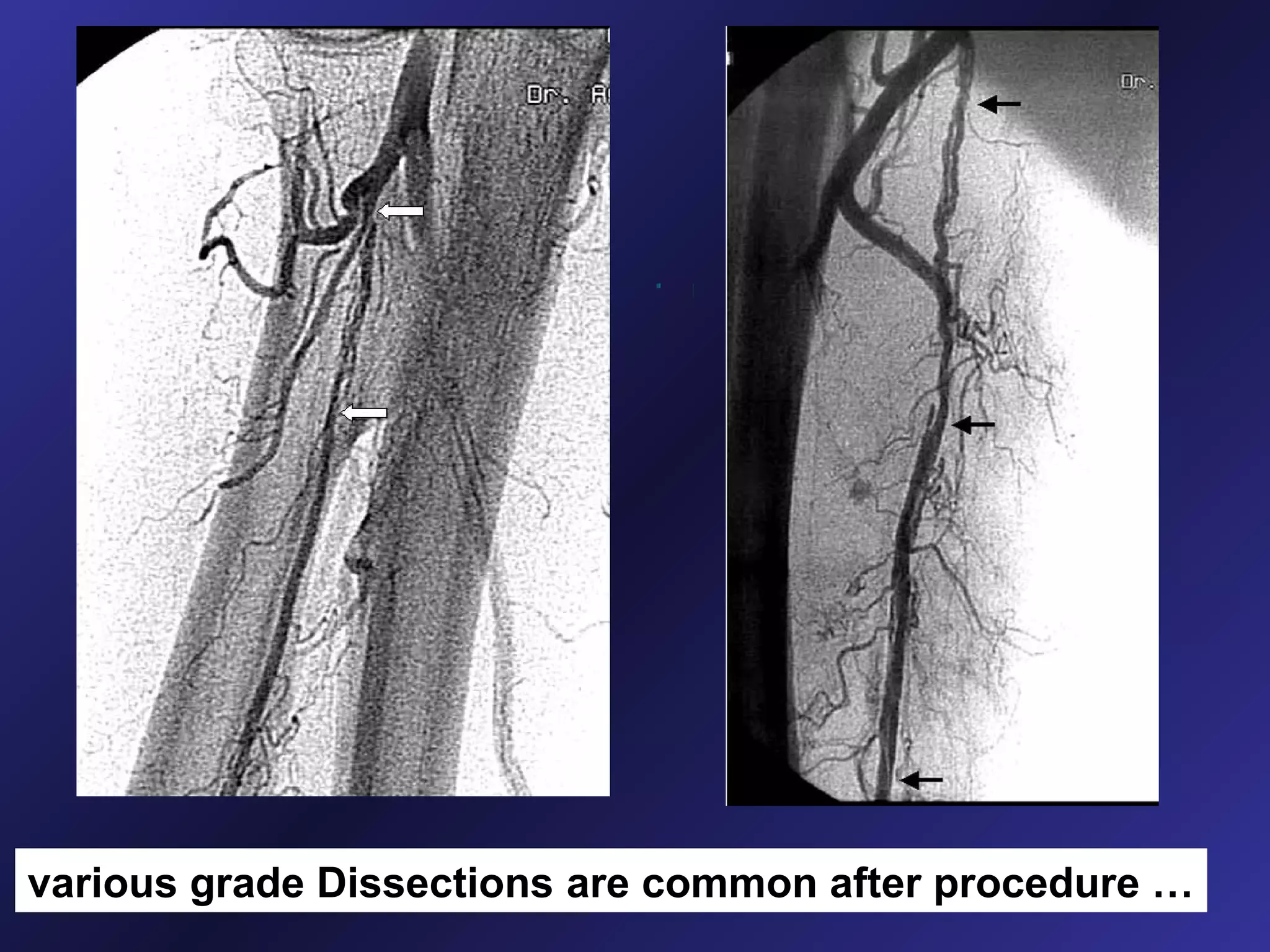
various grade Dissections are common after procedure …
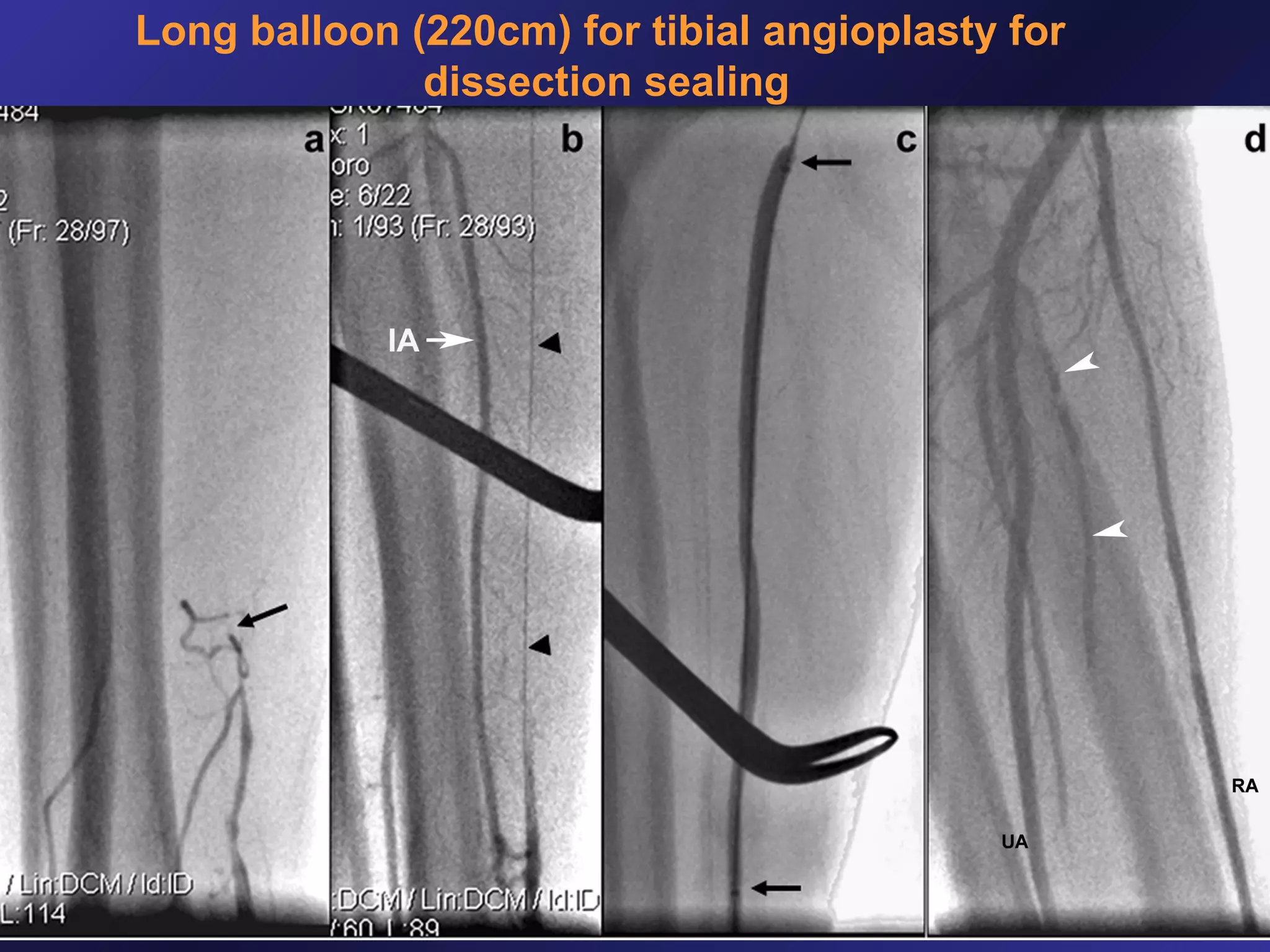
Long balloon (220cm) for tibial angioplasty for
dissection sealing
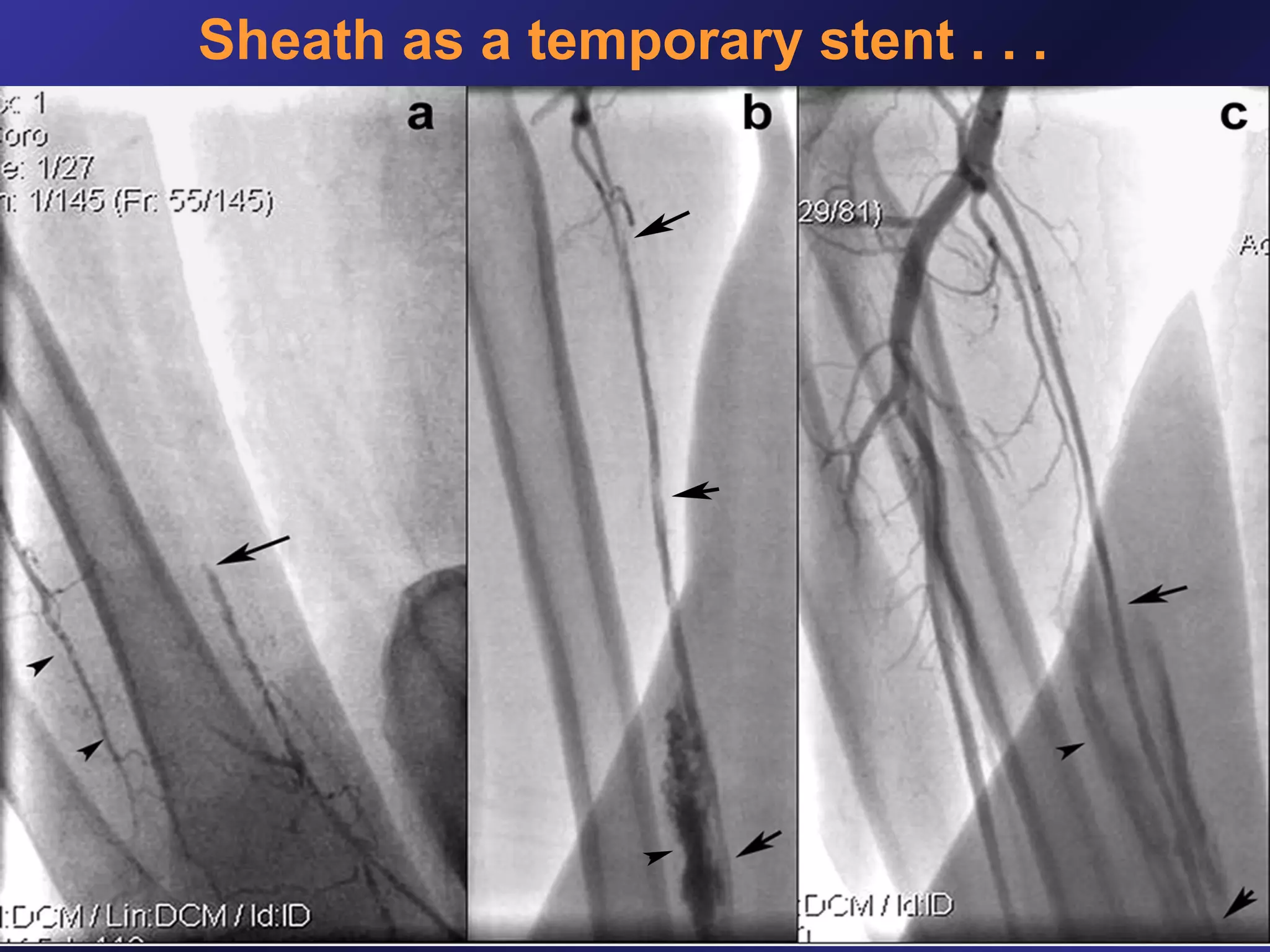
Sheath as a temporary stent . . .
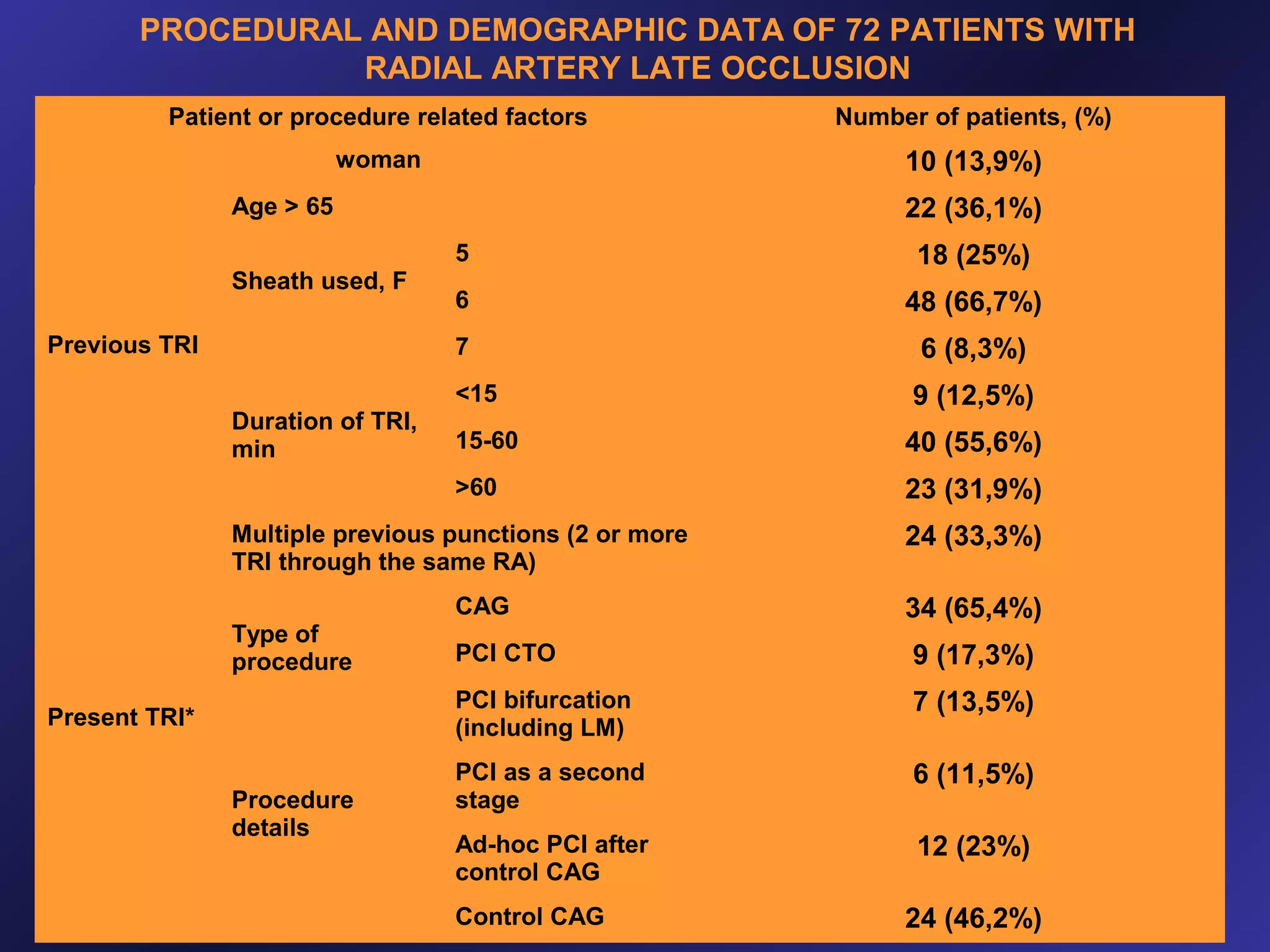
PROCEDURAL AND DEMOGRAPHIC DATA OF 72 PATIENTS WITH
RADIAL ARTERY LATE OCCLUSION
Patient or procedure related factors

Number of patients, (%)

woman

10 (13,9%)
22 (36,1%)

Age > 65
5

Previous TRI

6

48 (66,7%)

7

Sheath used, F

18 (25%)
6 (8,3%)

<15
Duration of TRI,
min

9 (12,5%)

15-60

40 (55,6%)

>60

23 (31,9%)

Multiple previous punctions (2 or more
TRI through the same RA)
CAG
Type of
procedure

24 (33,3%)
34 (65,4%)

Procedure
details

9 (17,3%)

PCI bifurcation
(including LM)

Present TRI*

PCI CTO

7 (13,5%)

PCI as a second
stage

6 (11,5%)

Ad-hoc PCI after
control CAG

12 (23%)

Control CAG

24 (46,2%)
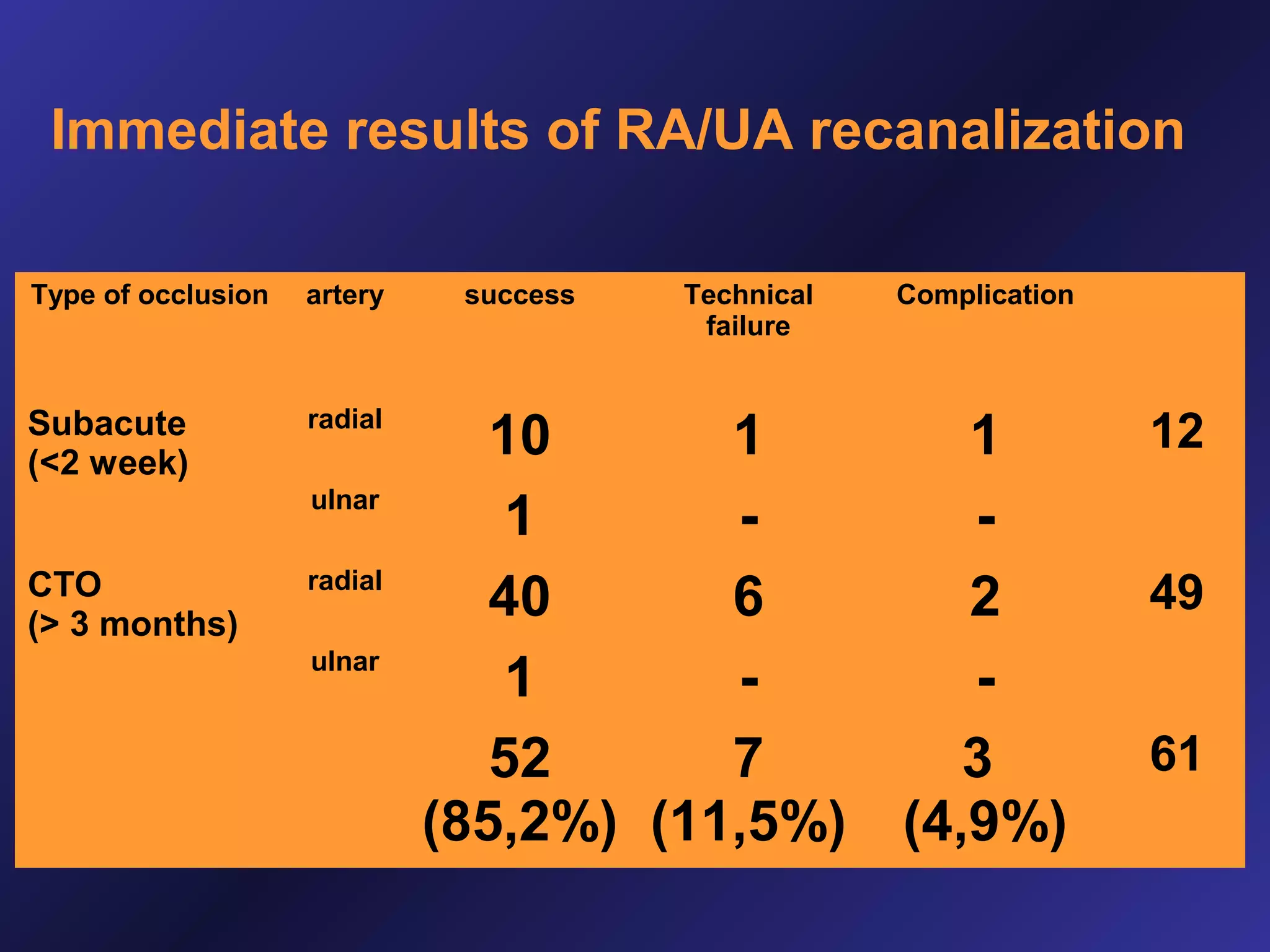
Immediate results of RA/UA recanalization
Type of occlusion

artery

Subacute
(<2 week)

radial
ulnar

CTO
(> 3 months)

radial
ulnar

success

Technical
failure

Complication

10
1
1
1
40
6
2
1
52
7
3
(85,2%) (11,5%) (4,9%)

12
49
61
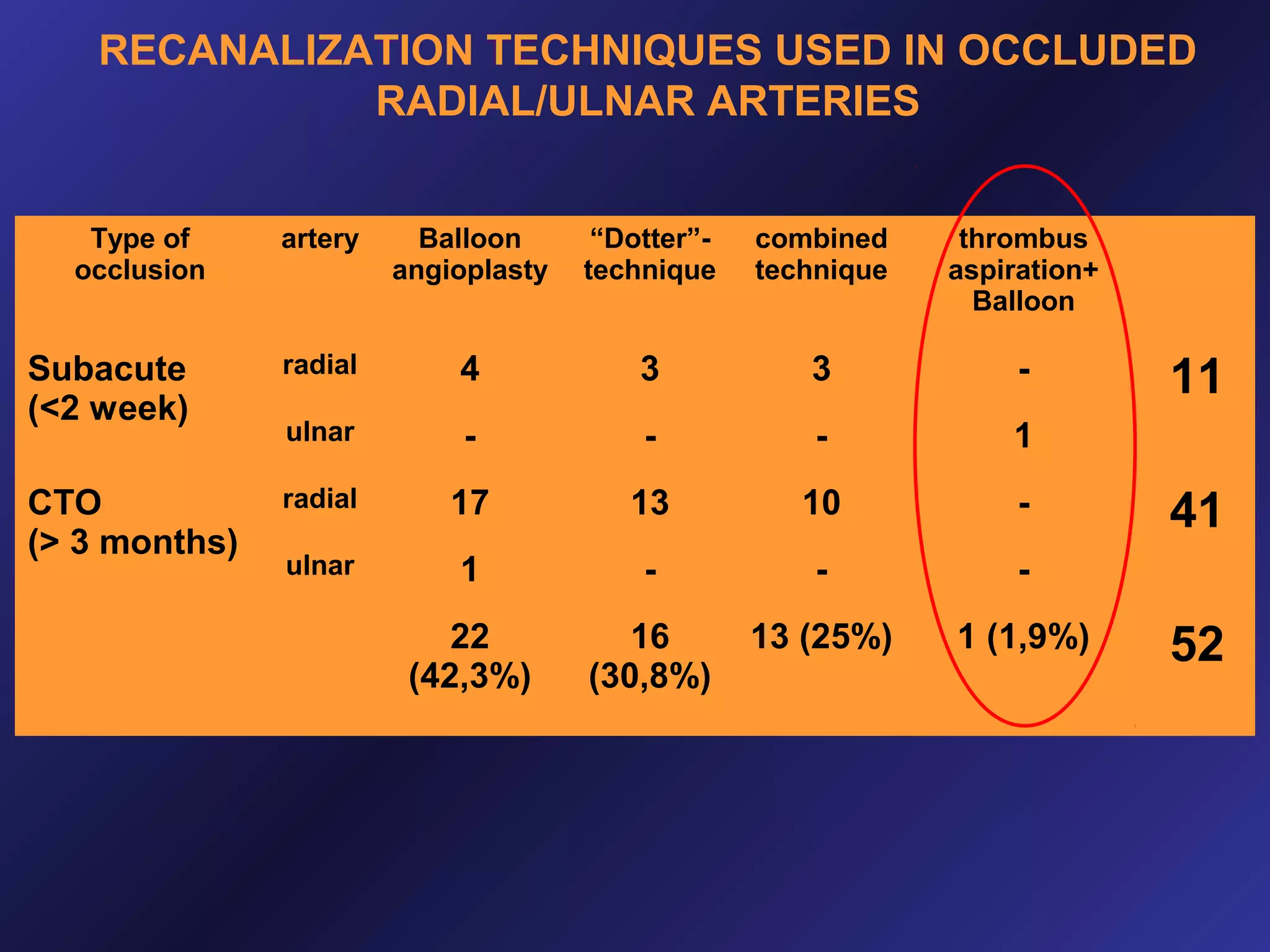
RECANALIZATION TECHNIQUES USED IN OCCLUDED
RADIAL/ULNAR ARTERIES
Type of
occlusion

artery

Balloon
angioplasty

“Dotter”technique

combined
technique

thrombus
aspiration+
Balloon

Subacute
(<2 week)

radial

4

3

3

-

ulnar

-

-

-

1

CTO
(> 3 months)

radial

17

13

10

-

ulnar

1

-

-

-

22
(42,3%)

16
(30,8%)

13 (25%)

1 (1,9%)

11
41
52
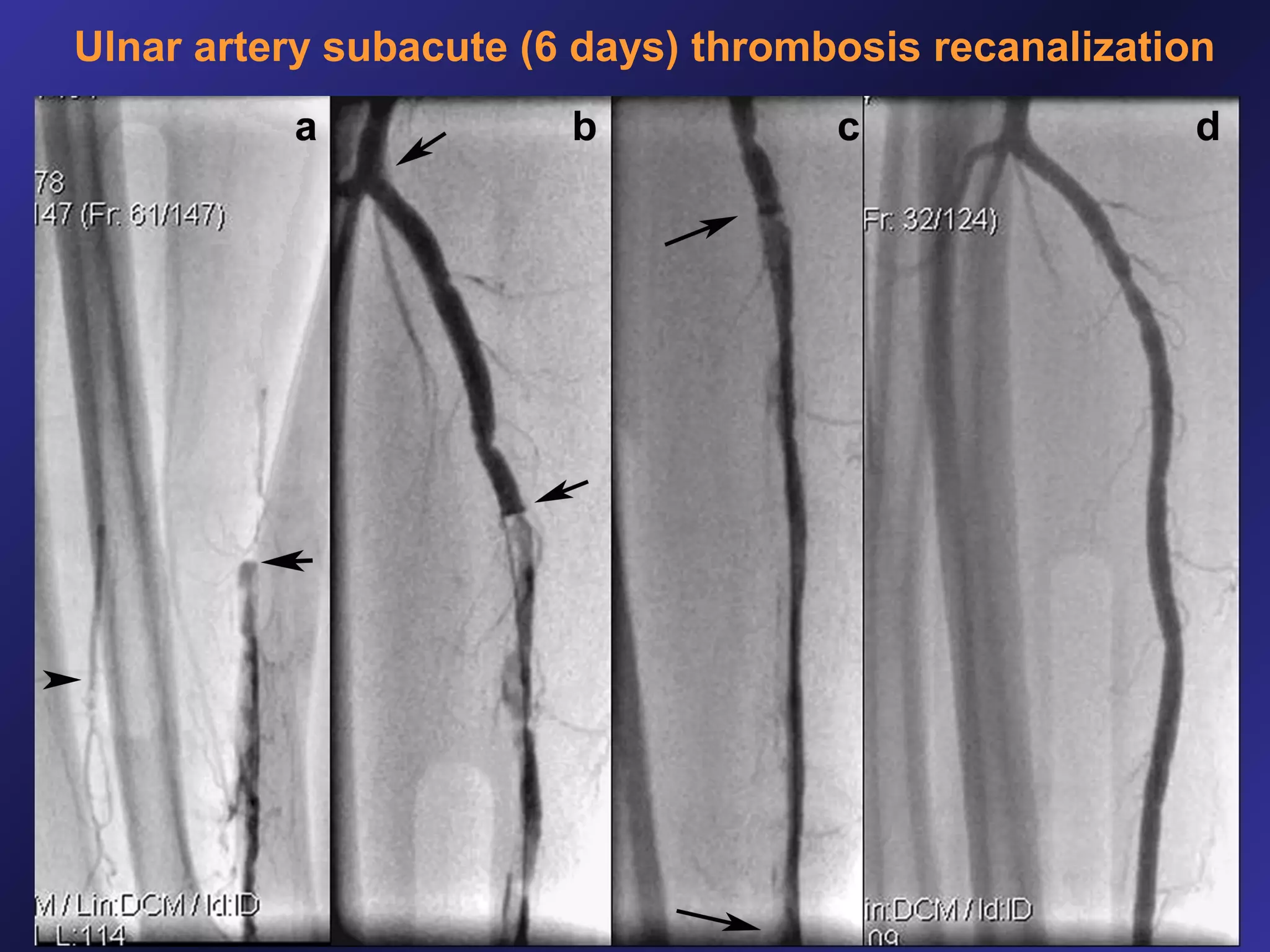
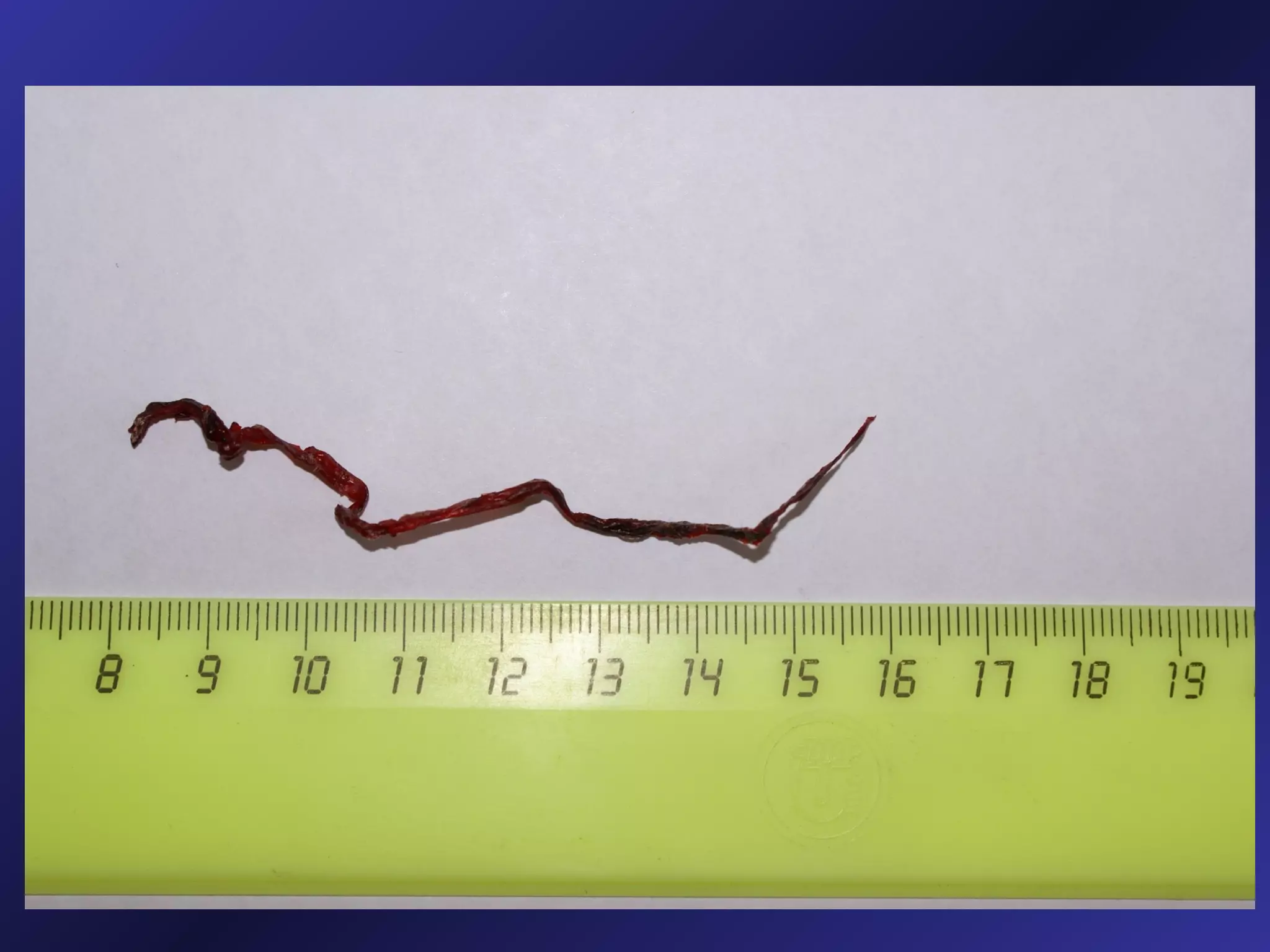
Ulnar artery subacute (6 days) thrombosis recanalization
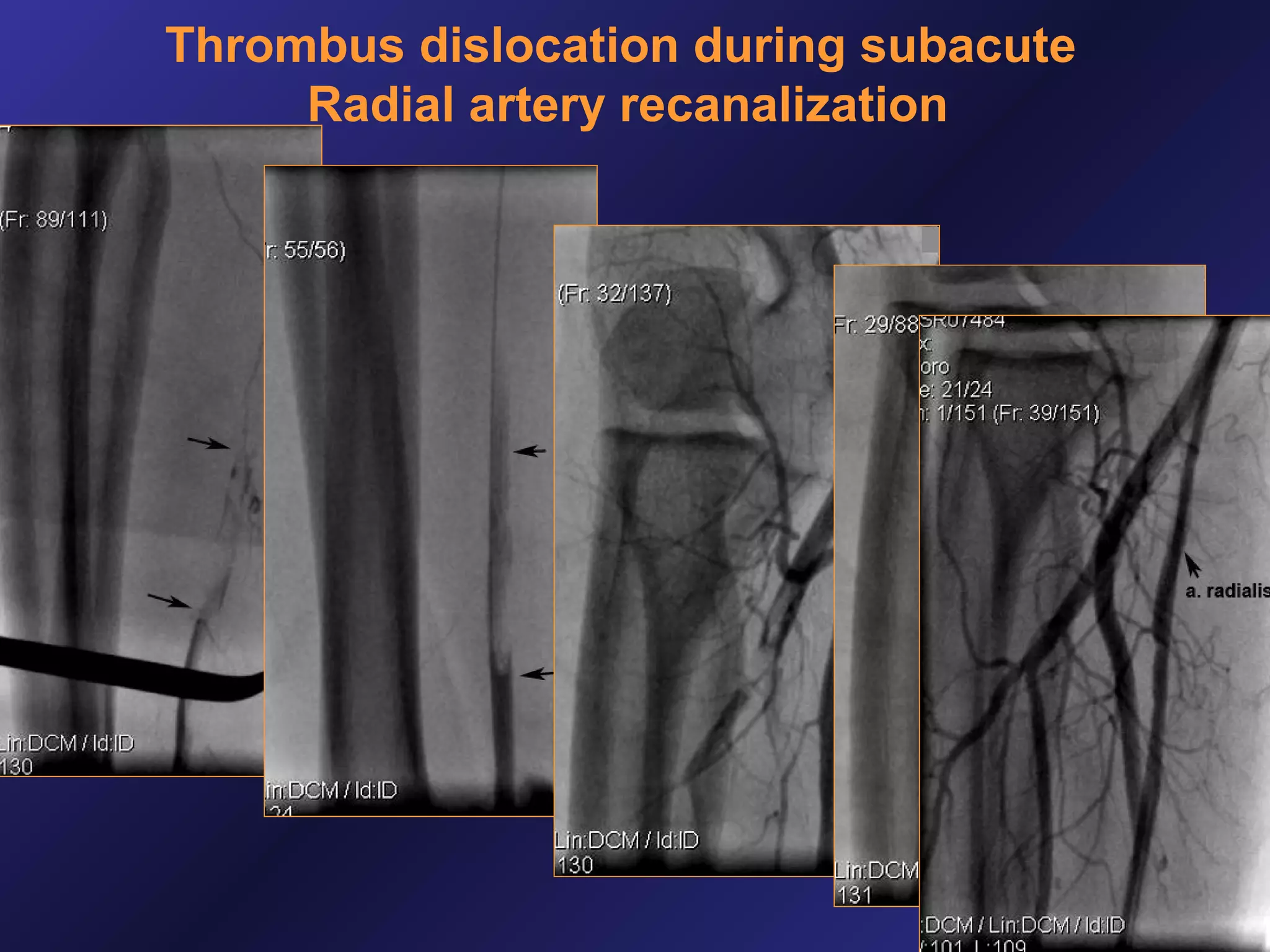
Thrombus dislocation during subacute
Radial artery recanalization
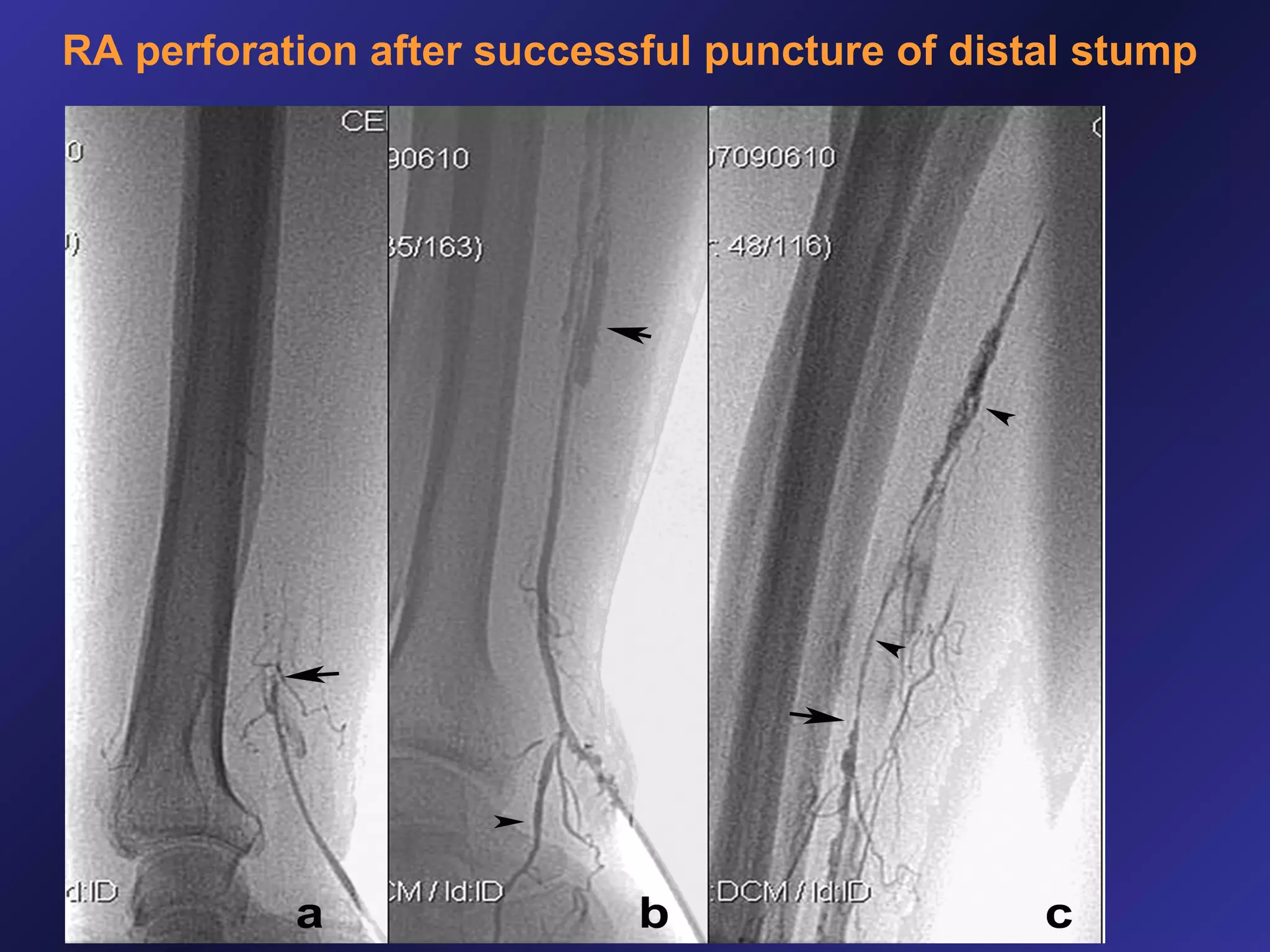
RA perforation after successful puncture of distal stump
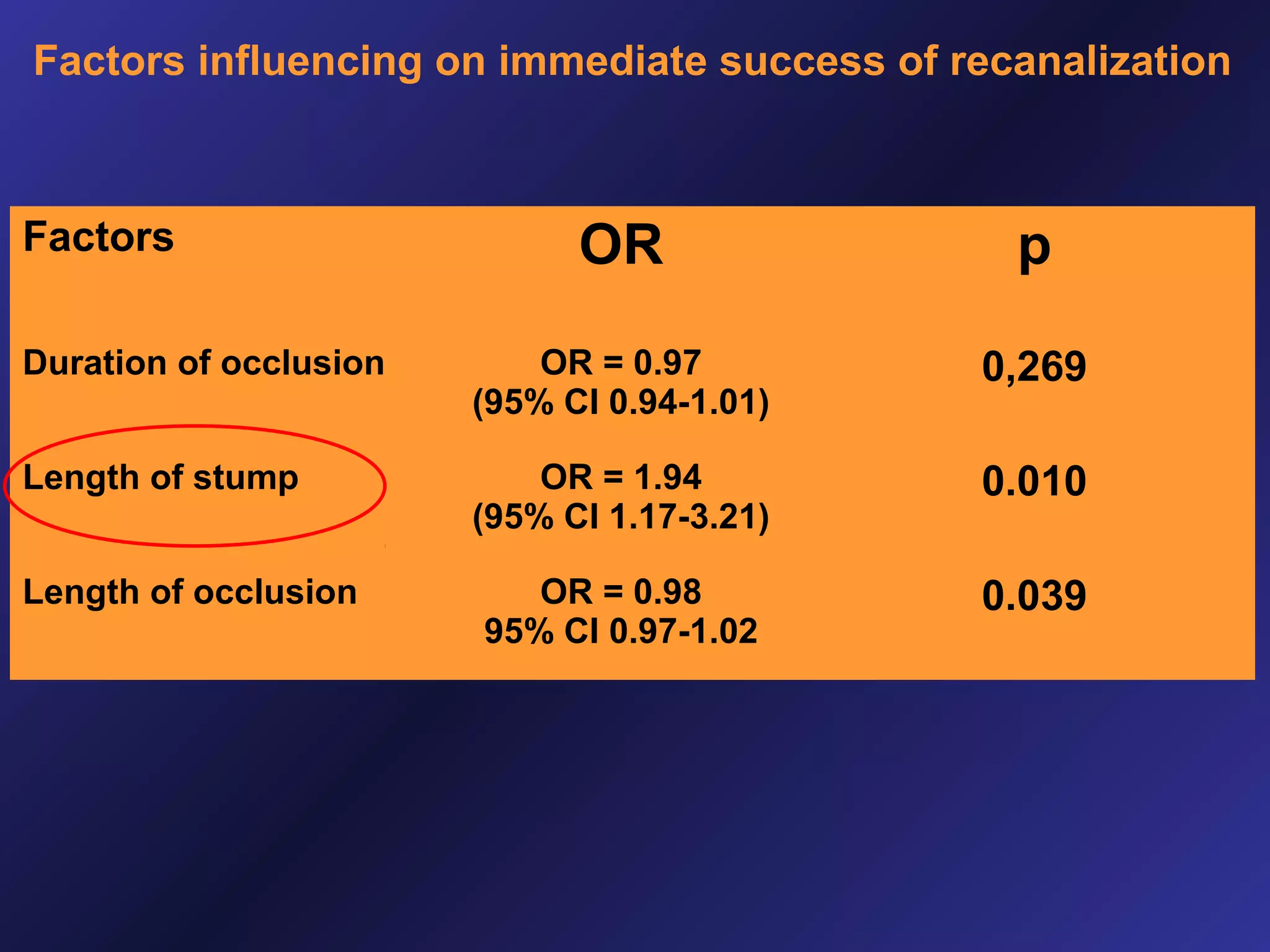
Factors influencing on immediate success of recanalization

Factors

OR

p

Duration of occlusion

OR = 0.97
(95% CI 0.94-1.01)

0,269

Length of stump

OR = 1.94
(95% CI 1.17-3.21)

0.010

OR = 0.98
95% CI 0.97-1.02

0.039

Length of occlusion
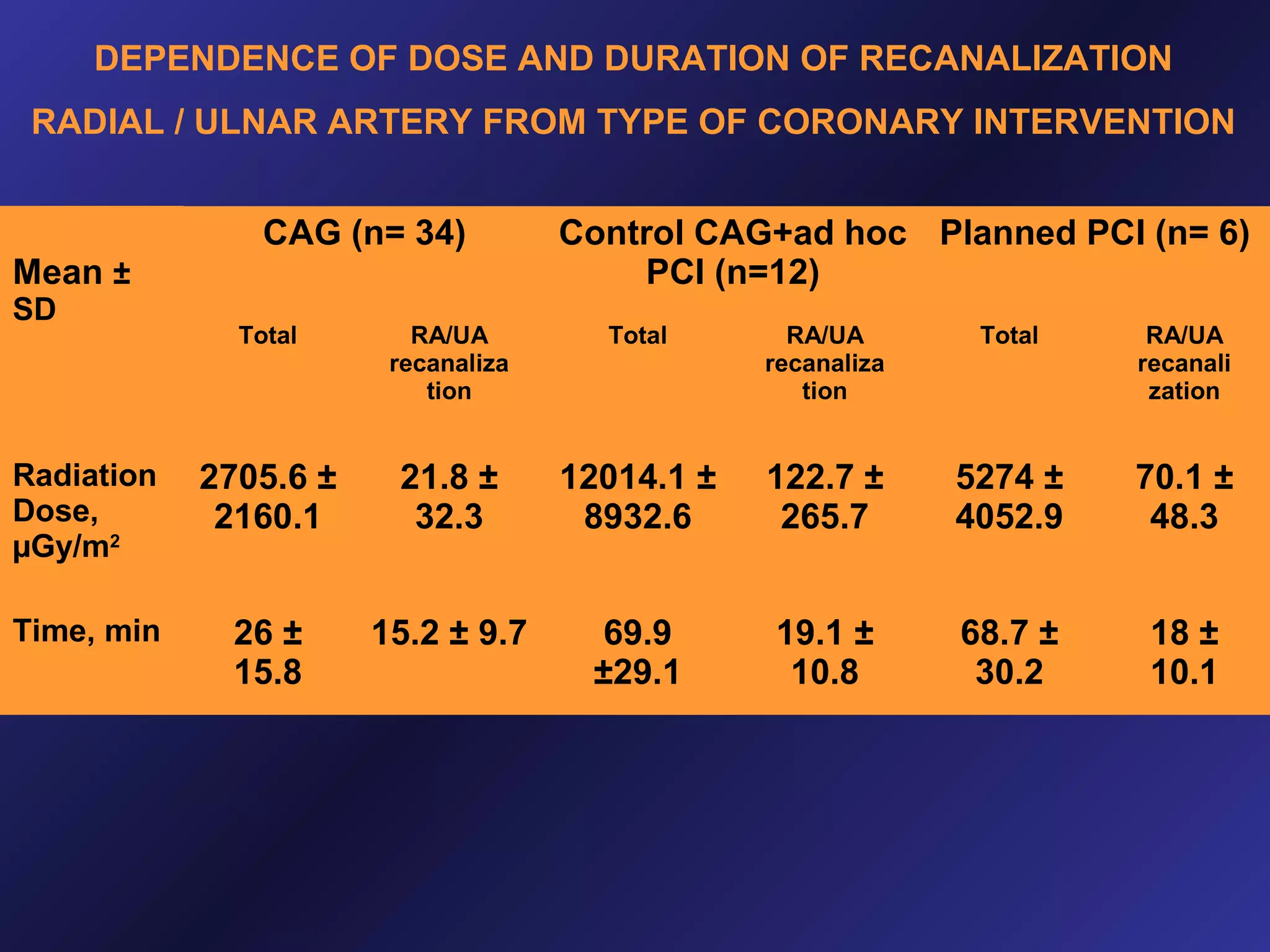
DEPENDENCE OF DOSE AND DURATION OF RECANALIZATION
RADIAL / ULNAR ARTERY FROM TYPE OF CORONARY INTERVENTION

Mean ±
SD

CAG (n= 34)

Control CAG+ad hoc Planned PCI (n= 6)
PCI (n=12)

Total

RA/UA
recanaliza
tion

Total

RA/UA
recanaliza
tion

Total

RA/UA
recanali
zation

Radiation
Dose,
µGy/m2

2705.6 ±
2160.1

21.8 ±
32.3

12014.1 ±
8932.6

122.7 ±
265.7

5274 ±
4052.9

70.1 ±
48.3

Time, min

26 ±
15.8

15.2 ± 9.7

69.9
±29.1

19.1 ±
10.8

68.7 ±
30.2

18 ±
10.1
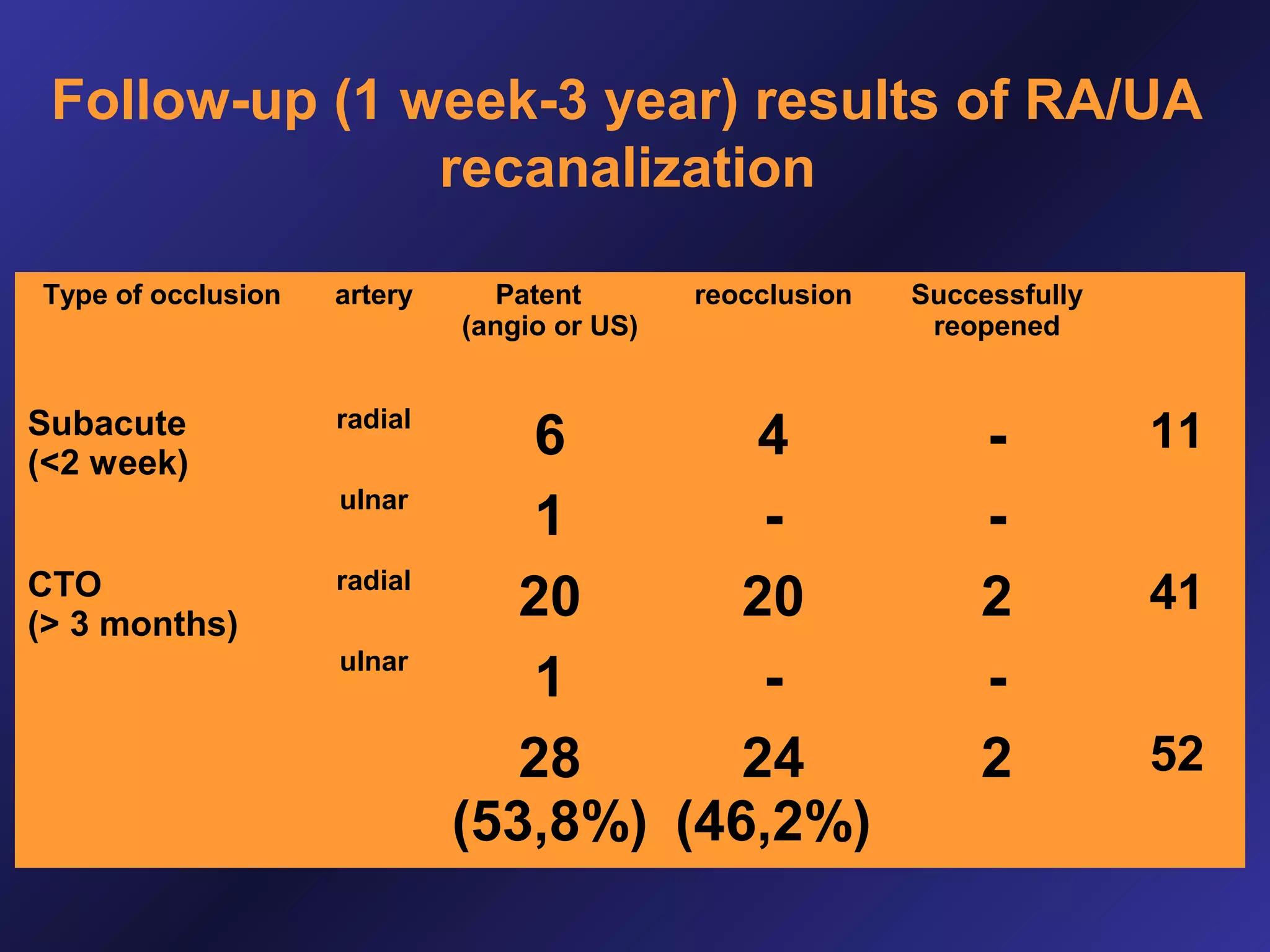
Follow-up (1 week-3 year) results of RA/UA
recanalization
Type of occlusion

Subacute
(<2 week)

artery

radial
ulnar

CTO
(> 3 months)

radial
ulnar

Patent
(angio or US)

reocclusion

6
4
1
20
20
1
28
24
(53,8%) (46,2%)

Successfully
reopened

2
2

11
41
52
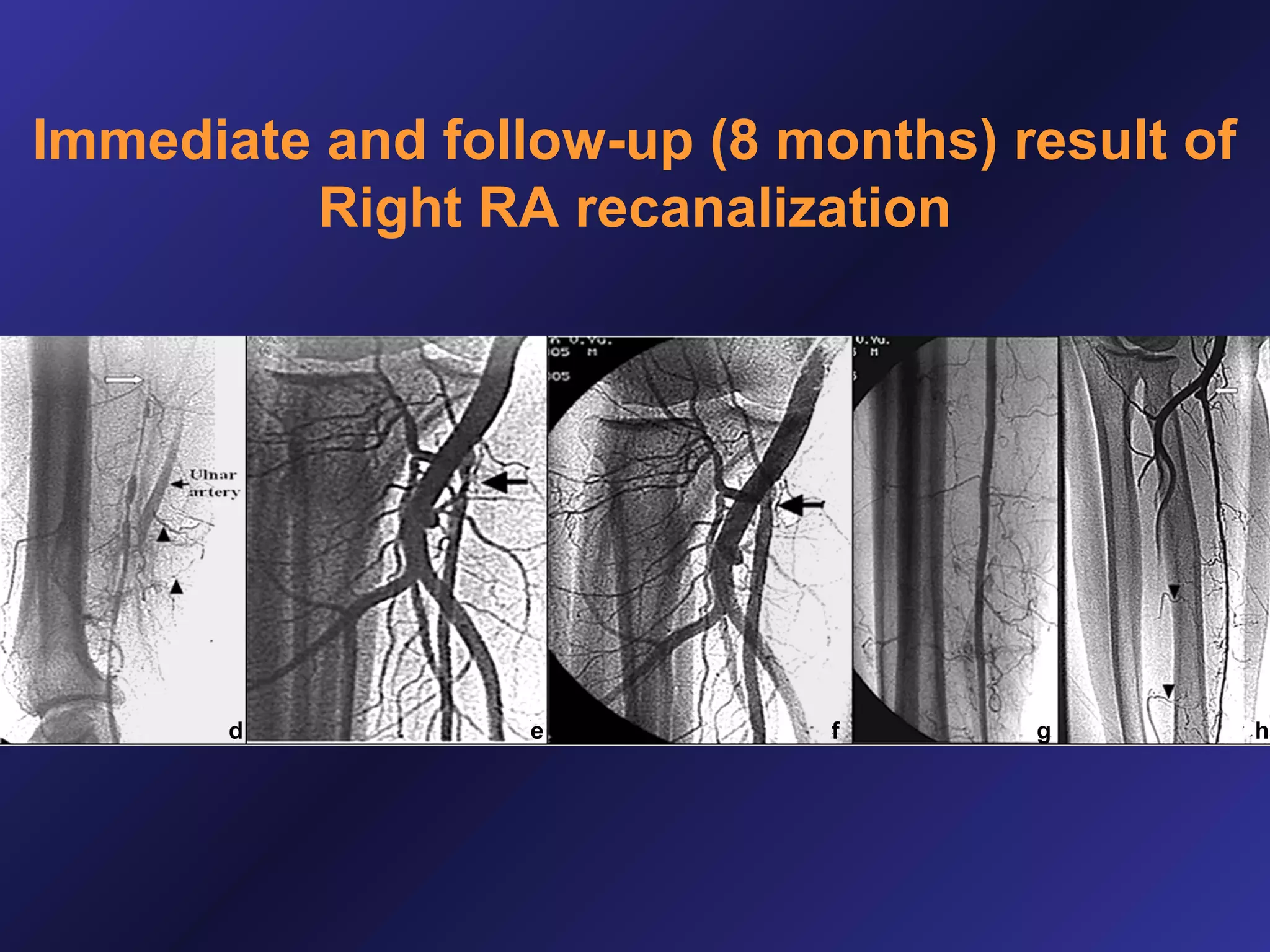
Immediate and follow-up (8 months) result of
Right RA recanalization
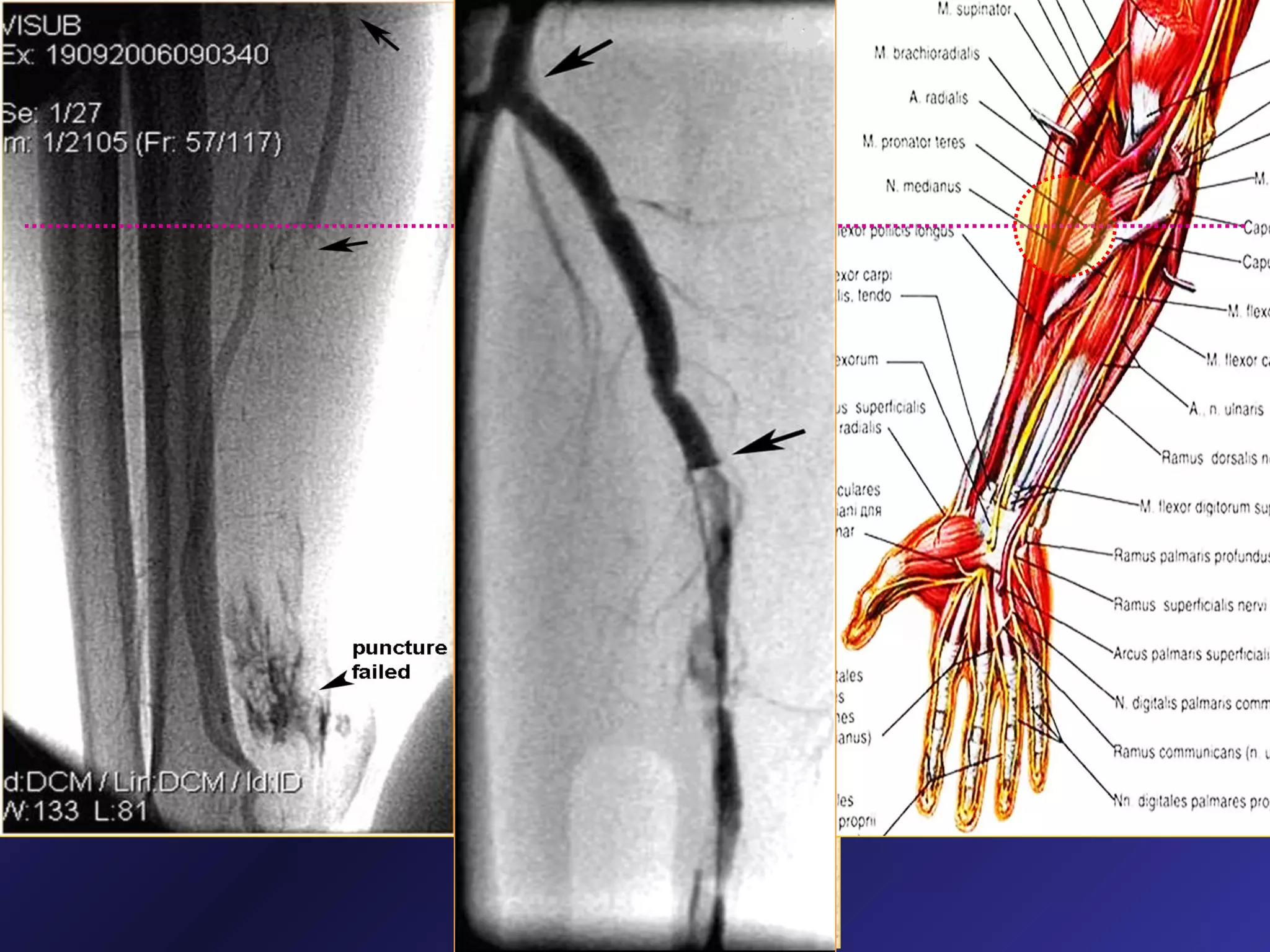
Proximal (“high”) puncture of
occluded radial artery
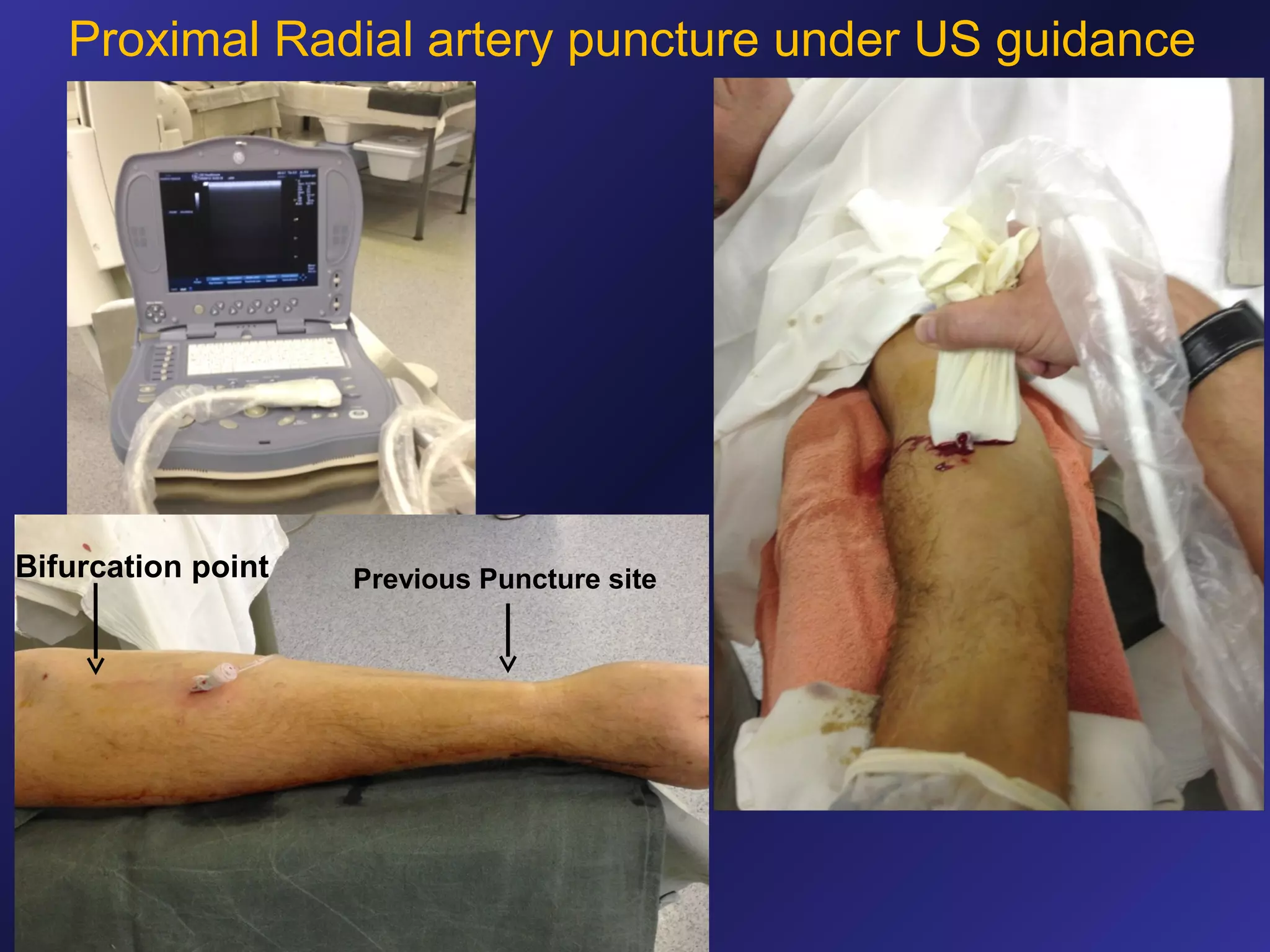
Proximal Radial artery puncture under US guidance

Bifurcation point

Previous Puncture site
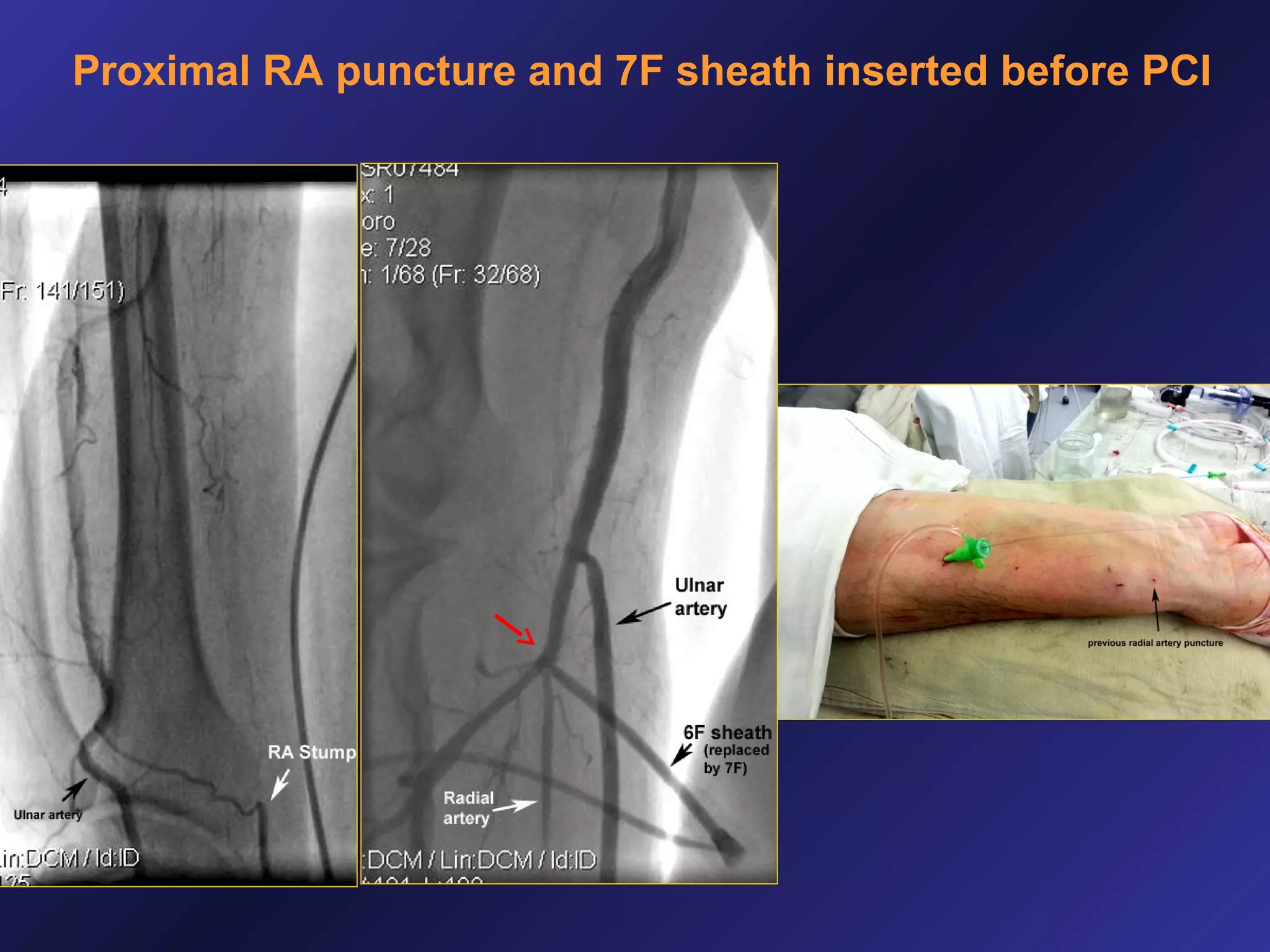
Proximal RA puncture and 7F sheath inserted before PCI
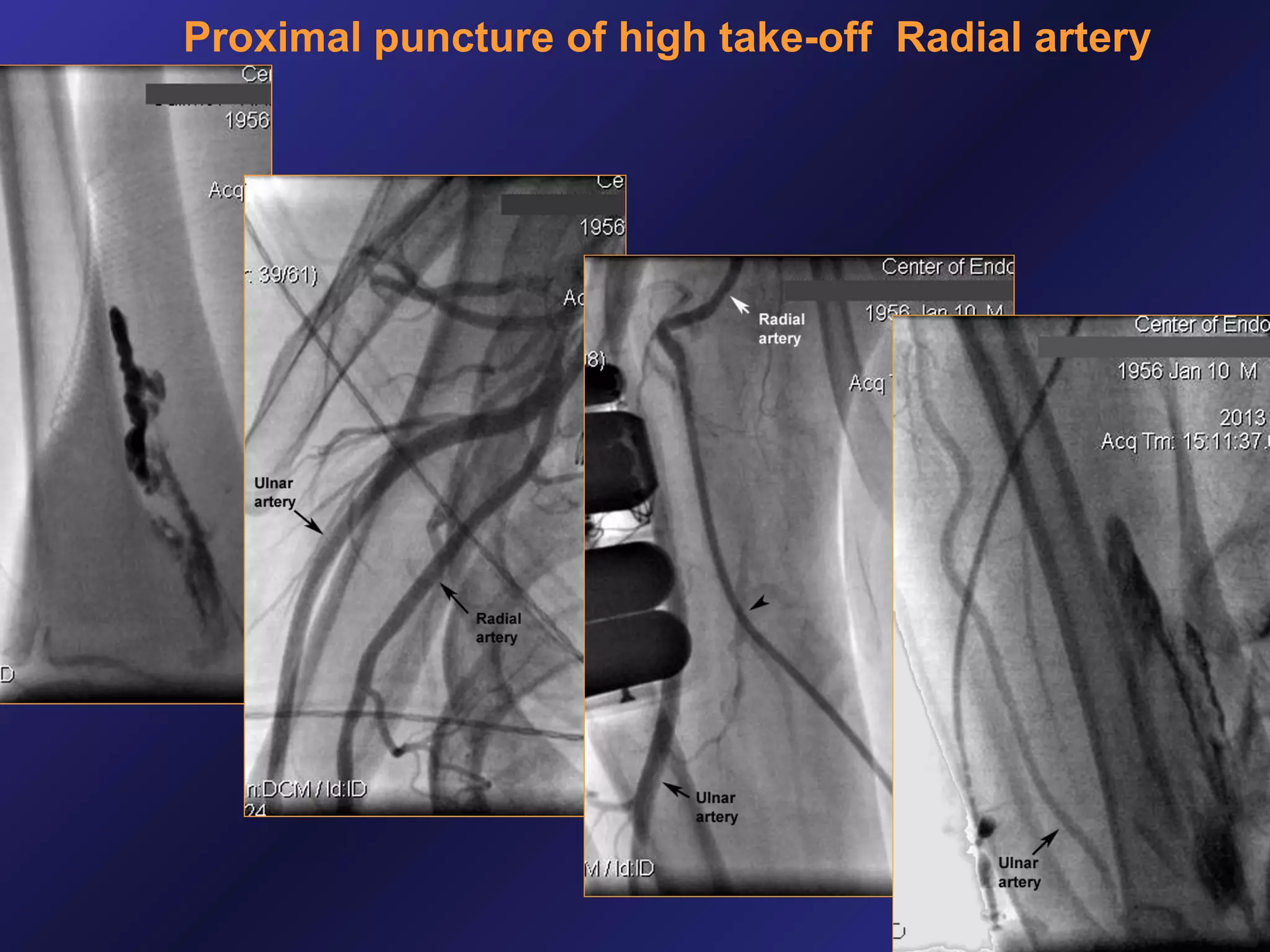
Proximal puncture of high take-off Radial artery
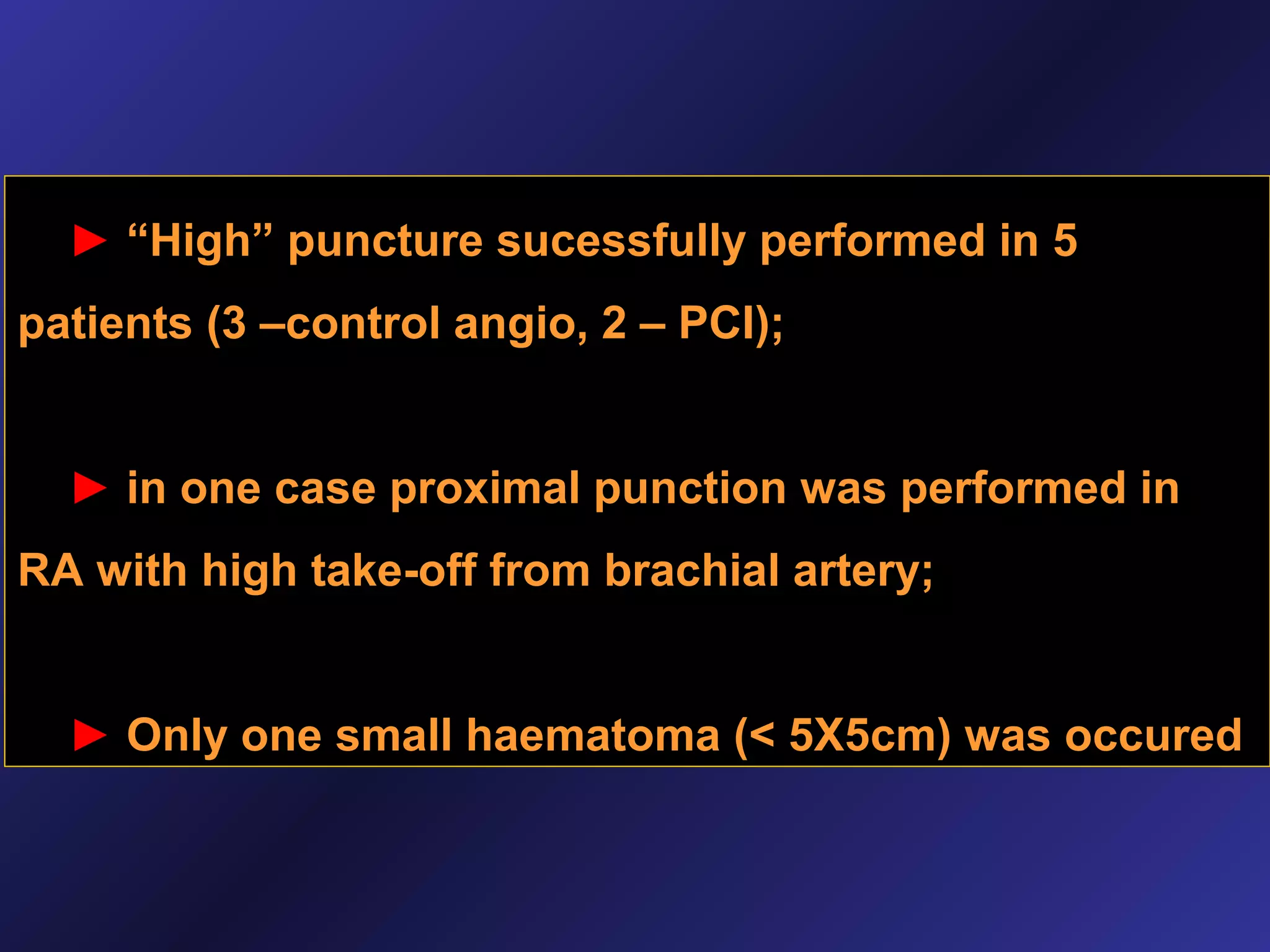
► “High” puncture sucessfully performed in 5
patients (3 –control angio, 2 – PCI);
► in one case proximal punction was performed in
RA with high take-off from brachial artery;
► Only one small haematoma (< 5X5cm) was occured
CONCLUSIONS
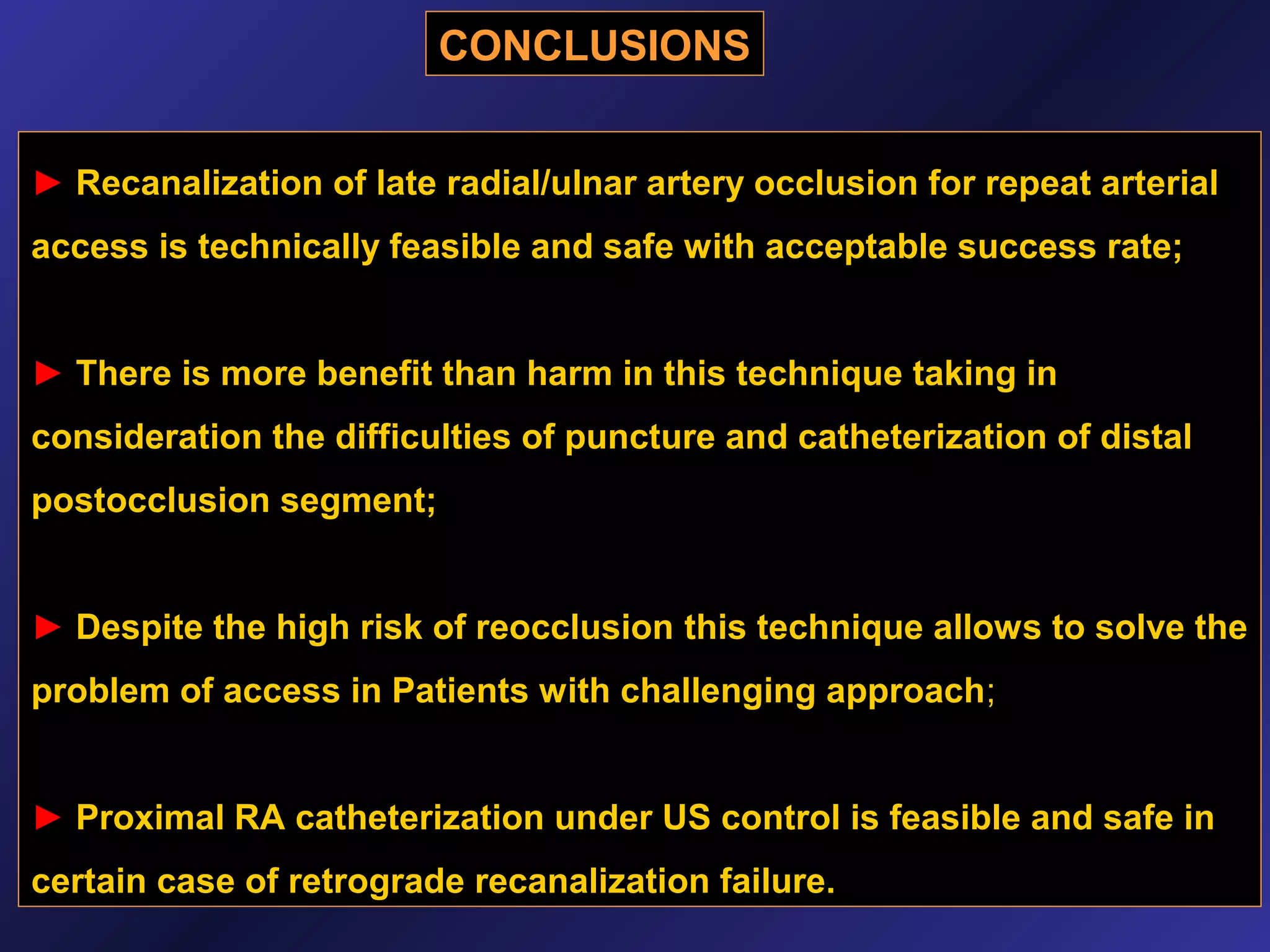
► Recanalization of late radial/ulnar artery occlusion for repeat arterial
access is technically feasible and safe with acceptable success rate;
► There is more benefit than harm in this technique taking in
consideration the difficulties of puncture and catheterization of distal
postocclusion segment;
► Despite the high risk of reocclusion this technique allows to solve the
problem of access in Patients with challenging approach;
► Proximal RA catheterization under US control is feasible and safe in
certain case of retrograde recanalization failure.

Babunashvili AM - AIMRADIAL 2013 - Radial recanalization

  • 1.
    HOW CAN WEMANAGE RADIAL ARTERY LATE OCCLUSION: RECANALIZATION OF OCCLUSION OR PROXIMAL “HIGH” PUNCTURE OF RADIAL ARTERY Avtandil M. Babunashvili Center of Endosurgery, Moscow, Russia
  • 2.
    Disclosure: Avtandil M.Babunashvili, MD I have no relevant financial interests to disclose
  • 3.
    Background: _______________________________________________ Transradial interventions (TRI)are associated with certain risk of radial artery (RA) occlusion, limiting The possibility of re-intervention through the same access site.
  • 4.
    Study population Occlusion ofthe RA/UA was detected in 72 cases (3.7%) of the 1972 repeat transradial or transulnar interventions for diagnostic and interventional procedures from January 2005 to November 2012. Methods In case of late RA/UA occlusion if the distal stump was palpable pulse, puncture and cannulation of the postocclusion segment, retrograde RA/UA recanalization and angioplasty was performed using the "Dottertechnique” or plain balloon dilatation or mixed technique.
  • 5.
    1 2 Schematic image andangiogram of previous (1) and repeat (2) puncture for recanalization of RA
  • 6.
    Radial artery lateocclusion recanalization Instruments Same as used for CTO coronary or tibial arteries (Fielder, Miracle series etc) Wire strategy ● escalation ● penetration Recanalization technique ● True lumen ● Subintimal (Bolia technique) Final lumen formation ● “Dotter” technique ● Balloon angioplasty ● Mixed
  • 7.
  • 8.
    various grade Dissectionsare common after procedure …
  • 9.
    Long balloon (220cm)for tibial angioplasty for dissection sealing
  • 10.
    Sheath as atemporary stent . . .
  • 11.
    PROCEDURAL AND DEMOGRAPHICDATA OF 72 PATIENTS WITH RADIAL ARTERY LATE OCCLUSION Patient or procedure related factors Number of patients, (%) woman 10 (13,9%) 22 (36,1%) Age > 65 5 Previous TRI 6 48 (66,7%) 7 Sheath used, F 18 (25%) 6 (8,3%) <15 Duration of TRI, min 9 (12,5%) 15-60 40 (55,6%) >60 23 (31,9%) Multiple previous punctions (2 or more TRI through the same RA) CAG Type of procedure 24 (33,3%) 34 (65,4%) Procedure details 9 (17,3%) PCI bifurcation (including LM) Present TRI* PCI CTO 7 (13,5%) PCI as a second stage 6 (11,5%) Ad-hoc PCI after control CAG 12 (23%) Control CAG 24 (46,2%)
  • 12.
    Immediate results ofRA/UA recanalization Type of occlusion artery Subacute (<2 week) radial ulnar CTO (> 3 months) radial ulnar success Technical failure Complication 10 1 1 1 40 6 2 1 52 7 3 (85,2%) (11,5%) (4,9%) 12 49 61
  • 13.
    RECANALIZATION TECHNIQUES USEDIN OCCLUDED RADIAL/ULNAR ARTERIES Type of occlusion artery Balloon angioplasty “Dotter”technique combined technique thrombus aspiration+ Balloon Subacute (<2 week) radial 4 3 3 - ulnar - - - 1 CTO (> 3 months) radial 17 13 10 - ulnar 1 - - - 22 (42,3%) 16 (30,8%) 13 (25%) 1 (1,9%) 11 41 52
  • 14.
    Ulnar artery subacute(6 days) thrombosis recanalization
  • 16.
    Thrombus dislocation duringsubacute Radial artery recanalization
  • 17.
    RA perforation aftersuccessful puncture of distal stump
  • 18.
    Factors influencing onimmediate success of recanalization Factors OR p Duration of occlusion OR = 0.97 (95% CI 0.94-1.01) 0,269 Length of stump OR = 1.94 (95% CI 1.17-3.21) 0.010 OR = 0.98 95% CI 0.97-1.02 0.039 Length of occlusion
  • 19.
    DEPENDENCE OF DOSEAND DURATION OF RECANALIZATION RADIAL / ULNAR ARTERY FROM TYPE OF CORONARY INTERVENTION Mean ± SD CAG (n= 34) Control CAG+ad hoc Planned PCI (n= 6) PCI (n=12) Total RA/UA recanaliza tion Total RA/UA recanaliza tion Total RA/UA recanali zation Radiation Dose, µGy/m2 2705.6 ± 2160.1 21.8 ± 32.3 12014.1 ± 8932.6 122.7 ± 265.7 5274 ± 4052.9 70.1 ± 48.3 Time, min 26 ± 15.8 15.2 ± 9.7 69.9 ±29.1 19.1 ± 10.8 68.7 ± 30.2 18 ± 10.1
  • 20.
    Follow-up (1 week-3year) results of RA/UA recanalization Type of occlusion Subacute (<2 week) artery radial ulnar CTO (> 3 months) radial ulnar Patent (angio or US) reocclusion 6 4 1 20 20 1 28 24 (53,8%) (46,2%) Successfully reopened 2 2 11 41 52
  • 21.
    Immediate and follow-up(8 months) result of Right RA recanalization
  • 22.
    Proximal (“high”) punctureof occluded radial artery
  • 24.
    Proximal Radial arterypuncture under US guidance Bifurcation point Previous Puncture site
  • 25.
    Proximal RA punctureand 7F sheath inserted before PCI
  • 26.
    Proximal puncture ofhigh take-off Radial artery
  • 27.
    ► “High” puncturesucessfully performed in 5 patients (3 –control angio, 2 – PCI); ► in one case proximal punction was performed in RA with high take-off from brachial artery; ► Only one small haematoma (< 5X5cm) was occured
  • 28.
    CONCLUSIONS ► Recanalization oflate radial/ulnar artery occlusion for repeat arterial access is technically feasible and safe with acceptable success rate; ► There is more benefit than harm in this technique taking in consideration the difficulties of puncture and catheterization of distal postocclusion segment; ► Despite the high risk of reocclusion this technique allows to solve the problem of access in Patients with challenging approach; ► Proximal RA catheterization under US control is feasible and safe in certain case of retrograde recanalization failure.