HORMONES
& FERTILITY
5 Hormonal
Aspects of
Infertility
CDC reports 22% of women
have trouble getting pregnant
Causes include:
- 21% anovulation
- 14% tubal damage
- 6% endometriosis
Overall, 28%
of cases were
unexplained
| www.zrtlab.com
There are 5 key hormonal
aspects to infertility
1. Ovarian insufficiency – as follicles
fall, estrogen is still produced but
ovulation does not occur
2. Luteal phase deficiency – ovulation
may occur but progesterone levels
are insufficient to sustain pregnancy
3. PCOS – polycystic ovarian syndrome
most common endocrine disorder
in women of reproductive age
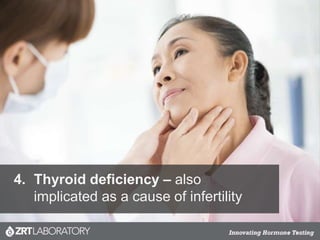
4. Thyroid deficiency – also
implicated as a cause of infertility
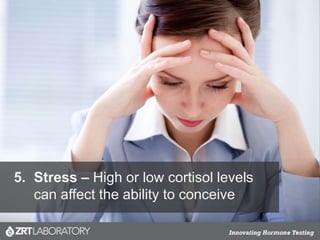
5. Stress – High or low cortisol levels
can affect the ability to conceive
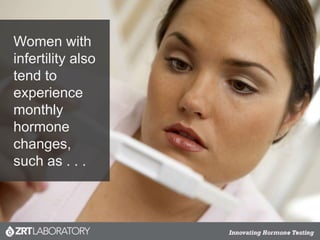
Women with
infertility also
tend to
experience
monthly
hormone
changes,
such as . . .
- High FSH level on Day 3 – follicular
phase – reflects ovarian insufficiency
- Low estradiol & progesterone on
Day 21 could indicate low egg reserve
- High estradiol & low progesterone in
luteal phase indicates non-ovulation
- High testosterone + DHEA-S with
high LH relative to FSH points to PCOS
Learn more by viewing an educational
webinar on Fertility & Hormones
Delivered by Dr. Alison McAllister

Hormones & Fertility