HOOKWORM
PRESENTED BY-
PRACHI
RATREY
INTRODUCTION
• Hookworm infection is an infection of the intestine that
can cause and itchy rush, respiratory and
gastrointestinal problems and eventually iron deficiency
anemia due to ongoing loss of blood.
• People can become infected when walking barefoot
because hookworm lives in the soil and can penetrate
the skin.
• Eggs are passed in the feces of an infected person. If
the person defecates outside (near bushes, in a garden/
field) or if the feces of an infected person are used as
fertilizers, eggs are deposited on soil.
DEFINATION
Hookworm are intestinal blood-
feeding parasitic roundworms that
cause types of infection known as
Helminthiases. Hookworm infection
is common in countries with poor
access to adequate water,
sanitation, and hygiene.
INCIDENCE RATE
Hookworm infection is a world wide
health problem with 151 million cases
of a war infection during 1997. It is
widely prevalent in India and about
60 to 80% of population of certain
areas like UP, Tamil Nadu, Odisha,
Punjab, Bihar is infected with
hookworm infection.
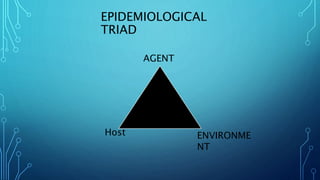
EPIDEMIOLOGICAL
TRIAD
AGENT
Host ENVIRONME
NT
AGENT
• The causative agent is Ancylostoma Duodenale. It
lives in the small intestine especially in Jejunum. The
other causative agent is Necatos americanus.
• A female A. Duodenale produces approximately
30000 eggs and N. Americanus produces 9000
eggs/day. Because of high egg production, it creates
a constant exposure to infection.
• Man is the source of infection containing ova of
hookworm is infective material.
• The period of infectivity is the feces harbours the
HOST
•Hookworm infection occurs
among both sexes and all
ages.
•The highest incidence rate is
in 15 to 25 years of age.
•It’s prevalence is high in
agriculture workers.
ENVIRONMENT
• Contaminated soil
• Rainfall
• Moisture
• Open air defecation
• Illiteracy
• Ignorance
• Low Standard of living
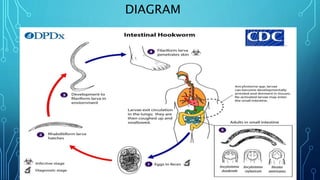
DIAGRAM
MODE OF
TRANSMISSION
Oral route and penetration
of skin by infective larvae.
INCUBATION PERIOD
Incubation period in case of A.
Duodenale is from 5 weeks to 9
months and for N. Americanus
in 7 weeks.
DIAGNOSTIC
EVALUATION
•Examination of a stool sample
•Blood tests to check for anemia and nutritional
deficiencies.
•Hookworm infection diagnosis is made by
identifying hookworm eggs in a sample of
stool. Stool should be examined within several
hours after defecation.
•Blood tests for anemia and nutritional
deficiency is particularly iron are also done.
TREATMENT
The drugs which are effective against the hookworm
infection such as Albendazole, Mebendazole, Pyrantes.
• Albendazole- 400mg once.
• Mebendazole- 500mg once or 100mg B.D* 3days.
Albendazole is effective against A. Duodenale and
Mebendazole against N. Americanus. These drugs
should be given to individuals above 2 years of age. On
taking these drugs the individual can have slight-
gastro- intestinal disturbance. These drugs should not
be used during pregnancy and also for children below 2
1.Proper sewage Disposal System- There should be
proper sewage disposal system to dispose of the
human excreta in a sanitary way. This sewage
disposal system should be installed in urban areas
as well as rural area. The government is taking all
the efforts to install the sanitary washrooms in
rural areas at low cost.
2.Farming practices - Farming practices regarding
the use of raw feces or untreated sewage need to
be changed as this can spread the infection. The
fertilizer formed after proper treatment should be
used in spite of raw feces.
3. Food hygiene- Food hygiene also needs to be
maintained as infected larvae attached of fruits and
vegetables, if not removed through proper washing, can
be ingested and can cause hookworm infection.
4. Environmental hygiene- Environmental hygiene
specially soil should be prevented from being
contaminated with the hookworm infection.
5. Treatment of Anemia- The impact of hookworm
infection is chronic blood loss and depletion of body’s
iron store leading to iron deficiency anemia. So, when
anemia is found to be severe it should be treated with
ferrous sulphate 200 mg TDS for 3 months. If along with
iron folic acid efficiency occurs it should be treated.
HEALTH EDUCATION- Health education is one of the
important means to make the public aware about the
consequences of disease by involving the community
this is an important aspect in control of hookworm
infection health education should be given
regarding.
•Use of sanitary washrooms.
•Prevention of soil pollution.
•Personal hygiene.
•Use of protective footwear.
CONCLUSIO
N
Major morbidity associated with hookworm
infection is caused by iron deficiency anemia,
intestinal blood loss, and protein malnutrition. They
result mainly from adult hookworm in the small
intestine ingesting blood, rupturing erythrocytes,
and degrading hemoglobin in the host.
BIBLIOGRAPHY
•KUMARI NEELAM" A TEXT BOOK OF
COMMUNITY HEALTH NURSING" EDITION 3rd
PAGENO-477-478
• HTTPS://WWW.SLIDESHARE.NET
Hookworm introduction defination cause effect cure

Hookworm introduction defination cause effect cure

  • 1.
  • 2.
    INTRODUCTION • Hookworm infectionis an infection of the intestine that can cause and itchy rush, respiratory and gastrointestinal problems and eventually iron deficiency anemia due to ongoing loss of blood. • People can become infected when walking barefoot because hookworm lives in the soil and can penetrate the skin. • Eggs are passed in the feces of an infected person. If the person defecates outside (near bushes, in a garden/ field) or if the feces of an infected person are used as fertilizers, eggs are deposited on soil.
  • 3.
    DEFINATION Hookworm are intestinalblood- feeding parasitic roundworms that cause types of infection known as Helminthiases. Hookworm infection is common in countries with poor access to adequate water, sanitation, and hygiene.
  • 4.
    INCIDENCE RATE Hookworm infectionis a world wide health problem with 151 million cases of a war infection during 1997. It is widely prevalent in India and about 60 to 80% of population of certain areas like UP, Tamil Nadu, Odisha, Punjab, Bihar is infected with hookworm infection.
  • 5.
  • 6.
    AGENT • The causativeagent is Ancylostoma Duodenale. It lives in the small intestine especially in Jejunum. The other causative agent is Necatos americanus. • A female A. Duodenale produces approximately 30000 eggs and N. Americanus produces 9000 eggs/day. Because of high egg production, it creates a constant exposure to infection. • Man is the source of infection containing ova of hookworm is infective material. • The period of infectivity is the feces harbours the
  • 7.
    HOST •Hookworm infection occurs amongboth sexes and all ages. •The highest incidence rate is in 15 to 25 years of age. •It’s prevalence is high in agriculture workers.
  • 8.
    ENVIRONMENT • Contaminated soil •Rainfall • Moisture • Open air defecation • Illiteracy • Ignorance • Low Standard of living
  • 9.
  • 10.
    MODE OF TRANSMISSION Oral routeand penetration of skin by infective larvae.
  • 11.
    INCUBATION PERIOD Incubation periodin case of A. Duodenale is from 5 weeks to 9 months and for N. Americanus in 7 weeks.
  • 12.
    DIAGNOSTIC EVALUATION •Examination of astool sample •Blood tests to check for anemia and nutritional deficiencies. •Hookworm infection diagnosis is made by identifying hookworm eggs in a sample of stool. Stool should be examined within several hours after defecation. •Blood tests for anemia and nutritional deficiency is particularly iron are also done.
  • 13.
    TREATMENT The drugs whichare effective against the hookworm infection such as Albendazole, Mebendazole, Pyrantes. • Albendazole- 400mg once. • Mebendazole- 500mg once or 100mg B.D* 3days. Albendazole is effective against A. Duodenale and Mebendazole against N. Americanus. These drugs should be given to individuals above 2 years of age. On taking these drugs the individual can have slight- gastro- intestinal disturbance. These drugs should not be used during pregnancy and also for children below 2
  • 14.
    1.Proper sewage DisposalSystem- There should be proper sewage disposal system to dispose of the human excreta in a sanitary way. This sewage disposal system should be installed in urban areas as well as rural area. The government is taking all the efforts to install the sanitary washrooms in rural areas at low cost. 2.Farming practices - Farming practices regarding the use of raw feces or untreated sewage need to be changed as this can spread the infection. The fertilizer formed after proper treatment should be used in spite of raw feces.
  • 15.
    3. Food hygiene-Food hygiene also needs to be maintained as infected larvae attached of fruits and vegetables, if not removed through proper washing, can be ingested and can cause hookworm infection. 4. Environmental hygiene- Environmental hygiene specially soil should be prevented from being contaminated with the hookworm infection. 5. Treatment of Anemia- The impact of hookworm infection is chronic blood loss and depletion of body’s iron store leading to iron deficiency anemia. So, when anemia is found to be severe it should be treated with ferrous sulphate 200 mg TDS for 3 months. If along with iron folic acid efficiency occurs it should be treated.
  • 16.
    HEALTH EDUCATION- Healtheducation is one of the important means to make the public aware about the consequences of disease by involving the community this is an important aspect in control of hookworm infection health education should be given regarding. •Use of sanitary washrooms. •Prevention of soil pollution. •Personal hygiene. •Use of protective footwear.
  • 17.
    CONCLUSIO N Major morbidity associatedwith hookworm infection is caused by iron deficiency anemia, intestinal blood loss, and protein malnutrition. They result mainly from adult hookworm in the small intestine ingesting blood, rupturing erythrocytes, and degrading hemoglobin in the host.
  • 18.
    BIBLIOGRAPHY •KUMARI NEELAM" ATEXT BOOK OF COMMUNITY HEALTH NURSING" EDITION 3rd PAGENO-477-478 • HTTPS://WWW.SLIDESHARE.NET