H&M Brand Audit
Who is H&M?
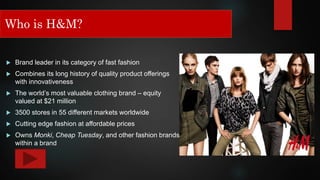
 Brand leader in its category of fast fashion
 Combines its long history of quality product offerings
with innovativeness
 The world’s most valuable clothing brand – equity
valued at $21 million
 3500 stores in 55 different markets worldwide
 Cutting edge fashion at affordable prices
 Owns Monki, Cheap Tuesday, and other fashion brands
within a brand
Who is H&M?
Growth Analysis
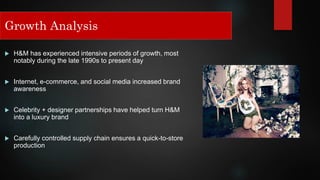
 H&M has experienced intensive periods of growth, most
notably during the late 1990s to present day
 Internet, e-commerce, and social media increased brand
awareness
 Celebrity + designer partnerships have helped turn H&M
into a luxury brand
 Carefully controlled supply chain ensures a quick-to-store
production
Growth Analysis
Consumer Analysis
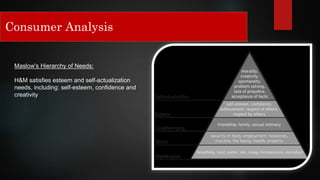
Maslow’s Hierarchy of Needs:
H&M satisfies esteem and self-actualization
needs, including: self-esteem, confidence and
creativity
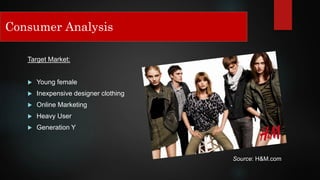
Target Market:
 Young female
 Inexpensive designer clothing
 Online Marketing
 Heavy User
 Generation Y
Consumer Analysis
Source: H&M.com
American Eagle:
 $3.3 billion in revenue
 A losing interest amongst logo eccentric stores
 Removing logo
 Much more expensive
 Beginning to expand globally to compete with H&M
Competitive Analysis 1/3
Gap Inc.
 Owns Banana Republic & Old Navy
 $15.6 billion in revenues
 Mistreatment of Cambodian workers
 ‘The New Gap’
 Successful E-commerce
Competitive Analysis 2/3
Zara:
 $14.4 billion in revenues
 Rapid expansion from Europe
 Runway clothing
 Markdown
 50/50 inventory
 Zara Home
Competitive Analysis 3/3
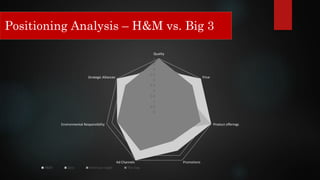
Growth AnalysisPositioning Analysis – H&M vs. Big 3
0
0.5
1
1.5
2
2.5
3
3.5
4
4.5
5
Quality
Price
Product offerings
PromotionsAd Channels
Environmental Responsibility
Strategic Alliances
H&M Zara American Eagle The Gap
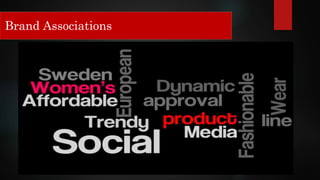
Brand Associations
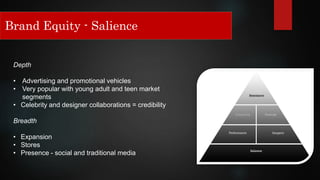
Brand Equity - Salience
Depth
• Advertising and promotional vehicles
• Very popular with young adult and teen market
segments
• Celebrity and designer collaborations = credibility
Breadth
• Expansion
• Stores
• Presence - social and traditional media
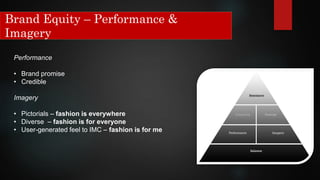
Brand Equity – Performance &
Imagery
Performance
• Brand promise
• Credible
Imagery
• Pictorials – fashion is everywhere
• Diverse – fashion is for everyone
• User-generated feel to IMC – fashion is for me
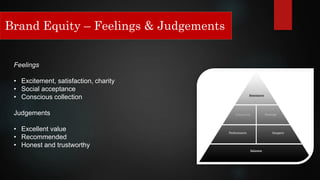
Brand Equity – Feelings & Judgements
Feelings
• Excitement, satisfaction, charity
• Social acceptance
• Conscious collection
Judgements
• Excellent value
• Recommended
• Honest and trustworthy
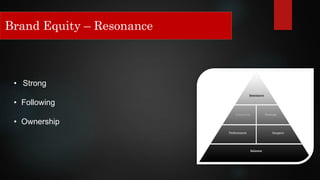
Brand Equity – Resonance
• Strong
• Following
• Ownership
 Excellent at maintaining very visible brand presence in the minds of
consumers
 H&M spirit of innovation gives the brand its strong equity
 Knows its’ markets and utilizes the channels to reach them
 Fast fashion presents challenges to brands; H&M is no exception
 Increasing existing CSR practice
 Enhance existing programs by working with loyalty program in tandem
 H&M needs to become not only a brand leader, but an industry leader
 Product customization through strategic alliances (Ex. RiptApparel)
Brand Evaluation

H+M Brand Audit

  • 2.
  • 3.
    Who is H&M? Brand leader in its category of fast fashion  Combines its long history of quality product offerings with innovativeness  The world’s most valuable clothing brand – equity valued at $21 million  3500 stores in 55 different markets worldwide  Cutting edge fashion at affordable prices  Owns Monki, Cheap Tuesday, and other fashion brands within a brand Who is H&M?
  • 5.
    Growth Analysis  H&Mhas experienced intensive periods of growth, most notably during the late 1990s to present day  Internet, e-commerce, and social media increased brand awareness  Celebrity + designer partnerships have helped turn H&M into a luxury brand  Carefully controlled supply chain ensures a quick-to-store production Growth Analysis
  • 6.
    Consumer Analysis Maslow’s Hierarchyof Needs: H&M satisfies esteem and self-actualization needs, including: self-esteem, confidence and creativity
  • 7.
    Target Market:  Youngfemale  Inexpensive designer clothing  Online Marketing  Heavy User  Generation Y Consumer Analysis Source: H&M.com
  • 8.
    American Eagle:  $3.3billion in revenue  A losing interest amongst logo eccentric stores  Removing logo  Much more expensive  Beginning to expand globally to compete with H&M Competitive Analysis 1/3
  • 9.
    Gap Inc.  OwnsBanana Republic & Old Navy  $15.6 billion in revenues  Mistreatment of Cambodian workers  ‘The New Gap’  Successful E-commerce Competitive Analysis 2/3
  • 10.
    Zara:  $14.4 billionin revenues  Rapid expansion from Europe  Runway clothing  Markdown  50/50 inventory  Zara Home Competitive Analysis 3/3
  • 11.
    Growth AnalysisPositioning Analysis– H&M vs. Big 3 0 0.5 1 1.5 2 2.5 3 3.5 4 4.5 5 Quality Price Product offerings PromotionsAd Channels Environmental Responsibility Strategic Alliances H&M Zara American Eagle The Gap
  • 12.
  • 13.
    Brand Equity -Salience Depth • Advertising and promotional vehicles • Very popular with young adult and teen market segments • Celebrity and designer collaborations = credibility Breadth • Expansion • Stores • Presence - social and traditional media
  • 14.
    Brand Equity –Performance & Imagery Performance • Brand promise • Credible Imagery • Pictorials – fashion is everywhere • Diverse – fashion is for everyone • User-generated feel to IMC – fashion is for me
  • 15.
    Brand Equity –Feelings & Judgements Feelings • Excitement, satisfaction, charity • Social acceptance • Conscious collection Judgements • Excellent value • Recommended • Honest and trustworthy
  • 16.
    Brand Equity –Resonance • Strong • Following • Ownership
  • 17.
     Excellent atmaintaining very visible brand presence in the minds of consumers  H&M spirit of innovation gives the brand its strong equity  Knows its’ markets and utilizes the channels to reach them  Fast fashion presents challenges to brands; H&M is no exception  Increasing existing CSR practice  Enhance existing programs by working with loyalty program in tandem  H&M needs to become not only a brand leader, but an industry leader  Product customization through strategic alliances (Ex. RiptApparel) Brand Evaluation