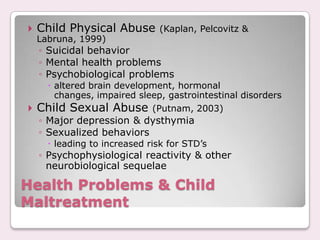
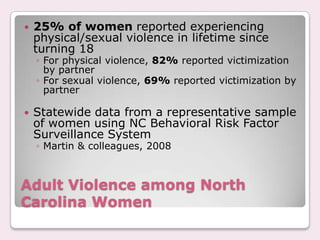
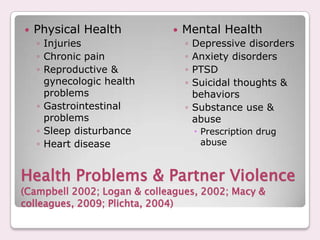
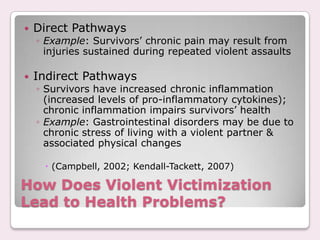
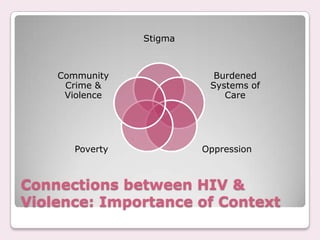
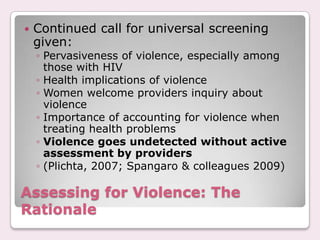
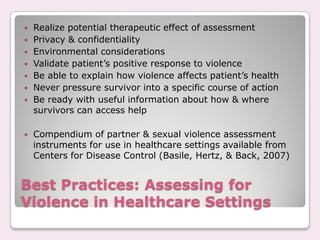
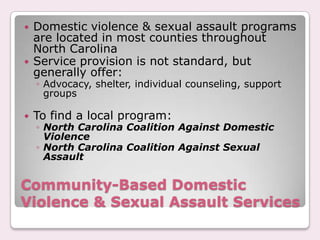
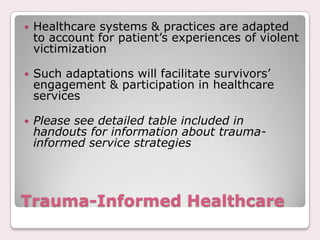
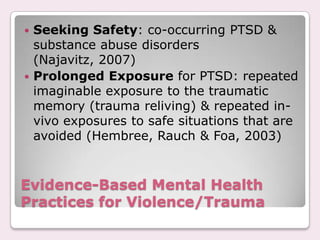
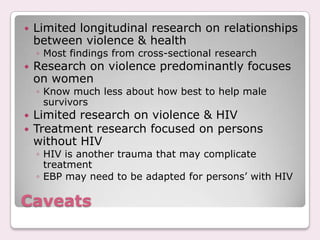



The document discusses the intersection of HIV and violence, highlighting how individuals with HIV often experience high rates of violence, which negatively affects their health and adherence to antiretroviral therapy. It outlines the prevalence of violence in North Carolina, its health consequences, and the importance of trauma-informed approaches in healthcare settings for survivors. Strategies for addressing violence, such as universal screening and community support services, are also emphasized as crucial for improving health outcomes among this vulnerable population.


