Trauma Informed 
Care Network 
Introductory Meeting 
March 14, 2014 
Sponsored by: 
Healing Pathways Therapy Center 
1174 E. Graystone Way, Suite 8 
Salt Lake City, UT 84106 
435-280-2089 
www.healingpathwaystherapy.com
About Us: 
 Formed in Salt Lake City, UT, in 2013 
 Group of mental health and medical professionals who have 
observed the impact of trauma on the physical health and 
emotional well being of our clients and patients. 
 As we apply evidence-based trauma resolution techniques, we are 
able to help to alleviate many of the mental and physical 
symptoms associated with these traumas. 
 Clients and patients tend to see improvements in many areas of 
their life: physical health, emotional functioning, relationships, 
recreation, general life adjustment, spirituality, etc. 
 Decreased need for long-term medical treatment, psychotropic 
medications, or dependency on addictive behaviors. 
 Through these successes we have been motivated to share this 
information, increase collaboration with mental health and 
medical colleagues in the community. 
 Our goal is to continue to work together to treat these clients and 
to increase outreach and education to the general public 
 Help more of the general public to understand the impact of 
underlying trauma and facilitate access to effective treatment.
Big Picture: 
To work together to promote client and 
patient healing through trauma resolution; 
to alleviate current symptoms and to 
reduce future and secondary effects of 
trauma in individuals, families, and in our 
community.
How to Start a Movement
What are your interests in 
trauma informed care?
What are some of the causes of 
resistance to trauma informed 
care?
In my training as a family physician, I was told not to pull 
up the lid on something you don’t have the time and 
training to deal with, like early life trauma. I am deeply 
embarrassed in looking back at my career caring for 
patients in Camden because I followed this advice too 
often. It’s likely that many of my patients had early life 
trauma that was probably sitting right below the 
surface, but I rarely asked. It’s frightening to open up a 
Pandora’s box in a 10-15 minute visit of an 
overwhelmed primary care office. 
I believe ACE scores should become a vital sign, as 
important as height, weight, and blood pressure. - Dr. 
Jeffrey Brenner
Mission of TICN: 
To increase awareness and understanding of the 
impact of emotional trauma, to promote the 
practice of evidence-based trauma informed 
mental and medical health care, and to facilitate 
client and patient access to providers engaged in 
trauma informed care.
Goals of TICN: 
 To provide networking, outreach, and education 
 To bring together mental health and medical 
professionals who are engaged in trauma 
informed care to work together to increase 
awareness 
 To gather and disseminate educational resources 
to facilitate trauma awareness in mental health 
and medical professionals as well as the 
community at large 
 To promote effective evidence-based 
interventions to clients and patients with a history 
of trauma.
What is Trauma-Informed 
Care? 
 We support the definition of SAMHSA: Substance Abuse and 
Mental Health Services Administration 
 Most individuals seeking public behavioral health services and 
many other public services, such as homeless and domestic 
violence services, have histories of physical and sexual abuse and 
other types of trauma-inducing experiences. These experiences 
often lead to mental health and co-occurring disorders such as 
chronic health conditions, substance abuse, eating disorders, and 
HIV/AIDS, as well as contact with the criminal justice system. 
 When a human service program takes the step to become trauma-informed, 
every part of its organization, management, and service 
delivery system is assessed and potentially modified to include a 
basic understanding of how trauma affects the life of an individual 
seeking services. Trauma-informed organizations, programs, and 
services are based on an understanding of the vulnerabilities or 
triggers of trauma survivors that traditional service delivery 
approaches may exacerbate, so that these services and programs 
can be more supportive and avoid re-traumatization.
What are Trauma-Specific 
Interventions? 
Trauma-specific interventions are designed specifically 
to address the consequences of trauma in the 
individual and to facilitate healing. Treatment programs 
generally recognize the following: 
 The survivor's need to be respected, informed, 
connected, and hopeful regarding their own 
recovery 
 The interrelation between trauma and symptoms of 
trauma (e.g., substance abuse, eating disorders, 
depression, and anxiety) 
 The need to work in a collaborative way with 
survivors, family and friends of the survivor, and other 
human services agencies in a manner that will 
empower survivors and consumers
Accountable Care Organizations: 
Implications for Trauma Informed Care 
 ACO’s are an undeniable part of future 
healthcare. ACOs were introduced to the 
healthcare field as part of the Affordable Care 
Act, and involve the merging of different specialty 
provider entities into single organizations able to 
better coordinate care, improve quality, and cut 
costs. These integrated “centers” of care will serve 
as the foundation for healthcare’s future as more 
and more payers are investing in them — and 
providers that don’t get involved now are at risk 
losing business.
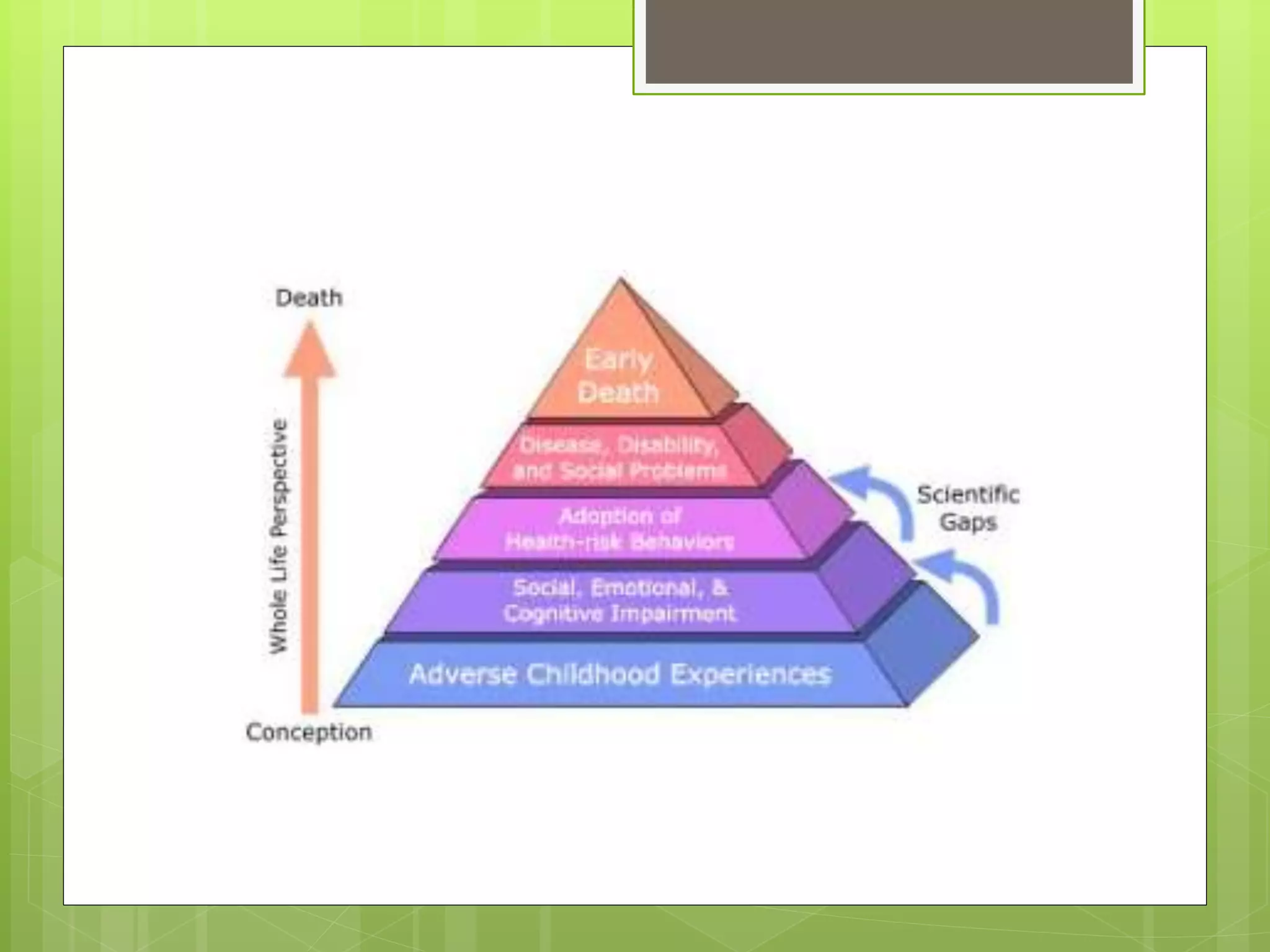
ACES study: 
 10 year study – Kaiser-Permenante Health 
Network 
 17,000 medical patients involved 
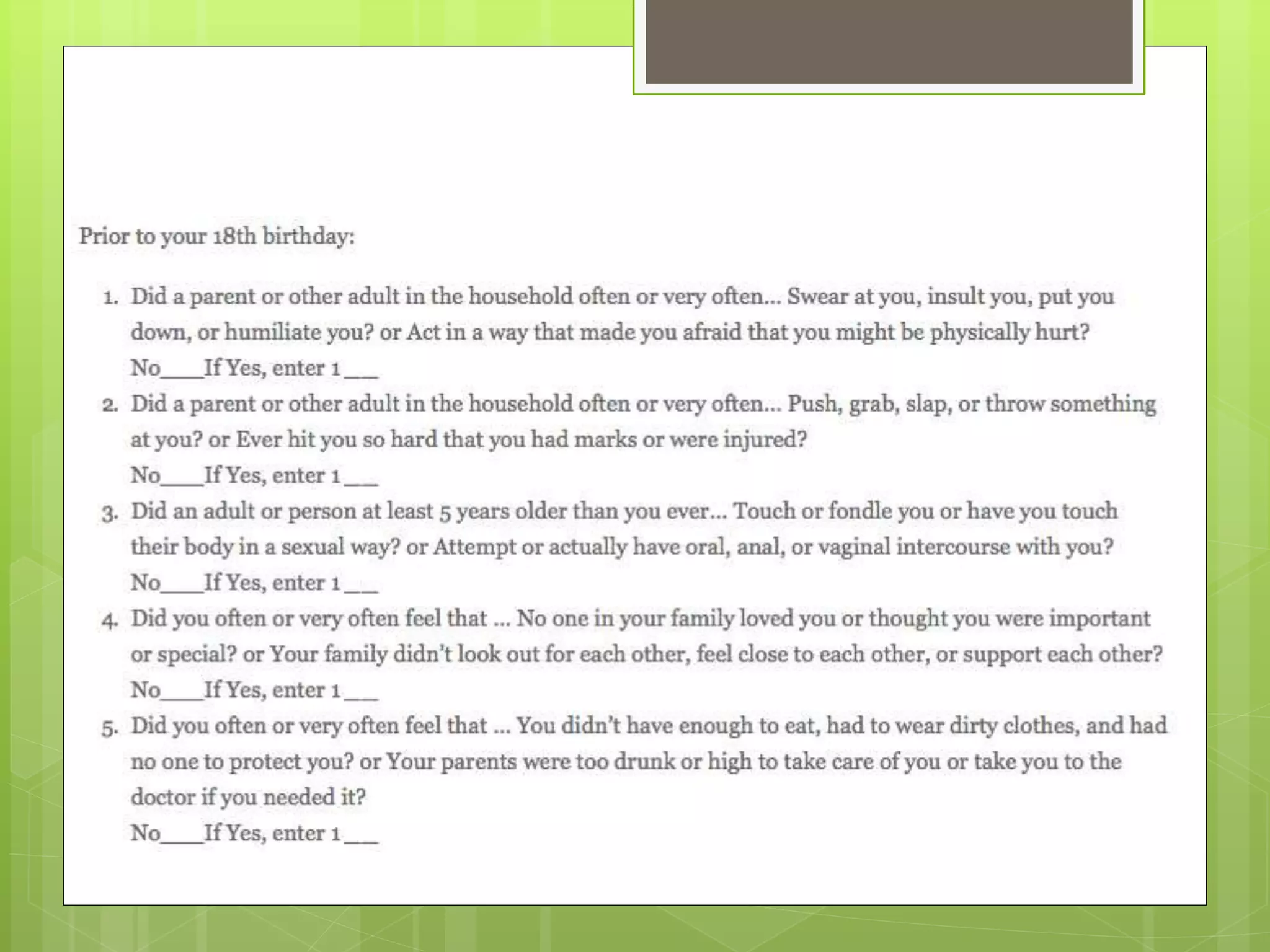
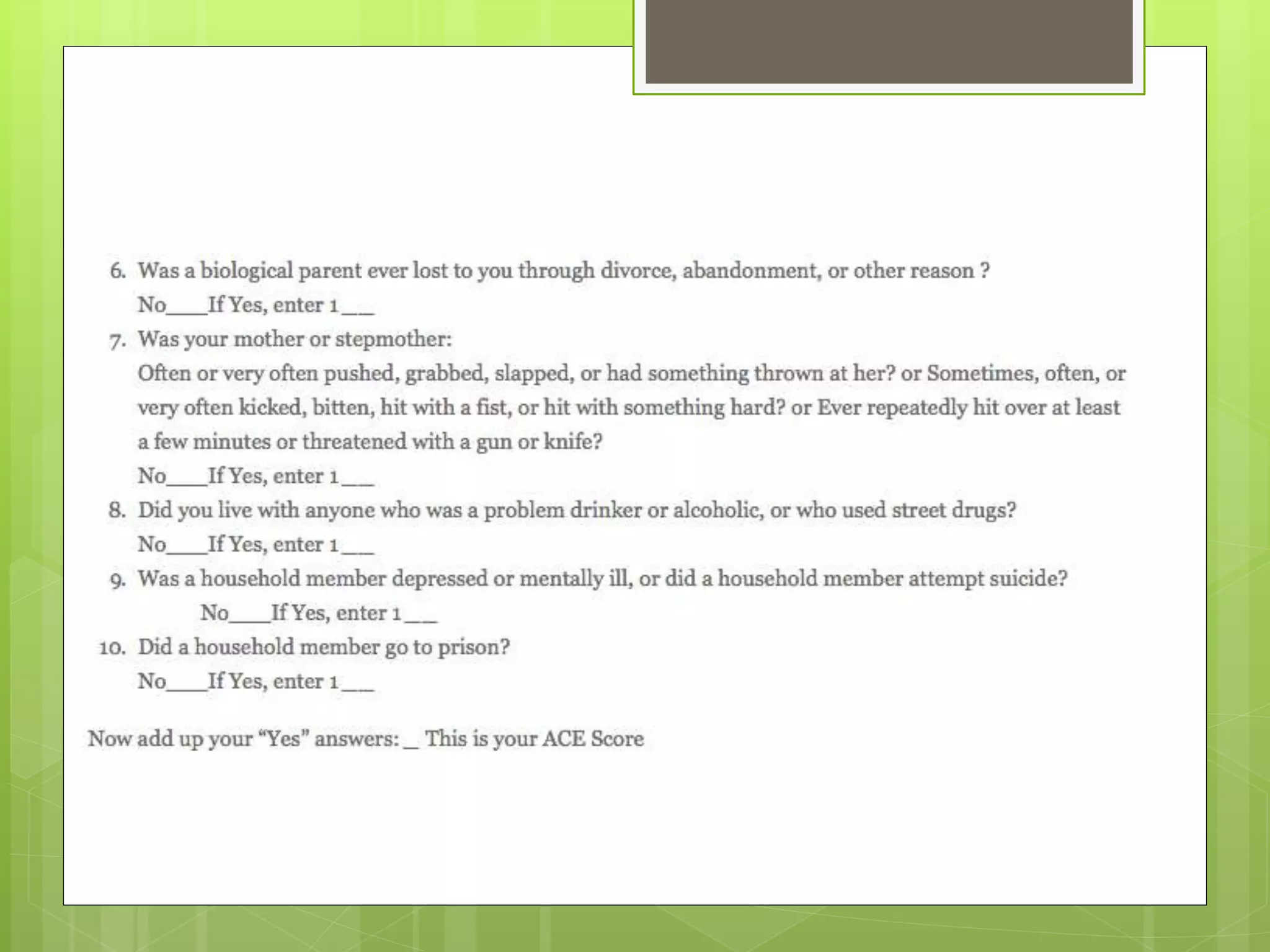
 Asked questions about childhood trauma 
events 
 Looked at the effects of adverse 
childhood experiences over the lifespan 
 Largest study ever done on this subject
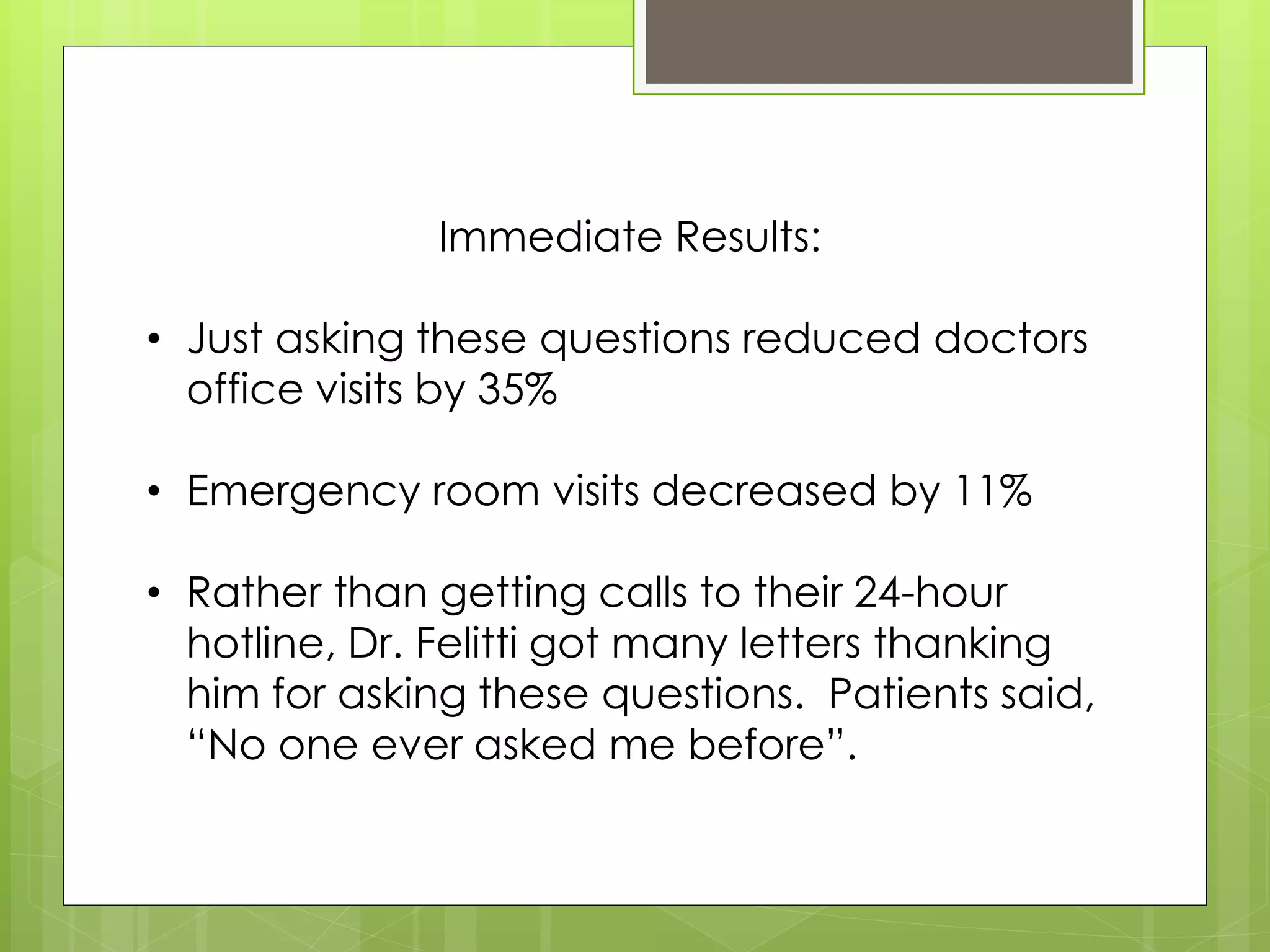
Immediate Results: 
• Just asking these questions reduced doctors 
office visits by 35% 
• Emergency room visits decreased by 11% 
• Rather than getting calls to their 24-hour 
hotline, Dr. Felitti got many letters thanking 
him for asking these questions. Patients said, 
“No one ever asked me before”.
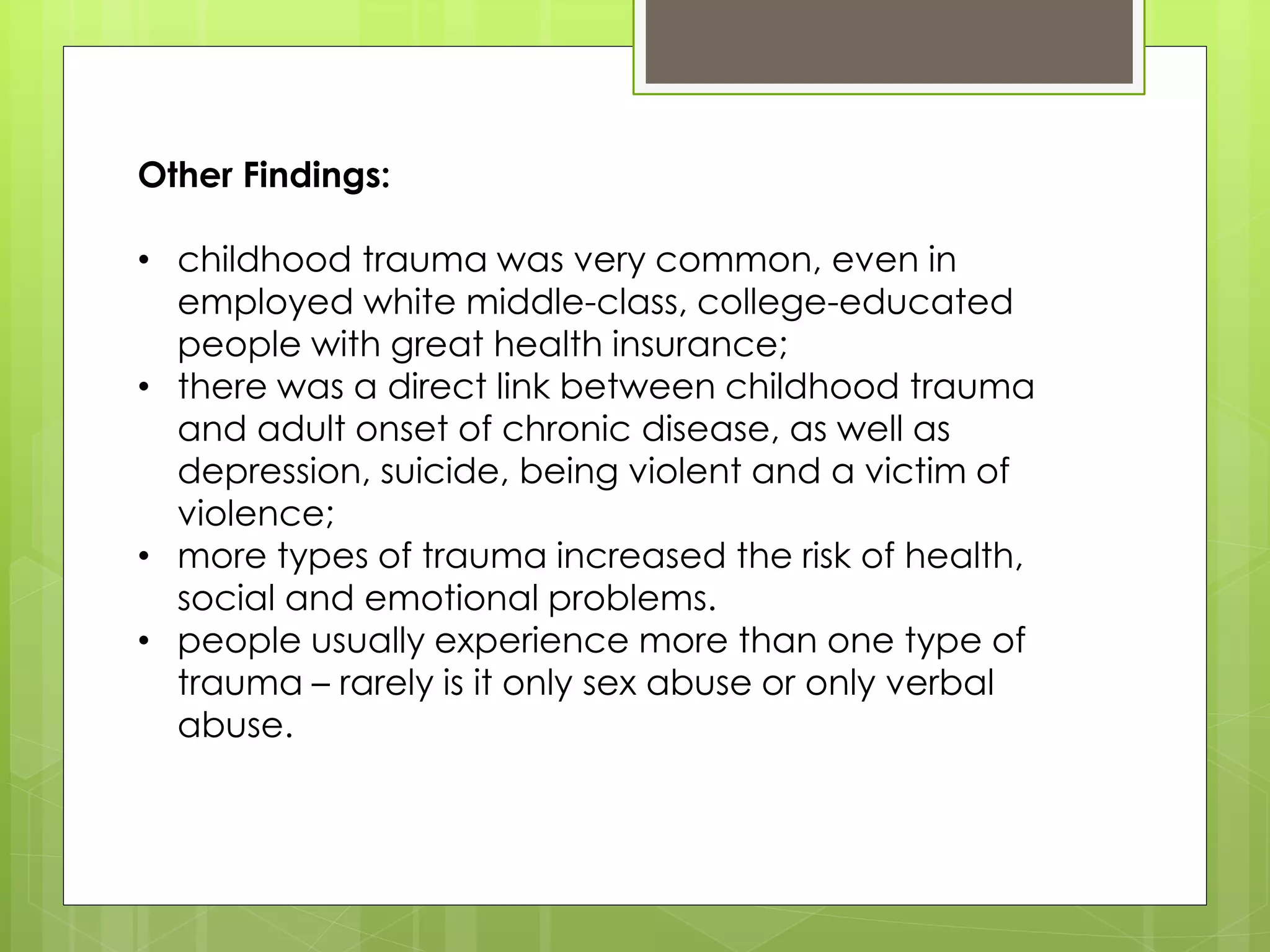
Other Findings: 
• childhood trauma was very common, even in 
employed white middle-class, college-educated 
people with great health insurance; 
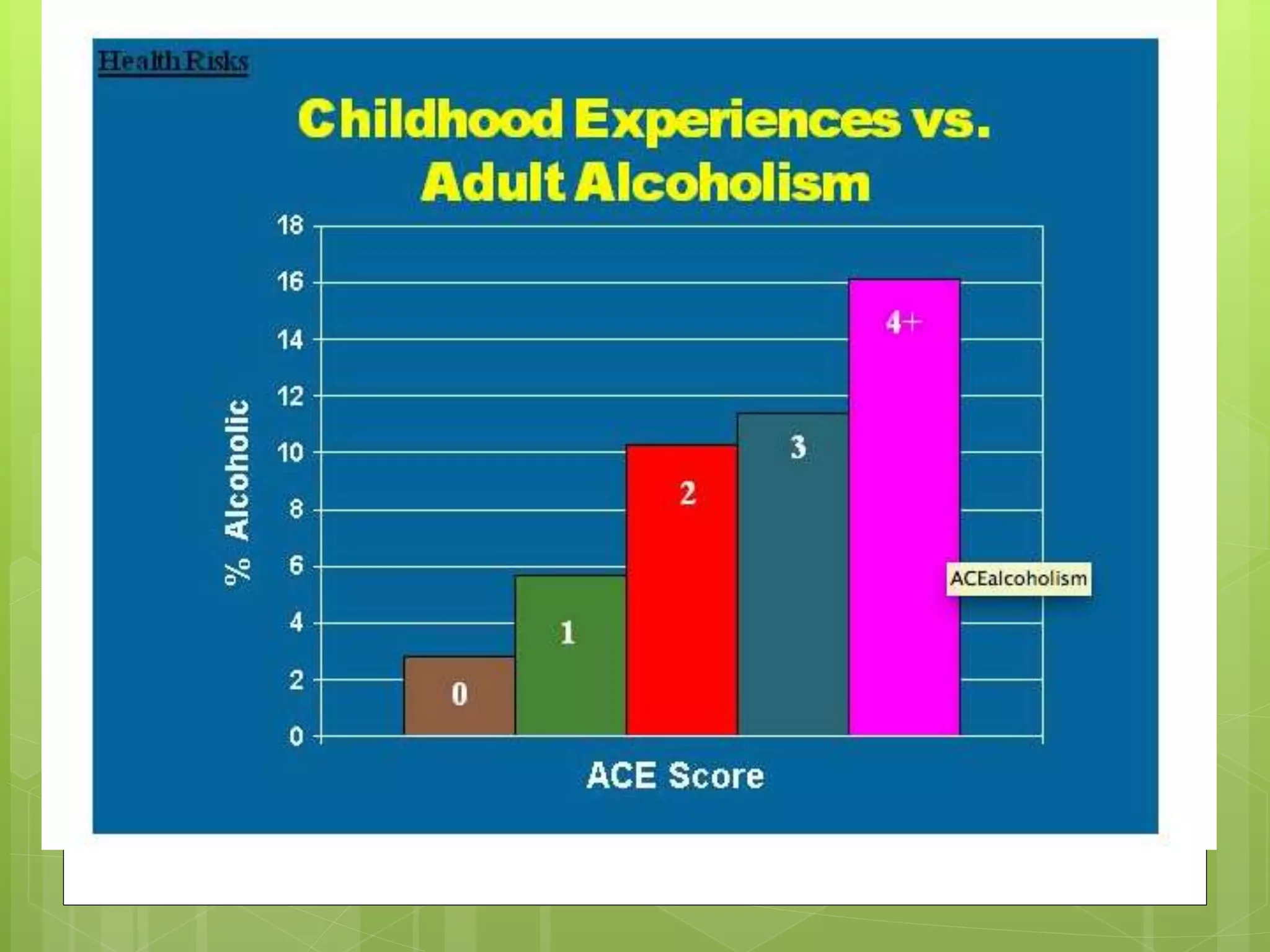
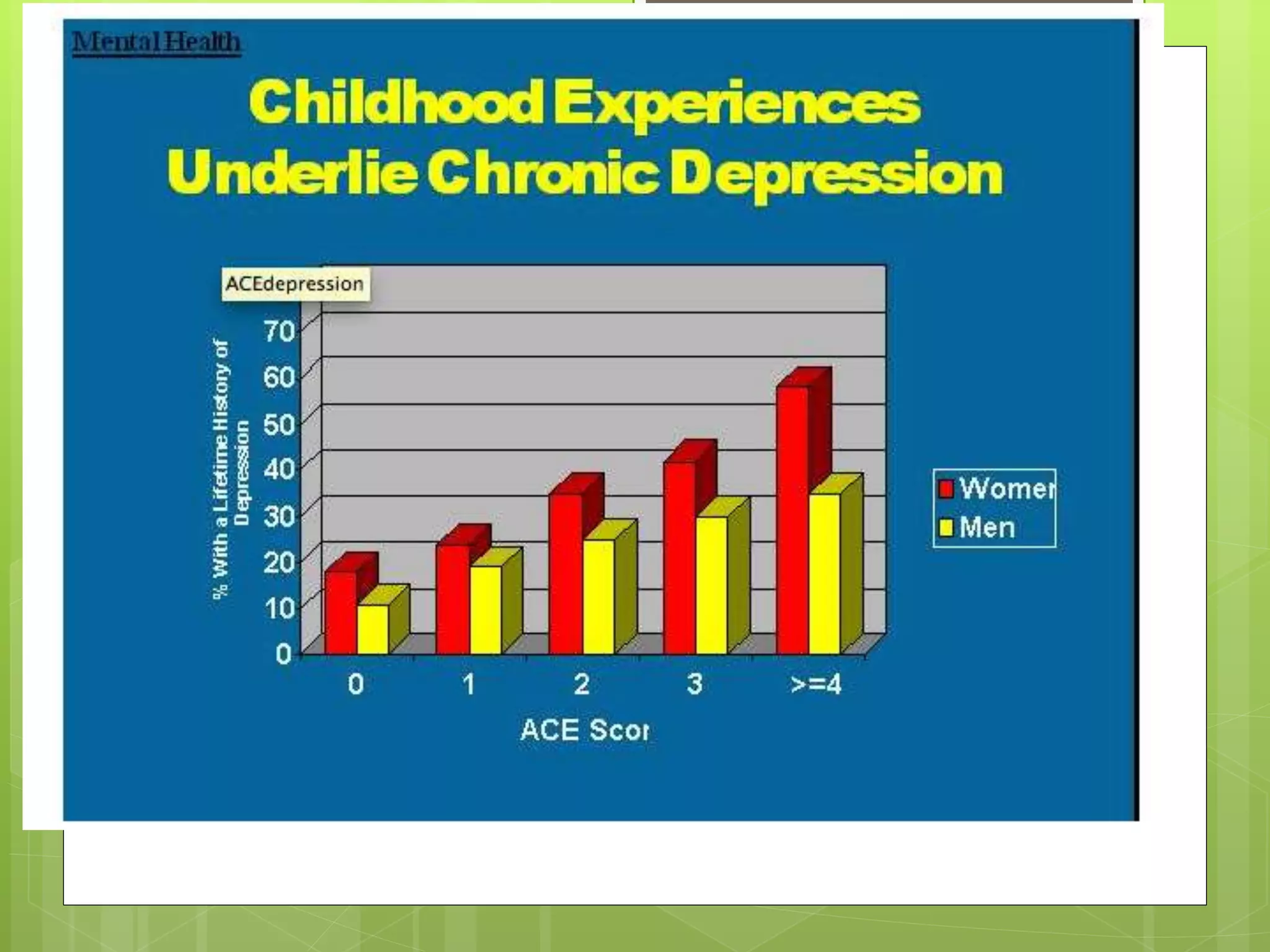
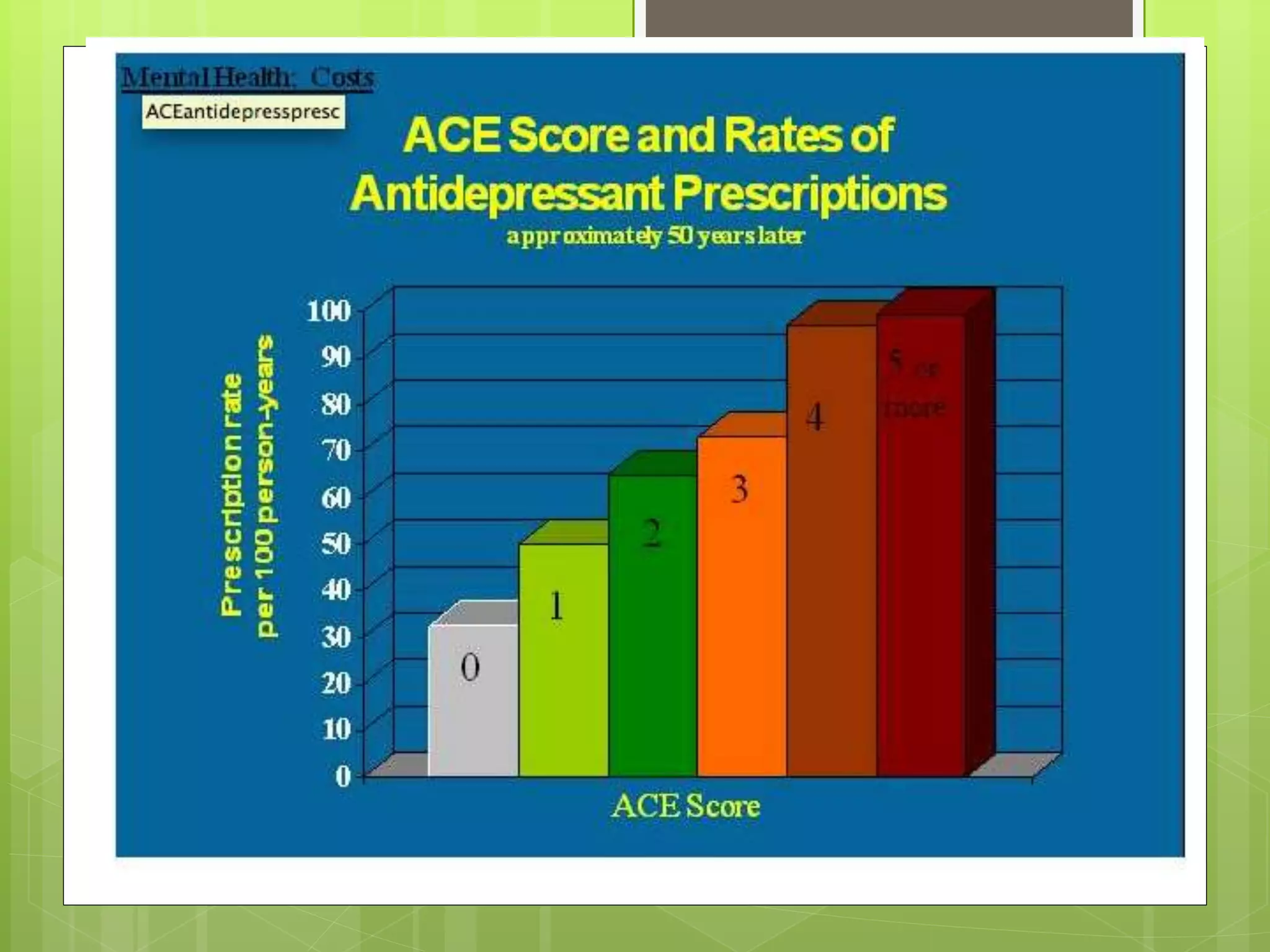
• there was a direct link between childhood trauma 
and adult onset of chronic disease, as well as 
depression, suicide, being violent and a victim of 
violence; 
• more types of trauma increased the risk of health, 
social and emotional problems. 
• people usually experience more than one type of 
trauma – rarely is it only sex abuse or only verbal 
abuse.
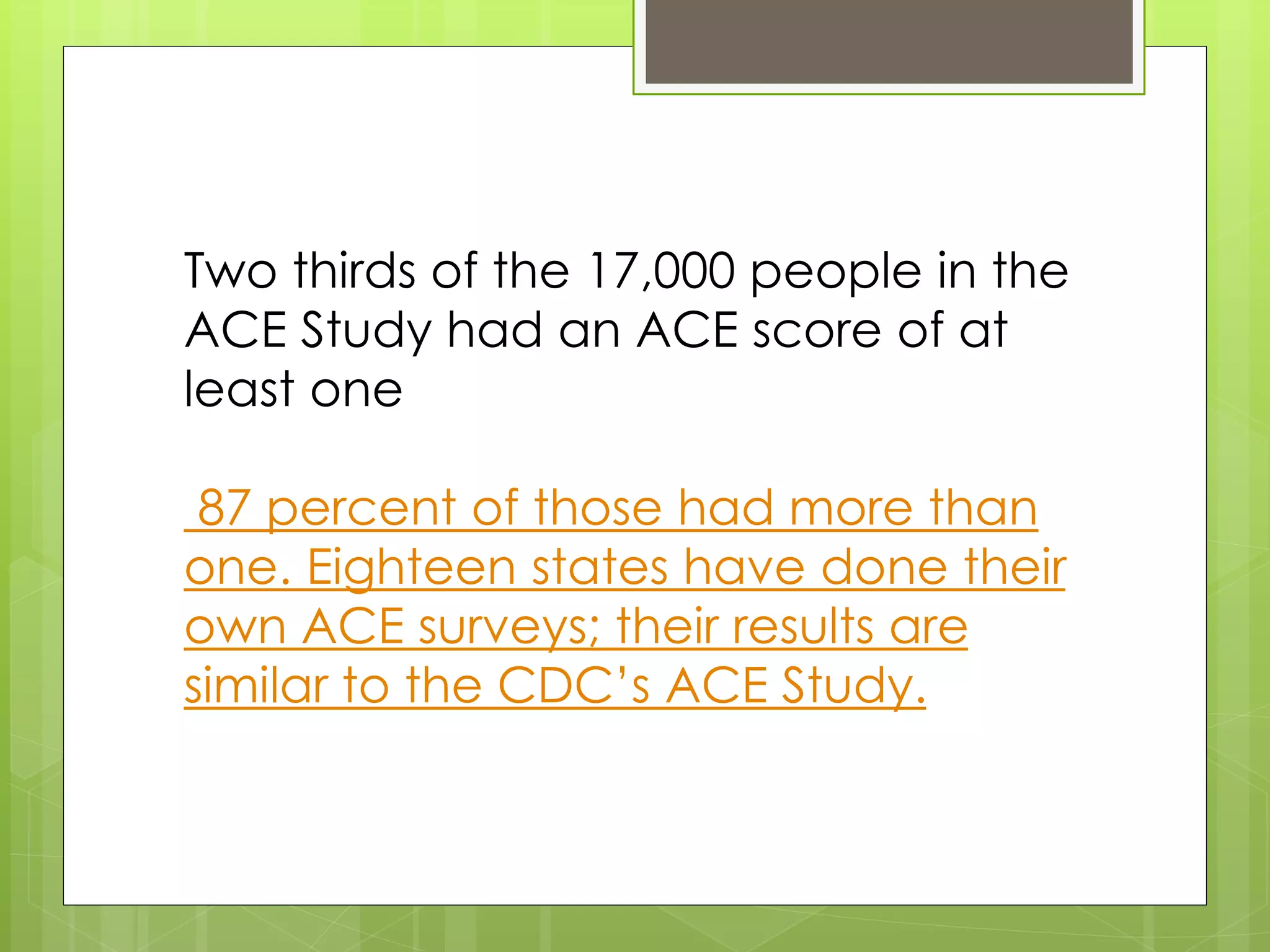
Two thirds of the 17,000 people in the 
ACE Study had an ACE score of at 
least one 
87 percent of those had more than 
one. Eighteen states have done their 
own ACE surveys; their results are 
similar to the CDC’s ACE Study.
APA January 2008 Cover Story: PTSD treatments 
grow in evidence and effectiveness 
• Prolonged Exposure Therapy 
• Cognitive-Processing Therapy 
• Stress-inoculation Training 
• Eye Movement Desensitization and 
Reprocessing (EMDR) 
• Medications 
http://www.apa.org/monitor/jan08/ptsd.aspx
U.S. Department of Veterans Affairs 
PTSD: National Center for PTSD 
• Cognitive Processing Therapy 
• Prolonged Exposure Therapy 
• EMDR 
• Medicine 
http://www.ptsd.va.gov/public/treatment/therapy-med/ 
treatment-ptsd.asp
What can TICN do to address 
these issues? 
 Meet regularly for collaboration and 
training 
 Assess and connect with current resources 
in the community 
 Identify where education is needed 
 Share Resources 
 Presentations/CEU’s 
 Outreach 
 Other ideas?
Speakers’ Bureau? 
Possible Topics: 
 Understanding Trauma and it’s Impact 
 Attachment Issues as a Form of Trauma 
 Effective Trauma Resolution Techniques 
 Trauma and Autoimmune Illness – Understanding the 
Link 
 Medical Treatment and Support for the Traumatized 
Individual 
 Psychotropic Medications and Trauma 
 Understanding Inter-generational Trauma and 
Epigenetics 
 Thoughts, Toxins, and Trauma
www.ticn.org
Brochure
Thank you for coming!!! 
 Please complete Sign up Sheet 
 Applications for Website Providers List 
 Meet and Greet 
 Next meeting: April 11th @ 2 PM

What is the Trauma Informed Care Network?

  • 1.
    Trauma Informed CareNetwork Introductory Meeting March 14, 2014 Sponsored by: Healing Pathways Therapy Center 1174 E. Graystone Way, Suite 8 Salt Lake City, UT 84106 435-280-2089 www.healingpathwaystherapy.com
  • 2.
    About Us: Formed in Salt Lake City, UT, in 2013  Group of mental health and medical professionals who have observed the impact of trauma on the physical health and emotional well being of our clients and patients.  As we apply evidence-based trauma resolution techniques, we are able to help to alleviate many of the mental and physical symptoms associated with these traumas.  Clients and patients tend to see improvements in many areas of their life: physical health, emotional functioning, relationships, recreation, general life adjustment, spirituality, etc.  Decreased need for long-term medical treatment, psychotropic medications, or dependency on addictive behaviors.  Through these successes we have been motivated to share this information, increase collaboration with mental health and medical colleagues in the community.  Our goal is to continue to work together to treat these clients and to increase outreach and education to the general public  Help more of the general public to understand the impact of underlying trauma and facilitate access to effective treatment.
  • 3.
    Big Picture: Towork together to promote client and patient healing through trauma resolution; to alleviate current symptoms and to reduce future and secondary effects of trauma in individuals, families, and in our community.
  • 4.
    How to Starta Movement
  • 5.
    What are yourinterests in trauma informed care?
  • 6.
    What are someof the causes of resistance to trauma informed care?
  • 7.
    In my trainingas a family physician, I was told not to pull up the lid on something you don’t have the time and training to deal with, like early life trauma. I am deeply embarrassed in looking back at my career caring for patients in Camden because I followed this advice too often. It’s likely that many of my patients had early life trauma that was probably sitting right below the surface, but I rarely asked. It’s frightening to open up a Pandora’s box in a 10-15 minute visit of an overwhelmed primary care office. I believe ACE scores should become a vital sign, as important as height, weight, and blood pressure. - Dr. Jeffrey Brenner
  • 8.
    Mission of TICN: To increase awareness and understanding of the impact of emotional trauma, to promote the practice of evidence-based trauma informed mental and medical health care, and to facilitate client and patient access to providers engaged in trauma informed care.
  • 9.
    Goals of TICN:  To provide networking, outreach, and education  To bring together mental health and medical professionals who are engaged in trauma informed care to work together to increase awareness  To gather and disseminate educational resources to facilitate trauma awareness in mental health and medical professionals as well as the community at large  To promote effective evidence-based interventions to clients and patients with a history of trauma.
  • 10.
    What is Trauma-Informed Care?  We support the definition of SAMHSA: Substance Abuse and Mental Health Services Administration  Most individuals seeking public behavioral health services and many other public services, such as homeless and domestic violence services, have histories of physical and sexual abuse and other types of trauma-inducing experiences. These experiences often lead to mental health and co-occurring disorders such as chronic health conditions, substance abuse, eating disorders, and HIV/AIDS, as well as contact with the criminal justice system.  When a human service program takes the step to become trauma-informed, every part of its organization, management, and service delivery system is assessed and potentially modified to include a basic understanding of how trauma affects the life of an individual seeking services. Trauma-informed organizations, programs, and services are based on an understanding of the vulnerabilities or triggers of trauma survivors that traditional service delivery approaches may exacerbate, so that these services and programs can be more supportive and avoid re-traumatization.
  • 11.
    What are Trauma-Specific Interventions? Trauma-specific interventions are designed specifically to address the consequences of trauma in the individual and to facilitate healing. Treatment programs generally recognize the following:  The survivor's need to be respected, informed, connected, and hopeful regarding their own recovery  The interrelation between trauma and symptoms of trauma (e.g., substance abuse, eating disorders, depression, and anxiety)  The need to work in a collaborative way with survivors, family and friends of the survivor, and other human services agencies in a manner that will empower survivors and consumers
  • 12.
    Accountable Care Organizations: Implications for Trauma Informed Care  ACO’s are an undeniable part of future healthcare. ACOs were introduced to the healthcare field as part of the Affordable Care Act, and involve the merging of different specialty provider entities into single organizations able to better coordinate care, improve quality, and cut costs. These integrated “centers” of care will serve as the foundation for healthcare’s future as more and more payers are investing in them — and providers that don’t get involved now are at risk losing business.
  • 13.
    ACES study: 10 year study – Kaiser-Permenante Health Network  17,000 medical patients involved  Asked questions about childhood trauma events  Looked at the effects of adverse childhood experiences over the lifespan  Largest study ever done on this subject
  • 16.
    Immediate Results: •Just asking these questions reduced doctors office visits by 35% • Emergency room visits decreased by 11% • Rather than getting calls to their 24-hour hotline, Dr. Felitti got many letters thanking him for asking these questions. Patients said, “No one ever asked me before”.
  • 17.
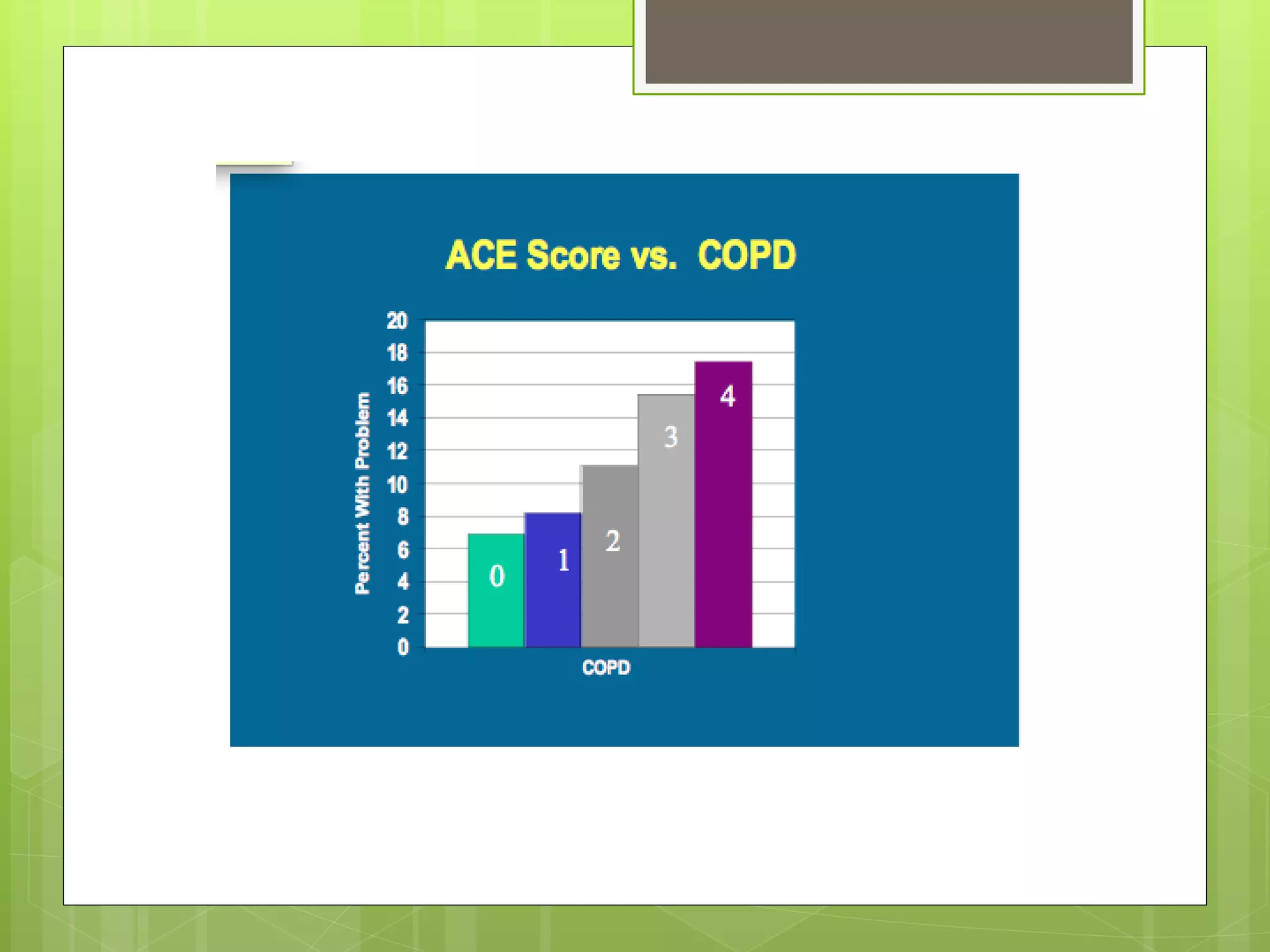
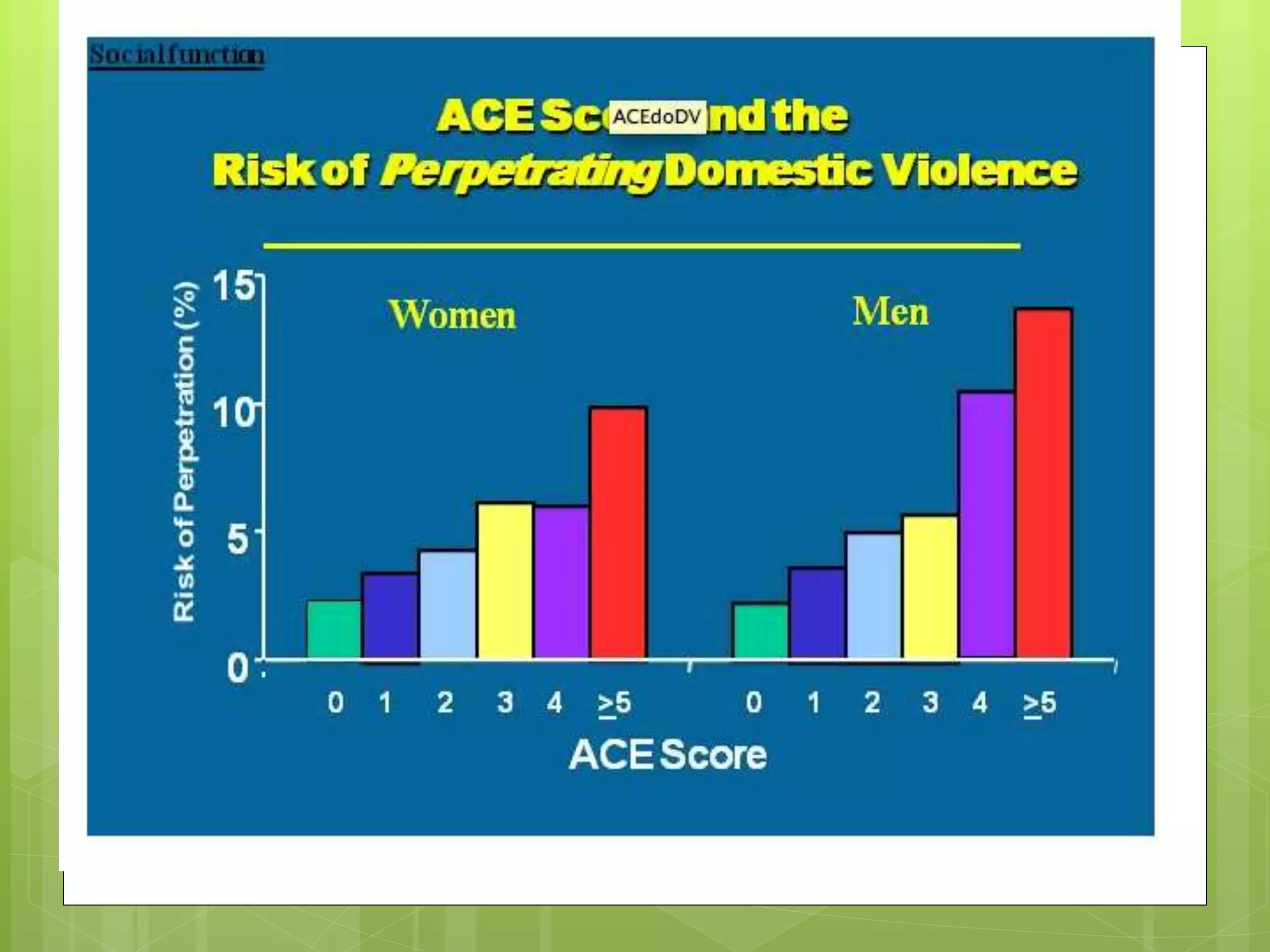
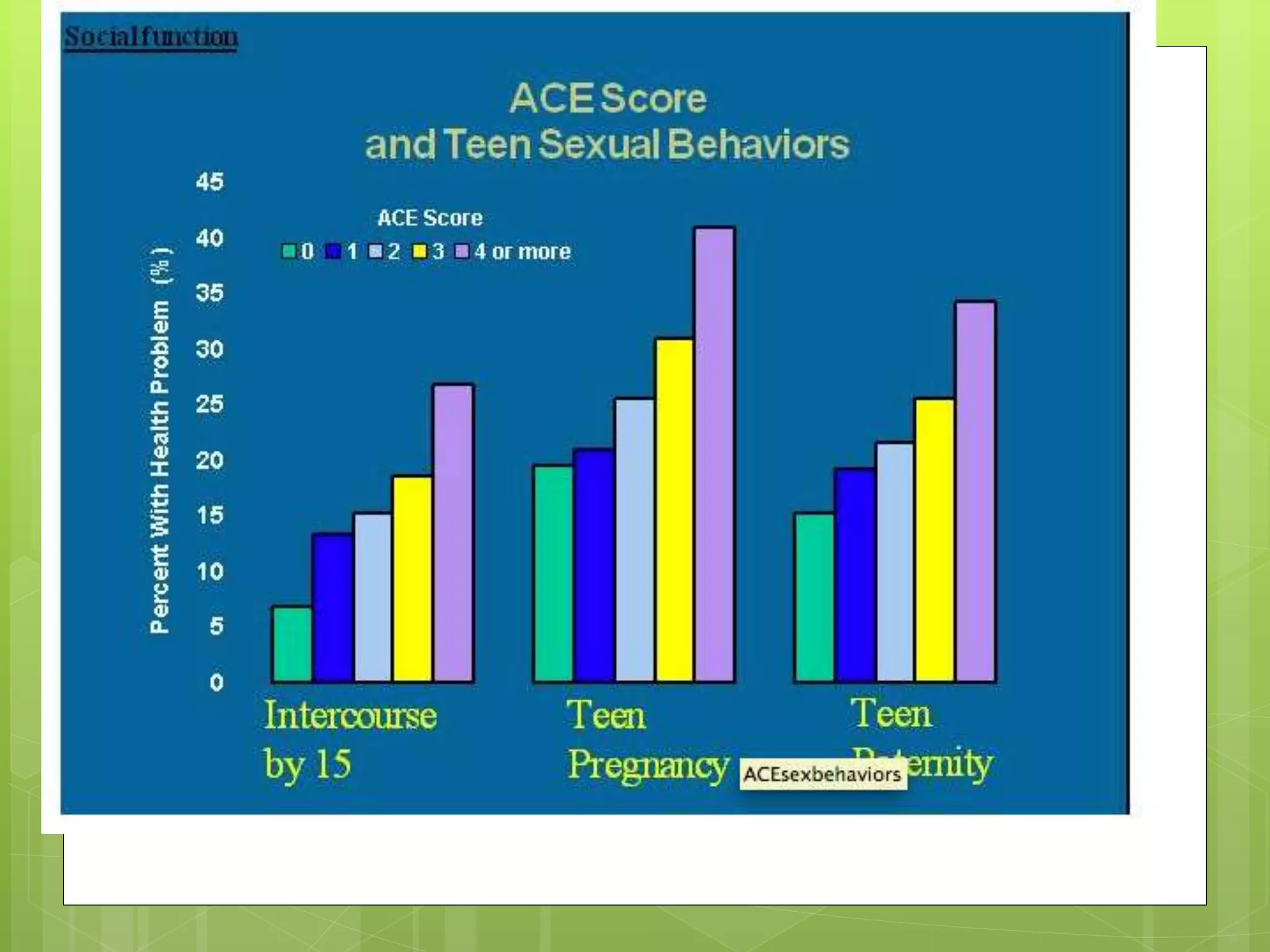
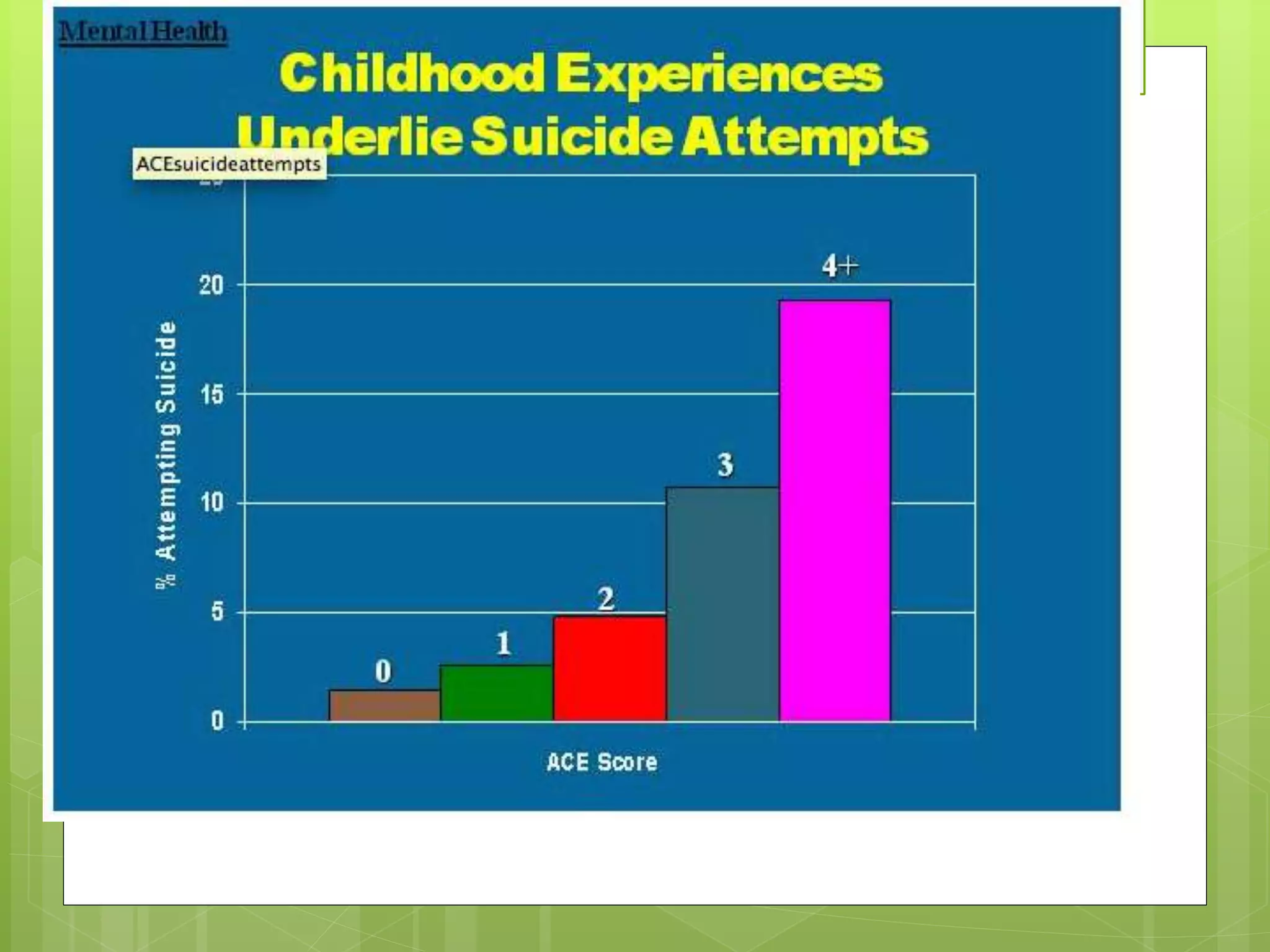
    Other Findings: •childhood trauma was very common, even in employed white middle-class, college-educated people with great health insurance; • there was a direct link between childhood trauma and adult onset of chronic disease, as well as depression, suicide, being violent and a victim of violence; • more types of trauma increased the risk of health, social and emotional problems. • people usually experience more than one type of trauma – rarely is it only sex abuse or only verbal abuse.
  • 18.
    Two thirds ofthe 17,000 people in the ACE Study had an ACE score of at least one 87 percent of those had more than one. Eighteen states have done their own ACE surveys; their results are similar to the CDC’s ACE Study.
  • 31.
    APA January 2008Cover Story: PTSD treatments grow in evidence and effectiveness • Prolonged Exposure Therapy • Cognitive-Processing Therapy • Stress-inoculation Training • Eye Movement Desensitization and Reprocessing (EMDR) • Medications http://www.apa.org/monitor/jan08/ptsd.aspx
  • 32.
    U.S. Department ofVeterans Affairs PTSD: National Center for PTSD • Cognitive Processing Therapy • Prolonged Exposure Therapy • EMDR • Medicine http://www.ptsd.va.gov/public/treatment/therapy-med/ treatment-ptsd.asp
  • 33.
    What can TICNdo to address these issues?  Meet regularly for collaboration and training  Assess and connect with current resources in the community  Identify where education is needed  Share Resources  Presentations/CEU’s  Outreach  Other ideas?
  • 34.
    Speakers’ Bureau? PossibleTopics:  Understanding Trauma and it’s Impact  Attachment Issues as a Form of Trauma  Effective Trauma Resolution Techniques  Trauma and Autoimmune Illness – Understanding the Link  Medical Treatment and Support for the Traumatized Individual  Psychotropic Medications and Trauma  Understanding Inter-generational Trauma and Epigenetics  Thoughts, Toxins, and Trauma
  • 35.
  • 36.
  • 37.
    Thank you forcoming!!!  Please complete Sign up Sheet  Applications for Website Providers List  Meet and Greet  Next meeting: April 11th @ 2 PM

Editor's Notes

  • #2 Welcome everyone, get a raise of hands: who are therapists, who are medical professionals, who are public? Anyone else?
  • #3 As I was preparing for this presentation, caught up in the midst of details, power point, etc. L.S. – 23 year old female, attachment issues, one incident of molestation by an uncle at age 7. – I was explaining autoimmune/trauma link and she explained she was 60 MG of prednisone for Lupus. Thought she’d have to be on at least 5 mg. her whole life, since therapy her numbers have improved and she’s down to 1 MG and all her numbers look better than they’d ever expect. I’m sure many therapists here have similar stories. Teaming with Mental Health and Medical works.
  • #5 So everyone stand up. Do your best dance move for 10 second. Now you are all officially part of the movement! Maybe that brought up some of YOUR childhood trauma . I feel funny showing this movie, partially because I feel about as silly standing up here as that guy looked on that video. Also, I want to be clear that I don’t view myself as the initiator of this movement. There are a lot of great people in this community who have been working to forward trauma informed care for a long time. I just hope to jump in the crowd with the rest of you to help keep this movement moving forward to this tipping point that we are trying to create.
  • #7 Lack of awareness Practitioners who are scared to ask, scared to stir up trauma, not sure how to handle it if it comes up Practitioners who are triggered and have not dealt with their own trauma Not knowing that there are effective ways to handle and resolve trauma
  • #8 Dr. Jeffrey Brenner is founder and executive director of the Camden Coalition of Healthcare Providers, and a 2013 MacArthur Foundation genius award winner. He did groundbreaking work in Camden, N.J., by using data to identify people who were hospital emergency room “frequent fliers”. He found that between their trips to the ER, little or nothing was done to help them improve their health. So, he began putting basic services in place to help these people. His work was written up in a New Yorker article — The Hot Spotters, by Dr. Atul Gawande — in  2011. Tex-Arcana therapist – doctors office, one therapists, took three years to convince them to start asking. Now she has a three year waiting list. We have a lot of work to do.
  • #11 What is your understanding of trauma informed care?
  • #13 This is good timing for mental health and medical practitioners to increase collaboration, as the ACO initiatives are imminent. Trauma issues are a great area for collaboration. In my building I work with psychiatrists, APRN’s, PA’s who refer to me when they recognize that their patients may have underlying trauma that is contributing to physical and mental health issues. We take a team approach and work effectively to reduce symptoms.
  • #14 How many have heard of this study? Tell the story: Vincent Filleti, I heard him at EMDR conference in 2013. Medical doctor, noticed his patients seemed to have a common them.
  • #15 This is the short version of the questionnaire. Maybe score it for yourself…
  • #16 I’ll give a few more minutes.
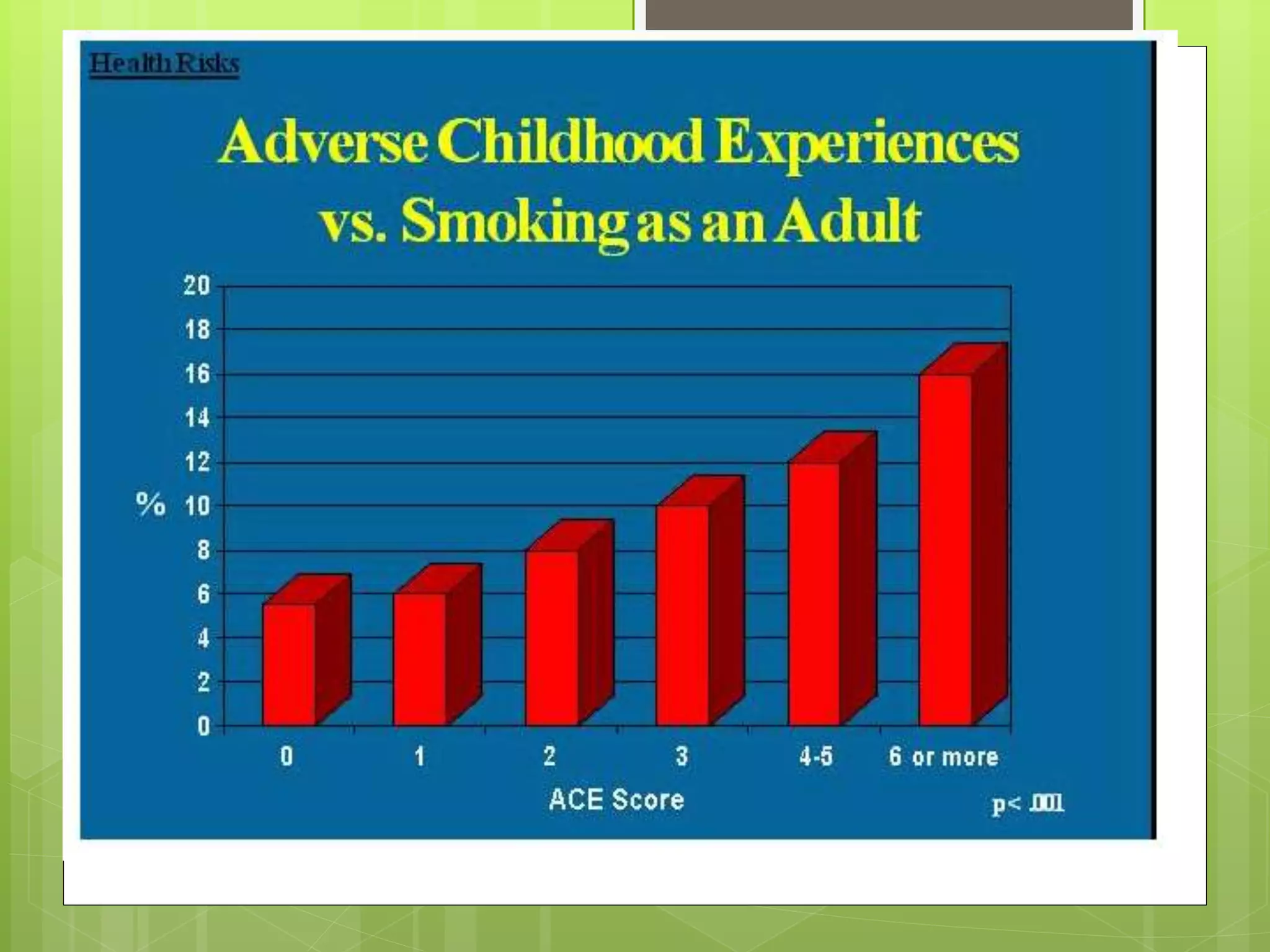
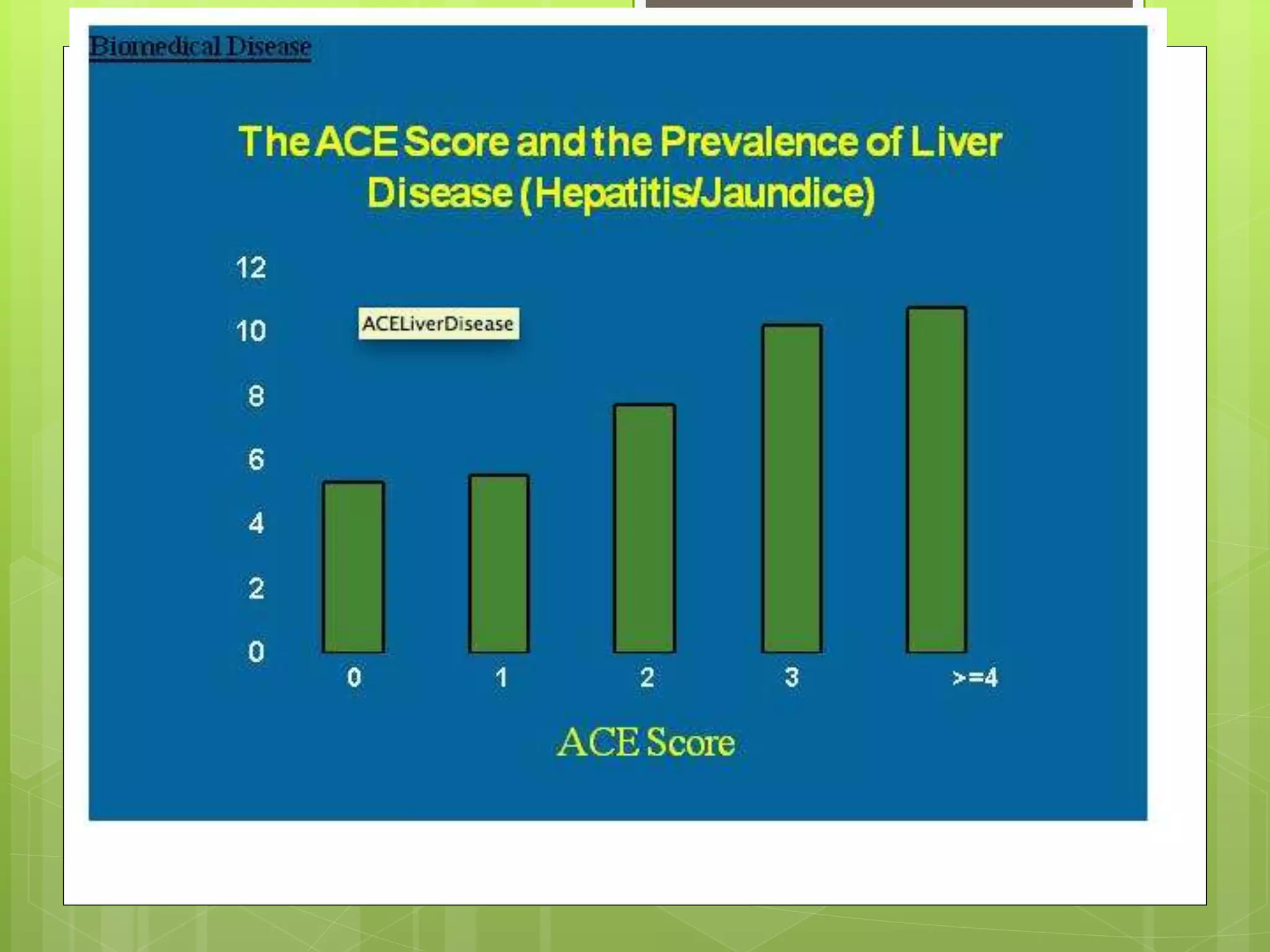
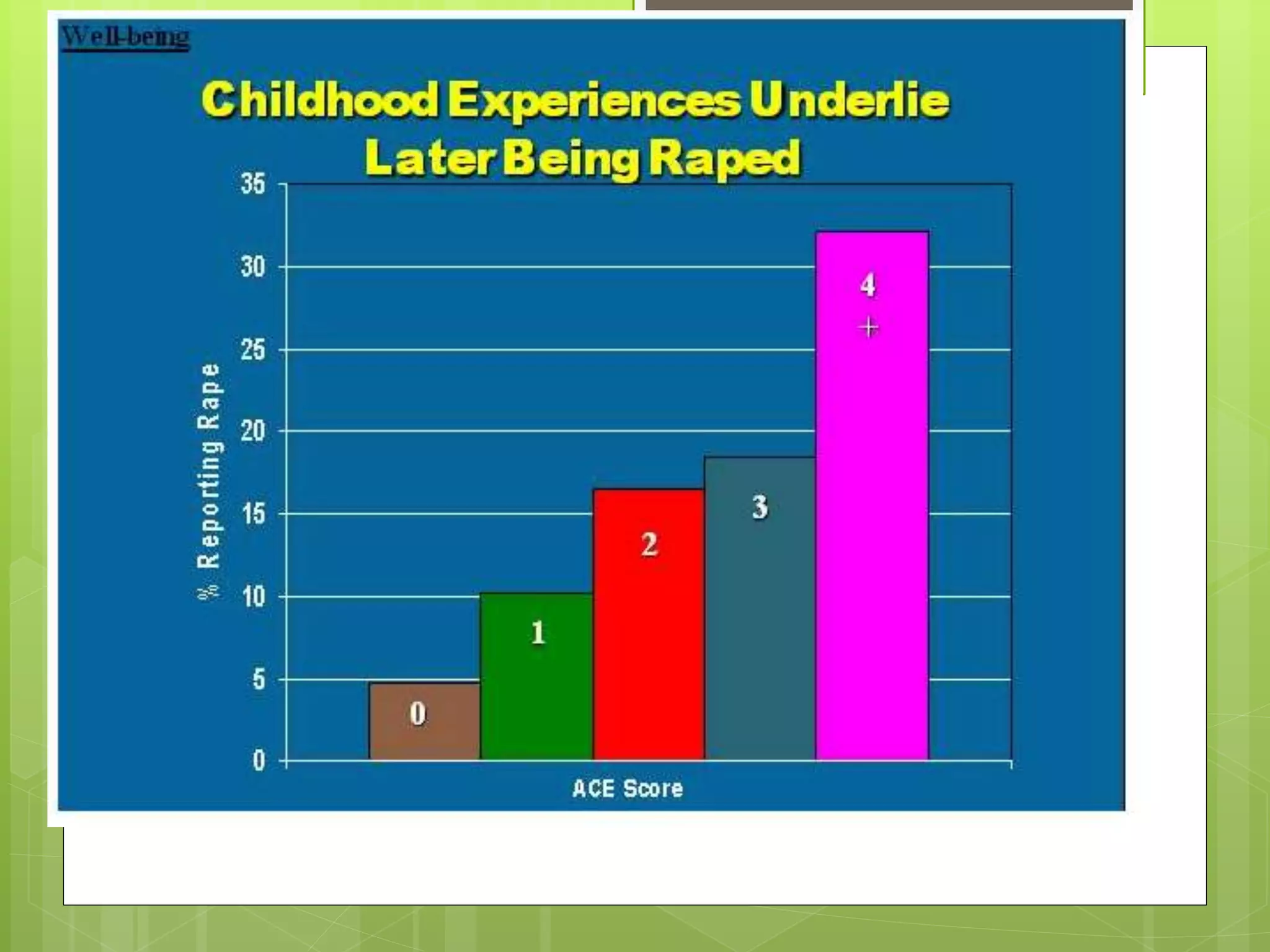
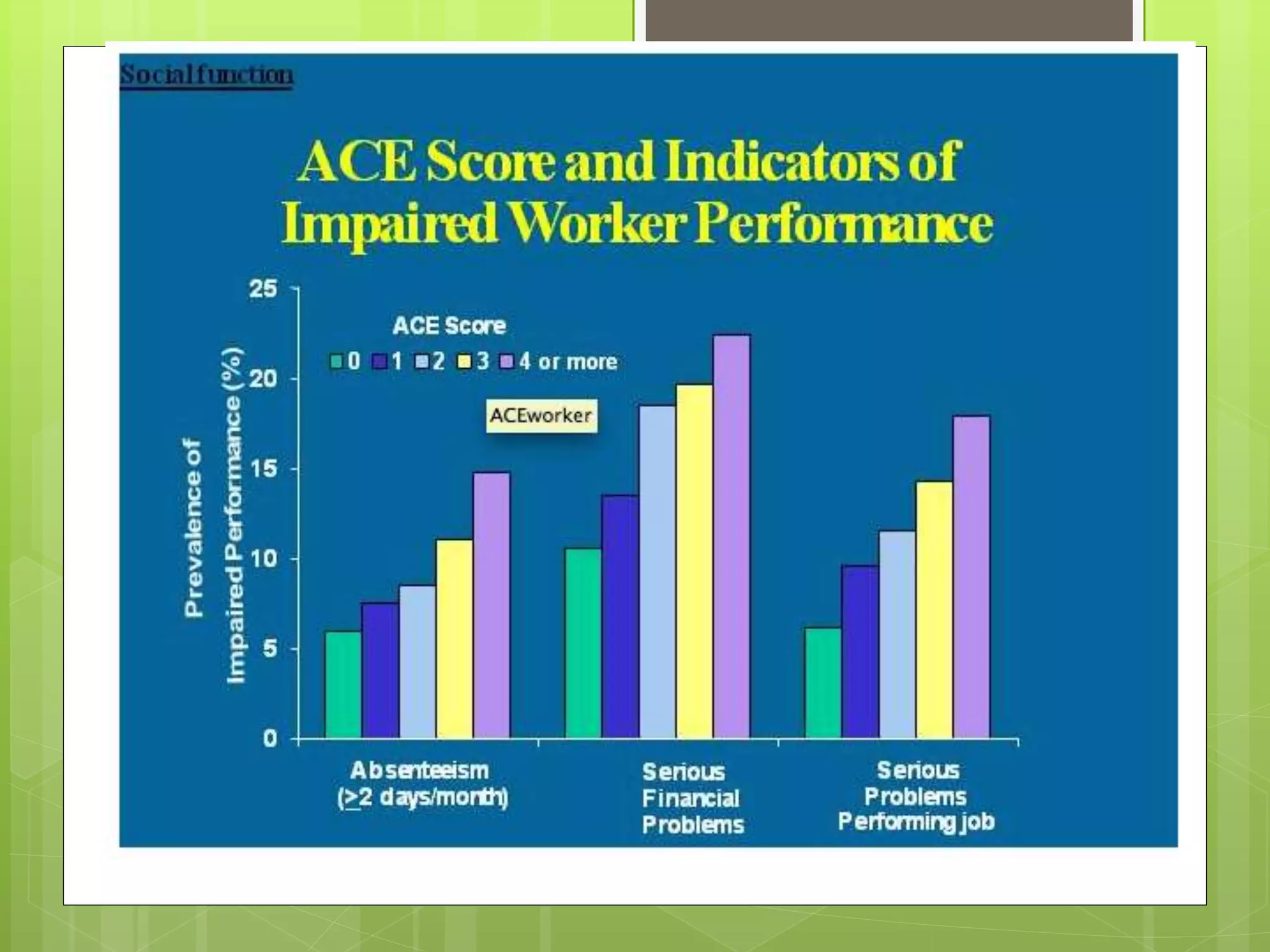
  • #20 Run quickly through a list of slides, reporting correlations between childhood trauma and adult issues. I was impressed by the direct relationship between the number of traumas and a variety of adult problems.
  • #27 Chronic obstructive pulmonary disease
  • #33 VA is providing these four treatments to vets. I brought page from the VA handout for trauma treatment which explains EMDR. Copies in the back
  • #34 Any other ideas?