Nazi Germany (1933 – 1945)
Nazi Germany
 Control of the State
 Opposition
 Propaganda
 Policy towards the religion
 Policy towards the youth
 Policy towards the women
Control of the State
 Nazis used different organizations and structures to control the people:
 SS
 Gestapo
 Police and courts
 Concentration camps
The SS
 The SS was a group of loyal to Hitler
 They were trained and equipped to impose the Nazi
aims by the force
 Once the Nazis took over the power, they were in
charge of controlling the society
 There were different subdivisions among the SS:
- Waffen SS: Army
- Death´s Head: Persecution of the Jews
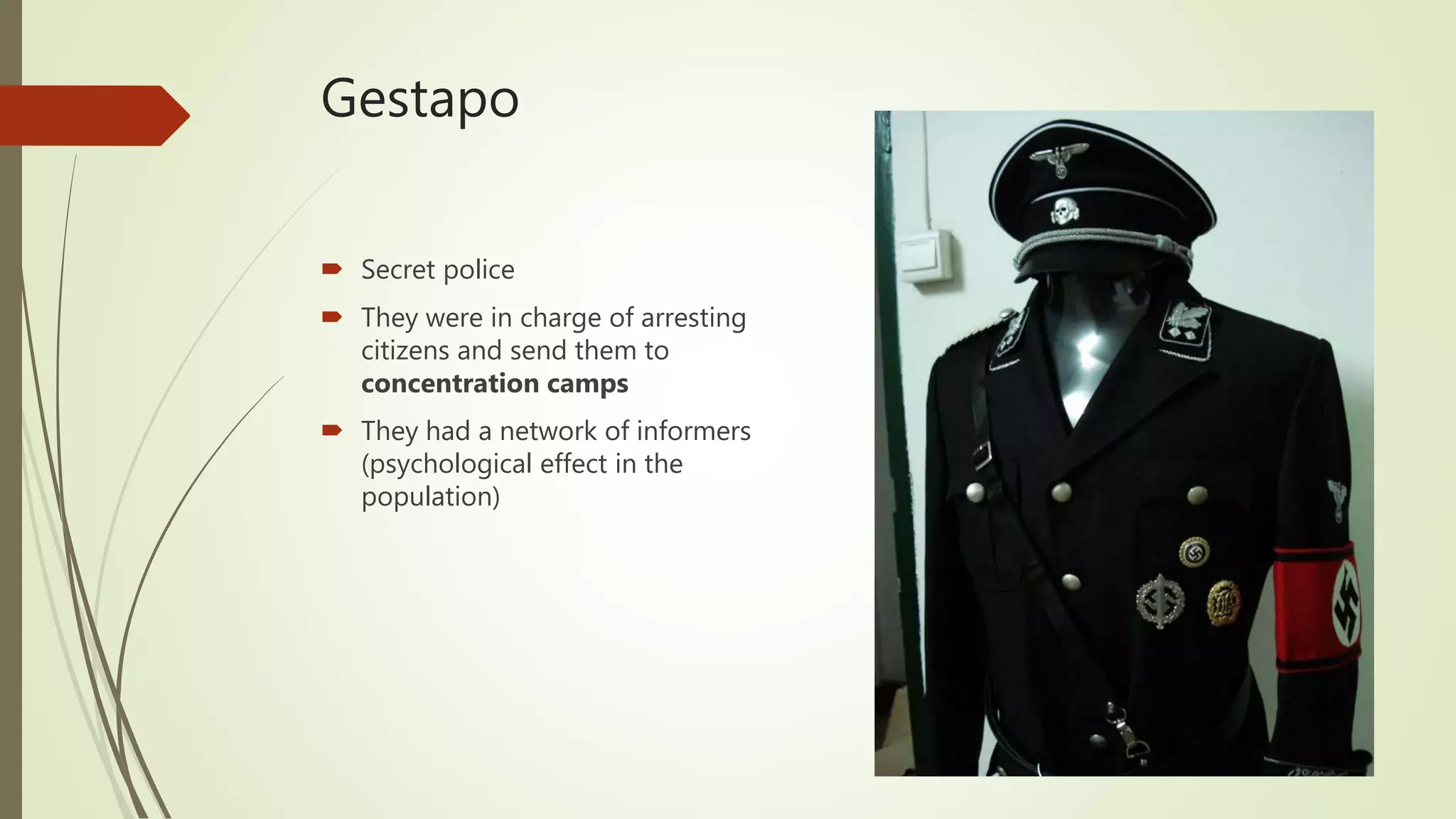
Gestapo
 Secret police
 They were in charge of arresting
citizens and send them to
concentration camps
 They had a network of informers
(psychological effect in the
population)
Concentration camps
 Concentration camps were
established in 1933
 Those who opposed the Nazis were
sent to concentration camps, but also
gypsies, Jews or homosexuals.
 The prisoners were forced to work if
they want to eat
The control of the police
 Nazis controlled the members of the
police, judges and the courts
 Generally, they simply give the high
rank positions to a member of the
party as a way to establish control
 They were forced to swear loyalty to
the Nazi principles
Nazi administration
 Nazis had ways of control the society,
although the organization was a little
bit chaotic
 The only way to pass a law was a
signature of the Fuhrer
 So, laws were dependent on Hitler´s
wills and behavior
Hitler´s schedule
 Wake up: 11 AM
 Breakfast and reading of newspapers: 11 – 12 AM
 Work: 12 – 2 PM
 Lunch: 2 – 4 PM
 Exercise: 4 – 4:30 P.M
 Take a nap: 4:30 – 5 PM
 Work: 5 – 9 PM
 Dinner: 9 – 10 PM
 Leisure time: 10 – 2 AM
The opposition to the Nazis
 Germans were scared to show the opposition to the Nazis in public for obvious
reasons
 But, many Germans supported German policies. Why?
 The population did not care about liberties, because:
- The economy was improving
- Nazis were fighting against Communism
- Germany recovered a prestigious position in the international relations
Poem
 First they came for the Socialists, and I did not speak out—
Because I was not a Socialist.
 Then they came for the Trade Unionists, and I did not speak out—
Because I was not a Trade Unionist.
 Then they came for the Jews, and I did not speak out—
Because I was not a Jew.
 Then they came for me—and there was no one left to speak for me.
 Martin Niemoller
 “Als die Nazis die Kommunisten holten,
habe ich geschwiegen;
ich war ja kein Kommunist.
 Als sie die Sozialdemokraten einsperrten,
habe ich geschwiegen;
ich war ja kein Sozialdemokrat.
 Als sie die Gewerkschafter holten,
habe ich nicht protestiert;
ich war ja kein Gewerkschafter.
 Als sie die Juden holten,
habe ich geschwiegen;
ich war ja kein Jude.
 Als sie mich holten,
gab es keinen mehr, der protestierte.”
Questions
 What is Niemoller saying?
 Can you think of a way that this statement applies to anything in the world today or in
other historical contexts?
 Why didn't the author "speak up" as he says for the Communists, Jews, trade unionists
and Catholics?
 If he had "spoken up", what would have happened?
 How can you apply this to your own personal life experiences in school, home, the
community and other areas?
The opposition to the Nazis
 Traumatic experience during the
Depression
 People just want to keep the job they
got, not get in trouble
 Extensive use of propaganda to
portray a positive image of Hitler and
the Nazis
The use of propaganda in the Nazi regime
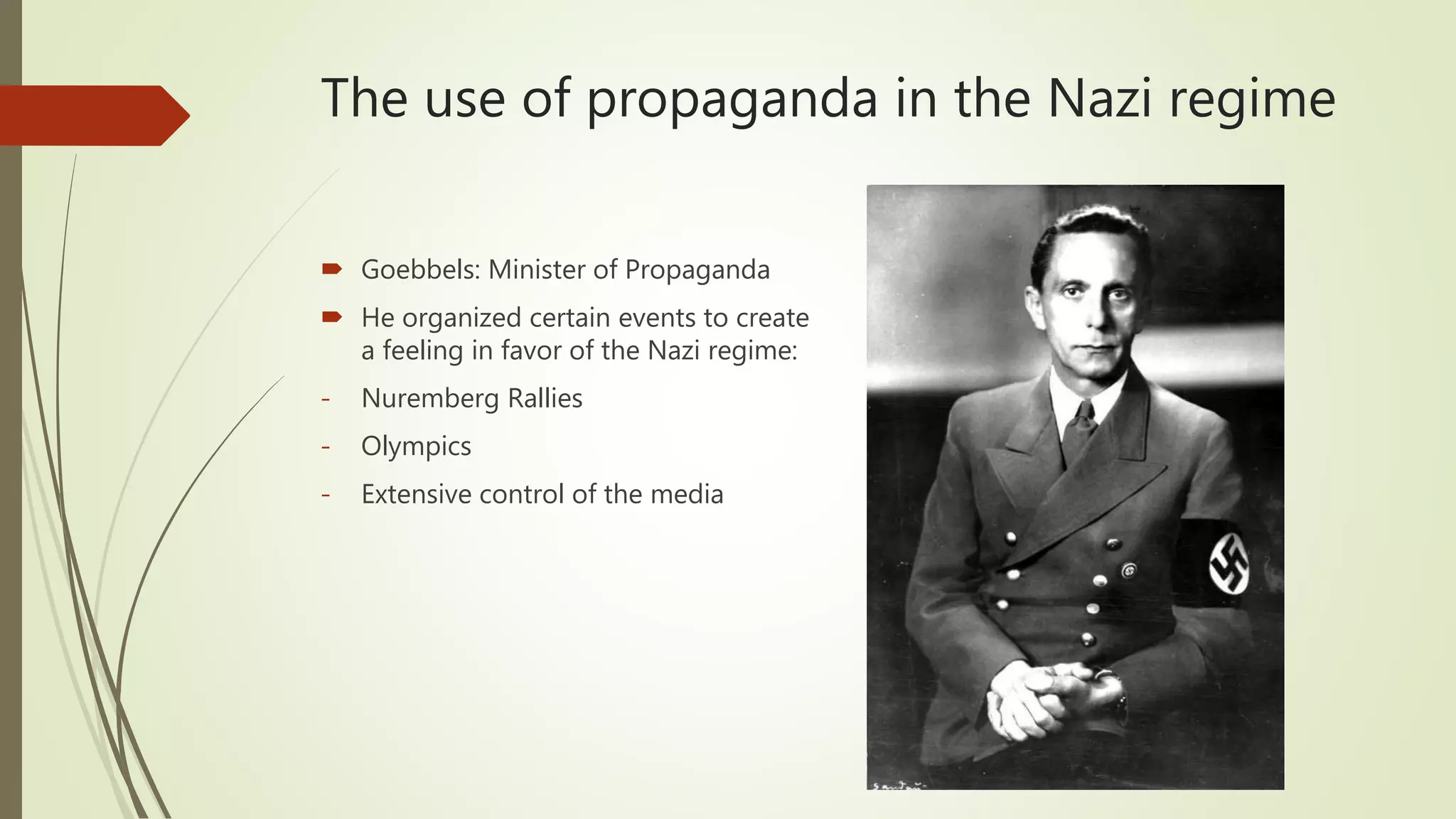
 Goebbels: Minister of Propaganda
 He organized certain events to create
a feeling in favor of the Nazi regime:
- Nuremberg Rallies
- Olympics
- Extensive control of the media
Nuremberg Rallies
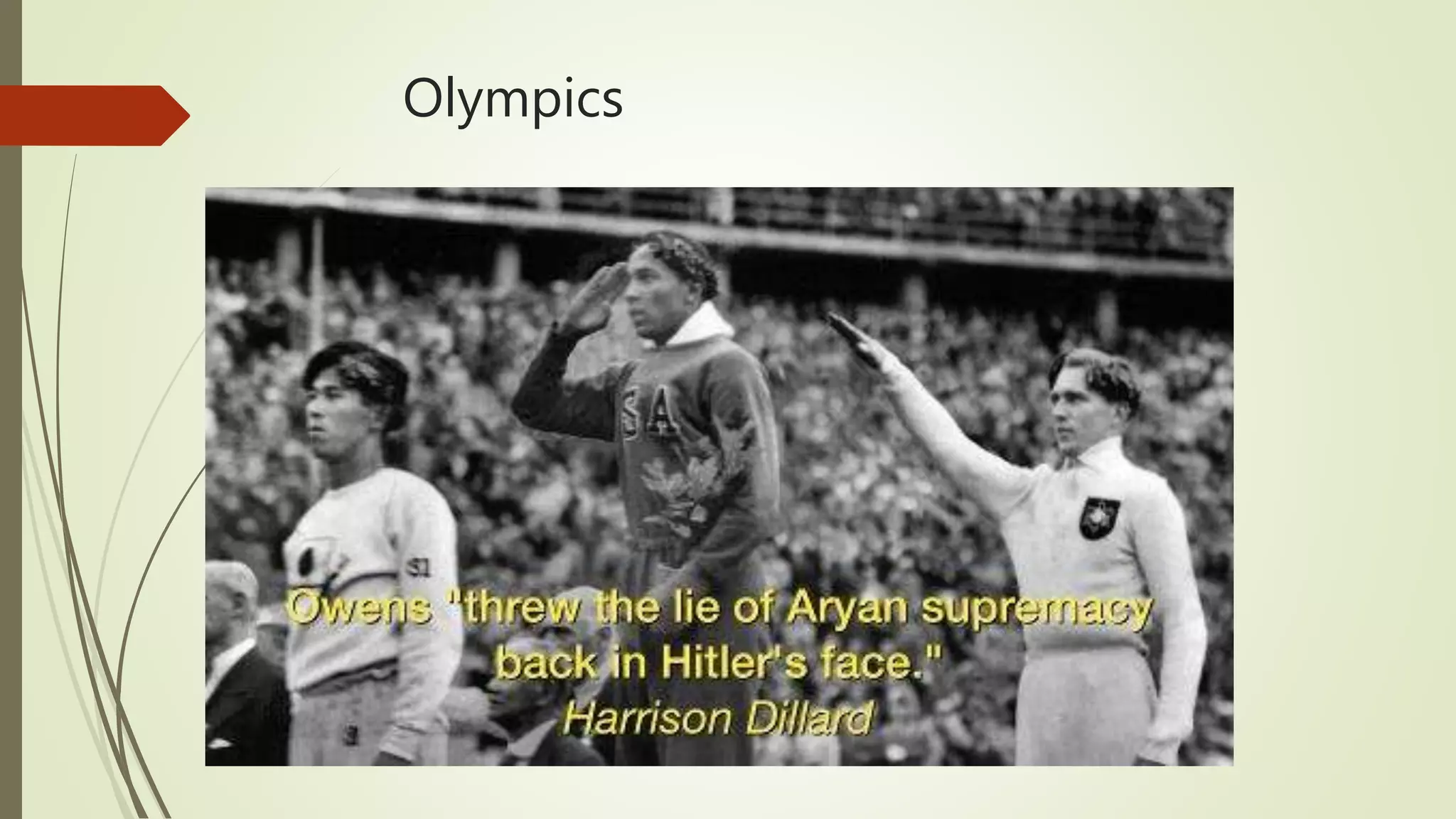
Olympics (1936)
Olympics
The control of the media
 Mein Kampf was a best-seller in
Germany during the Nazi period
 Organization of burning-book
gatherings
 Strict censorship in the newspapers,
books, but also music (jazz was
forbidden)
The control of the media
 Goebbels loved new technologies:
 Use of posters to show Nazi ideas
 Cheap radios available for listening
just German channels (listen the BBC
was punished with death penalty)
and speakers in the streets
* Describe what you can see
* Who do you think each poster is aimed at?
* What is the message behind the poster?
Why was it produced?
What can you learn from these
sources about Nazi methods of
propaganda?
Look at the poster carefully.
What is the purpose?
The Nazi flag to appeal to peoples
patriotism and sense of loyalty.
This youth is obviously happy to
join the organisation. She is
enjoying herself.
Military uniform. A sense of
belonging to an important
organisation. Pride.
What I can see
Key Question:
What does
this poster
tell us about:
*Nazi beliefs
regarding the
family and
family life
* Nazi
attitudes
regarding the
role of
women?
The Eagle
(The State)
protecting the
family
The father
above the
family
The mother
caring for the
baby – scarf on
her head
representing
domestic work
Happy, healthy
children
What I can
see
Key Question:
What does this
film poster tell
us about Nazi
attitudes
towards the
Jews?
What is the
purpose of this
poster?
Physical
features
Map of
Germany
Handful
of money
A
knotted
whip
Title in
Bold
Communist
Symbol

Nazi germany (1933 – 1945) IGCSE

  • 1.
  • 2.
    Nazi Germany  Controlof the State  Opposition  Propaganda  Policy towards the religion  Policy towards the youth  Policy towards the women
  • 4.
    Control of theState  Nazis used different organizations and structures to control the people:  SS  Gestapo  Police and courts  Concentration camps
  • 5.
    The SS  TheSS was a group of loyal to Hitler  They were trained and equipped to impose the Nazi aims by the force  Once the Nazis took over the power, they were in charge of controlling the society  There were different subdivisions among the SS: - Waffen SS: Army - Death´s Head: Persecution of the Jews
  • 6.
    Gestapo  Secret police They were in charge of arresting citizens and send them to concentration camps  They had a network of informers (psychological effect in the population)
  • 7.
    Concentration camps  Concentrationcamps were established in 1933  Those who opposed the Nazis were sent to concentration camps, but also gypsies, Jews or homosexuals.  The prisoners were forced to work if they want to eat
  • 9.
    The control ofthe police  Nazis controlled the members of the police, judges and the courts  Generally, they simply give the high rank positions to a member of the party as a way to establish control  They were forced to swear loyalty to the Nazi principles
  • 10.
    Nazi administration  Nazishad ways of control the society, although the organization was a little bit chaotic  The only way to pass a law was a signature of the Fuhrer  So, laws were dependent on Hitler´s wills and behavior
  • 11.
    Hitler´s schedule  Wakeup: 11 AM  Breakfast and reading of newspapers: 11 – 12 AM  Work: 12 – 2 PM  Lunch: 2 – 4 PM  Exercise: 4 – 4:30 P.M  Take a nap: 4:30 – 5 PM  Work: 5 – 9 PM  Dinner: 9 – 10 PM  Leisure time: 10 – 2 AM
  • 12.
    The opposition tothe Nazis  Germans were scared to show the opposition to the Nazis in public for obvious reasons  But, many Germans supported German policies. Why?  The population did not care about liberties, because: - The economy was improving - Nazis were fighting against Communism - Germany recovered a prestigious position in the international relations
  • 13.
    Poem  First theycame for the Socialists, and I did not speak out— Because I was not a Socialist.  Then they came for the Trade Unionists, and I did not speak out— Because I was not a Trade Unionist.  Then they came for the Jews, and I did not speak out— Because I was not a Jew.  Then they came for me—and there was no one left to speak for me.  Martin Niemoller
  • 14.
     “Als dieNazis die Kommunisten holten, habe ich geschwiegen; ich war ja kein Kommunist.  Als sie die Sozialdemokraten einsperrten, habe ich geschwiegen; ich war ja kein Sozialdemokrat.  Als sie die Gewerkschafter holten, habe ich nicht protestiert; ich war ja kein Gewerkschafter.  Als sie die Juden holten, habe ich geschwiegen; ich war ja kein Jude.  Als sie mich holten, gab es keinen mehr, der protestierte.”
  • 15.
    Questions  What isNiemoller saying?  Can you think of a way that this statement applies to anything in the world today or in other historical contexts?  Why didn't the author "speak up" as he says for the Communists, Jews, trade unionists and Catholics?  If he had "spoken up", what would have happened?  How can you apply this to your own personal life experiences in school, home, the community and other areas?
  • 16.
    The opposition tothe Nazis  Traumatic experience during the Depression  People just want to keep the job they got, not get in trouble  Extensive use of propaganda to portray a positive image of Hitler and the Nazis
  • 17.
    The use ofpropaganda in the Nazi regime  Goebbels: Minister of Propaganda  He organized certain events to create a feeling in favor of the Nazi regime: - Nuremberg Rallies - Olympics - Extensive control of the media
  • 18.
  • 19.
  • 20.
  • 21.
    The control ofthe media  Mein Kampf was a best-seller in Germany during the Nazi period  Organization of burning-book gatherings  Strict censorship in the newspapers, books, but also music (jazz was forbidden)
  • 22.
    The control ofthe media  Goebbels loved new technologies:  Use of posters to show Nazi ideas  Cheap radios available for listening just German channels (listen the BBC was punished with death penalty) and speakers in the streets
  • 23.
    * Describe whatyou can see * Who do you think each poster is aimed at? * What is the message behind the poster? Why was it produced? What can you learn from these sources about Nazi methods of propaganda?
  • 24.
    Look at theposter carefully. What is the purpose? The Nazi flag to appeal to peoples patriotism and sense of loyalty. This youth is obviously happy to join the organisation. She is enjoying herself. Military uniform. A sense of belonging to an important organisation. Pride.
  • 25.
    What I cansee Key Question: What does this poster tell us about: *Nazi beliefs regarding the family and family life * Nazi attitudes regarding the role of women? The Eagle (The State) protecting the family The father above the family The mother caring for the baby – scarf on her head representing domestic work Happy, healthy children
  • 26.
    What I can see KeyQuestion: What does this film poster tell us about Nazi attitudes towards the Jews? What is the purpose of this poster? Physical features Map of Germany Handful of money A knotted whip Title in Bold Communist Symbol