Moderator:
Presenters:
Manisha Dahal Aanand
Kumar Shah
Garima
Poudyal
20th batch,
History taking and
examination procedures for
contact lens fitting
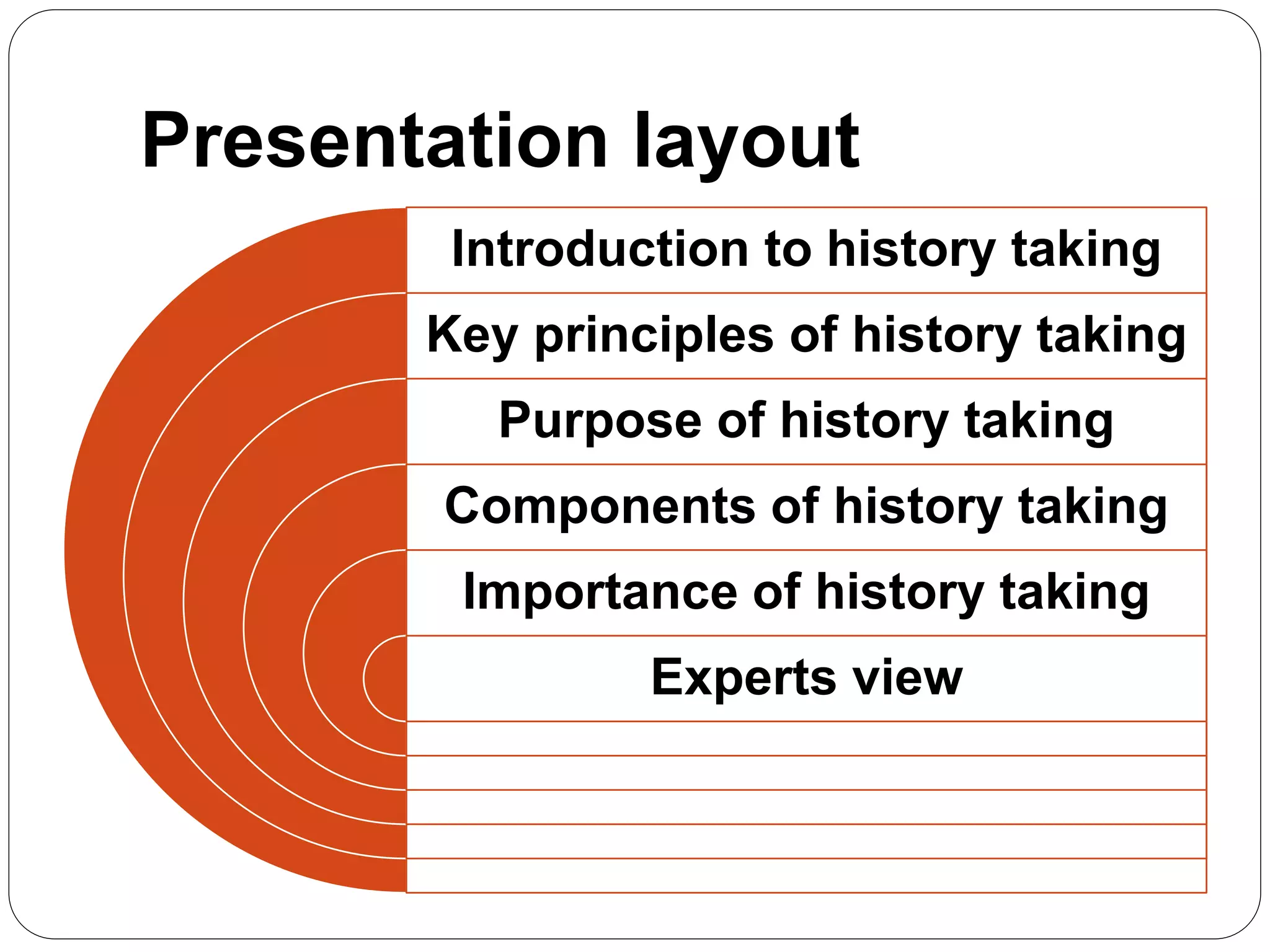
Presentation layout
Introduction to history taking
Key principles of history taking
Purpose of history taking
Components of history taking
Importance of history taking
Experts view
What is history taking?
Asking questions with the patients to obtain
information regarding their concerned problem
and aid in diagnosis.
It is estimated that 80% of diagnosis are based
on history taking alone.
It helps in gathering data both objective and
subjective for
i. Generating differential diagnosis
ii. Evaluating progress following a specific
treatment or procedure.
iii. Evaluating change in the patient’s condition or
Keys principles of history
taking
History must be taken in a non judgmental,
sensitive and simple manner.
Ensure the patient is as comfortable as
possible.
Maintain good communication with the
patient in order to elicit proper history and to
be accurately able to recognize their
problems.
Listen to what the patient says.
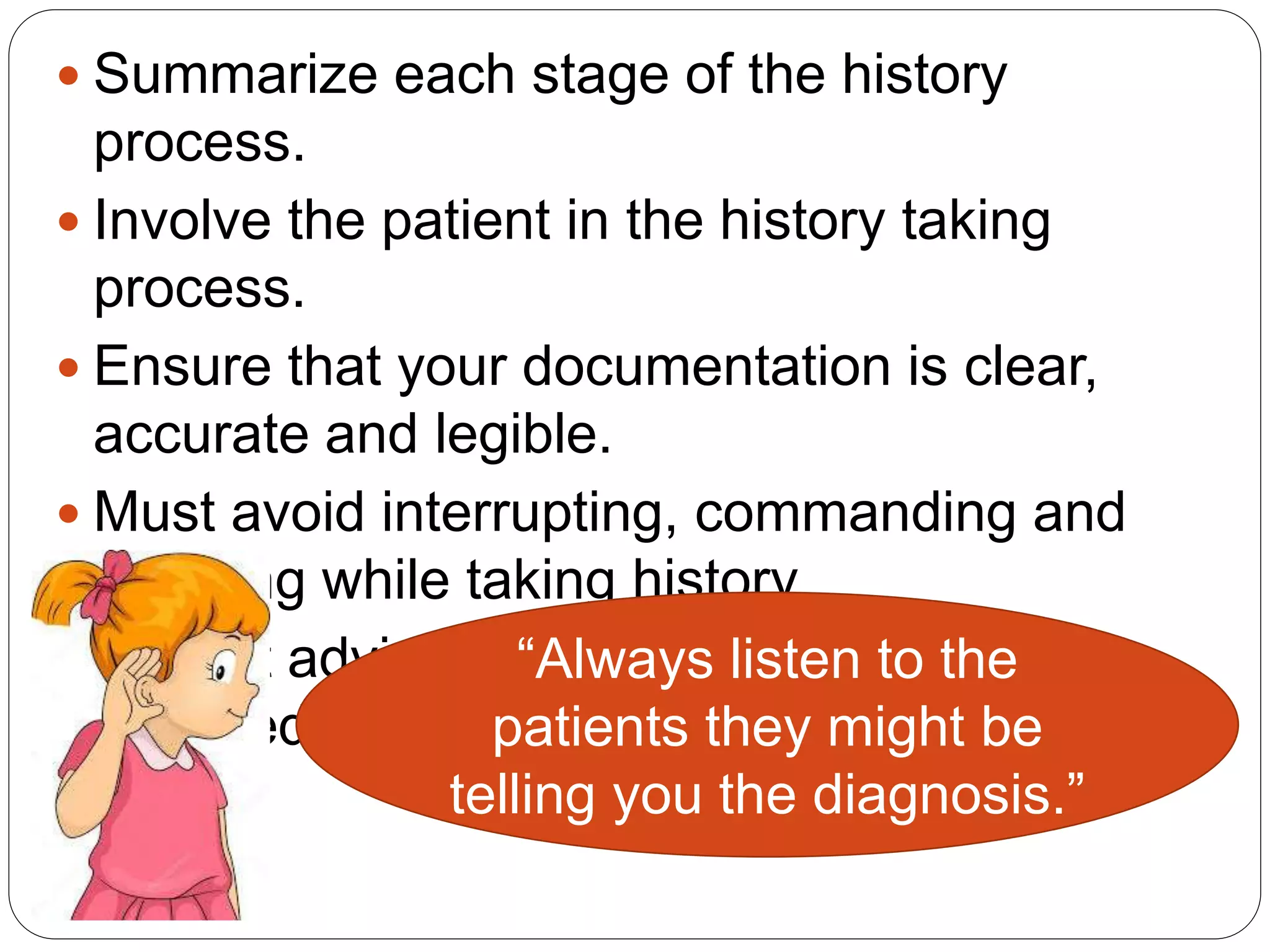
 Summarize each stage of the history
process.
 Involve the patient in the history taking
process.
 Ensure that your documentation is clear,
accurate and legible.
 Must avoid interrupting, commanding and
lecturing while taking history.
 Honest advice and opinion must always be
provided.
“Always listen to the
patients they might be
telling you the diagnosis.”
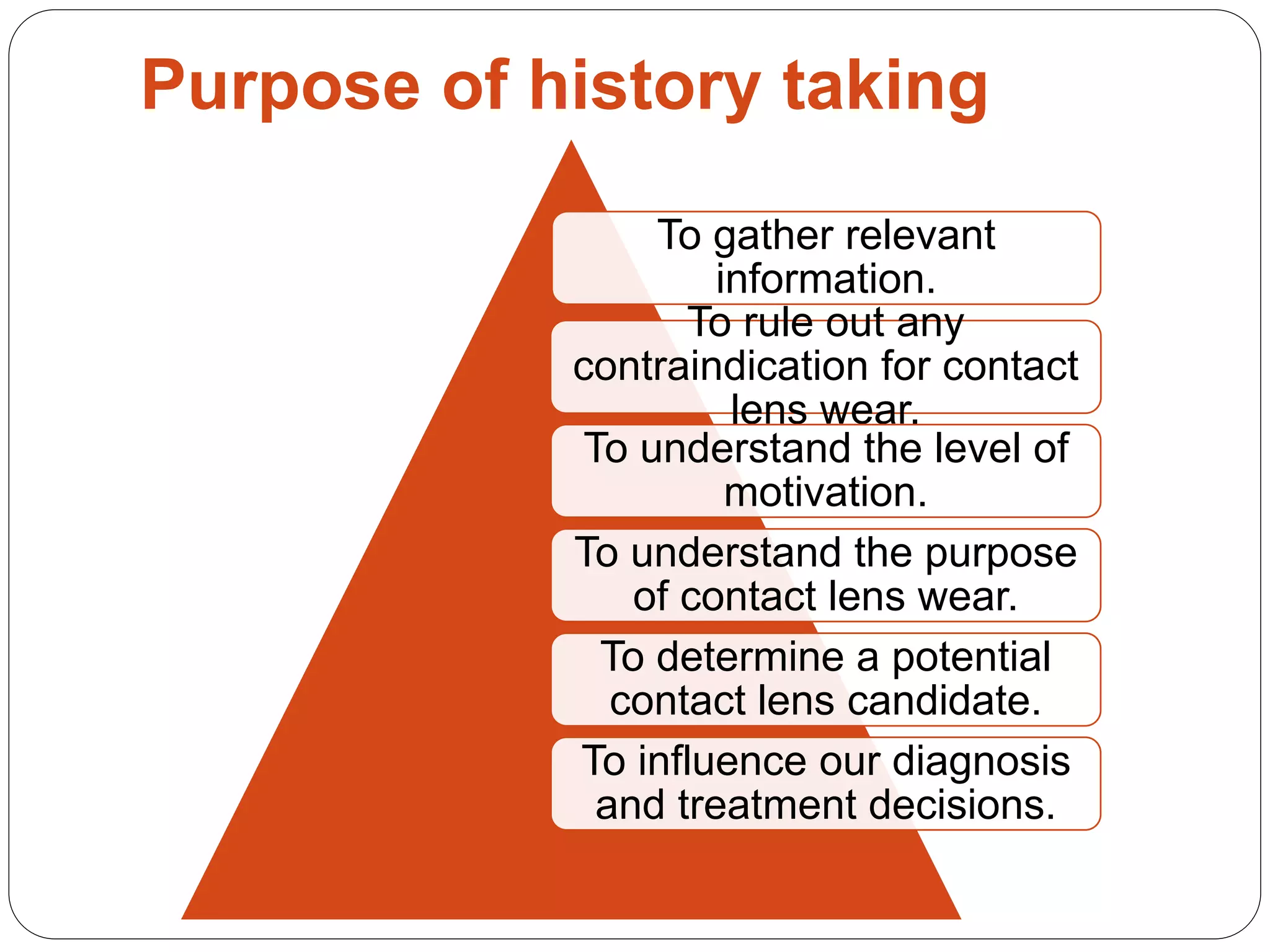
Purpose of history taking
To gather relevant
information.
To rule out any
contraindication for contact
lens wear.
To understand the level of
motivation.
To understand the purpose
of contact lens wear.
To determine a potential
contact lens candidate.
To influence our diagnosis
and treatment decisions.
Components of history taking
 The system of history taking is based on
problem oriented medical record system.
 Consists of four basic components.
1. Defined data base:
 It should include a problem oriented
history, tests of eye health, refraction and
binocular vision that are appropriate for
the patient’s age group.
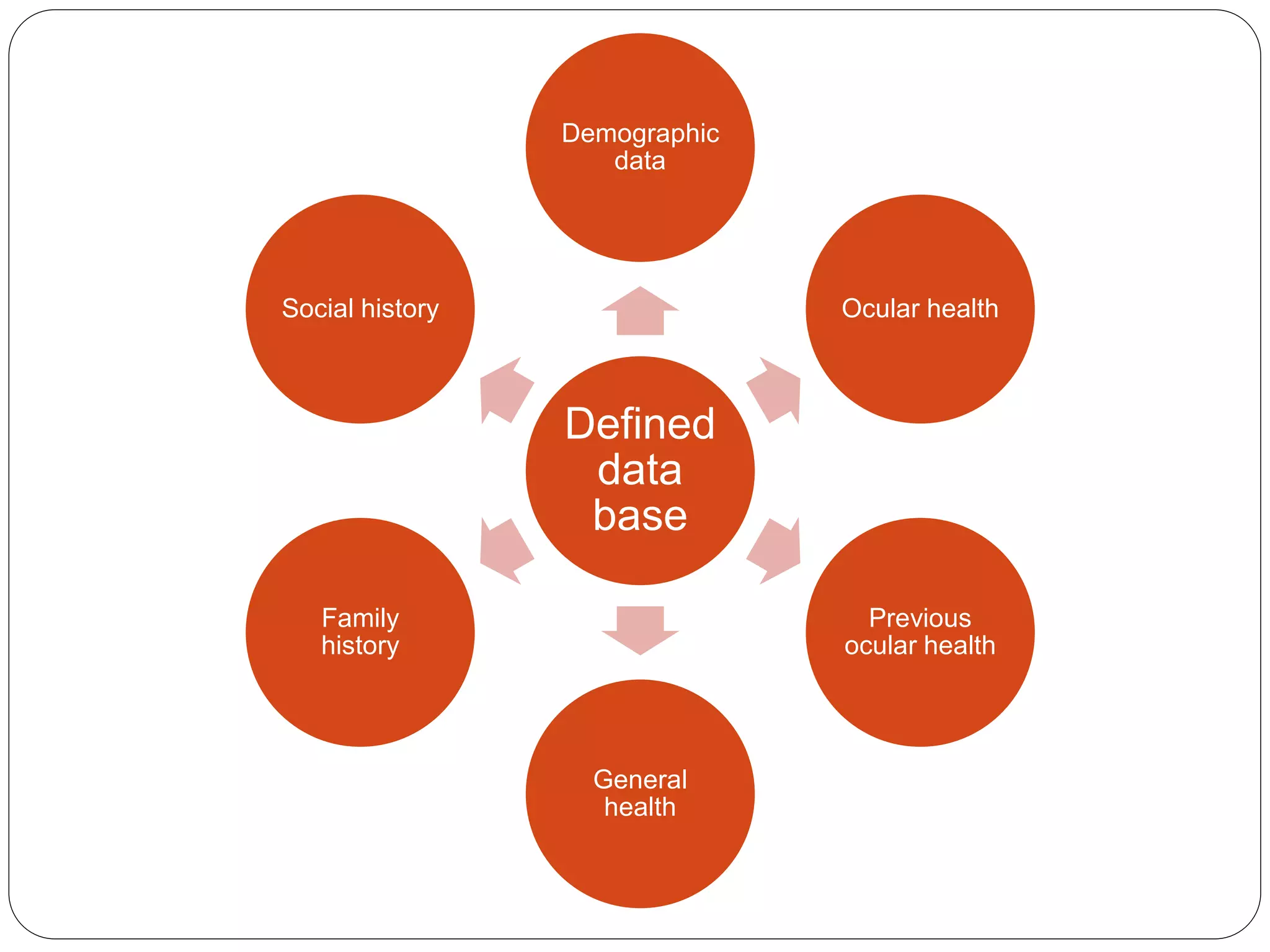
 It also includes:
Defined
data
base
Demographic
data
Ocular health
Previous
ocular health
General
health
Family
history
Social history
2. Complete problem list:
 It defines a problem as anything that
requires management or diagnostic
workup.
 It includes social, psychological and
demographic problems.
3. Initial treatment plan:
 Made on the basis of the complete problem
list.
 Helps to get more information concerning
diagnostic workup and management.
 Provide specific plans for each diagnostic
4. Progress report:
 Concerned with a single problem.
 Helps in the formulation of additional plans that
will be evaluated at the additional progress
visits.
 While fitting contact lens, progress note can
give direction to the procedures performed at
the previous visits following advice and
instruction given to the patients.
Worthy point:
Progress notes are of great value
for vision training patients and for
keeping tract of low-vision
patients progress in adapting to
their aids.
1.Demographic data or patient
profile
 Name (for identification, filing system,
friendly)
 Age (age related diseases –child: congenital
diseases, old: senile diseases)
 Address (endemic diseases, social status)
 Gender ( sex related diseases)
 Marital status
 Religion
 Phone number
2.Ocular health
Ocular conditions:
 Eye injuries
 Lid abnormalities
 Red eye
 dry eye
 conjunctivities
 Pterygium and pinguicula
 Blepharities
 Keratoconus
Ocular medication :
 Oral, topical or systemic
3. Previous ocular history
Ask about previous ophthalmological problems
including
 Poor vision since birth or during childhood
 Refractive errors
 History of lazy eye (i.e. amblyopia)
 Recurrent ocular problems such as
inflammatory (iritis) and herpes simplex
keratitis.
 Problems associated with contact lens wear
(e.g. bacterial keratitis).
 Recent cataract surgery (to look for
complication of surgery such as
endophthalmitis, wound infection, intraocular
lens displacement causing a sudden drop in
visual acuity).
 Past or recent refractive/corrective eye
surgery.
 Previous history of trauma to the eye
(associated with cataract, glaucoma, retinal
detachment).
4.Medical history or general
health
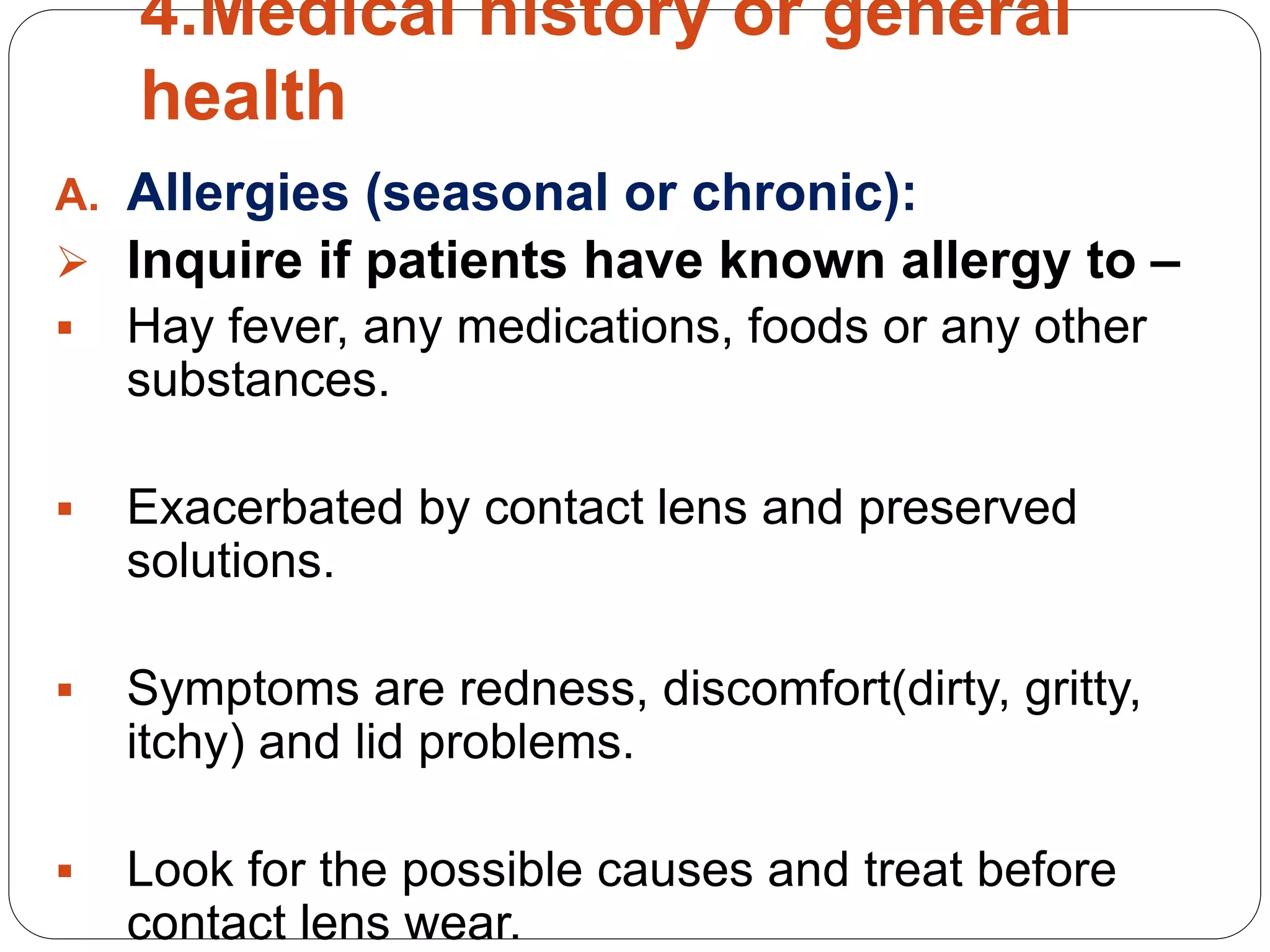
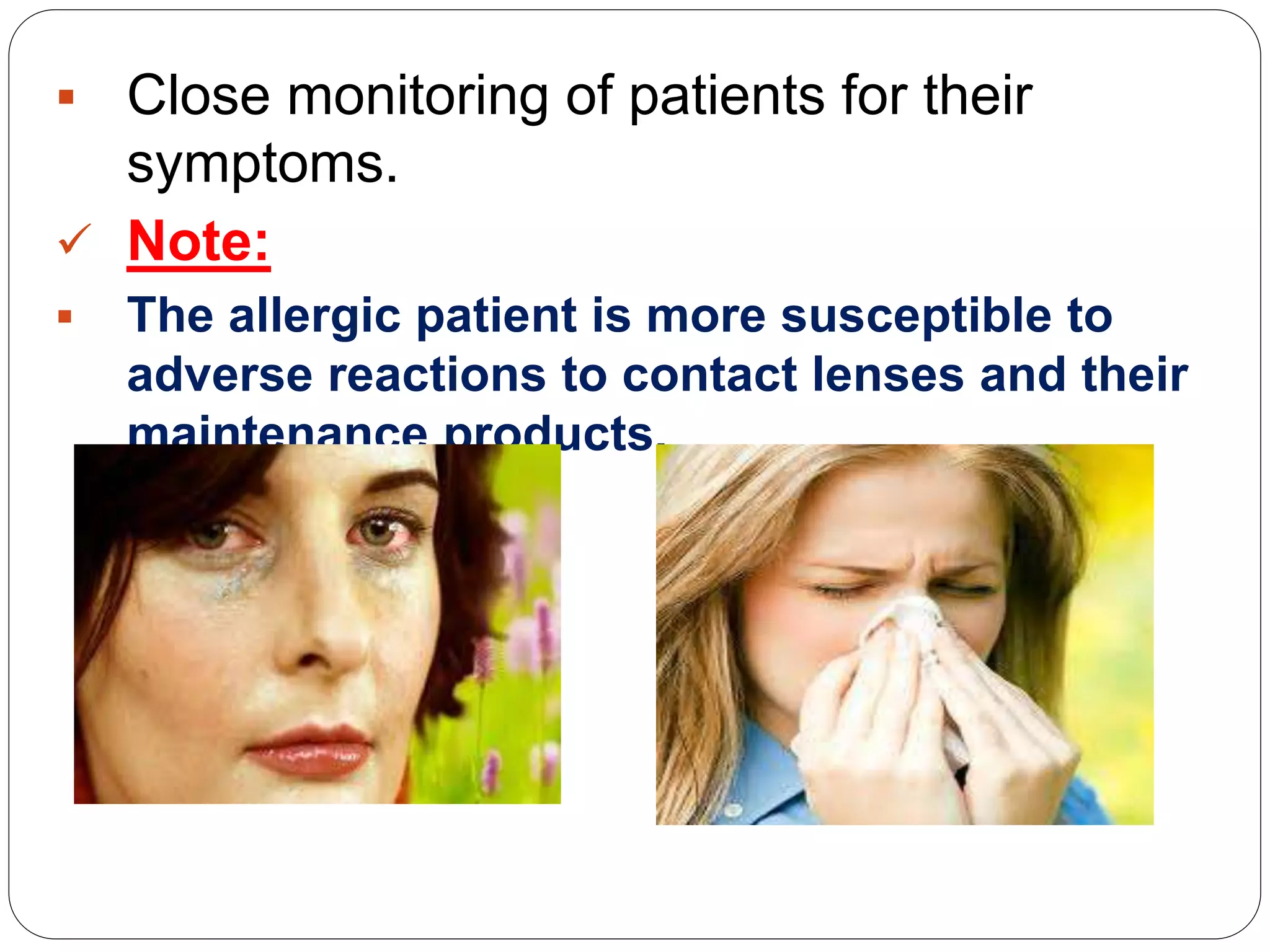
A. Allergies (seasonal or chronic):
 Inquire if patients have known allergy to –
 Hay fever, any medications, foods or any other
substances.
 Exacerbated by contact lens and preserved
solutions.
 Symptoms are redness, discomfort(dirty, gritty,
itchy) and lid problems.
 Look for the possible causes and treat before
contact lens wear.
 Close monitoring of patients for their
symptoms.
 Note:
 The allergic patient is more susceptible to
adverse reactions to contact lenses and their
maintenance products.
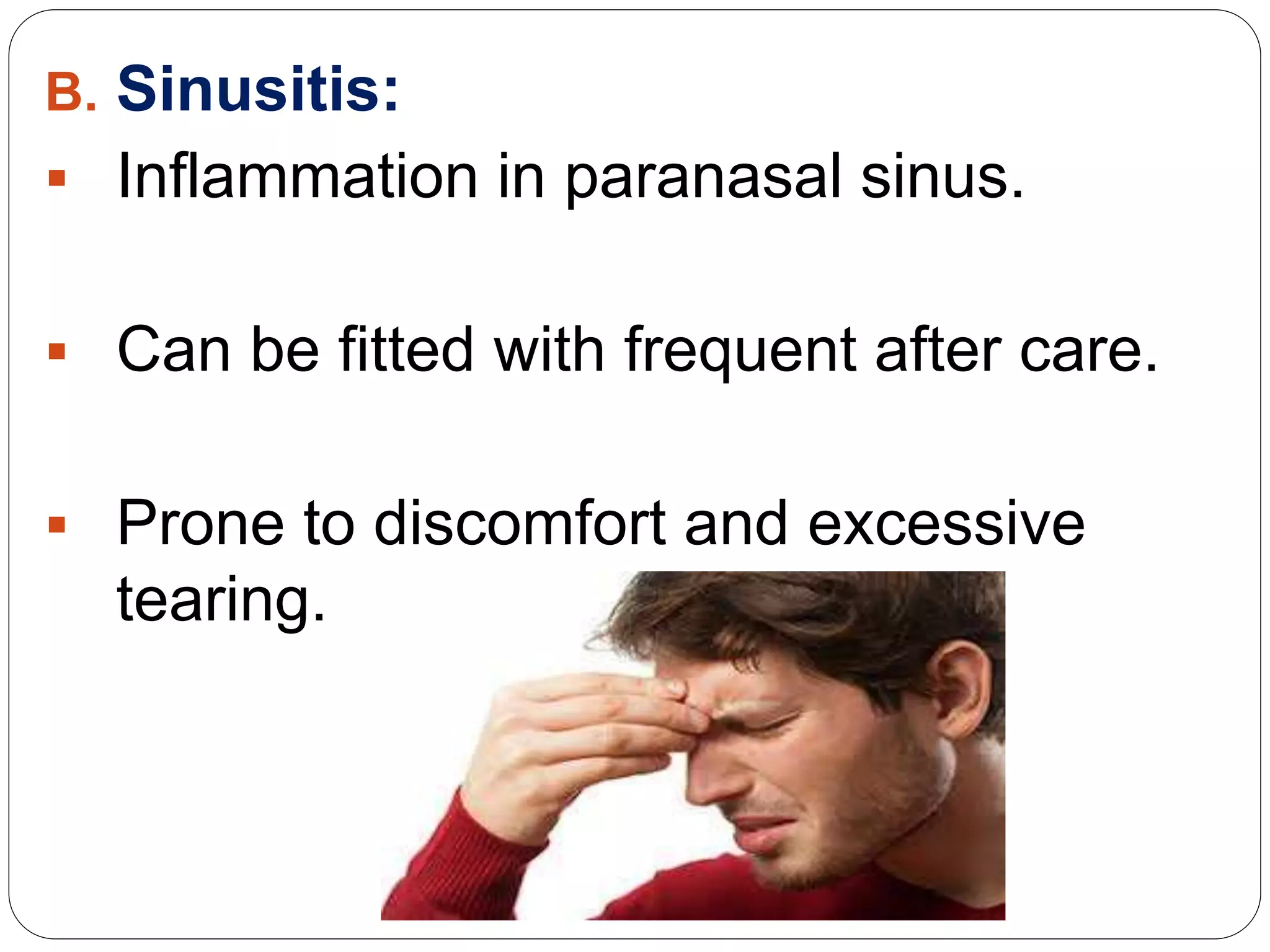
B. Sinusitis:
 Inflammation in paranasal sinus.
 Can be fitted with frequent after care.
 Prone to discomfort and excessive
tearing.
C. Diabetes:
 Metabolic disorder in which carbohydrate
utilization in the body is reduced and lipid
protein enhanced.
 Decrease contrast sensitivity
 Diabetic cornea may have SPK, recurrent
corneal erosions, persistent epithelial
defects, neurotrophic ulcers, stress,
delayed healing e.t.c.
 Not candidates for extended wear contact
lens use.
D. Pregnancy and menopause:
 Metabolic processes of cornea affected by
hormonal and systemic changes.
 Estrogen and progesterone level increases which
causes salt and water retention that swells the
cornea.
 Reduction in tear volume, lacrimation and TBUT.
 Shift towards myopia
 Minor reduction in amplitude of accommodation,
NPC and AC/A ratio.
 Low incidence of melanin deposits.
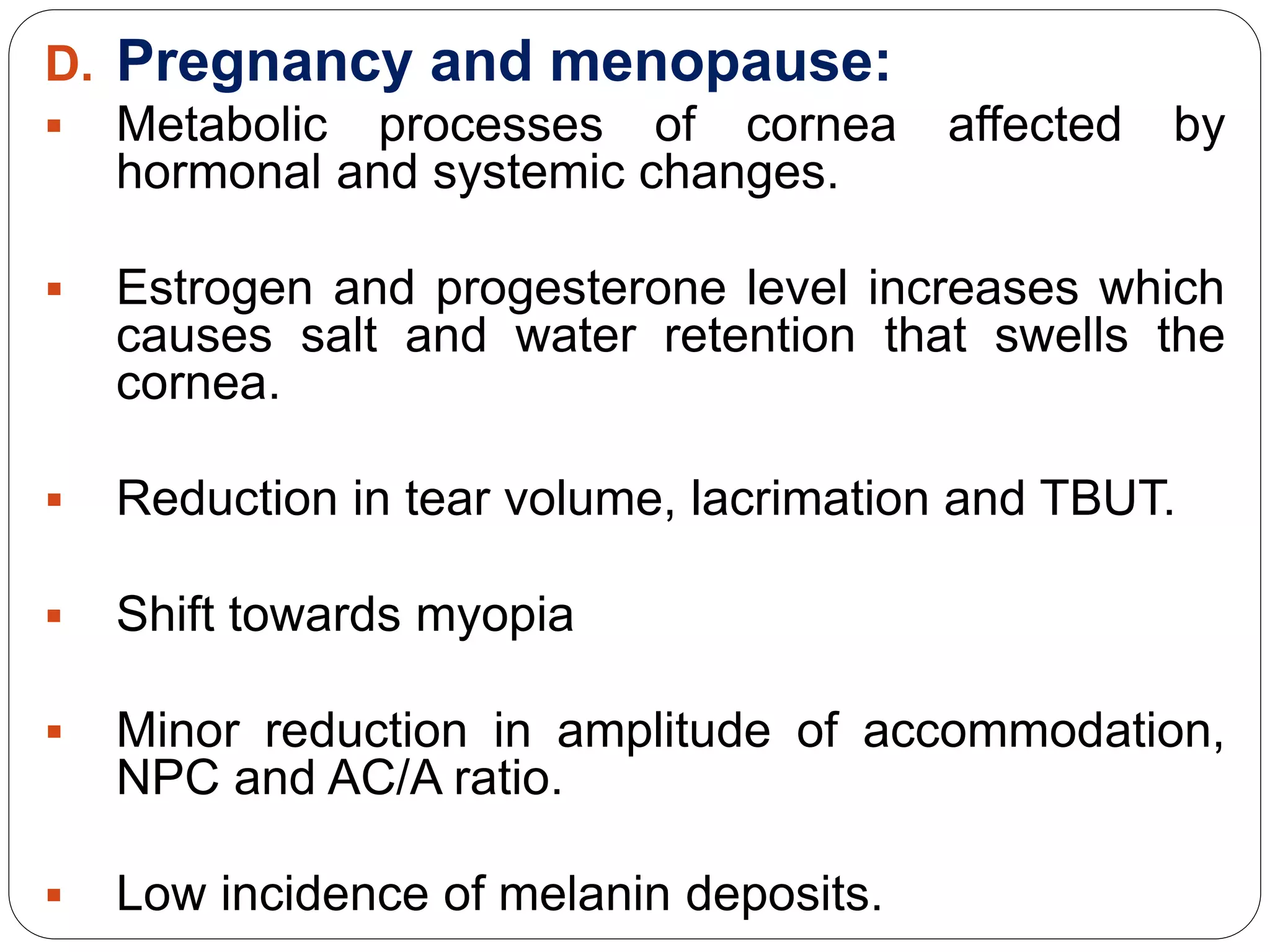
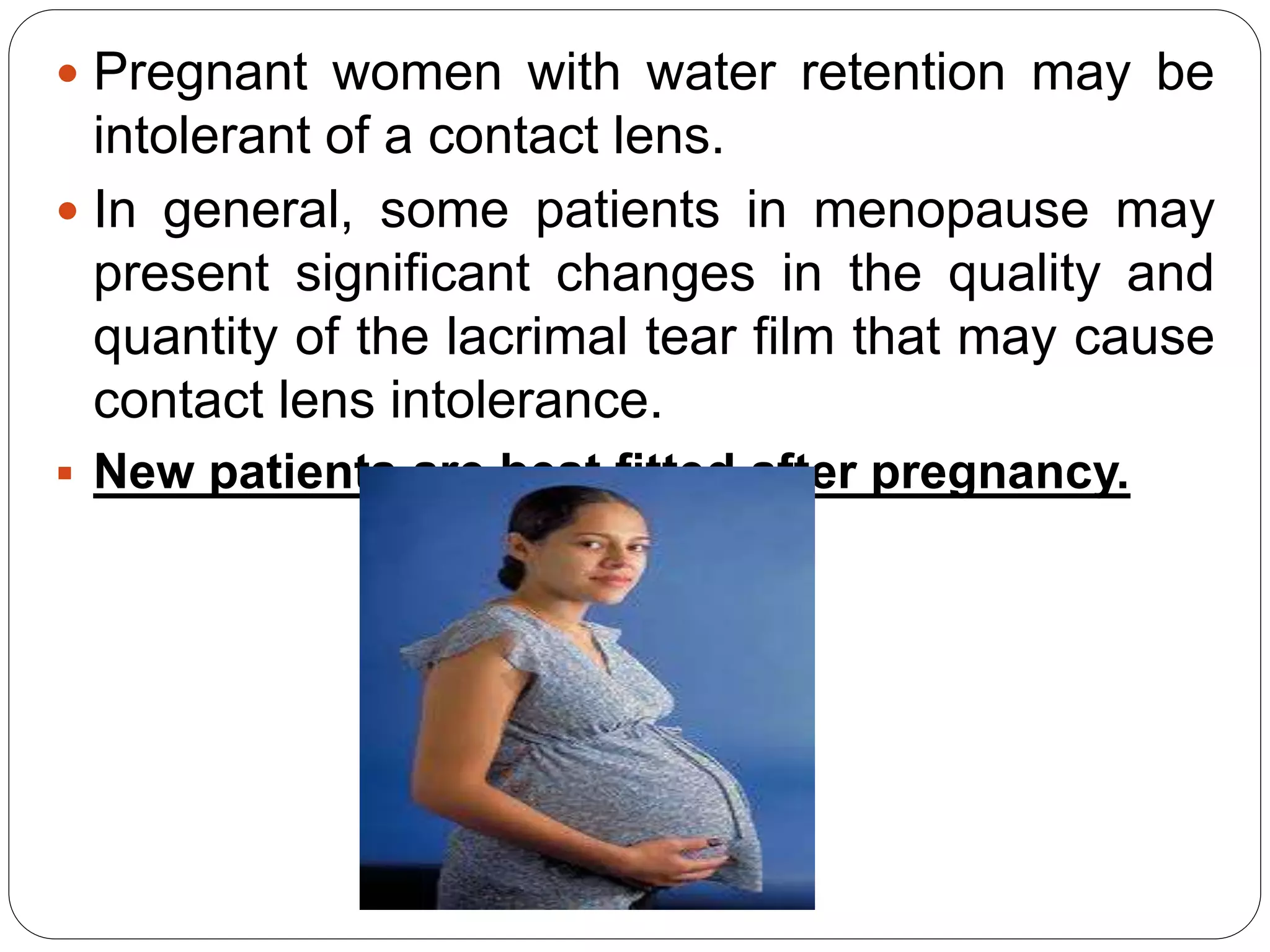
 Pregnant women with water retention may be
intolerant of a contact lens.
 In general, some patients in menopause may
present significant changes in the quality and
quantity of the lacrimal tear film that may cause
contact lens intolerance.
 New patients are best fitted after pregnancy.
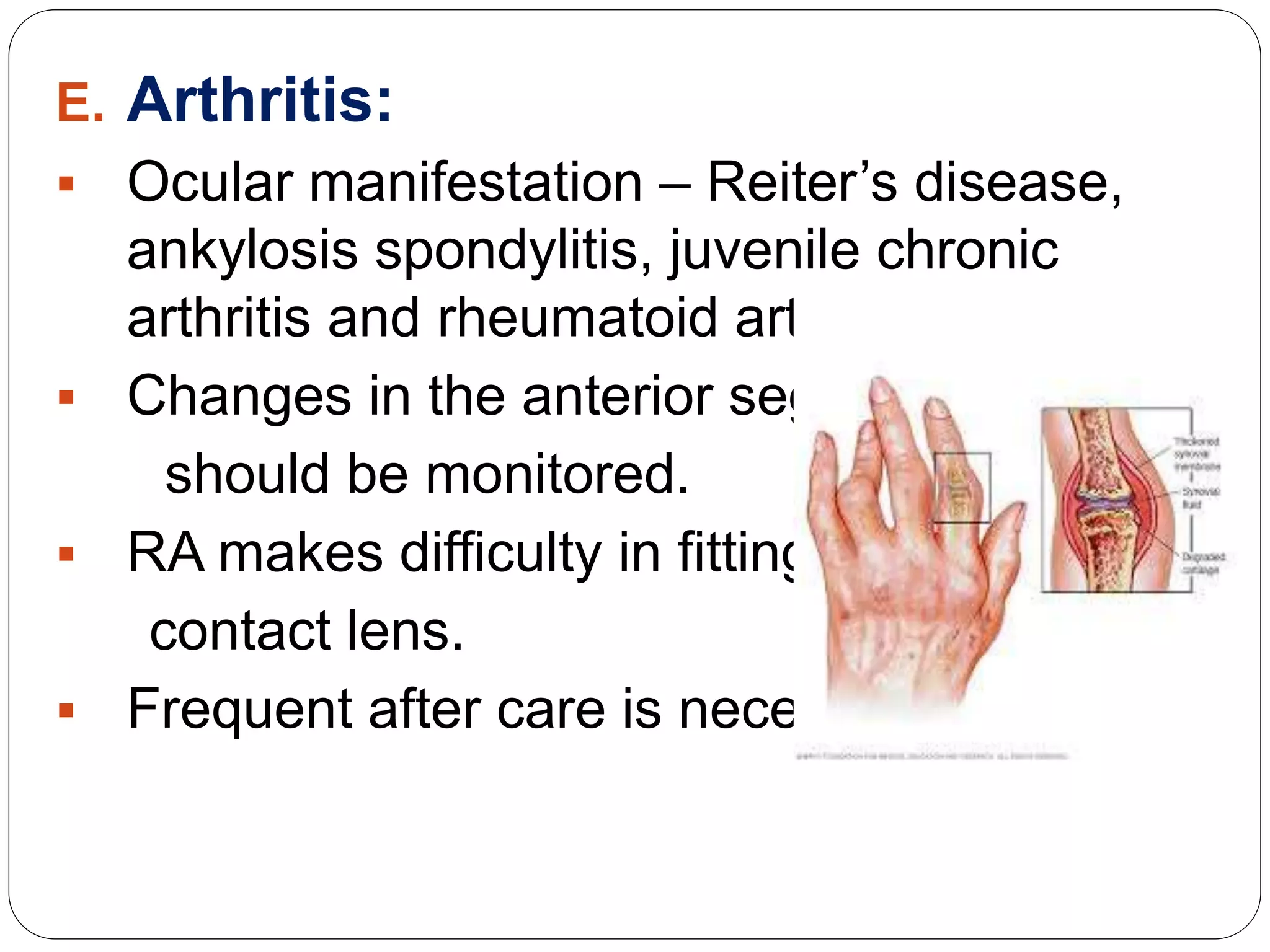
E. Arthritis:
 Ocular manifestation – Reiter’s disease,
ankylosis spondylitis, juvenile chronic
arthritis and rheumatoid arthritis(RA).
 Changes in the anterior segment
should be monitored.
 RA makes difficulty in fitting
contact lens.
 Frequent after care is necessary.
F. Chronic respiratory diseases:
 May have difficulty in fitting a contact lens.
 During respiratory crises they may have
conjunctival hyperemia, tearing, light
sensitivity and generalized discomfort that
is aggravated by the use of contact lens.
G. Thyroid function imbalance:
 Disturbs BMR of the body.
 Ocular complication- exophthalmic goiter
(Grave disease), lagophthalmos, Bell’s
phenomenon, dry eye e.t.c.
 Not suitable candidate for contact lens
wear.
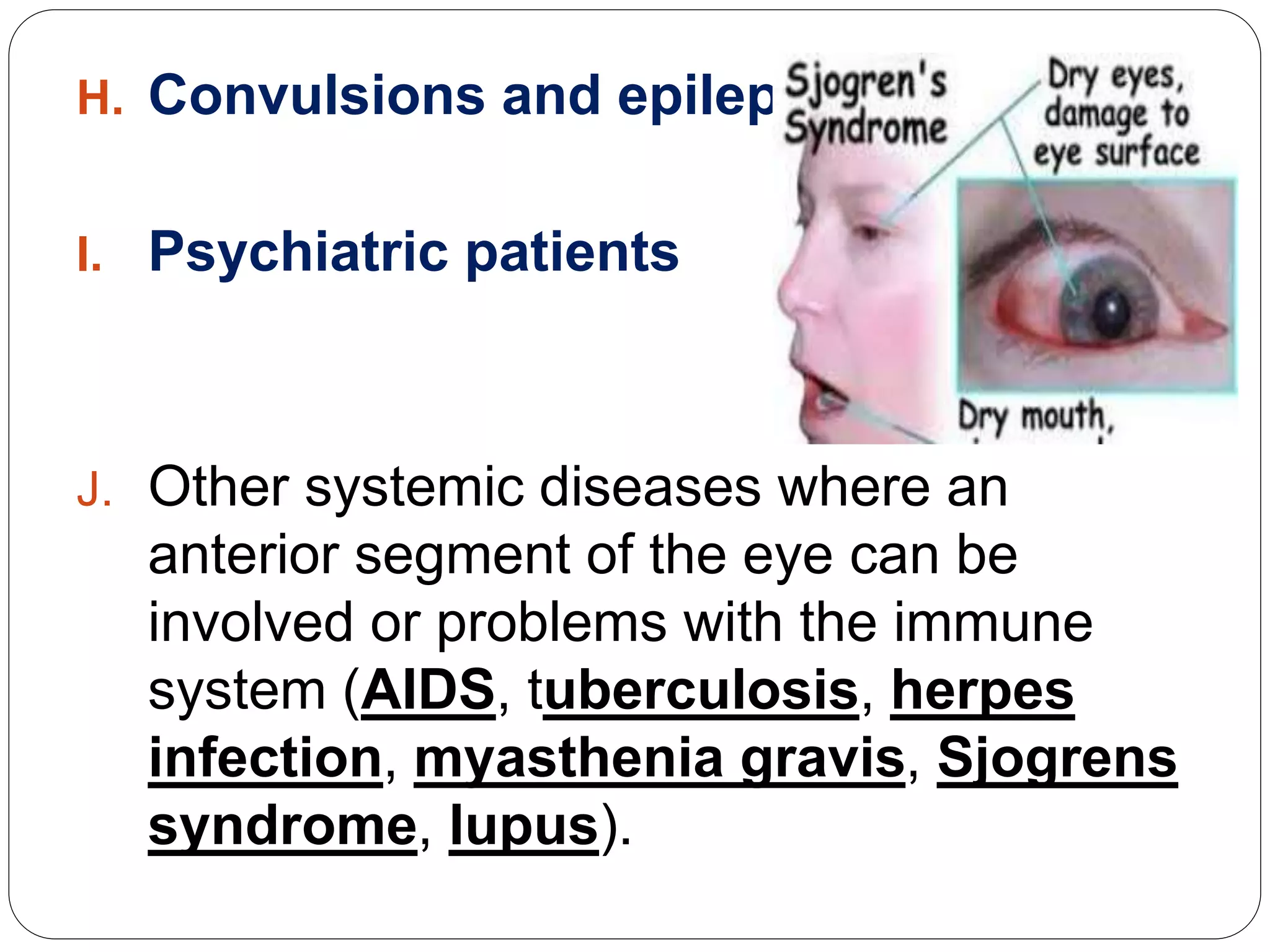
H. Convulsions and epilepsy
I. Psychiatric patients
J. Other systemic diseases where an
anterior segment of the eye can be
involved or problems with the immune
system (AIDS, tuberculosis, herpes
infection, myasthenia gravis, Sjogrens
syndrome, lupus).
5. Systemic and topical
medication
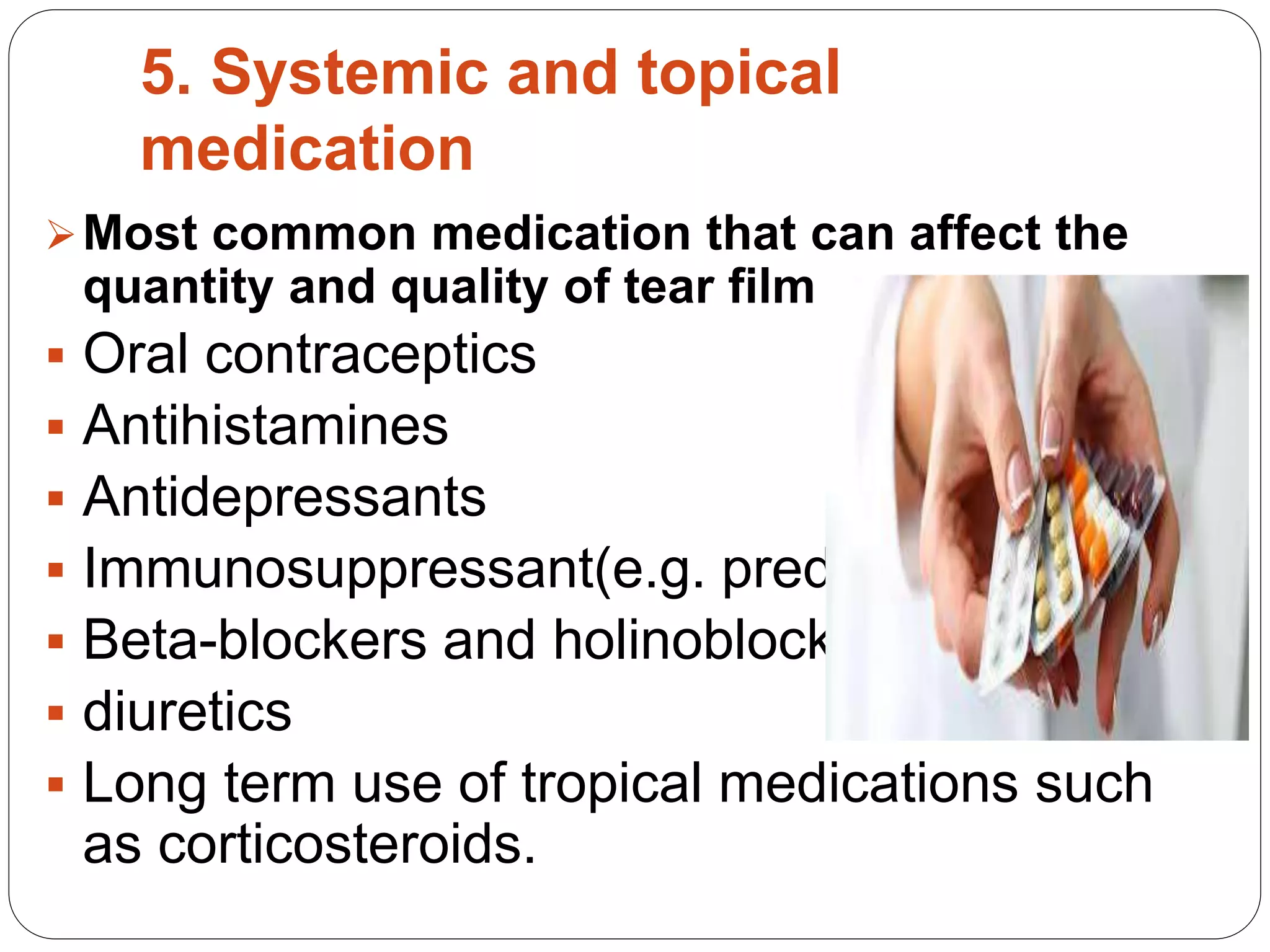
Most common medication that can affect the
quantity and quality of tear film are:
 Oral contraceptics
 Antihistamines
 Antidepressants
 Immunosuppressant(e.g. prednisone)
 Beta-blockers and holinoblockers
 diuretics
 Long term use of tropical medications such
as corticosteroids.
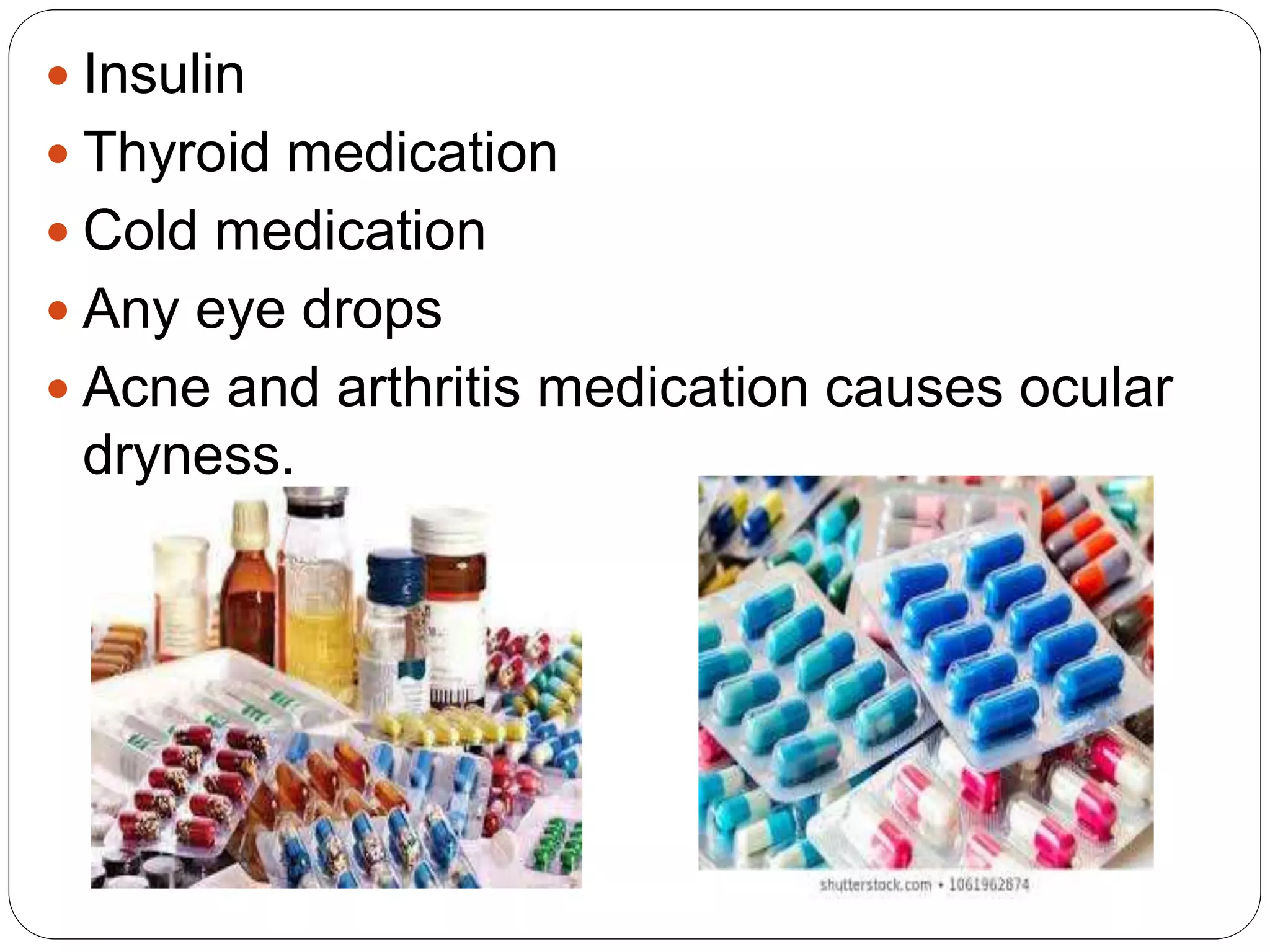
 Insulin
 Thyroid medication
 Cold medication
 Any eye drops
 Acne and arthritis medication causes ocular
dryness.
Therefore history of medication play crucial role
before contact lens fitting.
Drugs Ocular side effects
Amiodarone Corneal deposits(vortex
keratopathy)
Antiepileptics Ocular motility dysfunction
Trihexyphenidyl,
benztropine, atropine
Pupillary dilatation
Opiates Pupillary constriction
Sulphonamides, NSAIDS Steven-Johnson syndrome
6. Family history
Enquire if there’s family history of any of
these:
a. Systemic diseases- HTN, thyroid, diabetes,
chronic kidney diseases(CKD), heart diseases,
chronic respiratory diseases, genetic and
hereditary diseases e.t.c.
b. Ocular diseases/condition:
o Glaucoma
o Cataracts
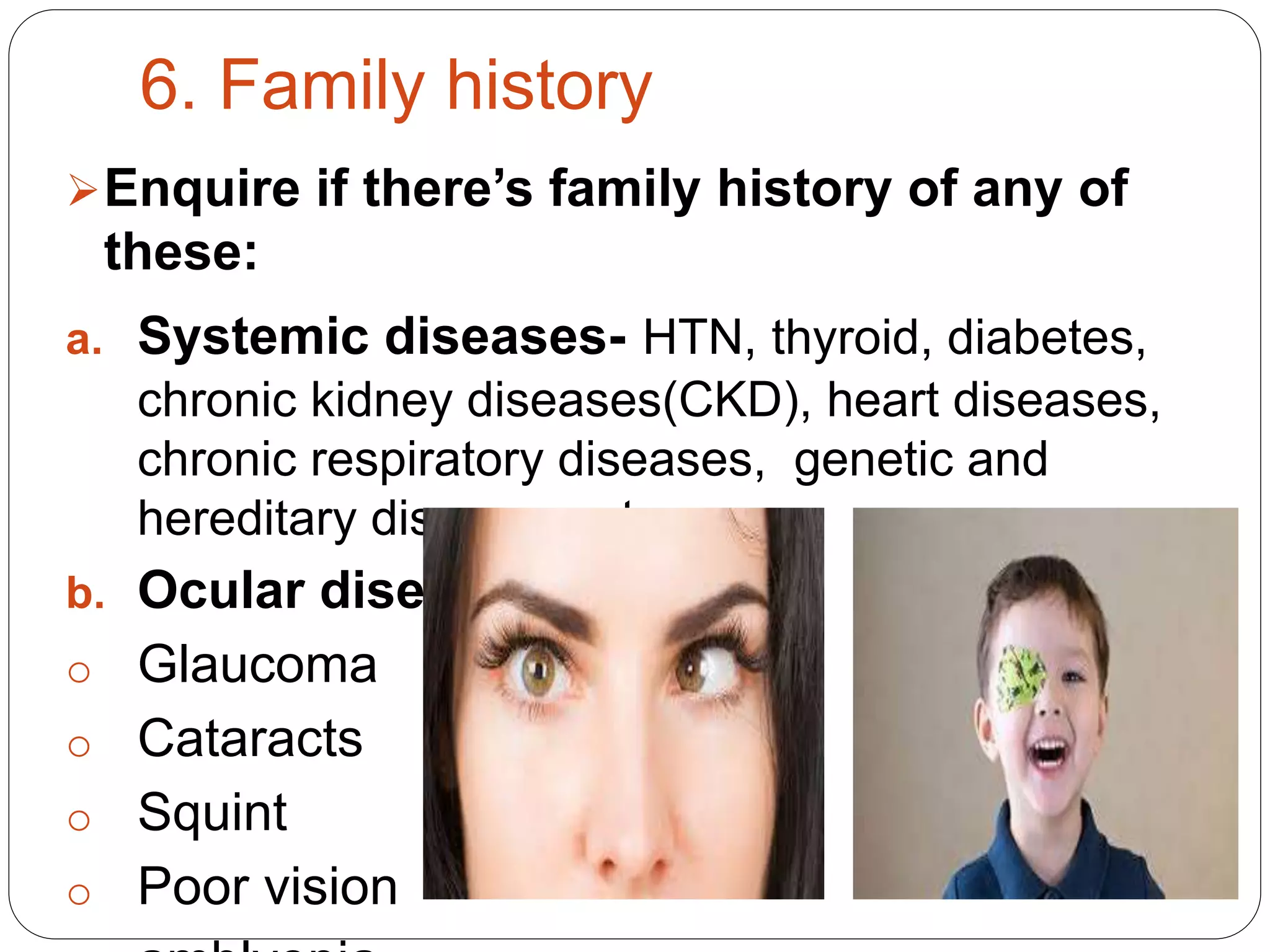
o Squint
o Poor vision
 Refractive errors
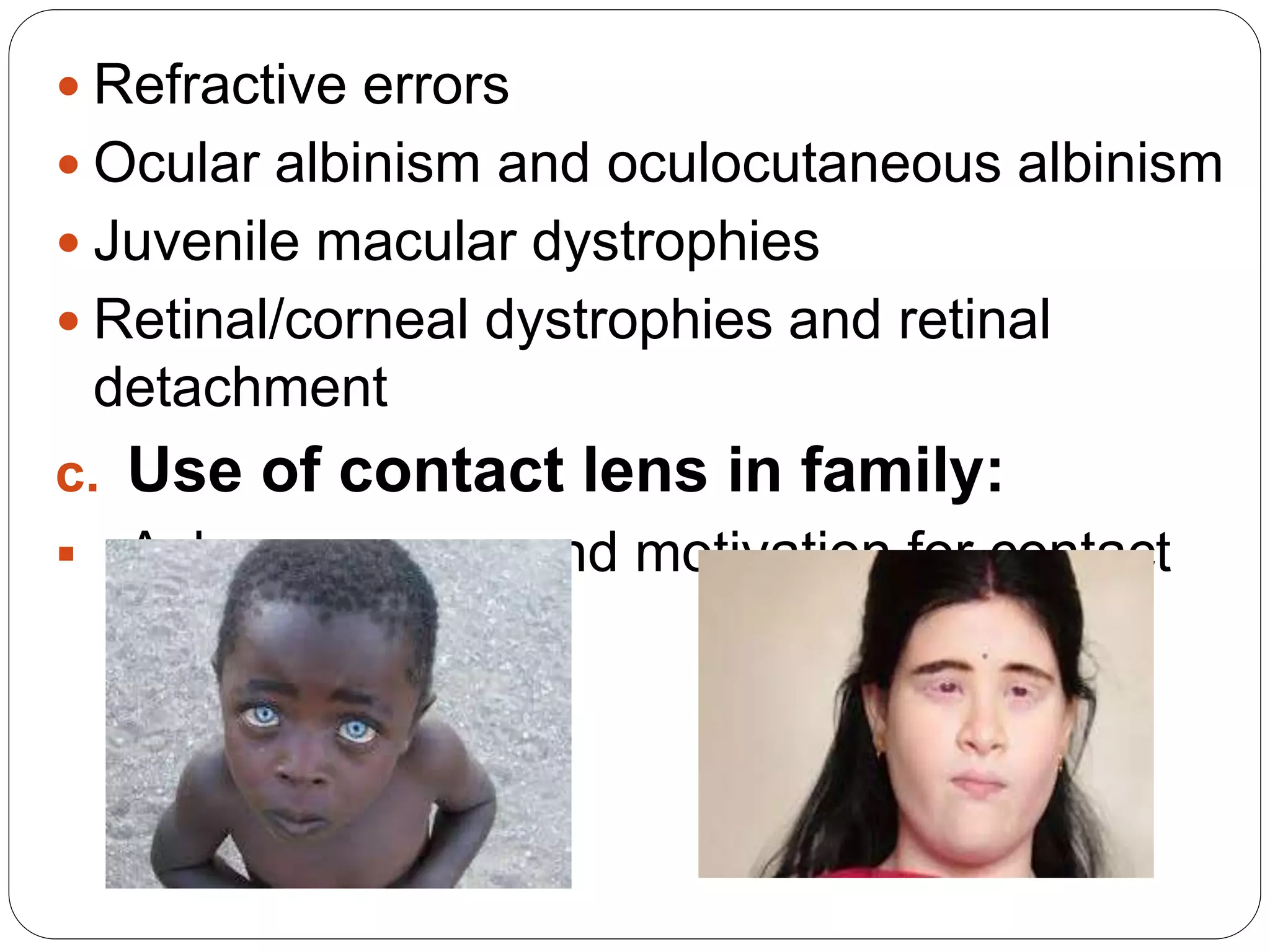
 Ocular albinism and oculocutaneous albinism
 Juvenile macular dystrophies
 Retinal/corneal dystrophies and retinal
detachment
c. Use of contact lens in family:
 Ask awareness and motivation for contact
lens
7.Social history
 It includes:
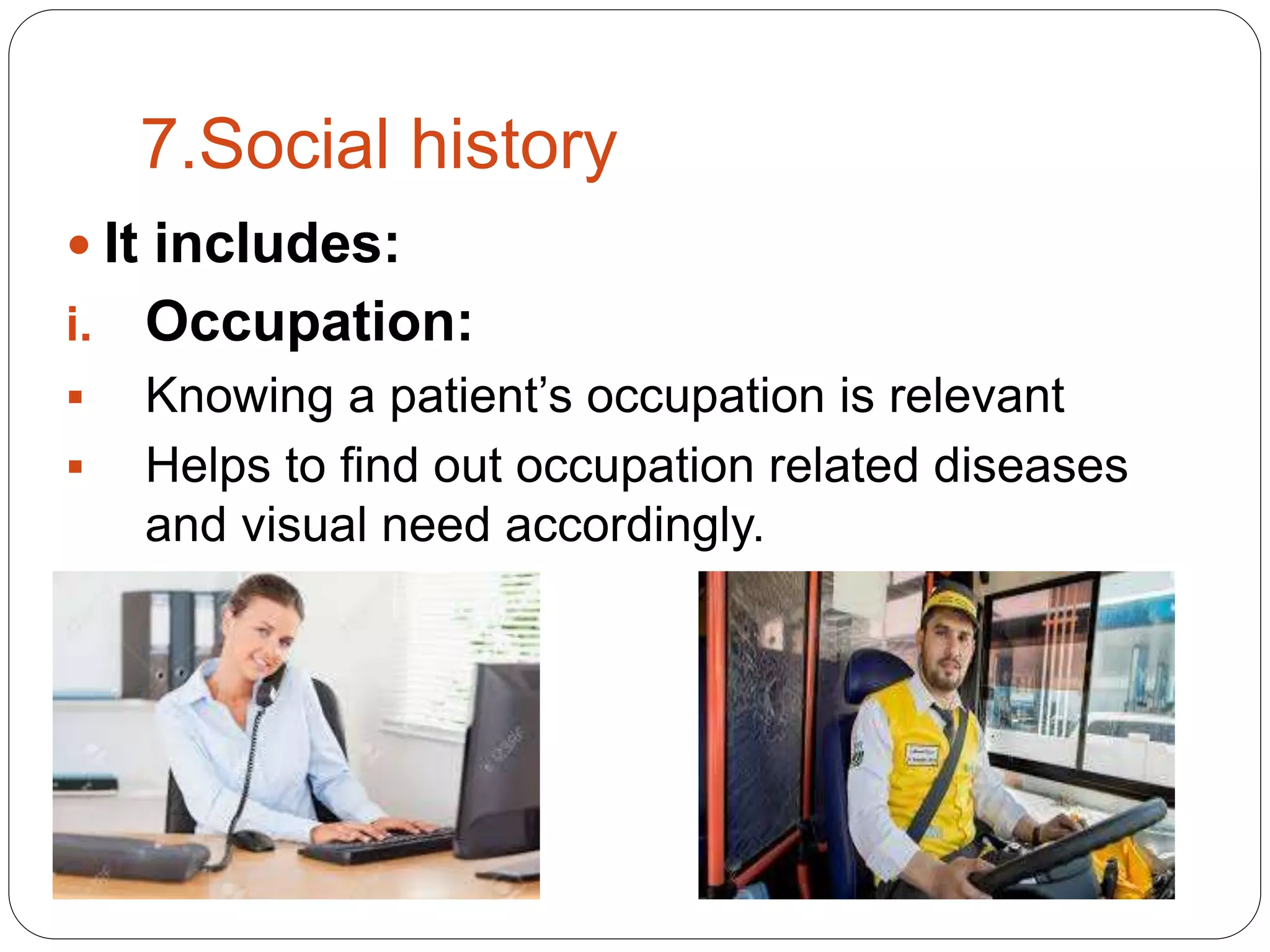
i. Occupation:
 Knowing a patient’s occupation is relevant
 Helps to find out occupation related diseases
and visual need accordingly.
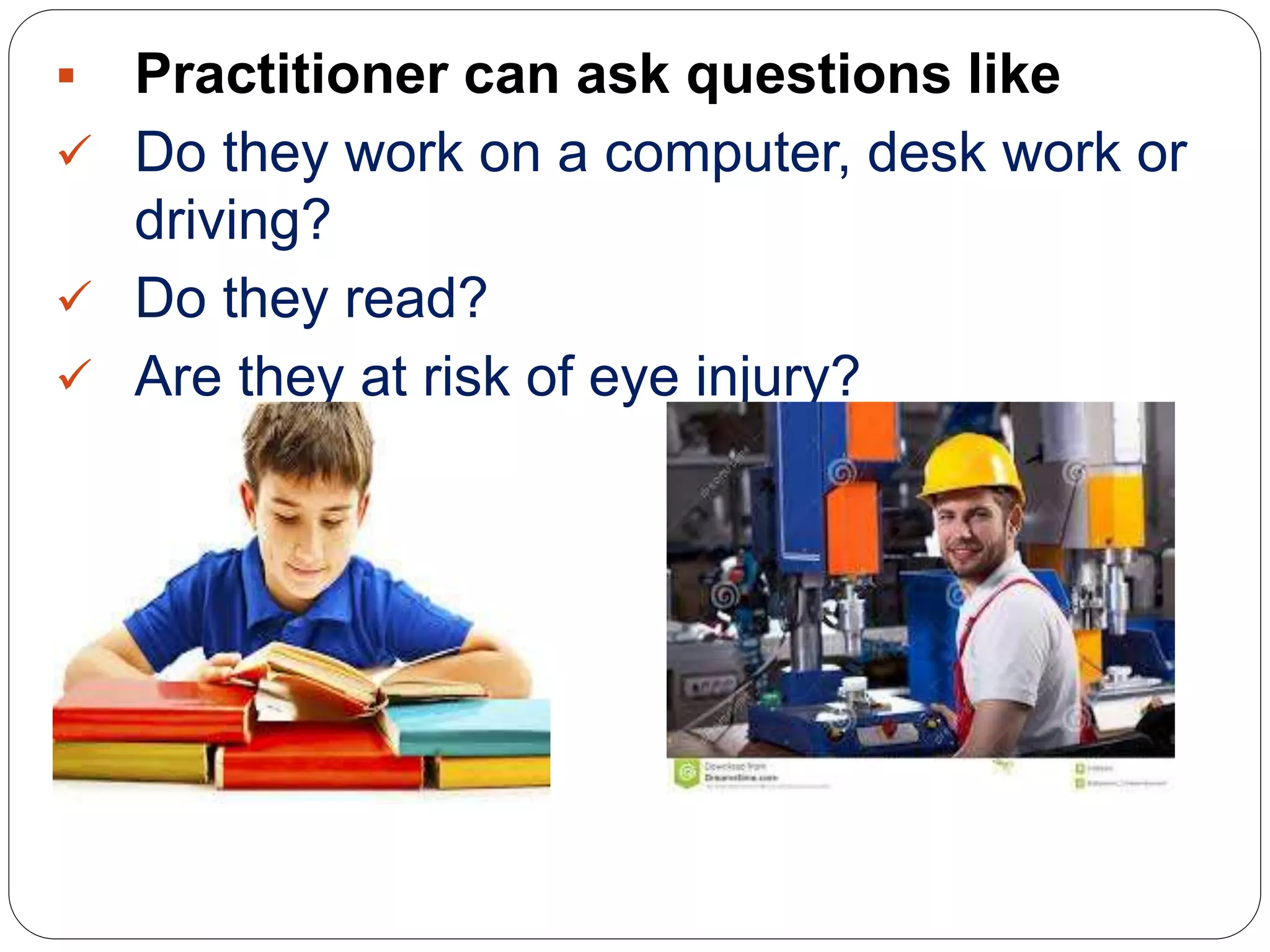
 Practitioner can ask questions like
 Do they work on a computer, desk work or
driving?
 Do they read?
 Are they at risk of eye injury?
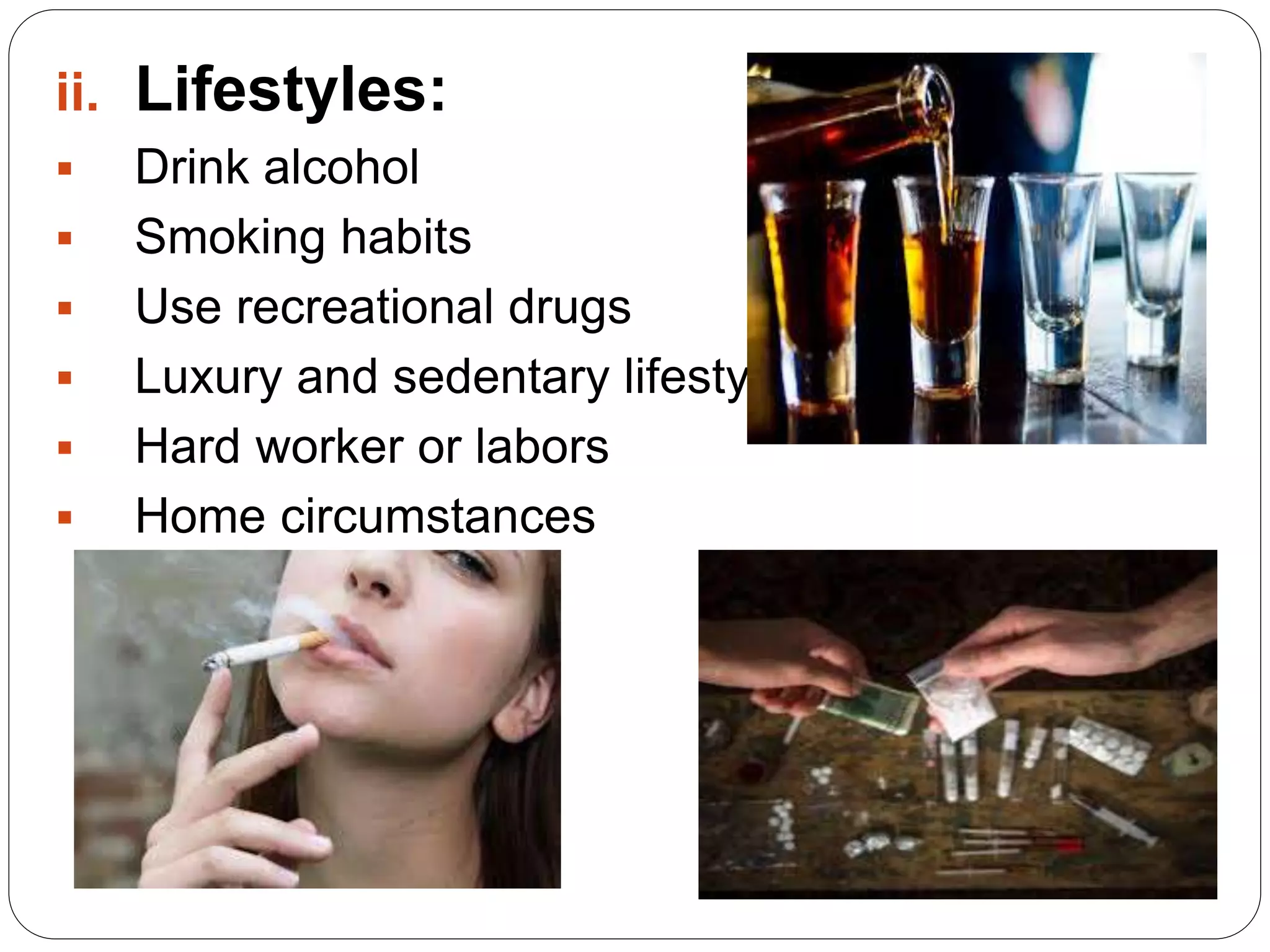
ii. Lifestyles:
 Drink alcohol
 Smoking habits
 Use recreational drugs
 Luxury and sedentary lifestyles
 Hard worker or labors
 Home circumstances
iii. Hobbies:
 Sports player
 Swimmer
 Athletes
 Acting
 Singing and dancing
8. Motivation and expectation
Patients are thoroughly asked about the
source of motivation for fitting contact lens.
Contact lens may perform differently from
the patient expectation.
It is the responsibility of the practitioner
to explain the benefits and limitations of
the lens being prescribed.
History of contact lens use
If the patient had used contact lens before
then patient is asked about:
 Duration of contact lens used
 Contact lens type
 Wearing schedule
 Care system used
 Satisfaction with vision and comfort
Contd…
 Average wearing time (hours/day) or (days/week)
 Contact lens wear in front of computer
 Lens replacement schedule (if disposable or
planned replacement)
 Disinfection regimen
 Reason for changing the type of contact lens or
discontinuation of use in the past
 Previous contact lens or solution related
Reason for using contact lens
 Full time vision
 Sports and recreational activities
 Social events only
 Changing eye color
 Avoiding use of reading glasses (i.e.
inconvenience of glasses)
 High Rx and myopia control
 Keratoconus
 Aphakia and anisometropia
Importance of history taking
A good history commonly leads to a diagnosis.
A good history may provide indications and
contraindication for contact lens wear.
Helps to identify the type or design of contact lens
which may be suitable for patient.
Helps you focus your examination.
Indicates when/what investigation are needed.
Helps determine the functional impact of the
condition.
Summary of history taking
Complete your history by reviewing what
the patient has told you.
Repeat back the important points so that
the patients can correct you if there are any
misunderstandings or errors.
Practitioner should also address what the
patient thinks is wrong with them and what
they are expecting/hoping for from the
consultation.
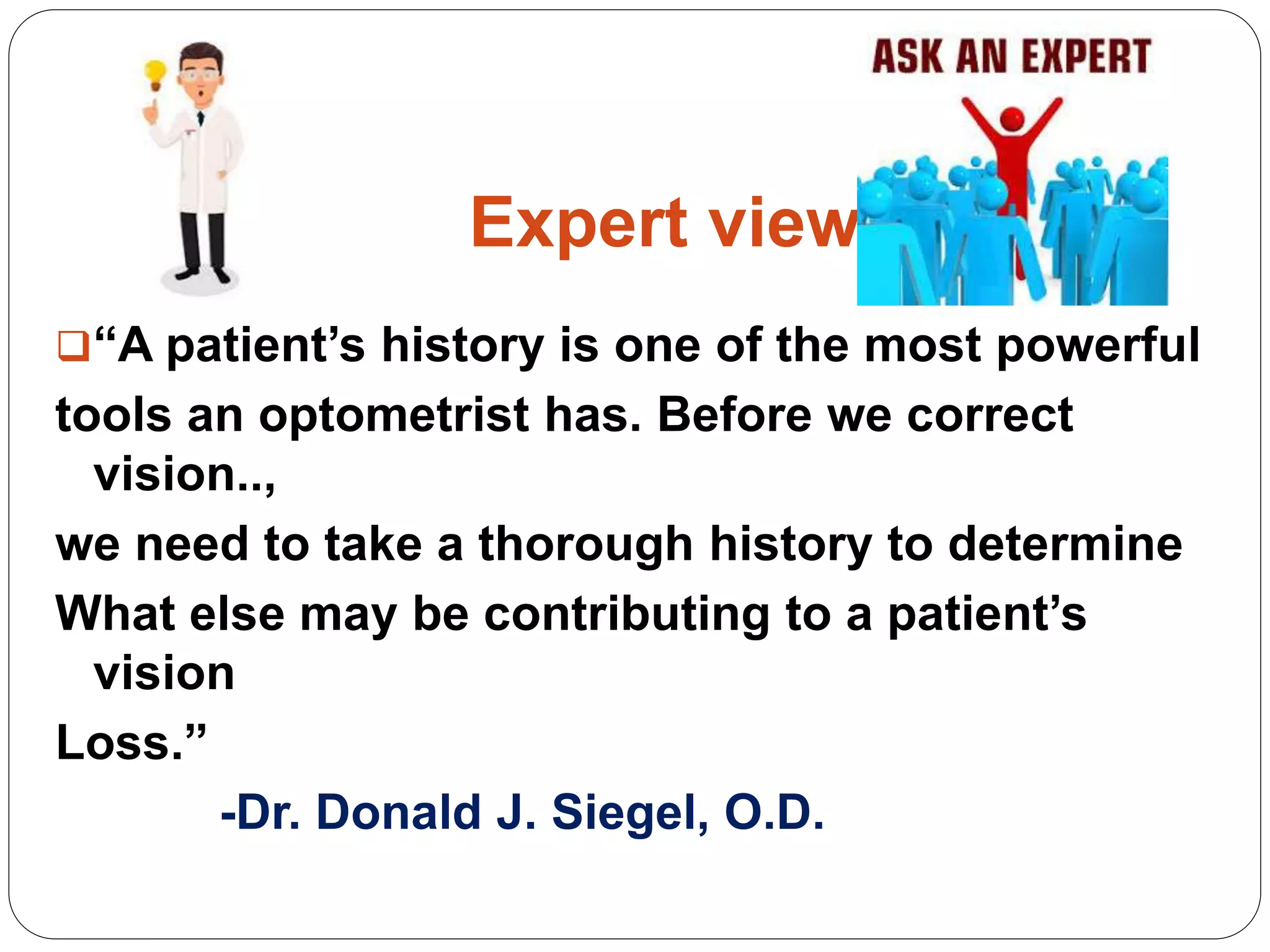
Expert view
“A patient’s history is one of the most powerful
tools an optometrist has. Before we correct
vision..,
we need to take a thorough history to determine
What else may be contributing to a patient’s
vision
Loss.”
-Dr. Donald J. Siegel, O.D.
“It’s important to ask patients what
they want, need and expect from
contact lenses…. If the patient failed
with contact lenses in the past, why
did that happen? And why does
he/she want to try again? These
answers help evaluate the patient as
a candidate, and they help the doctor
choose lenses and solutions.”
- Don R. Smith, N.C.L.E
certified

History taking and examination procedures for contact lens

  • 2.
    Moderator: Presenters: Manisha Dahal Aanand KumarShah Garima Poudyal 20th batch, History taking and examination procedures for contact lens fitting
  • 3.
    Presentation layout Introduction tohistory taking Key principles of history taking Purpose of history taking Components of history taking Importance of history taking Experts view
  • 4.
    What is historytaking? Asking questions with the patients to obtain information regarding their concerned problem and aid in diagnosis. It is estimated that 80% of diagnosis are based on history taking alone. It helps in gathering data both objective and subjective for i. Generating differential diagnosis ii. Evaluating progress following a specific treatment or procedure. iii. Evaluating change in the patient’s condition or
  • 5.
    Keys principles ofhistory taking History must be taken in a non judgmental, sensitive and simple manner. Ensure the patient is as comfortable as possible. Maintain good communication with the patient in order to elicit proper history and to be accurately able to recognize their problems. Listen to what the patient says.
  • 6.
     Summarize eachstage of the history process.  Involve the patient in the history taking process.  Ensure that your documentation is clear, accurate and legible.  Must avoid interrupting, commanding and lecturing while taking history.  Honest advice and opinion must always be provided. “Always listen to the patients they might be telling you the diagnosis.”
  • 7.
    Purpose of historytaking To gather relevant information. To rule out any contraindication for contact lens wear. To understand the level of motivation. To understand the purpose of contact lens wear. To determine a potential contact lens candidate. To influence our diagnosis and treatment decisions.
  • 8.
    Components of historytaking  The system of history taking is based on problem oriented medical record system.  Consists of four basic components. 1. Defined data base:  It should include a problem oriented history, tests of eye health, refraction and binocular vision that are appropriate for the patient’s age group.  It also includes:
  • 9.
  • 10.
    2. Complete problemlist:  It defines a problem as anything that requires management or diagnostic workup.  It includes social, psychological and demographic problems. 3. Initial treatment plan:  Made on the basis of the complete problem list.  Helps to get more information concerning diagnostic workup and management.  Provide specific plans for each diagnostic
  • 11.
    4. Progress report: Concerned with a single problem.  Helps in the formulation of additional plans that will be evaluated at the additional progress visits.  While fitting contact lens, progress note can give direction to the procedures performed at the previous visits following advice and instruction given to the patients. Worthy point: Progress notes are of great value for vision training patients and for keeping tract of low-vision patients progress in adapting to their aids.
  • 12.
    1.Demographic data orpatient profile  Name (for identification, filing system, friendly)  Age (age related diseases –child: congenital diseases, old: senile diseases)  Address (endemic diseases, social status)  Gender ( sex related diseases)  Marital status  Religion  Phone number
  • 13.
    2.Ocular health Ocular conditions: Eye injuries  Lid abnormalities  Red eye  dry eye  conjunctivities  Pterygium and pinguicula  Blepharities  Keratoconus Ocular medication :  Oral, topical or systemic
  • 14.
    3. Previous ocularhistory Ask about previous ophthalmological problems including  Poor vision since birth or during childhood  Refractive errors  History of lazy eye (i.e. amblyopia)  Recurrent ocular problems such as inflammatory (iritis) and herpes simplex keratitis.  Problems associated with contact lens wear (e.g. bacterial keratitis).
  • 15.
     Recent cataractsurgery (to look for complication of surgery such as endophthalmitis, wound infection, intraocular lens displacement causing a sudden drop in visual acuity).  Past or recent refractive/corrective eye surgery.  Previous history of trauma to the eye (associated with cataract, glaucoma, retinal detachment).
  • 16.
    4.Medical history orgeneral health A. Allergies (seasonal or chronic):  Inquire if patients have known allergy to –  Hay fever, any medications, foods or any other substances.  Exacerbated by contact lens and preserved solutions.  Symptoms are redness, discomfort(dirty, gritty, itchy) and lid problems.  Look for the possible causes and treat before contact lens wear.
  • 17.
     Close monitoringof patients for their symptoms.  Note:  The allergic patient is more susceptible to adverse reactions to contact lenses and their maintenance products.
  • 18.
    B. Sinusitis:  Inflammationin paranasal sinus.  Can be fitted with frequent after care.  Prone to discomfort and excessive tearing.
  • 19.
    C. Diabetes:  Metabolicdisorder in which carbohydrate utilization in the body is reduced and lipid protein enhanced.  Decrease contrast sensitivity  Diabetic cornea may have SPK, recurrent corneal erosions, persistent epithelial defects, neurotrophic ulcers, stress, delayed healing e.t.c.  Not candidates for extended wear contact lens use.
  • 20.
    D. Pregnancy andmenopause:  Metabolic processes of cornea affected by hormonal and systemic changes.  Estrogen and progesterone level increases which causes salt and water retention that swells the cornea.  Reduction in tear volume, lacrimation and TBUT.  Shift towards myopia  Minor reduction in amplitude of accommodation, NPC and AC/A ratio.  Low incidence of melanin deposits.
  • 21.
     Pregnant womenwith water retention may be intolerant of a contact lens.  In general, some patients in menopause may present significant changes in the quality and quantity of the lacrimal tear film that may cause contact lens intolerance.  New patients are best fitted after pregnancy.
  • 22.
    E. Arthritis:  Ocularmanifestation – Reiter’s disease, ankylosis spondylitis, juvenile chronic arthritis and rheumatoid arthritis(RA).  Changes in the anterior segment should be monitored.  RA makes difficulty in fitting contact lens.  Frequent after care is necessary.
  • 23.
    F. Chronic respiratorydiseases:  May have difficulty in fitting a contact lens.  During respiratory crises they may have conjunctival hyperemia, tearing, light sensitivity and generalized discomfort that is aggravated by the use of contact lens.
  • 24.
    G. Thyroid functionimbalance:  Disturbs BMR of the body.  Ocular complication- exophthalmic goiter (Grave disease), lagophthalmos, Bell’s phenomenon, dry eye e.t.c.  Not suitable candidate for contact lens wear.
  • 25.
    H. Convulsions andepilepsy I. Psychiatric patients J. Other systemic diseases where an anterior segment of the eye can be involved or problems with the immune system (AIDS, tuberculosis, herpes infection, myasthenia gravis, Sjogrens syndrome, lupus).
  • 26.
    5. Systemic andtopical medication Most common medication that can affect the quantity and quality of tear film are:  Oral contraceptics  Antihistamines  Antidepressants  Immunosuppressant(e.g. prednisone)  Beta-blockers and holinoblockers  diuretics  Long term use of tropical medications such as corticosteroids.
  • 27.
     Insulin  Thyroidmedication  Cold medication  Any eye drops  Acne and arthritis medication causes ocular dryness.
  • 28.
    Therefore history ofmedication play crucial role before contact lens fitting. Drugs Ocular side effects Amiodarone Corneal deposits(vortex keratopathy) Antiepileptics Ocular motility dysfunction Trihexyphenidyl, benztropine, atropine Pupillary dilatation Opiates Pupillary constriction Sulphonamides, NSAIDS Steven-Johnson syndrome
  • 29.
    6. Family history Enquireif there’s family history of any of these: a. Systemic diseases- HTN, thyroid, diabetes, chronic kidney diseases(CKD), heart diseases, chronic respiratory diseases, genetic and hereditary diseases e.t.c. b. Ocular diseases/condition: o Glaucoma o Cataracts o Squint o Poor vision
  • 30.
     Refractive errors Ocular albinism and oculocutaneous albinism  Juvenile macular dystrophies  Retinal/corneal dystrophies and retinal detachment c. Use of contact lens in family:  Ask awareness and motivation for contact lens
  • 31.
    7.Social history  Itincludes: i. Occupation:  Knowing a patient’s occupation is relevant  Helps to find out occupation related diseases and visual need accordingly.
  • 32.
     Practitioner canask questions like  Do they work on a computer, desk work or driving?  Do they read?  Are they at risk of eye injury?
  • 33.
    ii. Lifestyles:  Drinkalcohol  Smoking habits  Use recreational drugs  Luxury and sedentary lifestyles  Hard worker or labors  Home circumstances
  • 34.
    iii. Hobbies:  Sportsplayer  Swimmer  Athletes  Acting  Singing and dancing
  • 35.
    8. Motivation andexpectation Patients are thoroughly asked about the source of motivation for fitting contact lens. Contact lens may perform differently from the patient expectation. It is the responsibility of the practitioner to explain the benefits and limitations of the lens being prescribed.
  • 36.
    History of contactlens use If the patient had used contact lens before then patient is asked about:  Duration of contact lens used  Contact lens type  Wearing schedule  Care system used  Satisfaction with vision and comfort
  • 37.
    Contd…  Average wearingtime (hours/day) or (days/week)  Contact lens wear in front of computer  Lens replacement schedule (if disposable or planned replacement)  Disinfection regimen  Reason for changing the type of contact lens or discontinuation of use in the past  Previous contact lens or solution related
  • 38.
    Reason for usingcontact lens  Full time vision  Sports and recreational activities  Social events only  Changing eye color  Avoiding use of reading glasses (i.e. inconvenience of glasses)  High Rx and myopia control  Keratoconus  Aphakia and anisometropia
  • 39.
    Importance of historytaking A good history commonly leads to a diagnosis. A good history may provide indications and contraindication for contact lens wear. Helps to identify the type or design of contact lens which may be suitable for patient. Helps you focus your examination. Indicates when/what investigation are needed. Helps determine the functional impact of the condition.
  • 40.
    Summary of historytaking Complete your history by reviewing what the patient has told you. Repeat back the important points so that the patients can correct you if there are any misunderstandings or errors. Practitioner should also address what the patient thinks is wrong with them and what they are expecting/hoping for from the consultation.
  • 41.
    Expert view “A patient’shistory is one of the most powerful tools an optometrist has. Before we correct vision.., we need to take a thorough history to determine What else may be contributing to a patient’s vision Loss.” -Dr. Donald J. Siegel, O.D.
  • 42.
    “It’s important toask patients what they want, need and expect from contact lenses…. If the patient failed with contact lenses in the past, why did that happen? And why does he/she want to try again? These answers help evaluate the patient as a candidate, and they help the doctor choose lenses and solutions.” - Don R. Smith, N.C.L.E certified

Editor's Notes

  • #10 Besides this it also include the level of motivatation and expectation Hyiegene and responsibility
  • #13 Infection is constantly maintained at a baseline level in a geographical level without external inputs-endemic diseases Senile diseases-dementia and alzheimer diseases
  • #14 Patient is investigated about fresh ocular complains if any such as……
  • #20 Neurotrophic disease-degenerative diseases of cornea caused by damage of the trigeminal nerve
  • #27 Holinoblocker-acts as antispasmodic agents
  • #36 Hygiene and responsibility
  • #43 N.C.L.E- national contact lens examiner