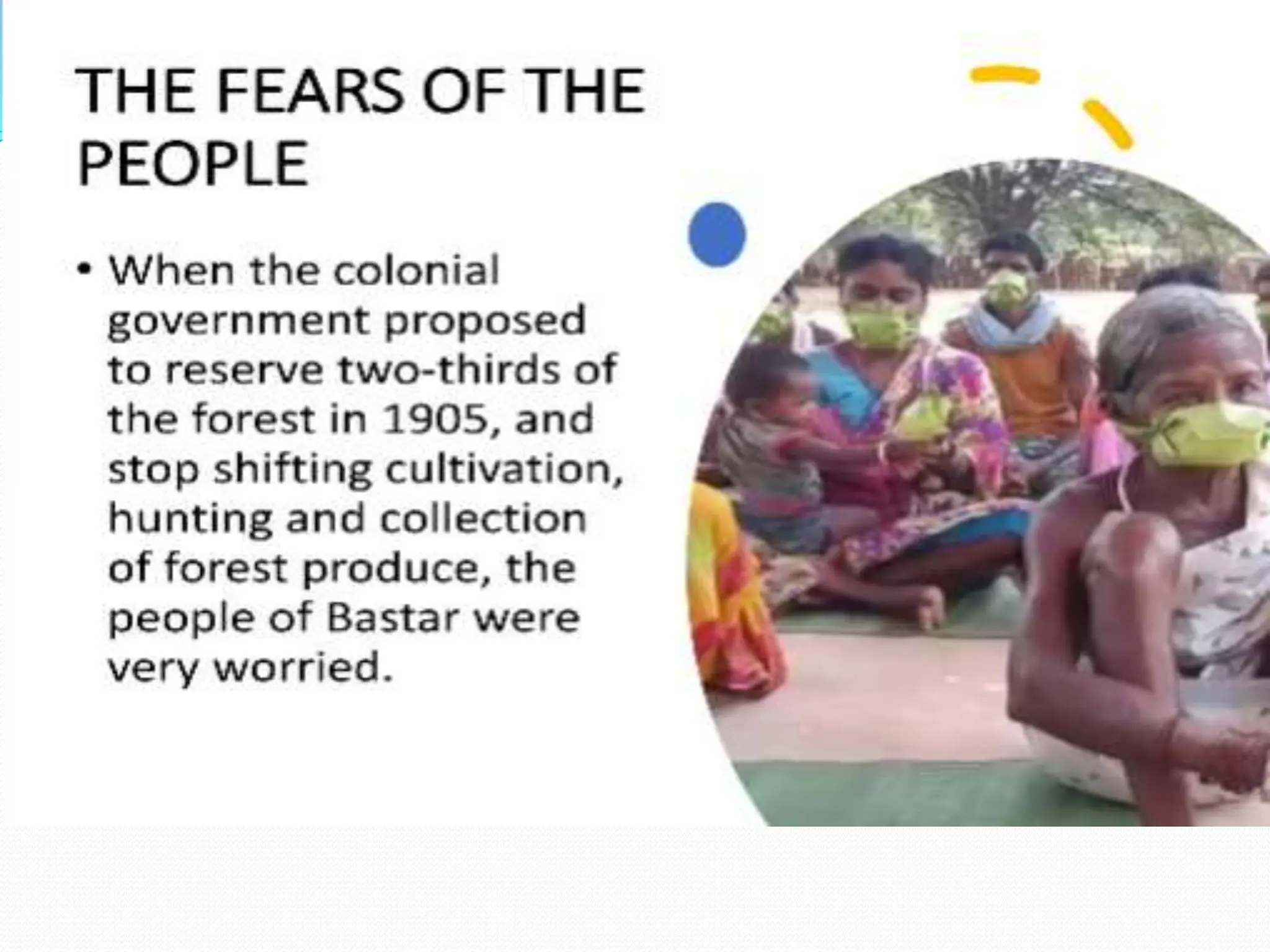
This document discusses how colonial control was established over forests in India and Indonesia. It explains that local communities traditionally used forest resources for things like bamboo, wood, fuel, grass, charcoal, packaging, fruits, flowers, and animals. However, European foresters viewed shifting cultivation practices as harmful to forests and believed it made land unsuitable for growing railway timber. The Dutch then enacted forest laws in Java that restricted villagers' access to forests and allowed wood to only be cut for specific purposes under foresters' supervision. Villagers were punished for activities like grazing cattle in younger stands or transporting wood without a permit. In summary, the document outlines how colonial powers mapped and classified forests, established plantations, and imposed restrictions that affected local