H ir o s h im a
     (1945)
       `
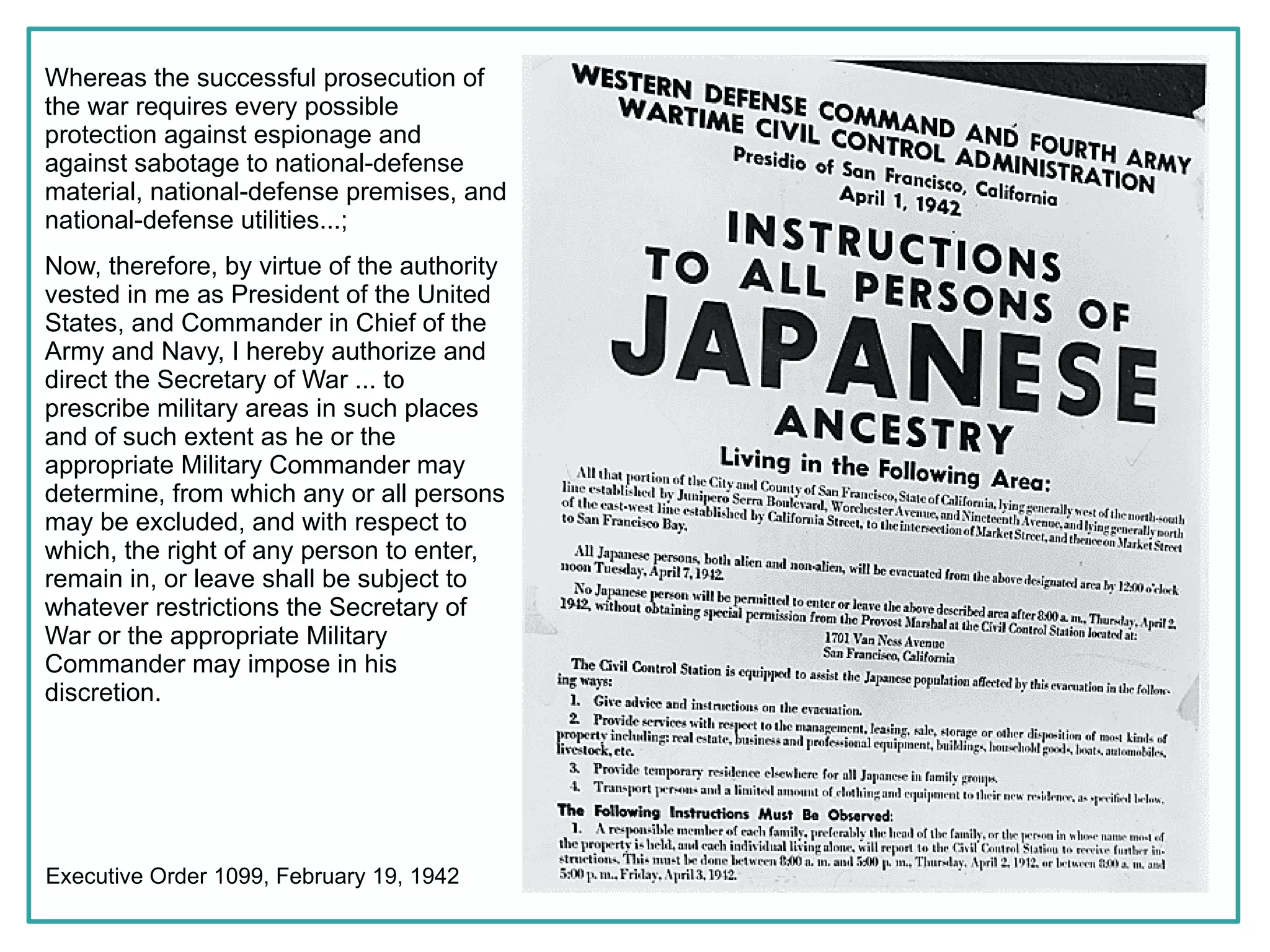
February, 1942
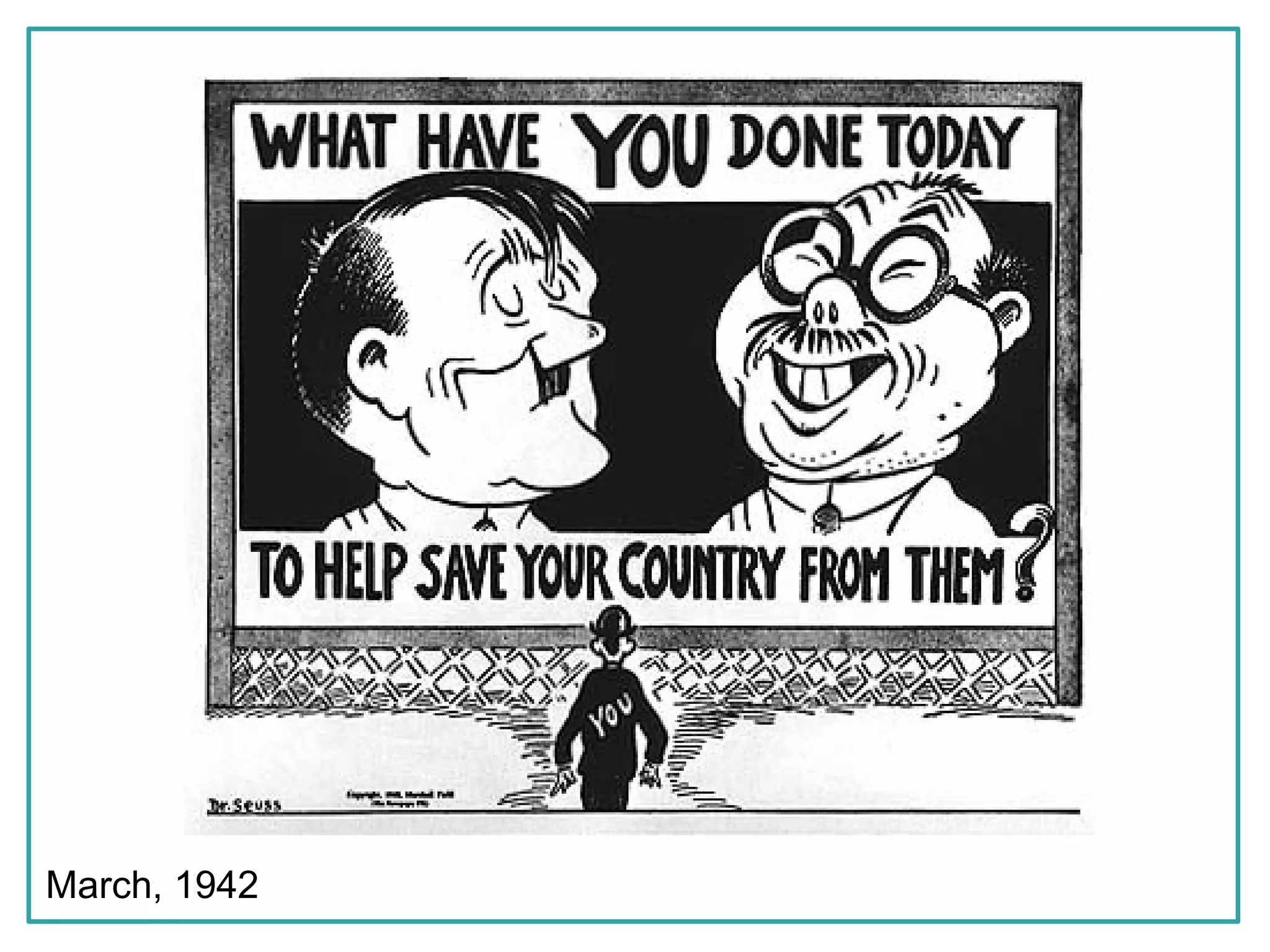
March, 1942
Whereas the successful prosecution of
the war requires every possible
protection against espionage and
against sabotage to national-defense
material, national-defense premises, and
national-defense utilities...;
Now, therefore, by virtue of the authority
vested in me as President of the United
States, and Commander in Chief of the
Army and Navy, I hereby authorize and
direct the Secretary of War ... to
prescribe military areas in such places
and of such extent as he or the
appropriate Military Commander may
determine, from which any or all persons
may be excluded, and with respect to
which, the right of any person to enter,
remain in, or leave shall be subject to
whatever restrictions the Secretary of
War or the appropriate Military
Commander may impose in his
discretion.


Executive Order 1099, February 19, 1942
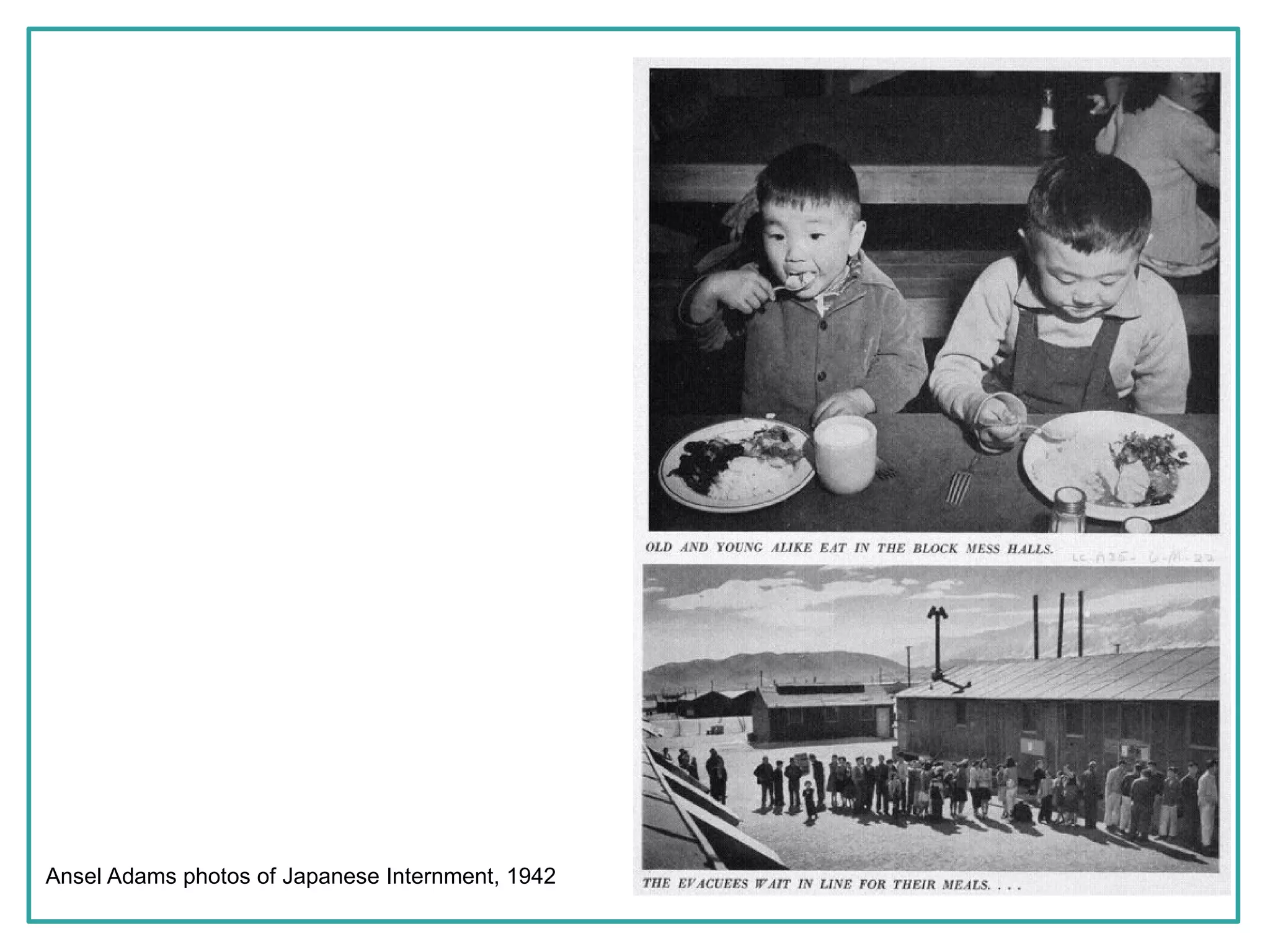
Ansel Adams photos of Japanese Internment, 1942
Memorandum from J. R. Oppenheimer to Brigadier General Farrell, May 11, 1945
7. Psychological Factors in Target Selection
A. It was agreed that psychological factors in the target selection
were of great importance. Two aspects of this are (1) obtaining the
greatest psychological effect against Japan and (2) making the initial
use sufficiently spectacular for the importance of the weapon to be
internationally recognized when publicity on it is released.
B. In this respect Kyoto has the advantage of the people being more
highly intelligent and hence better able to appreciate the significance
of the weapon. Hiroshima has the advantage of being such a size
and with possible focussing from nearby mountains that a large
fraction of the city may be destroyed. The Emperor's palace in Tokyo
has a greater fame than any other target but is of least strategic
value.


Minutes of the second meeting of the Target Committee, Los Alamos, May 10-11, 1945
“I told [assistant Secretary of War John McCloy]
that my own opinion was that the time now and the
method to deal with Russia was to keep out mouths
shut and let our actions speak for our words. The
Russians will understand them better than anything
else... I told him this was a place where we really
held all the cards. I called it a royal straight flush
and we mustn't be a fool about the way we play it...
we have coming into action a weapon which will be
unique.”


Diary of Secretary of War Henry Stimson, May 14, 1945
Memorandum of Conversation with General Marshall May 29, 1945
Memorandum from R. Gordon Arneson, Interim Committee Secretary, to Mr. Harrison, June 6, 1945
“Our experience in the Pacific war is so diverse as to casualties
that it is considered wrong to give any estimate in numbers. …
An important point about Russian participation on the war is
that the impact of Russian entry on the already hopeless
Japanese may well be the decisive action levering them into
capitulation at that time or shortly thereafter if we land in
Japan. ...
General Marshall said that it was his personal view that the
operation against Kyushu was the only course to pursue.”


Minutes of Meeting Held at the White House on Monday, 18 June 1945
“Admiral Leahy recalled that the President had been interested
in knowing what price the casualties for Kyushu would be...He
pointed out that the troops on Okinawa had lost 35 percent in
casualties. If this percentage were applied to the number of
troops to be employed in Kyushu, he thought from the similarity
of the fighting...that this would give a good estimate of
casualties to be expected.
General Marshal pointed out that the total assault troops for the
Kyushu campaign were shown in the memorandum prepared
for the President as 766,700.”


Minutes of Meeting Held at the White House on Monday, 18 June 1945
“...I again gave [Truman] my reasons for eliminating
one of the proposed targets [Kyoto]. ...He was
particularly emphatic in agreeing with my
suggestion that if elimination was not doe, the
bitterness which would be caused...might make it
impossible during the long post-war period to
reconcile the Japanese to us in that area rather
than to the Russians.”


Diary of Henry Stimson, July 24, 1945
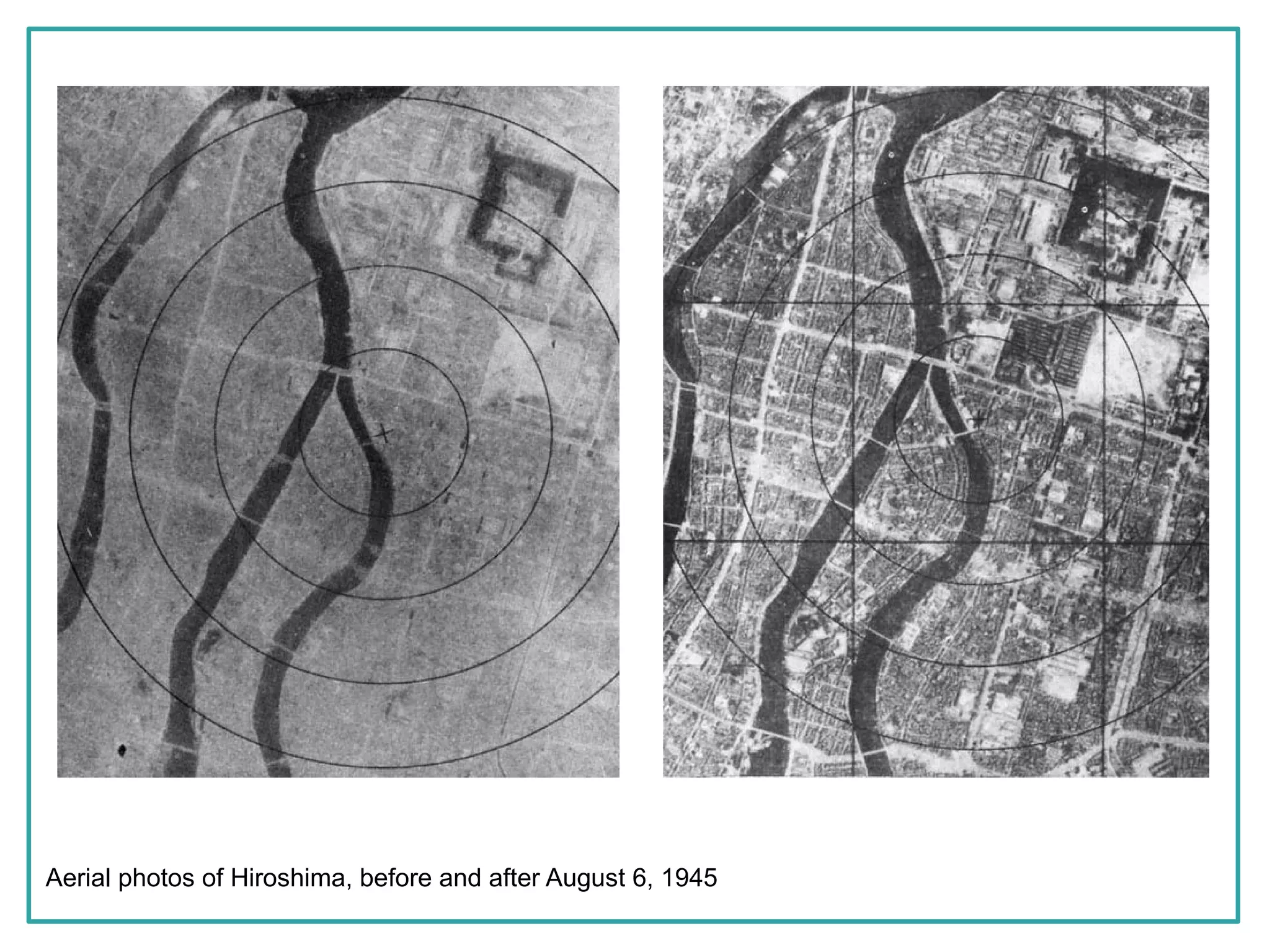
Aerial photos of Hiroshima, before and after August 6, 1945
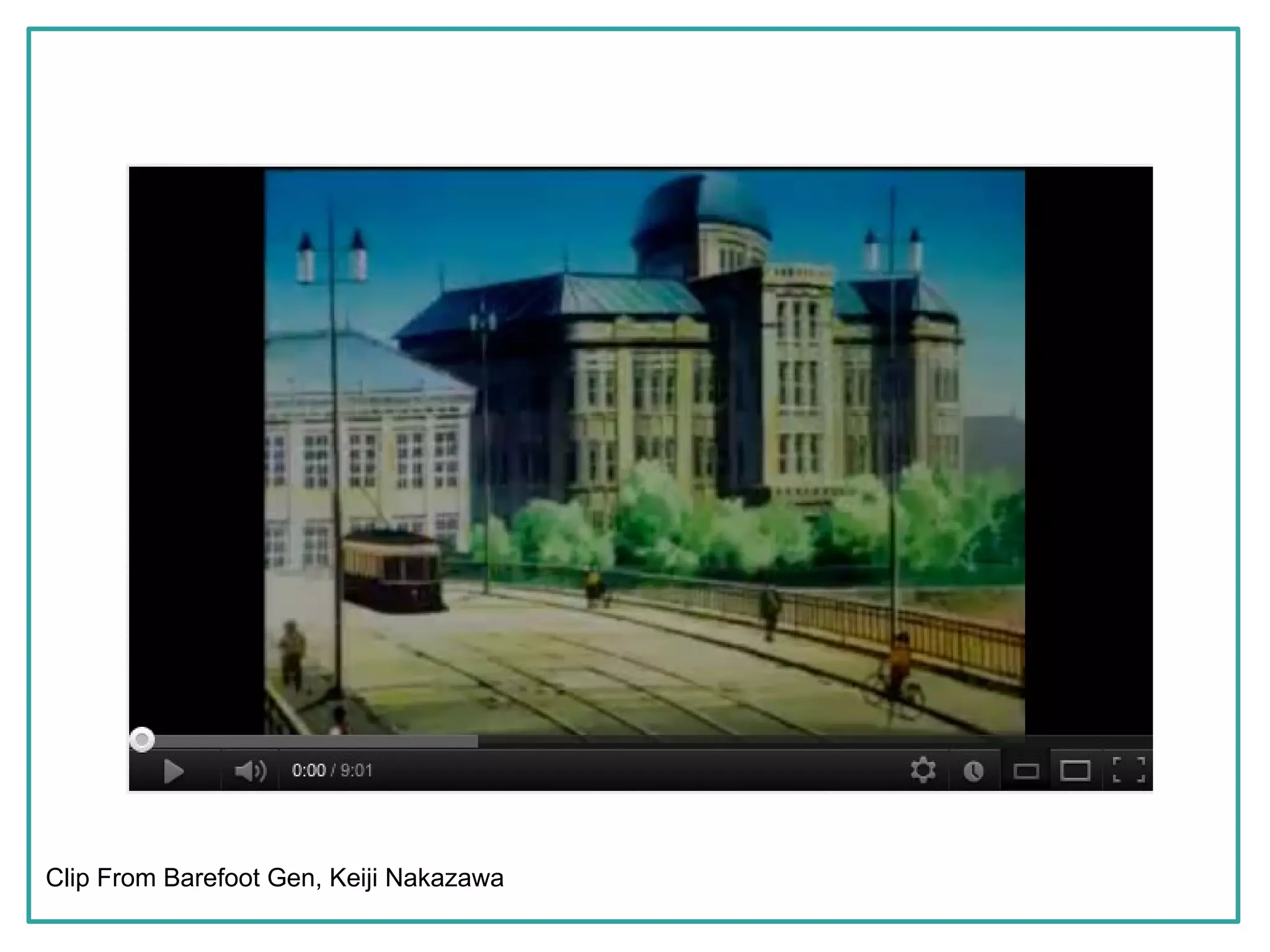
Clip From Barefoot Gen, Keiji Nakazawa
“The strategic plans of our armed forces for the
 defeat of Japan...had been prepared without the
 reliance on the atomic bomb... I was informed that
 such operations might be expected to cost over a
 million casualties, to American forces alone...

 My chief purpose was to end the war in victory with
 the least possible cost in the lives of the men in the
 armies which I had helped to raise.”


Henry Stimson, “The Decision to Use the Bomb,” Harper's Magazine, February, 1947
Q U E S T IO N S F O R
              C O N S ID E R A T IO N
What do you agree with most?
What do you disagree with?
What surprised you?
What historical context contributes to each
 viewpoint?
How does this contribute to your understanding of
 this event/time period?
Has your perspective of this era or these people
 changed?
What ideas are you struggling with? What

Hiroshima

  • 1.
    H ir os h im a (1945) `
  • 2.
  • 3.
  • 4.
    Whereas the successfulprosecution of the war requires every possible protection against espionage and against sabotage to national-defense material, national-defense premises, and national-defense utilities...; Now, therefore, by virtue of the authority vested in me as President of the United States, and Commander in Chief of the Army and Navy, I hereby authorize and direct the Secretary of War ... to prescribe military areas in such places and of such extent as he or the appropriate Military Commander may determine, from which any or all persons may be excluded, and with respect to which, the right of any person to enter, remain in, or leave shall be subject to whatever restrictions the Secretary of War or the appropriate Military Commander may impose in his discretion. Executive Order 1099, February 19, 1942
  • 5.
    Ansel Adams photosof Japanese Internment, 1942
  • 6.
    Memorandum from J.R. Oppenheimer to Brigadier General Farrell, May 11, 1945
  • 7.
    7. Psychological Factorsin Target Selection A. It was agreed that psychological factors in the target selection were of great importance. Two aspects of this are (1) obtaining the greatest psychological effect against Japan and (2) making the initial use sufficiently spectacular for the importance of the weapon to be internationally recognized when publicity on it is released. B. In this respect Kyoto has the advantage of the people being more highly intelligent and hence better able to appreciate the significance of the weapon. Hiroshima has the advantage of being such a size and with possible focussing from nearby mountains that a large fraction of the city may be destroyed. The Emperor's palace in Tokyo has a greater fame than any other target but is of least strategic value. Minutes of the second meeting of the Target Committee, Los Alamos, May 10-11, 1945
  • 8.
    “I told [assistantSecretary of War John McCloy] that my own opinion was that the time now and the method to deal with Russia was to keep out mouths shut and let our actions speak for our words. The Russians will understand them better than anything else... I told him this was a place where we really held all the cards. I called it a royal straight flush and we mustn't be a fool about the way we play it... we have coming into action a weapon which will be unique.” Diary of Secretary of War Henry Stimson, May 14, 1945
  • 9.
    Memorandum of Conversationwith General Marshall May 29, 1945
  • 10.
    Memorandum from R.Gordon Arneson, Interim Committee Secretary, to Mr. Harrison, June 6, 1945
  • 11.
    “Our experience inthe Pacific war is so diverse as to casualties that it is considered wrong to give any estimate in numbers. … An important point about Russian participation on the war is that the impact of Russian entry on the already hopeless Japanese may well be the decisive action levering them into capitulation at that time or shortly thereafter if we land in Japan. ... General Marshall said that it was his personal view that the operation against Kyushu was the only course to pursue.” Minutes of Meeting Held at the White House on Monday, 18 June 1945
  • 12.
    “Admiral Leahy recalledthat the President had been interested in knowing what price the casualties for Kyushu would be...He pointed out that the troops on Okinawa had lost 35 percent in casualties. If this percentage were applied to the number of troops to be employed in Kyushu, he thought from the similarity of the fighting...that this would give a good estimate of casualties to be expected. General Marshal pointed out that the total assault troops for the Kyushu campaign were shown in the memorandum prepared for the President as 766,700.” Minutes of Meeting Held at the White House on Monday, 18 June 1945
  • 13.
    “...I again gave[Truman] my reasons for eliminating one of the proposed targets [Kyoto]. ...He was particularly emphatic in agreeing with my suggestion that if elimination was not doe, the bitterness which would be caused...might make it impossible during the long post-war period to reconcile the Japanese to us in that area rather than to the Russians.” Diary of Henry Stimson, July 24, 1945
  • 14.
    Aerial photos ofHiroshima, before and after August 6, 1945
  • 15.
    Clip From BarefootGen, Keiji Nakazawa
  • 16.
    “The strategic plansof our armed forces for the defeat of Japan...had been prepared without the reliance on the atomic bomb... I was informed that such operations might be expected to cost over a million casualties, to American forces alone... My chief purpose was to end the war in victory with the least possible cost in the lives of the men in the armies which I had helped to raise.” Henry Stimson, “The Decision to Use the Bomb,” Harper's Magazine, February, 1947
  • 17.
    Q U ES T IO N S F O R C O N S ID E R A T IO N What do you agree with most? What do you disagree with? What surprised you? What historical context contributes to each viewpoint? How does this contribute to your understanding of this event/time period? Has your perspective of this era or these people changed? What ideas are you struggling with? What