HIPAA VS GDPR
THE HOW, WHAT, AND WHY ?
ENTREPRENEUR | CISO ON DEMAND | CYBERFEMINIST | TOP 50 CYBER
INFLUENCER @RESPONSIBLE CYBER
MAGDA LILIA CHELLY
1
 Why, What, How and Whom?
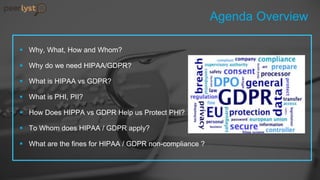
 Why do we need HIPAA/GDPR?
 What is HIPAA vs GDPR?
 What is PHI, PII?
 How Does HIPPA vs GDPR Help us Protect PHI?
 To Whom does HIPAA / GDPR apply?
 What are the fines for HIPAA / GDPR non-compliance ?
Agenda Overview
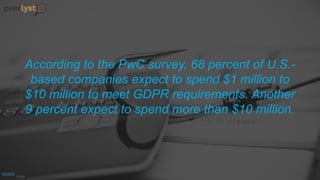
According to the PwC survey, 68 percent of U.S.-
based companies expect to spend $1 million to
$10 million to meet GDPR requirements. Another
9 percent expect to spend more than $10 million.
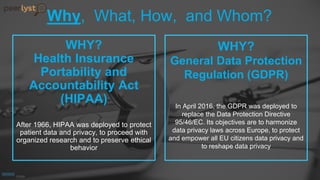
Why, What, How, and Whom?
WHY?
Health Insurance
Portability and
Accountability Act
(HIPAA)
After 1966, HIPAA was deployed to protect
patient data and privacy, to proceed with
organized research and to preserve ethical
behavior
WHY?
General Data Protection
Regulation (GDPR)
In April 2016, the GDPR was deployed to
replace the Data Protection Directive
95/46/EC. Its objectives are to harmonize
data privacy laws across Europe, to protect
and empower all EU citizens data privacy and
to reshape data privacy
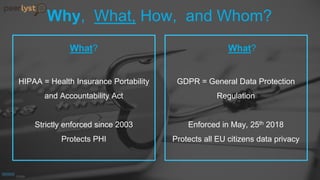
What?
HIPAA = Health Insurance Portability
and Accountability Act
Strictly enforced since 2003
Protects PHI
Why, What, How, and Whom?
What?
GDPR = General Data Protection
Regulation
Enforced in May, 25th 2018
Protects all EU citizens data privacy
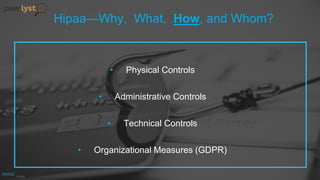
Hipaa—Why, What, How, and Whom?
• Physical Controls
• Administrative Controls
• Technical Controls
• Organizational Measures (GDPR)
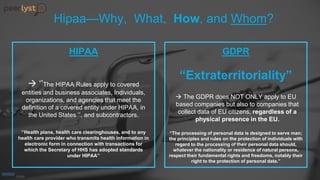
Hipaa—Why, What, How, and Whom?
HIPAA
 ‘’The HIPAA Rules apply to covered
entities and business associates, Individuals,
organizations, and agencies that meet the
definition of a covered entity under HIPAA, in
the United States ’’, and subcontractors.
‘’Health plans, health care clearinghouses, and to any
health care provider who transmits health information in
electronic form in connection with transactions for
which the Secretary of HHS has adopted standards
under HIPAA’’
GDPR
“Extraterritoriality”
 The GDPR does NOT ONLY apply to EU
based companies but also to companies that
collect data of EU citizens, regardless of a
physical presence in the EU.
“The processing of personal data is designed to serve man;
the principles and rules on the protection of individuals with
regard to the processing of their personal data should,
whatever the nationality or residence of natural persons,
respect their fundamental rights and freedoms, notably their
right to the protection of personal data.”
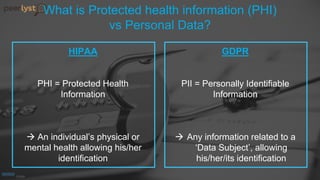
What is Protected health information (PHI)
vs Personal Data?
HIPAA
PHI = Protected Health
Information
 An individual’s physical or
mental health allowing his/her
identification
GDPR
PII = Personally Identifiable
Information
 Any information related to a
‘Data Subject’, allowing
his/her/its identification
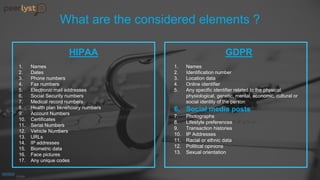
What are the considered elements ?
HIPAA
1. Names
2. Dates
3. Phone numbers
4. Fax numbers
5. Electronic mail addresses
6. Social Security numbers
7. Medical record numbers
8. Health plan beneficiary numbers
9. Account Numbers
10. Certificates
11. Serial Numbers
12. Vehicle Numbers
13. URLs
14. IP addresses
15. Biometric data
16. Face pictures
17. Any unique codes
GDPR
1. Names
2. Identification number
3. Location data
4. Online identifier
5. Any specific identifier related to the physical,
physiological, genetic, mental, economic, cultural or
social identity of the person
6. Social media posts
7. Photographs
8. Lifestyle preferences
9. Transaction histories
10. IP Addresses
11. Racial or ethnic data
12. Political opinions
13. Sexual orientation
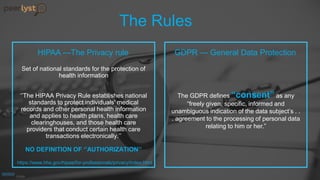
The Rules
Set of national standards for the protection of
health information
‘’The HIPAA Privacy Rule establishes national
standards to protect individuals' medical
records and other personal health information
and applies to health plans, health care
clearinghouses, and those health care
providers that conduct certain health care
transactions electronically.’’
NO DEFINITION OF ‘’AUTHORIZATION’’
HIPAA —The Privacy rule
https://www.hhs.gov/hipaa/for-professionals/privacy/index.html
The GDPR defines “consent” as any
“freely given, specific, informed and
unambiguous indication of the data subject’s . .
. agreement to the processing of personal data
relating to him or her.”
GDPR — General Data Protection
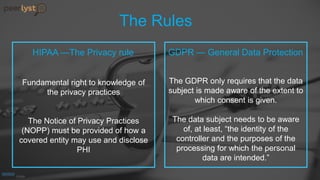
Fundamental right to knowledge of
the privacy practices
The Notice of Privacy Practices
(NOPP) must be provided of how a
covered entity may use and disclose
PHI
HIPAA —The Privacy rule GDPR — General Data Protection
The Rules
The GDPR only requires that the data
subject is made aware of the extent to
which consent is given.
The data subject needs to be aware
of, at least, “the identity of the
controller and the purposes of the
processing for which the personal
data are intended.”
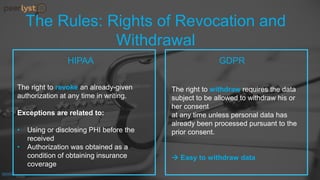
The right to revoke an already-given
authorization at any time in writing.
Exceptions are related to:
• Using or disclosing PHI before the
received
• Authorization was obtained as a
condition of obtaining insurance
coverage
The Rules: Rights of Revocation and
Withdrawal
HIPAA GDPR
The right to withdraw requires the data
subject to be allowed to withdraw his or
her consent
at any time unless personal data has
already been processed pursuant to the
prior consent.
 Easy to withdraw data
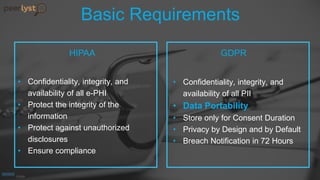
Basic Requirements
• Confidentiality, integrity, and
availability of all e-PHI
• Protect the integrity of the
information
• Protect against unauthorized
disclosures
• Ensure compliance
HIPAA GDPR
• Confidentiality, integrity, and
availability of all PII
• Data Portability
• Store only for Consent Duration
• Privacy by Design and by Default
• Breach Notification in 72 Hours
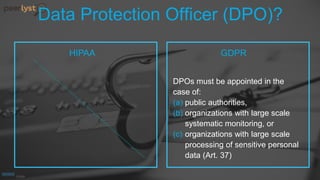
Data Protection Officer (DPO)?
HIPAA GDPR
DPOs must be appointed in the
case of:
(a) public authorities,
(b) organizations with large scale
systematic monitoring, or
(c) organizations with large scale
processing of sensitive personal
data (Art. 37)
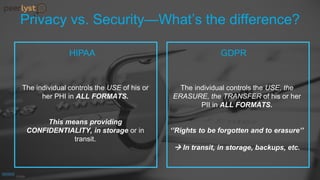
Privacy vs. Security—What’s the difference?
The individual controls the USE of his or
her PHI in ALL FORMATS.
This means providing
CONFIDENTIALITY, in storage or in
transit.
HIPAA GDPR
The individual controls the USE, the
ERASURE, the TRANSFER of his or her
PII in ALL FORMATS.
‘’Rights to be forgotten and to erasure’’
 In transit, in storage, backups, etc.
If you don’t Need it
Don’t Store it
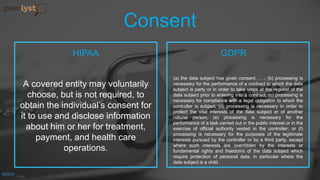
Consent
A covered entity may voluntarily
choose, but is not required, to
obtain the individual’s consent for
it to use and disclose information
about him or her for treatment,
payment, and health care
operations.
HIPAA GDPR
(a) the data subject has given consent . . .; (b) processing is
necessary for the performance of a contract to which the data
subject is party or in order to take steps at the request of the
data subject prior to entering into a contract; (c) processing is
necessary for compliance with a legal obligation to which the
controller is subject; (d) processing is necessary in order to
protect the vital interests of the data subject or of another
natural person; (e) processing is necessary for the
performance of a task carried out in the public interest or in the
exercise of official authority vested in the controller; or (f)
processing is necessary for the purposes of the legitimate
interests pursued by the controller or by a third party, except
where such interests are overridden by the interests or
fundamental rights and freedoms of the data subject which
require protection of personal data, in particular where the
data subject is a child
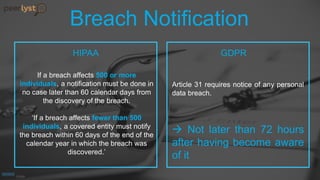
Breach Notification
If a breach affects 500 or more
individuals, a notification must be done in
no case later than 60 calendar days from
the discovery of the breach.
‘If a breach affects fewer than 500
individuals, a covered entity must notify
the breach within 60 days of the end of the
calendar year in which the breach was
discovered.’
HIPAA GDPR
Article 31 requires notice of any personal
data breach.
 Not later than 72 hours
after having become aware
of it
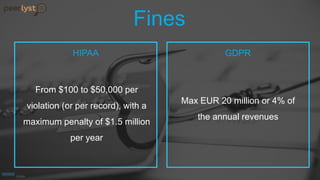
Fines
From $100 to $50,000 per
violation (or per record), with a
maximum penalty of $1.5 million
per year
HIPAA GDPR
Max EUR 20 million or 4% of
the annual revenues
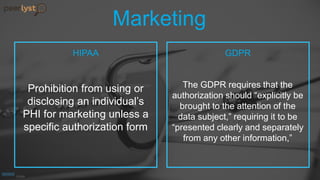
Marketing
HIPAA GDPR
Prohibition from using or
disclosing an individual’s
PHI for marketing unless a
specific authorization form
The GDPR requires that the
authorization should “explicitly be
brought to the attention of the
data subject,” requiring it to be
“presented clearly and separately
from any other information,”
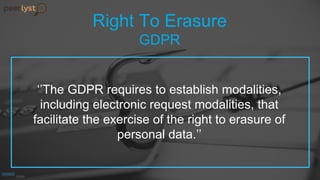
Right To Erasure
GDPR
‘’The GDPR requires to establish modalities,
including electronic request modalities, that
facilitate the exercise of the right to erasure of
personal data.’’
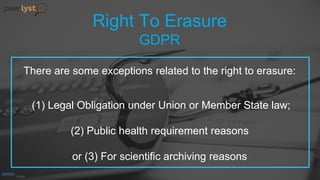
Right To Erasure
GDPR
There are some exceptions related to the right to erasure:
(1) Legal Obligation under Union or Member State law;
(2) Public health requirement reasons
or (3) For scientific archiving reasons
DISCLAIMER
NOTE: This presentation is not and shall not be considered legal advice.
For further information/details/clarification, visit the following references
View the HIPAA details on:
http://www.hhs.gov/ocr/privacy/hipaa
View the GDPR details on: https://www.eugdpr.org
THANK YOU !
PLEASE FEEL FREE TO ASK QUESTIONS OR SHARE YOUR TIPS
24

HIPAA vs GDPR The How, What, and Why ?

  • 1.
    HIPAA VS GDPR THEHOW, WHAT, AND WHY ? ENTREPRENEUR | CISO ON DEMAND | CYBERFEMINIST | TOP 50 CYBER INFLUENCER @RESPONSIBLE CYBER MAGDA LILIA CHELLY 1
  • 2.
     Why, What,How and Whom?  Why do we need HIPAA/GDPR?  What is HIPAA vs GDPR?  What is PHI, PII?  How Does HIPPA vs GDPR Help us Protect PHI?  To Whom does HIPAA / GDPR apply?  What are the fines for HIPAA / GDPR non-compliance ? Agenda Overview
  • 3.
    According to thePwC survey, 68 percent of U.S.- based companies expect to spend $1 million to $10 million to meet GDPR requirements. Another 9 percent expect to spend more than $10 million.
  • 4.
    Why, What, How,and Whom? WHY? Health Insurance Portability and Accountability Act (HIPAA) After 1966, HIPAA was deployed to protect patient data and privacy, to proceed with organized research and to preserve ethical behavior WHY? General Data Protection Regulation (GDPR) In April 2016, the GDPR was deployed to replace the Data Protection Directive 95/46/EC. Its objectives are to harmonize data privacy laws across Europe, to protect and empower all EU citizens data privacy and to reshape data privacy
  • 5.
    What? HIPAA = HealthInsurance Portability and Accountability Act Strictly enforced since 2003 Protects PHI Why, What, How, and Whom? What? GDPR = General Data Protection Regulation Enforced in May, 25th 2018 Protects all EU citizens data privacy
  • 6.
    Hipaa—Why, What, How,and Whom? • Physical Controls • Administrative Controls • Technical Controls • Organizational Measures (GDPR)
  • 7.
    Hipaa—Why, What, How,and Whom? HIPAA  ‘’The HIPAA Rules apply to covered entities and business associates, Individuals, organizations, and agencies that meet the definition of a covered entity under HIPAA, in the United States ’’, and subcontractors. ‘’Health plans, health care clearinghouses, and to any health care provider who transmits health information in electronic form in connection with transactions for which the Secretary of HHS has adopted standards under HIPAA’’ GDPR “Extraterritoriality”  The GDPR does NOT ONLY apply to EU based companies but also to companies that collect data of EU citizens, regardless of a physical presence in the EU. “The processing of personal data is designed to serve man; the principles and rules on the protection of individuals with regard to the processing of their personal data should, whatever the nationality or residence of natural persons, respect their fundamental rights and freedoms, notably their right to the protection of personal data.”
  • 8.
    What is Protectedhealth information (PHI) vs Personal Data? HIPAA PHI = Protected Health Information  An individual’s physical or mental health allowing his/her identification GDPR PII = Personally Identifiable Information  Any information related to a ‘Data Subject’, allowing his/her/its identification
  • 9.
    What are theconsidered elements ? HIPAA 1. Names 2. Dates 3. Phone numbers 4. Fax numbers 5. Electronic mail addresses 6. Social Security numbers 7. Medical record numbers 8. Health plan beneficiary numbers 9. Account Numbers 10. Certificates 11. Serial Numbers 12. Vehicle Numbers 13. URLs 14. IP addresses 15. Biometric data 16. Face pictures 17. Any unique codes GDPR 1. Names 2. Identification number 3. Location data 4. Online identifier 5. Any specific identifier related to the physical, physiological, genetic, mental, economic, cultural or social identity of the person 6. Social media posts 7. Photographs 8. Lifestyle preferences 9. Transaction histories 10. IP Addresses 11. Racial or ethnic data 12. Political opinions 13. Sexual orientation
  • 10.
    The Rules Set ofnational standards for the protection of health information ‘’The HIPAA Privacy Rule establishes national standards to protect individuals' medical records and other personal health information and applies to health plans, health care clearinghouses, and those health care providers that conduct certain health care transactions electronically.’’ NO DEFINITION OF ‘’AUTHORIZATION’’ HIPAA —The Privacy rule https://www.hhs.gov/hipaa/for-professionals/privacy/index.html The GDPR defines “consent” as any “freely given, specific, informed and unambiguous indication of the data subject’s . . . agreement to the processing of personal data relating to him or her.” GDPR — General Data Protection
  • 11.
    Fundamental right toknowledge of the privacy practices The Notice of Privacy Practices (NOPP) must be provided of how a covered entity may use and disclose PHI HIPAA —The Privacy rule GDPR — General Data Protection The Rules The GDPR only requires that the data subject is made aware of the extent to which consent is given. The data subject needs to be aware of, at least, “the identity of the controller and the purposes of the processing for which the personal data are intended.”
  • 12.
    The right torevoke an already-given authorization at any time in writing. Exceptions are related to: • Using or disclosing PHI before the received • Authorization was obtained as a condition of obtaining insurance coverage The Rules: Rights of Revocation and Withdrawal HIPAA GDPR The right to withdraw requires the data subject to be allowed to withdraw his or her consent at any time unless personal data has already been processed pursuant to the prior consent.  Easy to withdraw data
  • 13.
    Basic Requirements • Confidentiality,integrity, and availability of all e-PHI • Protect the integrity of the information • Protect against unauthorized disclosures • Ensure compliance HIPAA GDPR • Confidentiality, integrity, and availability of all PII • Data Portability • Store only for Consent Duration • Privacy by Design and by Default • Breach Notification in 72 Hours
  • 14.
    Data Protection Officer(DPO)? HIPAA GDPR DPOs must be appointed in the case of: (a) public authorities, (b) organizations with large scale systematic monitoring, or (c) organizations with large scale processing of sensitive personal data (Art. 37)
  • 15.
    Privacy vs. Security—What’sthe difference? The individual controls the USE of his or her PHI in ALL FORMATS. This means providing CONFIDENTIALITY, in storage or in transit. HIPAA GDPR The individual controls the USE, the ERASURE, the TRANSFER of his or her PII in ALL FORMATS. ‘’Rights to be forgotten and to erasure’’  In transit, in storage, backups, etc.
  • 16.
    If you don’tNeed it Don’t Store it
  • 17.
    Consent A covered entitymay voluntarily choose, but is not required, to obtain the individual’s consent for it to use and disclose information about him or her for treatment, payment, and health care operations. HIPAA GDPR (a) the data subject has given consent . . .; (b) processing is necessary for the performance of a contract to which the data subject is party or in order to take steps at the request of the data subject prior to entering into a contract; (c) processing is necessary for compliance with a legal obligation to which the controller is subject; (d) processing is necessary in order to protect the vital interests of the data subject or of another natural person; (e) processing is necessary for the performance of a task carried out in the public interest or in the exercise of official authority vested in the controller; or (f) processing is necessary for the purposes of the legitimate interests pursued by the controller or by a third party, except where such interests are overridden by the interests or fundamental rights and freedoms of the data subject which require protection of personal data, in particular where the data subject is a child
  • 18.
    Breach Notification If abreach affects 500 or more individuals, a notification must be done in no case later than 60 calendar days from the discovery of the breach. ‘If a breach affects fewer than 500 individuals, a covered entity must notify the breach within 60 days of the end of the calendar year in which the breach was discovered.’ HIPAA GDPR Article 31 requires notice of any personal data breach.  Not later than 72 hours after having become aware of it
  • 19.
    Fines From $100 to$50,000 per violation (or per record), with a maximum penalty of $1.5 million per year HIPAA GDPR Max EUR 20 million or 4% of the annual revenues
  • 20.
    Marketing HIPAA GDPR Prohibition fromusing or disclosing an individual’s PHI for marketing unless a specific authorization form The GDPR requires that the authorization should “explicitly be brought to the attention of the data subject,” requiring it to be “presented clearly and separately from any other information,”
  • 21.
    Right To Erasure GDPR ‘’TheGDPR requires to establish modalities, including electronic request modalities, that facilitate the exercise of the right to erasure of personal data.’’
  • 22.
    Right To Erasure GDPR Thereare some exceptions related to the right to erasure: (1) Legal Obligation under Union or Member State law; (2) Public health requirement reasons or (3) For scientific archiving reasons
  • 23.
    DISCLAIMER NOTE: This presentationis not and shall not be considered legal advice. For further information/details/clarification, visit the following references View the HIPAA details on: http://www.hhs.gov/ocr/privacy/hipaa View the GDPR details on: https://www.eugdpr.org
  • 24.
    THANK YOU ! PLEASEFEEL FREE TO ASK QUESTIONS OR SHARE YOUR TIPS 24