HIGH RISE BUILDINGS
RISHABH JAIN
9TH SEM
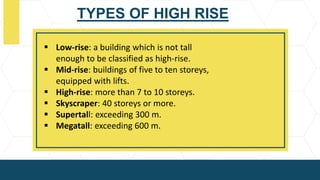
TYPES OF HIGH RISE
 Low-rise: a building which is not tall
enough to be classified as high-rise.
 Mid-rise: buildings of five to ten storeys,
equipped with lifts.
 High-rise: more than 7 to 10 storeys.
 Skyscraper: 40 storeys or more.
 Supertall: exceeding 300 m.
 Megatall: exceeding 600 m.
DEMAND FOR HIGH-RISE BUILDINGS
 Scarcity of land
 Increasing demand for buisness and residential
space
 Economic growth
 Technological advancement
 Innovations in structural systems
 Human aspiration to build higher
TYPES OF STRUCTURAL SYSTEM
 Braced Frame
 Rigid Frame Structure
 Infilled Frame Structure
 Shear wall structure
 Core Structure system
 Framed tube structure
 The trussed tube
 Bundled tube structure
 Outriggers system
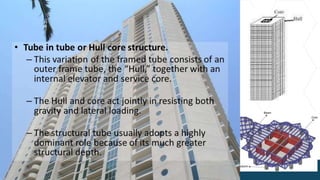
 Tube in tube
Braced Frame
 A braced frame is a structural system commonly
used in structures subject to lateral loads such as
wind and seismic pressure
 The members in a braced frame are generally
made of structural steel
 The beams and columns that form the frame carry
vertical loads, and the bracing system carries the
lateral loads.
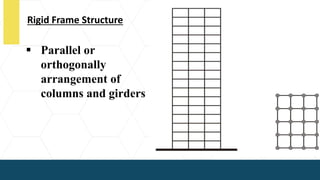
 Parallel or
orthogonally
arrangement of
columns and girders
Rigid Frame Structure
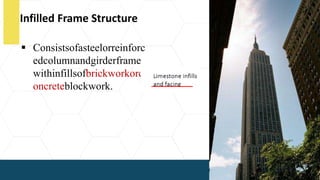
 Consistsofasteelorreinforc
edcolumnandgirderframe
withinfillsofbrickworkorc
oncreteblockwork.
Infilled Frame Structure
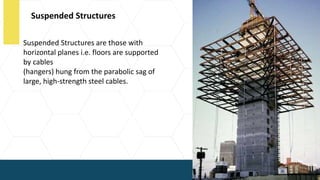
Suspended Structures
Suspended Structures are those with
horizontal planes i.e. floors are supported
by cables
(hangers) hung from the parabolic sag of
large, high-strength steel cables.
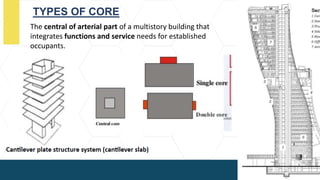
TYPES OF CORE
The central of arterial part of a multistory building that
integrates functions and service needs for established
occupants.

High Rise Building

  • 1.
  • 2.
    TYPES OF HIGHRISE  Low-rise: a building which is not tall enough to be classified as high-rise.  Mid-rise: buildings of five to ten storeys, equipped with lifts.  High-rise: more than 7 to 10 storeys.  Skyscraper: 40 storeys or more.  Supertall: exceeding 300 m.  Megatall: exceeding 600 m.
  • 4.
    DEMAND FOR HIGH-RISEBUILDINGS  Scarcity of land  Increasing demand for buisness and residential space  Economic growth  Technological advancement  Innovations in structural systems  Human aspiration to build higher
  • 5.
    TYPES OF STRUCTURALSYSTEM  Braced Frame  Rigid Frame Structure  Infilled Frame Structure  Shear wall structure  Core Structure system  Framed tube structure  The trussed tube  Bundled tube structure  Outriggers system  Tube in tube
  • 6.
    Braced Frame  Abraced frame is a structural system commonly used in structures subject to lateral loads such as wind and seismic pressure  The members in a braced frame are generally made of structural steel  The beams and columns that form the frame carry vertical loads, and the bracing system carries the lateral loads.
  • 7.
     Parallel or orthogonally arrangementof columns and girders Rigid Frame Structure
  • 8.
  • 9.
    Suspended Structures Suspended Structuresare those with horizontal planes i.e. floors are supported by cables (hangers) hung from the parabolic sag of large, high-strength steel cables.
  • 11.
    TYPES OF CORE Thecentral of arterial part of a multistory building that integrates functions and service needs for established occupants.