Download to read offline


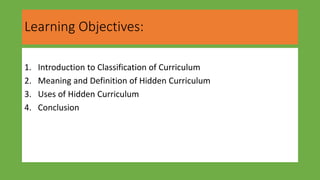
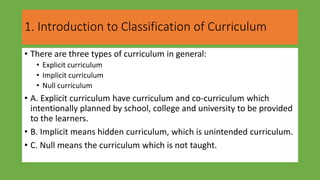
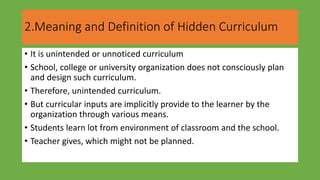
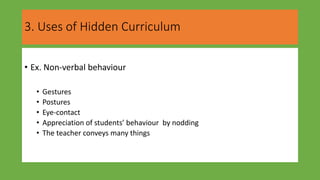


The document discusses the concept of hidden curriculum. It begins by defining the three types of curriculum: explicit, which is intentionally planned; implicit or hidden, which is unintended; and null, which is not taught. It then defines hidden curriculum as the unintended lessons learned from the organization of school/college environments and interactions, rather than formal coursework. Examples of hidden curriculum include non-verbal cues from teachers, like gestures, eye contact, and behavior approval. The conclusion reiterates that hidden curriculum conveys the implicit values of a school through a teacher's praise or ignoring of certain student groups.


