Optimizing PCB Performance and Cost through LaminationMethods
Applications
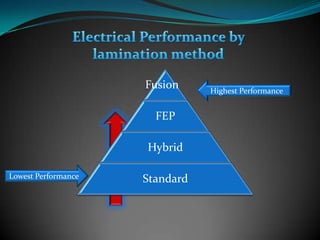
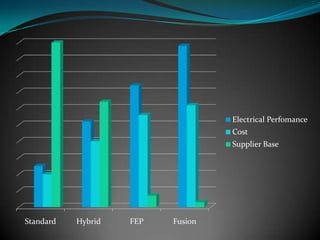
Performance Impact
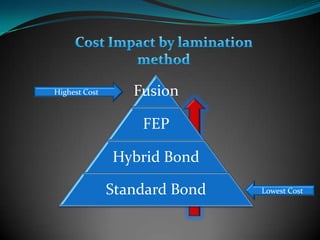
Cost ImpactPresented by Transline Technology©Transline Technology 2011
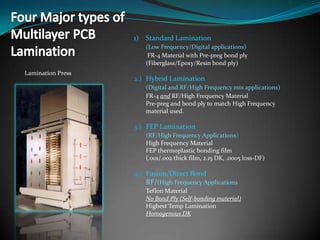
Four Major types of Multilayer PCB LaminationLamination PressStandard Lamination (Low Frequency/Digital applications) FR-4 Material with Pre-preg bond ply	(Fiberglass/Epoxy/Resin bond ply)2.)	Hybrid Lamination (Digital and RF/High Frequency mix applications)FR-4 and RF/High Frequency Material	Pre-preg and bond ply to match High Frequency material used.3.)	FEP Lamination(RF/High Frequency Applications)High Frequency Material	FEP thermoplastic bonding film 	(.001/.002 thick film, 2.15 DK, .0005 loss-DF)4.)	Fusion/Direct BondRF/(High Frequency ApplicationsTeflon MaterialNo Bond Ply (Self-bonding material)	Highest Temp LaminationHomogenous DK
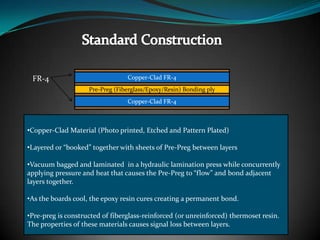
Standard ConstructionCopper-Clad FR-4FR-4Pre-Preg (Fiberglass/Epoxy/Resin) Bonding plyCopper-Clad FR-4Copper-Clad Material (Photo printed, Etched and Pattern Plated)
Layered or “booked” together with sheets of Pre-Preg between layers
Vacuum bagged and laminated  in a hydraulic lamination press while concurrently applying pressure and heat that causes the Pre-Preg to “flow” and bond adjacent layers together.
As the boards cool, the epoxy resin cures creating a permanent bond.
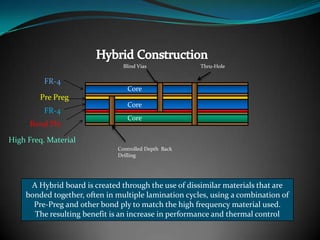
Pre-preg is constructed of fiberglass-reinforced (or unreinforced) thermoset resin. The properties of these materials causes signal loss between layers.Hybrid ConstructionBlind ViasThru-HoleFR-4CorePre PregCoreFR-4CoreBond PlyHigh Freq. MaterialControlled Depth  Back DrillingA Hybrid board is created through the use of dissimilar materials that are bonded together, often in multiple lamination cycles, using a combination of Pre-Preg and other bond ply to match the high frequency material used.  The resulting benefit is an increase in performance and thermal control
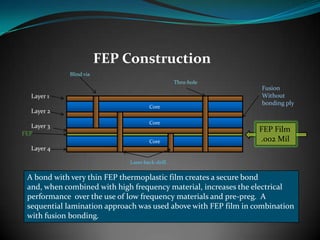
FEP ConstructionBlind viaThru-holeFusion Without bonding ply      Layer 1      Layer 2      Layer 3 FEP      Layer 4CoreCoreFEP Film .002 MilCoreLaser back-drillA bond with very thin FEP thermoplastic film creates a secure bond and, when combined with high frequency material, increases the electrical performance  over the use of low frequency materials and pre-preg.  A sequential lamination approach was used above with FEP film in combination with fusion bonding.
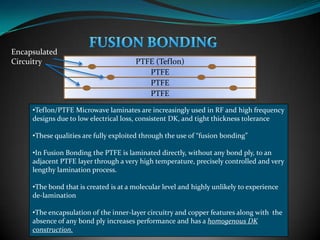
FUSION BONDING Encapsulated CircuitryPTFE (Teflon)PTFEPTFEPTFETeflon/PTFE Microwave laminates are increasingly used in RF and high frequency designs due to low electrical loss, consistent DK, and tight thickness tolerance
These qualities are fully exploited through the use of “fusion bonding”
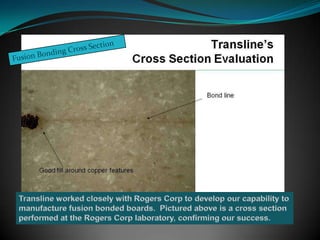
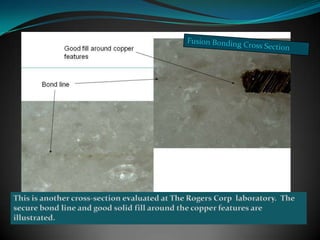
In Fusion Bonding the PTFE is laminated directly, without any bond ply, to an adjacent PTFE layer through a very high temperature, precisely controlled and very lengthy lamination process.

PCB Fusion Bonding

  • 1.
    Optimizing PCB Performanceand Cost through LaminationMethods
  • 2.
  • 3.
  • 4.
    Cost ImpactPresented byTransline Technology©Transline Technology 2011
  • 5.
    Four Major typesof Multilayer PCB LaminationLamination PressStandard Lamination (Low Frequency/Digital applications) FR-4 Material with Pre-preg bond ply (Fiberglass/Epoxy/Resin bond ply)2.) Hybrid Lamination (Digital and RF/High Frequency mix applications)FR-4 and RF/High Frequency Material Pre-preg and bond ply to match High Frequency material used.3.) FEP Lamination(RF/High Frequency Applications)High Frequency Material FEP thermoplastic bonding film (.001/.002 thick film, 2.15 DK, .0005 loss-DF)4.) Fusion/Direct BondRF/(High Frequency ApplicationsTeflon MaterialNo Bond Ply (Self-bonding material) Highest Temp LaminationHomogenous DK
  • 6.
    Standard ConstructionCopper-Clad FR-4FR-4Pre-Preg(Fiberglass/Epoxy/Resin) Bonding plyCopper-Clad FR-4Copper-Clad Material (Photo printed, Etched and Pattern Plated)
  • 7.
    Layered or “booked”together with sheets of Pre-Preg between layers
  • 8.
    Vacuum bagged andlaminated in a hydraulic lamination press while concurrently applying pressure and heat that causes the Pre-Preg to “flow” and bond adjacent layers together.
  • 9.
    As the boardscool, the epoxy resin cures creating a permanent bond.
  • 10.
    Pre-preg is constructedof fiberglass-reinforced (or unreinforced) thermoset resin. The properties of these materials causes signal loss between layers.Hybrid ConstructionBlind ViasThru-HoleFR-4CorePre PregCoreFR-4CoreBond PlyHigh Freq. MaterialControlled Depth Back DrillingA Hybrid board is created through the use of dissimilar materials that are bonded together, often in multiple lamination cycles, using a combination of Pre-Preg and other bond ply to match the high frequency material used. The resulting benefit is an increase in performance and thermal control
  • 11.
    FEP ConstructionBlind viaThru-holeFusionWithout bonding ply Layer 1 Layer 2 Layer 3 FEP Layer 4CoreCoreFEP Film .002 MilCoreLaser back-drillA bond with very thin FEP thermoplastic film creates a secure bond and, when combined with high frequency material, increases the electrical performance over the use of low frequency materials and pre-preg. A sequential lamination approach was used above with FEP film in combination with fusion bonding.
  • 12.
    FUSION BONDING EncapsulatedCircuitryPTFE (Teflon)PTFEPTFEPTFETeflon/PTFE Microwave laminates are increasingly used in RF and high frequency designs due to low electrical loss, consistent DK, and tight thickness tolerance
  • 13.
    These qualities arefully exploited through the use of “fusion bonding”
  • 14.
    In Fusion Bondingthe PTFE is laminated directly, without any bond ply, to an adjacent PTFE layer through a very high temperature, precisely controlled and very lengthy lamination process.