Introduction to Herbal Drug
• When it comes to herbs in the context of drugs, they refer to plants that have
therapeutic properties and are used in various traditional and modern medicines. Many
herbs contain active compounds that can have physiological effects on the body, such
as anti-inflammatory, analgesic, or antimicrobial properties. Examples include:
• Echinacea: Often used to boost the immune system.
• St. John's Wort: Used for its antidepressant properties.
• Ginseng: Known for its energy-boosting and adaptogenic effects.
• Biodynamic agriculture in the context of drug production refers to the cultivation of
medicinal plants and herbs using biodynamic principles. This method aims to produce
high-quality, potent herbs by nurturing the soil and ecosystem. Biodynamic farming is
believed to enhance the medicinal qualities of plants, making them more effective for
use in natural and herbal remedies.
Herbal Drug
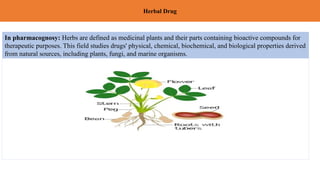
In pharmacognosy: Herbs are defined as medicinal plants and their parts containing bioactive compounds for
therapeutic purposes. This field studies drugs' physical, chemical, biochemical, and biological properties derived
from natural sources, including plants, fungi, and marine organisms.
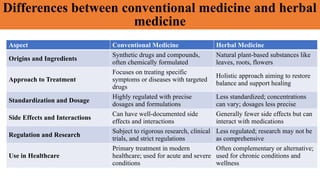
Differences between conventional medicine and herbal
medicine
Aspect Conventional Medicine Herbal Medicine
Origins and Ingredients
Synthetic drugs and compounds,
often chemically formulated
Natural plant-based substances like
leaves, roots, flowers
Approach to Treatment
Focuses on treating specific
symptoms or diseases with targeted
drugs
Holistic approach aiming to restore
balance and support healing
Standardization and Dosage
Highly regulated with precise
dosages and formulations
Less standardized; concentrations
can vary; dosages less precise
Side Effects and Interactions
Can have well-documented side
effects and interactions
Generally fewer side effects but can
interact with medications
Regulation and Research
Subject to rigorous research, clinical
trials, and strict regulations
Less regulated; research may not be
as comprehensive
Use in Healthcare
Primary treatment in modern
healthcare; used for acute and severe
conditions
Often complementary or alternative;
used for chronic conditions and
wellness
Herbal Material
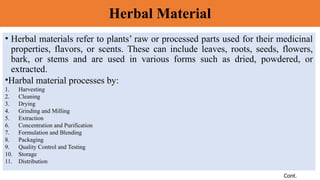
• Herbal materials refer to plants’ raw or processed parts used for their medicinal
properties, flavors, or scents. These can include leaves, roots, seeds, flowers,
bark, or stems and are used in various forms such as dried, powdered, or
extracted.
•Harbal material processes by:
1. Harvesting
2. Cleaning
3. Drying
4. Grinding and Milling
5. Extraction
6. Concentration and Purification
7. Formulation and Blending
8. Packaging
9. Quality Control and Testing
10. Storage
11. Distribution
Cont.
Herbal Preparation
• Herbal preparations involve transforming raw herbal materials into various forms suitable for
therapeutic use. Common preparations include infusions and decoctions, which involve
soaking or boiling herbs in water to extract their beneficial compounds. Tinctures are
concentrated liquid extracts made using alcohol or glycerin, while glycerites use glycerin as a
solvent, making them suitable for those avoiding alcohol. Syrups combine herbal extracts
with a sweetener, often used for soothing sore throats or coughs. Powders involve grinding
dried herbs into a fine consistency, which can be taken directly or encapsulated into capsules
for easy ingestion. Tablets are similar but compressed into a solid form. Ointments, salves,
creams, and lotions are used topically, incorporating herbs into a base for skin applications.
Poultices and compresses involve applying herbs directly to the skin for localized effects.
Essential oils are extracted through steam distillation and used aromatically or topically.
Herbal teas offer a simple, soothing way to consume herbs, while herbal vinegars and wines
use vinegar or wine as solvents for extraction. Inhalations involve breathing in steam from
herbs to relieve respiratory issues, and liniments are used for topical pain relief. Lozenges are
made to dissolve slowly in the mouth for throat soothing. Bath blends incorporate herbs into
bathwater for relaxation or skin benefits. Each preparation method is chosen based on the
desired therapeutic effect, the nature of the herbs, and the preferred method of administration.
Finished Herbal Product
•A mixture herbal product is a formulation that combines multiple herbs to achieve
a specific therapeutic effect or to provide a broader range of health benefits. These
mixtures leverage the synergistic effects of different herbs, enhancing their
individual properties and offering a more balanced approach to health and
wellness. By combining herbs with complementary actions, a mixture of herbal
products can address multiple aspects of a condition or provide support for overall
well-being.
Example:
Digestive Health Formula: A blend of Ginger, Fennel, and Peppermint to
alleviate digestive discomfort, reduce bloating, and promote healthy digestion.
Standardization of herbal drugs
• 1. Authentication
• Botanical Identification: Verifying the correct plant species is crucial. Techniques used include:
• Morphological Analysis: Examining the physical characteristics of the plant.
• Microscopic Examination: Identifying unique cellular structures or plant tissues.
• Chromatographic Techniques: Using methods like Thin-Layer Chromatography (TLC) or High-
Performance Liquid Chromatography (HPLC) to match the herb’s chemical profile to known
standards.
• DNA Barcoding: Utilizing genetic markers to confirm the plant’s identity.
• 2. Absence of Foreign Material
• Purity Testing: Ensuring that the herbal material is free from contaminants such as:
• Other Plant Species: Verifying that no adulterant species are present.
• Inorganic Contaminants: Checking for residues of heavy metals or pesticides.
• Microbial Contamination: Testing for the presence of bacteria, fungi, and other microorganisms.
• Physical Contaminants: Inspecting for foreign materials like dirt, stones, or other non-plant
substances.
• 3. Microscopic Characteristics
• Microscopy Analysis: Identifying the plant based on its cellular structure and other microscopic features. This can
include:
• Leaf and Stem Structures: Observing trichomes, stomata, and vascular tissues.
• Pollen Analysis: Using pollen morphology for species identification.
• Cellular Anatomy: Examining cell types, tissues, and other internal structures.
• 4. Radioactive Contamination Limit
• Testing for Radioactivity: Ensuring that the herbal material does not exceed acceptable levels of radioactive
contamination, which could be due to environmental factors or contamination during processing.
• Regulatory Compliance: Adhering to safety standards and limits set by regulatory bodies for radioactive substances
in herbal products.
• 5. Assay
• Active Ingredient Analysis: Measuring the concentration of active compounds or marker substances to ensure
consistency and potency. This includes:
• Quantitative Analysis: Using methods like HPLC, Gas Chromatography (GC), or spectrophotometry to
determine the concentration of specific compounds.
• Marker Substances: Identifying and quantifying compounds that are used as indicators of quality and efficacy.
• Pharmacokinetic Studies: Assessing how the active ingredients are absorbed, distributed, metabolized, and
excreted in the body.
Collection of Drugs
• The collection of herbal drugs involves several important steps to ensure that the
plant material is harvested, handled, and processed in a way that preserves its
quality and therapeutic properties.
1. Identification and Selection
• Botanical Identification: Accurately identify the plant species using taxonomic
keys, field guides, or expert consultation to ensure the correct herb is collected.
• Optimal Harvesting Time: Determine the best time to harvest based on the
plant’s growth cycle, typically when the plant part (roots, leaves, flowers)
contains the highest concentration of active compounds.
2. Harvesting
• Method: Use appropriate harvesting techniques to minimize damage to the plant
and its surrounding environment. This might include hand-picking leaves, cutting
stems, or carefully digging roots.
• Sustainable Practices: Follow sustainable harvesting guidelines to prevent
overharvesting and ensure the plant population remains healthy. This may
involve leaving some plants to seed or rotating harvesting areas.
3. Handling
• Gentle Handling: Handle the plant material carefully to avoid bruising or
damaging the plant parts, which can affect the quality of the final product.
• Avoid Contamination: Ensure that the plant material does not come into
contact with pollutants, chemicals, or other contaminants.
4. Cleaning
• Initial Cleaning: Rinse the plant material to remove dirt, insects, or other
debris. For delicate parts like leaves and flowers, this may involve a gentle
wash with water.
• Inspection: Sort and inspect the cleaned material to remove any damaged or
diseased parts.
5. Drying
• Method: Choose an appropriate drying method based on the plant material:
• Air Drying: Spread the material out in a well-ventilated, shaded area to dry naturally. This is commonly used for
leaves and flowers.
• Mechanical Drying: Use dehydrators or ovens to speed up the drying process, especially for tougher plant parts like
roots and barks.
• Freeze Drying: Freeze the plant material and then remove moisture under vacuum conditions to preserve delicate
compounds.
6. Storage
• Conditions: Store dried plant material in a cool, dry, and dark environment to prevent degradation. Use airtight containers to
protect against moisture and pests.
• Labeling: Clearly label storage containers with the plant name, harvest date, and other relevant information to ensure proper
identification and traceability.
7. Processing
• Grinding: If needed, grind the dried plant material into a suitable particle size for further use or formulation.
• Extraction: Prepare extracts or other preparations using methods such as infusions, decoctions, tinctures, or oils.
8. Documentation
• Record Keeping: Maintain detailed records of the collection process, including the source of the plant material, harvesting
date, and handling procedures. This documentation supports quality control and traceability.
9. Compliance
• Regulations: Adhere to local, national, and international regulations regarding the collection, processing, and sale of herbal
drugs to ensure compliance with legal and safety standards.
THANK YOU

Herbal Druĝ Technology unit-1 basic info

  • 1.
    Introduction to HerbalDrug • When it comes to herbs in the context of drugs, they refer to plants that have therapeutic properties and are used in various traditional and modern medicines. Many herbs contain active compounds that can have physiological effects on the body, such as anti-inflammatory, analgesic, or antimicrobial properties. Examples include: • Echinacea: Often used to boost the immune system. • St. John's Wort: Used for its antidepressant properties. • Ginseng: Known for its energy-boosting and adaptogenic effects. • Biodynamic agriculture in the context of drug production refers to the cultivation of medicinal plants and herbs using biodynamic principles. This method aims to produce high-quality, potent herbs by nurturing the soil and ecosystem. Biodynamic farming is believed to enhance the medicinal qualities of plants, making them more effective for use in natural and herbal remedies.
  • 2.
    Herbal Drug In pharmacognosy:Herbs are defined as medicinal plants and their parts containing bioactive compounds for therapeutic purposes. This field studies drugs' physical, chemical, biochemical, and biological properties derived from natural sources, including plants, fungi, and marine organisms.
  • 3.
    Differences between conventionalmedicine and herbal medicine Aspect Conventional Medicine Herbal Medicine Origins and Ingredients Synthetic drugs and compounds, often chemically formulated Natural plant-based substances like leaves, roots, flowers Approach to Treatment Focuses on treating specific symptoms or diseases with targeted drugs Holistic approach aiming to restore balance and support healing Standardization and Dosage Highly regulated with precise dosages and formulations Less standardized; concentrations can vary; dosages less precise Side Effects and Interactions Can have well-documented side effects and interactions Generally fewer side effects but can interact with medications Regulation and Research Subject to rigorous research, clinical trials, and strict regulations Less regulated; research may not be as comprehensive Use in Healthcare Primary treatment in modern healthcare; used for acute and severe conditions Often complementary or alternative; used for chronic conditions and wellness
  • 4.
    Herbal Material • Herbalmaterials refer to plants’ raw or processed parts used for their medicinal properties, flavors, or scents. These can include leaves, roots, seeds, flowers, bark, or stems and are used in various forms such as dried, powdered, or extracted. •Harbal material processes by: 1. Harvesting 2. Cleaning 3. Drying 4. Grinding and Milling 5. Extraction 6. Concentration and Purification 7. Formulation and Blending 8. Packaging 9. Quality Control and Testing 10. Storage 11. Distribution Cont.
  • 5.
    Herbal Preparation • Herbalpreparations involve transforming raw herbal materials into various forms suitable for therapeutic use. Common preparations include infusions and decoctions, which involve soaking or boiling herbs in water to extract their beneficial compounds. Tinctures are concentrated liquid extracts made using alcohol or glycerin, while glycerites use glycerin as a solvent, making them suitable for those avoiding alcohol. Syrups combine herbal extracts with a sweetener, often used for soothing sore throats or coughs. Powders involve grinding dried herbs into a fine consistency, which can be taken directly or encapsulated into capsules for easy ingestion. Tablets are similar but compressed into a solid form. Ointments, salves, creams, and lotions are used topically, incorporating herbs into a base for skin applications. Poultices and compresses involve applying herbs directly to the skin for localized effects. Essential oils are extracted through steam distillation and used aromatically or topically. Herbal teas offer a simple, soothing way to consume herbs, while herbal vinegars and wines use vinegar or wine as solvents for extraction. Inhalations involve breathing in steam from herbs to relieve respiratory issues, and liniments are used for topical pain relief. Lozenges are made to dissolve slowly in the mouth for throat soothing. Bath blends incorporate herbs into bathwater for relaxation or skin benefits. Each preparation method is chosen based on the desired therapeutic effect, the nature of the herbs, and the preferred method of administration.
  • 6.
    Finished Herbal Product •Amixture herbal product is a formulation that combines multiple herbs to achieve a specific therapeutic effect or to provide a broader range of health benefits. These mixtures leverage the synergistic effects of different herbs, enhancing their individual properties and offering a more balanced approach to health and wellness. By combining herbs with complementary actions, a mixture of herbal products can address multiple aspects of a condition or provide support for overall well-being. Example: Digestive Health Formula: A blend of Ginger, Fennel, and Peppermint to alleviate digestive discomfort, reduce bloating, and promote healthy digestion.
  • 7.
    Standardization of herbaldrugs • 1. Authentication • Botanical Identification: Verifying the correct plant species is crucial. Techniques used include: • Morphological Analysis: Examining the physical characteristics of the plant. • Microscopic Examination: Identifying unique cellular structures or plant tissues. • Chromatographic Techniques: Using methods like Thin-Layer Chromatography (TLC) or High- Performance Liquid Chromatography (HPLC) to match the herb’s chemical profile to known standards. • DNA Barcoding: Utilizing genetic markers to confirm the plant’s identity. • 2. Absence of Foreign Material • Purity Testing: Ensuring that the herbal material is free from contaminants such as: • Other Plant Species: Verifying that no adulterant species are present. • Inorganic Contaminants: Checking for residues of heavy metals or pesticides. • Microbial Contamination: Testing for the presence of bacteria, fungi, and other microorganisms. • Physical Contaminants: Inspecting for foreign materials like dirt, stones, or other non-plant substances.
  • 8.
    • 3. MicroscopicCharacteristics • Microscopy Analysis: Identifying the plant based on its cellular structure and other microscopic features. This can include: • Leaf and Stem Structures: Observing trichomes, stomata, and vascular tissues. • Pollen Analysis: Using pollen morphology for species identification. • Cellular Anatomy: Examining cell types, tissues, and other internal structures. • 4. Radioactive Contamination Limit • Testing for Radioactivity: Ensuring that the herbal material does not exceed acceptable levels of radioactive contamination, which could be due to environmental factors or contamination during processing. • Regulatory Compliance: Adhering to safety standards and limits set by regulatory bodies for radioactive substances in herbal products. • 5. Assay • Active Ingredient Analysis: Measuring the concentration of active compounds or marker substances to ensure consistency and potency. This includes: • Quantitative Analysis: Using methods like HPLC, Gas Chromatography (GC), or spectrophotometry to determine the concentration of specific compounds. • Marker Substances: Identifying and quantifying compounds that are used as indicators of quality and efficacy. • Pharmacokinetic Studies: Assessing how the active ingredients are absorbed, distributed, metabolized, and excreted in the body.
  • 9.
    Collection of Drugs •The collection of herbal drugs involves several important steps to ensure that the plant material is harvested, handled, and processed in a way that preserves its quality and therapeutic properties. 1. Identification and Selection • Botanical Identification: Accurately identify the plant species using taxonomic keys, field guides, or expert consultation to ensure the correct herb is collected. • Optimal Harvesting Time: Determine the best time to harvest based on the plant’s growth cycle, typically when the plant part (roots, leaves, flowers) contains the highest concentration of active compounds. 2. Harvesting • Method: Use appropriate harvesting techniques to minimize damage to the plant and its surrounding environment. This might include hand-picking leaves, cutting stems, or carefully digging roots.
  • 10.
    • Sustainable Practices:Follow sustainable harvesting guidelines to prevent overharvesting and ensure the plant population remains healthy. This may involve leaving some plants to seed or rotating harvesting areas. 3. Handling • Gentle Handling: Handle the plant material carefully to avoid bruising or damaging the plant parts, which can affect the quality of the final product. • Avoid Contamination: Ensure that the plant material does not come into contact with pollutants, chemicals, or other contaminants. 4. Cleaning • Initial Cleaning: Rinse the plant material to remove dirt, insects, or other debris. For delicate parts like leaves and flowers, this may involve a gentle wash with water. • Inspection: Sort and inspect the cleaned material to remove any damaged or diseased parts.
  • 11.
    5. Drying • Method:Choose an appropriate drying method based on the plant material: • Air Drying: Spread the material out in a well-ventilated, shaded area to dry naturally. This is commonly used for leaves and flowers. • Mechanical Drying: Use dehydrators or ovens to speed up the drying process, especially for tougher plant parts like roots and barks. • Freeze Drying: Freeze the plant material and then remove moisture under vacuum conditions to preserve delicate compounds. 6. Storage • Conditions: Store dried plant material in a cool, dry, and dark environment to prevent degradation. Use airtight containers to protect against moisture and pests. • Labeling: Clearly label storage containers with the plant name, harvest date, and other relevant information to ensure proper identification and traceability. 7. Processing • Grinding: If needed, grind the dried plant material into a suitable particle size for further use or formulation. • Extraction: Prepare extracts or other preparations using methods such as infusions, decoctions, tinctures, or oils. 8. Documentation • Record Keeping: Maintain detailed records of the collection process, including the source of the plant material, harvesting date, and handling procedures. This documentation supports quality control and traceability. 9. Compliance • Regulations: Adhere to local, national, and international regulations regarding the collection, processing, and sale of herbal drugs to ensure compliance with legal and safety standards.
  • 12.