Ambulatory Conference Vishal Tiwari PGY 2 Thursday 22 May 2008
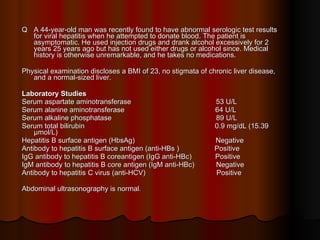
Q  A 44-year-old man was recently found to have abnormal serologic test results for viral hepatitis when he attempted to donate blood. The patient is asymptomatic. He used injection drugs and drank alcohol excessively for 2 years 25 years ago but has not used either drugs or alcohol since. Medical history is otherwise unremarkable, and he takes no medications.  Physical examination discloses a BMI of 23, no stigmata of chronic liver disease, and a normal-sized liver. Laboratory Studies Serum aspartate aminotransferase  53 U/L Serum alanine aminotransferase  64 U/L  Serum alkaline phosphatase  89 U/L Serum total bilirubin  0.9 mg/dL (15.39 μmol/L) Hepatitis B surface antigen (HbsAg)  Negative Antibody to hepatitis B surface antigen (anti-HBs )  Positive  IgG antibody to hepatitis B coreantigen (IgG anti-HBc)  Positive  IgM antibody to hepatitis B core antigen (IgM anti-HBc)  Negative Antibody to hepatitis C virus (anti-HCV)  Positive Abdominal ultrasonography is normal .
Which of the following diagnostic studies should be done next? A Hepatitis B e antigen (HBeAg)  B Hepatitis B virus DNA (HBV DNA)   C Hepatitis C virus RNA (HCV RNA)  D IgM antibody to hepatitis A virus (IgM anti-HAV)
Source of presentation Data supported approach, based on A formal review and analysis of recently published world literature topic (medline) ACP Manual for assessing health practices and designing practice guidelines AASLD guideline policies Medstudy and MKSAP 14 Presentation article is fully endorsed by the AASLD, IDSA and American College of Gastroenterology
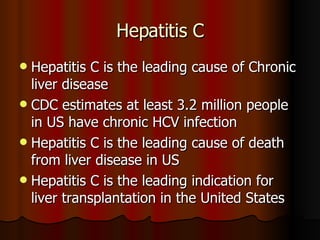
Hepatitis C is the leading cause of Chronic liver disease  CDC estimates at least 3.2 million people in US have chronic HCV infection Hepatitis C is the leading cause of death from liver disease in US Hepatitis C is the leading indication for liver transplantation in the United States  Hepatitis C
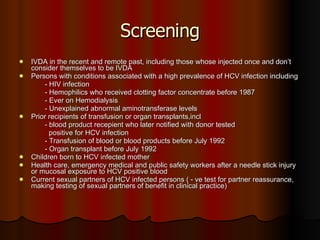
Screening IVDA in the recent and remote past, including those whose injected once and don’t consider themselves to be IVDA Persons with conditions associated with a high prevalence of HCV infection including - HIV infection - Hemophilics who received clotting factor concentrate before 1987  - Ever on Hemodialysis - Unexplained abnormal aminotransferase levels Prior recipients of transfusion or organ transplants,incl - blood product recepient who later notified with donor tested  positive for HCV infection - Transfusion of blood or blood products before July 1992 - Organ transplant before July 1992 Children born to HCV infected mother Health care, emergency medical and public safety workers after a needle stick injury or mucosal exposure to HCV positive blood Current sexual partners of HCV infected persons ( - ve test for partner reassurance, making testing of sexual partners of benefit in clinical practice)
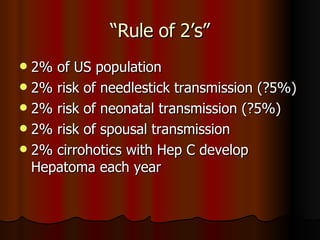
“Rule of 2’s” 2% of US population 2% risk of needlestick transmission (?5%) 2% risk of neonatal transmission (?5%) 2% risk of spousal transmission 2% cirrohotics with Hep C develop Hepatoma each year
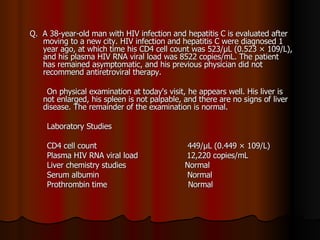
Q.  A 38-year-old man with HIV infection and hepatitis C is evaluated after moving to a new city. HIV infection and hepatitis C were diagnosed 1 year ago, at which time his CD4 cell count was 523/μL (0.523 × 10⁹/L), and his plasma HIV RNA viral load was 8522 copies/mL. The patient has remained asymptomatic, and his previous physician did not recommend antiretroviral therapy.  On physical examination at today's visit, he appears well. His liver is not enlarged, his spleen is not palpable, and there are no signs of liver disease. The remainder of the examination is normal. Laboratory Studies CD4 cell count  449/μL (0.449 × 10⁹/L) Plasma HIV RNA viral load  12,220 copies/mL Liver chemistry studies  Normal Serum albumin  Normal Prothrombin time  Normal
Which of the following is the most appropriate management of this patient's hepatitis C at this time?  A Qualitative hepatitis C virus RNA viral  load testing  B Liver biopsy  C Pegylated interferon D Pegylated interferon and ribavirin
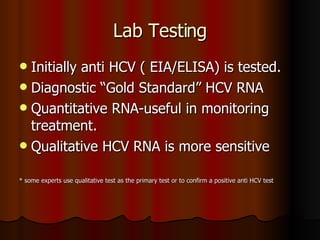
Lab Testing Initially anti HCV ( EIA/ELISA) is tested. Diagnostic “Gold Standard” HCV RNA  Quantitative RNA-useful in monitoring treatment. Qualitative HCV RNA is more sensitive  * some experts use qualitative test as the primary test or to confirm a positive anti HCV test
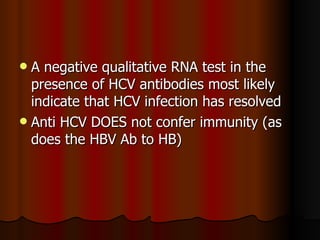
A negative qualitative RNA test in the presence of HCV antibodies most likely indicate that HCV infection has resolved Anti HCV DOES not confer immunity (as does the HBV Ab to HB)
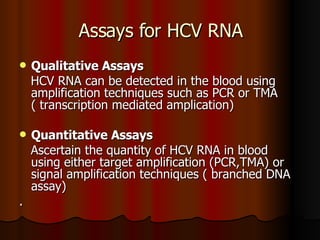
Assays for HCV RNA Qualitative Assays HCV RNA can be detected in the blood using amplification techniques such as PCR or TMA  ( transcription mediated amplication) Quantitative Assays Ascertain the quantity of HCV RNA in blood using either target amplification (PCR,TMA) or signal amplification techniques ( branched DNA assay) .
HCV Genotyping There are 6 major genotypes Although genotype does not predict the outcome of infection, it does predict the likelihood of treatment response, and, in many cases, determines the duration of treatment Most HCV infection in US are Genotype 1
Liver Biopsy Role is currently debated Bx is NOT necessary for diagnosis Bx is helpful in assessing disease severity Bx can aid in decisions about treatment and surveillance Normal LFTs does not preclude a liver biopsy. But Biopsy in not mandatory in order to initiate Rx. ( Sero marker for cirrhosis in process)
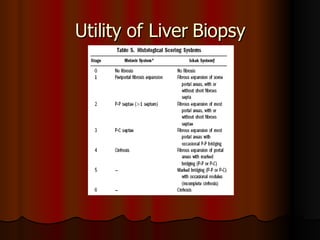
Utility of Liver Biopsy
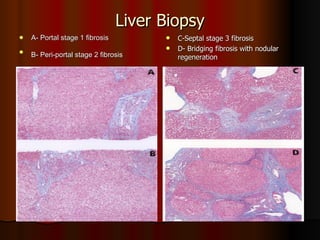
Liver Biopsy A- Portal stage 1 fibrosis B- Peri-portal stage 2 fibrosis C-Septal stage 3 fibrosis D- Bridging fibrosis with nodular  regeneration
Genotype and liver Biopsy HCV genotype-1 infection Liver biopsy to guide recommendations for treatment. HCV genotype-2 & 3 Have a high likelihood of Rx response Treatment regardless of severity of liver disease without liver biopsy.
Characteristics of persons for whom therapy is widely accepted Age at least 18 years Abnormal ALT values Liver Bx showing chronic Hepatitis with significant fibrosis Compensated liver disease  (Bili <1.5 g/dl, INR<1.5 Alb>3.4 g/dl, Plt ct > 75K and no evidence of Hepatic Encephalopathy or ascitis) Acceptable Hematological and biochemical indices (Hb>13 for Men and > 12g/dl for women, Neutrophil > 1.5k/mm3 Cr<1.5 mg/dl) Treated previously for HCV infection History of depression but the condition is well controlled Willing to be treated and to conform to Rx requirement Note: All patients have detectable HCV RNA
Treatment Recommendations Peginterferon + Ribavarin Indicated in those with more than portal fibrosis, if histology available. Rx is individualized based on Severity of liver disease Potential of serious side effects Likelihood of treatment response Presence of comorbid conditions
Optimal HCV treatment Combination Peginterferon Regimens with Ribavarin Peginterferon alfa-2a(40 kd)  180 mcg SQ q weekly  regardless of weight Peginterferon alfa-2b(12kd)  1.5 mcg/kg SQ q weekly Ribavarin  800 – 1200 mg PO daily ( in 2 divided doses),  dose depending on infection,  genotype, and patient   weight
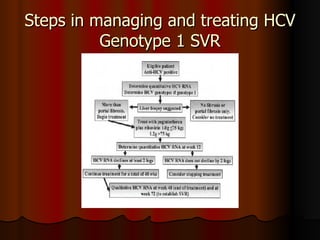
Genotype 1 HCV infection Peginterferon + Ribavarin for 48 weeks, ribavarin doses 1 gm for those <= 75 kg  1.2 gm those >= 75 kg Quantitative serum HCV RNA at the initiation of, or shortly before treatment and at week 12 of therapy.
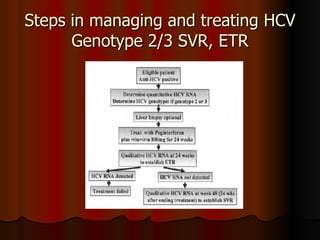
Genotype-2 or Genotype -3 infection Peginterferon + ribavarin for 24 wks, ribavarin dose of 800 mg. Measure qualitative HCV RNA. If -ve,retest for HCV RNA in 24 wks to document  Sustained Virologic Response.
Q  A 36-year-old asymptomatic woman who is a phlebotomist is evaluated 12  weeks after having sustained a needlestick injury while drawing blood from a patient known to be infected with hepatitis C virus. After the injury, baseline laboratory studies showed the patient to be negative for hepatitis C virus and HIV. She has a history of hypothyroidism and self-limited depression 5 years ago after the sudden death of her father; her only current medication is levothyroxine. On physical examination, her vital signs are normal. There is mild diffuse enlargement of the thyroid gland; the liver span is normal, and there is no splenomegaly or stigmata of chronic liver disease.  Laboratory Studies Complete blood count  Normal Albumin  4.1 g/dL (41 g/L) Thyroid-stimulating hormone  3.5 μU/mL (3.5 mU/L) Alanine aminotransferase  900 U/L Bilirubin, total  1.7 mg/dL (29.1 μmol/L) Anti-HCV  Positive HCV RNA  60,000 IU/Ml HCV genotype  1b Anti-HBs  Positive The INR is normal; HBsAg, anti-HBc, and HIV are all negative
Which of the following is the most appropriate next step in the management of this patient? A Therapy with entecavir B Remeasurement of HCV RNA in 6 months C Hepatic ultrasonography and measurement of serum α-fetoprotein  D Therapy with pegylated interferon  E Hepatitis C recombinant immunoblot assay (RIBA)
Adverse Events : Interferon Alfa Hematologic Neutropenia Thrombocytopenia Aplastic anemia Autoimmune ITP TTP Endocrine Hypothyroidism Hyperthyroidism Neuro-Psych Depression Irritability  Concentration and memory disturbances Visual disturbances Fatigue Muscle aches Headaches Nausea vomiting
Ribavarin Hemolytic anemia Fatigue Itching Rash Sinusitis Birth defects Gout
Adverse Events Deaths  reported with INF-Alfa and Ribavarin include Suicide, MI, Sepsis and Stroke
Q.  An 84-year-old man comes for a follow-up visit after being diagnosed with hepatitis C. Liver chemistry tests are abnormal, and serum HCV RNA is positive. Medical history is significant for ischemic cardiomyopathy with an ejection fraction of 15%. The patient had a blood transfusion 20 years ago at the time of coronary artery bypass graft surgery. He has no history of excessive alcohol intake.  On physical examination, he appears chronically ill. Pulse rate is 80/min, and blood pressure is 90/60 mm Hg. There are no stigmata of chronic liver disease. Jugular venous distention is present. Bibasilar crackles and a prominent S3 are auscultated. The liver is pulsatile and slightly enlarged. There is no ascites, but mild pedal edema is noted. Laboratory Studies Complete blood count  Normal Serum aspartate aminotransferase  73 U/L Serum alanine aminotransferase  84 U/L Serum alkaline phosphatase  132 U/L Serum total bilirubin  1.0 mg/dL (17.1 μmol/L) Abdominal ultrasonography shows mild hepatomegaly, a normal-sized spleen, and no ascites.
Which of the following is most appropriate for managing this patient's hepatitis C at this time? A Liver biopsy  B HCV genotyping  C Pegylated interferon  D Pegylated interferon and ribavirin  E No further testing or treatment
Contraindications for Treatment Major, uncontrolled depressive illness Renal, Heart or Lung transplant recipient Autoimmune Hepatitis or other condition known to be exacerbated by interferon and ribavarin Untreated Hyperthyroidism Pregnant or unwilling/unable to comply with adequate contraception Severe concurrent disease such as severe hypertension, heart failure, significant CAD, poorly controlled DM, Obstructive pulmonary ds Under 3 years of age Known hypersensitivity to drugs used to treat HCV
Q.  A 22-year-old woman with hepatitis C becomes pregnant for the first time. She is at 10 weeks gestation, and the pregnancy has been uneventful. Hepatitis C was diagnosed 5 years ago and was believed to be acquired following blood transfusions when the patient was 3 years old and was being treated for hemolytic uremic syndrome. The patient is HCV genotype 1 and has an HCV RNA viral load of 3 million copies/mL. Liver biopsy 6 months ago showed grade 1 (mild) inflammation and stage 0 (no) fibrosis.  Physical examination is normal. Laboratory Studies Complete blood count  Normal Liver enzyme studies  Normal Serum albumin  Normal INR  Normal HIV antibody  Negative Hepatitis B surface antigen (HBsAg)  Negative Antibody to hepatitis B surface antigen (anti-HBs)  Positive
Which of the following is most appropriate? A Administer pegylated interferon and ribavirin to the mother now  B Administer pegylated interferon to the mother now  C Administer pegylated interferon and ribavirin to the infant soon after birth  D Check the serum HCV RNA in the infant 4 months after birth
Steps in managing and treating HCV Genotype 1 SVR
Steps in managing and treating HCV Genotype 2/3 SVR, ETR
Counseling Avoid sharing toothbrushes and dental or shaving equipment  Cautioned to cover any bleeding wound in order to keep their blood away from others Stop using illicit drugs, if continues then should be counseled to avoid reusing or sharing syringes, needles, water and cotton or other paraphernalia Risk of sexual transmission is low and that the infection itself is not a reason to change sexual practices if in long term relationship Not to donate blood, body organs other tissues or semen Adapted from CDC recommendations for prevention and control of HCV infection
Q.  A 40-year-old woman has a lower extremity rash that has been present for several months. The patient used injection drugs 18 years ago. She was once told that her liver enzyme values were abnormal but did not return for follow-up studies. Medical history is otherwise noncontributory. Physical examination is normal except for a palpable purpuric rash on her lower extremities.  Laboratory Studies Serum aspartate aminotransferase  63 U/L Serum alanine aminotransferase  84 U/L Serum alkaline phosphatase  74 U/L Hepatitis B surface antigen (HBsAg)  Negative Antibody to hepatitis B surface antigen (anti-HBs)  Positive IgG antibody to hepatitis B core antigen (IgG anti-HBc)  Positive IgM antibody to hepatitis B core antigen (IgM anti-HBc)  Negative Antibody to hepatitis C virus (anti-HCV)  Positive
Which of the following diagnostic studies should be done next? A Mesenteric angiography  B Measurement of serum and urine porphyrin C Antinuclear antibody assay  D Measurement of serum cryoglobulin
Extra-hepatic complications of HCV Small vessel vasculitis with GN and Neuropathy Mixed cryoglobulinemia- Purple purpura Porphyria cutanea tarda
Thanks Dr Mathew

Hepatitis C

  • 1.
    Ambulatory Conference VishalTiwari PGY 2 Thursday 22 May 2008
  • 2.
    Q A44-year-old man was recently found to have abnormal serologic test results for viral hepatitis when he attempted to donate blood. The patient is asymptomatic. He used injection drugs and drank alcohol excessively for 2 years 25 years ago but has not used either drugs or alcohol since. Medical history is otherwise unremarkable, and he takes no medications. Physical examination discloses a BMI of 23, no stigmata of chronic liver disease, and a normal-sized liver. Laboratory Studies Serum aspartate aminotransferase 53 U/L Serum alanine aminotransferase 64 U/L Serum alkaline phosphatase 89 U/L Serum total bilirubin 0.9 mg/dL (15.39 μmol/L) Hepatitis B surface antigen (HbsAg) Negative Antibody to hepatitis B surface antigen (anti-HBs ) Positive IgG antibody to hepatitis B coreantigen (IgG anti-HBc) Positive IgM antibody to hepatitis B core antigen (IgM anti-HBc) Negative Antibody to hepatitis C virus (anti-HCV) Positive Abdominal ultrasonography is normal .
  • 3.
    Which of thefollowing diagnostic studies should be done next? A Hepatitis B e antigen (HBeAg) B Hepatitis B virus DNA (HBV DNA) C Hepatitis C virus RNA (HCV RNA) D IgM antibody to hepatitis A virus (IgM anti-HAV)
  • 4.
    Source of presentationData supported approach, based on A formal review and analysis of recently published world literature topic (medline) ACP Manual for assessing health practices and designing practice guidelines AASLD guideline policies Medstudy and MKSAP 14 Presentation article is fully endorsed by the AASLD, IDSA and American College of Gastroenterology
  • 5.
    Hepatitis C isthe leading cause of Chronic liver disease CDC estimates at least 3.2 million people in US have chronic HCV infection Hepatitis C is the leading cause of death from liver disease in US Hepatitis C is the leading indication for liver transplantation in the United States Hepatitis C
  • 6.
    Screening IVDA inthe recent and remote past, including those whose injected once and don’t consider themselves to be IVDA Persons with conditions associated with a high prevalence of HCV infection including - HIV infection - Hemophilics who received clotting factor concentrate before 1987 - Ever on Hemodialysis - Unexplained abnormal aminotransferase levels Prior recipients of transfusion or organ transplants,incl - blood product recepient who later notified with donor tested positive for HCV infection - Transfusion of blood or blood products before July 1992 - Organ transplant before July 1992 Children born to HCV infected mother Health care, emergency medical and public safety workers after a needle stick injury or mucosal exposure to HCV positive blood Current sexual partners of HCV infected persons ( - ve test for partner reassurance, making testing of sexual partners of benefit in clinical practice)
  • 7.
    “Rule of 2’s”2% of US population 2% risk of needlestick transmission (?5%) 2% risk of neonatal transmission (?5%) 2% risk of spousal transmission 2% cirrohotics with Hep C develop Hepatoma each year
  • 8.
    Q. A38-year-old man with HIV infection and hepatitis C is evaluated after moving to a new city. HIV infection and hepatitis C were diagnosed 1 year ago, at which time his CD4 cell count was 523/μL (0.523 × 10⁹/L), and his plasma HIV RNA viral load was 8522 copies/mL. The patient has remained asymptomatic, and his previous physician did not recommend antiretroviral therapy. On physical examination at today's visit, he appears well. His liver is not enlarged, his spleen is not palpable, and there are no signs of liver disease. The remainder of the examination is normal. Laboratory Studies CD4 cell count 449/μL (0.449 × 10⁹/L) Plasma HIV RNA viral load 12,220 copies/mL Liver chemistry studies Normal Serum albumin Normal Prothrombin time Normal
  • 9.
    Which of thefollowing is the most appropriate management of this patient's hepatitis C at this time? A Qualitative hepatitis C virus RNA viral load testing B Liver biopsy C Pegylated interferon D Pegylated interferon and ribavirin
  • 10.
    Lab Testing Initiallyanti HCV ( EIA/ELISA) is tested. Diagnostic “Gold Standard” HCV RNA Quantitative RNA-useful in monitoring treatment. Qualitative HCV RNA is more sensitive * some experts use qualitative test as the primary test or to confirm a positive anti HCV test
  • 11.
    A negative qualitativeRNA test in the presence of HCV antibodies most likely indicate that HCV infection has resolved Anti HCV DOES not confer immunity (as does the HBV Ab to HB)
  • 12.
    Assays for HCVRNA Qualitative Assays HCV RNA can be detected in the blood using amplification techniques such as PCR or TMA ( transcription mediated amplication) Quantitative Assays Ascertain the quantity of HCV RNA in blood using either target amplification (PCR,TMA) or signal amplification techniques ( branched DNA assay) .
  • 13.
    HCV Genotyping Thereare 6 major genotypes Although genotype does not predict the outcome of infection, it does predict the likelihood of treatment response, and, in many cases, determines the duration of treatment Most HCV infection in US are Genotype 1
  • 14.
    Liver Biopsy Roleis currently debated Bx is NOT necessary for diagnosis Bx is helpful in assessing disease severity Bx can aid in decisions about treatment and surveillance Normal LFTs does not preclude a liver biopsy. But Biopsy in not mandatory in order to initiate Rx. ( Sero marker for cirrhosis in process)
  • 15.
  • 16.
    Liver Biopsy A-Portal stage 1 fibrosis B- Peri-portal stage 2 fibrosis C-Septal stage 3 fibrosis D- Bridging fibrosis with nodular regeneration
  • 17.
    Genotype and liverBiopsy HCV genotype-1 infection Liver biopsy to guide recommendations for treatment. HCV genotype-2 & 3 Have a high likelihood of Rx response Treatment regardless of severity of liver disease without liver biopsy.
  • 18.
    Characteristics of personsfor whom therapy is widely accepted Age at least 18 years Abnormal ALT values Liver Bx showing chronic Hepatitis with significant fibrosis Compensated liver disease (Bili <1.5 g/dl, INR<1.5 Alb>3.4 g/dl, Plt ct > 75K and no evidence of Hepatic Encephalopathy or ascitis) Acceptable Hematological and biochemical indices (Hb>13 for Men and > 12g/dl for women, Neutrophil > 1.5k/mm3 Cr<1.5 mg/dl) Treated previously for HCV infection History of depression but the condition is well controlled Willing to be treated and to conform to Rx requirement Note: All patients have detectable HCV RNA
  • 19.
    Treatment Recommendations Peginterferon+ Ribavarin Indicated in those with more than portal fibrosis, if histology available. Rx is individualized based on Severity of liver disease Potential of serious side effects Likelihood of treatment response Presence of comorbid conditions
  • 20.
    Optimal HCV treatmentCombination Peginterferon Regimens with Ribavarin Peginterferon alfa-2a(40 kd) 180 mcg SQ q weekly regardless of weight Peginterferon alfa-2b(12kd) 1.5 mcg/kg SQ q weekly Ribavarin 800 – 1200 mg PO daily ( in 2 divided doses), dose depending on infection, genotype, and patient weight
  • 21.
    Genotype 1 HCVinfection Peginterferon + Ribavarin for 48 weeks, ribavarin doses 1 gm for those <= 75 kg 1.2 gm those >= 75 kg Quantitative serum HCV RNA at the initiation of, or shortly before treatment and at week 12 of therapy.
  • 22.
    Genotype-2 or Genotype-3 infection Peginterferon + ribavarin for 24 wks, ribavarin dose of 800 mg. Measure qualitative HCV RNA. If -ve,retest for HCV RNA in 24 wks to document Sustained Virologic Response.
  • 23.
    Q A36-year-old asymptomatic woman who is a phlebotomist is evaluated 12 weeks after having sustained a needlestick injury while drawing blood from a patient known to be infected with hepatitis C virus. After the injury, baseline laboratory studies showed the patient to be negative for hepatitis C virus and HIV. She has a history of hypothyroidism and self-limited depression 5 years ago after the sudden death of her father; her only current medication is levothyroxine. On physical examination, her vital signs are normal. There is mild diffuse enlargement of the thyroid gland; the liver span is normal, and there is no splenomegaly or stigmata of chronic liver disease. Laboratory Studies Complete blood count Normal Albumin 4.1 g/dL (41 g/L) Thyroid-stimulating hormone 3.5 μU/mL (3.5 mU/L) Alanine aminotransferase 900 U/L Bilirubin, total 1.7 mg/dL (29.1 μmol/L) Anti-HCV Positive HCV RNA 60,000 IU/Ml HCV genotype 1b Anti-HBs Positive The INR is normal; HBsAg, anti-HBc, and HIV are all negative
  • 24.
    Which of thefollowing is the most appropriate next step in the management of this patient? A Therapy with entecavir B Remeasurement of HCV RNA in 6 months C Hepatic ultrasonography and measurement of serum α-fetoprotein D Therapy with pegylated interferon E Hepatitis C recombinant immunoblot assay (RIBA)
  • 25.
    Adverse Events :Interferon Alfa Hematologic Neutropenia Thrombocytopenia Aplastic anemia Autoimmune ITP TTP Endocrine Hypothyroidism Hyperthyroidism Neuro-Psych Depression Irritability Concentration and memory disturbances Visual disturbances Fatigue Muscle aches Headaches Nausea vomiting
  • 26.
    Ribavarin Hemolytic anemiaFatigue Itching Rash Sinusitis Birth defects Gout
  • 27.
    Adverse Events Deaths reported with INF-Alfa and Ribavarin include Suicide, MI, Sepsis and Stroke
  • 28.
    Q. An84-year-old man comes for a follow-up visit after being diagnosed with hepatitis C. Liver chemistry tests are abnormal, and serum HCV RNA is positive. Medical history is significant for ischemic cardiomyopathy with an ejection fraction of 15%. The patient had a blood transfusion 20 years ago at the time of coronary artery bypass graft surgery. He has no history of excessive alcohol intake. On physical examination, he appears chronically ill. Pulse rate is 80/min, and blood pressure is 90/60 mm Hg. There are no stigmata of chronic liver disease. Jugular venous distention is present. Bibasilar crackles and a prominent S3 are auscultated. The liver is pulsatile and slightly enlarged. There is no ascites, but mild pedal edema is noted. Laboratory Studies Complete blood count Normal Serum aspartate aminotransferase 73 U/L Serum alanine aminotransferase 84 U/L Serum alkaline phosphatase 132 U/L Serum total bilirubin 1.0 mg/dL (17.1 μmol/L) Abdominal ultrasonography shows mild hepatomegaly, a normal-sized spleen, and no ascites.
  • 29.
    Which of thefollowing is most appropriate for managing this patient's hepatitis C at this time? A Liver biopsy B HCV genotyping C Pegylated interferon D Pegylated interferon and ribavirin E No further testing or treatment
  • 30.
    Contraindications for TreatmentMajor, uncontrolled depressive illness Renal, Heart or Lung transplant recipient Autoimmune Hepatitis or other condition known to be exacerbated by interferon and ribavarin Untreated Hyperthyroidism Pregnant or unwilling/unable to comply with adequate contraception Severe concurrent disease such as severe hypertension, heart failure, significant CAD, poorly controlled DM, Obstructive pulmonary ds Under 3 years of age Known hypersensitivity to drugs used to treat HCV
  • 31.
    Q. A22-year-old woman with hepatitis C becomes pregnant for the first time. She is at 10 weeks gestation, and the pregnancy has been uneventful. Hepatitis C was diagnosed 5 years ago and was believed to be acquired following blood transfusions when the patient was 3 years old and was being treated for hemolytic uremic syndrome. The patient is HCV genotype 1 and has an HCV RNA viral load of 3 million copies/mL. Liver biopsy 6 months ago showed grade 1 (mild) inflammation and stage 0 (no) fibrosis. Physical examination is normal. Laboratory Studies Complete blood count Normal Liver enzyme studies Normal Serum albumin Normal INR Normal HIV antibody Negative Hepatitis B surface antigen (HBsAg) Negative Antibody to hepatitis B surface antigen (anti-HBs) Positive
  • 32.
    Which of thefollowing is most appropriate? A Administer pegylated interferon and ribavirin to the mother now B Administer pegylated interferon to the mother now C Administer pegylated interferon and ribavirin to the infant soon after birth D Check the serum HCV RNA in the infant 4 months after birth
  • 33.
    Steps in managingand treating HCV Genotype 1 SVR
  • 34.
    Steps in managingand treating HCV Genotype 2/3 SVR, ETR
  • 35.
    Counseling Avoid sharingtoothbrushes and dental or shaving equipment Cautioned to cover any bleeding wound in order to keep their blood away from others Stop using illicit drugs, if continues then should be counseled to avoid reusing or sharing syringes, needles, water and cotton or other paraphernalia Risk of sexual transmission is low and that the infection itself is not a reason to change sexual practices if in long term relationship Not to donate blood, body organs other tissues or semen Adapted from CDC recommendations for prevention and control of HCV infection
  • 36.
    Q. A40-year-old woman has a lower extremity rash that has been present for several months. The patient used injection drugs 18 years ago. She was once told that her liver enzyme values were abnormal but did not return for follow-up studies. Medical history is otherwise noncontributory. Physical examination is normal except for a palpable purpuric rash on her lower extremities. Laboratory Studies Serum aspartate aminotransferase 63 U/L Serum alanine aminotransferase 84 U/L Serum alkaline phosphatase 74 U/L Hepatitis B surface antigen (HBsAg) Negative Antibody to hepatitis B surface antigen (anti-HBs) Positive IgG antibody to hepatitis B core antigen (IgG anti-HBc) Positive IgM antibody to hepatitis B core antigen (IgM anti-HBc) Negative Antibody to hepatitis C virus (anti-HCV) Positive
  • 37.
    Which of thefollowing diagnostic studies should be done next? A Mesenteric angiography B Measurement of serum and urine porphyrin C Antinuclear antibody assay D Measurement of serum cryoglobulin
  • 38.
    Extra-hepatic complications ofHCV Small vessel vasculitis with GN and Neuropathy Mixed cryoglobulinemia- Purple purpura Porphyria cutanea tarda
  • 39.