BY
PROF. YOSRY ABDELRAHMAN
THEODOR BILHARZ RESEARCH INSTITUTE
Reactivation of Hepatitis B
Definition
Abrupt rise or reappearance of hepatitis
B virus (HBV) DNA in the serum of a patient with
previously inactive or resolved HBV infection
Hoofnagle J, Hepatology, ,2009,vol 49,N 5,S156-165
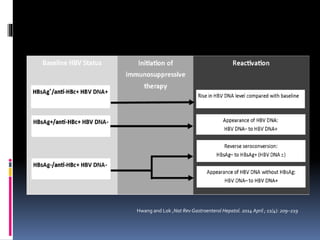
Hwang and Lok ,Nat Rev Gastroenterol Hepatol. 2014 April ; 11(4): 209–219
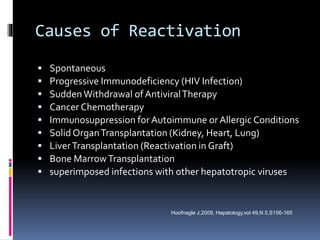
Causes of Reactivation
ď‚§ Spontaneous
ď‚§ Progressive Immunodeficiency (HIV Infection)
ď‚§ Sudden Withdrawal of AntiviralTherapy
ď‚§ Cancer Chemotherapy
ď‚§ Immunosuppression for Autoimmune or Allergic Conditions
ď‚§ Solid OrganTransplantation (Kidney, Heart, Lung)
ď‚§ LiverTransplantation (Reactivation in Graft)
ď‚§ Bone MarrowTransplantation
ď‚§ superimposed infections with other hepatotropic viruses
Hoofnagle J,2009, Hepatology,vol 49,N 5,S156-165
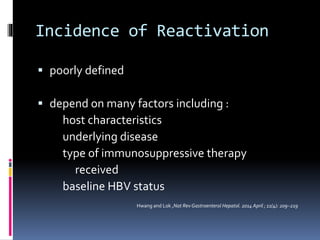
Incidence of Reactivation
ď‚§ poorly defined
ď‚§ depend on many factors including :
host characteristics
underlying disease
type of immunosuppressive therapy
received
baseline HBV status
Hwang and Lok ,Nat Rev Gastroenterol Hepatol. 2014 April ; 11(4): 209–219
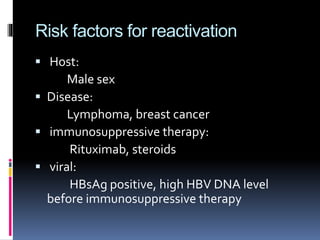
Risk factors for reactivation
ď‚§ Host:
Male sex
ď‚§ Disease:
Lymphoma, breast cancer
ď‚§ immunosuppressive therapy:
Rituximab, steroids
ď‚§ viral:
HBsAg positive, high HBV DNA level
before immunosuppressive therapy
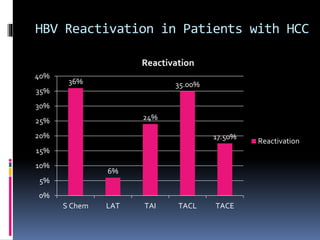
HBV Reactivation in Patients with HCC
36%
6%
24%
35.00%
17.50%
0%
5%
10%
15%
20%
25%
30%
35%
40%
S Chem LAT TAI TACL TACE
Reactivation
Reactivation
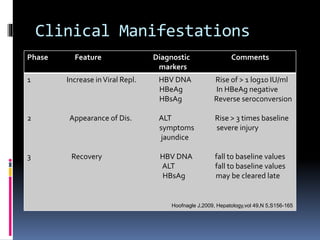
Clinical Manifestations
Phase Feature Diagnostic Comments
markers
1 Increase inViral Repl. HBV DNA Rise of > 1 log10 IU/ml
HBeAg In HBeAg negative
HBsAg Reverse seroconversion
2 Appearance of Dis. ALT Rise > 3 times baseline
symptoms severe injury
jaundice
3 Recovery HBV DNA fall to baseline values
ALT fall to baseline values
HBsAg may be cleared late
Hoofnagle J,2009, Hepatology,vol 49,N 5,S156-165
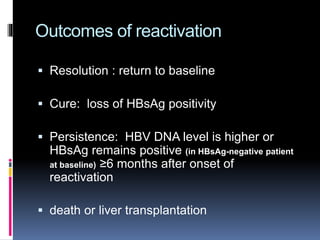
Outcomes of reactivation
ď‚§ Resolution : return to baseline
ď‚§ Cure: loss of HBsAg positivity
ď‚§ Persistence: HBV DNA level is higher or
HBsAg remains positive (in HBsAg-negative patient
at baseline) ≥6 months after onset of
reactivation
ď‚§ death or liver transplantation
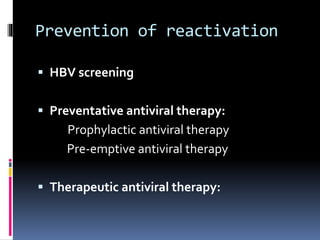
Prevention of reactivation
ď‚§ HBV screening
ď‚§ Preventative antiviral therapy:
Prophylactic antiviral therapy
Pre-emptive antiviral therapy
ď‚§ Therapeutic antiviral therapy:
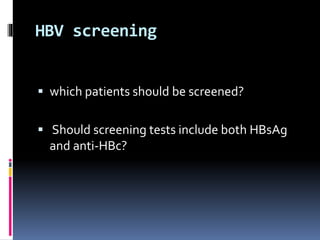
HBV screening
ď‚§ which patients should be screened?
ď‚§ Should screening tests include both HBsAg
and anti-HBc?
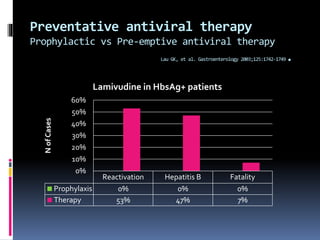
Preventative antiviral therapy
Prophylactic vs Pre-emptive antiviral therapy
Lau GK, et al. Gastroenterology 2003;125:1742-1749.
Reactivation Hepatitis B Fatality
Prophylaxis 0% 0% 0%
Therapy 53% 47% 7%
0%
10%
20%
30%
40%
50%
60%
NofCases
Lamivudine in HbsAg+ patients
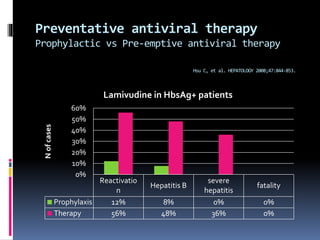
Preventative antiviral therapy
Prophylactic vs Pre-emptive antiviral therapy
Hsu C, et al. HEPATOLOGY 2008;47:844-853.
Reactivatio
n
Hepatitis B
severe
hepatitis
fatality
Prophylaxis 12% 8% 0% 0%
Therapy 56% 48% 36% 0%
0%
10%
20%
30%
40%
50%
60%
Nofcases
Lamivudine in HbsAg+ patients
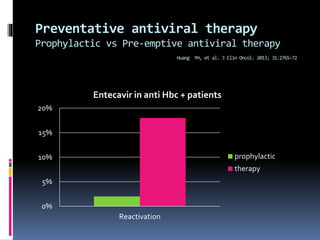
Preventative antiviral therapy
Prophylactic vs Pre-emptive antiviral therapy
Huang YH, et al. J Clin Oncol. 2013; 31:2765–72
0%
5%
10%
15%
20%
Reactivation
Entecavir in anti Hbc + patients
prophylactic
therapy
Prevention of reactivation
ď‚§ Which patients should be offered prophylaxis
against reactivation?
ď‚§ Which antiviral agent should be used? And for
how long?
ď‚§ Using what tests to monitor therapy for both
efficacy and safety
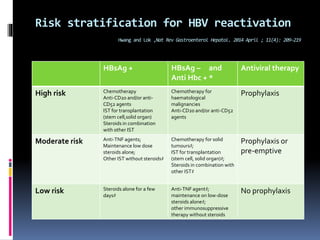
Risk stratification for HBV reactivation
Hwang and Lok ,Nat Rev Gastroenterol Hepatol. 2014 April ; 11(4): 209–219
Antiviral therapyHBsAg – and
Anti Hbc + *
HBsAg +
ProphylaxisChemotherapy for
haematological
malignancies
Anti-CD20 and/or anti-CD52
agents
Chemotherapy
Anti-CD20 and/or anti-
CD52 agents
IST for transplantation
(stem cell,solid organ)
Steroids in combination
with other IST
High risk
Prophylaxis or
pre-emptive
Chemotherapy for solid
tumours‡;
IST for transplantation
(stem cell, solid organ)‡;
Steroids in combination with
other IST‡
Anti-TNF agents;
Maintenance low dose
steroids alone;
Other IST without steroids‡
Moderate risk
No prophylaxisAnti-TNF agent‡;
maintenance on low-dose
steroids alone‡;
other immunosuppressive
therapy without steroids
Steroids alone for a few
days‡
Low risk
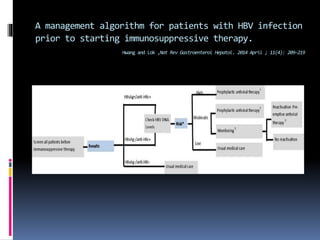
A management algorithm for patients with HBV infection
prior to starting immunosuppressive therapy.
Hwang and Lok ,Nat Rev Gastroenterol Hepatol. 2014 April ; 11(4): 209–219
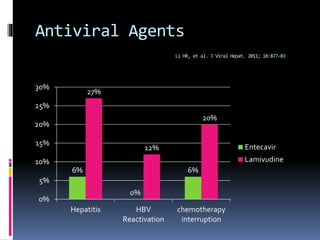
Antiviral Agents
Li HR, et al. J Viral Hepat. 2011; 18:877–83
6%
0%
6%
27%
12%
20%
0%
5%
10%
15%
20%
25%
30%
Hepatitis HBV
Reactivation
chemotherapy
interruption
Entecavir
Lamivudine
Recomendations
ď‚§ screening all patients about to start immunosuppressive therapy with
HBsAg and anti-HBc tests.
ď‚§ prophylactic antiviral therapy for all patients who are deemed to be at
high risk of HBV reactivation.
ď‚§ Patients considered to be at moderate risk can receive prophylactic
antiviral therapy, or they can be closely monitored and pre-emptive
antiviral therapy initiated if there is evidence of HBV reactivation.
ď‚§ Patients at low risk of HBV reactivation can receive usual medical care,
and pre-emptive antiviral therapy initiated if there is evidence of HBV
reactivation.
ď‚§ entecavir use is better than tenofovir because of the lack of
nephrotoxicity.
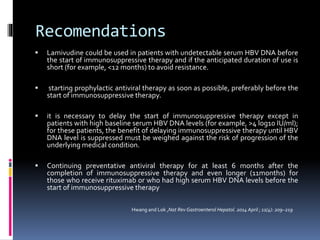
Recomendations
ď‚§ Lamivudine could be used in patients with undetectable serum HBV DNA before
the start of immunosuppressive therapy and if the anticipated duration of use is
short (for example, <12 months) to avoid resistance.
ď‚§ starting prophylactic antiviral therapy as soon as possible, preferably before the
start of immunosuppressive therapy.
ď‚§ it is necessary to delay the start of immunosuppressive therapy except in
patients with high baseline serum HBV DNA levels (for example, >4 log10 IU/ml);
for these patients, the benefit of delaying immunosuppressive therapy until HBV
DNA level is suppressed must be weighed against the risk of progression of the
underlying medical condition.
ď‚§ Continuing preventative antiviral therapy for at least 6 months after the
completion of immunosuppressive therapy and even longer (11months) for
those who receive rituximab or who had high serum HBV DNA levels before the
start of immunosuppressive therapy
Hwang and Lok ,Nat Rev Gastroenterol Hepatol. 2014 April ; 11(4): 209–219

Hbv reactivation

  • 1.
    BY PROF. YOSRY ABDELRAHMAN THEODORBILHARZ RESEARCH INSTITUTE Reactivation of Hepatitis B
  • 2.
    Definition Abrupt rise orreappearance of hepatitis B virus (HBV) DNA in the serum of a patient with previously inactive or resolved HBV infection Hoofnagle J, Hepatology, ,2009,vol 49,N 5,S156-165
  • 3.
    Hwang and Lok,Nat Rev Gastroenterol Hepatol. 2014 April ; 11(4): 209–219
  • 4.
    Causes of Reactivation ď‚§Spontaneous ď‚§ Progressive Immunodeficiency (HIV Infection) ď‚§ Sudden Withdrawal of AntiviralTherapy ď‚§ Cancer Chemotherapy ď‚§ Immunosuppression for Autoimmune or Allergic Conditions ď‚§ Solid OrganTransplantation (Kidney, Heart, Lung) ď‚§ LiverTransplantation (Reactivation in Graft) ď‚§ Bone MarrowTransplantation ď‚§ superimposed infections with other hepatotropic viruses Hoofnagle J,2009, Hepatology,vol 49,N 5,S156-165
  • 5.
    Incidence of Reactivation poorly defined  depend on many factors including : host characteristics underlying disease type of immunosuppressive therapy received baseline HBV status Hwang and Lok ,Nat Rev Gastroenterol Hepatol. 2014 April ; 11(4): 209–219
  • 6.
    Risk factors forreactivation ď‚§ Host: Male sex ď‚§ Disease: Lymphoma, breast cancer ď‚§ immunosuppressive therapy: Rituximab, steroids ď‚§ viral: HBsAg positive, high HBV DNA level before immunosuppressive therapy
  • 7.
    HBV Reactivation inPatients with HCC 36% 6% 24% 35.00% 17.50% 0% 5% 10% 15% 20% 25% 30% 35% 40% S Chem LAT TAI TACL TACE Reactivation Reactivation
  • 8.
    Clinical Manifestations Phase FeatureDiagnostic Comments markers 1 Increase inViral Repl. HBV DNA Rise of > 1 log10 IU/ml HBeAg In HBeAg negative HBsAg Reverse seroconversion 2 Appearance of Dis. ALT Rise > 3 times baseline symptoms severe injury jaundice 3 Recovery HBV DNA fall to baseline values ALT fall to baseline values HBsAg may be cleared late Hoofnagle J,2009, Hepatology,vol 49,N 5,S156-165
  • 9.
    Outcomes of reactivation Resolution : return to baseline  Cure: loss of HBsAg positivity  Persistence: HBV DNA level is higher or HBsAg remains positive (in HBsAg-negative patient at baseline) ≥6 months after onset of reactivation  death or liver transplantation
  • 10.
    Prevention of reactivation ď‚§HBV screening ď‚§ Preventative antiviral therapy: Prophylactic antiviral therapy Pre-emptive antiviral therapy ď‚§ Therapeutic antiviral therapy:
  • 11.
    HBV screening ď‚§ whichpatients should be screened? ď‚§ Should screening tests include both HBsAg and anti-HBc?
  • 12.
    Preventative antiviral therapy Prophylacticvs Pre-emptive antiviral therapy Lau GK, et al. Gastroenterology 2003;125:1742-1749. Reactivation Hepatitis B Fatality Prophylaxis 0% 0% 0% Therapy 53% 47% 7% 0% 10% 20% 30% 40% 50% 60% NofCases Lamivudine in HbsAg+ patients
  • 13.
    Preventative antiviral therapy Prophylacticvs Pre-emptive antiviral therapy Hsu C, et al. HEPATOLOGY 2008;47:844-853. Reactivatio n Hepatitis B severe hepatitis fatality Prophylaxis 12% 8% 0% 0% Therapy 56% 48% 36% 0% 0% 10% 20% 30% 40% 50% 60% Nofcases Lamivudine in HbsAg+ patients
  • 14.
    Preventative antiviral therapy Prophylacticvs Pre-emptive antiviral therapy Huang YH, et al. J Clin Oncol. 2013; 31:2765–72 0% 5% 10% 15% 20% Reactivation Entecavir in anti Hbc + patients prophylactic therapy
  • 15.
    Prevention of reactivation ď‚§Which patients should be offered prophylaxis against reactivation? ď‚§ Which antiviral agent should be used? And for how long? ď‚§ Using what tests to monitor therapy for both efficacy and safety
  • 16.
    Risk stratification forHBV reactivation Hwang and Lok ,Nat Rev Gastroenterol Hepatol. 2014 April ; 11(4): 209–219 Antiviral therapyHBsAg – and Anti Hbc + * HBsAg + ProphylaxisChemotherapy for haematological malignancies Anti-CD20 and/or anti-CD52 agents Chemotherapy Anti-CD20 and/or anti- CD52 agents IST for transplantation (stem cell,solid organ) Steroids in combination with other IST High risk Prophylaxis or pre-emptive Chemotherapy for solid tumours‡; IST for transplantation (stem cell, solid organ)‡; Steroids in combination with other IST‡ Anti-TNF agents; Maintenance low dose steroids alone; Other IST without steroids‡ Moderate risk No prophylaxisAnti-TNF agent‡; maintenance on low-dose steroids alone‡; other immunosuppressive therapy without steroids Steroids alone for a few days‡ Low risk
  • 17.
    A management algorithmfor patients with HBV infection prior to starting immunosuppressive therapy. Hwang and Lok ,Nat Rev Gastroenterol Hepatol. 2014 April ; 11(4): 209–219
  • 18.
    Antiviral Agents Li HR,et al. J Viral Hepat. 2011; 18:877–83 6% 0% 6% 27% 12% 20% 0% 5% 10% 15% 20% 25% 30% Hepatitis HBV Reactivation chemotherapy interruption Entecavir Lamivudine
  • 19.
    Recomendations ď‚§ screening allpatients about to start immunosuppressive therapy with HBsAg and anti-HBc tests. ď‚§ prophylactic antiviral therapy for all patients who are deemed to be at high risk of HBV reactivation. ď‚§ Patients considered to be at moderate risk can receive prophylactic antiviral therapy, or they can be closely monitored and pre-emptive antiviral therapy initiated if there is evidence of HBV reactivation. ď‚§ Patients at low risk of HBV reactivation can receive usual medical care, and pre-emptive antiviral therapy initiated if there is evidence of HBV reactivation. ď‚§ entecavir use is better than tenofovir because of the lack of nephrotoxicity.
  • 20.
    Recomendations  Lamivudine couldbe used in patients with undetectable serum HBV DNA before the start of immunosuppressive therapy and if the anticipated duration of use is short (for example, <12 months) to avoid resistance.  starting prophylactic antiviral therapy as soon as possible, preferably before the start of immunosuppressive therapy.  it is necessary to delay the start of immunosuppressive therapy except in patients with high baseline serum HBV DNA levels (for example, >4 log10 IU/ml); for these patients, the benefit of delaying immunosuppressive therapy until HBV DNA level is suppressed must be weighed against the risk of progression of the underlying medical condition.  Continuing preventative antiviral therapy for at least 6 months after the completion of immunosuppressive therapy and even longer (11months) for those who receive rituximab or who had high serum HBV DNA levels before the start of immunosuppressive therapy Hwang and Lok ,Nat Rev Gastroenterol Hepatol. 2014 April ; 11(4): 209–219