Chronic Hepatitis C with
Hypertension and GERD
J O S E P H H E L M S
D O C TO R O F P H A R M AC Y C A N D I D AT E
W I N G AT E U N I V E RS I T Y S C H O O L O F P H A R M AC Y
A M B U L ATO RY C A R E : M AT T H E WS F R E E C L I N I C
0 9 / 1 6 / 1 5
D R . M EG A N D U C K E R
Objectives
Review patient case information
Discuss Background, Risk Factors, Methods of Transmission, Screening, Pathophysiology, Clinical
Presentation, Progression, Diagnosis, Treatment, and Monitoring of Chronic Hepatitis C
Discuss primary literature relevant to patient case
Discuss assessment and treatment plan for relevant patient problems
Patient Case
CC:
◦ Patient JB is a 62 year old male who presents to the clinic on 8/26 for a
pharmacy follow-up on Chronic Hepatitis C management.
HPI:
◦ Reports feeling “tired” and having “rheumy looking” eyes x 6 months.
States not taking HCTZ or omeprazole. No cirrhosis.
Patient Case
PMH:
Primary Disease States:
◦ Hepatitis C diagnosed around 1985; cause not known, though IV drug use is suspected.
◦ Hypertension
◦ GERD
Other:
◦ Multiple fractures/jaw, neck, spine due to MVA and MCA; compression fracture LS, broken jaw
◦ History of complications from anesthesia
◦ Psoriasis
◦ Bilateral hand arthritis
Surgeries:
◦ Dental Implants
◦ Facial reconstruction after MVA 1982
Patient Case
Family History:
•Mother: deceased- bone and breast cancer, hypothyroid
•Father: deceased- alcoholism, heart disease, DM, emphysema, cirrhosis, ulcers
•Siblings: 3 sisters- benign polyps
•Children: daughter healthy
Patient Case
Social History:
◦ Former smoker and smoked > 100 cigarettes/life
◦ Tobacco: Smoked x 27 years, quit 22 years ago
◦ Living situation: house, alone, dog, cat
◦ Occupation: Unemployed musician. He stopped working 7 years ago due to
hand pain and back pain.
◦ EtOH: none
◦ Rec. drugs: marijuana “vaping” for arthritis.
◦ Travel 30 days (self/household): May 2015 Denies x 30 days
◦ Education: Completed 8th grade
Patient Case
Home Medications:
1) desoximetasone 0.05% topical cream, prn
2) hydrochlorothiazide 25 mg oral tablet, Take 1 pill by mouth QD (Daily) x 1 month (30 days)
3) omeprazole 20 mg oral delayed release capsule, One tablet daily PRN stomach pain
Allergies:
Most pain meds including codeine and Talwin (pentazocine and naloxone); most antibiotics
including erythromycin and penicillin.
Previous Visits
Initial Visit (09/03/14):
◦ Presents with chief complaint of rectal bleeding.
◦ Also presents with elevated blood pressure along with PMH of Hepatitis C.
◦ Complains of stomach pain when taking Aspirin, and arthritis in hands. Wants to wait on starting omeprazole
for stomach pain and NSAID for arthritis until he sees hand films.
Follow-up Visit (10/01/14):
◦ HTN: Prescribed HCTZ
◦ GERD: Prescribed omeprazole for stomach pain.
◦ Has had no more complaints of rectal bleeding.
◦ Check HAV ab and HBV ab, and if negative will need vaccination.
Follow-up Visit (12/17/14)
Previous Visits (continued)
Follow-up Visit (03/01/15): Refer to GI for HCV assessment
Follow-Up Visit (05/27/15): Hypertension: Repeat BP 140/80, Increased HCTZ to 25 mg/day, diet
low in salt, and exercise.
Labs (07/10/15): Patient labs indicate Chronic Hepatitis Genotype 2 and elevated HCV RNA
Labs (07/30/15): Patient labs indicate elevated anti-HCV (antibodies)
Follow-Up Visit (08/20/15): Presents with left knee pain and increasingly severe fatigue due to
chronic active Hepatitis C
Follow-Up Visit (08/26/15): Hepatitis C: 12 weeks of treatment with ribavirin and Sovaldi ---
PAP Application pending; Hypertension: average BPs 120s/80s, and will defer additional meds.
PAP applications for Solvadi and Moderiba successfully faxed.
Patient’s Hepatitis C medications arrive to free clinic 09/11/15.
Patient Case
Physical Exam:
Vitals: (8/26/15)
◦ Wt: 194.0 lbs. (88kg)
◦ Ht/Lt in: 70.0’’
◦ BP: 146/96 mmHg
◦ Pulse: 60 bpm
◦ BMI: 27.8 kg/m2
Pertinent Labs:
• HCV Fibrosure: 0.98 (07/30/15)
• Hep C Virus Ab > 11.0 [IU]/mL (07/30/15)
• Hep C Quantity (A) 3,802,150 [IU]/mL
( 07/10/15)
• Genotype 2 (07/10/15)
• HIV: Negative (09/03/14)
• RA Latex Turbid= 90.8 [IU]/mL (06/04/15)
• ALT= 414 U/L (07/30/15)
• AST= 196 U/L (07/23/15)
• Haptoglobin <10 mg/dL (07/30/15)
Patient Case
Other Pertinent Labs:
◦Na+ = 127 mmol/L (most recent)
◦SCr= 0.81 mg/dL (07/23/15)
◦CrCl= 95.3 mL/min
Primary Disease States
Chronic Hepatitis C
Hypertension
Gastroesophageal Reflux Disease
Chronic Hepatitis C
Hepatitis C Background
Single-stranded RNA virus
Acute vs. Chronic
◦ Acute: <6 months infection
◦ Chronic: >6 months infection
◦ Acute infections spontaneously resolve in 15-50% of cases; 5% of cases
spontaneously resolve in patients who have had the chronic form for several years
◦ 50-70% of patients who have Acute Hepatitis C develop Chronic Hepatitis C
Genotypes: 1a, 1b, 2, 3, 4, 6
Genotype 1 is considered the most difficult of the genotypes to treat
No vaccination available
Hepatitis C Risk Factors
oPersons born between 1945-1965 (all born should be tested for HCV)
oInjection Drug Use
oIntranasal Illicit Drug Use
oLong-term hemodialysis
oGetting a tattoo in an unregulated setting
oHealthcare workers exposed to needles or mucus-related exposures
oChildren of HCV infected women
oPrior transfusions
oIncarcerated
oHIV infection
oUnexplained chronic liver disease
oChronic hepatitis including elevated ALT levels
oSolid organ donors
Hepatitis C Modes of Transmission and
Screening
Modes of transmission:
◦ See all risk factors
◦ Blood transfusion most common in developing countries
◦ IV Drug Use most common in developed countries
Screening:
◦ See all risk factors
◦ Most notably if born between the years of 1945-1965
Hepatitis C Pathophysiology
oFamily: Flaviviridae, Genus: Hepacivirus
oVirus invades the blood
oVery efficient at evading innate and adaptive immune system
oHost cell recognizes that virus is not “self” which activates innate and adaptive immune system
oCD4 T-cells stimulate cytokines which stimulates CD8 + cytotoxic T cells; this response is thought to
be stronger in those who clear the virus faster, but not as strong in those who have Chronic Hepatitis
C.
oInterferes with adaptive immunity by inhibiting T cells, and innate immunity by blocking the effects
of interferon.
oIL28B CC Haplotype: more likely to clear the virus
oIL28B Non-CC Haplotype: less likely to clear the virus
oStrength of NK Cell response: If greater response, more likely to clear virus
Hepatitis C Clinical Presentation
oThe incubation period of Hepatitis C is approximately 15-160 days
oFatigue (most common)
oJaundice (rare)
oArthritis
oOther symptoms include: malaise, nausea, loss of appetite, liver pain, hepatosplenomegaly,
myalgia, arthralgia, erythema, alcoholic stool, spider nervus, pruritus, lichen planus, porphyria
cutanea tarda, and depression
oApproximately 33% of patients with Chronic Hepatitis C have normal aminotransferase activity
(liver enzymes do not correlate with severity)
oMost patients who are identified to have Hepatitis C are asymptomatic when they receive a
positive test for Hepatitis C (many are asymptomatic)
Hepatitis C Clinical Presentation (cont.)
oALT and AST fluctuate, and tend to be lower in those who have had chronic disease for several
years (these do not correlate with disease severity)
oOccasionally autoantibodies present (anti-LKM)
oImmune-complex mediated glomerulonephritis
Chronic Hepatitis C Progression
oThe prevalence of progression to chronic liver disease in
patients who have Chronic Hepatitis C is 70-90%.
oThe prevalence of progression to cirrhosis in patients who
have Chronic Hepatitis C is 20-50%.
oThe most frequent indication of liver transplant is end-
stage liver disease associated with HCV.
Diagnosis
oPresence of Anti-HCV in serum: indicates active HCV
infection (chronic or acute)
oAssays for HCV RNA (gold standard): detectable early
(detectable before aminotransferase elevations and
appearance of anti-HCV); test often used to confirm positive
Anti-HCV test.
oBoth tests are recommended when HCV is suspected
Hepatitis C Treatment Eligibility
In the past, more patients were ineligible for treatment, because of the side effects of
Peg-Interferon
Patients who do not have interacting medications
Kidney Disease
Anemia
Patients who have not shown resistance to treatment
Pregnancy or trying to become pregnant; men (having sex with women who may
become pregnant) and women trying to become pregnant should not be using peg-
interferon or ribavirin
Patient Assistance Program ($): http://www.gilead.com/responsibility/us-patient-
access/support%20path%20for%20sovaldi%20and%20harvoni
Chronic Hepatitis C Genotype 2
Treatment
oPharmacological Treatment Options: sofosbuvir 400 mg once daily + ribavirin 10-12 mg/kg x 12
weeks (AALSD-IDSA Guidelines), Peg-Interferon-Alpha +ribavirin x 24 weeks (not in guidelines,
but was once a treatment commonly used)
oSofosbuvir (Direct Acting Antivirals): NS5B Polymerase Inhibitor
oRibavirin (Nucleoside Analogues): Inhibits viral DNA, RNA, and protein synthesis
oFirst-Line Treatment (Pharmacological): sofosbuvir 400 mg once daily + ribavirin 10-12 mg/kg
BID
oSupportive Care: Pain medications for arthritis (i.e., NSAIDs); no mention in guidelines of
supplementing with iron
oNon-Pharmacological Treatment: Avoid transmission of Hepatitis C
oSide effects of First-Line Treatment: anemia, fatigue (both agents)
Chronic Hepatitis C Genotype 2
Treatment
oTreatment Goals:
Achieve a sustained virologic response (undetectable serum HCV
RNA) 12 or more weeks after completion of treatment.
Prevent chronic liver disease, cirrhosis, or a transplant.
HCV: Monitoring on Therapy
Quantitative HCV Viral Load testing is recommended after 4 weeks of therapy and 12 weeks
after the completion of therapy. Testing after 4 weeks is recommended to prevent resistance.
CBC (anemia)
CMP
◦ Creatinine level (after 4 weeks of therapy)
◦ Hepatic Function (after 4 weeks of therapy)
 GFR (after 4 weeks of therapy)
First Line Therapy:
sofosbuvir 400 mg + ribavirin (dose based
on body weight) x 12 weeks has been
shown to be effective in maintaining high
rates of SVR (sustained virologic response),
and has less adverse effects than treatment
with peg-interferon.
Background of Study
More than 350,000 people die from HCV associated with chronic liver disease yearly worldwide.
Peg-interferon + ribavirin x 24 weeks was the standard of care for patients who had Chronic
Hepatitis C Genotype 2.
Many patients were untreated, because of contraindications and/or unwillingness to take
interferon.
Aims:
◦ Compare the efficacy of sofosbuvir + ribavirin x 12 weeks (experimental group) vs. peg-interferon alfa-
2a +ribavirin x 24 weeks (control)
◦ Sustained Virologic Response (HCV RNA below lower limit of quantification at 12 weeks after the end of
treatment)
Methods of Study
FISSION Trial
Randomized Clinical trial; Open label; active control study
20% of patients with cirrhosis
Trial conducted from December 2011-May 2012
Intervention (n= 499)
◦ Experimental Group: sofosbuvir + ribavirin x 12 weeks treatment group (n=256); 20% with cirrhosis
◦ Control: Peg-interferon-alfa-2a + ribavirin x 24 week treatment group (n=243); 21% with cirrhosis
Inclusion Criteria: >18 years of age, serum HCV RNA levels > 10,000 IU/mL, Genotype 2 or 3
patients
Exclusion Criteria: Were not treatment naive
Results of Study
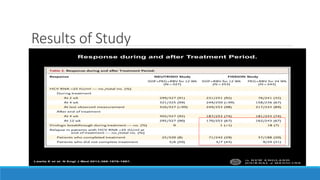
Lawitz E et al. N Engl J Med 2013;368:1878-1887.
Response during and after Treatment Period.
Results (continued)
Patients treated with sofosbuvir + ribavirin x 12 weeks or peg-interferon + ribavirin x 24 weeks achieved
sustained virologic response 12 weeks after treatment; both achieved a 67% sustained virologic response
~1 % of patients did not complete the sofosbuvir + ribavirin x 12 week regimen due to adverse effects;
~12% of patients did not complete the peg-interferon + ribavirin x 24 week regimen due to adverse effects.
Dizziness and anemia were the only adverse effects (side effects with a frequency of occurring in more
than 10% of patients) more common in sofosbuvir. Influenza and fever had a higher incidence in peg-
interferon.
Patients who completed therapy:
 29% of patients who completed sofosbuvir + ribavirin x 12 weeks experienced relapse
 20% of patients who completed peg-interferon + ribavirin x 24 weeks experienced relapse
Patients who did not complete therapy:
 43% of patients who completed sofosbuvir + ribavirin x 12 weeks experienced relapse
 31% of patients who completed peg-interferon + ribavirin x 24 weeks experienced relapse
Conclusions and Recommendations
Conclusions
◦ Patients who took sofosbuvir + ribavirin for 12 weeks vs. those who took peg-interferon-alfa-2a + ribavirin for
24 weeks experienced 67% sustained virologic response meaning both agents had equal efficacy in these
groups.
◦ A higher percentage of patients dropped out of the peg-interferon group due to the adverse effects of the
medication than the sofosbuvir group. Overall, a greater percentage of patients did not complete therapy as
compared to the sofosbuvir group.
◦ Overall, there was a higher relapse in patients who were took sofosbuvir + ribavirin (29%) vs. those who took
peg-interferon + ribavirin (18%).
◦ Limitation
◦ Open-label
◦ Recommendations:
◦ Sofosbuvir + ribavirin x 12 weeks is an effective, first-line option in patients with detectable HCV RNA, and
has less adverse effects than peg-interferon-alfa-2a + ribavirin x 24 weeks, allowing a greater percentage of
patients to complete therapy. Patients with Chronic Hepatitis C Genotype 3 are not as likely to experience a
sustained virologic response as those with Genotype 2.
◦ Is efficacious in treatment-naïve patients
Assessment: Chronic Hepatitis C
Genotype 2
JB is a 62 year old male, who has Chronic Hepatitis C Genotype 2 due to suspected IV drug use.
Per the 2015 AASLD-IDSA Guidelines, this patient meets the diagnostic criteria for a chronic Hepatitis
C infection.
 HCV RNA (+) and Anti-HCV (+), and > 6 months
Diagnosis (~1985); likely due to IV drug use.
Patient is treatment-naïve.
Per the 2015 AASLD-IDSA Guidelines, because patient has Chronic Hepatitis C Genotype 2, and is
treatment-naïve, initiate patient on therapy of sofosbuvir + ribavirin x 12 weeks as first line
treatment. This therapy is efficacious, and has greater safety (less adverse effects) than the old
therapy peg-interferon + ribavirin x 24 weeks (not recommended in guidelines as first or second line
in these particular patients).
Goals:
◦ Achieve undetectable serum HCV RNA 12 or more weeks after completion of treatment.
◦ Prevent chronic liver disease, cirrhosis, or a transplant.
Plan: Chronic Hepatitis C Genotype 2
Initiate patient on therapy of sofosbuvir 400 mg daily + ribavirin 400 mg BID x 12 weeks according to 2015 AALSD-IDSA Guidelines
Re-check HCV RNA 4 weeks after the beginning of therapy to decide if therapy should be continued; if resistant to therapy, discontinue therapy
Recheck HCV RNA 12 weeks after therapy has ended to check for SVR
Supportive care if symptoms of disease or adverse side effects as a result of medication occur
If no SVR 12 weeks after therapy: Guidelines have no specific recommendation regarding this with a sofosbuvir containing regimen, but it should be
considered to defer re-treatment until information is available
Non-Pharm:
 Educate patient to avoid transmission of Hepatitis C
 Educate patient to take in adequate nutrients (anemia)
Follow-up (in 4 weeks and 12 weeks):
o Serology Panel
o Quantitative HCV Viral Load 4 weeks of therapy and 12 weeks after the completion of therapy.
o CBC (anemia caused by Ribavirin) (check at next visit due to risk anemia)
o CMP
◦ Creatinine level (after 4 weeks of therapy)
o Liver Panel
◦ Hepatic Function (after 4 weeks of therapy)
o GFR (after 4 weeks of therapy)
Assessment Hypertension
PMH of HTN
◦ Most recent BP(8/26/15)= 146/96 mmHg, though reports that his average BP is usually 120/80 mmHg,
and patient has not been compliant in taking his HCTZ. BP is uncontrolled at times due to
noncompliance in taking his blood pressure medication.
Treatment options
◦ Per the 2014 ASH/ISH Guidelines, patients over the age of 60, who are non-black may start a CCB or
thiazide diuretic as first-line therapy (may also start with an ARB or ACE Inhibitor).
Goals of therapy
◦ According to the 2014 ASH/ISH Guidelines, the goal blood pressure for people aged 18 and older is
<140/90 mmHg.
Plan Hypertension
Per 2014 ASH/ISH Guidelines, encourage patient to take HCTZ 25 mg daily
Encourage lifestyle modifications: decreased sodium in diet and increased exercise
Monitor: BP, HR, electrolytes (Na+, K+, Mg2+, Ca2+), CMP (SCr), and GFR
F/U on HTN with upon next visit with PCP
Assessment GERD
PMH of GERD; GERD currently not controlled due to lack of patient taking medications.
Treatment options: According to the 2013 American College of Gastroenterology Guidelines, a
PPI can be used as treatment for the presumptive diagnosis of GERD. PPI is considered to be the
most efficacious medication for GERD.
Goals: Decrease the frequency of the patient’s GERD.
Plan GERD
Per 2013 American College of Gastroenterology Guidelines, encourage patient to take
omeprazole 20 mg oral delayed release capsule, one tablet daily PRN stomach pain. According to
guidelines, many physicians do not feel taking PPIs before meals is important.
Encourage lifestyle modifications (i.e., avoidance of late evening meals, elevate head of the bed)
Monitoring:
 CBC: Hemolytic anemia (check at next visit due to increased risk of anemia)
F/U on GERD at next visit
References
(1) AASLD/IDSA HCV Guidance Panel (2015), Hepatitis C guidance: AASLD-IDSA recommendations for testing, managing, and treating adults infected with hepatitis C virus.
Hepatology, 62: 932–954. doi:10.1002/hep.27950. http://onlinelibrary.wiley.com/enhanced/doi/10.1002/hep.27950/. Accessed September 13, 2015.
(2) Carroll KC, Hobden JA, Miller S, Morse SA, Mietzner TA, Detrick B, Mitchell TG, McKerrow JH, Sakanari JA. Hepatitis Viruses. In: Carroll KC, Hobden JA, Miller S, Morse SA,
Mietzner TA, Detrick B, Mitchell TG, McKerrow JH, Sakanari JA. eds. Jawetz, Melnick, & Adelberg’s Medical Microbiology, 27e. New York, NY: McGraw-Hill; 2015.
http://accesspharmacy.mhmedical.com/content.aspx?bookid=1551&Sectionid=94109875. Accessed September 13, 2015.
(3) Dienstag JL. Acute Viral Hepatitis. In: Kasper D, Fauci A, Hauser S, Longo D, Jameson J, Loscalzo J. eds. Harrison's Principles of Internal Medicine, 19e.New York, NY: McGraw-
Hill; 2015.http://accessmedicine.mhmedical.com/content.aspx?bookid=1130&Sectionid=79748507. Accessed September 13, 2015.
(4) Katz, Philip O. Am J Gastroenterol 2013; 108:308–328; doi: 10.1038/ajg.2012.444 http://gi.org/guideline/diagnosis-and-managemen-of-gastroesophageal-reflux-disease/.
Accessed September 12, 2015.
(5) Lawitz, E., M.D.. Sofosbuvir for Previously Untreated Chronic Hepatitis C Infection. New England Journal of Medicine 2015;368:1878–1887.
doi:10.://www.nejm.org/doi/full/10.1056/NEJMoa1214853#t=articleBackground. Accessed September 13, 2015.
(6) Lexicomp. Wolters Kluwer Health. Hudson, Ohio. Available at: https://online.lexi.com/lco/action/home. Accessed September 13, 2015.
(7) Maheshwari, A.. "Management of acute hepatitis C". Clinics in liver disease 2015; 14 (1): 169–76; x. doi:10.1016/j.cld.2009.11.007.
http://www.sciencedirect.com/science/article/pii/S1089326109000889. Accessed September 14, 2015.
(8) Micromedex. Truven Health Analytics, Greenwood Village, Colorado, USA. Available at: http://www.micromedexsolutions.com. Accessed September 13, 2015.
(9) Weber, et. al. “Clinical Guidelines for the Management of Hypertension in the Community: A Statement by the American Society of Hypertension and the International
Society of Hypertension.” The Journal of Clinical Hypertension. 16; 14-26; DOI: 10.1111/jch.12237. http://onlinelibrary.wiley.com/doi/10.1111/jch.12237/full. Accessed
September 14, 2015.
(10) Website: http://hepc.liverfoundation.org/taking-action/am-i-eligible-for-treatment/. Accessed September 14, 2015.
Questions?

Hepatitis C Presentation

  • 1.
    Chronic Hepatitis Cwith Hypertension and GERD J O S E P H H E L M S D O C TO R O F P H A R M AC Y C A N D I D AT E W I N G AT E U N I V E RS I T Y S C H O O L O F P H A R M AC Y A M B U L ATO RY C A R E : M AT T H E WS F R E E C L I N I C 0 9 / 1 6 / 1 5 D R . M EG A N D U C K E R
  • 2.
    Objectives Review patient caseinformation Discuss Background, Risk Factors, Methods of Transmission, Screening, Pathophysiology, Clinical Presentation, Progression, Diagnosis, Treatment, and Monitoring of Chronic Hepatitis C Discuss primary literature relevant to patient case Discuss assessment and treatment plan for relevant patient problems
  • 3.
    Patient Case CC: ◦ PatientJB is a 62 year old male who presents to the clinic on 8/26 for a pharmacy follow-up on Chronic Hepatitis C management. HPI: ◦ Reports feeling “tired” and having “rheumy looking” eyes x 6 months. States not taking HCTZ or omeprazole. No cirrhosis.
  • 4.
    Patient Case PMH: Primary DiseaseStates: ◦ Hepatitis C diagnosed around 1985; cause not known, though IV drug use is suspected. ◦ Hypertension ◦ GERD Other: ◦ Multiple fractures/jaw, neck, spine due to MVA and MCA; compression fracture LS, broken jaw ◦ History of complications from anesthesia ◦ Psoriasis ◦ Bilateral hand arthritis Surgeries: ◦ Dental Implants ◦ Facial reconstruction after MVA 1982
  • 5.
    Patient Case Family History: •Mother:deceased- bone and breast cancer, hypothyroid •Father: deceased- alcoholism, heart disease, DM, emphysema, cirrhosis, ulcers •Siblings: 3 sisters- benign polyps •Children: daughter healthy
  • 6.
    Patient Case Social History: ◦Former smoker and smoked > 100 cigarettes/life ◦ Tobacco: Smoked x 27 years, quit 22 years ago ◦ Living situation: house, alone, dog, cat ◦ Occupation: Unemployed musician. He stopped working 7 years ago due to hand pain and back pain. ◦ EtOH: none ◦ Rec. drugs: marijuana “vaping” for arthritis. ◦ Travel 30 days (self/household): May 2015 Denies x 30 days ◦ Education: Completed 8th grade
  • 7.
    Patient Case Home Medications: 1)desoximetasone 0.05% topical cream, prn 2) hydrochlorothiazide 25 mg oral tablet, Take 1 pill by mouth QD (Daily) x 1 month (30 days) 3) omeprazole 20 mg oral delayed release capsule, One tablet daily PRN stomach pain Allergies: Most pain meds including codeine and Talwin (pentazocine and naloxone); most antibiotics including erythromycin and penicillin.
  • 8.
    Previous Visits Initial Visit(09/03/14): ◦ Presents with chief complaint of rectal bleeding. ◦ Also presents with elevated blood pressure along with PMH of Hepatitis C. ◦ Complains of stomach pain when taking Aspirin, and arthritis in hands. Wants to wait on starting omeprazole for stomach pain and NSAID for arthritis until he sees hand films. Follow-up Visit (10/01/14): ◦ HTN: Prescribed HCTZ ◦ GERD: Prescribed omeprazole for stomach pain. ◦ Has had no more complaints of rectal bleeding. ◦ Check HAV ab and HBV ab, and if negative will need vaccination. Follow-up Visit (12/17/14)
  • 9.
    Previous Visits (continued) Follow-upVisit (03/01/15): Refer to GI for HCV assessment Follow-Up Visit (05/27/15): Hypertension: Repeat BP 140/80, Increased HCTZ to 25 mg/day, diet low in salt, and exercise. Labs (07/10/15): Patient labs indicate Chronic Hepatitis Genotype 2 and elevated HCV RNA Labs (07/30/15): Patient labs indicate elevated anti-HCV (antibodies) Follow-Up Visit (08/20/15): Presents with left knee pain and increasingly severe fatigue due to chronic active Hepatitis C Follow-Up Visit (08/26/15): Hepatitis C: 12 weeks of treatment with ribavirin and Sovaldi --- PAP Application pending; Hypertension: average BPs 120s/80s, and will defer additional meds. PAP applications for Solvadi and Moderiba successfully faxed. Patient’s Hepatitis C medications arrive to free clinic 09/11/15.
  • 10.
    Patient Case Physical Exam: Vitals:(8/26/15) ◦ Wt: 194.0 lbs. (88kg) ◦ Ht/Lt in: 70.0’’ ◦ BP: 146/96 mmHg ◦ Pulse: 60 bpm ◦ BMI: 27.8 kg/m2 Pertinent Labs: • HCV Fibrosure: 0.98 (07/30/15) • Hep C Virus Ab > 11.0 [IU]/mL (07/30/15) • Hep C Quantity (A) 3,802,150 [IU]/mL ( 07/10/15) • Genotype 2 (07/10/15) • HIV: Negative (09/03/14) • RA Latex Turbid= 90.8 [IU]/mL (06/04/15) • ALT= 414 U/L (07/30/15) • AST= 196 U/L (07/23/15) • Haptoglobin <10 mg/dL (07/30/15)
  • 11.
    Patient Case Other PertinentLabs: ◦Na+ = 127 mmol/L (most recent) ◦SCr= 0.81 mg/dL (07/23/15) ◦CrCl= 95.3 mL/min
  • 12.
    Primary Disease States ChronicHepatitis C Hypertension Gastroesophageal Reflux Disease
  • 13.
  • 14.
    Hepatitis C Background Single-strandedRNA virus Acute vs. Chronic ◦ Acute: <6 months infection ◦ Chronic: >6 months infection ◦ Acute infections spontaneously resolve in 15-50% of cases; 5% of cases spontaneously resolve in patients who have had the chronic form for several years ◦ 50-70% of patients who have Acute Hepatitis C develop Chronic Hepatitis C Genotypes: 1a, 1b, 2, 3, 4, 6 Genotype 1 is considered the most difficult of the genotypes to treat No vaccination available
  • 15.
    Hepatitis C RiskFactors oPersons born between 1945-1965 (all born should be tested for HCV) oInjection Drug Use oIntranasal Illicit Drug Use oLong-term hemodialysis oGetting a tattoo in an unregulated setting oHealthcare workers exposed to needles or mucus-related exposures oChildren of HCV infected women oPrior transfusions oIncarcerated oHIV infection oUnexplained chronic liver disease oChronic hepatitis including elevated ALT levels oSolid organ donors
  • 16.
    Hepatitis C Modesof Transmission and Screening Modes of transmission: ◦ See all risk factors ◦ Blood transfusion most common in developing countries ◦ IV Drug Use most common in developed countries Screening: ◦ See all risk factors ◦ Most notably if born between the years of 1945-1965
  • 17.
    Hepatitis C Pathophysiology oFamily:Flaviviridae, Genus: Hepacivirus oVirus invades the blood oVery efficient at evading innate and adaptive immune system oHost cell recognizes that virus is not “self” which activates innate and adaptive immune system oCD4 T-cells stimulate cytokines which stimulates CD8 + cytotoxic T cells; this response is thought to be stronger in those who clear the virus faster, but not as strong in those who have Chronic Hepatitis C. oInterferes with adaptive immunity by inhibiting T cells, and innate immunity by blocking the effects of interferon. oIL28B CC Haplotype: more likely to clear the virus oIL28B Non-CC Haplotype: less likely to clear the virus oStrength of NK Cell response: If greater response, more likely to clear virus
  • 18.
    Hepatitis C ClinicalPresentation oThe incubation period of Hepatitis C is approximately 15-160 days oFatigue (most common) oJaundice (rare) oArthritis oOther symptoms include: malaise, nausea, loss of appetite, liver pain, hepatosplenomegaly, myalgia, arthralgia, erythema, alcoholic stool, spider nervus, pruritus, lichen planus, porphyria cutanea tarda, and depression oApproximately 33% of patients with Chronic Hepatitis C have normal aminotransferase activity (liver enzymes do not correlate with severity) oMost patients who are identified to have Hepatitis C are asymptomatic when they receive a positive test for Hepatitis C (many are asymptomatic)
  • 19.
    Hepatitis C ClinicalPresentation (cont.) oALT and AST fluctuate, and tend to be lower in those who have had chronic disease for several years (these do not correlate with disease severity) oOccasionally autoantibodies present (anti-LKM) oImmune-complex mediated glomerulonephritis
  • 20.
    Chronic Hepatitis CProgression oThe prevalence of progression to chronic liver disease in patients who have Chronic Hepatitis C is 70-90%. oThe prevalence of progression to cirrhosis in patients who have Chronic Hepatitis C is 20-50%. oThe most frequent indication of liver transplant is end- stage liver disease associated with HCV.
  • 21.
    Diagnosis oPresence of Anti-HCVin serum: indicates active HCV infection (chronic or acute) oAssays for HCV RNA (gold standard): detectable early (detectable before aminotransferase elevations and appearance of anti-HCV); test often used to confirm positive Anti-HCV test. oBoth tests are recommended when HCV is suspected
  • 22.
    Hepatitis C TreatmentEligibility In the past, more patients were ineligible for treatment, because of the side effects of Peg-Interferon Patients who do not have interacting medications Kidney Disease Anemia Patients who have not shown resistance to treatment Pregnancy or trying to become pregnant; men (having sex with women who may become pregnant) and women trying to become pregnant should not be using peg- interferon or ribavirin Patient Assistance Program ($): http://www.gilead.com/responsibility/us-patient- access/support%20path%20for%20sovaldi%20and%20harvoni
  • 23.
    Chronic Hepatitis CGenotype 2 Treatment oPharmacological Treatment Options: sofosbuvir 400 mg once daily + ribavirin 10-12 mg/kg x 12 weeks (AALSD-IDSA Guidelines), Peg-Interferon-Alpha +ribavirin x 24 weeks (not in guidelines, but was once a treatment commonly used) oSofosbuvir (Direct Acting Antivirals): NS5B Polymerase Inhibitor oRibavirin (Nucleoside Analogues): Inhibits viral DNA, RNA, and protein synthesis oFirst-Line Treatment (Pharmacological): sofosbuvir 400 mg once daily + ribavirin 10-12 mg/kg BID oSupportive Care: Pain medications for arthritis (i.e., NSAIDs); no mention in guidelines of supplementing with iron oNon-Pharmacological Treatment: Avoid transmission of Hepatitis C oSide effects of First-Line Treatment: anemia, fatigue (both agents)
  • 24.
    Chronic Hepatitis CGenotype 2 Treatment oTreatment Goals: Achieve a sustained virologic response (undetectable serum HCV RNA) 12 or more weeks after completion of treatment. Prevent chronic liver disease, cirrhosis, or a transplant.
  • 25.
    HCV: Monitoring onTherapy Quantitative HCV Viral Load testing is recommended after 4 weeks of therapy and 12 weeks after the completion of therapy. Testing after 4 weeks is recommended to prevent resistance. CBC (anemia) CMP ◦ Creatinine level (after 4 weeks of therapy) ◦ Hepatic Function (after 4 weeks of therapy)  GFR (after 4 weeks of therapy)
  • 26.
    First Line Therapy: sofosbuvir400 mg + ribavirin (dose based on body weight) x 12 weeks has been shown to be effective in maintaining high rates of SVR (sustained virologic response), and has less adverse effects than treatment with peg-interferon.
  • 27.
    Background of Study Morethan 350,000 people die from HCV associated with chronic liver disease yearly worldwide. Peg-interferon + ribavirin x 24 weeks was the standard of care for patients who had Chronic Hepatitis C Genotype 2. Many patients were untreated, because of contraindications and/or unwillingness to take interferon. Aims: ◦ Compare the efficacy of sofosbuvir + ribavirin x 12 weeks (experimental group) vs. peg-interferon alfa- 2a +ribavirin x 24 weeks (control) ◦ Sustained Virologic Response (HCV RNA below lower limit of quantification at 12 weeks after the end of treatment)
  • 28.
    Methods of Study FISSIONTrial Randomized Clinical trial; Open label; active control study 20% of patients with cirrhosis Trial conducted from December 2011-May 2012 Intervention (n= 499) ◦ Experimental Group: sofosbuvir + ribavirin x 12 weeks treatment group (n=256); 20% with cirrhosis ◦ Control: Peg-interferon-alfa-2a + ribavirin x 24 week treatment group (n=243); 21% with cirrhosis Inclusion Criteria: >18 years of age, serum HCV RNA levels > 10,000 IU/mL, Genotype 2 or 3 patients Exclusion Criteria: Were not treatment naive
  • 29.
    Results of Study LawitzE et al. N Engl J Med 2013;368:1878-1887. Response during and after Treatment Period.
  • 30.
    Results (continued) Patients treatedwith sofosbuvir + ribavirin x 12 weeks or peg-interferon + ribavirin x 24 weeks achieved sustained virologic response 12 weeks after treatment; both achieved a 67% sustained virologic response ~1 % of patients did not complete the sofosbuvir + ribavirin x 12 week regimen due to adverse effects; ~12% of patients did not complete the peg-interferon + ribavirin x 24 week regimen due to adverse effects. Dizziness and anemia were the only adverse effects (side effects with a frequency of occurring in more than 10% of patients) more common in sofosbuvir. Influenza and fever had a higher incidence in peg- interferon. Patients who completed therapy:  29% of patients who completed sofosbuvir + ribavirin x 12 weeks experienced relapse  20% of patients who completed peg-interferon + ribavirin x 24 weeks experienced relapse Patients who did not complete therapy:  43% of patients who completed sofosbuvir + ribavirin x 12 weeks experienced relapse  31% of patients who completed peg-interferon + ribavirin x 24 weeks experienced relapse
  • 31.
    Conclusions and Recommendations Conclusions ◦Patients who took sofosbuvir + ribavirin for 12 weeks vs. those who took peg-interferon-alfa-2a + ribavirin for 24 weeks experienced 67% sustained virologic response meaning both agents had equal efficacy in these groups. ◦ A higher percentage of patients dropped out of the peg-interferon group due to the adverse effects of the medication than the sofosbuvir group. Overall, a greater percentage of patients did not complete therapy as compared to the sofosbuvir group. ◦ Overall, there was a higher relapse in patients who were took sofosbuvir + ribavirin (29%) vs. those who took peg-interferon + ribavirin (18%). ◦ Limitation ◦ Open-label ◦ Recommendations: ◦ Sofosbuvir + ribavirin x 12 weeks is an effective, first-line option in patients with detectable HCV RNA, and has less adverse effects than peg-interferon-alfa-2a + ribavirin x 24 weeks, allowing a greater percentage of patients to complete therapy. Patients with Chronic Hepatitis C Genotype 3 are not as likely to experience a sustained virologic response as those with Genotype 2. ◦ Is efficacious in treatment-naïve patients
  • 32.
    Assessment: Chronic HepatitisC Genotype 2 JB is a 62 year old male, who has Chronic Hepatitis C Genotype 2 due to suspected IV drug use. Per the 2015 AASLD-IDSA Guidelines, this patient meets the diagnostic criteria for a chronic Hepatitis C infection.  HCV RNA (+) and Anti-HCV (+), and > 6 months Diagnosis (~1985); likely due to IV drug use. Patient is treatment-naïve. Per the 2015 AASLD-IDSA Guidelines, because patient has Chronic Hepatitis C Genotype 2, and is treatment-naïve, initiate patient on therapy of sofosbuvir + ribavirin x 12 weeks as first line treatment. This therapy is efficacious, and has greater safety (less adverse effects) than the old therapy peg-interferon + ribavirin x 24 weeks (not recommended in guidelines as first or second line in these particular patients). Goals: ◦ Achieve undetectable serum HCV RNA 12 or more weeks after completion of treatment. ◦ Prevent chronic liver disease, cirrhosis, or a transplant.
  • 33.
    Plan: Chronic HepatitisC Genotype 2 Initiate patient on therapy of sofosbuvir 400 mg daily + ribavirin 400 mg BID x 12 weeks according to 2015 AALSD-IDSA Guidelines Re-check HCV RNA 4 weeks after the beginning of therapy to decide if therapy should be continued; if resistant to therapy, discontinue therapy Recheck HCV RNA 12 weeks after therapy has ended to check for SVR Supportive care if symptoms of disease or adverse side effects as a result of medication occur If no SVR 12 weeks after therapy: Guidelines have no specific recommendation regarding this with a sofosbuvir containing regimen, but it should be considered to defer re-treatment until information is available Non-Pharm:  Educate patient to avoid transmission of Hepatitis C  Educate patient to take in adequate nutrients (anemia) Follow-up (in 4 weeks and 12 weeks): o Serology Panel o Quantitative HCV Viral Load 4 weeks of therapy and 12 weeks after the completion of therapy. o CBC (anemia caused by Ribavirin) (check at next visit due to risk anemia) o CMP ◦ Creatinine level (after 4 weeks of therapy) o Liver Panel ◦ Hepatic Function (after 4 weeks of therapy) o GFR (after 4 weeks of therapy)
  • 34.
    Assessment Hypertension PMH ofHTN ◦ Most recent BP(8/26/15)= 146/96 mmHg, though reports that his average BP is usually 120/80 mmHg, and patient has not been compliant in taking his HCTZ. BP is uncontrolled at times due to noncompliance in taking his blood pressure medication. Treatment options ◦ Per the 2014 ASH/ISH Guidelines, patients over the age of 60, who are non-black may start a CCB or thiazide diuretic as first-line therapy (may also start with an ARB or ACE Inhibitor). Goals of therapy ◦ According to the 2014 ASH/ISH Guidelines, the goal blood pressure for people aged 18 and older is <140/90 mmHg.
  • 35.
    Plan Hypertension Per 2014ASH/ISH Guidelines, encourage patient to take HCTZ 25 mg daily Encourage lifestyle modifications: decreased sodium in diet and increased exercise Monitor: BP, HR, electrolytes (Na+, K+, Mg2+, Ca2+), CMP (SCr), and GFR F/U on HTN with upon next visit with PCP
  • 36.
    Assessment GERD PMH ofGERD; GERD currently not controlled due to lack of patient taking medications. Treatment options: According to the 2013 American College of Gastroenterology Guidelines, a PPI can be used as treatment for the presumptive diagnosis of GERD. PPI is considered to be the most efficacious medication for GERD. Goals: Decrease the frequency of the patient’s GERD.
  • 37.
    Plan GERD Per 2013American College of Gastroenterology Guidelines, encourage patient to take omeprazole 20 mg oral delayed release capsule, one tablet daily PRN stomach pain. According to guidelines, many physicians do not feel taking PPIs before meals is important. Encourage lifestyle modifications (i.e., avoidance of late evening meals, elevate head of the bed) Monitoring:  CBC: Hemolytic anemia (check at next visit due to increased risk of anemia) F/U on GERD at next visit
  • 38.
    References (1) AASLD/IDSA HCVGuidance Panel (2015), Hepatitis C guidance: AASLD-IDSA recommendations for testing, managing, and treating adults infected with hepatitis C virus. Hepatology, 62: 932–954. doi:10.1002/hep.27950. http://onlinelibrary.wiley.com/enhanced/doi/10.1002/hep.27950/. Accessed September 13, 2015. (2) Carroll KC, Hobden JA, Miller S, Morse SA, Mietzner TA, Detrick B, Mitchell TG, McKerrow JH, Sakanari JA. Hepatitis Viruses. In: Carroll KC, Hobden JA, Miller S, Morse SA, Mietzner TA, Detrick B, Mitchell TG, McKerrow JH, Sakanari JA. eds. Jawetz, Melnick, & Adelberg’s Medical Microbiology, 27e. New York, NY: McGraw-Hill; 2015. http://accesspharmacy.mhmedical.com/content.aspx?bookid=1551&Sectionid=94109875. Accessed September 13, 2015. (3) Dienstag JL. Acute Viral Hepatitis. In: Kasper D, Fauci A, Hauser S, Longo D, Jameson J, Loscalzo J. eds. Harrison's Principles of Internal Medicine, 19e.New York, NY: McGraw- Hill; 2015.http://accessmedicine.mhmedical.com/content.aspx?bookid=1130&Sectionid=79748507. Accessed September 13, 2015. (4) Katz, Philip O. Am J Gastroenterol 2013; 108:308–328; doi: 10.1038/ajg.2012.444 http://gi.org/guideline/diagnosis-and-managemen-of-gastroesophageal-reflux-disease/. Accessed September 12, 2015. (5) Lawitz, E., M.D.. Sofosbuvir for Previously Untreated Chronic Hepatitis C Infection. New England Journal of Medicine 2015;368:1878–1887. doi:10.://www.nejm.org/doi/full/10.1056/NEJMoa1214853#t=articleBackground. Accessed September 13, 2015. (6) Lexicomp. Wolters Kluwer Health. Hudson, Ohio. Available at: https://online.lexi.com/lco/action/home. Accessed September 13, 2015. (7) Maheshwari, A.. "Management of acute hepatitis C". Clinics in liver disease 2015; 14 (1): 169–76; x. doi:10.1016/j.cld.2009.11.007. http://www.sciencedirect.com/science/article/pii/S1089326109000889. Accessed September 14, 2015. (8) Micromedex. Truven Health Analytics, Greenwood Village, Colorado, USA. Available at: http://www.micromedexsolutions.com. Accessed September 13, 2015. (9) Weber, et. al. “Clinical Guidelines for the Management of Hypertension in the Community: A Statement by the American Society of Hypertension and the International Society of Hypertension.” The Journal of Clinical Hypertension. 16; 14-26; DOI: 10.1111/jch.12237. http://onlinelibrary.wiley.com/doi/10.1111/jch.12237/full. Accessed September 14, 2015. (10) Website: http://hepc.liverfoundation.org/taking-action/am-i-eligible-for-treatment/. Accessed September 14, 2015.
  • 39.