Case Presentation: MAI (Mycobacterium Avium
Intracellulare) Infection Likely Due to COPD
(Chronic Obstructive Pulmonary Disease) &
COPD Exacerbation Likely Due to Anxiety
William Joseph Helms
Doctor of Pharmacy Candidate
Wingate University School of Pharmacy
Inpatient Rotation: Novant Health Presbyterian Medical Center
02/10/16
Dr. Jacky Olin
Objectives:
 Describe a patient case for patient who has MAI
 Define and Describe Background, Risk Factors, Screening,
Pathophysiology, Clinical Presentation, Progression,
Diagnosis, Treatment, and Monitoring of MAI
 Describe primary literature relevant to the patient case
 Describe assessment and treatment plan for patient with
MAI and other chronic respiratory conditions
Patient Case: Subjective
CC:“Productive Cough and
Wheezing”
HPI:“AM, a 66 year old AA female,
appears to be weak and presents to
the ED on 01/08/16. She is having a
panic attack that is exacerbating
her COPD, and was recently
diagnosed with MAI.”
Patient Case: Subjective
 PMH: COPD and emphysema (O2 dependent), MAI infection,
Chronic Sinusitis, former smoker for 35 years (quit 01/01/02),
HTN, LV diastolic dysfunction on post echo, Diabetes with
gastropathy and neuropathy, anemia (chronic, normocytic),
thrombocytopenia, chronic pain (with chronic narcotic therapy
and dependence), chronic low back and abdominal pain,
osteoarthritis with spinal disc disease, former alcohol abuser (quit
in 1993), GERD and esophagitis, esophageal dysmotility and
spasms, odynophagia, dysphagia, PEG tube in place, anxiety and
panic attacks, depression, glaucoma
 Past Surgical History: Bronchoscopy 2012; PEG tube placed 2013;
Multiple upper endoscopies and esophageal dilation, plus
manometry; multiple steroid injection, and facet injection as
recently as January 5th [2016].
Patient Case: Subjective
Family History: Did not contribute
Social History:
 Former Alcoholic (quit in 1993),
 Former Smoker for 35 years (quit
01/01/02)
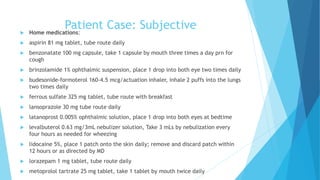
Patient Case: Subjective Home medications:
 aspirin 81 mg tablet, tube route daily
 benzonatate 100 mg capsule, take 1 capsule by mouth three times a day prn for
cough
 brinzolamide 1% ophthalmic suspension, place 1 drop into both eye two times daily
 budesonide-formoterol 160-4.5 mcg/actuation inhaler, inhale 2 puffs into the lungs
two times daily
 ferrous sulfate 325 mg tablet, tube route with breakfast
 lansoprazole 30 mg tube route daily
 latanoprost 0.005% ophthalmic solution, place 1 drop into both eyes at bedtime
 levalbuterol 0.63 mg/3mL nebulizer solution, Take 3 mLs by nebulization every
four hours as needed for wheezing
 lidocaine 5%, place 1 patch onto the skin daily; remove and discard patch within
12 hours or as directed by MD
 lorazepam 1 mg tablet, tube route daily
 metoprolol tartrate 25 mg tablet, take 1 tablet by mouth twice daily
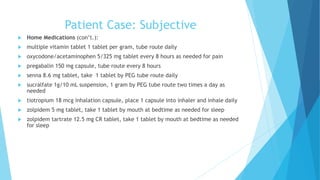
Patient Case: Subjective
 Home Medications (con’t.):
 multiple vitamin tablet 1 tablet per gram, tube route daily
 oxycodone/acetaminophen 5/325 mg tablet every 8 hours as needed for pain
 pregabalin 150 mg capsule, tube route every 8 hours
 senna 8.6 mg tablet, take 1 tablet by PEG tube route daily
 sucralfate 1g/10 mL suspension, 1 gram by PEG tube route two times a day as
needed
 tiotropium 18 mcg inhalation capsule, place 1 capsule into inhaler and inhale daily
 zolpidem 5 mg tablet, take 1 tablet by mouth at bedtime as needed for sleep
 zolpidem tartrate 12.5 mg CR tablet, take 1 tablet by mouth at bedtime as needed
for sleep
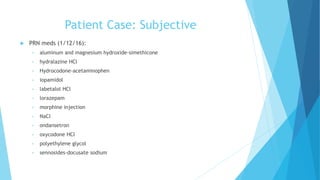
Patient Case: Subjective
 PRN meds (1/12/16):
• aluminum and magnesium hydroxide-simethicone
• hydralazine HCl
• Hydrocodone-acetaminophen
• iopamidol
• labetalol HCl
• lorazepam
• morphine injection
• NaCl
• ondansetron
• oxycodone HCl
• polyethylene glycol
• sennosides-docusate sodium
Patient Case: Subjective
Allergies: Shellfish Allergy
(Itching), lisinopril (swelling)
ROS: Not obtainable
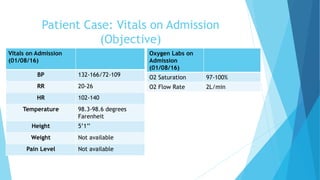
Patient Case: Vitals on Admission
(Objective)
Vitals on Admission
(01/08/16)
BP 132-166/72-109
RR 20-26
HR 102-140
Temperature 98.3-98.6 degrees
Farenheit
Height 5’1’’
Weight Not available
Pain Level Not available
Oxygen Labs on
Admission
(01/08/16)
O2 Saturation 97-100%
O2 Flow Rate 2L/min
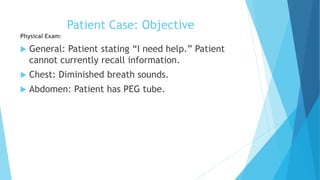
Patient Case: Objective
Physical Exam:
 General: Patient stating “I need help.” Patient
cannot currently recall information.
 Chest: Diminished breath sounds.
 Abdomen: Patient has PEG tube.
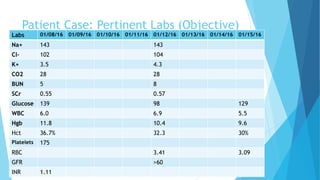
Patient Case: Pertinent Labs (Objective)
Labs 01/08/16 01/09/16 01/10/16 01/11/16 01/12/16 01/13/16 01/14/16 01/15/16
Na+ 143 143
Cl- 102 104
K+ 3.5 4.3
CO2 28 28
BUN 5 8
SCr 0.55 0.57
Glucose 139 98 129
WBC 6.0 6.9 5.5
Hgb 11.8 10.4 9.6
Hct 36.7% 32.3 30%
Platelets 175
RBC 3.41 3.09
GFR >60
INR 1.11
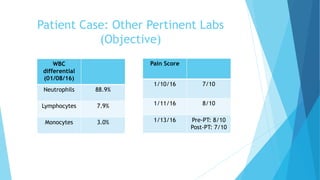
Patient Case: Other Pertinent Labs
(Objective)
WBC
differential
(01/08/16)
Neutrophils 88.9%
Lymphocytes 7.9%
Monocytes 3.0%
Pain Score
1/10/16 7/10
1/11/16 8/10
1/13/16 Pre-PT: 8/10
Post-PT: 7/10
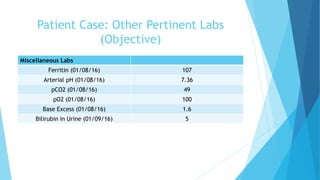
Patient Case: Other Pertinent Labs
(Objective)
Miscellaneous Labs
Ferritin (01/08/16) 107
Arterial pH (01/08/16) 7.36
pCO2 (01/08/16) 49
pO2 (01/08/16) 100
Base Excess (01/08/16) 1.6
Bilirubin in Urine (01/09/16) 5
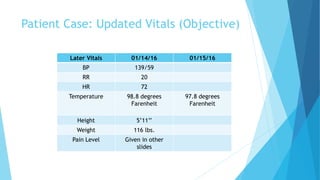
Patient Case: Updated Vitals (Objective)
Later Vitals 01/14/16 01/15/16
BP 139/59
RR 20
HR 72
Temperature 98.8 degrees
Farenheit
97.8 degrees
Farenheit
Height 5’11’’
Weight 116 lbs.
Pain Level Given in other
slides
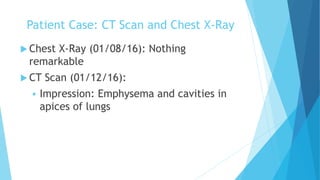
Patient Case: CT Scan and Chest X-Ray
 Chest X-Ray (01/08/16): Nothing
remarkable
 CT Scan (01/12/16):
 Impression: Emphysema and cavities in
apices of lungs
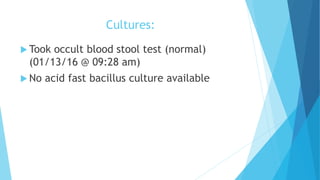
Cultures:
 Took occult blood stool test (normal)
(01/13/16 @ 09:28 am)
 No acid fast bacillus culture available
Patient Case
Primary disease states:
 MAI infection
 COPD and emphysema
 Anxiety and panic attacks
 Normocytic Anemia
 Chronic Pain, currently with exacerbated chest wall pain
 Constipation
 Possible Insomnia
 Diabetes, with gastropathy and neuropathy (not currently
on diabetes medications)
MAI Infection
(Mycobacterium Avium-
Intracellulare)
MAI Infection Background
 Also known as MAC (M. avium complex)
 Mycobacteria are rod-shaped aerobic bacteria that do not
form spores
 Grow optimally at 41 degrees Celsius (105 degrees in the
body)
 Water, food, soil, and animals (especially birds)
 Atypical
 Spread from person to person? No
 Do not treat with usual Tb drugs
MAI Pathophysiology
 Pulmonary infection is acquired through inhalation. The
respiratory tract or GI tract may be colonized after
environmental exposure.
 Bacteremia may occur after invasion--- invasion of
tissues---- invasions of organs----- organ dysfunction
(any organ may be involved)
 Organ involvement may include the following:
Endobrachial lesions (lungs, nodules), pericarditis, soft
tissue abscesses, lesions of skin, involvement of lymph
nodes, bone infection, and lesions of the central nervous
system.
MAI Clinical Presentation
 Chronic, recurring cough (Most common)
 Fatigue
 Malaise
 Weight loss
 Fever
 Sputum production
 Dyspnea
 Chest Pain
 Hemoptysis
MAI Risk Factors
Risk Factors:
 Higher risk of developing infection in HIV patients
when CD-4 positive lymphocyte count <100/microliter
 Pneumocystitis jirovecil infection
 COPD (Chronic Obstructive Pulmonary Disease)
 Severe anemia
 Interruption of antiretroviral therapy may increase the
risk of developing MAC
 Cystic fibrosis
 Pulmonary alveolar proteinosis
2007 ATS/IDSA Guidelines for Diagnosis, Treatment,
and Prevention of Nontuberculosis Mycobacterial
Diseases: MAI Diagnostic Criteria
 Clinical:
 Nodules or cavities present on CT Scan or chest radiograph
 Exclude other diseases
 Microbiologic
 Two positive sputum cultures
 One positive culture after flushing of the respiratory tract
 Lung biopsy and a positive culture
 Should consult experts if rare strain of NTM or concern for environmental spread
 Should decide if should treat
Griffith, DE et. al. ATS/IDSA Statement 2007. AJRCC. 367-415(378)).
MAI Diagnosis
 Diagnostic Tests: Blood or Tissue culture with MAC
organisms Bone marrow cultures
 Body fluid culture, sputum culture
 Acid Fast Stain (not as reliable)
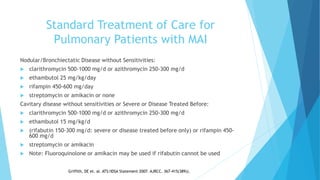
Standard Treatment of Care for
Pulmonary Patients with MAI
Nodular/Bronchiectatic Disease without Sensitivities:
 clarithromycin 500-1000 mg/d or azithromycin 250-300 mg/d
 ethambutol 25 mg/kg/day
 rifampin 450-600 mg/day
 streptomycin or amikacin or none
Cavitary disease without sensitivities or Severe or Disease Treated Before:
 clarithromycin 500-1000 mg/d or azithromycin 250-300 mg/d
 ethambutol 15 mg/kg/d
 (rifabutin 150-300 mg/d: severe or disease treated before only) or rifampin 450-
600 mg/d
 streptomycin or amikacin
 Note: Fluoroquinolone or amikacin may be used if rifabutin cannot be used
Griffith, DE et. al. ATS/IDSA Statement 2007. AJRCC. 367-415(389)).
Goals of Therapy for Patients with MAI
Without symptoms
Low risk of having the infection return
1 year
Griffith, DE et. al. ATS/IDSA Statement 2007. AJRCC. 367-415(394)).
Clinical Trial: “Efficacy of Clarithromycin and
Ethambutol for Mycobacterium avium Complex
Pulmonary Disease”
 Background: The study assessed the treatment and clinical outcomes of
fibrocavitory pulmonary infection due to Mycobacterium avium complex and
Mycobacterium malmoense with clarithromycin, rifampicin, and ethambutol likely
compared to statistics of those who received rifampicin, ethambutol, with or
without isoniazid.
 Methods: Patients who came into the clinic (Royal Infirmary of Edinburgh) from
2001-2007 were given a three-drug regimen. Patients who were immunosuppressed
(HIV, receiving immunosuppressive therapy, cystic fibrosis, DM); 28 total patients
included in the study; were treated with once daily rifampicin (450 mg for
patients who were >50 kg or 600 mg for patients who were >50 kg), once daily
ethambutol (15 mg/kg), and twice daily clarithromycin (500 mg) for 24 months; 14
of the patients had M. avium complex
 Statistical Analysis: SPSS, Analysis of Variance with Bonferroni correction for
multiple comparisons, Wilcoxon Test analysis compared 2 treatment time points
Murray MP, Laurenson IF, and Hill AT. Outcomes of a Standardized Triple-Drug Regimen for the Treatment of Nontuberculous Mycobacterial Pulmonary
Infection. Oxford Journals: Clin Infect Dis [Internet]. 2008 July [cited 2016 Feb 23]; 47(2): 222-224. Available from:
http://cid.oxfordjournals.org/content/47/2/222.full.pdf+html .
Clinical Trial: “Efficacy of Clarithromycin and
Ethambutol for Mycobacterium avium
Complex Pulmonary Disease”
 Results: Sputum cultures were positive in one patient at month 6, 2 patients
at month 12, 1 patient at month 18, and 0 patients at months 24 and 30. (Met
P value<0.001)
 Recommendations: The three drug recommendation of clarithromycin,
rifampicin, and ethambutol has better efficacy in M. avium complex over a
24 month period compared to those who take rifampicin and ethambutol with
or without isoniazid.
 Strengths/Limitations: Strengths: Patients were followed up every 6 months
until 6 months after treatment completion; Patients were followed for at
least 2 years; Data was pulled from patients over a 7 year period (changes in
resistance) Limitations: The trial had only 28 participants and of those only
half of the participants had MAC.
Murray MP, Laurenson IF, and Hill AT. Outcomes of a Standardized Triple-Drug Regimen for the Treatment of Nontuberculous Mycobacterial Pulmonary Infection. Oxford
Journals: Clin Infect Dis [Internet]. 2008 July [cited 2016 Feb 23]; 47(2): 222-224. Available from: http://cid.oxfordjournals.org/content/47/2/222.full.pdf+html .
Assessment: MAI
 Etiology: AM is a 66 year old female who has MAI likely due to COPD. MAI may
be caused by structural lung diseases such as COPD.
 Assessment if Therapy is Indicated: The patient currently has MAI likely
caused by cavitary disease. The patient is on the appropriate treatment
regimen for MAI caused by cavitary disease per the 2007 ATS/IDSA Guidelines.
 Goals: Resolution of MAI infection through adherence to treatment without
recurrence or symptoms for 1 year.
 Assessment of Current and/or New Therapy: On admission, it was not known
if the patient was on treatment for MAI. When the patient is able to start
treatment, treatment should consist of ethambutol, azithromycin, and
rifampin (or fluoroquinolone or amikacin) per the 2007 ATS/IDSA Guidelines
for Diagnosis, Treatment, and Prevention of Nontuberculosis Mycobacterial
Diseases
Griffith, DE et. al. ATS/IDSA Statement 2007. AJRCC. 367-415(389, 394. 405)).
Plan: MAI
 Started in hospital: azithromycin 250 mg tablet, Take 1 tablet (250 mg total)
by mouth daily from 01/09/16- 01/15/16 for
 Started in hospital: ethambutol 400 mg tablet, Take 2 tablets (800 mg total)
by mouth daily from 01/09/16- 01/15/16
 Started in hospital: rifampin 300 mg capsule, Take 2 capsules (600 mg total)
by mouth daily from 01/09/16/- 01/15/16
 These agents should be continued for 12 months from start date with no
return of symptoms for twelve months from start date, the 2007 ATS/IDSA
Guidelines for Diagnosis, Treatment, and Prevention of Nontuberculosis
Mycobacterial Diseases
Griffith, DE et. al. ATS/IDSA Statement 2007. AJRCC. 367-415(394)).
Monitoring: MAI Medications (Pertinent
monitoring parameters)
 Rifampin: Orange urine, and LFTs at appointments
 Ethambutol: Vision and LFTs at next appointment
 Azithromycin: LFTs at next appointment
Assessment: Acute Exacerbation of COPD
 Etiology: AM is a 66 year old female with a PMH of COPD. Patient’s panic
attack or MAI infection may be contributing.
 Assessment if therapy is indicated/ Assessment of Current and/or New
Therapy: The patient’s COPD is not currently controlled, because she is
experiencing an exacerbation of COPD. Prednisone should be given to the
patient for resolution of the patient’s acute exacerbation of COPD per the
2014 ACCP/CTS Guideline on Prevention of Acute Exacerbations of COPD and
the 2013 GOLD Guidelines. The prednisone will help decrease inflammation of
the patient’s airway.
 Goals of Therapy: Manage patient’s COPD exacerbation; resolution of cough
and wheezing; adequate oxygenation per provider; patient progressing
according to 01/09/16 note
Plan: Acute Exacerbation of COPD
 Started in hospital: Initiate prednisone 40 mg for treatment
 Started outpatient: prednisone 10 mg tablet, Take 1 tablet by mouth daily
 Started in hospital and outpatient: prednisone 20 mg tablet, Take 1 tablet by
mouth daily
 Taper prednisone over 7-10 days
 Started in hospital: ipatropium 0.02% nebulizer solution, Take 2.5 mLs (0.05 mg
total) by nebulization every six hours as needed
 Home medications: tiotropioum 18 mcg inhalation capsule, Place 1 capsule (18
mcg total) into inhaler and inhale daily
 Home medications: levalbulterol 0.63 mg/3mL nebulizer solution, Take 3 mLs (0.63
mg total) by nebulization every 4 hours as needed for wheezing
 Home medications: budesonide-formoterol 160-4.5 mcg/actuation inhaler
 Home medications: Oxygen, Inhale 2L/min into the lungs
Assessment: Anxiety and Panic Attacks
 Etiology: AM is a 66 year old female who has anxiety and panic attacks in her PMH.
 Assessment if therapy is indicated: The patient was having a panic attack on
admission, so her anxiety is not currently controlled. The patient’s anxiety has not
been controlled on lorazepam. According to the DSM-IV guidelines,
benzodiazepines are used fore the short term management of anxiety, and the
SSRIs have shown to be the best tolerated medications for anxiety, and have shown
response rates greater than the placebo for panic disorder and Generalized
Anxiety Disorder.
 Goals of therapy: Resolution of the patient’s panic attack, and continue to help
control the patient’s anxiety
 Assessment of current and/or new therapy: The patient has been on chronic
therapy with a benzodiazepine, but according to the DSM-IV Guidelines, an SSRI is
a better option for long-term therapy because of better tolerability and less
potential for addiction as compared to benzodiazepines. However, it takes SSRIs
approximately a week before they begin to work. The patient will continue to be
managed with the benzodiazepine for short-term symptom relief, but will now
also be given an SSRI for long term management per DSM-IV Guidelines.
Plan: Anxiety and Panic Attacks
 Home med: Continue on lorazepam 0.5 mg, Take 1
tablet by per G tube route every 4 hours as
needed
 Started in hospital: sertraline 25 mg tablet, 1
tablet by Per G Tube route at bedtime
Assessment: Normocytic Anemia
 Etiology
 AM is a 66 year old female with normocytic anemia in her PMH. Normocytic
anemia may be associated with chronic disease.
 Assessment if therapy is indicated
 Her normocytic anemia is not currently under control as evidenced by her
decreased hemoglobin and hematocrit. Normocytic anemia is treated by
treating the underlying cause. Although the patient has a normal serum
ferritin (an indicator of normocytic anemia), the patient’s hemoglobin and
hematocrit are mildly decreased, though not decreased enough to warrant a
blood transfusion. Often patient’s serum iron levels are decreased in
normocytic anemia, though there were no serum iron levels drawn for this
patient.
 Goals of therapy
 Appropriate goals for the patient and evaluation if the patient is currently at
goal. The appropriate treatment goals for this patient is to help improve their
hemoglobin to keep the patient from requiring a blood transfusion.
 Assessment of current and/or new therapy
 Although a serum iron level was not drawn, the ferrous sulfate may help treat
the patient’s low hemoglobin and iron levels.
Plan: Normocytic Anemia
 Ferrous sulfate 325 (65 Fe) mg tablet (discontinued)
 Monitor serum iron levels
 Monitor hemoglobin levels
Assessment: Chronic Pain
 Etiology: The patient has chronic pain in her past medical history. The patient states
her chronic pain has gotten worse with diffuse soreness in her chest with chronic or
deep breathing.
 Assessment if therapy is indicated/Assessment of Current and/or New Therapy: The
patient is likely experiencing increased pain in addition to her chronic pain. The
patient should remain on her home medications (oxycodone-acetaminophen and
lidocaine) for her chronic pain, while starting the oral corticosteroid which may help
reduce inflammation in the patient’s chest area, which may help reduce the patient’s
pain. According to the 2009 American Pain Society, American Academy of Pain
Guidelines, “Guideline for the Use of Opioid Therapy in Chronic Non-Cancer Pain,”
“chronic pain is defined by the International Association for the Study of Pain as ‘pain
that persists beyond normal tissue healing time, which is assumed to be three months.”
According to the same guidelines all chronic pain besides cancer pain or end of life pain
is referred to as chronic non-cancer pain (CNCP). The guidelines say that potential
benefits vs. potential harms must be weighed when making a decision to put a patient
on opioid therapy for chronic non-cancer pain, and COT (chronic opioid therapy) is
controversial. In this patient, the benefits of COT for her CNCP may outweigh the risks
of therapy. Patients with acute exacerbation of COPD may be started on prednisone per
the 2014 ACCP/CTS Guideline on Prevention of Acute Exacerbations of COPD and the
2013 GOLD Guidelines.
 Goal of Therapy: Lower the patient’s pain level.
Plan: Chronic Pain
 Home medications: Continue oxycodone-acetaminophen 5/325 mg, Take 1
tablet per G Tube route every 8 hours as needed
 Home medications: Continue lidocaine (Lidoderm; patch) 5%, Place patch
onto the skin daily. Remove and discard patch within 12 hours or as directed
by MD.
 Hospital medications: Start prednisone 40 mg daily
Assessment: Constipation
 Etiology: The patient has gastropathy in her past medical history and is
also taking opioids, both of which may be contributing to her
constipation.
 Assessment if therapy is indicated: On the 12th, the patient requested
miralax as she had not had a bowel movement since the day of
admission.
 Goal of therapy: The goal of therapy for this patient is to induce a bowel
movement for this patient.
 Assessment of Current and/or New Therapy: According to the 2014
AGA Guidelines for IBS, polyethylene glycol laxatives are effective for
increasing the frequency of bowel movements, have few adverse
effects, and the cost of these are low. The senna was not effective, so
the patient should try a different agent.
Plan: Constipation
 Home medications: Senna 8.6 mg tablet, Take 1
tablet by PEG Tube Route daily
 Started in hospital: polyethylene glycol packet,
Take 17 grams by mouth daily
 Requested miralax on the 1/12/16 as she had not
had a bowel movement since the 8th.
Assessment: Possible Insomnia
 Etiology: The cause of the patient’s (possible) insomnia is not known
though the patient’s chronic pain and anxiety may be contributing
factors.
 Assessment if Therapy is Indicated: The patient needs medication to
help her sleep which indicates that the patient’s (possible) insomnia is
not controlled. Her insomnia may be due to her other problems not
being controlled, and treatment of those problems may help her
insomnia, but the patient currently needs medication therapy.
 Goal of Therapy: The goal of therapy for this patient is to have
adequate sleep by obtaining resolution of the patient’s (possible)
insomnia by helping induce sleep onset at a minimum.
 Assessment of Current and/or New Therapy: It was not clear if sleep
onset or maintenance was the patient’s problem, but the patient will
be given a medication which will help induce sleep onset at a
minimum.
Plan: Possible Insomnia
 Started in hospital: zolpidem 5mg tablet,
Take 1 tablet (5mg total) by mouth at
bedtime
 Monitor the patient for falls, because falls
have been reported in the elderly with this
drug
Assessment: Diabetes
 Etiology: AM is a 66 year old female who has a PMH of diabetes mellitus.
 Assessment if New Therapy is Indicated/Assessment of current and/or new
therapy: The patient’s last A1C taken on 11/01/15 (within the last 3 months) was
5.6%. While her A1C indicates that she is controlled, she is likely having blood
sugar spikes in the hospital due to her corticosteroid. The healthcare provider did
not recommend any medications for the patient’s blood sugar spikes, so although
the patient’s blood sugar is not stable, this does not mean that her diabetes is not
under control. The patient’s last A1C was taken on November 1st 2015, and
although the patient has seen some spikes in blood sugars this may be due to her
medications, but it has not been 3 months since her last A1C. Her last A1C
indicated that she had a relatively good A1C as she would not even be considered
pre-diabetic. The patient was diet controlled, which indicates the increase in
blood sugar could be due to her medications.
 Goals of Therapy: The best therapy for this patient is to continue to control the
patient’s diet until the patient’s blood sugar spikes to greater than 180 mg/dL per
the 2016 ADA Guidelines.
Plan: Diabetes
 Continue to diet control the patient.
 Take A1C at next healthcare provider visit
(03/07/16)
Other Problems (Relatively Controlled
Problems):
 GERD:
 Home medications lansoprazole 30 mg disintegrating tablet, Take 1 tablet by Per G Tube Route Daily
 Home medications: sucralfate 1g/10 mL suspension, Take 1 g by PEG Tube route twice daily as needed
 DVT Prophylaxis:
 Hospital: heparin subcutaneously (prophylactic dose is heparin 5000 U q8h or 3 times daily)
 Glaucoma
 Home medications: latanoprost 0.005% ophthalmic solution, Place 1 drop into both eyes at bedtime
 Home medications: brinzolamide, Place 1 drop into both eyes twice daily
 Depression:
 Hospital medications: sertraline 25 mg tablet, Take 1 tablet by Per G Tube route at bedtime
 HTN
• Home medications: metoprolol tartrate 25 mg tablet, Take 1 tablet (25 mg total) by mouth twice daily
 Cough
• Home medications: benzonatate 100 mg capsule, Take 1 capsule (100 mg total) by mouth three times
daily as needed for cough
 Nutrition:
 Home medications: Multiple Vitamin tablet, Take 1 tablet by Per G route daily
Other Problems (Relatively Controlled
Problems) (Con’t):
 ASCVD Risk Protection:
 According to the 2016 ADA Guidelines, Aspirin therapy (75-162 mg/day) should be
considered “as a primary prevention strategy in those with Type 1 or 2 Diabetes
who are at increased cardiovascular risk (10 year risk > 10%). This includes most
men or women with diabetes aged > 50 years who have at least one additional risk
factor (family history of premature atherosclerotic cardiovascular disease,
hypertension, smoking, dyslipidemia, or albuminuria) and are not at increased risk
of bleeding.
 Home medications: aspirin 81 mg by Per G Tube Route Daily
Final Notes
Unresolved Problems:
 MAI
Resolved Hospital Problems:
 COPD Exacerbation
Discharge Date: 01/15/16
References
 Primary Literature Sources for Main Problem (MAI):
Murray MP, Laurenson IF, and Hill AT. Outcomes of a Standardized Triple-Drug
Regimen for the Treatment of Nontuberculous Mycobacterial Pulmonary Infection.
Oxford Journals: Clin Infect Dis [Internet]. 2008 July [cited 2016 Feb 23]; 47(2):
222-224. Available from:
http://cid.oxfordjournals.org/content/47/2/222.full.pdf+html .
 Guidelines for Main Problem (MAI):
Griffith DE, Aksamit T, Brown-Elliott BA, Catanzaro A, Daley C, Gordin F, Holland
SM, Horsburgh R, Huitt G, Lademarco MF, Iseman M, Olivier K, Ruoss S, Reyn CF,
Wallace Jr. RJ, and Winthrop K, and Mycobacterial Diseases Subcommittee. An
official ATS/IDSA statement: diagnosis, treatment, and prevention of
nontuberculous mycobacterial diseases. Am J of Respir and Crit Care Med
[Internet]. 2007 Jan [cited 2016 Feb 22]; 175(4): 367-416. Available from:
http://www.atsjournals.org/doi/pdf/10.1164/rccm.200604-571ST.
ReferencesOthers:
 2014 CHEST Guidelines, Gold Guidelines
 2014 AGA Guidelines for IBS
 Facts and Comparisons Eanswers. [Internet]. (Netherlands) Alphen aan den Rijn. Wolters Kluwer. [modified 2016; cited 2016 Feb 22].
Available from: http://online.factsandcomparisons.com/index.aspx .
 2014 ACCP/CTS Guideline on Prevention of Acute Exacerbations of COPD
 Global Initiative for Chronic Obstructive Lung Disease. Global strategy for the diagnosis, management and prevention of chronic obstructive
pulmonary disease. Updated 2013. Global Initiative for Chronic Obstructive Lung Disease website.
http://www.goldcopd.org/uploads/users/files/GOLD_Report_2013_Feb20.pdf. Accessed 01/24/16
 Reilly, John J., Jr., et al. "Chronic Obstructive Pulmonary Disease." Harrison's Principles of Internal Medicine, 19e. Eds. Dennis Kasper, et
al. New York, NY: McGraw-Hill, 2015. n. pag. AccessMedicine. Web. 26 Jan.
2016.<http://accessmedicine.mhmedical.com/content.aspx?bookid=1130&Sectionid=79745089>.
 Bourdet, Sharya V., and Dennis M. Williams. "Chapter 16. Chronic Obstructive Pulmonary Disease." Pharmacotherapy: A Pathophysiologic
Approach, 9e.Eds. Joseph T. DiPiro, et al. New York, NY: McGraw-Hill, 2014. n. pag.AccessPharmacy. Web. 26 Jan.
2016.<http://accesspharmacy.mhmedical.com/content.aspx?bookid=689&Sectionid=48811464>.
 Carroll, Karen C., et al. "Mycobacteria." Jawetz, Melnick, & Adelberg’s Medical Microbiology, 27e. Eds. Karen C. Carroll, et al. New York,
NY: McGraw-Hill, 2015. n. pag. AccessMedicine. Web. 30 Jan. 2016.
<http://accessmedicine.mhmedical.com/content.aspx?bookid=1551&Sectionid=94107776>.
 2009 American Pain Society, American Academy of Pain Guidelines, “Guideline for the Use of Opioid Therapy in Chronic Non-Cancer Pain,”
 2016 ADA Guidelines
 Gumbo, Tawanda. "Chemotherapy of Tuberculosis, Mycobacterium Avium Complex Disease, and Leprosy." Goodman & Gilman's: The
Pharmacological Basis of Therapeutics, 12e. Eds. Laurence L. Brunton, et al. New York, NY: McGraw-Hill, 2011. n. pag. AccessPharmacy.
Web. 10 Feb. 2016. <http://accesspharmacy.mhmedical.com/content.aspx?bookid=1613&Sectionid=102163458>.
 Dynamed. DynaMed Plus [Internet]. Ipswich (MA): EBSCO Information Services. 1995 – [cited 2016 Feb 10]. Available from
http://www.www.dynamed.com. Registration and login required.
 Lexicomp. Lexidrugs. Hudson, Ohio: 2016. Lexicomp, Inc.; Feb 10, 2016.

Case Presentation MAI

  • 1.
    Case Presentation: MAI(Mycobacterium Avium Intracellulare) Infection Likely Due to COPD (Chronic Obstructive Pulmonary Disease) & COPD Exacerbation Likely Due to Anxiety William Joseph Helms Doctor of Pharmacy Candidate Wingate University School of Pharmacy Inpatient Rotation: Novant Health Presbyterian Medical Center 02/10/16 Dr. Jacky Olin
  • 2.
    Objectives:  Describe apatient case for patient who has MAI  Define and Describe Background, Risk Factors, Screening, Pathophysiology, Clinical Presentation, Progression, Diagnosis, Treatment, and Monitoring of MAI  Describe primary literature relevant to the patient case  Describe assessment and treatment plan for patient with MAI and other chronic respiratory conditions
  • 3.
    Patient Case: Subjective CC:“ProductiveCough and Wheezing” HPI:“AM, a 66 year old AA female, appears to be weak and presents to the ED on 01/08/16. She is having a panic attack that is exacerbating her COPD, and was recently diagnosed with MAI.”
  • 4.
    Patient Case: Subjective PMH: COPD and emphysema (O2 dependent), MAI infection, Chronic Sinusitis, former smoker for 35 years (quit 01/01/02), HTN, LV diastolic dysfunction on post echo, Diabetes with gastropathy and neuropathy, anemia (chronic, normocytic), thrombocytopenia, chronic pain (with chronic narcotic therapy and dependence), chronic low back and abdominal pain, osteoarthritis with spinal disc disease, former alcohol abuser (quit in 1993), GERD and esophagitis, esophageal dysmotility and spasms, odynophagia, dysphagia, PEG tube in place, anxiety and panic attacks, depression, glaucoma  Past Surgical History: Bronchoscopy 2012; PEG tube placed 2013; Multiple upper endoscopies and esophageal dilation, plus manometry; multiple steroid injection, and facet injection as recently as January 5th [2016].
  • 5.
    Patient Case: Subjective FamilyHistory: Did not contribute Social History:  Former Alcoholic (quit in 1993),  Former Smoker for 35 years (quit 01/01/02)
  • 6.
    Patient Case: SubjectiveHome medications:  aspirin 81 mg tablet, tube route daily  benzonatate 100 mg capsule, take 1 capsule by mouth three times a day prn for cough  brinzolamide 1% ophthalmic suspension, place 1 drop into both eye two times daily  budesonide-formoterol 160-4.5 mcg/actuation inhaler, inhale 2 puffs into the lungs two times daily  ferrous sulfate 325 mg tablet, tube route with breakfast  lansoprazole 30 mg tube route daily  latanoprost 0.005% ophthalmic solution, place 1 drop into both eyes at bedtime  levalbuterol 0.63 mg/3mL nebulizer solution, Take 3 mLs by nebulization every four hours as needed for wheezing  lidocaine 5%, place 1 patch onto the skin daily; remove and discard patch within 12 hours or as directed by MD  lorazepam 1 mg tablet, tube route daily  metoprolol tartrate 25 mg tablet, take 1 tablet by mouth twice daily
  • 7.
    Patient Case: Subjective Home Medications (con’t.):  multiple vitamin tablet 1 tablet per gram, tube route daily  oxycodone/acetaminophen 5/325 mg tablet every 8 hours as needed for pain  pregabalin 150 mg capsule, tube route every 8 hours  senna 8.6 mg tablet, take 1 tablet by PEG tube route daily  sucralfate 1g/10 mL suspension, 1 gram by PEG tube route two times a day as needed  tiotropium 18 mcg inhalation capsule, place 1 capsule into inhaler and inhale daily  zolpidem 5 mg tablet, take 1 tablet by mouth at bedtime as needed for sleep  zolpidem tartrate 12.5 mg CR tablet, take 1 tablet by mouth at bedtime as needed for sleep
  • 8.
    Patient Case: Subjective PRN meds (1/12/16): • aluminum and magnesium hydroxide-simethicone • hydralazine HCl • Hydrocodone-acetaminophen • iopamidol • labetalol HCl • lorazepam • morphine injection • NaCl • ondansetron • oxycodone HCl • polyethylene glycol • sennosides-docusate sodium
  • 9.
    Patient Case: Subjective Allergies:Shellfish Allergy (Itching), lisinopril (swelling) ROS: Not obtainable
  • 10.
    Patient Case: Vitalson Admission (Objective) Vitals on Admission (01/08/16) BP 132-166/72-109 RR 20-26 HR 102-140 Temperature 98.3-98.6 degrees Farenheit Height 5’1’’ Weight Not available Pain Level Not available Oxygen Labs on Admission (01/08/16) O2 Saturation 97-100% O2 Flow Rate 2L/min
  • 11.
    Patient Case: Objective PhysicalExam:  General: Patient stating “I need help.” Patient cannot currently recall information.  Chest: Diminished breath sounds.  Abdomen: Patient has PEG tube.
  • 12.
    Patient Case: PertinentLabs (Objective) Labs 01/08/16 01/09/16 01/10/16 01/11/16 01/12/16 01/13/16 01/14/16 01/15/16 Na+ 143 143 Cl- 102 104 K+ 3.5 4.3 CO2 28 28 BUN 5 8 SCr 0.55 0.57 Glucose 139 98 129 WBC 6.0 6.9 5.5 Hgb 11.8 10.4 9.6 Hct 36.7% 32.3 30% Platelets 175 RBC 3.41 3.09 GFR >60 INR 1.11
  • 13.
    Patient Case: OtherPertinent Labs (Objective) WBC differential (01/08/16) Neutrophils 88.9% Lymphocytes 7.9% Monocytes 3.0% Pain Score 1/10/16 7/10 1/11/16 8/10 1/13/16 Pre-PT: 8/10 Post-PT: 7/10
  • 14.
    Patient Case: OtherPertinent Labs (Objective) Miscellaneous Labs Ferritin (01/08/16) 107 Arterial pH (01/08/16) 7.36 pCO2 (01/08/16) 49 pO2 (01/08/16) 100 Base Excess (01/08/16) 1.6 Bilirubin in Urine (01/09/16) 5
  • 15.
    Patient Case: UpdatedVitals (Objective) Later Vitals 01/14/16 01/15/16 BP 139/59 RR 20 HR 72 Temperature 98.8 degrees Farenheit 97.8 degrees Farenheit Height 5’11’’ Weight 116 lbs. Pain Level Given in other slides
  • 16.
    Patient Case: CTScan and Chest X-Ray  Chest X-Ray (01/08/16): Nothing remarkable  CT Scan (01/12/16):  Impression: Emphysema and cavities in apices of lungs
  • 17.
    Cultures:  Took occultblood stool test (normal) (01/13/16 @ 09:28 am)  No acid fast bacillus culture available
  • 18.
    Patient Case Primary diseasestates:  MAI infection  COPD and emphysema  Anxiety and panic attacks  Normocytic Anemia  Chronic Pain, currently with exacerbated chest wall pain  Constipation  Possible Insomnia  Diabetes, with gastropathy and neuropathy (not currently on diabetes medications)
  • 19.
  • 20.
    MAI Infection Background Also known as MAC (M. avium complex)  Mycobacteria are rod-shaped aerobic bacteria that do not form spores  Grow optimally at 41 degrees Celsius (105 degrees in the body)  Water, food, soil, and animals (especially birds)  Atypical  Spread from person to person? No  Do not treat with usual Tb drugs
  • 21.
    MAI Pathophysiology  Pulmonaryinfection is acquired through inhalation. The respiratory tract or GI tract may be colonized after environmental exposure.  Bacteremia may occur after invasion--- invasion of tissues---- invasions of organs----- organ dysfunction (any organ may be involved)  Organ involvement may include the following: Endobrachial lesions (lungs, nodules), pericarditis, soft tissue abscesses, lesions of skin, involvement of lymph nodes, bone infection, and lesions of the central nervous system.
  • 22.
    MAI Clinical Presentation Chronic, recurring cough (Most common)  Fatigue  Malaise  Weight loss  Fever  Sputum production  Dyspnea  Chest Pain  Hemoptysis
  • 23.
    MAI Risk Factors RiskFactors:  Higher risk of developing infection in HIV patients when CD-4 positive lymphocyte count <100/microliter  Pneumocystitis jirovecil infection  COPD (Chronic Obstructive Pulmonary Disease)  Severe anemia  Interruption of antiretroviral therapy may increase the risk of developing MAC  Cystic fibrosis  Pulmonary alveolar proteinosis
  • 24.
    2007 ATS/IDSA Guidelinesfor Diagnosis, Treatment, and Prevention of Nontuberculosis Mycobacterial Diseases: MAI Diagnostic Criteria  Clinical:  Nodules or cavities present on CT Scan or chest radiograph  Exclude other diseases  Microbiologic  Two positive sputum cultures  One positive culture after flushing of the respiratory tract  Lung biopsy and a positive culture  Should consult experts if rare strain of NTM or concern for environmental spread  Should decide if should treat Griffith, DE et. al. ATS/IDSA Statement 2007. AJRCC. 367-415(378)).
  • 25.
    MAI Diagnosis  DiagnosticTests: Blood or Tissue culture with MAC organisms Bone marrow cultures  Body fluid culture, sputum culture  Acid Fast Stain (not as reliable)
  • 26.
    Standard Treatment ofCare for Pulmonary Patients with MAI Nodular/Bronchiectatic Disease without Sensitivities:  clarithromycin 500-1000 mg/d or azithromycin 250-300 mg/d  ethambutol 25 mg/kg/day  rifampin 450-600 mg/day  streptomycin or amikacin or none Cavitary disease without sensitivities or Severe or Disease Treated Before:  clarithromycin 500-1000 mg/d or azithromycin 250-300 mg/d  ethambutol 15 mg/kg/d  (rifabutin 150-300 mg/d: severe or disease treated before only) or rifampin 450- 600 mg/d  streptomycin or amikacin  Note: Fluoroquinolone or amikacin may be used if rifabutin cannot be used Griffith, DE et. al. ATS/IDSA Statement 2007. AJRCC. 367-415(389)).
  • 27.
    Goals of Therapyfor Patients with MAI Without symptoms Low risk of having the infection return 1 year Griffith, DE et. al. ATS/IDSA Statement 2007. AJRCC. 367-415(394)).
  • 28.
    Clinical Trial: “Efficacyof Clarithromycin and Ethambutol for Mycobacterium avium Complex Pulmonary Disease”  Background: The study assessed the treatment and clinical outcomes of fibrocavitory pulmonary infection due to Mycobacterium avium complex and Mycobacterium malmoense with clarithromycin, rifampicin, and ethambutol likely compared to statistics of those who received rifampicin, ethambutol, with or without isoniazid.  Methods: Patients who came into the clinic (Royal Infirmary of Edinburgh) from 2001-2007 were given a three-drug regimen. Patients who were immunosuppressed (HIV, receiving immunosuppressive therapy, cystic fibrosis, DM); 28 total patients included in the study; were treated with once daily rifampicin (450 mg for patients who were >50 kg or 600 mg for patients who were >50 kg), once daily ethambutol (15 mg/kg), and twice daily clarithromycin (500 mg) for 24 months; 14 of the patients had M. avium complex  Statistical Analysis: SPSS, Analysis of Variance with Bonferroni correction for multiple comparisons, Wilcoxon Test analysis compared 2 treatment time points Murray MP, Laurenson IF, and Hill AT. Outcomes of a Standardized Triple-Drug Regimen for the Treatment of Nontuberculous Mycobacterial Pulmonary Infection. Oxford Journals: Clin Infect Dis [Internet]. 2008 July [cited 2016 Feb 23]; 47(2): 222-224. Available from: http://cid.oxfordjournals.org/content/47/2/222.full.pdf+html .
  • 29.
    Clinical Trial: “Efficacyof Clarithromycin and Ethambutol for Mycobacterium avium Complex Pulmonary Disease”  Results: Sputum cultures were positive in one patient at month 6, 2 patients at month 12, 1 patient at month 18, and 0 patients at months 24 and 30. (Met P value<0.001)  Recommendations: The three drug recommendation of clarithromycin, rifampicin, and ethambutol has better efficacy in M. avium complex over a 24 month period compared to those who take rifampicin and ethambutol with or without isoniazid.  Strengths/Limitations: Strengths: Patients were followed up every 6 months until 6 months after treatment completion; Patients were followed for at least 2 years; Data was pulled from patients over a 7 year period (changes in resistance) Limitations: The trial had only 28 participants and of those only half of the participants had MAC. Murray MP, Laurenson IF, and Hill AT. Outcomes of a Standardized Triple-Drug Regimen for the Treatment of Nontuberculous Mycobacterial Pulmonary Infection. Oxford Journals: Clin Infect Dis [Internet]. 2008 July [cited 2016 Feb 23]; 47(2): 222-224. Available from: http://cid.oxfordjournals.org/content/47/2/222.full.pdf+html .
  • 30.
    Assessment: MAI  Etiology:AM is a 66 year old female who has MAI likely due to COPD. MAI may be caused by structural lung diseases such as COPD.  Assessment if Therapy is Indicated: The patient currently has MAI likely caused by cavitary disease. The patient is on the appropriate treatment regimen for MAI caused by cavitary disease per the 2007 ATS/IDSA Guidelines.  Goals: Resolution of MAI infection through adherence to treatment without recurrence or symptoms for 1 year.  Assessment of Current and/or New Therapy: On admission, it was not known if the patient was on treatment for MAI. When the patient is able to start treatment, treatment should consist of ethambutol, azithromycin, and rifampin (or fluoroquinolone or amikacin) per the 2007 ATS/IDSA Guidelines for Diagnosis, Treatment, and Prevention of Nontuberculosis Mycobacterial Diseases Griffith, DE et. al. ATS/IDSA Statement 2007. AJRCC. 367-415(389, 394. 405)).
  • 31.
    Plan: MAI  Startedin hospital: azithromycin 250 mg tablet, Take 1 tablet (250 mg total) by mouth daily from 01/09/16- 01/15/16 for  Started in hospital: ethambutol 400 mg tablet, Take 2 tablets (800 mg total) by mouth daily from 01/09/16- 01/15/16  Started in hospital: rifampin 300 mg capsule, Take 2 capsules (600 mg total) by mouth daily from 01/09/16/- 01/15/16  These agents should be continued for 12 months from start date with no return of symptoms for twelve months from start date, the 2007 ATS/IDSA Guidelines for Diagnosis, Treatment, and Prevention of Nontuberculosis Mycobacterial Diseases Griffith, DE et. al. ATS/IDSA Statement 2007. AJRCC. 367-415(394)).
  • 32.
    Monitoring: MAI Medications(Pertinent monitoring parameters)  Rifampin: Orange urine, and LFTs at appointments  Ethambutol: Vision and LFTs at next appointment  Azithromycin: LFTs at next appointment
  • 33.
    Assessment: Acute Exacerbationof COPD  Etiology: AM is a 66 year old female with a PMH of COPD. Patient’s panic attack or MAI infection may be contributing.  Assessment if therapy is indicated/ Assessment of Current and/or New Therapy: The patient’s COPD is not currently controlled, because she is experiencing an exacerbation of COPD. Prednisone should be given to the patient for resolution of the patient’s acute exacerbation of COPD per the 2014 ACCP/CTS Guideline on Prevention of Acute Exacerbations of COPD and the 2013 GOLD Guidelines. The prednisone will help decrease inflammation of the patient’s airway.  Goals of Therapy: Manage patient’s COPD exacerbation; resolution of cough and wheezing; adequate oxygenation per provider; patient progressing according to 01/09/16 note
  • 34.
    Plan: Acute Exacerbationof COPD  Started in hospital: Initiate prednisone 40 mg for treatment  Started outpatient: prednisone 10 mg tablet, Take 1 tablet by mouth daily  Started in hospital and outpatient: prednisone 20 mg tablet, Take 1 tablet by mouth daily  Taper prednisone over 7-10 days  Started in hospital: ipatropium 0.02% nebulizer solution, Take 2.5 mLs (0.05 mg total) by nebulization every six hours as needed  Home medications: tiotropioum 18 mcg inhalation capsule, Place 1 capsule (18 mcg total) into inhaler and inhale daily  Home medications: levalbulterol 0.63 mg/3mL nebulizer solution, Take 3 mLs (0.63 mg total) by nebulization every 4 hours as needed for wheezing  Home medications: budesonide-formoterol 160-4.5 mcg/actuation inhaler  Home medications: Oxygen, Inhale 2L/min into the lungs
  • 35.
    Assessment: Anxiety andPanic Attacks  Etiology: AM is a 66 year old female who has anxiety and panic attacks in her PMH.  Assessment if therapy is indicated: The patient was having a panic attack on admission, so her anxiety is not currently controlled. The patient’s anxiety has not been controlled on lorazepam. According to the DSM-IV guidelines, benzodiazepines are used fore the short term management of anxiety, and the SSRIs have shown to be the best tolerated medications for anxiety, and have shown response rates greater than the placebo for panic disorder and Generalized Anxiety Disorder.  Goals of therapy: Resolution of the patient’s panic attack, and continue to help control the patient’s anxiety  Assessment of current and/or new therapy: The patient has been on chronic therapy with a benzodiazepine, but according to the DSM-IV Guidelines, an SSRI is a better option for long-term therapy because of better tolerability and less potential for addiction as compared to benzodiazepines. However, it takes SSRIs approximately a week before they begin to work. The patient will continue to be managed with the benzodiazepine for short-term symptom relief, but will now also be given an SSRI for long term management per DSM-IV Guidelines.
  • 36.
    Plan: Anxiety andPanic Attacks  Home med: Continue on lorazepam 0.5 mg, Take 1 tablet by per G tube route every 4 hours as needed  Started in hospital: sertraline 25 mg tablet, 1 tablet by Per G Tube route at bedtime
  • 37.
    Assessment: Normocytic Anemia Etiology  AM is a 66 year old female with normocytic anemia in her PMH. Normocytic anemia may be associated with chronic disease.  Assessment if therapy is indicated  Her normocytic anemia is not currently under control as evidenced by her decreased hemoglobin and hematocrit. Normocytic anemia is treated by treating the underlying cause. Although the patient has a normal serum ferritin (an indicator of normocytic anemia), the patient’s hemoglobin and hematocrit are mildly decreased, though not decreased enough to warrant a blood transfusion. Often patient’s serum iron levels are decreased in normocytic anemia, though there were no serum iron levels drawn for this patient.  Goals of therapy  Appropriate goals for the patient and evaluation if the patient is currently at goal. The appropriate treatment goals for this patient is to help improve their hemoglobin to keep the patient from requiring a blood transfusion.  Assessment of current and/or new therapy  Although a serum iron level was not drawn, the ferrous sulfate may help treat the patient’s low hemoglobin and iron levels.
  • 38.
    Plan: Normocytic Anemia Ferrous sulfate 325 (65 Fe) mg tablet (discontinued)  Monitor serum iron levels  Monitor hemoglobin levels
  • 39.
    Assessment: Chronic Pain Etiology: The patient has chronic pain in her past medical history. The patient states her chronic pain has gotten worse with diffuse soreness in her chest with chronic or deep breathing.  Assessment if therapy is indicated/Assessment of Current and/or New Therapy: The patient is likely experiencing increased pain in addition to her chronic pain. The patient should remain on her home medications (oxycodone-acetaminophen and lidocaine) for her chronic pain, while starting the oral corticosteroid which may help reduce inflammation in the patient’s chest area, which may help reduce the patient’s pain. According to the 2009 American Pain Society, American Academy of Pain Guidelines, “Guideline for the Use of Opioid Therapy in Chronic Non-Cancer Pain,” “chronic pain is defined by the International Association for the Study of Pain as ‘pain that persists beyond normal tissue healing time, which is assumed to be three months.” According to the same guidelines all chronic pain besides cancer pain or end of life pain is referred to as chronic non-cancer pain (CNCP). The guidelines say that potential benefits vs. potential harms must be weighed when making a decision to put a patient on opioid therapy for chronic non-cancer pain, and COT (chronic opioid therapy) is controversial. In this patient, the benefits of COT for her CNCP may outweigh the risks of therapy. Patients with acute exacerbation of COPD may be started on prednisone per the 2014 ACCP/CTS Guideline on Prevention of Acute Exacerbations of COPD and the 2013 GOLD Guidelines.  Goal of Therapy: Lower the patient’s pain level.
  • 40.
    Plan: Chronic Pain Home medications: Continue oxycodone-acetaminophen 5/325 mg, Take 1 tablet per G Tube route every 8 hours as needed  Home medications: Continue lidocaine (Lidoderm; patch) 5%, Place patch onto the skin daily. Remove and discard patch within 12 hours or as directed by MD.  Hospital medications: Start prednisone 40 mg daily
  • 41.
    Assessment: Constipation  Etiology:The patient has gastropathy in her past medical history and is also taking opioids, both of which may be contributing to her constipation.  Assessment if therapy is indicated: On the 12th, the patient requested miralax as she had not had a bowel movement since the day of admission.  Goal of therapy: The goal of therapy for this patient is to induce a bowel movement for this patient.  Assessment of Current and/or New Therapy: According to the 2014 AGA Guidelines for IBS, polyethylene glycol laxatives are effective for increasing the frequency of bowel movements, have few adverse effects, and the cost of these are low. The senna was not effective, so the patient should try a different agent.
  • 42.
    Plan: Constipation  Homemedications: Senna 8.6 mg tablet, Take 1 tablet by PEG Tube Route daily  Started in hospital: polyethylene glycol packet, Take 17 grams by mouth daily  Requested miralax on the 1/12/16 as she had not had a bowel movement since the 8th.
  • 43.
    Assessment: Possible Insomnia Etiology: The cause of the patient’s (possible) insomnia is not known though the patient’s chronic pain and anxiety may be contributing factors.  Assessment if Therapy is Indicated: The patient needs medication to help her sleep which indicates that the patient’s (possible) insomnia is not controlled. Her insomnia may be due to her other problems not being controlled, and treatment of those problems may help her insomnia, but the patient currently needs medication therapy.  Goal of Therapy: The goal of therapy for this patient is to have adequate sleep by obtaining resolution of the patient’s (possible) insomnia by helping induce sleep onset at a minimum.  Assessment of Current and/or New Therapy: It was not clear if sleep onset or maintenance was the patient’s problem, but the patient will be given a medication which will help induce sleep onset at a minimum.
  • 44.
    Plan: Possible Insomnia Started in hospital: zolpidem 5mg tablet, Take 1 tablet (5mg total) by mouth at bedtime  Monitor the patient for falls, because falls have been reported in the elderly with this drug
  • 45.
    Assessment: Diabetes  Etiology:AM is a 66 year old female who has a PMH of diabetes mellitus.  Assessment if New Therapy is Indicated/Assessment of current and/or new therapy: The patient’s last A1C taken on 11/01/15 (within the last 3 months) was 5.6%. While her A1C indicates that she is controlled, she is likely having blood sugar spikes in the hospital due to her corticosteroid. The healthcare provider did not recommend any medications for the patient’s blood sugar spikes, so although the patient’s blood sugar is not stable, this does not mean that her diabetes is not under control. The patient’s last A1C was taken on November 1st 2015, and although the patient has seen some spikes in blood sugars this may be due to her medications, but it has not been 3 months since her last A1C. Her last A1C indicated that she had a relatively good A1C as she would not even be considered pre-diabetic. The patient was diet controlled, which indicates the increase in blood sugar could be due to her medications.  Goals of Therapy: The best therapy for this patient is to continue to control the patient’s diet until the patient’s blood sugar spikes to greater than 180 mg/dL per the 2016 ADA Guidelines.
  • 46.
    Plan: Diabetes  Continueto diet control the patient.  Take A1C at next healthcare provider visit (03/07/16)
  • 47.
    Other Problems (RelativelyControlled Problems):  GERD:  Home medications lansoprazole 30 mg disintegrating tablet, Take 1 tablet by Per G Tube Route Daily  Home medications: sucralfate 1g/10 mL suspension, Take 1 g by PEG Tube route twice daily as needed  DVT Prophylaxis:  Hospital: heparin subcutaneously (prophylactic dose is heparin 5000 U q8h or 3 times daily)  Glaucoma  Home medications: latanoprost 0.005% ophthalmic solution, Place 1 drop into both eyes at bedtime  Home medications: brinzolamide, Place 1 drop into both eyes twice daily  Depression:  Hospital medications: sertraline 25 mg tablet, Take 1 tablet by Per G Tube route at bedtime  HTN • Home medications: metoprolol tartrate 25 mg tablet, Take 1 tablet (25 mg total) by mouth twice daily  Cough • Home medications: benzonatate 100 mg capsule, Take 1 capsule (100 mg total) by mouth three times daily as needed for cough  Nutrition:  Home medications: Multiple Vitamin tablet, Take 1 tablet by Per G route daily
  • 48.
    Other Problems (RelativelyControlled Problems) (Con’t):  ASCVD Risk Protection:  According to the 2016 ADA Guidelines, Aspirin therapy (75-162 mg/day) should be considered “as a primary prevention strategy in those with Type 1 or 2 Diabetes who are at increased cardiovascular risk (10 year risk > 10%). This includes most men or women with diabetes aged > 50 years who have at least one additional risk factor (family history of premature atherosclerotic cardiovascular disease, hypertension, smoking, dyslipidemia, or albuminuria) and are not at increased risk of bleeding.  Home medications: aspirin 81 mg by Per G Tube Route Daily
  • 49.
    Final Notes Unresolved Problems: MAI Resolved Hospital Problems:  COPD Exacerbation Discharge Date: 01/15/16
  • 50.
    References  Primary LiteratureSources for Main Problem (MAI): Murray MP, Laurenson IF, and Hill AT. Outcomes of a Standardized Triple-Drug Regimen for the Treatment of Nontuberculous Mycobacterial Pulmonary Infection. Oxford Journals: Clin Infect Dis [Internet]. 2008 July [cited 2016 Feb 23]; 47(2): 222-224. Available from: http://cid.oxfordjournals.org/content/47/2/222.full.pdf+html .  Guidelines for Main Problem (MAI): Griffith DE, Aksamit T, Brown-Elliott BA, Catanzaro A, Daley C, Gordin F, Holland SM, Horsburgh R, Huitt G, Lademarco MF, Iseman M, Olivier K, Ruoss S, Reyn CF, Wallace Jr. RJ, and Winthrop K, and Mycobacterial Diseases Subcommittee. An official ATS/IDSA statement: diagnosis, treatment, and prevention of nontuberculous mycobacterial diseases. Am J of Respir and Crit Care Med [Internet]. 2007 Jan [cited 2016 Feb 22]; 175(4): 367-416. Available from: http://www.atsjournals.org/doi/pdf/10.1164/rccm.200604-571ST.
  • 51.
    ReferencesOthers:  2014 CHESTGuidelines, Gold Guidelines  2014 AGA Guidelines for IBS  Facts and Comparisons Eanswers. [Internet]. (Netherlands) Alphen aan den Rijn. Wolters Kluwer. [modified 2016; cited 2016 Feb 22]. Available from: http://online.factsandcomparisons.com/index.aspx .  2014 ACCP/CTS Guideline on Prevention of Acute Exacerbations of COPD  Global Initiative for Chronic Obstructive Lung Disease. Global strategy for the diagnosis, management and prevention of chronic obstructive pulmonary disease. Updated 2013. Global Initiative for Chronic Obstructive Lung Disease website. http://www.goldcopd.org/uploads/users/files/GOLD_Report_2013_Feb20.pdf. Accessed 01/24/16  Reilly, John J., Jr., et al. "Chronic Obstructive Pulmonary Disease." Harrison's Principles of Internal Medicine, 19e. Eds. Dennis Kasper, et al. New York, NY: McGraw-Hill, 2015. n. pag. AccessMedicine. Web. 26 Jan. 2016.<http://accessmedicine.mhmedical.com/content.aspx?bookid=1130&Sectionid=79745089>.  Bourdet, Sharya V., and Dennis M. Williams. "Chapter 16. Chronic Obstructive Pulmonary Disease." Pharmacotherapy: A Pathophysiologic Approach, 9e.Eds. Joseph T. DiPiro, et al. New York, NY: McGraw-Hill, 2014. n. pag.AccessPharmacy. Web. 26 Jan. 2016.<http://accesspharmacy.mhmedical.com/content.aspx?bookid=689&Sectionid=48811464>.  Carroll, Karen C., et al. "Mycobacteria." Jawetz, Melnick, & Adelberg’s Medical Microbiology, 27e. Eds. Karen C. Carroll, et al. New York, NY: McGraw-Hill, 2015. n. pag. AccessMedicine. Web. 30 Jan. 2016. <http://accessmedicine.mhmedical.com/content.aspx?bookid=1551&Sectionid=94107776>.  2009 American Pain Society, American Academy of Pain Guidelines, “Guideline for the Use of Opioid Therapy in Chronic Non-Cancer Pain,”  2016 ADA Guidelines  Gumbo, Tawanda. "Chemotherapy of Tuberculosis, Mycobacterium Avium Complex Disease, and Leprosy." Goodman & Gilman's: The Pharmacological Basis of Therapeutics, 12e. Eds. Laurence L. Brunton, et al. New York, NY: McGraw-Hill, 2011. n. pag. AccessPharmacy. Web. 10 Feb. 2016. <http://accesspharmacy.mhmedical.com/content.aspx?bookid=1613&Sectionid=102163458>.  Dynamed. DynaMed Plus [Internet]. Ipswich (MA): EBSCO Information Services. 1995 – [cited 2016 Feb 10]. Available from http://www.www.dynamed.com. Registration and login required.  Lexicomp. Lexidrugs. Hudson, Ohio: 2016. Lexicomp, Inc.; Feb 10, 2016.