HEPATITIS C CASE
STUDY
Shaza Lauren
PATIENT DATA
 Age: 26
 Sex: Female
 Ethnicity: European American
 Height: 5’8’’
 Weight: 125 lbs
 Diagnosed with Hepatitis C, 3 years ago
 Complaints: fatigue, anorexia, pale skin and
weakness.
ASSESSMENT
Food and nutrition related history:
 Had no appetite for the past few weeks
 Only juice, water, diet coke in the past 2 days
 About 1200 cal intake per day
 Lost 10# in 6 months
 Doesn’t like liver or lima beans
 200 mg of milk thistle twice daily
 3 grams chicory
 500 mg ginger at least twice daily
 Daily multivitamin/mineral supplements
 Treated with Alpha-interferon and ribavirin
ASSESSMENT
Anthropometric measurements:
 Height = 5’8’’
 Weight = 125 lb
 Usual body weight = 135 lb
 BMI = 19 which is normal
 IBW% = 87.6%
 UBW% = 92.6%
BIOCHEMICAL DATA
Chemistry Ref Range
BUN 8-18 21 ↑
Creatinine serum 0.6-1.2 1.4 ↑
Glucose 70.110 115 ↑
Bilirubin <0.3 3.7 ↑
Total Protein 6-8 5.4 ↓
Alkaline Phosphatase 30-120 275 ↑
ALT 4-36 62 ↑
AST 0-35 230 ↑
HDL >55 50 ↓
Triglycerides 35-135 256 ↑
PT 12.4-14.4 18.5 ↑
BIOCHEMICAL DATA
Chemistry Ref Range
RBC 4.2-5.4 4.1 ↓
Hemoglobin 12-15 10.9 ↓
Hematocrit 37-47 35.9 ↓
Urinalysis Protein Neg 1+ ↑
LAB DATA INTERPRETATION
 High BUN: indicates kidney disease or dehydration
 High Creatinine: indicates kidney disease or
dehydration as well
 Slightly high glucose: pre-diabetes
 High Bilirubin: confirms that the liver is the cause of
jaundice
 Low total protein: caused from the liver disease,
malnutrition and protein-loss enteropathy
 High Alkaline Phosphatase: suggests cholestasis
 High ALT and AST: increase with liver damage
LAB DATA INTERPRETATION
 High triglycerides: because of the decreased bile
salts. And in Cirrhosis, the body prefers lipids for
energy in the fasting state
 High PT: indicates vitamin K deficiency and
decreased synthesis of clotting factors
 Low RBC, hemoglobin, and hematocrit: anemia
 Protein in urine: a sign of kidney disease
 Stool is light brown: Fat malabsorption
NUTRITION FOCUS PHYSICAL FINDINGS
 Dry skin and mucus because of the dehydration
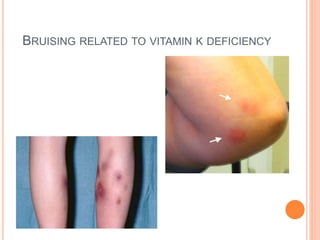
 Bruises because of the liver disease and vitamin K
deficiency
 Weight loss due to loss of appetite
 Enlarged esophageal veins; hypertension
 Pale skin is a sign of anemia
BRUISING RELATED TO VITAMIN K DEFICIENCY
CLIENT HISTORY
 The patient was in a good health until 3 years ago
when she was diagnosed with Hepatitis C.
 Mother(living) – HTN, diverticulitis, cholecystitis,
carpal tunnel syndrome.
 Father(deceased) – diabetes mellitus, peptic ulcer
disease.
 Maternal grandmother – cholecystitis, bilateral
breast cancer.
 Maternal grandfather – leukemia
 Parental grandfather – cirrhosis
 Parental grandmother – amyotrophic lateral
sclerosis
CLIENT HISTORY
 The previous nutrition therapy was 3 years ago:
small, frequent meals, plenty of liquids.
 Previously treated with alpha-interferon and
ribavirin.
 Seasonal allergies treated with antihistamines.
 Live with a roommate who is a law student.
SUBJECTIVE GLOBAL ASSESSMENT
PARAMETERS
 History
Weight changes
Appetite
Taste changes
Dietary intake
Persistent gastrointestinal problems
 Physical findings
Muscle wasting
Fat stores
Edema
SUBJECTIVE GLOBAL ASSESSMENT
PARAMETERS
 Existing conditions
Other problems that could influence nutrition status
 Nutrition rating based on results
Well nourished
Moderately malnourished
Severely malnourished
NUTRITION DIAGNOSIS
 Medical diagnosis: chronic Hepatitis C and
recreantly, Cirrhosis.
 Pre-diabetes, weight loss, bruising, Vitamin K
deficiency, and anorexia resulted from the disease
 Iron deficiency Anemia
 Inadequate intake related to decreased
appetite as evidenced by and intake of 57%
of the estimated energy requirements
INTERVENTION
 24 hour recall
Sips of water, juice, and diet coke
 Usual intake
Breakfast: Calcium fortified orange juice
Lunch: soup and crackers with diet coke
Dinner: carry-out Chinese or Italian food
INTERVENTION
 The goal is gradually increasing the caloric intake
on a two weeks period till the EER is met. And to
improve the anemia, vitamin K deficiency, and the
hyperglycemia.
Protein: 1.3 g/kg/day = 15%
Fat: 40%
Carbohydrates: 45%
Water: at least 10 glasses per day
Iron supplementation
200 mg milk thistle twice daily
chicory 3 grams daily
500 mg ginger twice daily
THE CORRECTIVE SAMPLE MENU
 Breakfast
Whole milk 1 cup
oatmeal 1 package
Banana 1
Whole wheat toast 1 slice
Peanut butter 1 tbsp
 Snack
Non-fat Greek yogurt
THE CORRECTIVE SAMPLE MENU
 Lunch
Vegetables salad 1,5 cup
Olive oil 1 tbsp
Tilapia fillet 1 fillet
Sauteed spinach 1 cup
Brown rice 0.5 cup
 Snack
Apple 1
Chopped cucumbers 1 cup
THE CORRECTIVE SAMPLE MENU
 Dinner
Homemade vegetable soup 1 bowl
Grilled chicken breast 1 slice
Cannola oil 1 tbsp
Shredded Parmesan cheese 2 tbsp
Boiled Asparagus 1 cup
 Snack
Orange juice 1 cup
COMPARISON
Carbohydrates
43%
Protein 17%
Fat 40%
Carbohydrates
57%
Protein 16%
Fat 27%
Corrective Menu 2100 cal Usual intake 900 cal
NUTRITION EDUCATION
 Healthy food choices
 Macro and micro nutrients
 Nutritional impact on anemia
 The good fat sources
 Carbohydrate control for hypoglycemia
 Vitamin and mineral supplements importance
 Oral liquid and rehydration
NUTRITION COUNSELING
 Always eat breakfast
 Eat small, frequent meals
 Healthy snacks choices
 Use spices to increase the appetite
 Exercise
 Keep a food diary
 Avoid eating alone
MONITORING AND EVALUATION
 Weight
 Blood glucose
 Biochemical data
 Anemia
 Hydration
 Skin bruising
 Food diary
POSSIBLE MONITORING
 Adjunctive nutrition support should be given to
malnourished patients if their intake is less than
DRI levels of 0.8g of protein and 30 cal/kg per day.
 Esophageal varices are not a contraindication for
tube feeding.
 Medium chain fatty acids and whole protein
formulas are encouraged
 May contribute to 50% of the daily nutrient intake.
 Intravenous vitamin K for 3 days to rule out the
deficiency.
Any question ??!
Thank you 

Hepatitis C Case Study

  • 1.
  • 2.
    PATIENT DATA  Age:26  Sex: Female  Ethnicity: European American  Height: 5’8’’  Weight: 125 lbs  Diagnosed with Hepatitis C, 3 years ago  Complaints: fatigue, anorexia, pale skin and weakness.
  • 3.
    ASSESSMENT Food and nutritionrelated history:  Had no appetite for the past few weeks  Only juice, water, diet coke in the past 2 days  About 1200 cal intake per day  Lost 10# in 6 months  Doesn’t like liver or lima beans  200 mg of milk thistle twice daily  3 grams chicory  500 mg ginger at least twice daily  Daily multivitamin/mineral supplements  Treated with Alpha-interferon and ribavirin
  • 4.
    ASSESSMENT Anthropometric measurements:  Height= 5’8’’  Weight = 125 lb  Usual body weight = 135 lb  BMI = 19 which is normal  IBW% = 87.6%  UBW% = 92.6%
  • 5.
    BIOCHEMICAL DATA Chemistry RefRange BUN 8-18 21 ↑ Creatinine serum 0.6-1.2 1.4 ↑ Glucose 70.110 115 ↑ Bilirubin <0.3 3.7 ↑ Total Protein 6-8 5.4 ↓ Alkaline Phosphatase 30-120 275 ↑ ALT 4-36 62 ↑ AST 0-35 230 ↑ HDL >55 50 ↓ Triglycerides 35-135 256 ↑ PT 12.4-14.4 18.5 ↑
  • 6.
    BIOCHEMICAL DATA Chemistry RefRange RBC 4.2-5.4 4.1 ↓ Hemoglobin 12-15 10.9 ↓ Hematocrit 37-47 35.9 ↓ Urinalysis Protein Neg 1+ ↑
  • 7.
    LAB DATA INTERPRETATION High BUN: indicates kidney disease or dehydration  High Creatinine: indicates kidney disease or dehydration as well  Slightly high glucose: pre-diabetes  High Bilirubin: confirms that the liver is the cause of jaundice  Low total protein: caused from the liver disease, malnutrition and protein-loss enteropathy  High Alkaline Phosphatase: suggests cholestasis  High ALT and AST: increase with liver damage
  • 8.
    LAB DATA INTERPRETATION High triglycerides: because of the decreased bile salts. And in Cirrhosis, the body prefers lipids for energy in the fasting state  High PT: indicates vitamin K deficiency and decreased synthesis of clotting factors  Low RBC, hemoglobin, and hematocrit: anemia  Protein in urine: a sign of kidney disease  Stool is light brown: Fat malabsorption
  • 9.
    NUTRITION FOCUS PHYSICALFINDINGS  Dry skin and mucus because of the dehydration  Bruises because of the liver disease and vitamin K deficiency  Weight loss due to loss of appetite  Enlarged esophageal veins; hypertension  Pale skin is a sign of anemia
  • 10.
    BRUISING RELATED TOVITAMIN K DEFICIENCY
  • 11.
    CLIENT HISTORY  Thepatient was in a good health until 3 years ago when she was diagnosed with Hepatitis C.  Mother(living) – HTN, diverticulitis, cholecystitis, carpal tunnel syndrome.  Father(deceased) – diabetes mellitus, peptic ulcer disease.  Maternal grandmother – cholecystitis, bilateral breast cancer.  Maternal grandfather – leukemia  Parental grandfather – cirrhosis  Parental grandmother – amyotrophic lateral sclerosis
  • 12.
    CLIENT HISTORY  Theprevious nutrition therapy was 3 years ago: small, frequent meals, plenty of liquids.  Previously treated with alpha-interferon and ribavirin.  Seasonal allergies treated with antihistamines.  Live with a roommate who is a law student.
  • 13.
    SUBJECTIVE GLOBAL ASSESSMENT PARAMETERS History Weight changes Appetite Taste changes Dietary intake Persistent gastrointestinal problems  Physical findings Muscle wasting Fat stores Edema
  • 14.
    SUBJECTIVE GLOBAL ASSESSMENT PARAMETERS Existing conditions Other problems that could influence nutrition status  Nutrition rating based on results Well nourished Moderately malnourished Severely malnourished
  • 15.
    NUTRITION DIAGNOSIS  Medicaldiagnosis: chronic Hepatitis C and recreantly, Cirrhosis.  Pre-diabetes, weight loss, bruising, Vitamin K deficiency, and anorexia resulted from the disease  Iron deficiency Anemia  Inadequate intake related to decreased appetite as evidenced by and intake of 57% of the estimated energy requirements
  • 16.
    INTERVENTION  24 hourrecall Sips of water, juice, and diet coke  Usual intake Breakfast: Calcium fortified orange juice Lunch: soup and crackers with diet coke Dinner: carry-out Chinese or Italian food
  • 17.
    INTERVENTION  The goalis gradually increasing the caloric intake on a two weeks period till the EER is met. And to improve the anemia, vitamin K deficiency, and the hyperglycemia. Protein: 1.3 g/kg/day = 15% Fat: 40% Carbohydrates: 45% Water: at least 10 glasses per day Iron supplementation 200 mg milk thistle twice daily chicory 3 grams daily 500 mg ginger twice daily
  • 18.
    THE CORRECTIVE SAMPLEMENU  Breakfast Whole milk 1 cup oatmeal 1 package Banana 1 Whole wheat toast 1 slice Peanut butter 1 tbsp  Snack Non-fat Greek yogurt
  • 19.
    THE CORRECTIVE SAMPLEMENU  Lunch Vegetables salad 1,5 cup Olive oil 1 tbsp Tilapia fillet 1 fillet Sauteed spinach 1 cup Brown rice 0.5 cup  Snack Apple 1 Chopped cucumbers 1 cup
  • 20.
    THE CORRECTIVE SAMPLEMENU  Dinner Homemade vegetable soup 1 bowl Grilled chicken breast 1 slice Cannola oil 1 tbsp Shredded Parmesan cheese 2 tbsp Boiled Asparagus 1 cup  Snack Orange juice 1 cup
  • 21.
    COMPARISON Carbohydrates 43% Protein 17% Fat 40% Carbohydrates 57% Protein16% Fat 27% Corrective Menu 2100 cal Usual intake 900 cal
  • 22.
    NUTRITION EDUCATION  Healthyfood choices  Macro and micro nutrients  Nutritional impact on anemia  The good fat sources  Carbohydrate control for hypoglycemia  Vitamin and mineral supplements importance  Oral liquid and rehydration
  • 23.
    NUTRITION COUNSELING  Alwayseat breakfast  Eat small, frequent meals  Healthy snacks choices  Use spices to increase the appetite  Exercise  Keep a food diary  Avoid eating alone
  • 24.
    MONITORING AND EVALUATION Weight  Blood glucose  Biochemical data  Anemia  Hydration  Skin bruising  Food diary
  • 25.
    POSSIBLE MONITORING  Adjunctivenutrition support should be given to malnourished patients if their intake is less than DRI levels of 0.8g of protein and 30 cal/kg per day.  Esophageal varices are not a contraindication for tube feeding.  Medium chain fatty acids and whole protein formulas are encouraged  May contribute to 50% of the daily nutrient intake.  Intravenous vitamin K for 3 days to rule out the deficiency.
  • 26.