Low levels common

Iron is an important part of the red blood cells that carry oxygen to all
the cells of the body. Our bodies contain 4-5 grammes of iron. It may
be difficult to get enough of this important nutrient unless meat
courses are part of the diet. 
Fruit, cereals and vegetables contain relaCvely liDle of useful iron. If
you’re suffering from low iron, no amount of vitamins or any other
supplement is going to change it. 
Low iron levels are very common, especially for ferCle females. There
are also many chronics that need conCnual supplementaCon for
different reasons.


HEMOGLOBIN AS IRON FOOD SUPPLEMENTATION.

Only two kinds of iron.

There are only two kinds of iron that we can use; heme iron from meat,
poultry or fish and non- heme iron from vegetables, dairy products or
chemically bonded iron in synthtetcic supplements. 
Heme iron is taken up along the whole gastro- intesCnal tract (not only
the first part) and, unlike non-heme iron, absorpCon is not affected by
other chelaCng components of the diet such as phytates, tannates and
phosphate.
Heme iron uptake is 20 – 40 % as opposed to non-heme iron only 2 -4 %
HEMOGLOBIN AS IRON FOOD SUPPLEMENTATION.

Non-heme iron in supplements

Different iron salts and other synthteCc/chemical iron compounds
have tradiConally been used as supplementaCon with mixed results. 
The uptake is only 2-4 % and there are o]en tolerance problems.
However, since iron is essenCal for life the alternaCves are blood
transfusions or intravenously given iron. Both, however have
negaCve sides except being very costly and uncomfortable for the
paCent.
The clinical use of blood transfusion is associated with risks that can
cause morbidity and mortality. Intravenous iron injecCons cause
periods of exacerbaCon of oxidaCve stress in the circulaCon.
Non-heme iron difficulCes

Many oral iron supplementaCon treatments fail because syntethic
iron compounds produce painful and uncomfortable gastro-intesCnal
side-effects sooner or later. 

Non-heme iron supplements at 100 mg Fe++ per dose regularly have
an incidence of side-effects leading to terminaCon of the therapy of
around 30 %.


HEMOGLOBIN AS IRON FOOD SUPPLEMENTATION.

Heme iron

Heme iron is found mainly in meat in the diet, which historically has
always been the main source for iron. It is very efficiently absorbed
as a whole unit as opposed to non-heme iron, which has to dissolve
before iron ions can be taken up in the intesCnal cells.
Pure hemolyzed hemoglobin powder of bovine or porcine origin
derived from the food industry as raw material for iron subsCtuCon
has been of interest in Sweden since the early sevenCes. Science and
Medicine agrees as this is by far the best-tolerated and efficient form
of oral iron.
Heme iron uptake is 20 – 40 %. non-heme iron is 2 - 4 %. 
The heme-iron side-effects raCo in studies remains at placebo level.
Industrial hemoglobin handling

In the 1970-ies large changes were taking place in environmental
legislature and waste handling. One of these was a prohibiCon to
dump bovine or porcine blood into the general waste system. This
waste had beDer uses, though. It contained many valuable
components that could be taken care of in beDer ways.

One of these was the content of red blood cells. So a technology was
developed to efficiently and hygienically collect and treat what
historically had been dumped or later industrially transformed to
ferClizer. 


HEMOGLOBIN AS IRON FOOD SUPPLEMENTATION.

Heme iron available for supplementaCon.

It became possible to collect, clean and treat hemoglobin and plasma
in a hygienically acceptable way industrially. One of the end products
was food grade hemoglobin powder.
This gave birth to heme iron supplementaCon by evolving into
pharma-grade hemoglobin powder raw material for tablets. 
Heme iron tablet supplements have been in use in Scandinavia for
more than thirty years. There have been no cases of serious side-
effects or poisonings reported a]er use by literally millions.
HEMOGLOBIN AS IRON FOOD SUPPLEMENTATION.

Heme iron advantages

Tolerance for heme iron is equal or close to placebo. There is no
change in tolerance or efficacy over Cme. The absorpCon of heme iron
is several Cmes higher and the side-effects rate significantly lower than
for non-heme oral iron. 
Heme iron is absorbed through a separate pathway and does not have
to be disconCnued when intravenous treatment is started. This can for
instance allow for longer intervals between resource-heavy,
inconvenient and painful injecCons.
HEMOGLOBIN AS IRON FOOD SUPPLEMENTATION.

Heme iron is always taken up

Heme iron is always absorbed. In any clinical situaCon. It has been
observed that paCents a]er a gastric bypass surgery sCll can absorb
heme iron, but not non-heme, since heme iron is taken up along the
whole of the intesCnal length.

Non-heme iron absorpCon virtually ceases for a period a]er heavy
blood loss, such as surgery or blood donaCon. Heme iron, however, is
taken up normally.

Heme iron uptake is also not affected by simultaneously ingested
foodstuff, drink or medicaCon.
HEMOGLOBIN AS IRON FOOD SUPPLEMENTATION.

RelaCvely low natural percentage of iron.

The natural percentage of iron in bovine hemoglobin is low. To make oral products reach
recommended daily allowance dosage the early heme iron products for years had a
larger part of iron added as Ferrous Fumarate or Ferrous Sulphate. 
The next step was to develop a procedure where the hemoglobin molecules themselves
could be made to carry more iron. 
This was eventually accomplished and today the OpCFer® line of products contain all
iron as heme iron. The iron added is totally integrated with the hemoglobin and will not
dissolve before uptake. DisintegraCon happens only within the gastric cells, just as with
natural hemoglobin, giving superior efficacy and tolerance compared to any other form
of oral iron.
Heme iron absorpCon is efficient

Heme absorpCon is not affected by other simultaneously ingested
food, drink or medicaCon.

Because the hemoglobin molecule is absorbed as a whole unit it will
not leave free toxic iron ions in the stomach. This is believed to be the
main cause of gastro-intesCnal side-effects from non-heme iron. Free
iron ions do not exist in nature and are highly reacCve in the stomach.
.


HEMOGLOBIN AS IRON FOOD SUPPLEMENTATION.

Micronutrients

Natural bovine hemoglobin is not only well-tolerated and an efficient source of iron. It
means also a wealth of micronutrients and for example amino acids and signal
substances that together make the formaCon of blood naturally more efficient.
Called micronutrients because they are needed only in small amounts, these substances
are the “magic wands” that enable the body to produce enzymes, hormones and other
substances essenCal for proper growth and development. 
As Cny as the amounts are, however, the consequences of their absence are severe.
Iodine, vitamin A and iron are most important in global public health terms; 
They include dietary trace minerals in amounts generally less than 100 milligrams/day -
as opposed to macrominerals which are required in larger quanCCes. 
The microminerals or trace elements include iron, cobalt, chromium, copper, iodine,
manganese, selenium and zinc
HEMOGLOBIN AS IRON FOOD SUPPLEMENTATION.

How can 18 mg of heme iron compete
with a 100 mg non-heme iron
supplement?

30 days of supplementaCon with 100 mg Fe++ non-heme iron at a bio-availablity of 2
% theoreCcally gives 60 mg absorbed iron. At 4 % the amount is 120 mg.
SupplementaCon with 18 mg of heme iron for thirty days with a bio-availability of 20
% gives 108 mg of absorbed iron. At 40 % it is more than 200 mg. Heme iron is very
well tolerated and is known to have a side-effects raCo as placebo. This also means a
higher therapy success rate.
This is why heme iron tablets with a dose of 18 mg Fe++ can compete with non-heme
preparaCons of 100 mg Fe++ or more.
Heme iron will also not block the uptake of zinc as non-heme iron in doses 
over 60 mg will.
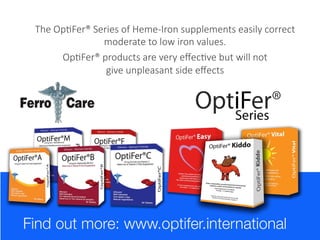
The OpCFer® Series of Heme-Iron supplements easily correct
moderate to low iron values.
OpCFer® products are very effecCve but will not
give unpleasant side effects

Hemoglobin as supplementation. Why and how.

  • 1.
    Low levels common Ironis an important part of the red blood cells that carry oxygen to all the cells of the body. Our bodies contain 4-5 grammes of iron. It may be difficult to get enough of this important nutrient unless meat courses are part of the diet. Fruit, cereals and vegetables contain relaCvely liDle of useful iron. If you’re suffering from low iron, no amount of vitamins or any other supplement is going to change it. Low iron levels are very common, especially for ferCle females. There are also many chronics that need conCnual supplementaCon for different reasons. HEMOGLOBIN AS IRON FOOD SUPPLEMENTATION.
  • 2.
    HEMOGLOBIN AS IRONFOOD SUPPLEMENTATION. Only two kinds of iron. There are only two kinds of iron that we can use; heme iron from meat, poultry or fish and non- heme iron from vegetables, dairy products or chemically bonded iron in synthtetcic supplements. Heme iron is taken up along the whole gastro- intesCnal tract (not only the first part) and, unlike non-heme iron, absorpCon is not affected by other chelaCng components of the diet such as phytates, tannates and phosphate. Heme iron uptake is 20 – 40 % as opposed to non-heme iron only 2 -4 %
  • 3.
    HEMOGLOBIN AS IRONFOOD SUPPLEMENTATION. Non-heme iron in supplements Different iron salts and other synthteCc/chemical iron compounds have tradiConally been used as supplementaCon with mixed results. The uptake is only 2-4 % and there are o]en tolerance problems. However, since iron is essenCal for life the alternaCves are blood transfusions or intravenously given iron. Both, however have negaCve sides except being very costly and uncomfortable for the paCent. The clinical use of blood transfusion is associated with risks that can cause morbidity and mortality. Intravenous iron injecCons cause periods of exacerbaCon of oxidaCve stress in the circulaCon.
  • 4.
    Non-heme iron difficulCes Manyoral iron supplementaCon treatments fail because syntethic iron compounds produce painful and uncomfortable gastro-intesCnal side-effects sooner or later. Non-heme iron supplements at 100 mg Fe++ per dose regularly have an incidence of side-effects leading to terminaCon of the therapy of around 30 %. HEMOGLOBIN AS IRON FOOD SUPPLEMENTATION.
  • 5.
    HEMOGLOBIN AS IRONFOOD SUPPLEMENTATION. Heme iron Heme iron is found mainly in meat in the diet, which historically has always been the main source for iron. It is very efficiently absorbed as a whole unit as opposed to non-heme iron, which has to dissolve before iron ions can be taken up in the intesCnal cells. Pure hemolyzed hemoglobin powder of bovine or porcine origin derived from the food industry as raw material for iron subsCtuCon has been of interest in Sweden since the early sevenCes. Science and Medicine agrees as this is by far the best-tolerated and efficient form of oral iron. Heme iron uptake is 20 – 40 %. non-heme iron is 2 - 4 %. The heme-iron side-effects raCo in studies remains at placebo level.
  • 6.
    Industrial hemoglobin handling Inthe 1970-ies large changes were taking place in environmental legislature and waste handling. One of these was a prohibiCon to dump bovine or porcine blood into the general waste system. This waste had beDer uses, though. It contained many valuable components that could be taken care of in beDer ways. One of these was the content of red blood cells. So a technology was developed to efficiently and hygienically collect and treat what historically had been dumped or later industrially transformed to ferClizer. HEMOGLOBIN AS IRON FOOD SUPPLEMENTATION.
  • 7.
    HEMOGLOBIN AS IRONFOOD SUPPLEMENTATION. Heme iron available for supplementaCon. It became possible to collect, clean and treat hemoglobin and plasma in a hygienically acceptable way industrially. One of the end products was food grade hemoglobin powder. This gave birth to heme iron supplementaCon by evolving into pharma-grade hemoglobin powder raw material for tablets. Heme iron tablet supplements have been in use in Scandinavia for more than thirty years. There have been no cases of serious side- effects or poisonings reported a]er use by literally millions.
  • 8.
    HEMOGLOBIN AS IRONFOOD SUPPLEMENTATION. Heme iron advantages Tolerance for heme iron is equal or close to placebo. There is no change in tolerance or efficacy over Cme. The absorpCon of heme iron is several Cmes higher and the side-effects rate significantly lower than for non-heme oral iron. Heme iron is absorbed through a separate pathway and does not have to be disconCnued when intravenous treatment is started. This can for instance allow for longer intervals between resource-heavy, inconvenient and painful injecCons.
  • 9.
    HEMOGLOBIN AS IRONFOOD SUPPLEMENTATION. Heme iron is always taken up Heme iron is always absorbed. In any clinical situaCon. It has been observed that paCents a]er a gastric bypass surgery sCll can absorb heme iron, but not non-heme, since heme iron is taken up along the whole of the intesCnal length. Non-heme iron absorpCon virtually ceases for a period a]er heavy blood loss, such as surgery or blood donaCon. Heme iron, however, is taken up normally. Heme iron uptake is also not affected by simultaneously ingested foodstuff, drink or medicaCon.
  • 10.
    HEMOGLOBIN AS IRONFOOD SUPPLEMENTATION. RelaCvely low natural percentage of iron. The natural percentage of iron in bovine hemoglobin is low. To make oral products reach recommended daily allowance dosage the early heme iron products for years had a larger part of iron added as Ferrous Fumarate or Ferrous Sulphate. The next step was to develop a procedure where the hemoglobin molecules themselves could be made to carry more iron. This was eventually accomplished and today the OpCFer® line of products contain all iron as heme iron. The iron added is totally integrated with the hemoglobin and will not dissolve before uptake. DisintegraCon happens only within the gastric cells, just as with natural hemoglobin, giving superior efficacy and tolerance compared to any other form of oral iron.
  • 11.
    Heme iron absorpConis efficient Heme absorpCon is not affected by other simultaneously ingested food, drink or medicaCon. Because the hemoglobin molecule is absorbed as a whole unit it will not leave free toxic iron ions in the stomach. This is believed to be the main cause of gastro-intesCnal side-effects from non-heme iron. Free iron ions do not exist in nature and are highly reacCve in the stomach. . HEMOGLOBIN AS IRON FOOD SUPPLEMENTATION.
  • 12.
    HEMOGLOBIN AS IRONFOOD SUPPLEMENTATION. Micronutrients Natural bovine hemoglobin is not only well-tolerated and an efficient source of iron. It means also a wealth of micronutrients and for example amino acids and signal substances that together make the formaCon of blood naturally more efficient. Called micronutrients because they are needed only in small amounts, these substances are the “magic wands” that enable the body to produce enzymes, hormones and other substances essenCal for proper growth and development. As Cny as the amounts are, however, the consequences of their absence are severe. Iodine, vitamin A and iron are most important in global public health terms; They include dietary trace minerals in amounts generally less than 100 milligrams/day - as opposed to macrominerals which are required in larger quanCCes. The microminerals or trace elements include iron, cobalt, chromium, copper, iodine, manganese, selenium and zinc
  • 13.
    HEMOGLOBIN AS IRONFOOD SUPPLEMENTATION. How can 18 mg of heme iron compete with a 100 mg non-heme iron supplement? 30 days of supplementaCon with 100 mg Fe++ non-heme iron at a bio-availablity of 2 % theoreCcally gives 60 mg absorbed iron. At 4 % the amount is 120 mg. SupplementaCon with 18 mg of heme iron for thirty days with a bio-availability of 20 % gives 108 mg of absorbed iron. At 40 % it is more than 200 mg. Heme iron is very well tolerated and is known to have a side-effects raCo as placebo. This also means a higher therapy success rate. This is why heme iron tablets with a dose of 18 mg Fe++ can compete with non-heme preparaCons of 100 mg Fe++ or more. Heme iron will also not block the uptake of zinc as non-heme iron in doses over 60 mg will.
  • 14.
    The OpCFer® Seriesof Heme-Iron supplements easily correct moderate to low iron values. OpCFer® products are very effecCve but will not give unpleasant side effects