 What is hemocytometer?
 Uses of hemocytometer?
 Principle of cell counting using Neubauer's
slides
 Common sources of error during the process of
Hemocytometery
 Hemo: Blood
 Cyto: Cell
 Meter: Measurement/Counting
Thus , it is a device originally designed and
usually used for counting blood cells.
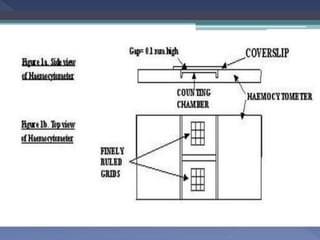
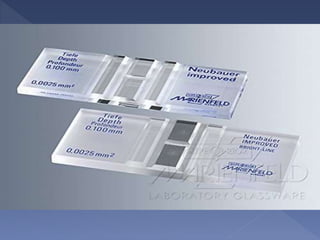
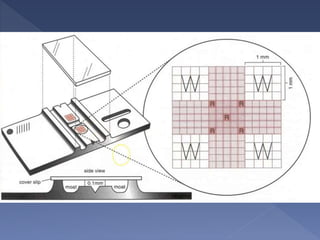
 Thick glass slides with two ruling areas on
center
 Ruling areas are separated by H-shaped
trough.
 Beyond trough, there are two raised arms to
support cover glass
 lining is coated by shiny metal or rhodium.
 Neubauer’s slide with a cover slip over it is
called Neubauer’s chamber.
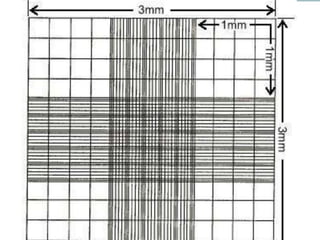
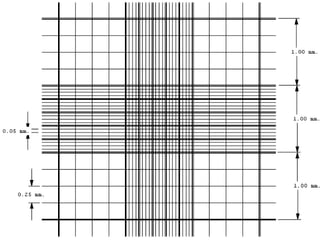
 Each scale is 3mm wide and 3mm long.
 Depth of the chamber is 0.1mm.
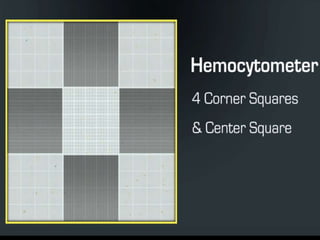
 The whole scale is divided into 9 big
squares.
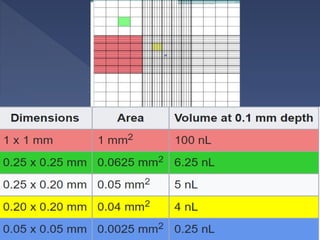
 Each square is 1mm long and 1mm wide.
 The four corner squares are further divided
into 16 smaller squares and are used for
WBC counting.
 Total 64 small squares are there which have
a dimension of
0.25mm x 0.25mm = 0.0625mm
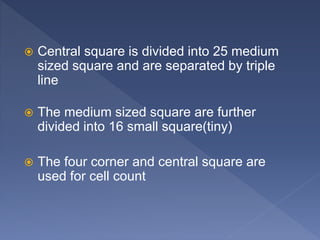
 Central square is divided into 25 medium
sized square and are separated by triple
line
 The medium sized square are further
divided into 16 small square(tiny)
 The four corner and central square are
used for cell count
 Special cover glass with smooth surface
and even thickness
› Thickness= 0.3, 0.4, 0.5 mm
› Length= 16x22mm, 22x23mm
 Draw the cell suspension into pipette up to
100 μL
 Draw 100 μL of Trypan blue (to differentiate live and
dead cells)
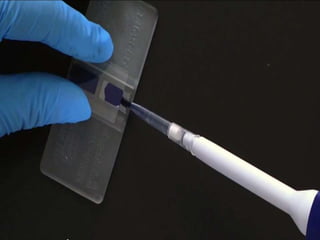
 Load both chambers of the Neubauer's slide
by pipetting the suspension under the cover
slip.
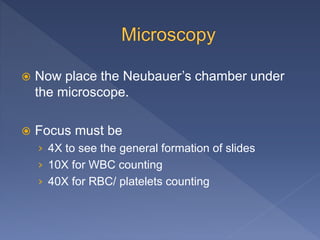
 Now place the Neubauer’s chamber under
the microscope.
 Focus must be
› 4X to see the general formation of slides
› 10X for WBC counting
› 40X for RBC/ platelets counting
 Count the cells in
› 4 corner squares
› The center square
 Do not count cells
touching
› Bottom line
› Right line
count
Don’t
Count
 Count cells in the five selected chambers of
cell count.
1. Average # of cell per square =
Total number of cells / Total squares
2. Dilution factor =
final volume/ volume of cell
3. Concentration of cells =
average # of cell / dilution factor
 Blood count:
› for patients with abnormal blood cells, where
automated counters don't perform well.
 Sperm count:
 Cell culture:
› when subculturing or recording cell growth over
time.
 Errors in this process are of two main types
› False high count
› False low count
› Uneven distribution of cell
 Improper mixing
 Error in pipetting
› Error in calculation
› Blood taken from area of hemo
concentration
› Yeast, dirt and leukocyte are
counted as RBC
› Blood diluted with tissue fluid
› Undue delay in counting of cell
› Clumping of cell(AIHA)
› Uneven distribution of cell
› Faulty technique of counting
› Improperly standardized counting chamber
Hemocytometer

Hemocytometer

  • 2.
     What ishemocytometer?  Uses of hemocytometer?  Principle of cell counting using Neubauer's slides  Common sources of error during the process of Hemocytometery
  • 3.
     Hemo: Blood Cyto: Cell  Meter: Measurement/Counting Thus , it is a device originally designed and usually used for counting blood cells.
  • 5.
     Thick glassslides with two ruling areas on center  Ruling areas are separated by H-shaped trough.  Beyond trough, there are two raised arms to support cover glass  lining is coated by shiny metal or rhodium.  Neubauer’s slide with a cover slip over it is called Neubauer’s chamber.
  • 8.
     Each scaleis 3mm wide and 3mm long.  Depth of the chamber is 0.1mm.  The whole scale is divided into 9 big squares.  Each square is 1mm long and 1mm wide.
  • 11.
     The fourcorner squares are further divided into 16 smaller squares and are used for WBC counting.  Total 64 small squares are there which have a dimension of 0.25mm x 0.25mm = 0.0625mm
  • 12.
     Central squareis divided into 25 medium sized square and are separated by triple line  The medium sized square are further divided into 16 small square(tiny)  The four corner and central square are used for cell count
  • 15.
     Special coverglass with smooth surface and even thickness › Thickness= 0.3, 0.4, 0.5 mm › Length= 16x22mm, 22x23mm
  • 17.
     Draw thecell suspension into pipette up to 100 μL  Draw 100 μL of Trypan blue (to differentiate live and dead cells)  Load both chambers of the Neubauer's slide by pipetting the suspension under the cover slip.
  • 19.
     Now placethe Neubauer’s chamber under the microscope.  Focus must be › 4X to see the general formation of slides › 10X for WBC counting › 40X for RBC/ platelets counting
  • 24.
     Count thecells in › 4 corner squares › The center square
  • 26.
     Do notcount cells touching › Bottom line › Right line
  • 27.
  • 29.
     Count cellsin the five selected chambers of cell count.
  • 31.
    1. Average #of cell per square = Total number of cells / Total squares 2. Dilution factor = final volume/ volume of cell 3. Concentration of cells = average # of cell / dilution factor
  • 33.
     Blood count: ›for patients with abnormal blood cells, where automated counters don't perform well.  Sperm count:
  • 34.
     Cell culture: ›when subculturing or recording cell growth over time.
  • 35.
     Errors inthis process are of two main types › False high count › False low count
  • 36.
    › Uneven distributionof cell  Improper mixing  Error in pipetting › Error in calculation › Blood taken from area of hemo concentration › Yeast, dirt and leukocyte are counted as RBC
  • 37.
    › Blood dilutedwith tissue fluid › Undue delay in counting of cell › Clumping of cell(AIHA) › Uneven distribution of cell › Faulty technique of counting › Improperly standardized counting chamber