Helix Nebula Science Cloud
usage by ALICE
Helix Nebula Science Cloud meeting
2018-06-14
Maarten Litmaath
CERN-IT
v1.1
1
Modus operandi
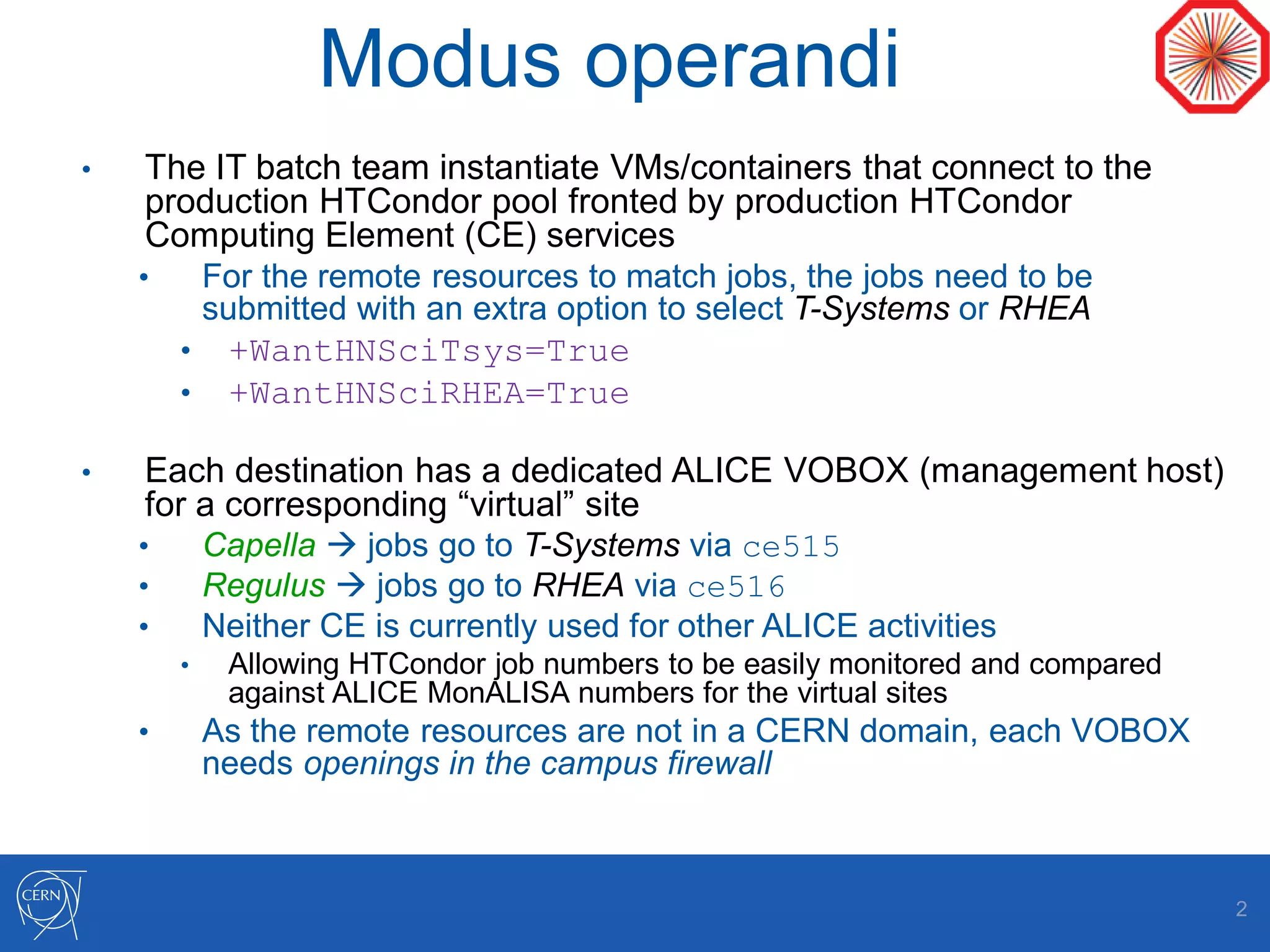
• The IT batch team instantiate VMs/containers that connect to the
production HTCondor pool fronted by production HTCondor
Computing Element (CE) services
• For the remote resources to match jobs, the jobs need to be
submitted with an extra option to select T-Systems or RHEA
• +WantHNSciTsys=True
• +WantHNSciRHEA=True
• Each destination has a dedicated ALICE VOBOX (management host)
for a corresponding “virtual” site
• Capella  jobs go to T-Systems via ce515
• Regulus  jobs go to RHEA via ce516
• Neither CE is currently used for other ALICE activities
• Allowing HTCondor job numbers to be easily monitored and compared
against ALICE MonALISA numbers for the virtual sites
• As the remote resources are not in a CERN domain, each VOBOX
needs openings in the campus firewall
2
Timeline
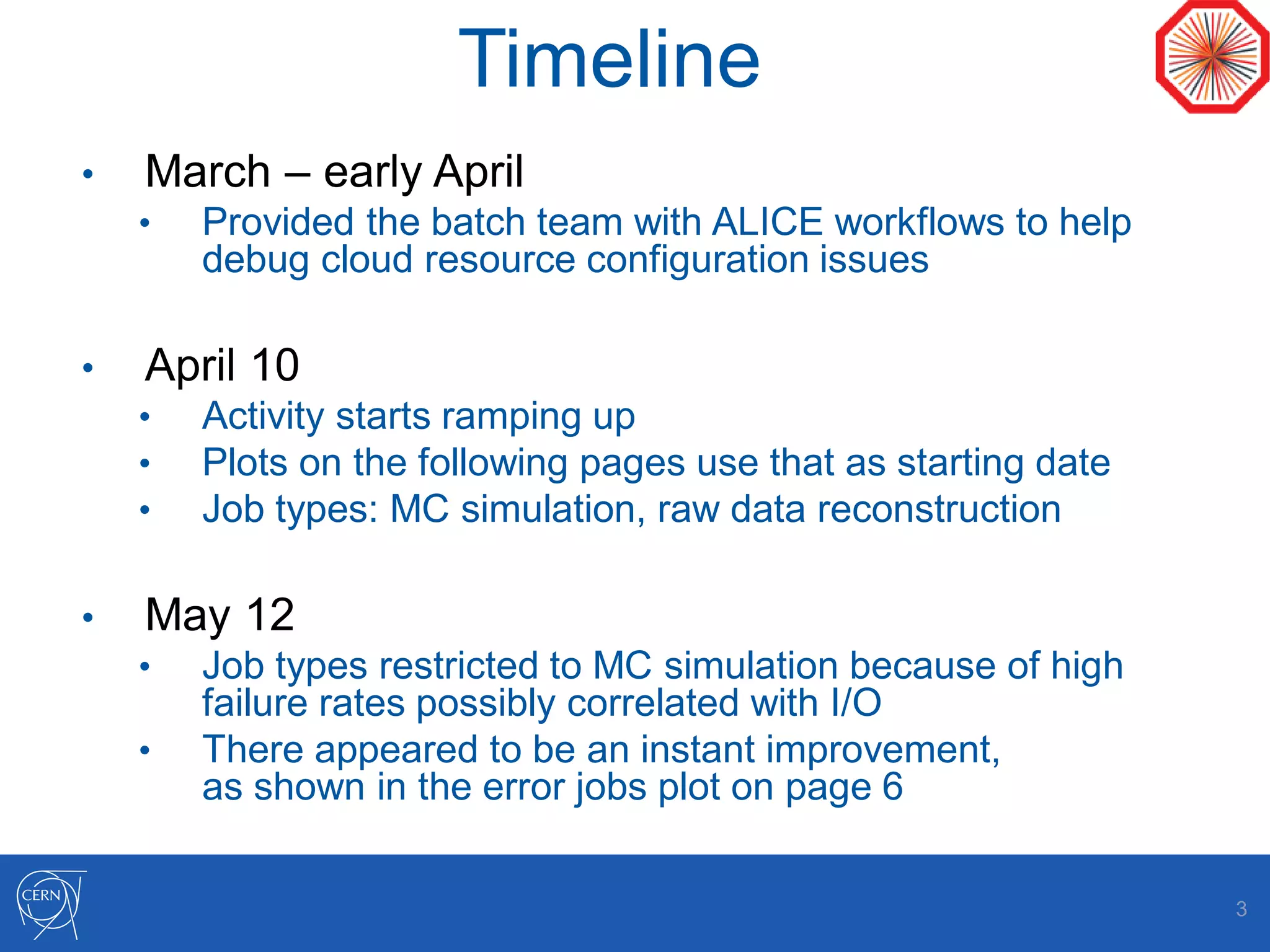
• March – early April
• Provided the batch team with ALICE workflows to help
debug cloud resource configuration issues
• April 10
• Activity starts ramping up
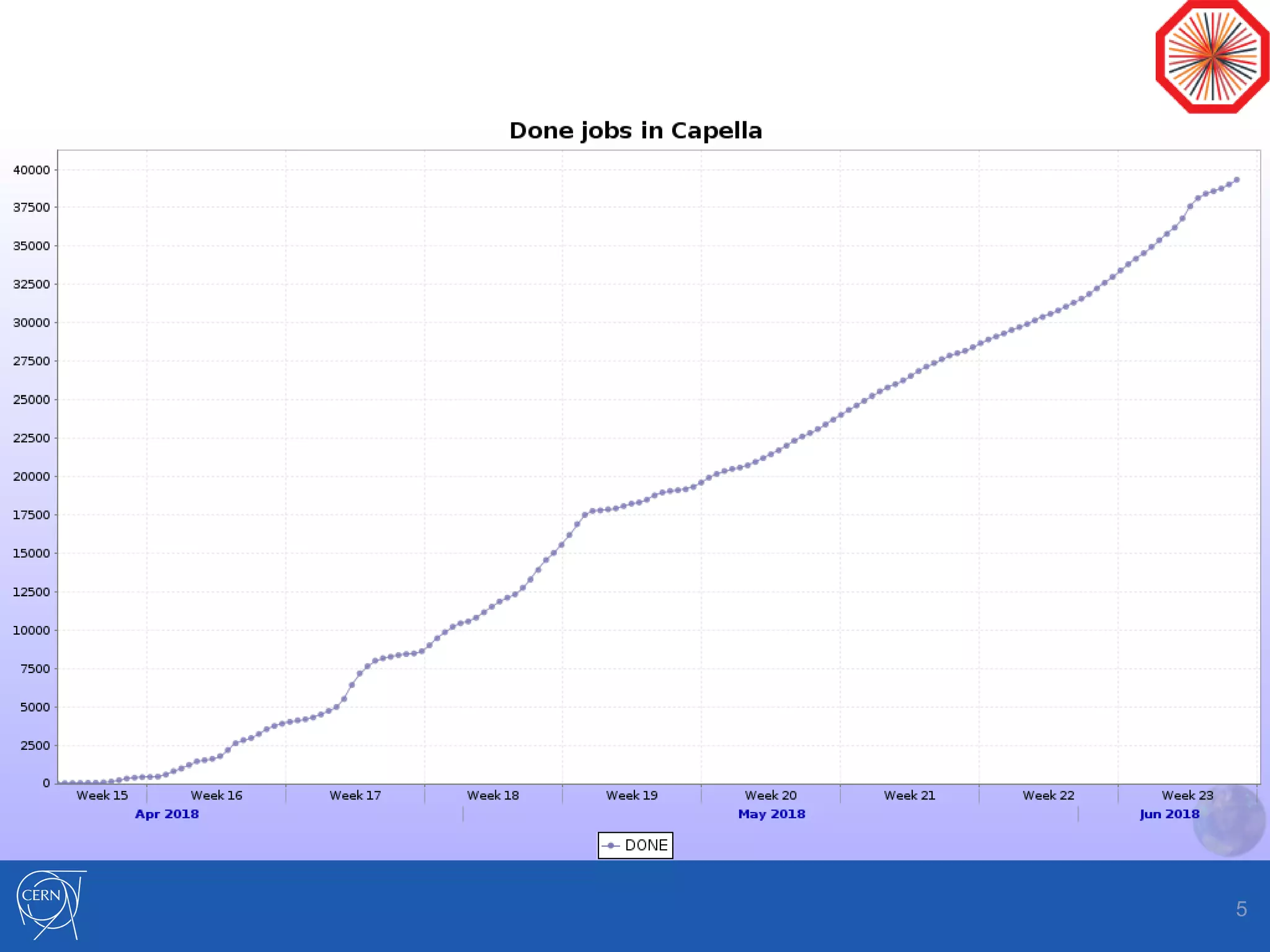
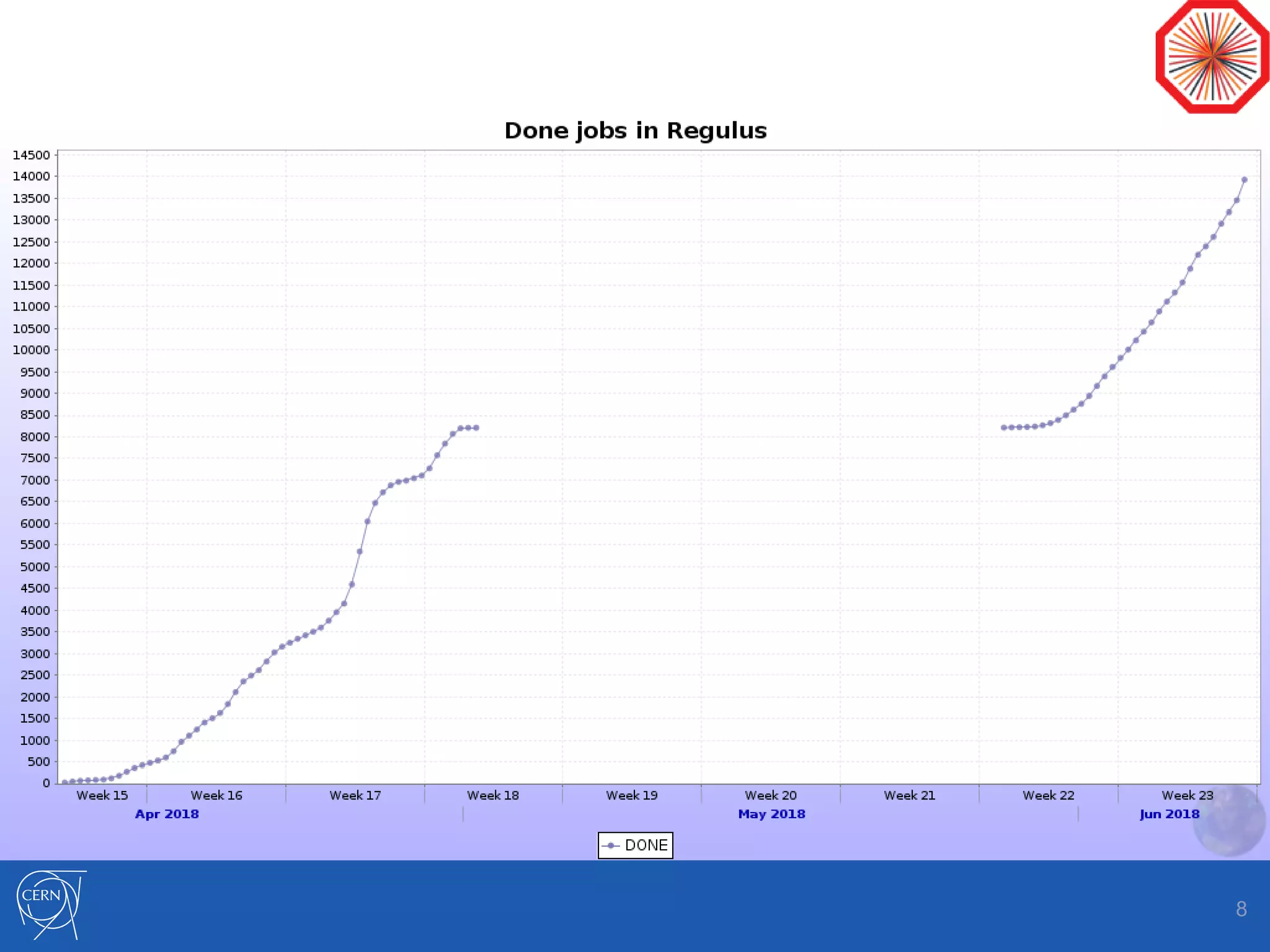
• Plots on the following pages use that as starting date
• Job types: MC simulation, raw data reconstruction
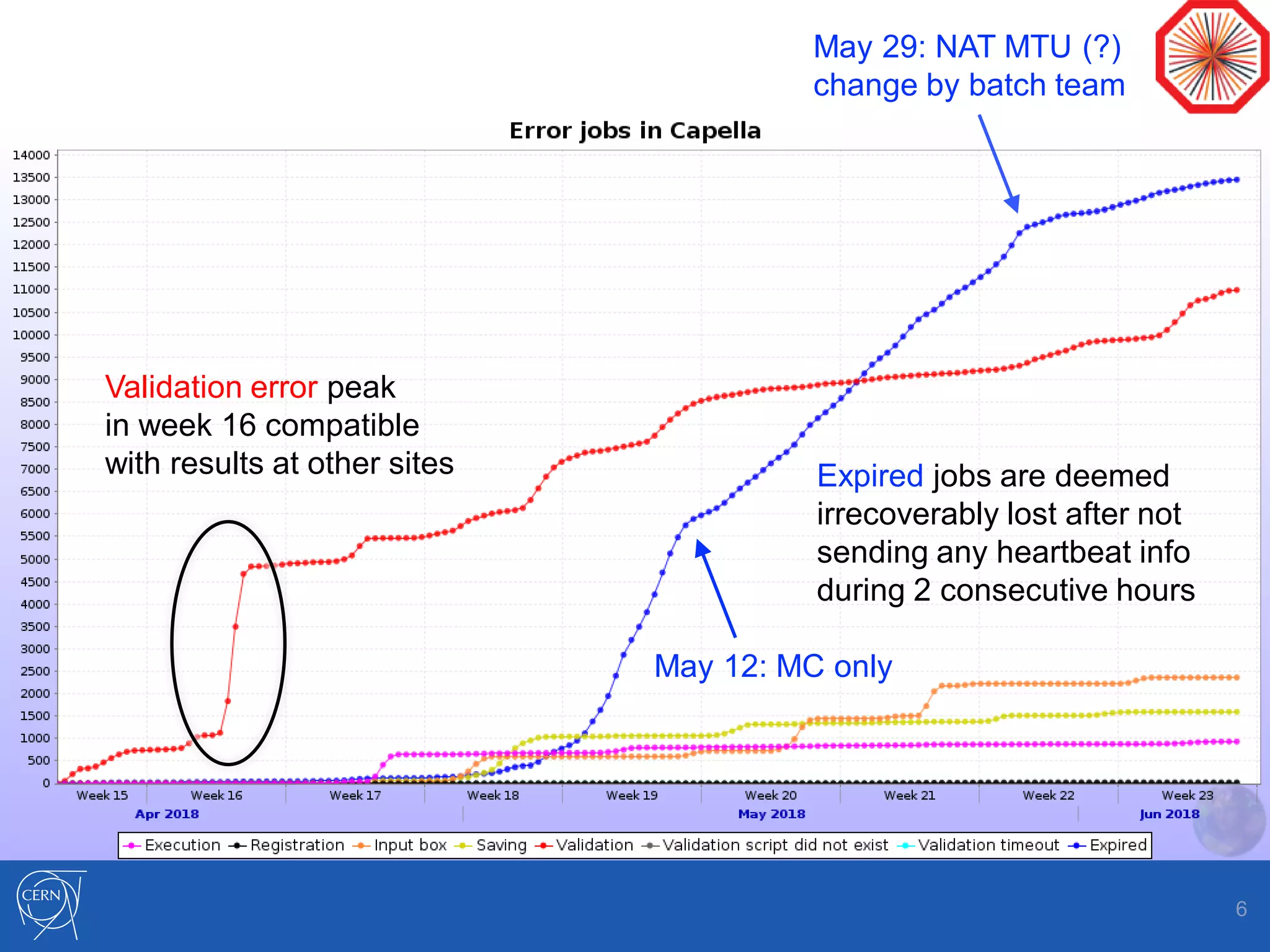
• May 12
• Job types restricted to MC simulation because of high
failure rates possibly correlated with I/O
• There appeared to be an instant improvement,
as shown in the error jobs plot on page 6
3
4
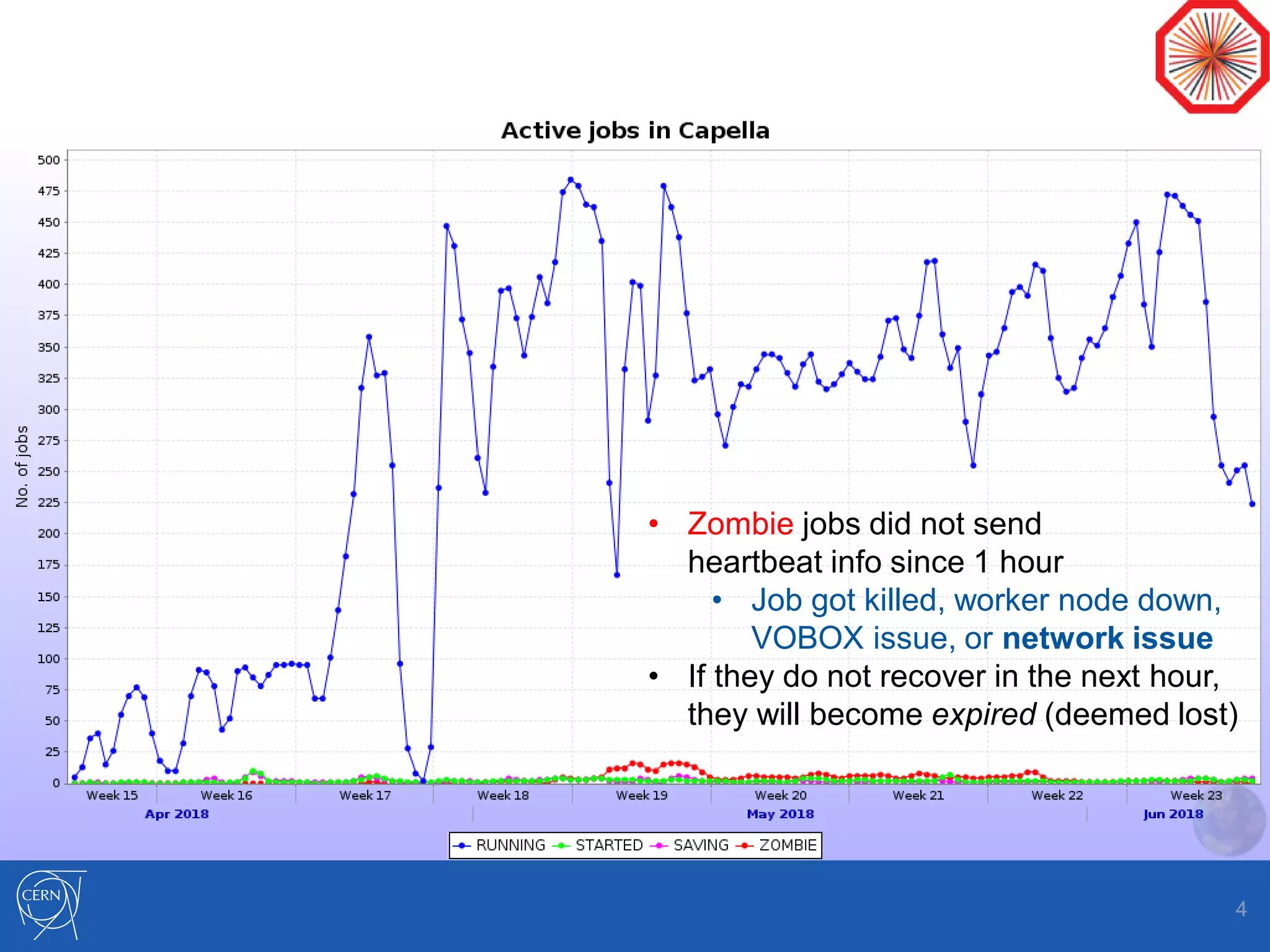
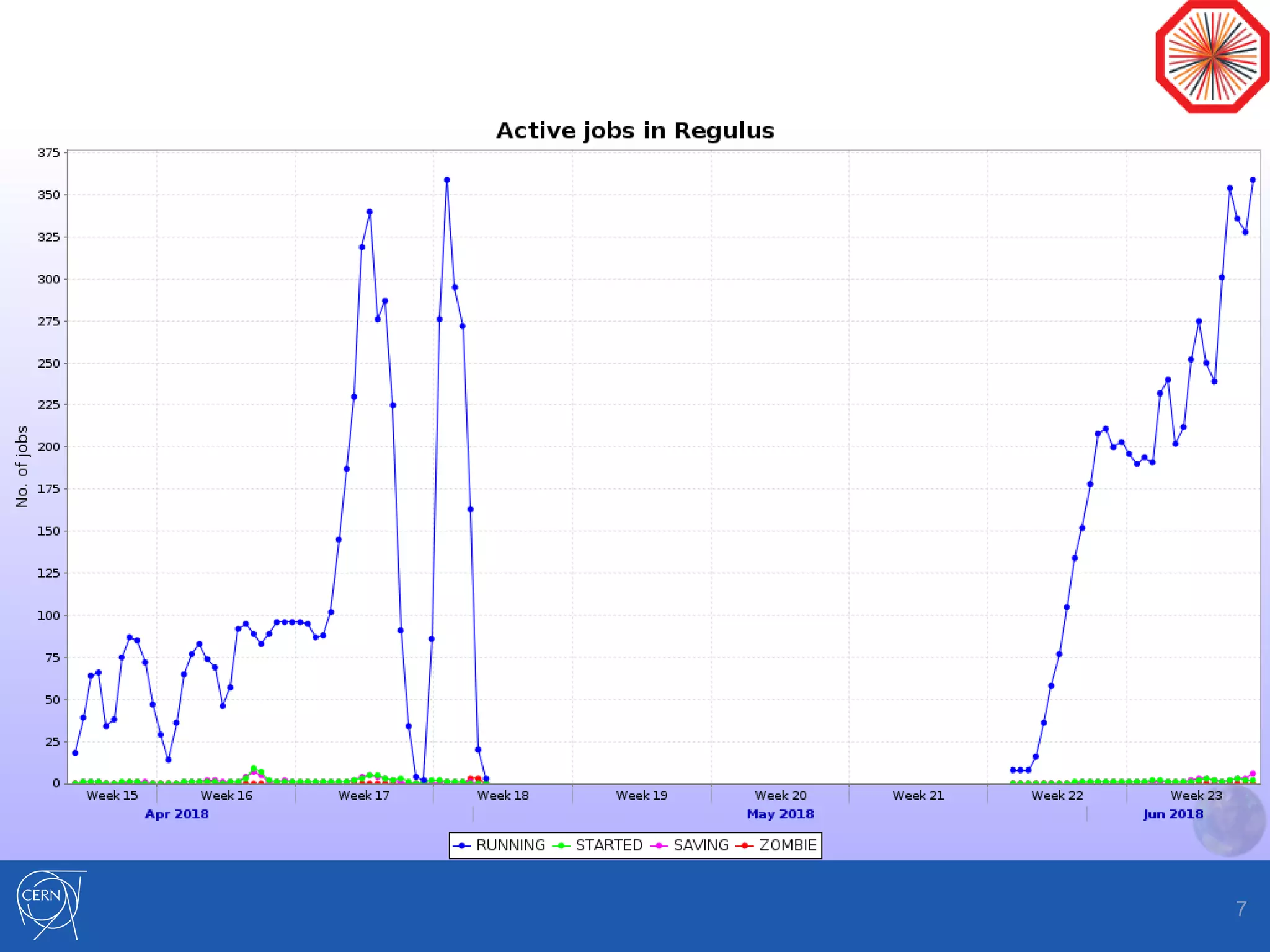
• Zombie jobs did not send
heartbeat info since 1 hour
• Job got killed, worker node down,
VOBOX issue, or network issue
• If they do not recover in the next hour,
they will become expired (deemed lost)
5
6
Expired jobs are deemed
irrecoverably lost after not
sending any heartbeat info
during 2 consecutive hours
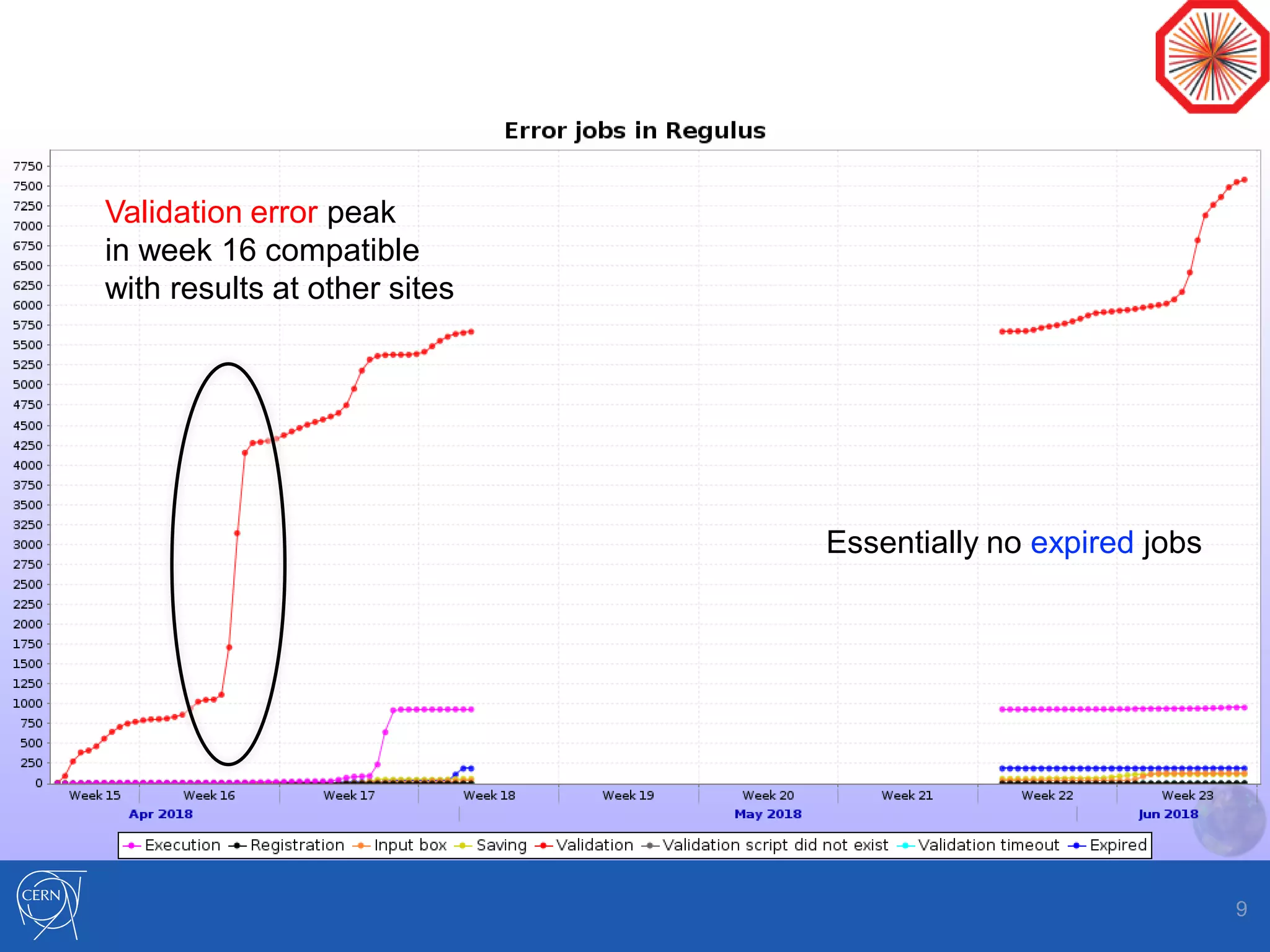
Validation error peak
in week 16 compatible
with results at other sites
May 12: MC only
May 29: NAT MTU (?)
change by batch team
7
8
9
Validation error peak
in week 16 compatible
with results at other sites
Essentially no expired jobs
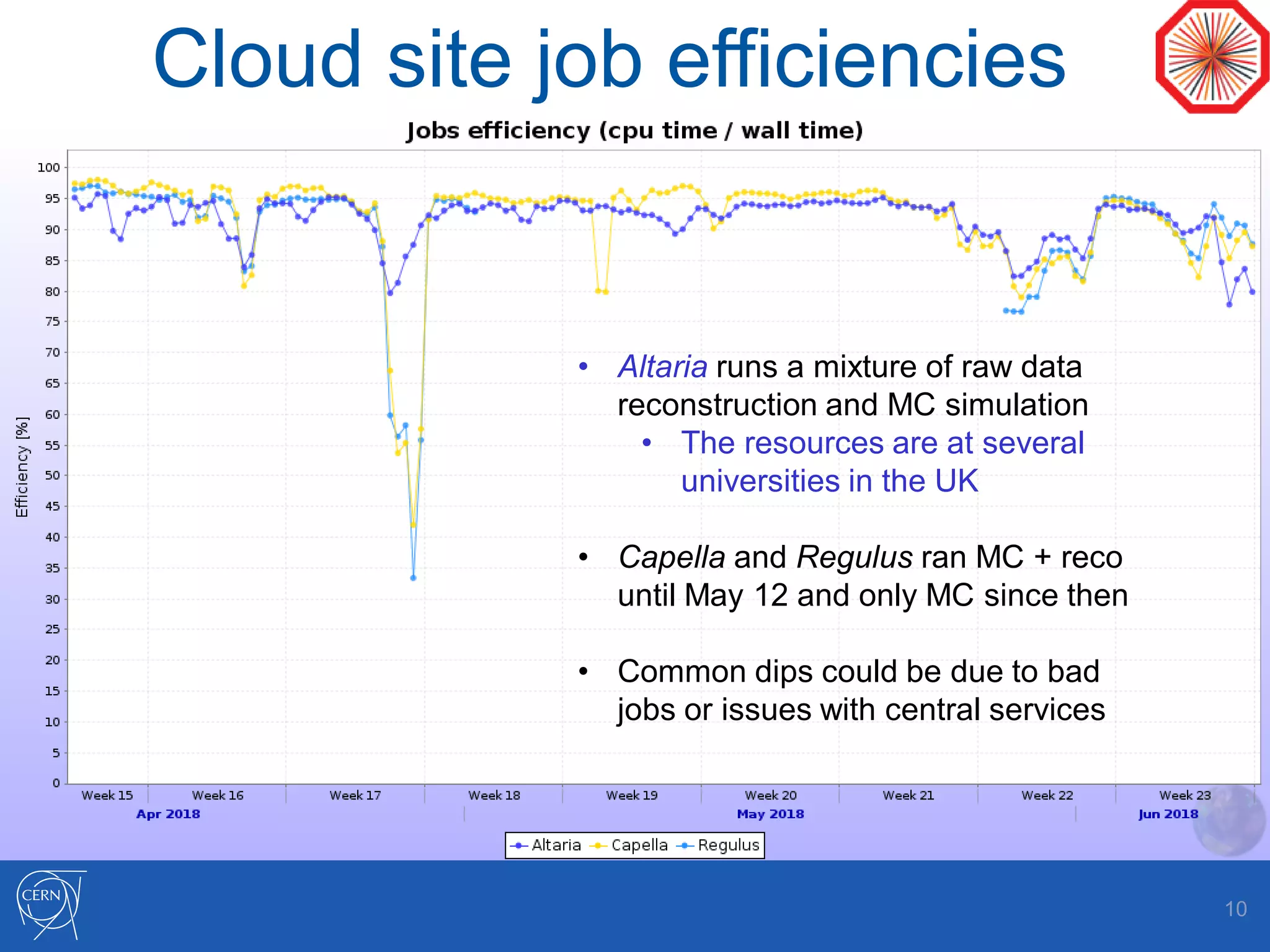
Cloud site job efficiencies
10
• Altaria runs a mixture of raw data
reconstruction and MC simulation
• The resources are at several
universities in the UK
• Capella and Regulus ran MC + reco
until May 12 and only MC since then
• Common dips could be due to bad
jobs or issues with central services
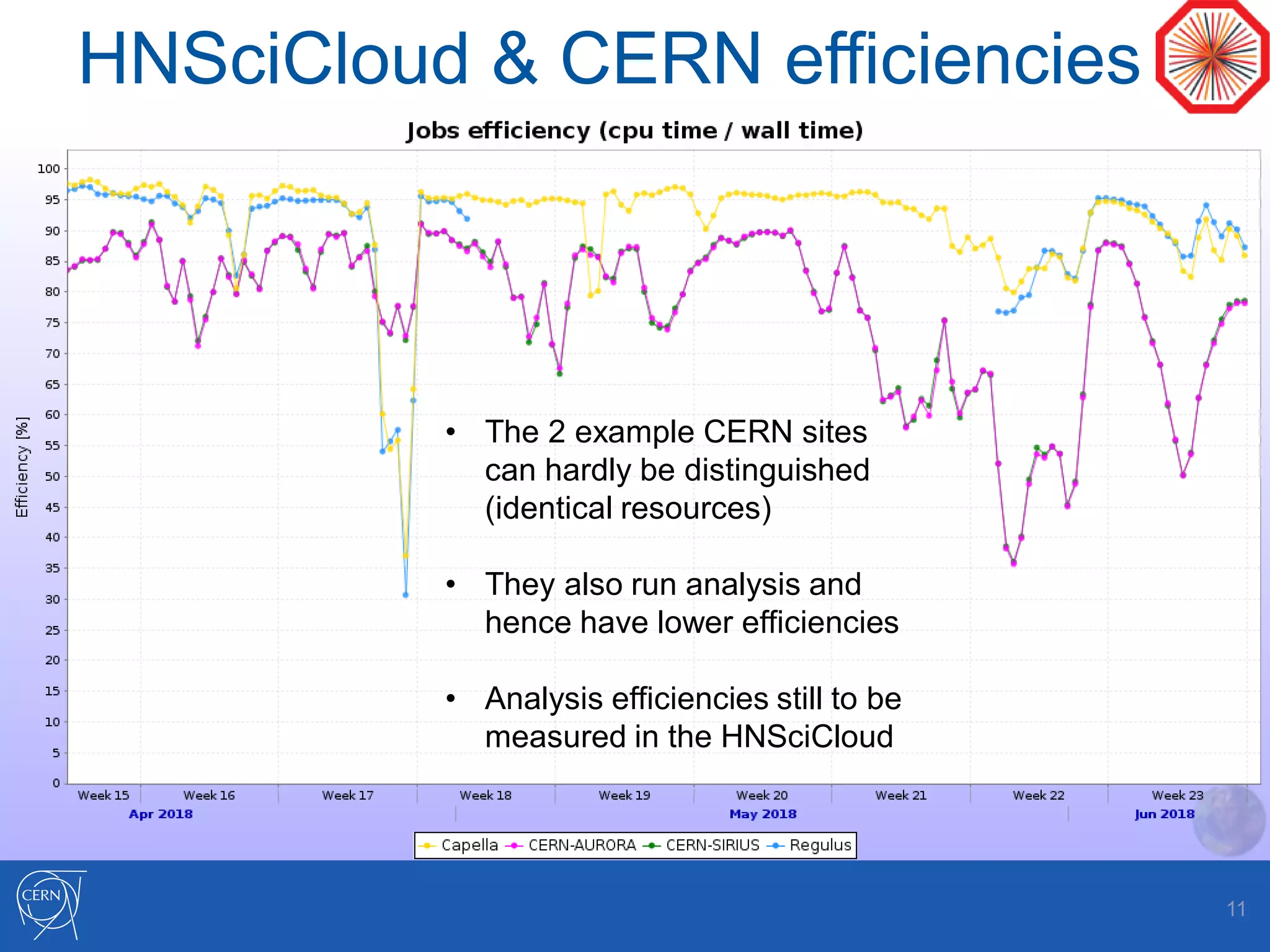
HNSciCloud & CERN efficiencies
11
• The 2 example CERN sites
can hardly be distinguished
(identical resources)
• They also run analysis and
hence have lower efficiencies
• Analysis efficiencies still to be
measured in the HNSciCloud
Conclusions & outlook
• ALICE were able to start making use of HNSciCloud resources
quite quickly
• Cloud details were handled by the batch team
• MC simulation workloads are a good match
• Still to be fixed: expired jobs in T-Systems
• Success rates and efficiencies of other job types are still to be
measured
• I/O-intensive jobs have some concerns
• Network performance between cloud resources and remote Storage
Elements (SEs)
• To measure network bandwidth, latency and reliability,
the VOBOXes should be in the cloud, not at CERN
• Important for matching jobs to virtual sites and to SEs they should use
• Use of S3 cloud storage would require major development
• XRootD-compatible cloud storage could work
12

Helix Nebula Science Cloud usage by ALICE

  • 1.
    Helix Nebula ScienceCloud usage by ALICE Helix Nebula Science Cloud meeting 2018-06-14 Maarten Litmaath CERN-IT v1.1 1
  • 2.
    Modus operandi • TheIT batch team instantiate VMs/containers that connect to the production HTCondor pool fronted by production HTCondor Computing Element (CE) services • For the remote resources to match jobs, the jobs need to be submitted with an extra option to select T-Systems or RHEA • +WantHNSciTsys=True • +WantHNSciRHEA=True • Each destination has a dedicated ALICE VOBOX (management host) for a corresponding “virtual” site • Capella  jobs go to T-Systems via ce515 • Regulus  jobs go to RHEA via ce516 • Neither CE is currently used for other ALICE activities • Allowing HTCondor job numbers to be easily monitored and compared against ALICE MonALISA numbers for the virtual sites • As the remote resources are not in a CERN domain, each VOBOX needs openings in the campus firewall 2
  • 3.
    Timeline • March –early April • Provided the batch team with ALICE workflows to help debug cloud resource configuration issues • April 10 • Activity starts ramping up • Plots on the following pages use that as starting date • Job types: MC simulation, raw data reconstruction • May 12 • Job types restricted to MC simulation because of high failure rates possibly correlated with I/O • There appeared to be an instant improvement, as shown in the error jobs plot on page 6 3
  • 4.
    4 • Zombie jobsdid not send heartbeat info since 1 hour • Job got killed, worker node down, VOBOX issue, or network issue • If they do not recover in the next hour, they will become expired (deemed lost)
  • 5.
  • 6.
    6 Expired jobs aredeemed irrecoverably lost after not sending any heartbeat info during 2 consecutive hours Validation error peak in week 16 compatible with results at other sites May 12: MC only May 29: NAT MTU (?) change by batch team
  • 7.
  • 8.
  • 9.
    9 Validation error peak inweek 16 compatible with results at other sites Essentially no expired jobs
  • 10.
    Cloud site jobefficiencies 10 • Altaria runs a mixture of raw data reconstruction and MC simulation • The resources are at several universities in the UK • Capella and Regulus ran MC + reco until May 12 and only MC since then • Common dips could be due to bad jobs or issues with central services
  • 11.
    HNSciCloud & CERNefficiencies 11 • The 2 example CERN sites can hardly be distinguished (identical resources) • They also run analysis and hence have lower efficiencies • Analysis efficiencies still to be measured in the HNSciCloud
  • 12.
    Conclusions & outlook •ALICE were able to start making use of HNSciCloud resources quite quickly • Cloud details were handled by the batch team • MC simulation workloads are a good match • Still to be fixed: expired jobs in T-Systems • Success rates and efficiencies of other job types are still to be measured • I/O-intensive jobs have some concerns • Network performance between cloud resources and remote Storage Elements (SEs) • To measure network bandwidth, latency and reliability, the VOBOXes should be in the cloud, not at CERN • Important for matching jobs to virtual sites and to SEs they should use • Use of S3 cloud storage would require major development • XRootD-compatible cloud storage could work 12